Tuesday October 25, 2022 Nazare, Obidos and Lisbon, Portugal

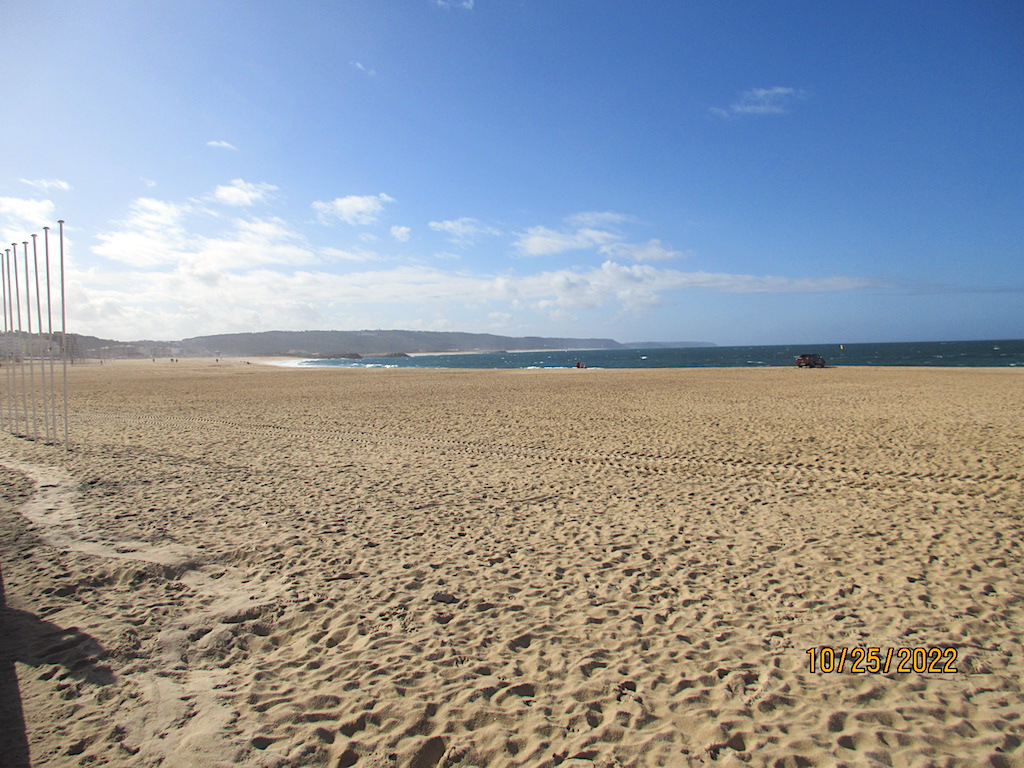
Nazare Beach
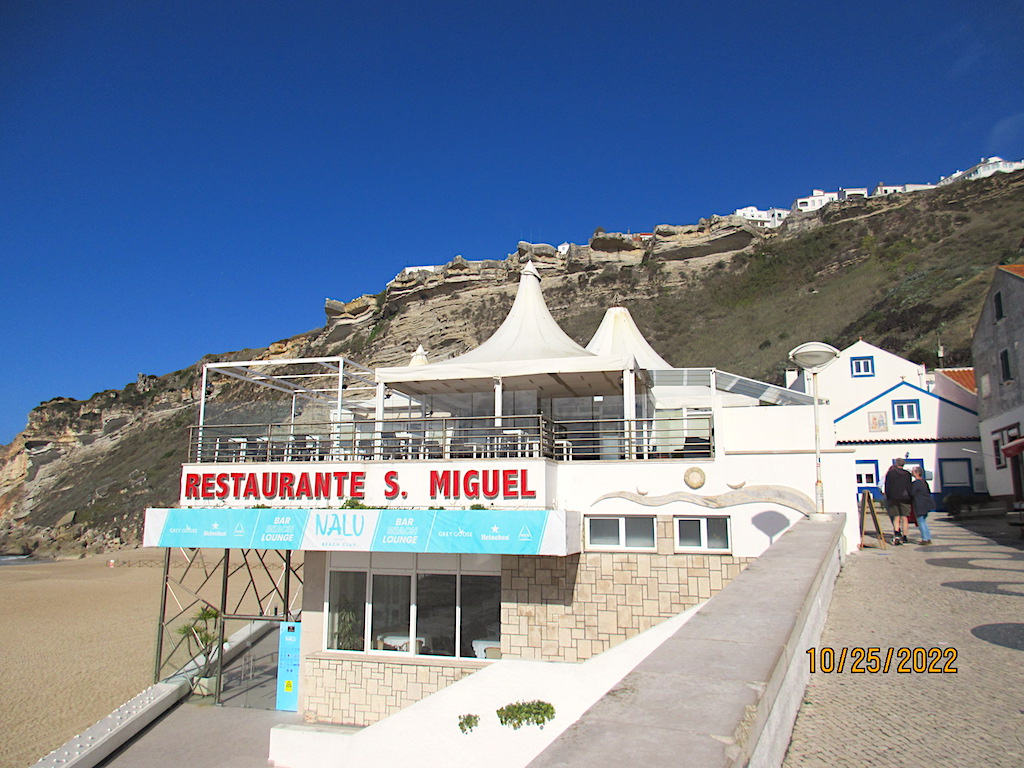
San Miguel Restaurant
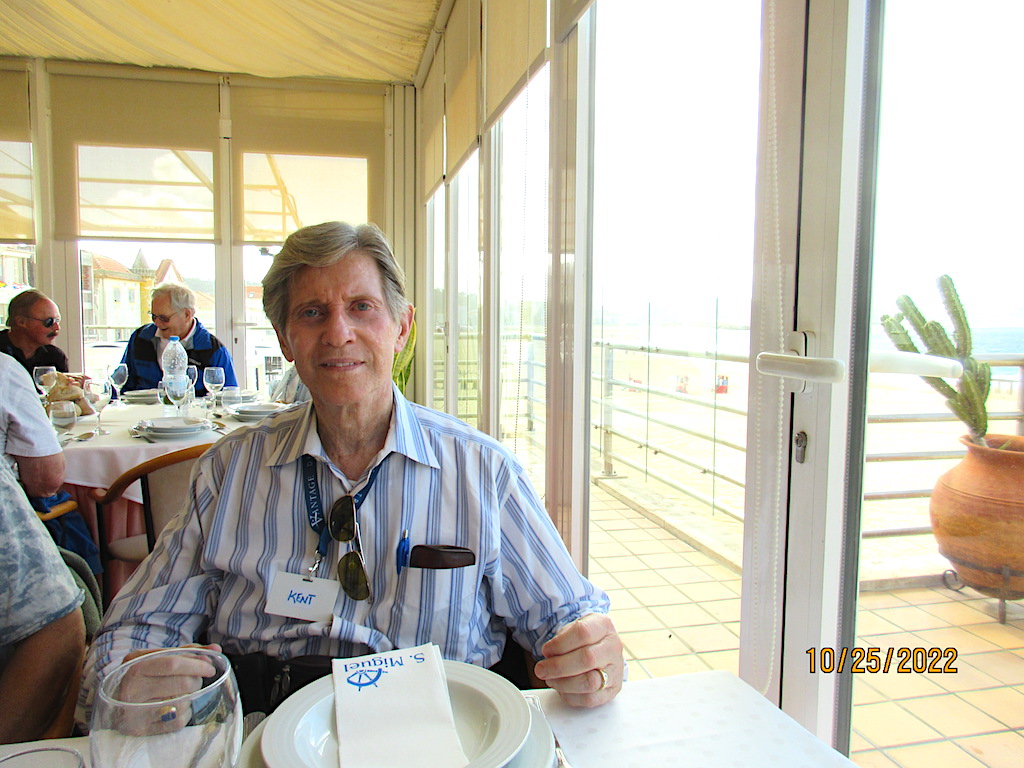
Kent at the Nazare Lunch
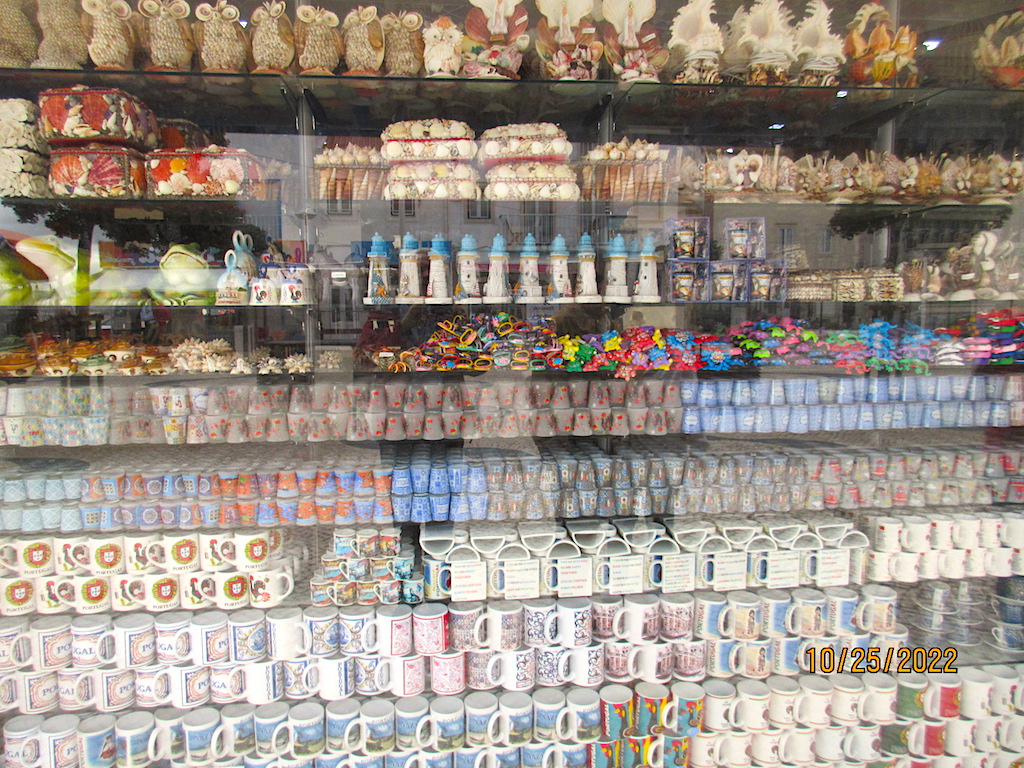
Nazare Gift Shop Window
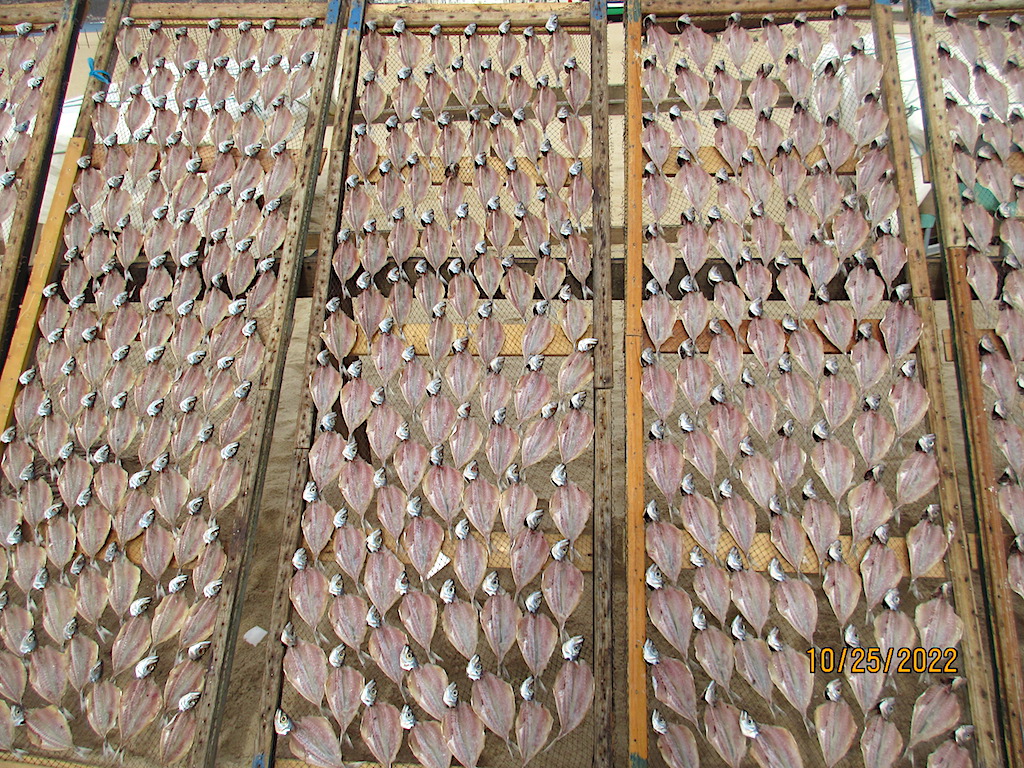
Nazare Beach Fish Drying
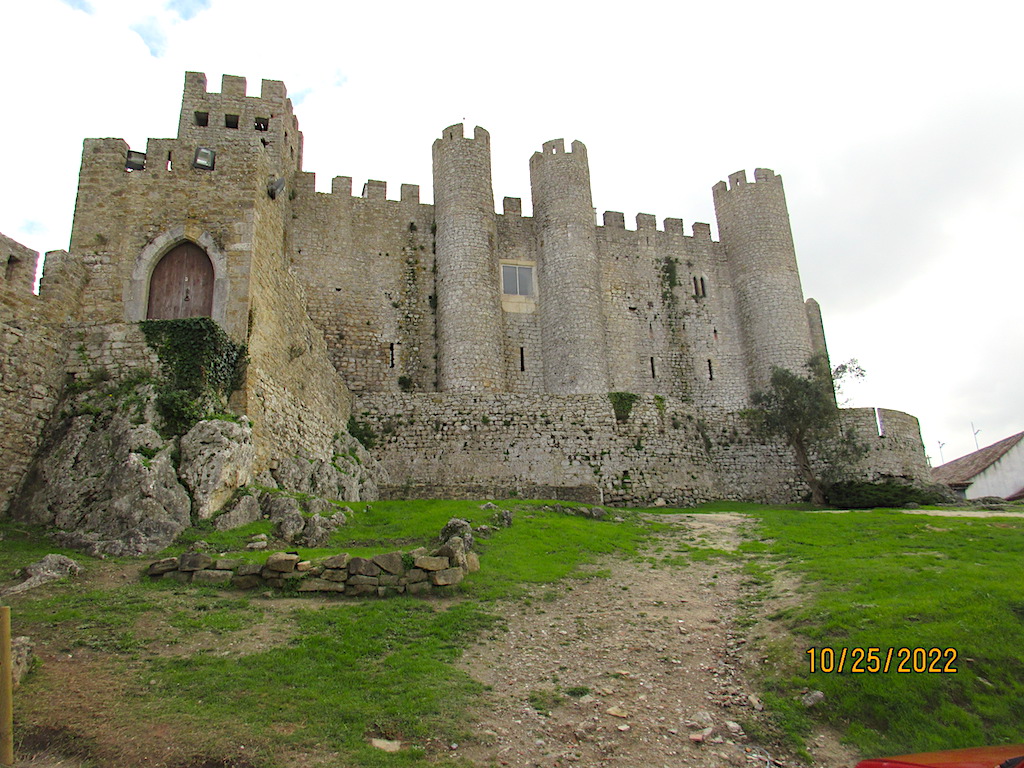
Obidos Fortress Walls
Obidos Shop
Obidos Sardine Shop

This morning, early we disembarked the m/s Douro Serenity for the final time, bound for our final stop in Lisbon. We stopped for lunch in Nazare, a beach town famous for its monstrous waves and surfing culture. Nazare is about 135 miles southwest of Porto and about 80 miles north of Lisbon. The bus ride took us about three hours to drive with a comfort stop along the route. 

Nazare, a town of only about 10,000 inhabitants, was once known as a fishing village but has now become a tourist destination for its Mediterranean climate, quaint seaside town and its surfing. The coastline here has some of the largest waves in the world created by an underwater canyon that increases and converges the incoming ocean swell with the local water current, dramatically enlarging the wave heights. 

The restaurant called San Miguel, where we had lunch, was tucked against the hillside and elevated over the white sand beach. For lunch we had deep fried fish balls and sticks with cheese. Next came a green salad with tomatoes, onions and vinegar and oil dressing. For the entrée they served a fried white fish with rice mixed with peas. Dessert was a vanilla ice cream with a strawberry swirl. 

After lunch we had about an hour to explore the beachside town and its many shops along the waterfront. Most of the shops were filled with Portuguese souvenirs like the cork purses and shoes, clothing, shot glasses, roosters, mugs, painted tiles and the like. Some of the folks in our group seem to do some shopping in most every town whereas we seem to pass by everything without giving it a second look. 

Our next stop along the way was at a charming seaside town called Obidos with only 3,000 residents located about 60 miles north of Lisbon. Here we took a walking tour of this small Medieval town that is encircled by a fortified wall and has become a popular tourist destination. Obidos is also popular for its bookstores. There are about 15 bookstores in this small town. It is also popular for its sour cherry liqueur called Ginginha. They serve the liqueur either in a plastic glass or in a small cup made of dark chocolate. They only charge about one euro for the tastings at most of the shops but we didn’t try it.  Kent did eat a chocolate cup from a fellow traveler who couldn’t eat chocolate.

Obidos is a very charming rural town with one main street of charming shops and cafes lining both sides of the narrow cobblestone street. Many of the shops have merchandise hanging on the walls outside and you find many plants like bougainvillea hanging over the walls to enhance the charm. An artist was painting local scenes on a porch of a building using only coffee instead of paint. The coffee creates many shades of brown tones like a watercolor. One shop is filled with small cans of sardines and fish with your birth date on them. Each can has things that happened during that year as a souvenir. Very colorful and fun but not sure how long you can keep the can of fish. 

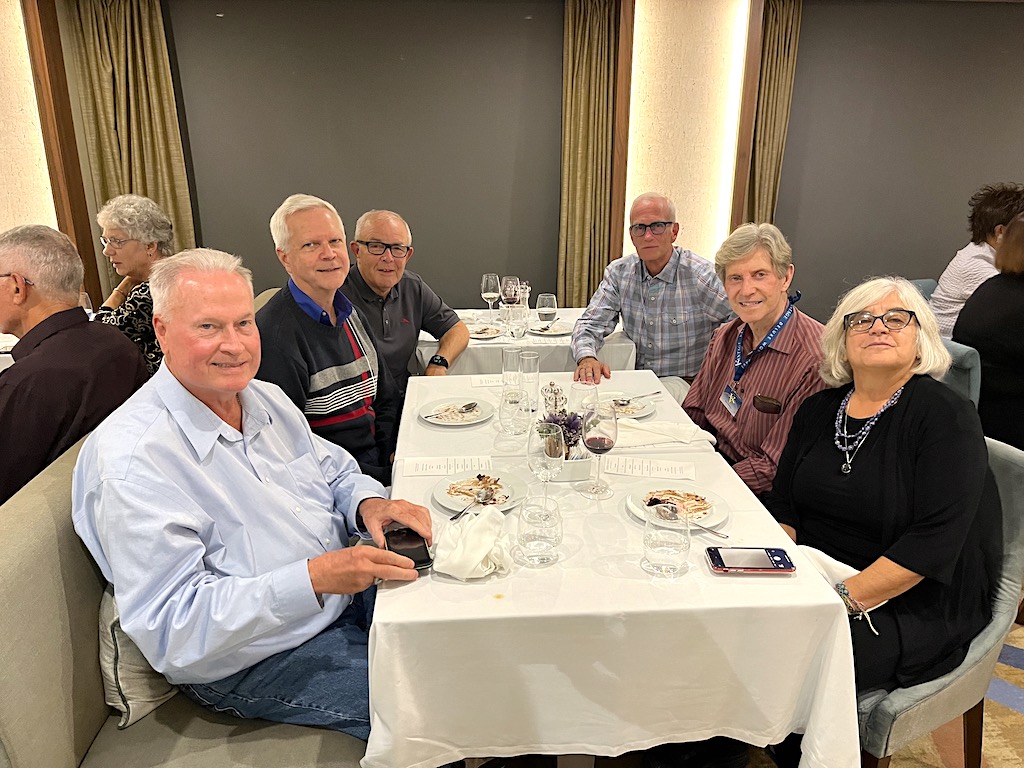
We arrived at our hotel, the Corinthia Hotel Lisbon, after five-o’clock in the afternoon. After a short rest and some time to get settled into our new home we gathered at the hotel restaurant for a farewell dinner. We would be in Lisbon for three nights before our departure, but this was when they had the farewell dinner. Dinner included a salad with cheese and pickled pears, chicken breast stuffed with a Portuguese sausage and an apple tart dessert. Everything was very good. 
Monday October 24, 2022 Porto and Guimaraes, Portugal

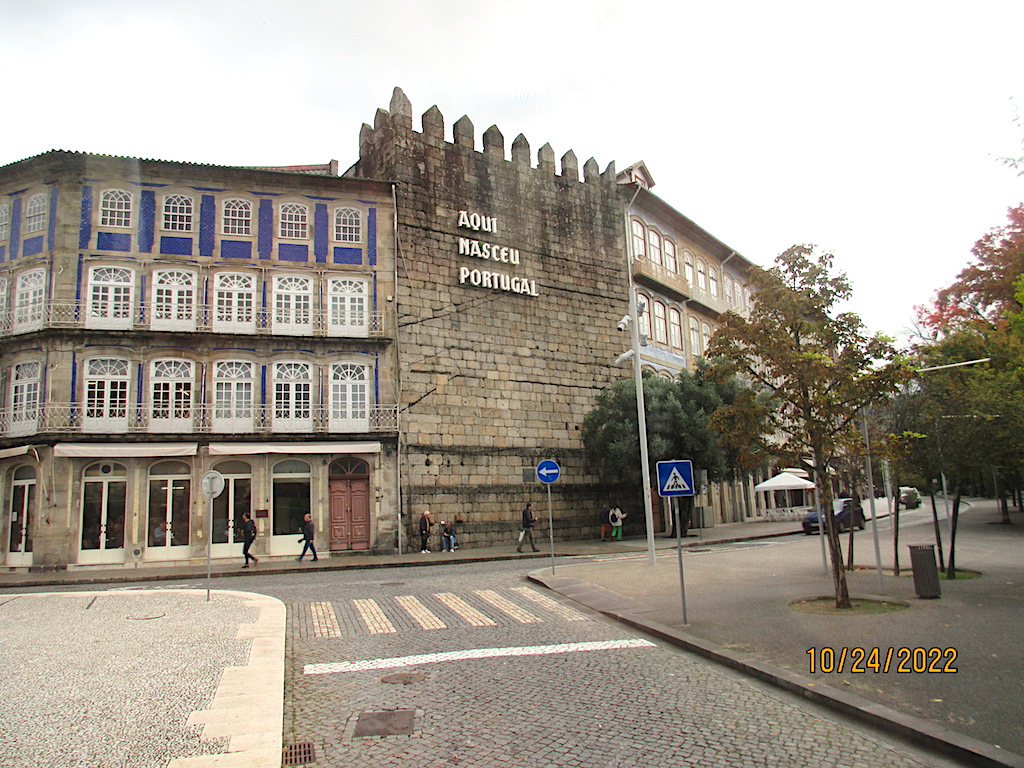
Guimaraes Wall Section
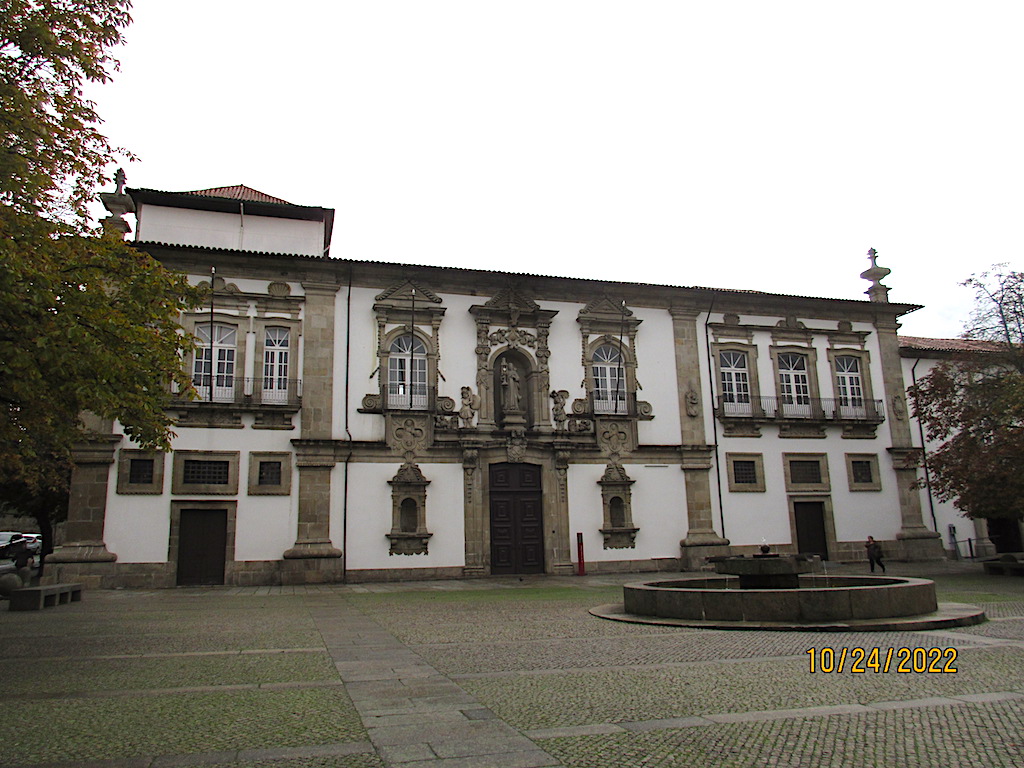
Guimaraes Nunery Now the City Hall
Guimaraes Square
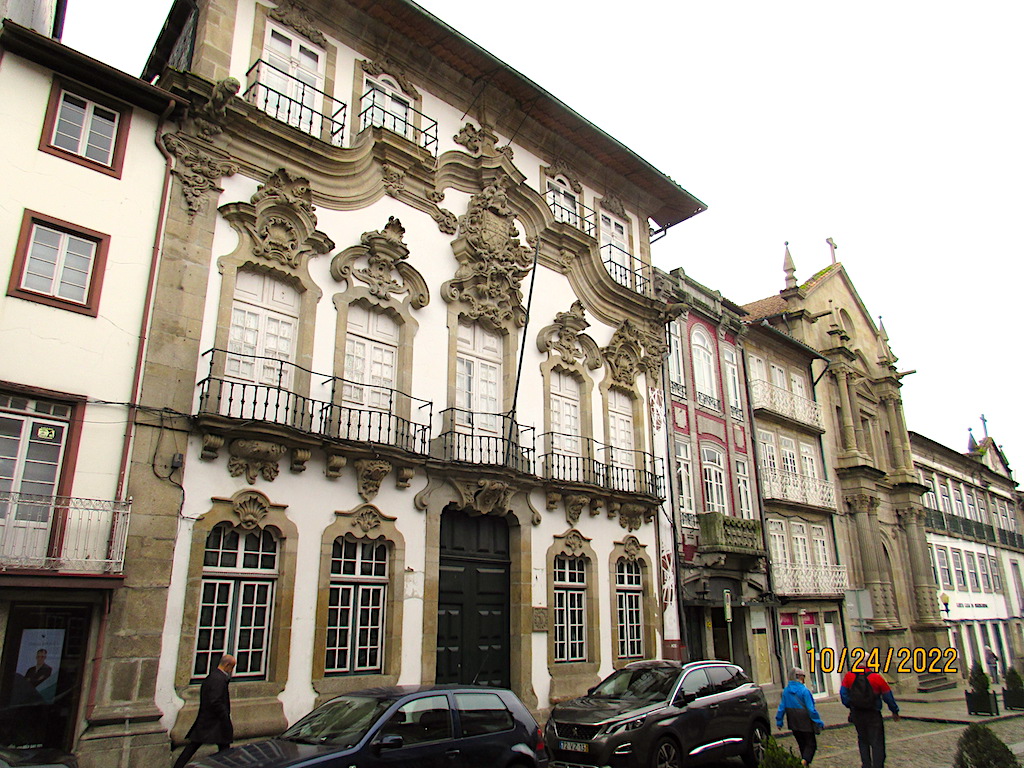
Guimaraes Street
Guimaraes Church Exterior
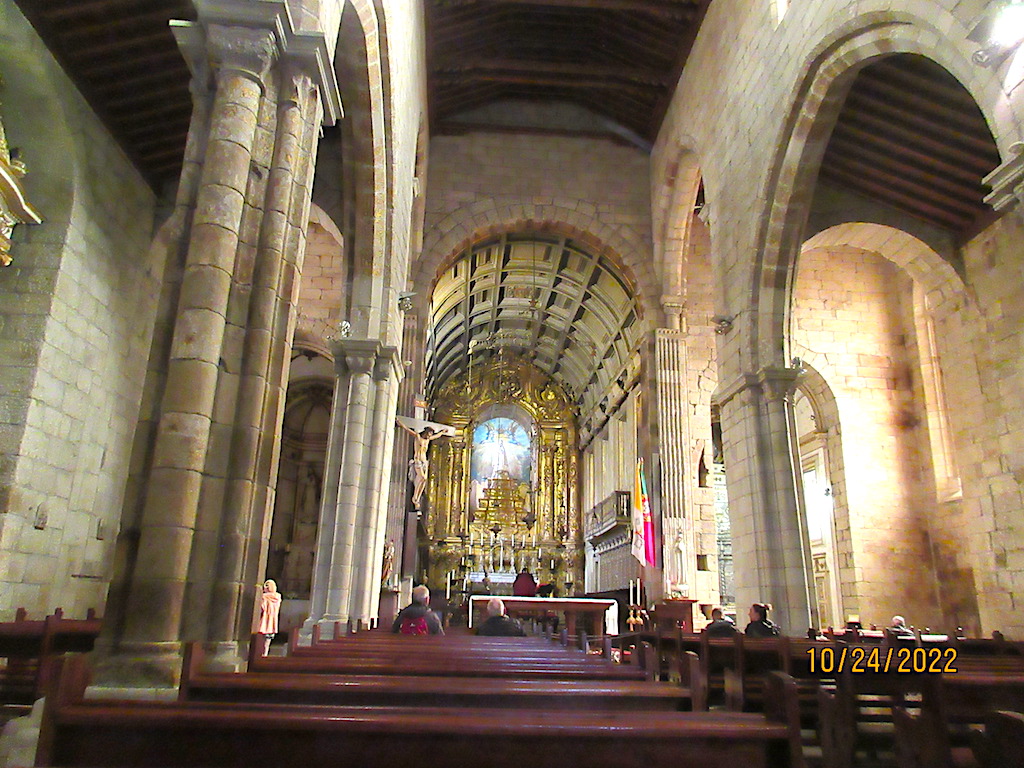
Guimaraes Church Interior
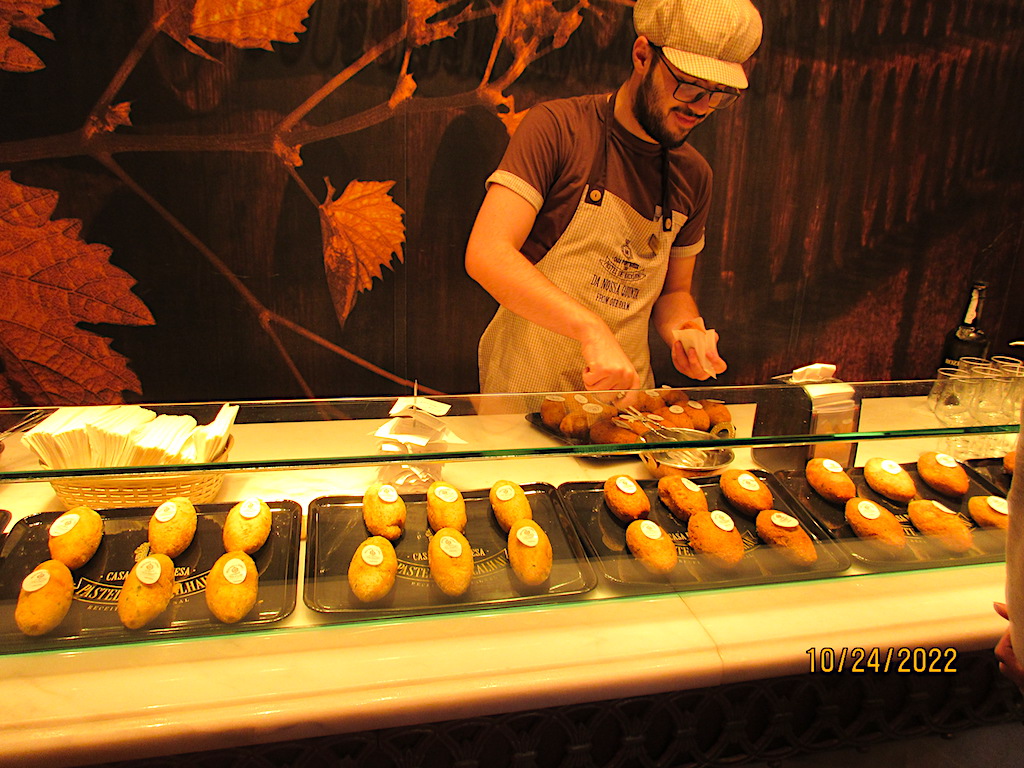
Fish Cake Shop
Fish Cakes

On this morning we had the opportunity to visit a town about an hour’s drive northeast of Porto by the name of Guimaraes. This historic town center has been listed as a UNESCO World Heritage Site in recognition of its well preserved and authentic example of the evolution of a medieval settlement into a modern town. The population of the city is about 150,000 and was originally settled about in the 9th century. It is often referred to as the “birthplace of Portugal” because it is believed that Portugal’s first King, Afonso Henriques, was born here.  

We experienced a bit of rain during our visit, otherwise the weather was mostly cloudy and slightly cool. We toured the historic old walled city and its rustic cobblestoned streets with our guide. Most of the buildings are very old and in differing states of disrepair. Some abandoned, some restored and many showing their age. Several large churches are located in the old city with their bell towers, ornate altars, paintings and artifacts. Cafes line the public squares for people to stop and enjoy a bite to eat and a snack or a full meal. A few souvenir shops sell items like colorful tiles and ceramics, fine filigree jewelry and locally made cork and linen products. 

Lunch was back onboard the ship with the afternoon at leisure in Porto. We took this opportunity to have a little nap after the long week of activities onboard and to begin preparing for our trip to Lisbon early the next morning.

Others headed several miles east of Porto’s city center to the area called Gondomar which is well known for its Portuguese filigree jewelry. The exact origin of the jewelry is unknown, but it is believed to date back to around 2000 BC, with Phoenician origins. The technique consists in molding metal into very fine threads, mainly gold alloy, and then twisted two-by-two and then flattened. The threads are as thin as a hair strand and the twisting gives them greater resistance allowing them to be bent and rolled without breaking. Expert artisans work these very fine threads into delicate looking brooches, necklaces, bracelets, earrings and rings. 

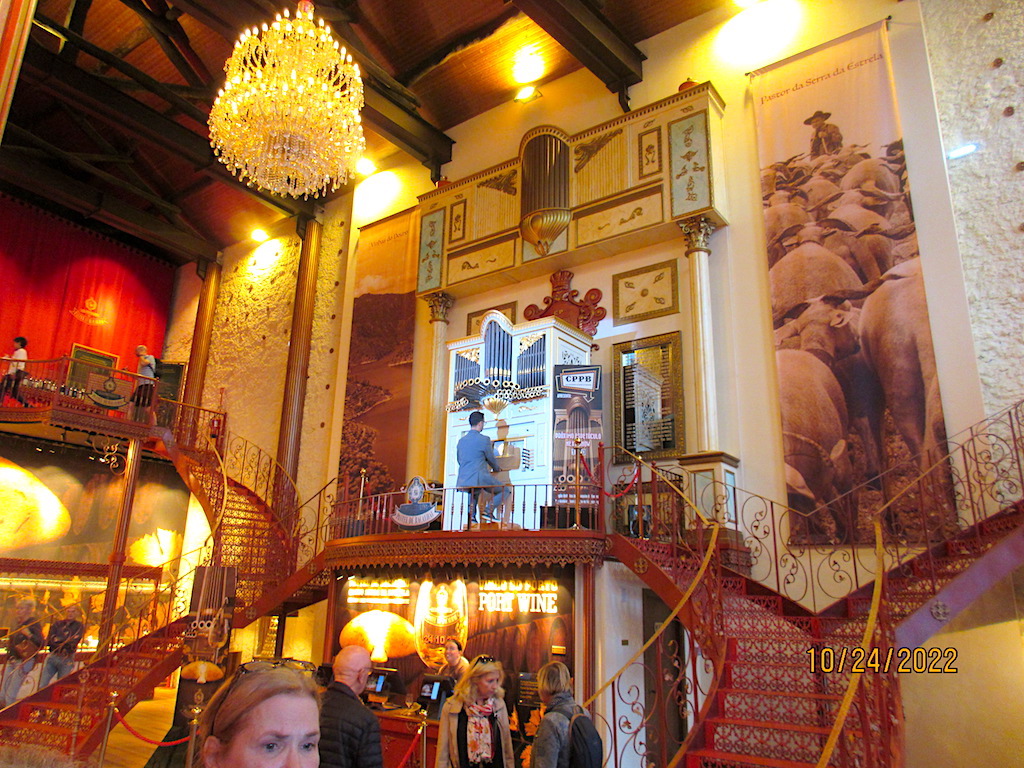
Several of us joined the ships concierge, Lidia, on a short walk to a local café to taste a local specialty, the fish cake. The fish cakes are made of cod with a local cheese from the north of Portugal inside and the outside has a slight amount of breading. The fish cakes are served warm with a glass of cold white port wine. The Café where they sell the fish cakes had an organist playing a vintage pipe organ to attract people to the shop. 

We then went to a local bar where folks tried a local beer called dirty beer where they add a little local wine to the beer. They also have what they call the ladies drink, dirty beer with red grenadine syrup which makes the beer red and much sweeter. Not any better than regular beer to me. 

Sunday October 23, 2022 Porto Portugal

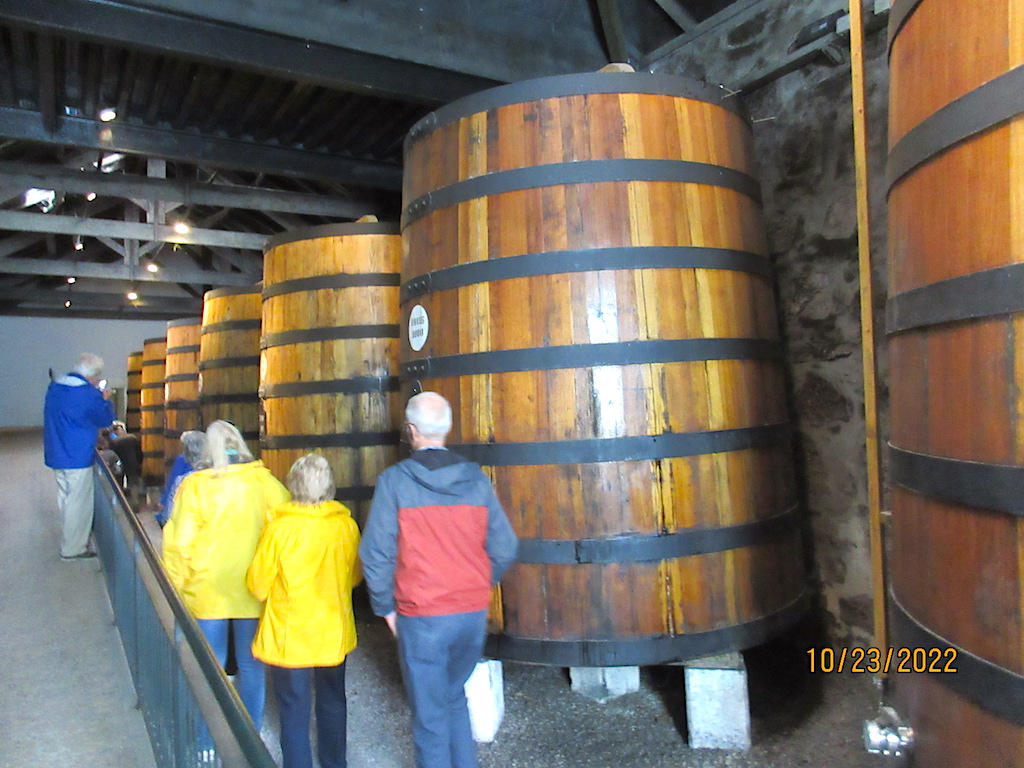
Taylor Cellars in Gaia
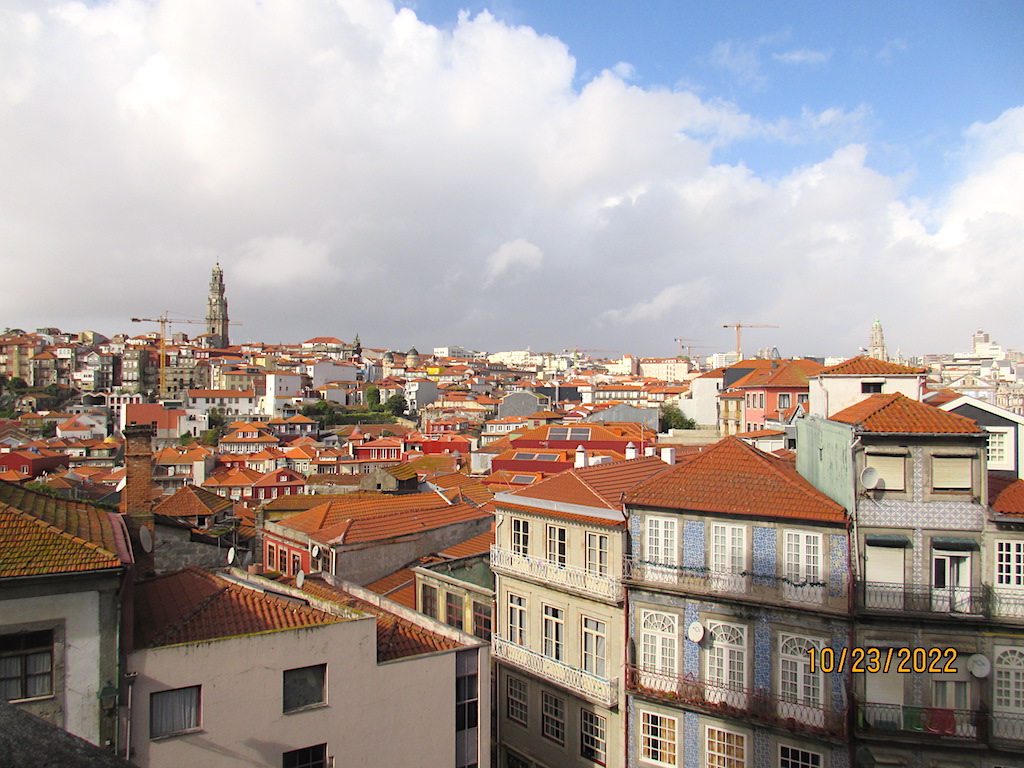
City View of Porto, Portugal
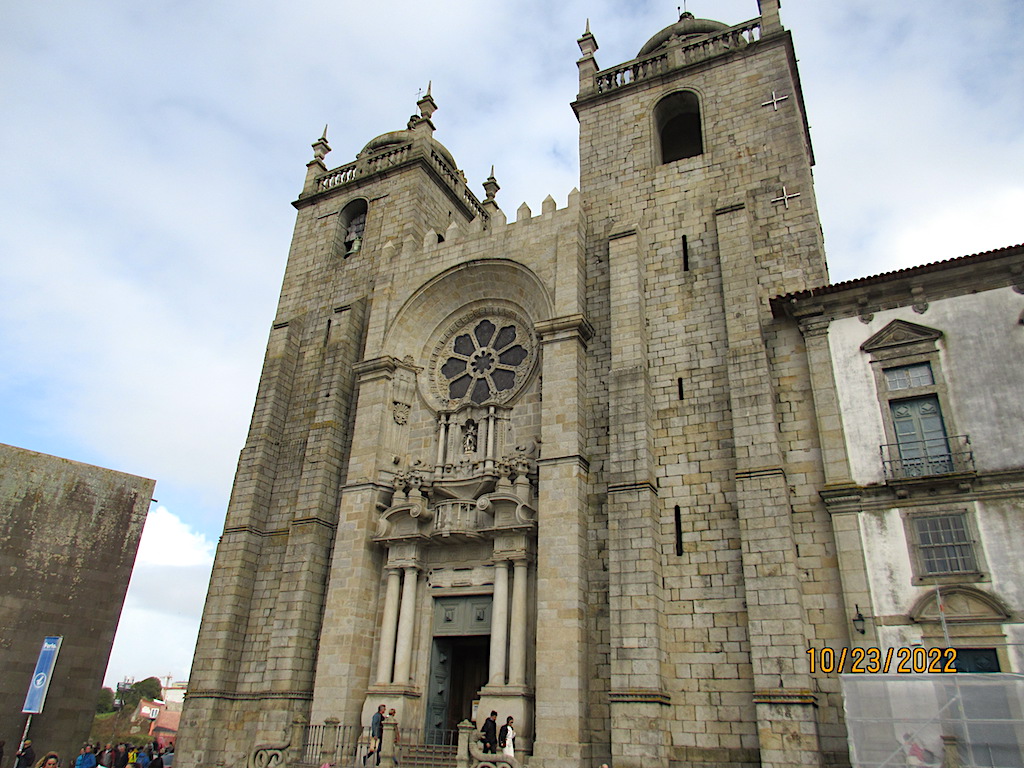
Porto Cathedral
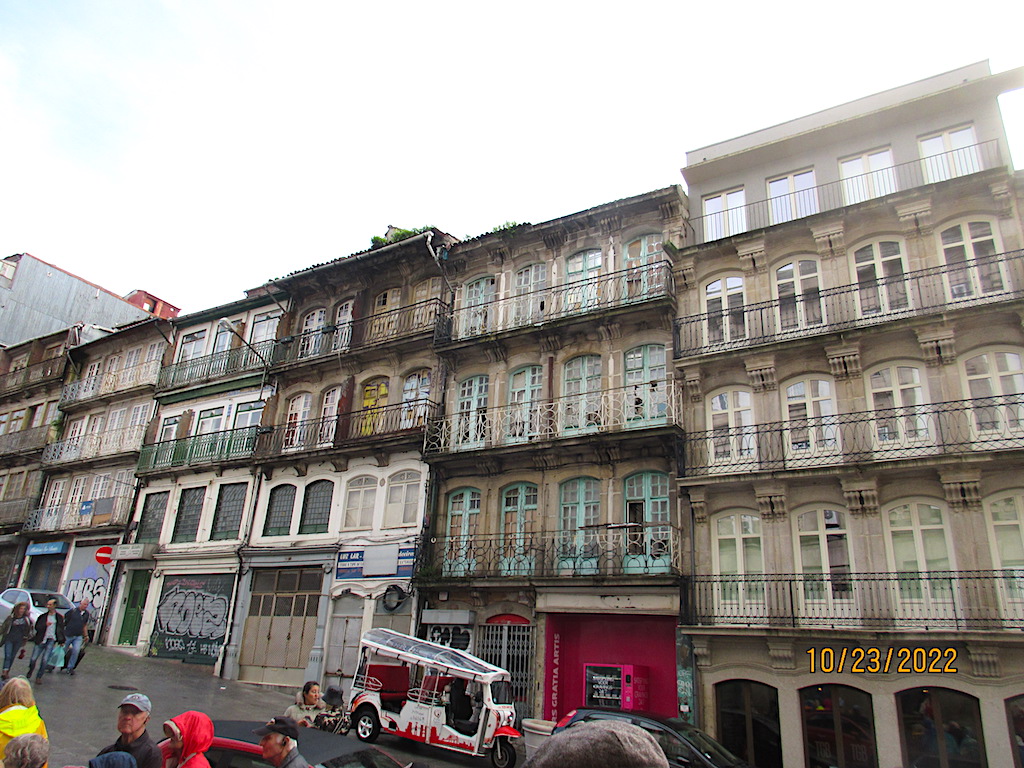
Building Facades in Porto
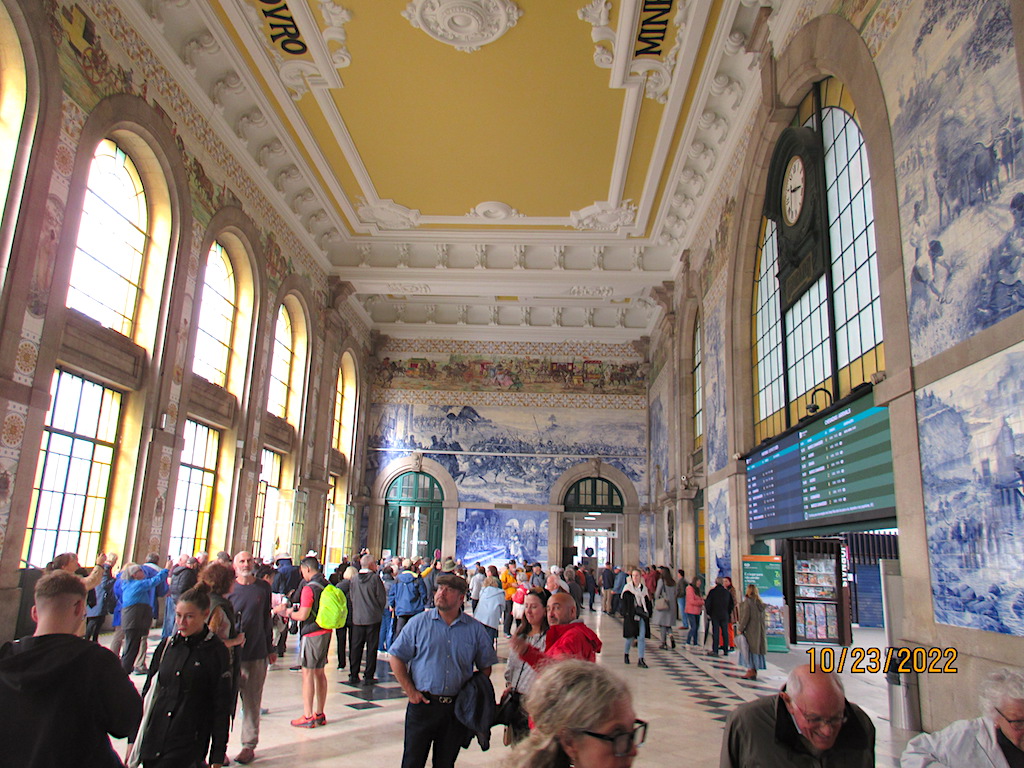
Porto Train Station
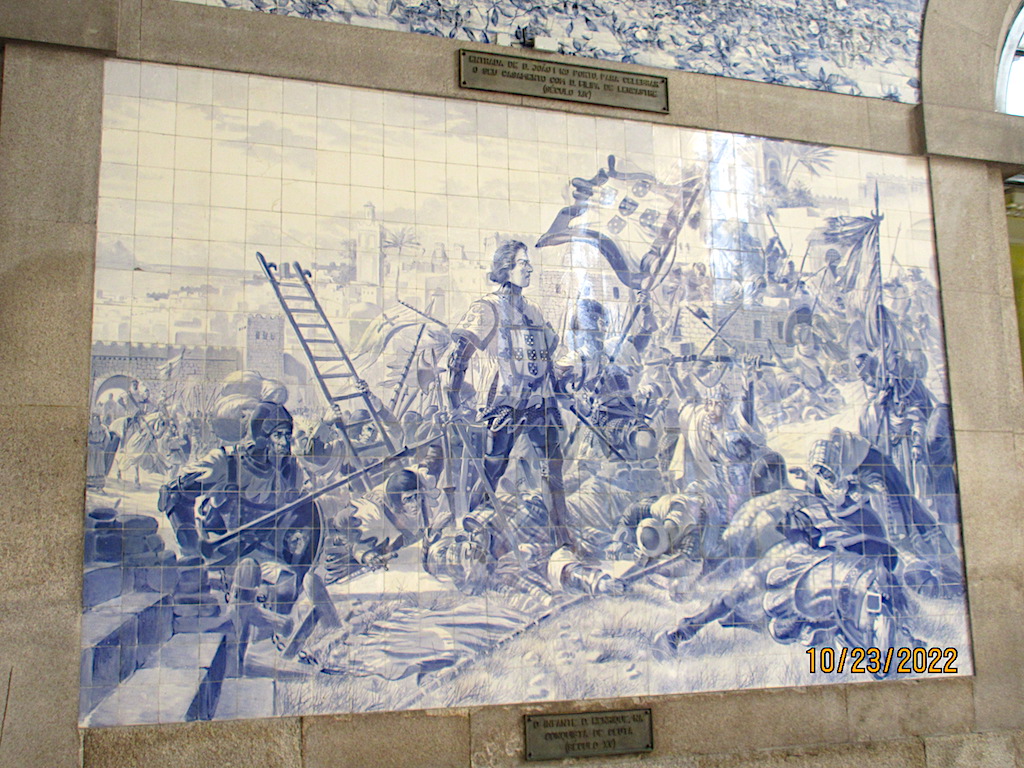
Porto Train Station Tile Mural
Public Square in Porto
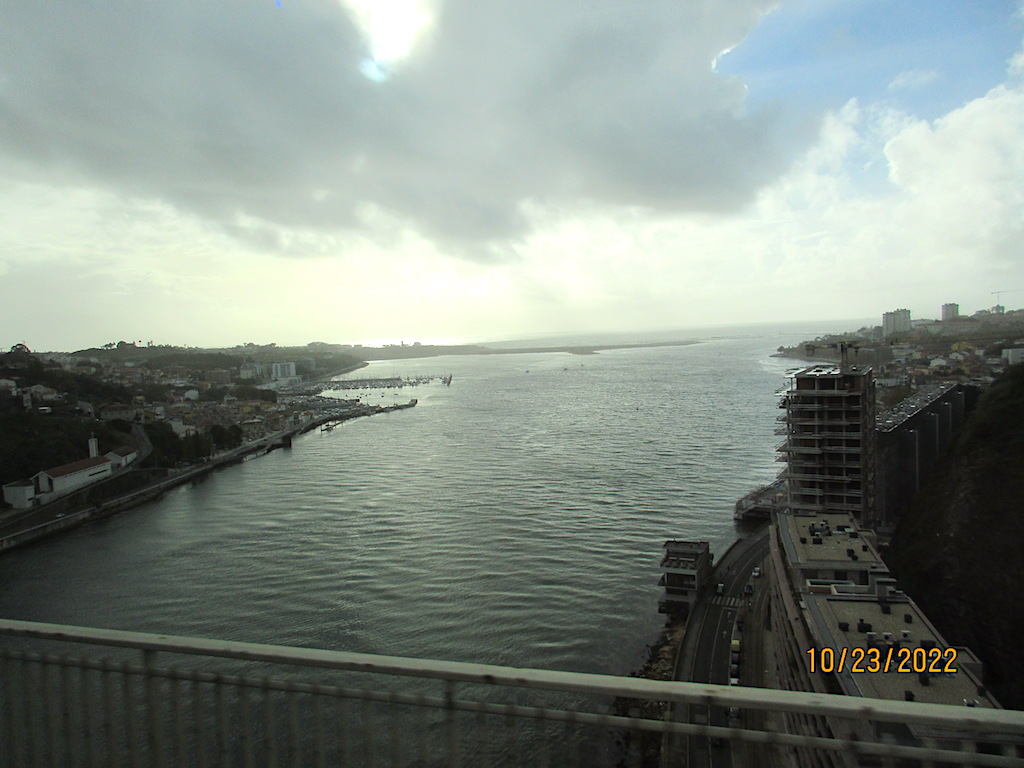
Mouth of the Douro River

On our final leg of our cruise on the Douro River we sailed into the town of Porto this morning in a downpour of rain with very little visibility. Porto, with a population of about 240,000 people, is the second largest city in Portugal after Lisbon. This does not account for the nearly 2.4 million people living in the metropolitan area. The city is located along the Douro River in northwestern Portugal and its historical core was named a UNESCO World Heritage Site in 1996. Across from Porto is the town of Gaia where we docked. Gaia is the area where most of the wineries have cellars.  The higher humidity and lower temperatures are more conducive to wine storage than in the heat of the Douro River Valley.

The history of Porto began around 300BC with the Celtic people being the first known inhabitants. Ruins from this period have been discovered in several areas. During the Roman occupation of the Iberian Peninsula the city developed as an important port. In the 14th and 15th centuries, Porto’s shipyards contributed to the development of Portuguese shipbuilding. 

One of Portugal’s internationally famous exports is the port wine named after Porto and produced in the Douro Valley as far back as the 13th century.  Other top exports include cork and sardines.

On this morning we visited one of the city’s best-known cellars to check out the port wine that the city is known for. We took a short-guided tour of the Taylor wine cellar as well as had a tasting of both a white and a red port wine. The cellar sits high above the river on the Gaia side of the river where all of the wine cellars are located.  The cellar has panoramic views over the city and the river. 

We enjoyed lunch back onboard before a panoramic tour of the city of Porto, including the exterior of the Porto Cathedral, a Roman Catholic Church located in the heart of the old town. 

We stopped in at the 1916 train station in the center of town to view the beautiful murals on the walls. These murals are painted on approximately 20,000 Azulejo tiles. The tiles are painted in blue on white tiles and are quite extraordinary. They reminded us of the ceramic Dutch tiles.  The scenes depict battles, the conquest of Ceuta and many scenes from historical events in Portugal’s history. The city is filled with architecturally interesting buildings one stacked right next to another. The majority of buildings have red clay tile roofs which give the city skyline a very unique look. 

After dinner, a local tuna band performed in the ships lounge. A tuna band is a group of university students in traditional university dress who play traditional instruments and sing serenades. This tradition originated in Portugal in the 13thcentury as a means for students to earn money and food. This group was ten students who performed local songs for about 45-minutes. It was very interesting. 

Saturday October 22, 2022 Entre-os-Rios, Portugal

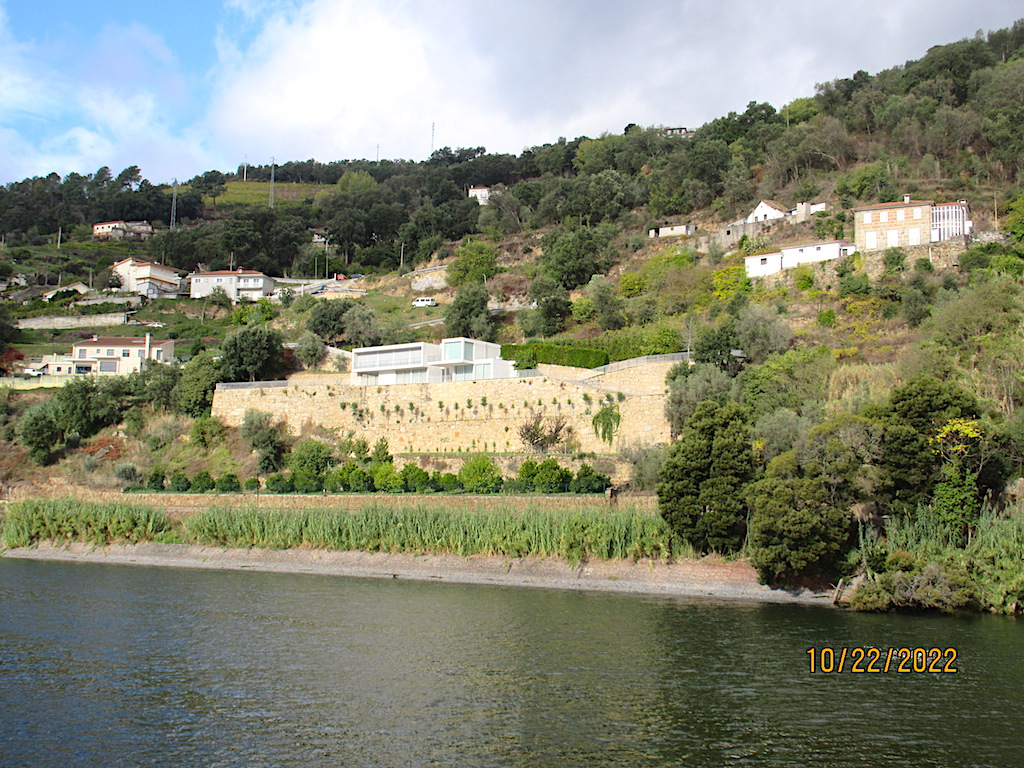
Modern Construction Along the River
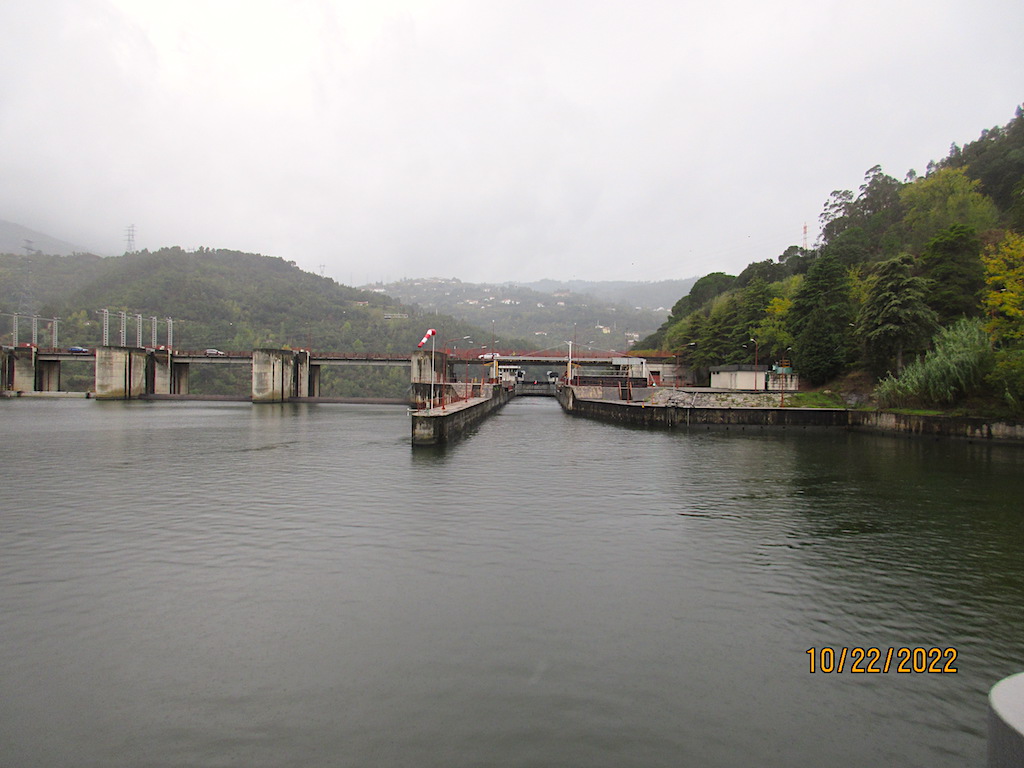
Carrapatelo Lock
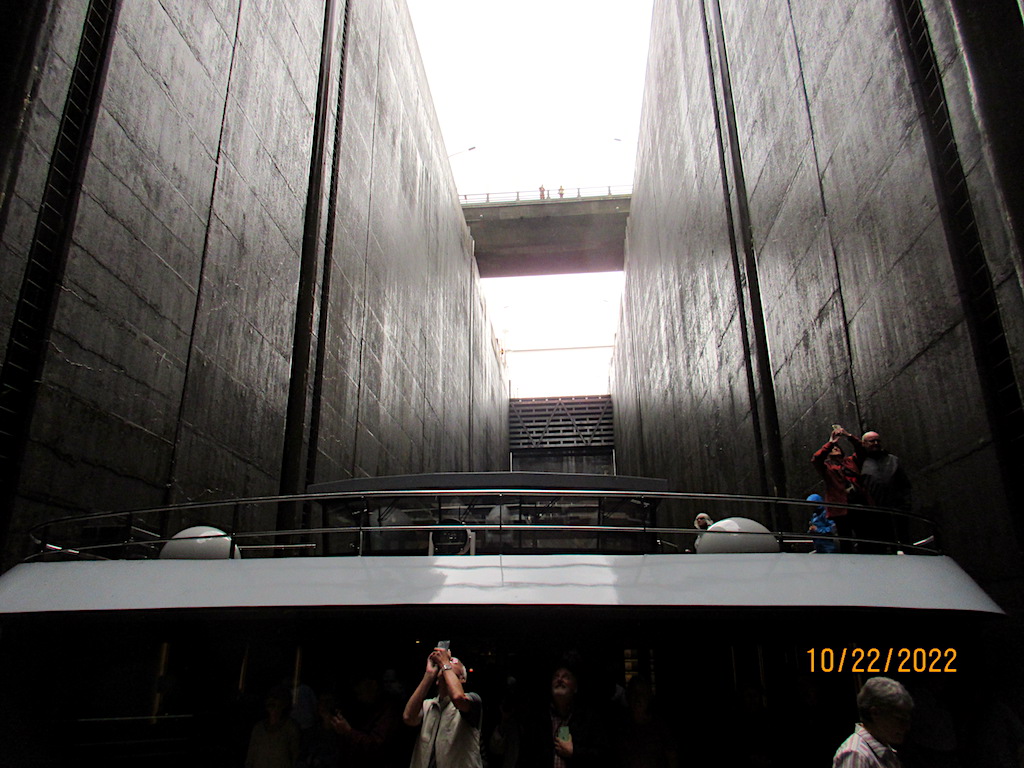
Inside the Carrapatelo Lock
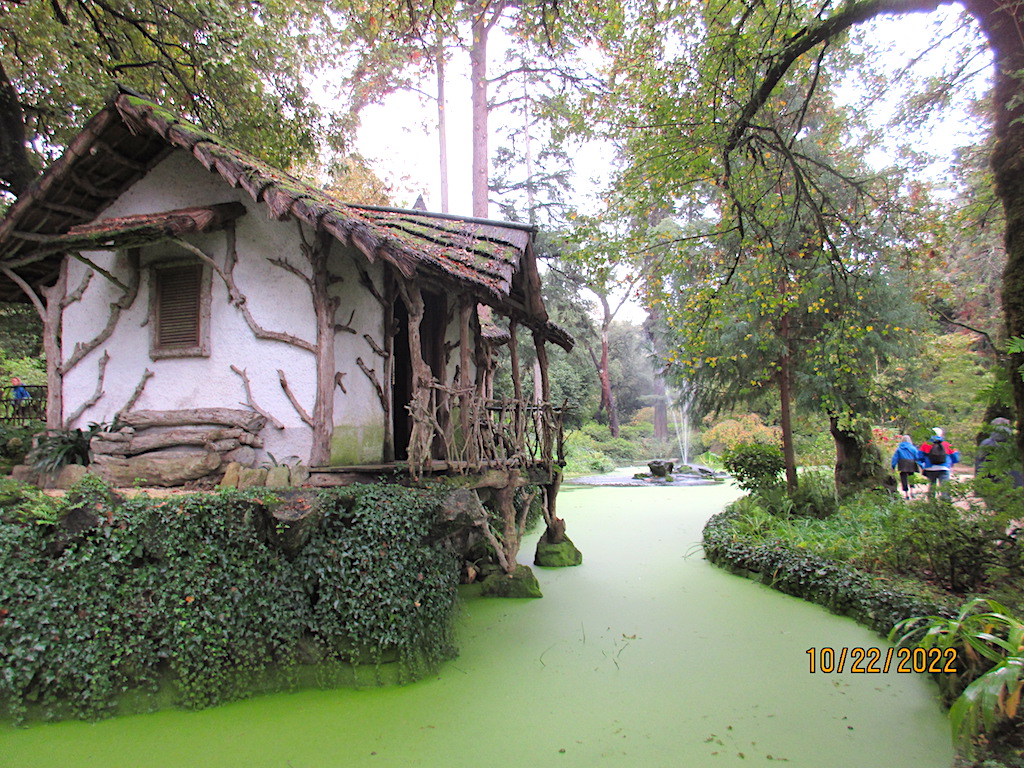
Aveleda Winery Tea House
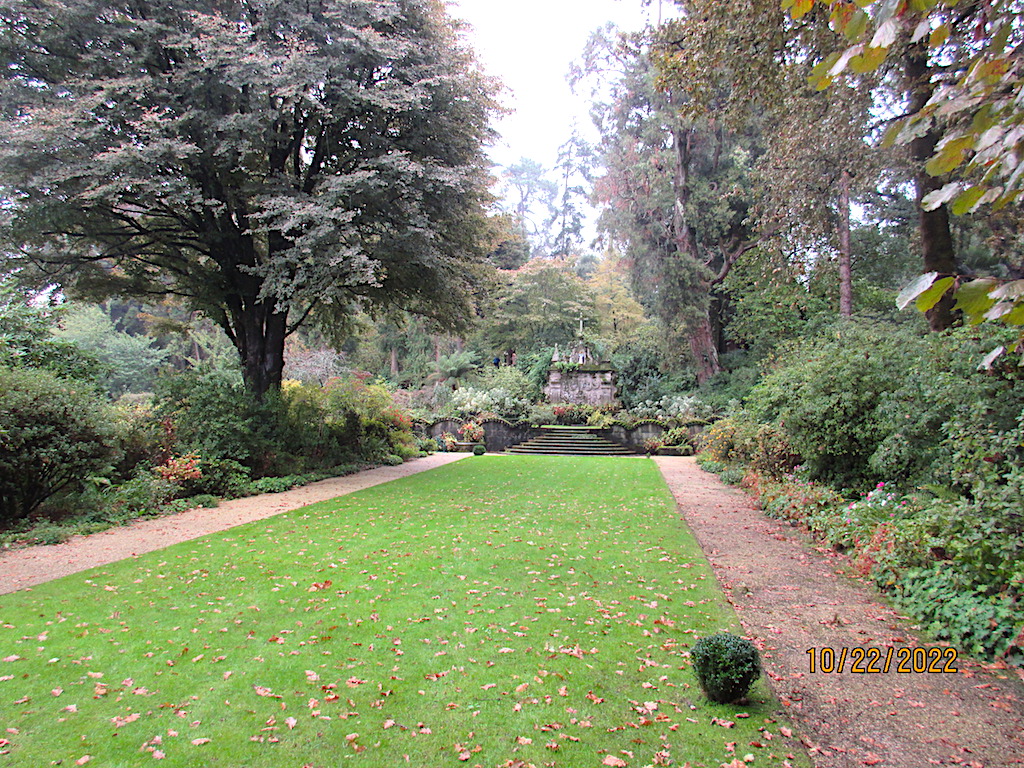
Aveleda Winery Garden
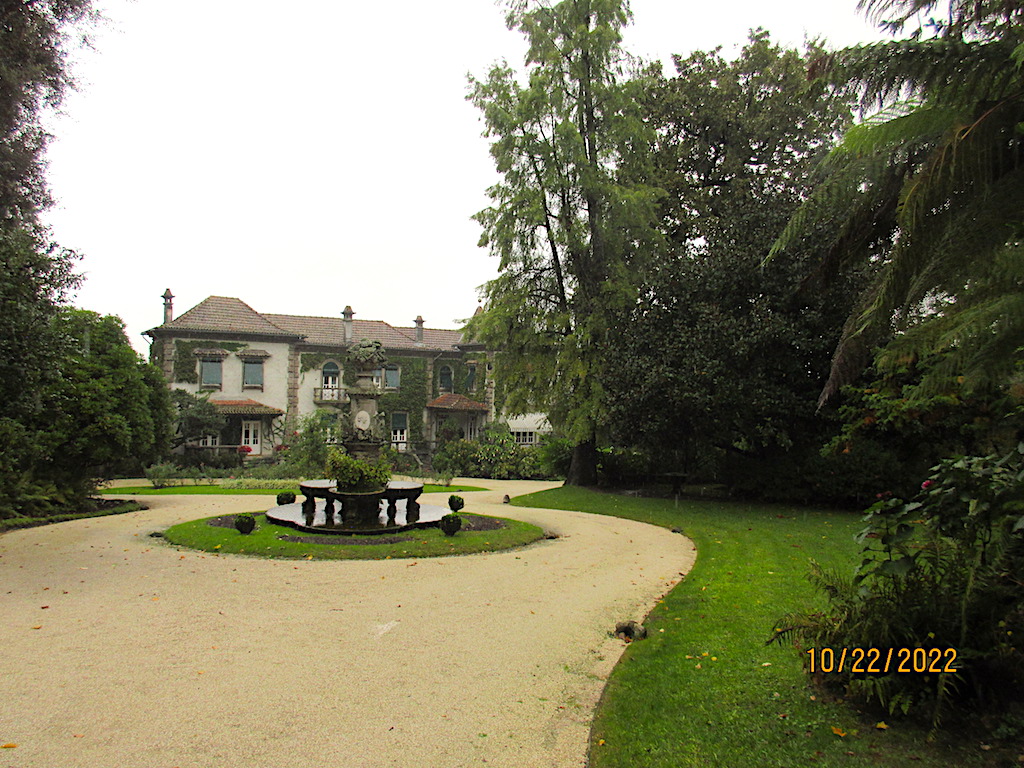
Aveleda Winery Family Residence
Captains Dinner

In the morning we set sail down river passing the deepest lock in Europe called the Carrapatelo Lock with a height of 115 feet. The voyage along the Douro in this area is more developed than the area further east and the terrain has changed. Where there were grape vines and olive trees there is now much more wild vegetation, steeper hillsides and the river is much narrower in some places. The day is filled with rain showers but the scenery is still beautiful. 

While we were sailing, Patricia, the cruise director presented a brief history of Portugal so that we could better understand the culture of the country. She discussed how the country came to be and how the borders have changed over time. Portugal only has one neighbor, Spain, although they were great explorers around the world and have had many other colonies over the years. They controlled Macau until they gave the land to China and they controlled Timor in Africa which is now an independent nation. They still control Madeira and the Azores in the Atlantic. 

After lunch onboard, we docked at the town of Entre-os-Rios or “in between the rivers” at the confluence of the Tamega and Douro Rivers. The small town was a tragic spot in March of 2001when the Hintze Ribeiro Bridge collapsed after flooding of the river and a strong current. The collapse caused the death of 59 people. Since then a new bridge called the Duarte Pacheco bridge was built reconnecting the town of Torrao to Entre-os-Rios.

We took a 30-minute ride to the Aveleda Winery for a tasting of Vinho Verde. The name Vinho Verde translates into green wine but can also be translated as young wine. These young wines can be released three to six months after the grapes are harvested. The wines are reds, whites and rose and can be consumed shortly after bottling. Vinho Verde also has a popular sparkling version. This area has as many as 20,000 small grape growers. 

The grounds at the Aveleda winery were very beautiful with vast gardens that have been in the family for some 300 years and they have produced wines for 150 years. The family would collect plants from around the world over the years and bring them home to plant in the garden. They even have a couple of California Sequoia trees. We saw a lake and the tea house where the ladies would go to drink wine under the guise of having tea as it was more acceptable at the time. 

After the tour of the gardens and the brandy cellar we were treated to a wine tasting in a very modern tasting room large enough to seat more than 100 people. We tasted two white wines, one a bit more acidic and the other sweeter. They also served up some cheese and crackers. Everywhere we go we are given wine, wine and more wine. It matters not what time of day it is. 

On this night they had the Captain’s farewell party as we will arrive the next day in Porto and people will have time to explore on their own. The dinner was a five-course dinner with an appetizer, soup, hot appetizer, entrée and baked Alaska for dessert. After dinner, a local trio came onboard to perform favorites from the ‘60’s, ‘70’s and ‘80’s. The captain joined the fun and danced with many of the women.

Friday October 21, 2022 Pinhao, Lamego and Reggae, Portugal

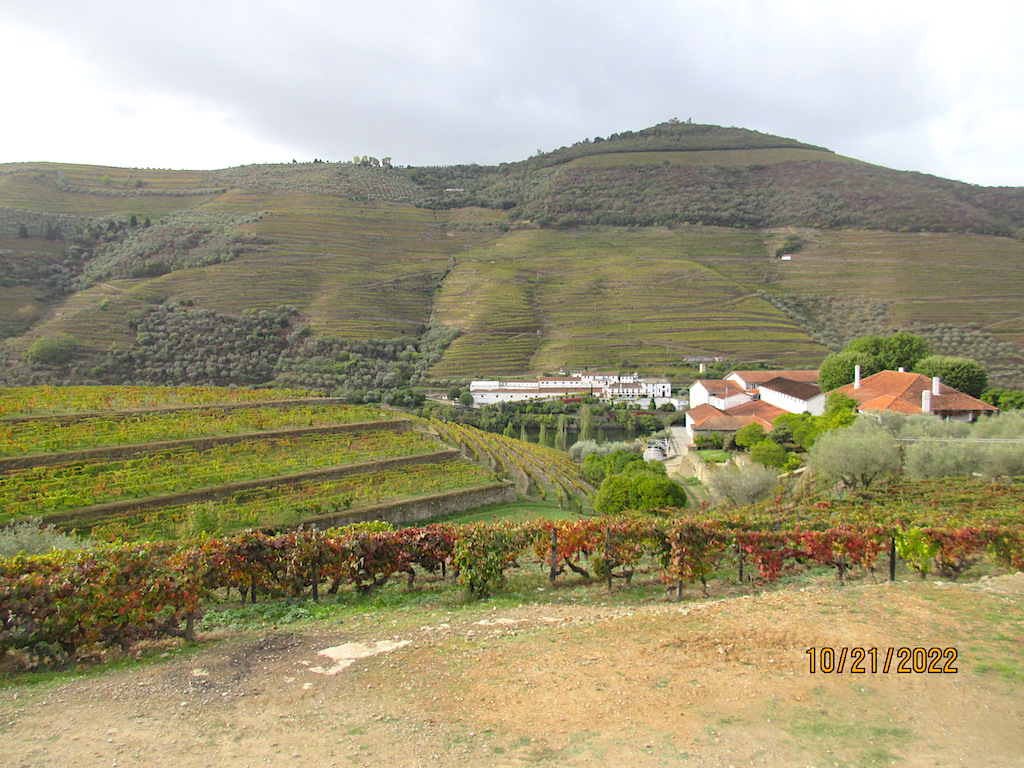
Quinta da Roeda Vineyards
Insect Motel
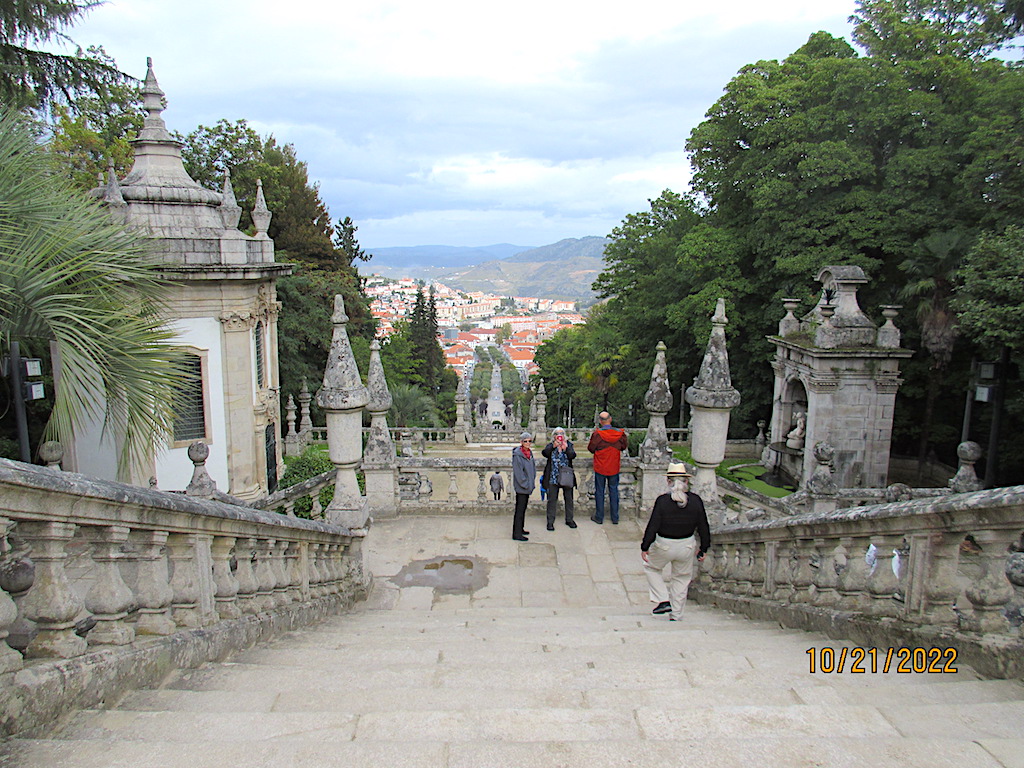
Santuario de Nossa Senhora dos Remidios
Elaborate Gardens in Front of the Church
Interior of the Church
Staircase and View in Front of the Church

Our morning started with a tour of the Quinta da Roeda winery in Pinhao where they make Croft branded port wine. The Croft family history with the Portuguese port business dates back to the 1707 when the two Irish brothers moved to Portugal and began trading port wine. This estate was acquired by the family in 1889. We had a guided tour of the concrete vats where the grapes are still stomped by foot before being put into stainless steel or wooden barrels depending on the type of port wine they are making. We then moved out to the vineyards where we learned about the soil in the area, the use of olive trees to help with erosion and the fact that grape vines can produce grapes for up to 130 years. 

We then were taken into a modern, spacious tasting room with large tables with chairs that can seat about 12 people each where we tasted two of their port wines. We tasted a rose-colored port wine and a dark red port wine. The rose colored one, while being very sweet, was much smoother while the darker port was much stronger and less sweet tasting. 

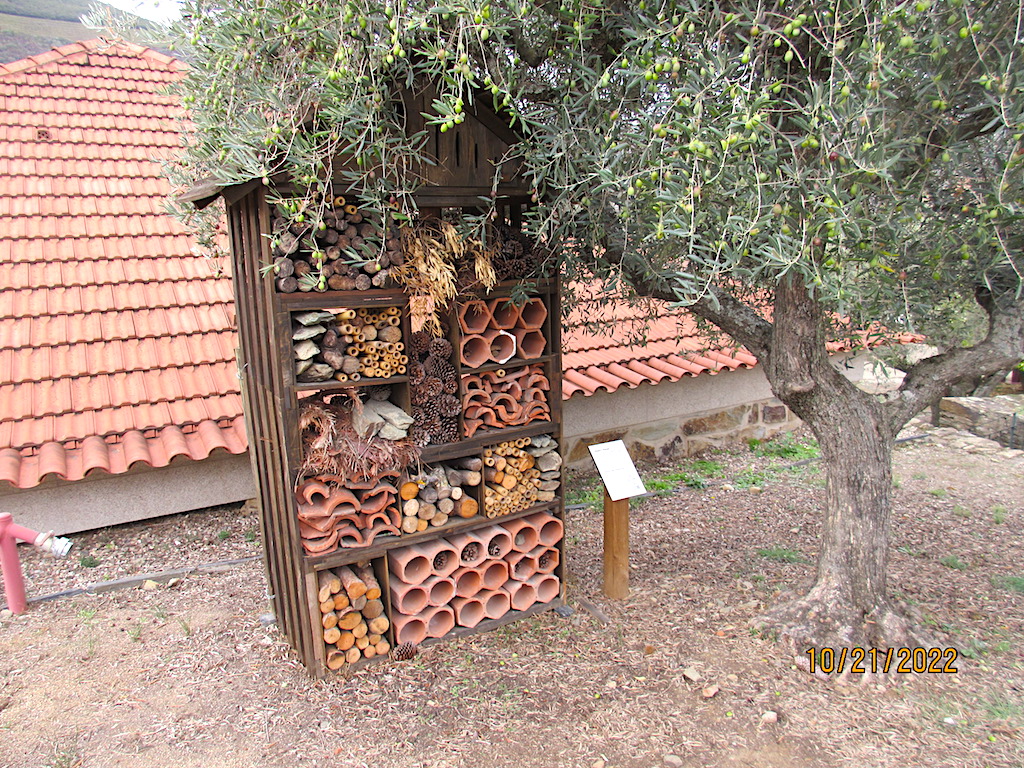
Outside of the winery they have a display of an insect motel where insects can make their homes. Insects are an important part of the agricultural process but the use of chemicals often kills the needed insects. These motels allow the insects to find a home away from the pesticides and hopefully thrive. 

After the winery tour we were taken back to our vessel where we set sail down the Douro to the town of Lamego. We had a large buffet lunch with a served entrée of either a white fish or turkey legs. On the way to Lamego we passed through the Baguaste Lock with a height of 91 feet. At the Lamego pier we refueled the ship before moving to the other side of the river in the town of Regua. 

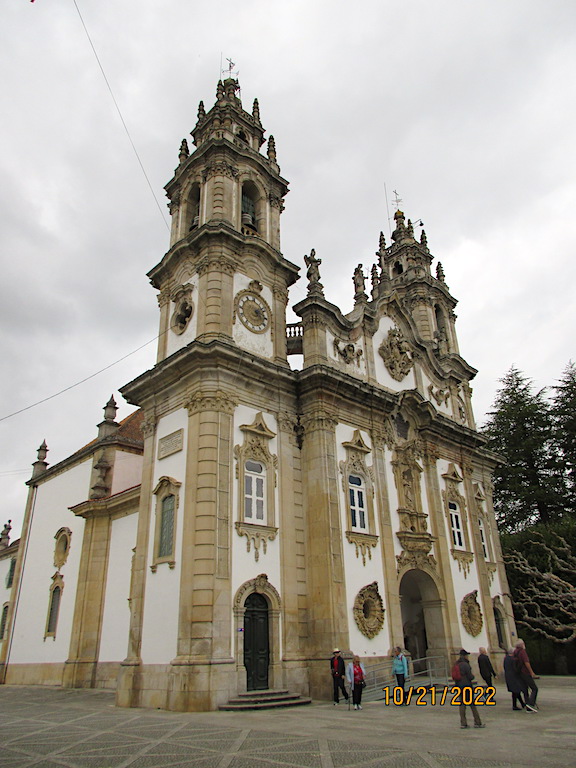
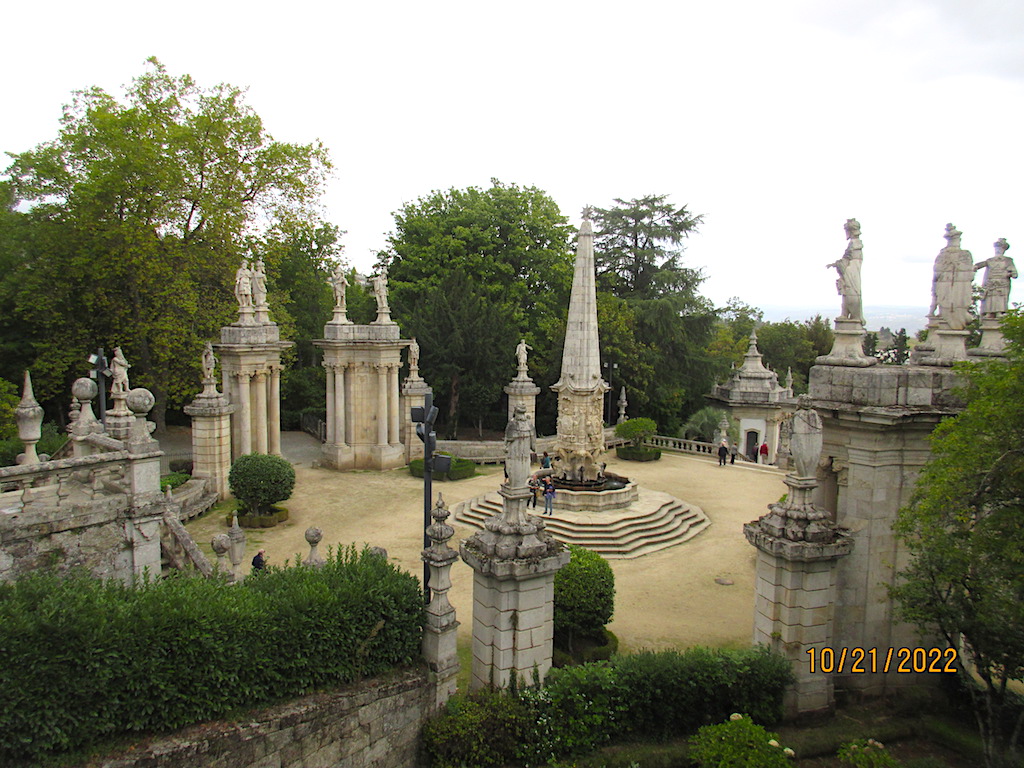
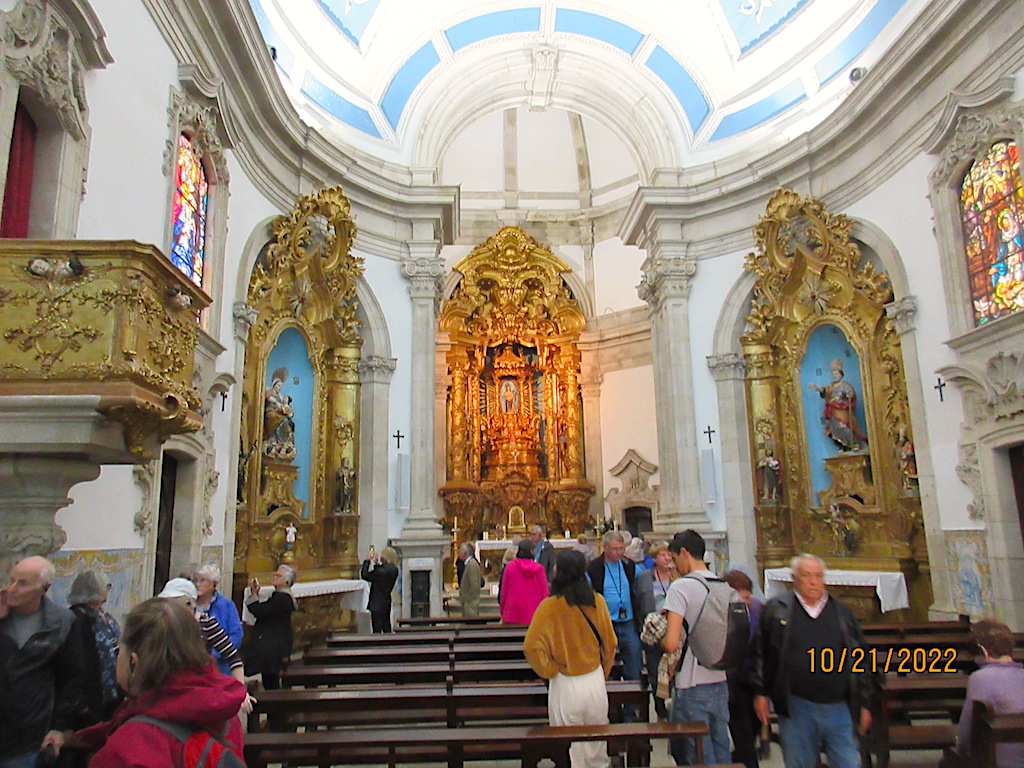
In the afternoon we visited the beautiful and historic town of Lamego with a population of about 25,000 people. The quaint town is filled with terra-cotta rooftops and tree lined streets. We first visited the Santuario de Nossa Senhoura dos Remedios or Sanctuary of Our Lady of Remedies. The church sits on a hilltop high above the city with wonderful views. The church is very ornate with a gilded altar, many side altars and blue and white ceramic tiles on the walls depicting biblical stories. The ceiling was painted with a beautiful shade of blue and white. From the hilltop location of the church, we began our descent of a 686-step staircase to admire the picturesque gardens, monuments, terraces, fountains and ornate tile mosaics surrounding the stairs. 

After the tour of the church we had some free time in the town center to shop, visit another church or rest in a café or bakery. The town is very clean with cobblestone sidewalks and narrow roads. The few shops that were open were very nice although many of the shops were not open. We returned to the ship about 5:30pm for a short rest before having a traditional Portuguese dinner in the dining room. 

After dinner we visited the Museu do Douro in Regua for a lecture and wine tasting to learn about the Douro River port wine making process.  A young man who works at the museum gave a 30-minute lecture with an audiovisual presentation. His command of the English language was very good except that he spoke very fast. We then tasted a 10-year old port from the area but it was not to my liking. 

Regua is a small town with a population of about 10,000 inhabitants and is famous for its Port Wine. The main street runs along the waterfront and is filled with small shops, cafes and restaurants. There were several river boats in port but there is a lot of dock space for the vessels to dock.

Thursday October 20, 2022 Pinhao and Vila Real, Portugal

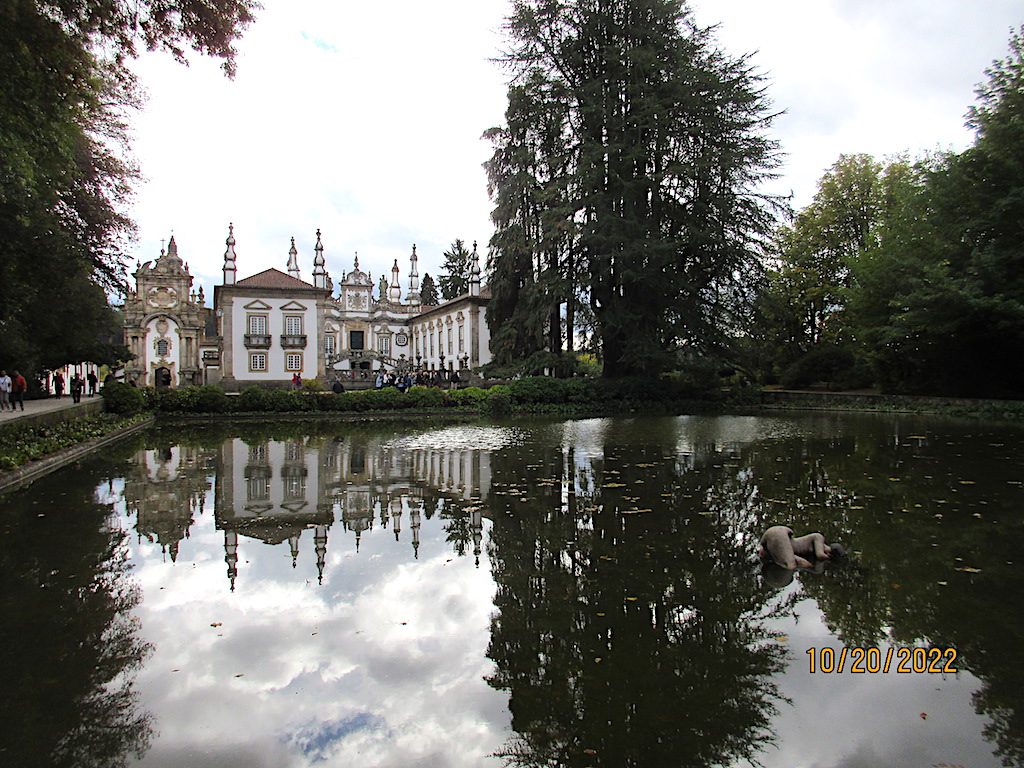
Mateus Palace
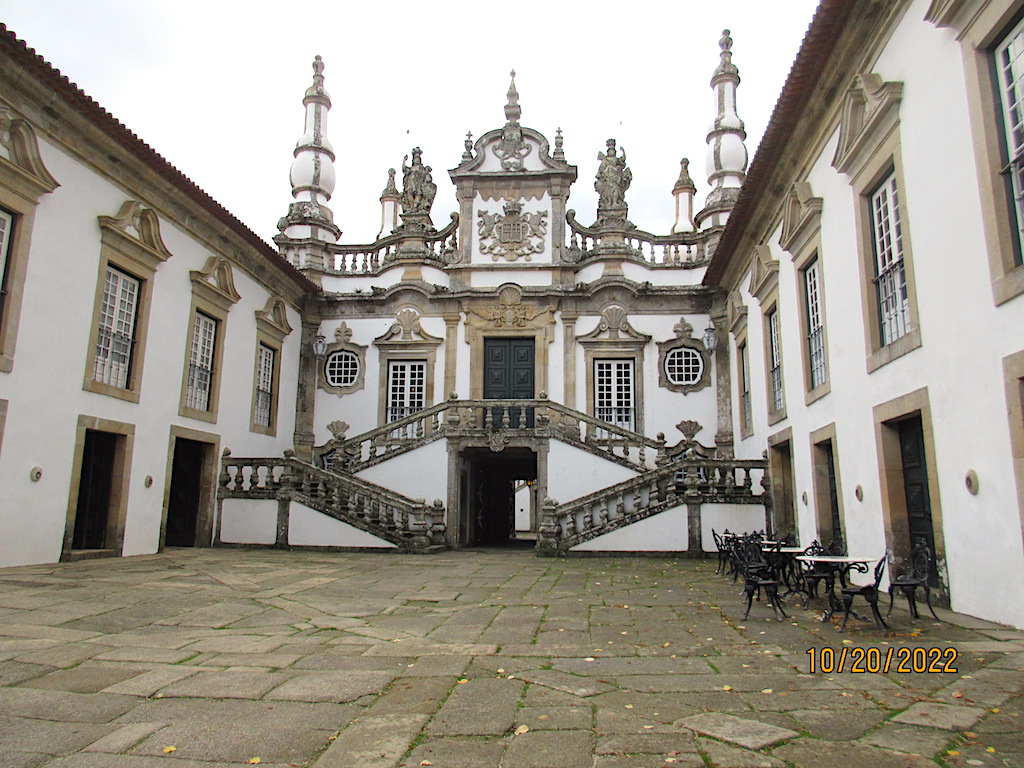
Entrance to Mateus Palace
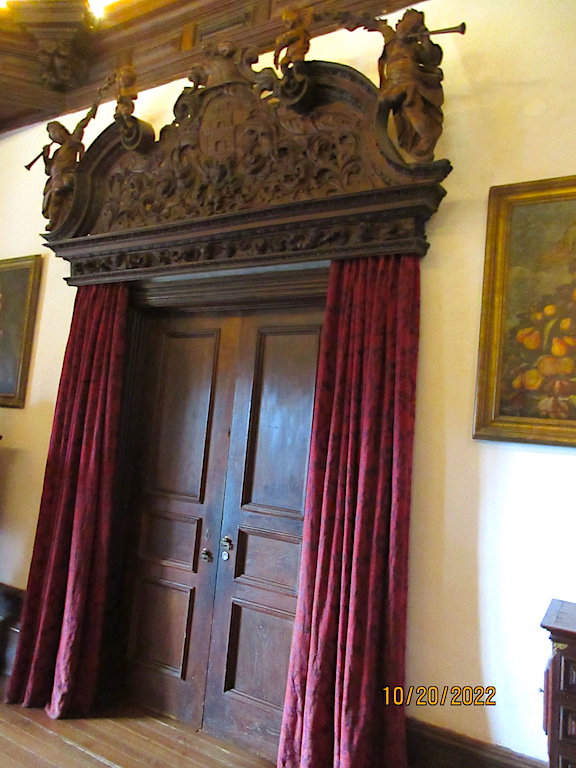
Mateus Palace Valance and Drapes
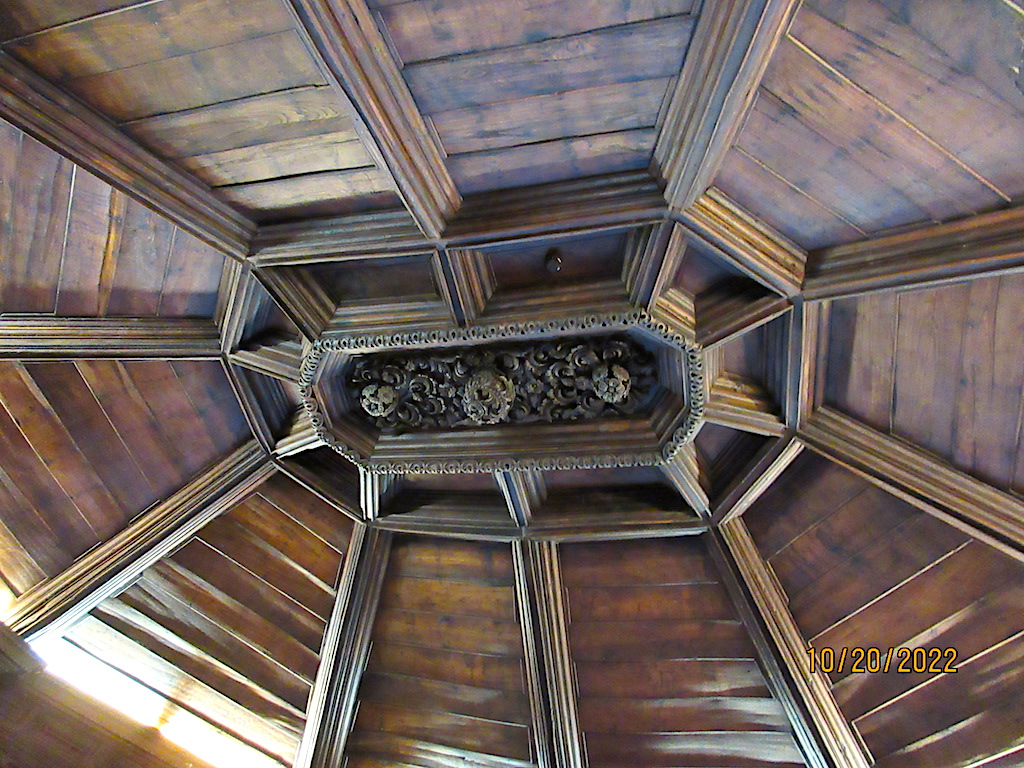
Mateus Palace Ceilings
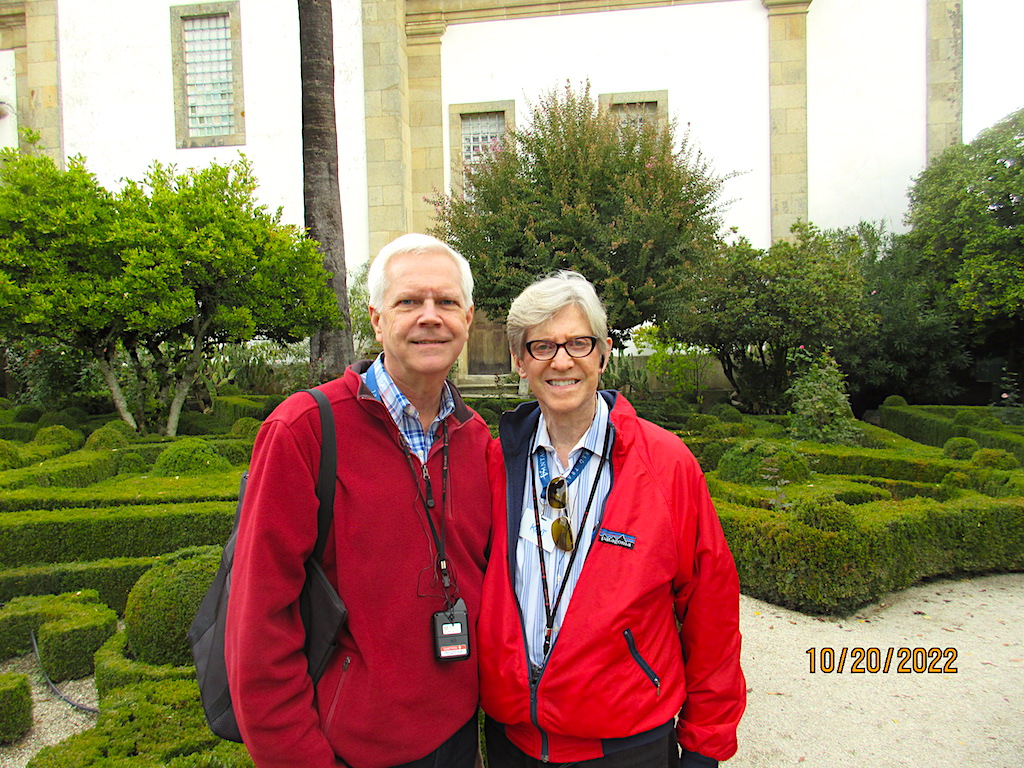
Mark and Kent at the Mateus Palace
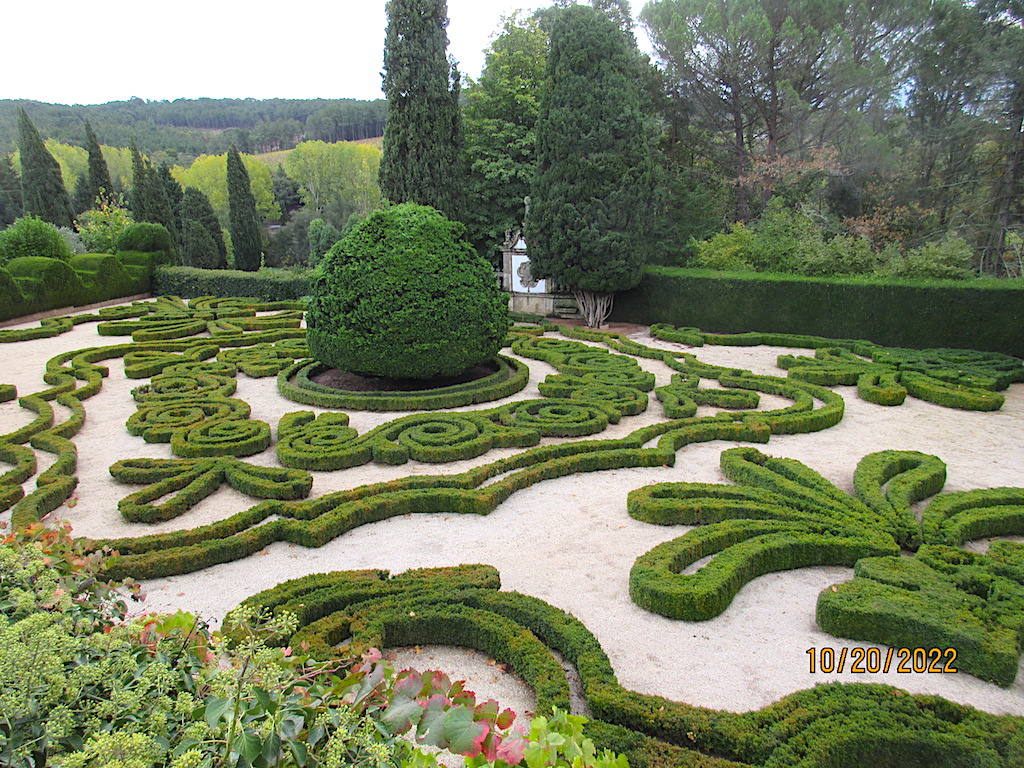
Mateus Palace Formal Gardens
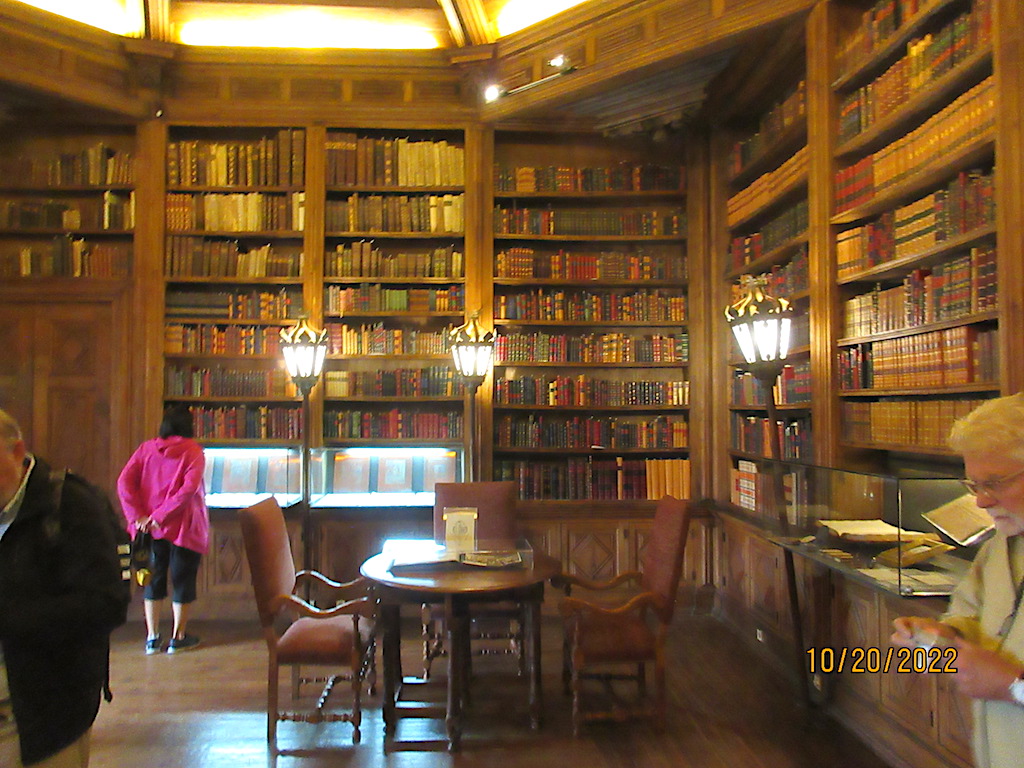
Mateus Palace Library

The village along the Douro River where we were docked on this day is called Pinhoa (population 1,000) although we took a bus to Vila Real about one-hour from the ship. Vila Real is the capital and largest city of the Vila Real District in northern Portugal, with a population of about 55,000 inhabitants. Founded in 1289 by King Denis of Portugal, Vila Real means Royal Town. The town has housed more members of the royal family during the middle ages than any other settlement in Portugal, with the exception of Lisbon. This area is known for its vineyards and export of red, white and pink wines. 

We visited the Mateus Palace of the Mateus winery fame. The palace is made up of three primary buildings; the manor, the winery and the chapel. The winery buildings date from the 16th century and were modified in the 18th century, around 1740. The current manor replaced a former family residence in the same location in the early 1600’s. In 1910, it was classified as a National monument. 

We had a walking tour at the Mateus Manor House and Gardens including a maze of manicured hedgerows, elegant gardens and a lake. The manor house has an extraordinary history and the interior rooms that are open to the public (only about seven) are filled with exception art, furnishings, books, sculpture, china and more. The ceilings are made of chestnut wood and the floors are a type of pine. Each window and interior set of doors has an elaborately hand-carved cornice box with tapestry draperies hanging to the floor. The library is filled is six-thousand collectable books, many of them handwritten. 

The gardens of the manor house are very beautiful even at this time of year when the spring and summer flowers have begun to fade. In the front of the house is a large reflecting pool which reflects the grandness of the manor house in its waters. Next to the reflecting pool is an enormous pine tree planted in 1870. The grounds around the manor include flowers, fruits and vegetable gardens. 

Our next stop was a visit to the Quinta da Avessada wine estate in the village of Favaios where we toured the winery and enjoyed a delicious lunch. This 2,500-acre wine estate is located on one of the highest peaks in the center of the Douro Valley (about 2,000 feet in elevation) with views of the entire region. There are four buildings dating back nearly 100 years surrounded by some 625 acres of planted grapevines, mostly the Muscat variety. They produce Moscatel de Favaios (Muscat of Favaios) which is a national aperitif or liqueur. To increase the world’s knowledge of this region’s wine, they started a cooperative with other growers in the area to expand their market share. 

Luis, one of the owners of the family business, was there to greet us and he was quite a character. He would introduce each course of our five-course lunch with a funny story. He would laugh at his own jokes and seemed really happy to be entertaining us. We enjoyed a salad and bread course followed by three appetizers, followed by a soup, followed by pot roast with vegetables, followed by three different dessert samples. All of this while the wine glasses never went empty. After the meal we enjoyed a Moscatel liqueur and a grappa. It was way too much food and drink for an afternoon lunch at 1:45 pm.  

After lunch we took a short tour of the neighboring building where they manually stomp the grapes in large concrete vats. Then we saw the barrel room and gift shop where you could purchase wines by the bottle and several other souvenirs like small paintings from a local artist. It was a great afternoon visit to the winery. We did have some rain showers throughout the day but usually while we were on the bus or inside so we never needed our umbrellas. 

After dinner we enjoyed Portuguese folk music by a group called Castas do Douro. The group of nine family members performed for an hour a variety of popular folk songs from the region. After the popular songs they also performed a few Fado style songs. This folk music typically has harsh lyrics accompanied by a wire strung acoustic guitar and is sung with the sadness of poverty and loneliness, but remains dignified and fully in control. This genre of music has its roots from the 15th century when women longed for their husbands that sailed the never-ending seas. Today, many artists have used this style of music to express their opinions on social and political issues. 

Wednesday October 19, 2022 Guarda, Portugal

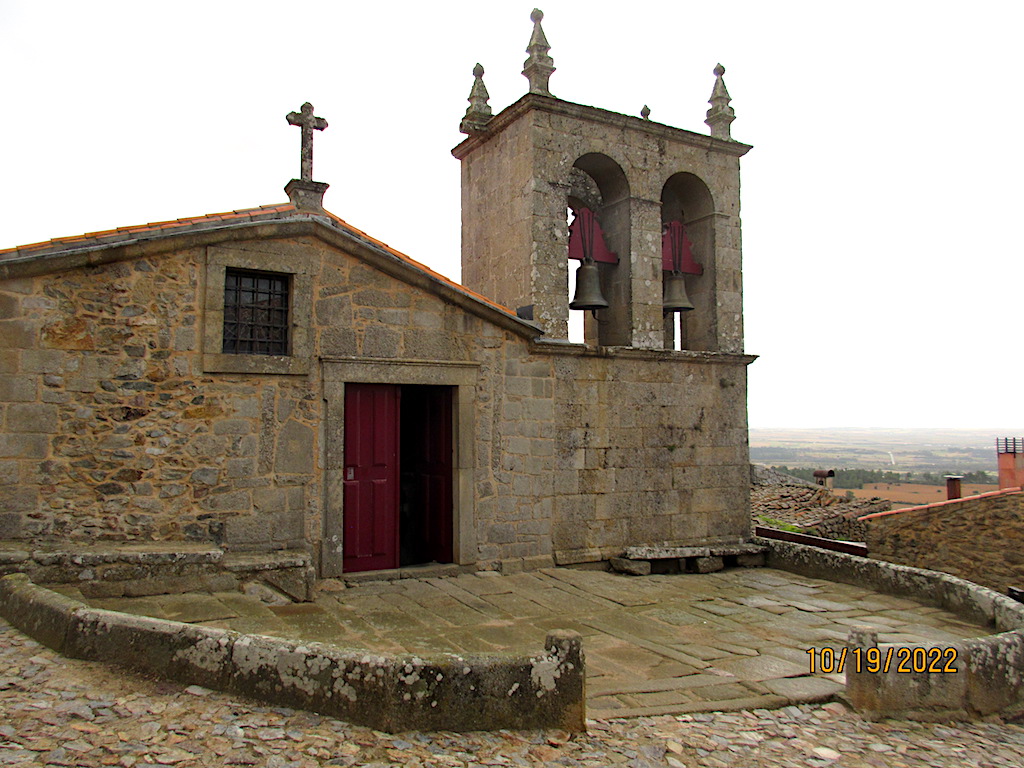
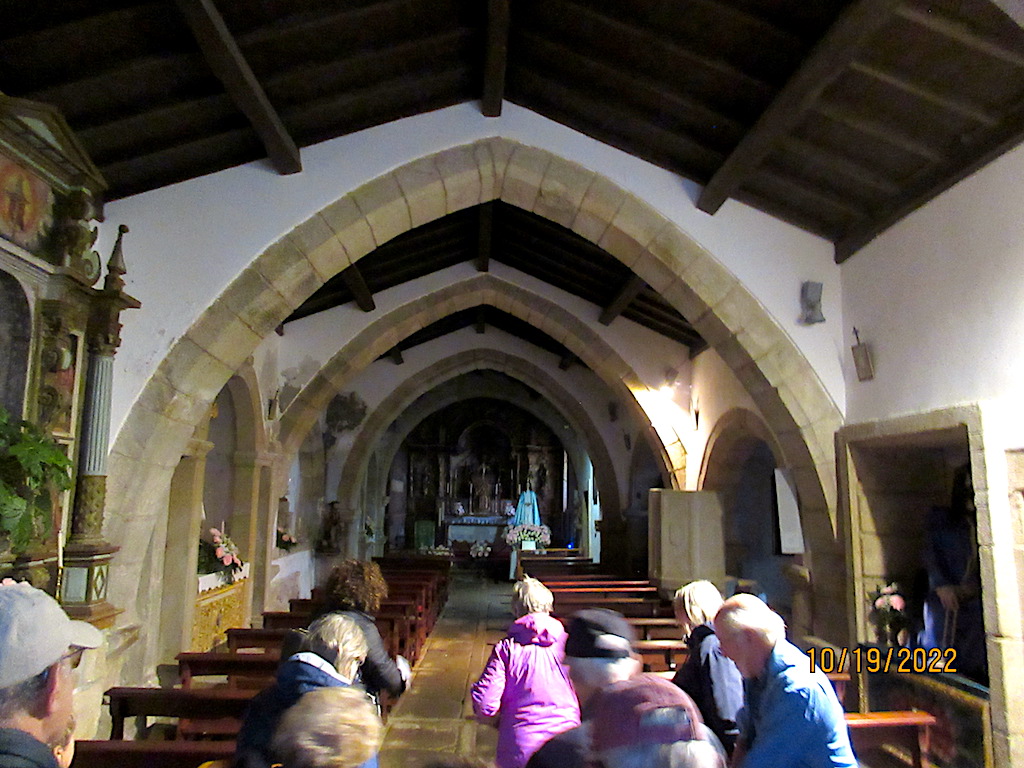
Parish Church
Parish Church Interior
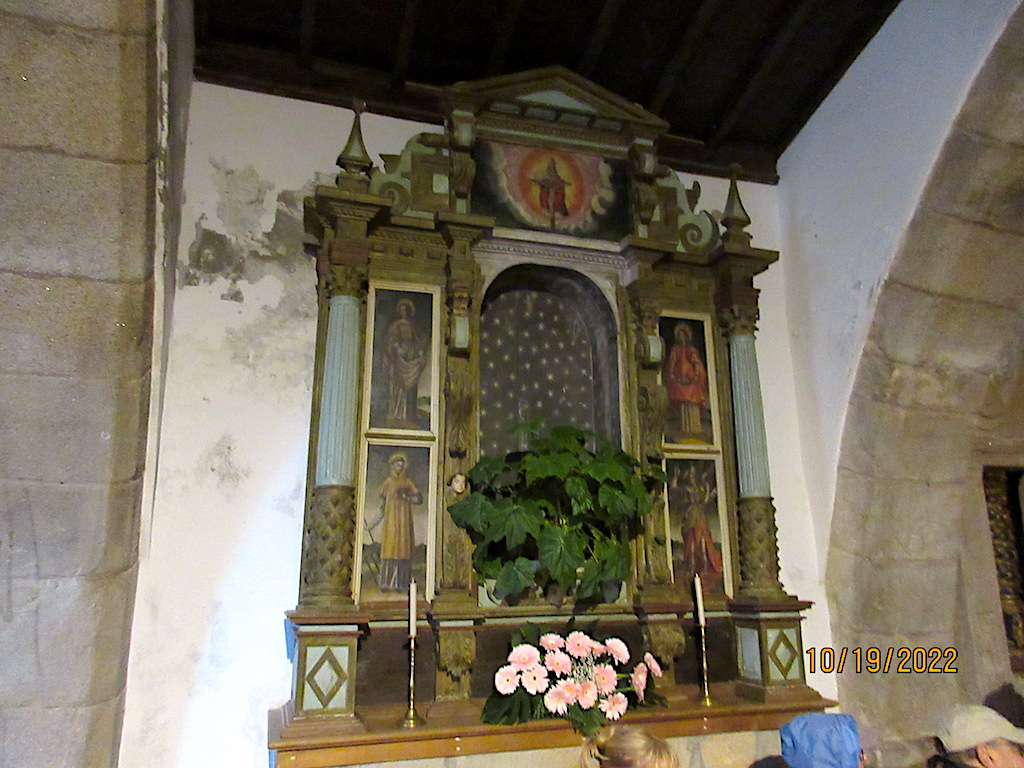
Parish Church Side Altar
Parish Church St. Sebastian
Almond Tasting
Cork Handbags and Purses
Douro River Shoreline

On this day we took a bus about 45-minutes from the ship to the fortified hill town of Figueira de Castelo Rodrigo, a national monument in the municipality of Guarda in Portugal. The drive took us past miles of beautifully terraced hillsides of grapes, olive and almond trees. The terraces have been created over the centuries by hand using stones gathered from the land and dry-stacked into beautiful walls. The trees only get rain water, are not irrigated and they must be hand-picked due to the steep hillsides. 

This Portuguese town along the border with Spain has a population of approximately 6,500 inhabitants. We traveled further up the hill to the old castle ruins where only about 55 residents reside. We took a brief walking tour to see the city walls, the 16th century pillory (wooden framework with holes for your head and hands in which an offender was imprisoned and exposed to public ridicule) and the local Parish Church of Castelo Rodrigo. 

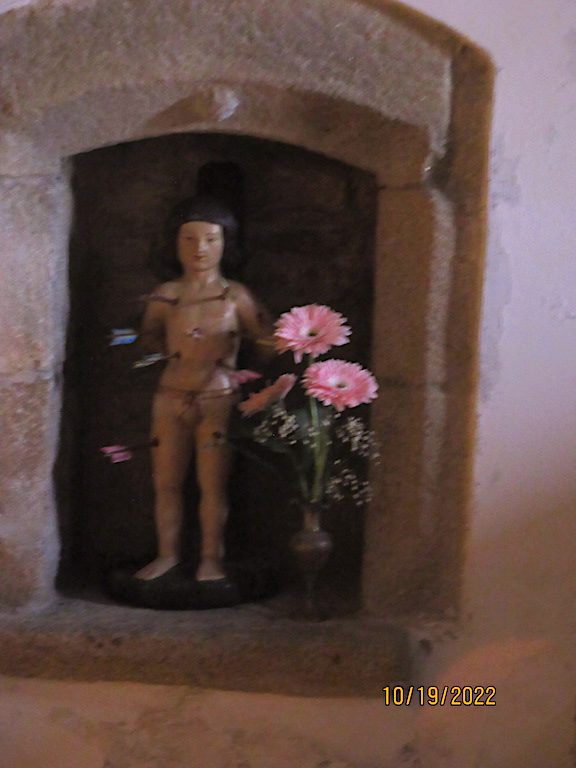
The Parish Church was founded in 1192 by a brotherhood of Hospitaller friars in order to assist with the pilgrims on their way to Santiago de Compostela. The church was originally built in the Romanesque style although later enlarged and enhanced.  The wooden altar with gold embellishments dates back to 1686 while the coffered ceiling decorated with paintings of saints is from the 18th century. It is a very dark church and not well lit as to preserve the interior. There is a small statue of St. Sebastian that is now recognized by the LGBTQ+ community to be their patron saint. 

It is thought that the medieval castle now in ruins was built in the sixth century by Alfonso IX of Leon as part of his defensive line. The name of the castle and the surrounding village comes from the name of Count Rodrigo Gonzalez de Giron who was responsible for the defense of the castle. The fortress, walled fence, moats and 13 turrets were rebuilt in the 14th century. The ruins have been listed as a National monument since 1922. 

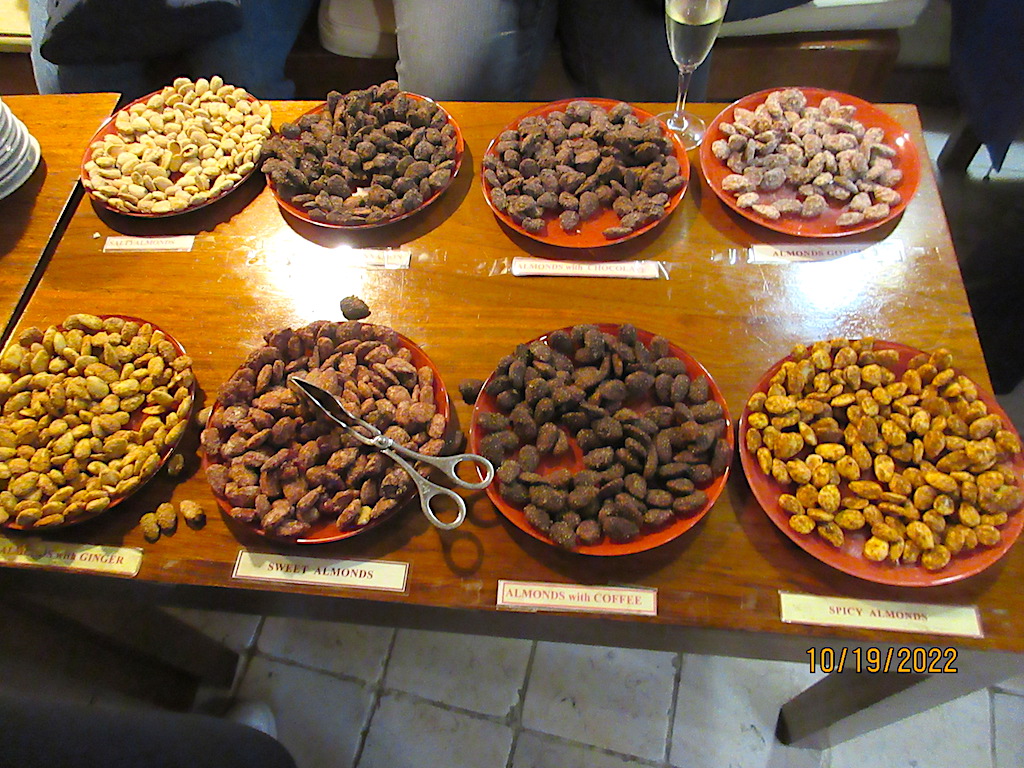
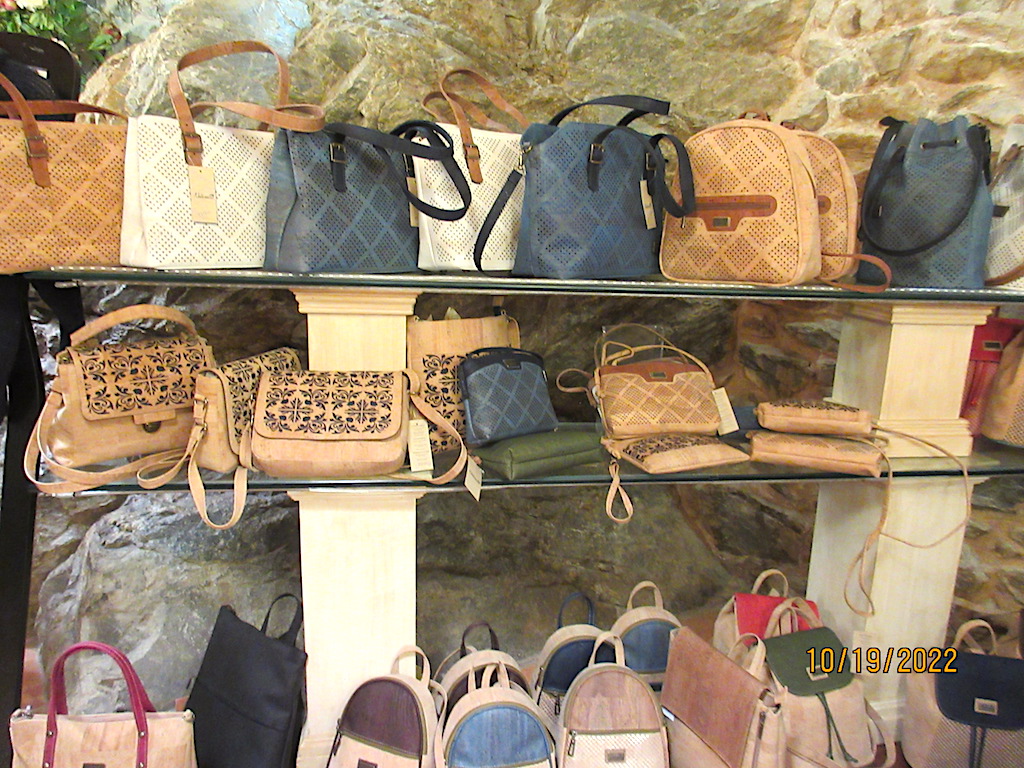
While in town we were introduced to the culinary culture in the area with a tasting of some of the local products. Candied almonds with both savory and sweet flavors are popular as well as local wines, liqueurs and cheeses. We sampled almond liqueur with a sparkling soda water which was very refreshing. Also available in the shops were many purses, shoes and jewelry made from the local cork. 

The downside of our outing today was that it was raining and extremely windy on the hillside. We had umbrellas but with the strong winds they were not keeping much of the rain off of us. 

Back onboard our vessel we set sail down river and were given a basic lesson in the Portuguese language. The language is similar in some instances to Spanish but mostly much more complicated than Spanish or English. We also had a demonstration on the making of a classic Portuguese egg pastry called the Pasteis de Nata. Along with the pastries we were introduced to the Portuguese tea traditions, tea drinking and tea production. The pastries were delicious although doubt I would ever try to make them myself. 

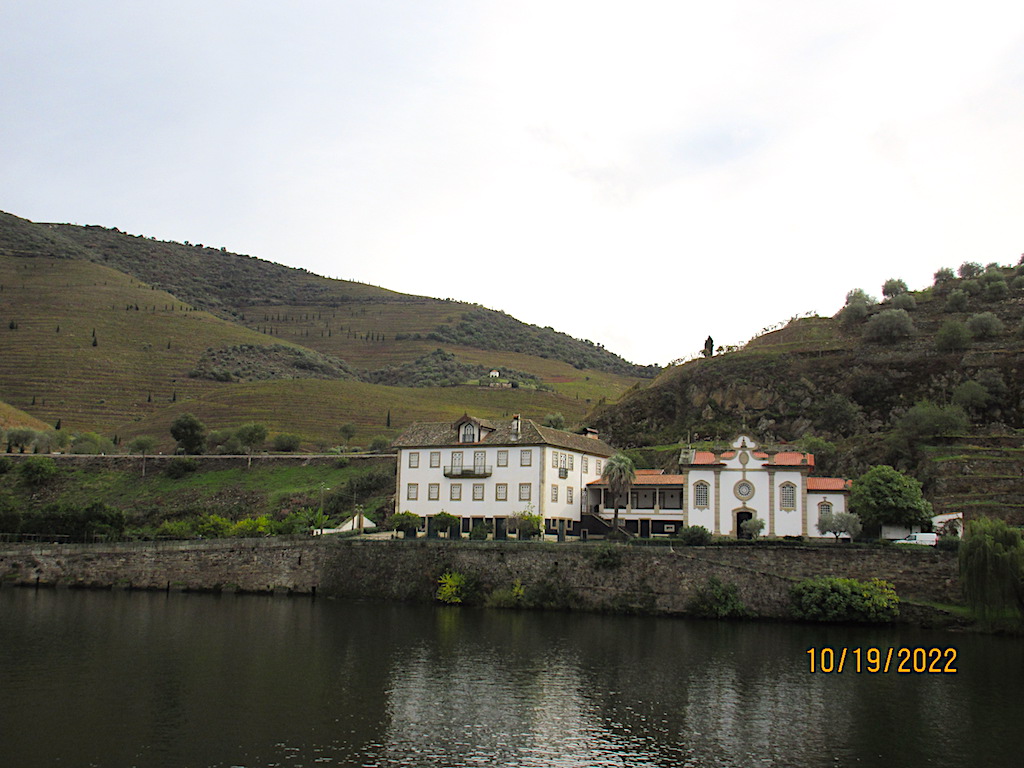
By 11:00am we set sail on the UNESCO listed Douro River lined with beautiful terraced hillsides of vineyards, olive orchards and rural estates known as quintas. We had intermittent showers but the narrow river lined with steep hillsides was breathtaking. We transited through the Pocinho and Valeira locks on this day with 72 and 109-foot drops. We docked in the small town of Pinhao about 7:00pm for the night. 

Dinner included an oxtail appetizer, fish or pork cheek entrée, spinach soup, lemon cake. The food has been plentiful and good but not extraordinary. After dinner in the dining room we enjoyed Luis, the ships pianist who played a wide variety of music from Portuguese songs to American Classics. 

Tuesday October 18, 2022 Salamanca, Spain

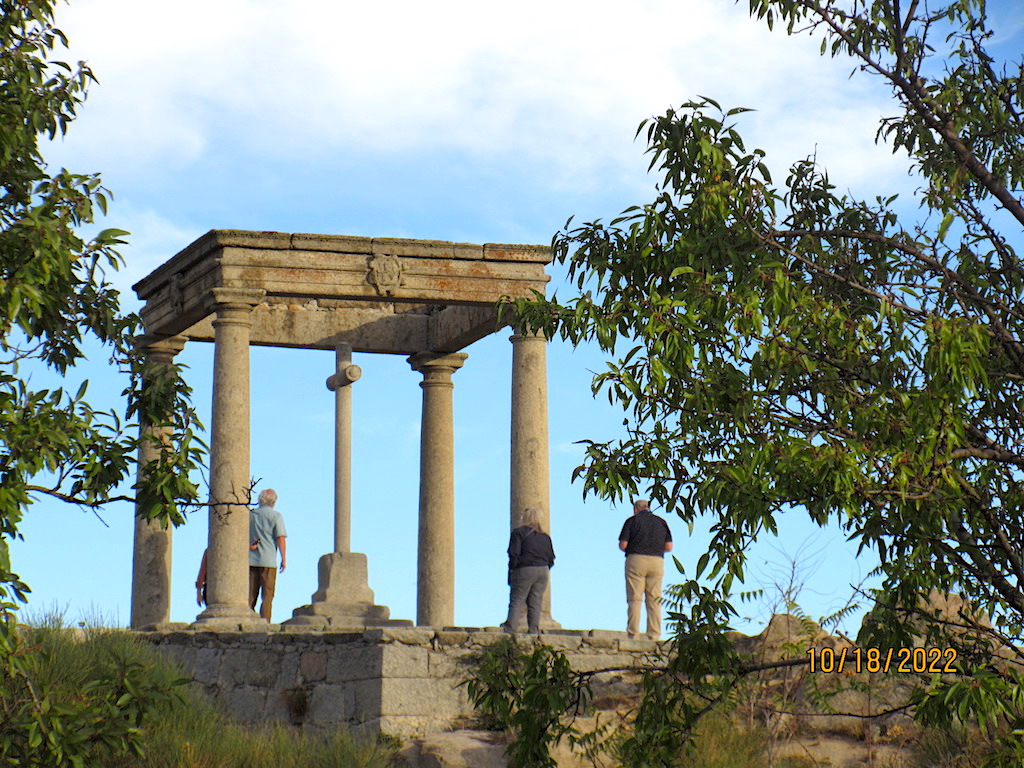
Four Pillar Shrine at Avila
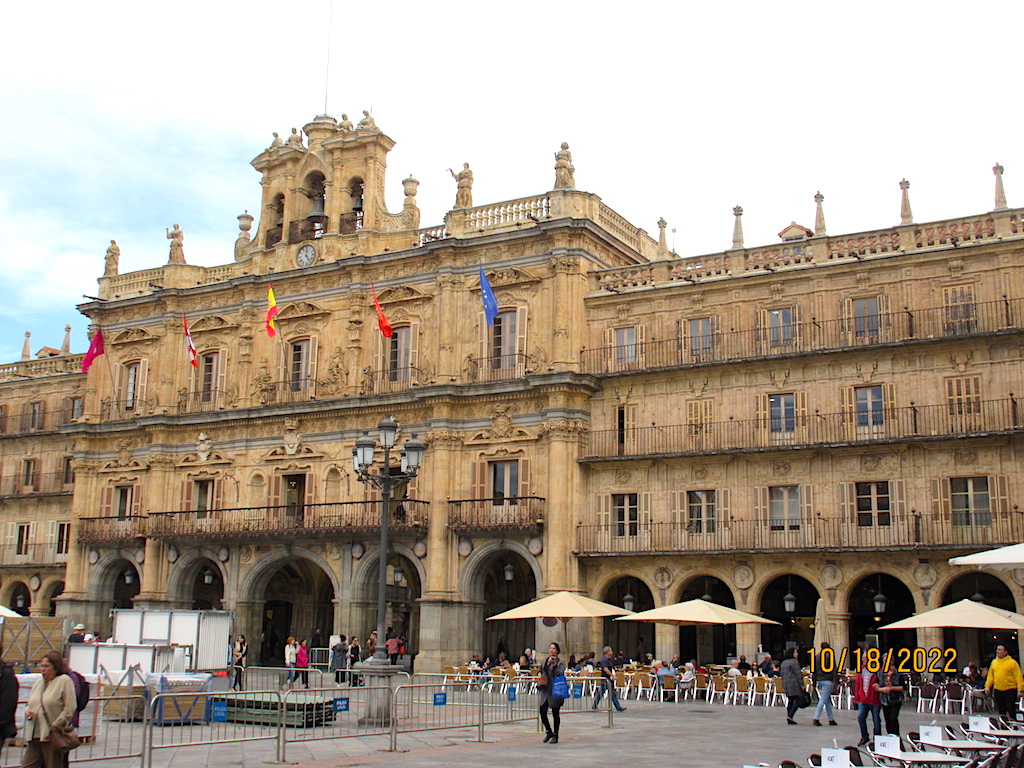
Salamanca Plaza Mayor
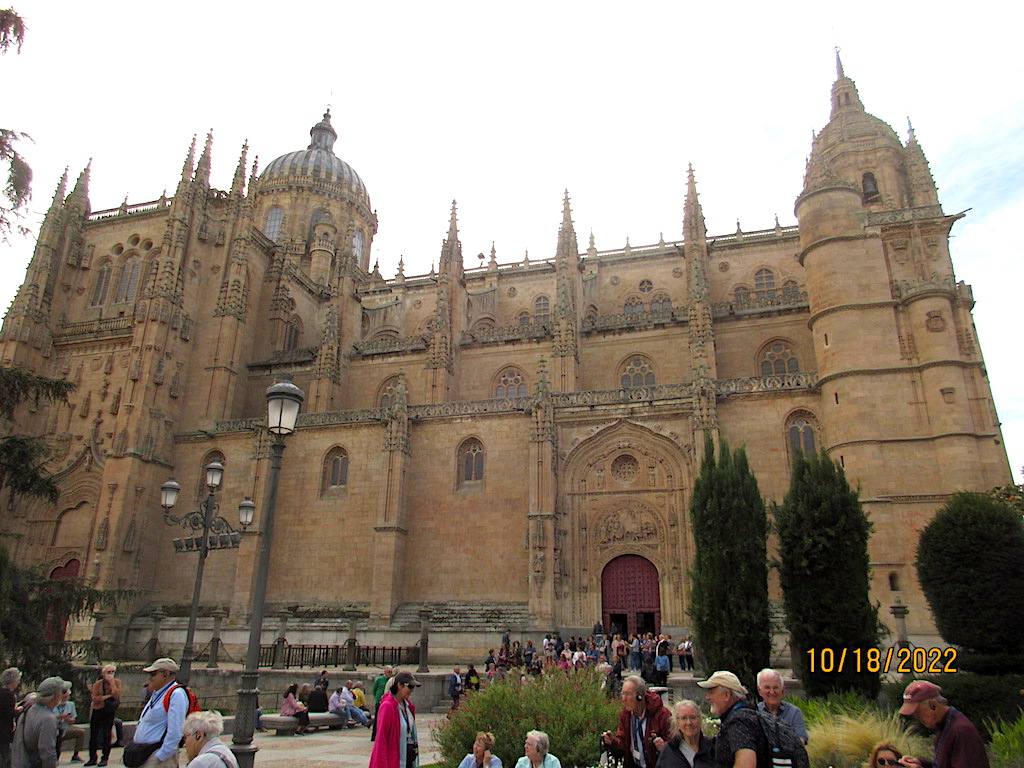
Salamanca Cathedral
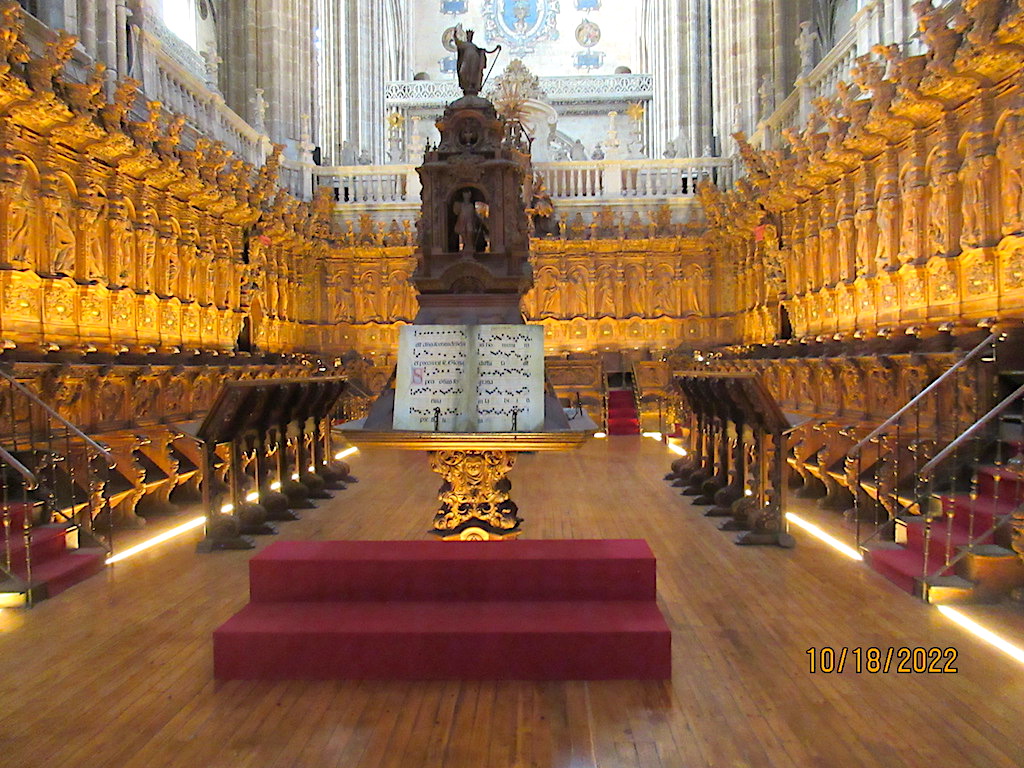
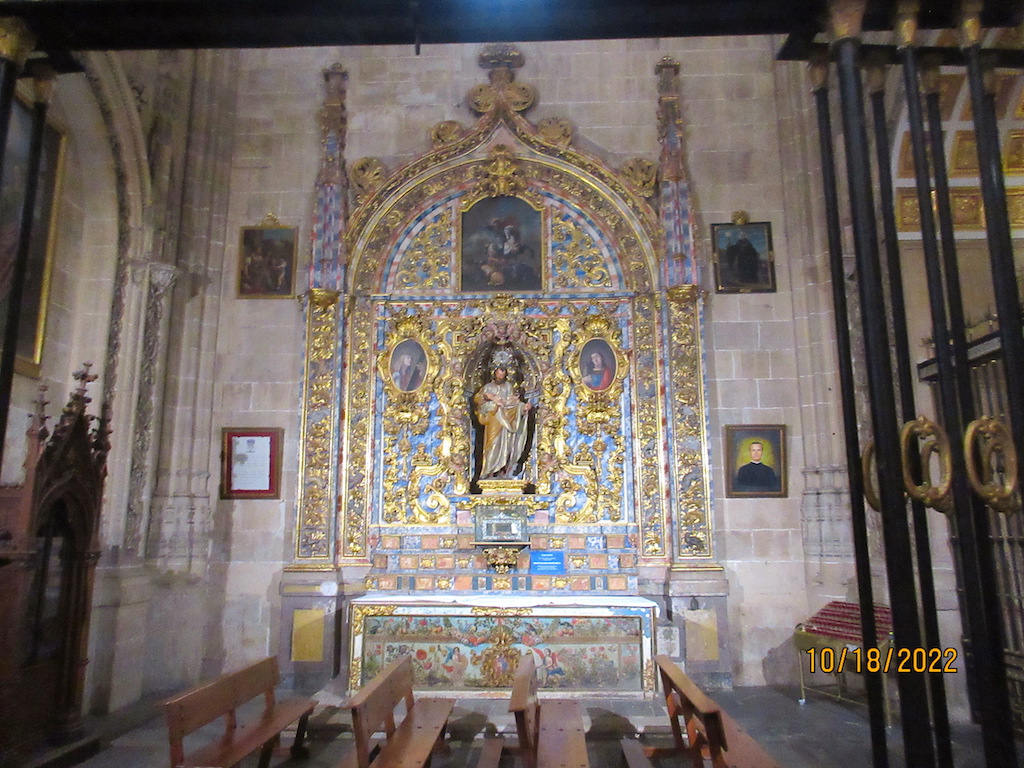
Salamanca Cathedral Shrine
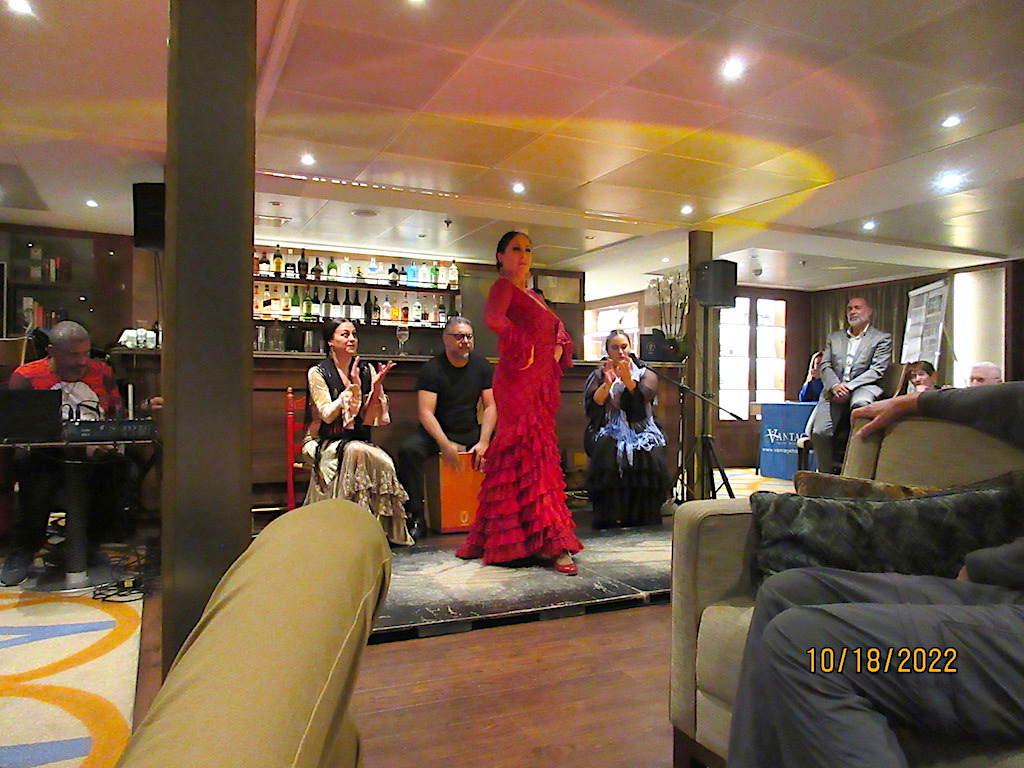
Flamenco Show

First thing this morning Kent was getting on the coach and had an accident. As he was boarding the coach with his carry-on bag, he slipped and fell backwards out of the coach door landing on the concrete on his back and hitting the back of his head. A doctor and nurse traveling with us checked on him and we got ice from the hotel for him to reduce the swelling. He decided to continue on the trip without going to the hospital. By the end of the day he was feeling sore but felt certain that he had not broken anything. 

We traveled by motor coach about three hours to the city of Salamanca which is about 120 miles west of Madrid, with a population of about 150,000 inhabitants. Along the way we stopped in a small town called Avila where had a comfort stop. The town sits on the Adaja River where there is a small four posted shrine with a cross in it built in 1566 on the site of a former Roman Temple. Many believe that it is where seven-year-old Saint Teresa tried to run away to seek martyrdom in the battle with the Moors. Her Uncle, Francisco, stopped her and made her return to the city as the story goes. 

In Salamanca we took a walking tour of the UNESCO listed historic old city and its gorgeous Grand Cathedral. The cathedral of Salamanca is a combination of both an old cathedral dating back to the 12th and 13th centuries, as well as a newer cathedral built in the 16th century. The old cathedral was built in the Romanesque style with an incredible Gallo Tower in the shape of a lantern with faceted sides rather than a traditional dome. The cathedral is filled with ornate murals and its tomb of the bishops’ is filled with members of nobility. 

The old town’s cobblestone streets and pedestrian only streets make it an easy town to navigate on foot. The traditional buildings with wrought iron railings and glass enclosed verandas were inviting. The Plaza Mayor is filled with cafes where you can sit and visit with friends or just watch the people go by. Kent spent most of the afternoon on the main square watching the people go by while Mark went on the walking tour. 

After some time to explore Salamanca and have a bite of lunch we drove about two hours to a small village located in a gorgeous valley called Barca D’Alva in Portugal near the border with Spain. The village is located in a quiet rural area of rolling hills covered with grapevines, almond orchards and olive trees. The village is known for its wine making as well as being a gateway to riverboats on the Douro River. 

Here we boarded our river boat called the Douro Serenity which we would call home for the next week. The riverboat was built in 2017 and can accommodate up to 126 guests. Like most riverboats it is long and low with three decks including a restaurant, bar/lounge and a roof top pool deck. The cabins are small but nicely appointed with everything you might need including a private bath with shower. 

After settling into our cabin, we had a welcome drink and briefing in the lounge before enjoying a delicious dinner onboard. After dinner a local Spanish Flamenco Show provided the evening’s entertainment. There were three Flamenco dancers who were excellent and one of them sang the songs with her beautiful voice. Not sure that we have ever seen a Flamenco show in person so it was very high energy and interesting. 

Monday October 17th, 2022 Madrid, Spain

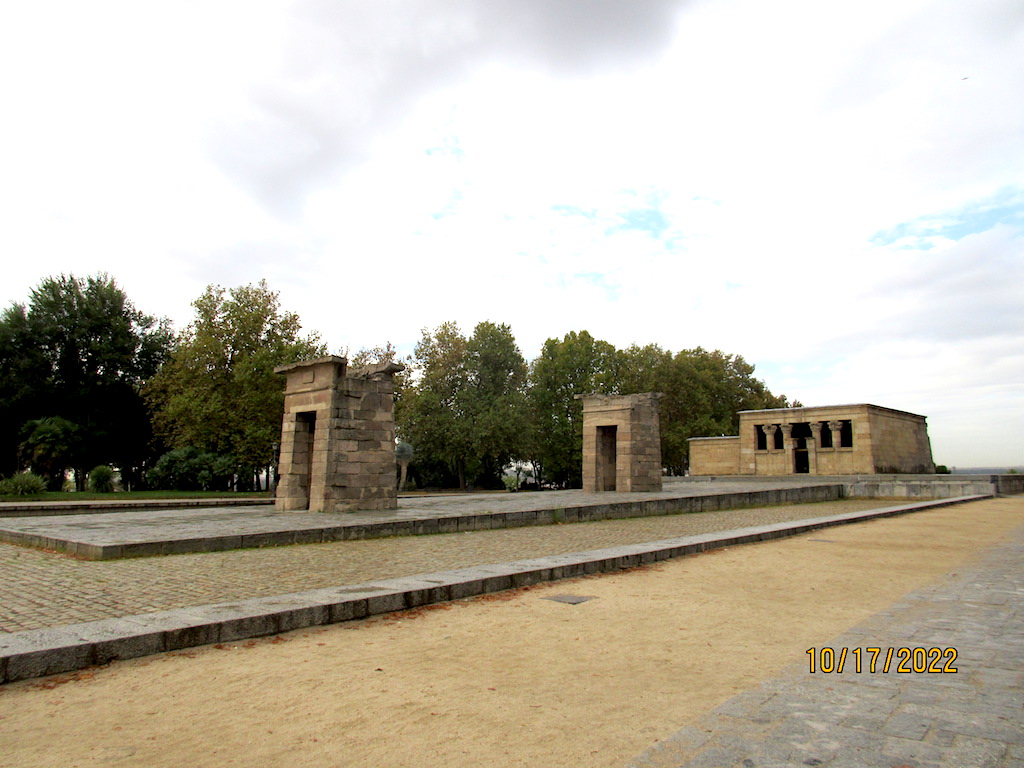
The Temple of DeBod
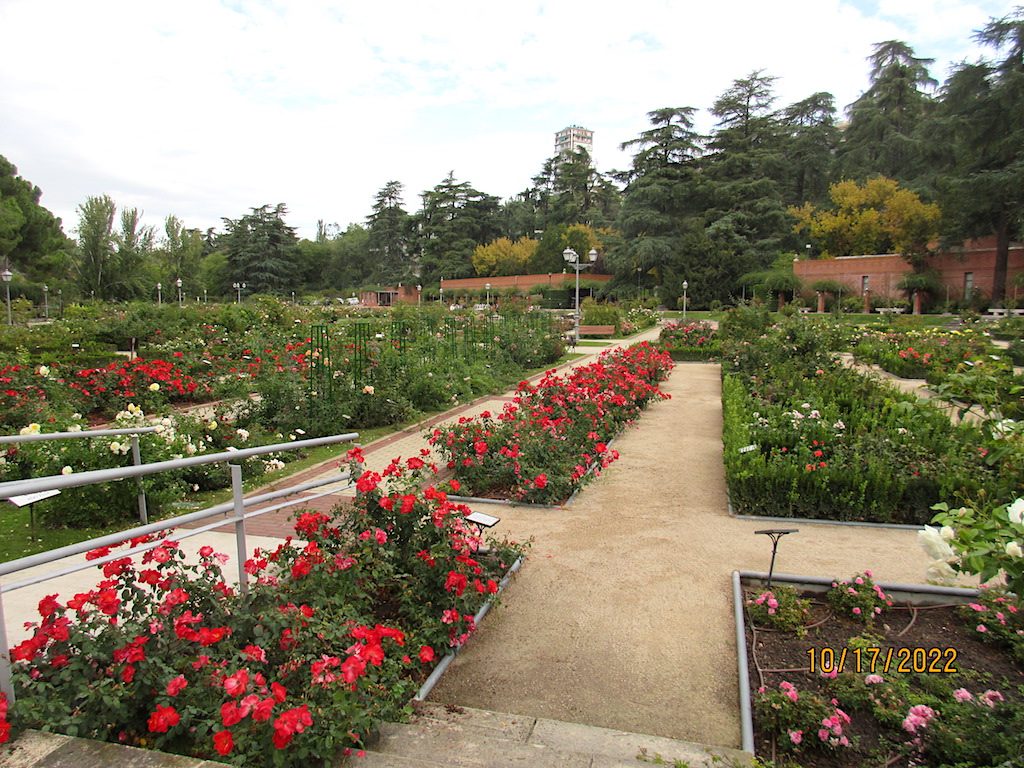
Rose Garden
Mark at the Royal Palace
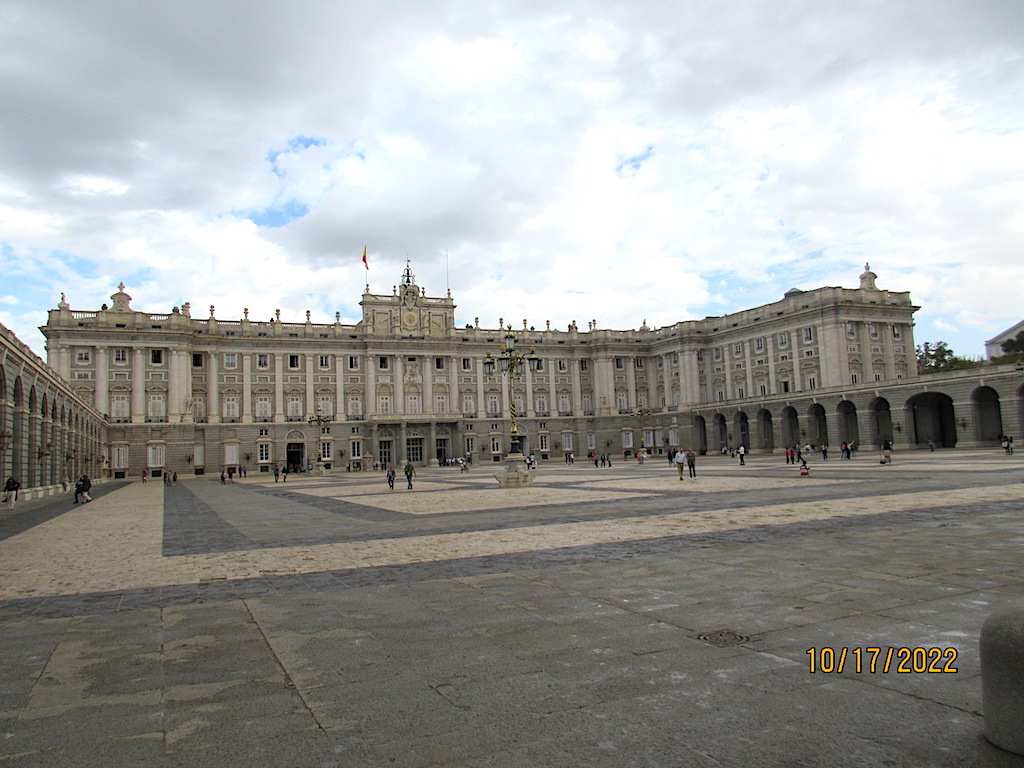
Royal Palace Madrid
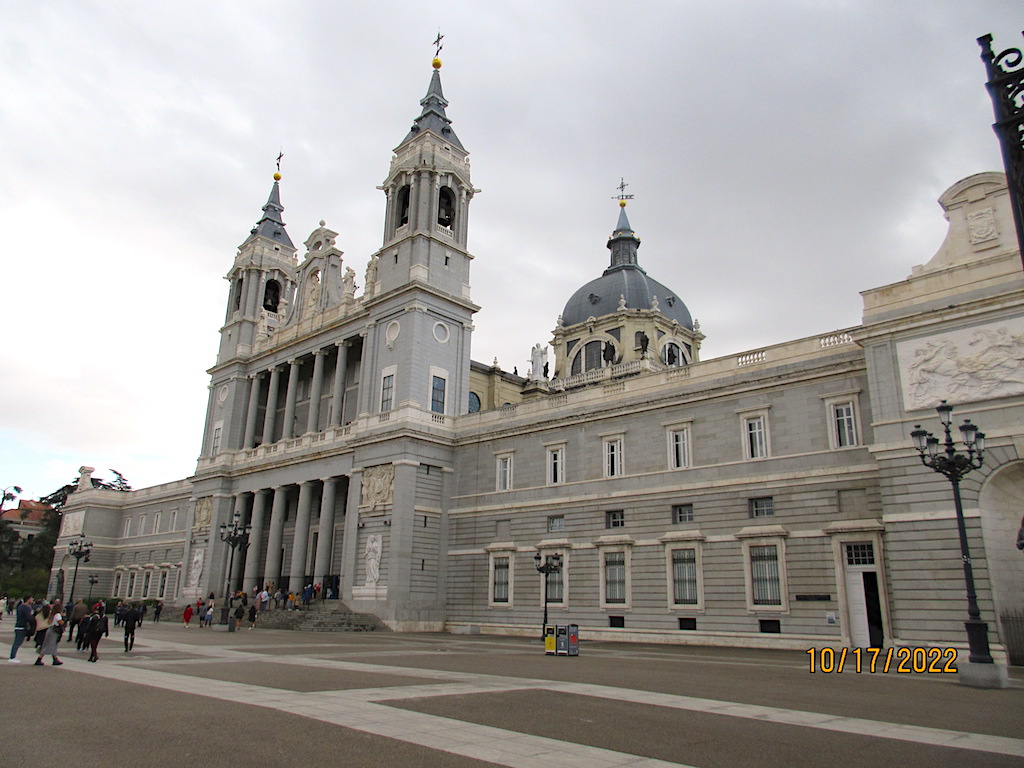
Almudena Cathedral
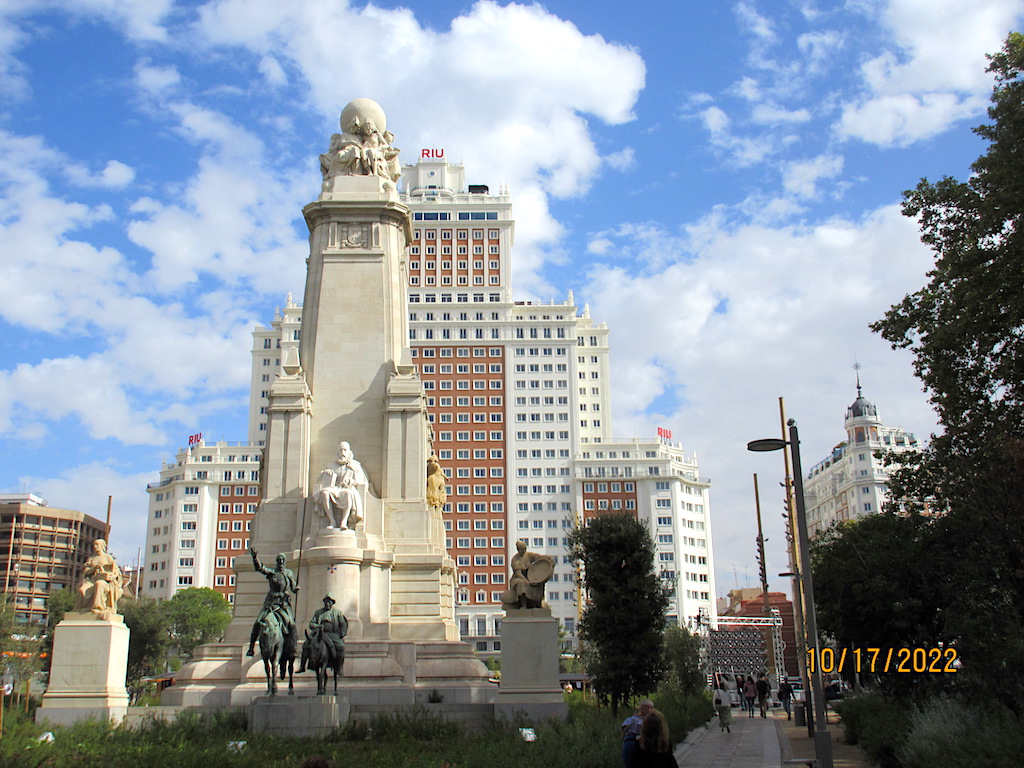
Miguel de Cervantes Saavedra Monument

First stop this morning was the small ancient Egyptian Templo de Debod or Temple of Debod. The temple was first erected in Egypt in the early 2nd Century BC and over the years it was expanded to a small single-room chapel dedicated to the god Amun (god of wind). In 1960 during the construction of the Aswan High Dam in Egypt, Spain assisted with saving the temples of Abu Simbel. As a thank you from the Egyptian people, this small temple and two gates were given to Madrid. The temple was disassembled and moved to Madrid where it was reassembled. The temple stands in the Parque del Oeste or Western Park and was opened in 1972. Unfortunately, the only day the temple is not open to go inside is Monday, which is the day we came to see it. 

Also, in the Western Park is a large rose garden that we checked out. The giant park was created in 1905 where there was once a trash dump. The rose garden was designed in 1955 by Ramon Ortiz, Madrid’s head gardener. The garden features about 600 different varieties of rose bushes. Every spring the park hosts an international rose show, and in 2006, it won the Garden of Excellence Award granted by the World Federation of Rose Societies, recognizing it as one of the exceptional rose gardens of the world. The roses were not at their prime at this time of year but many of the roses were still in bloom. The garden has many divided beds of roses, arbors covered with roses, ponds and fountains. 

We then headed back to the Royal Palace that we had seen briefly yesterday for a closer look around. The Royal Palace, owned by the Spanish state, is the official residence of the Spanish royal family, although is now used only for state ceremonies. The palace is the largest in Europe with 3,418 rooms and 1,450,000 square feet of floor space. A palace was originally built on this site by Muhammad I between 860 and 880 but was severely damaged in 1476. The castle had been added onto and renovated many times through the years, until 1734 when the palace was once again destroyed by fire. After the palace was destroyed work began again to build a new palace which was later enlarged and renovated over the years. The building is quite regal looking and is very prominent in the city skyline as it sits on an elevated hill above the city. 

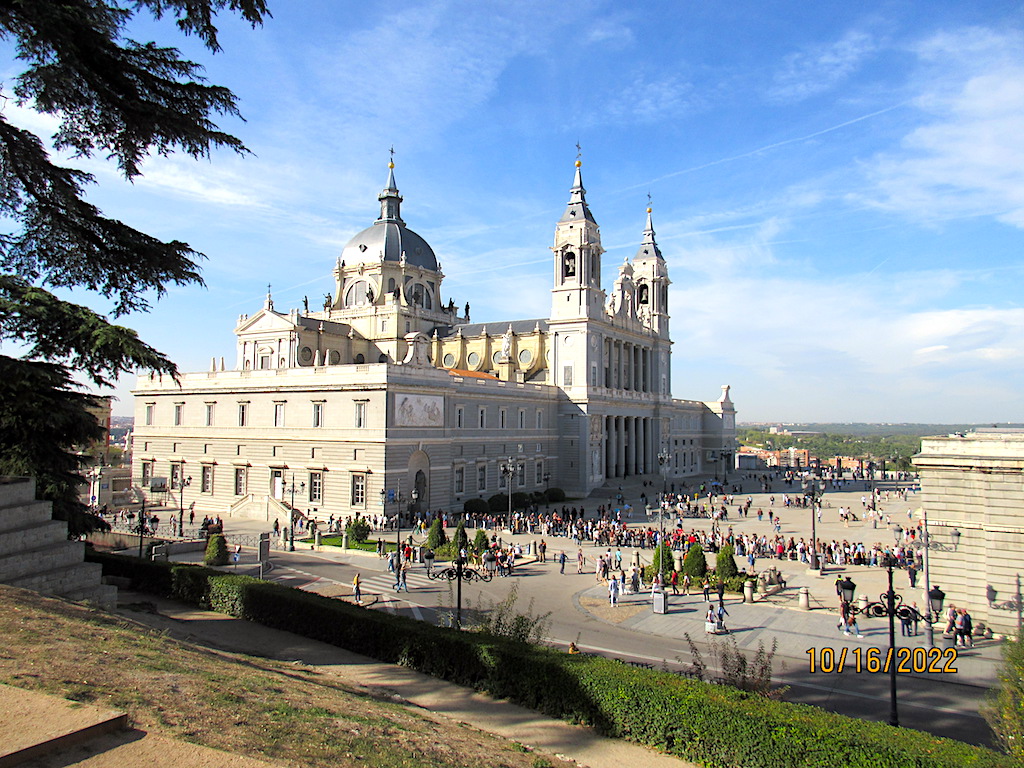
Next door to the Royal Palace stands the Almudena Cathedral that had a groundbreaking in 1883 but was not completed until 1993. In that same year it was consecrated by Pope John Paul II. King Felipe VI, then crown prince, and Letizia Ortiz Rocasolano were married in the cathedral in 2004. 

Our last stop was the Plaza de Espana which is a large public square with temporary structures where people were selling food and beverages, cheeses, jewelry and more. The square was recently renovated for over two years and is also the site of a monument to Miguel de Cervantes Saavedra, the famous Spanish author who wrote Don Quixote in 1605 prior to his death in 1615. 

For dinner we met up with Ric and Kevin and headed out to a neighborhood restaurant called Casa Mono or Monkey House. The restaurant was very comfortable high ceilings, tons of black wrought iron decorative window frames and interesting objects of art. They had a large menu with all sorts of appetizers, entrees like Indian Chicken, roast boneless suckling pig and even a hamburger. Everyone was able to find something that they enjoyed and the food was good. Even better was that the prices were very reasonable including three-euro beers and large bottles of water. 
Sunday October 16th, 2022 Madrid, Spain

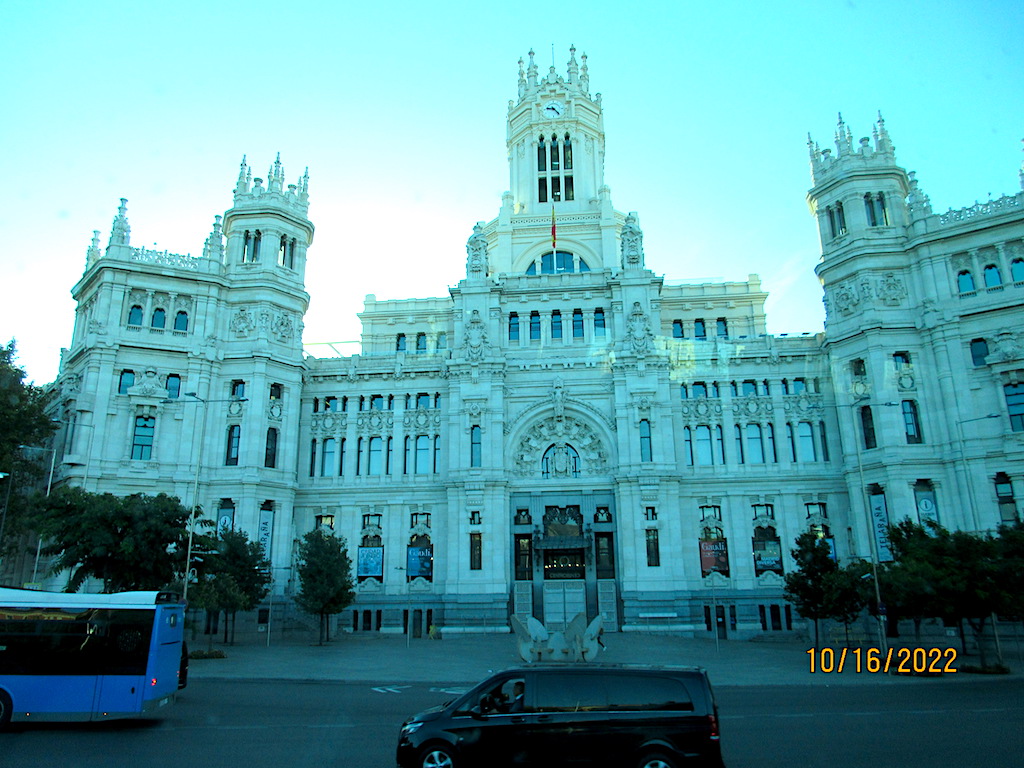
Madrid’s City Hall
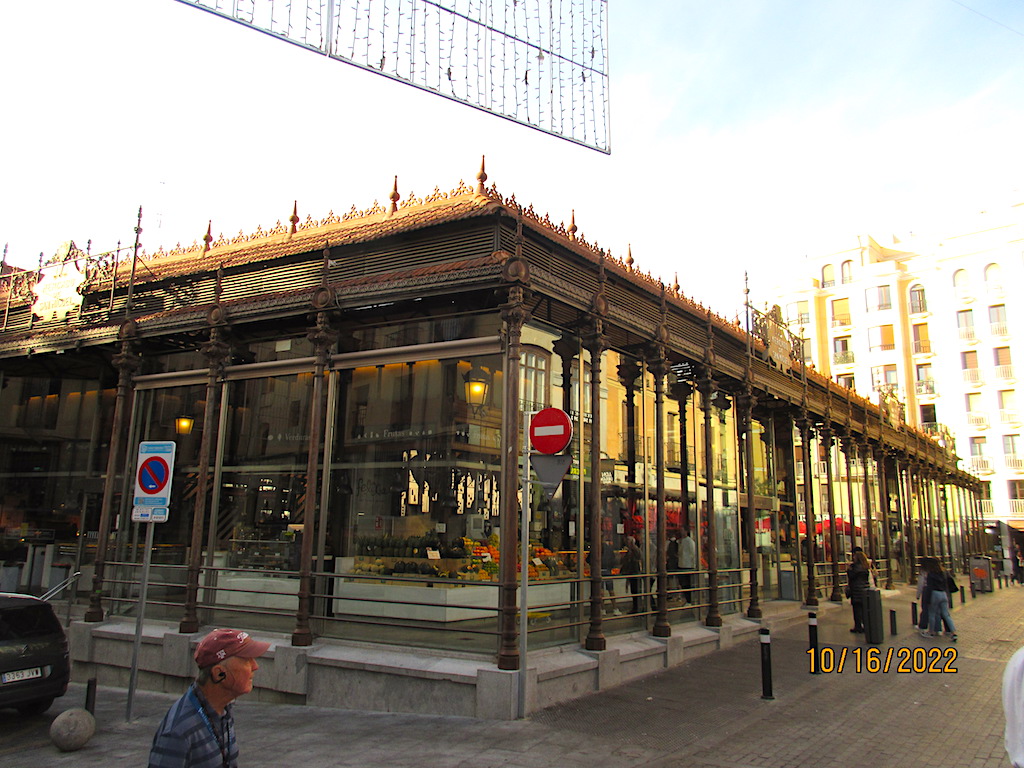
Exterior of the Mercado
Mercado Fruit Seller
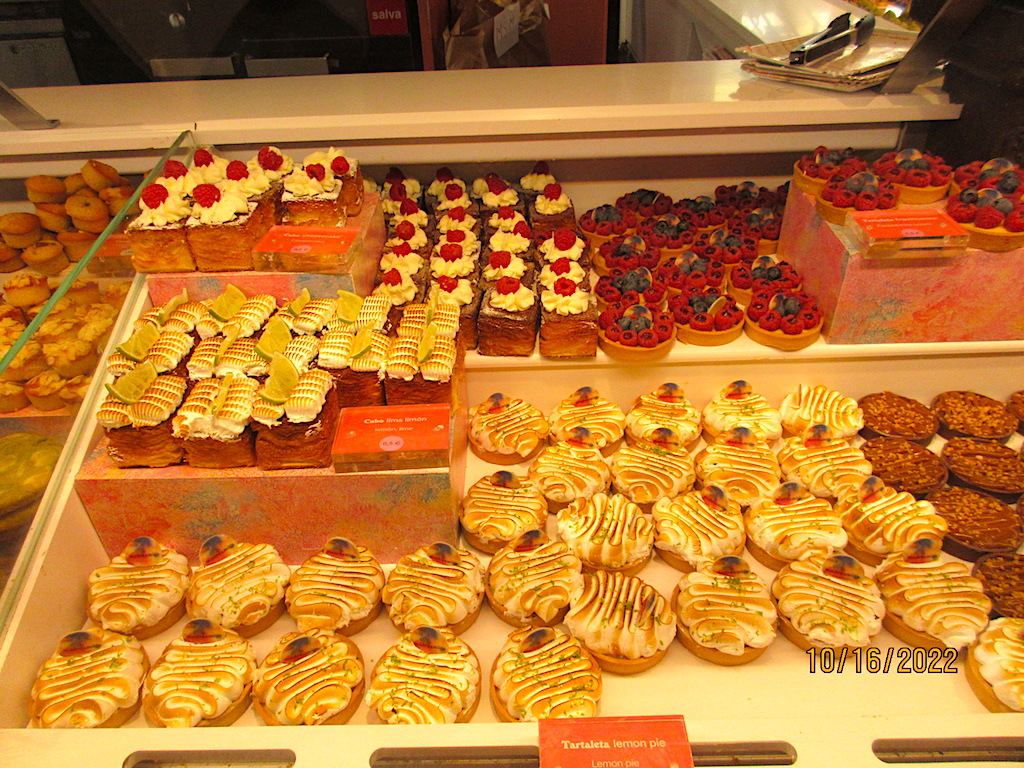
Mercado Pasty Vendor
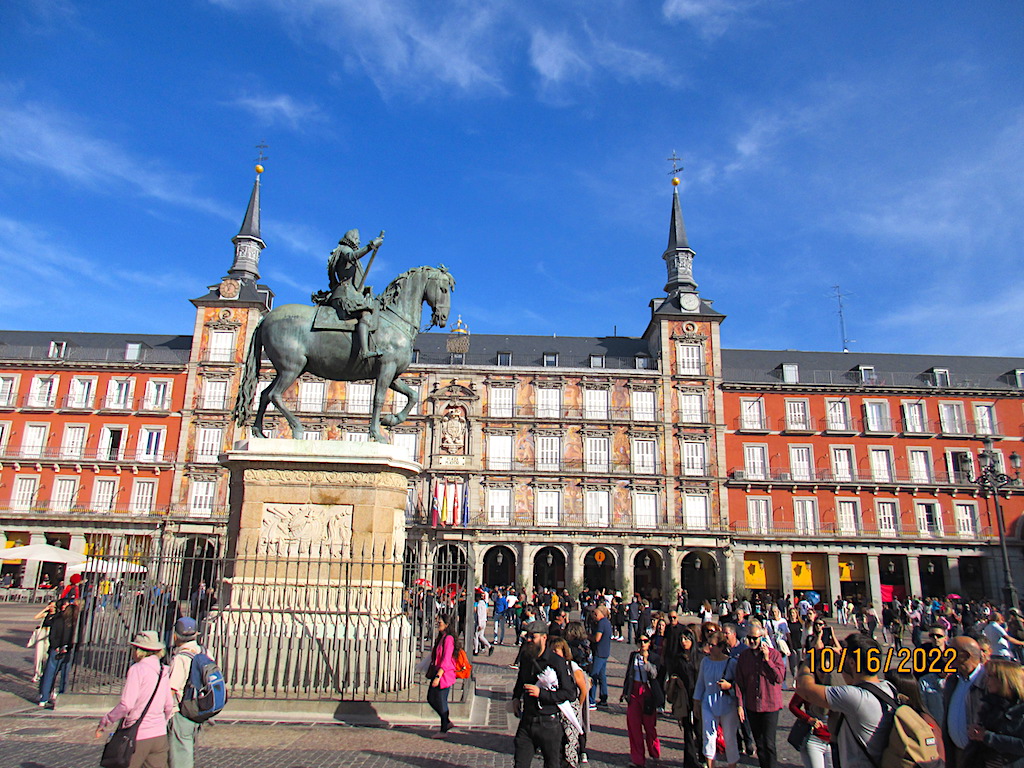
Plaza Mayor Square
Madrid’s Cathedral
Beautiful Church in Madrid
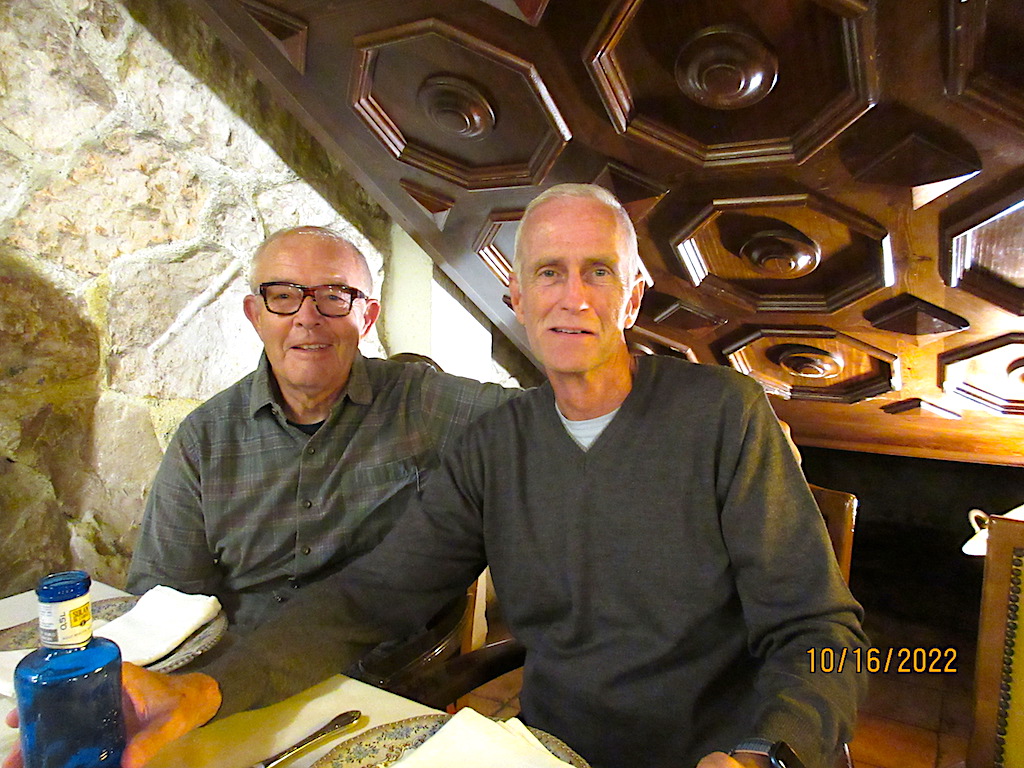
Our Dear Friends Ric and Kevin
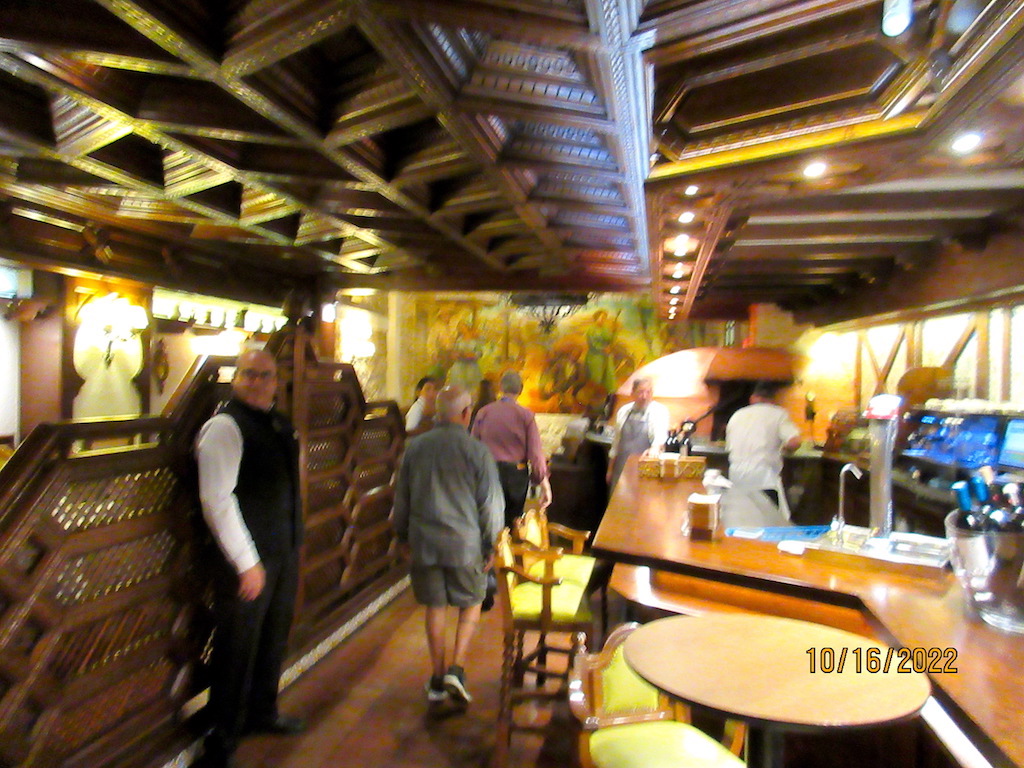
Asador de Aranda Restaurant
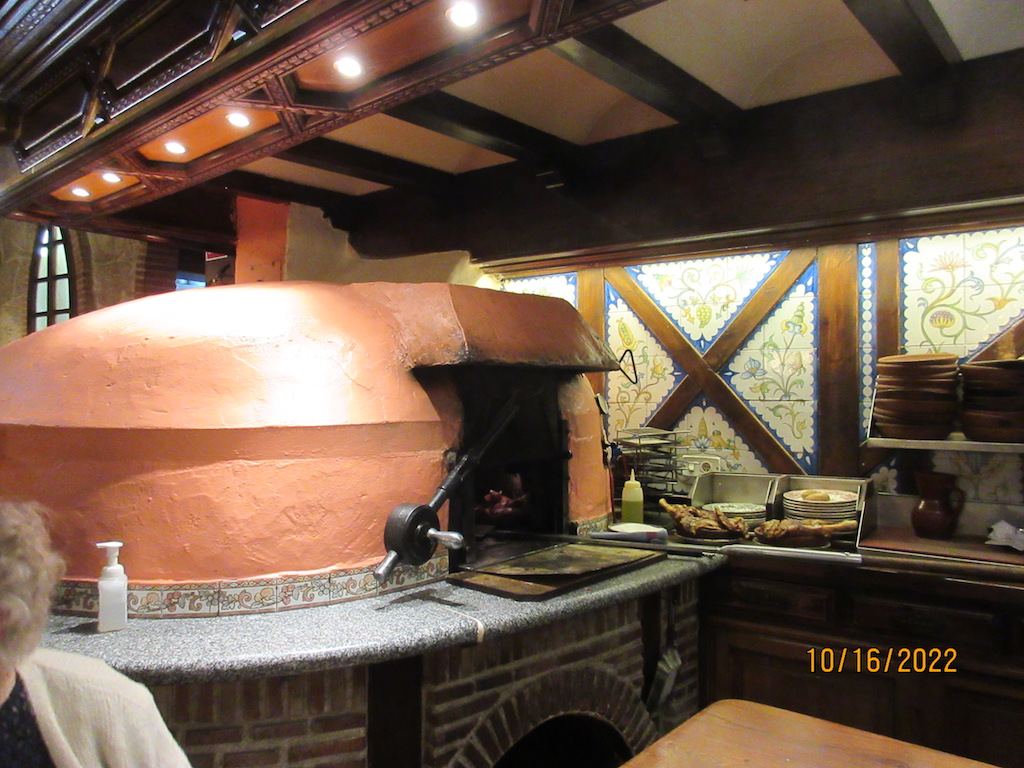
Roast Lamb Oven

This morning we were taken on a sightseeing tour of the city. A motor coach took us to the Puerta del Sol, one of the gates in the city wall that surrounded Madrid in the 15th century. The name of the gate came from the rising sun which decorated the entry since the gate faces east. 

We passed by the Atocha Railway Station also named Madrid Puerta de Atocha which is the first major railway station in Madrid dating back to 1851. It is the largest rail station serving commuter trains, regional trains and even train service to Marseille, France. After a major fire destroyed the original station it was rebuilt in 1892. Alberto de Palacio Elissagne along with collaboration from Gustave Eiffel built what was called a wrought iron renewal style structure. Two gorgeous brick buildings flank the train platforms which are covered with a steel and glass roof. In 1992 the original building was taken out of service as a newer station replaced it and it was converted into a concourse with shops and cafes. The area where the train tracks would have run is now an acre sized covered tropical garden.  

We drove by one of Madrid’s largest parks at 350-acres, called Retiro Park. The park belonged to the Spanish Monarchy until the late 1800’s when it became a public park. In 2021 the park became a part of a combined UNESCO Heritage Site along with the Paseo del Prado. The park includes a man-made lake, galleries, gardens, fountains, statuary and many venues where public events are held. 
The Gran Via or “Great Way” street in central Madrid is one of the city’s most important shopping areas. Madrid’s urban planners in the mid 19th century decided that a new thoroughfare should be created to connect the Calle de Alcala with the Plaza de Espana. After much planning and opposition, in 1904 the plan was approved and in 1910 construction began. The project involved the demolition of many buildings and much new construction. The entire project was not completed for nearly 20 years. The new avenue brought out many architects of the time and many beautiful new buildings. 
To finish off our tour of Madrid we arrived at the Mercado de San Miguel or Market of San Miguel. Originally built in 1916 this covered market is housed in an ornate stunning glass and wrought iron building. Inside there are small stalls of vendors selling all types of food items like tapas, fresh fruits, empanadas, desserts, fish, cheeses, breads, beer, wine and sangria. 

We stopped at one of the vendors where they treated us to a choice of drink and two tapas. The tapa choices were calamari, shrimp, crab, prosciutto ham and others. There was a section that had small tables to sit once you made your selection of items. Each vendor’s selection of food items was beautifully arranged making them difficult to resist if you were just planning to stop in for a look. 

Compared with our experience yesterday when the streets were incredibly busy, today, on a Sunday morning, the streets were quiet and many of the shops had not yet opened. The streets are not laid out in a grid pattern, but instead curve and meander making navigating the streets difficult. Some streets are extremely narrow one-way cobble stone streets, while others are broad eight lane boulevards. Overall the streets appeared well maintained; the buildings are well kept with the exception of a vast amount of graffiti. 

In the afternoon Mark took a tour of the Museo Nacional del Prado or Prado Museum while Kent stayed at the hotel to rest. He had been to the museum in the past when he was studying Spanish in Bilbao. The museum holds one of the finest collections of European art, dating from the 12th century to the early 20th century. The museum was founded in 1819 and has the single best collection of Spanish art in the world. Francisco Goya, Rubens, Titian and Diego Velazquez are some of the highlights of the collection. The collection contains more than 8,000 drawings, 7,500 paintings, 4,800 prints and 1,000 sculptures. Currently about 1,800 works of art in the permanent collection are presented in more than 100 galleries. 

The building that houses the museum was designed in 1785 by architect of the Enlightenment in Spain, Juan de Villanueva on orders of Charles III. The building’s final function was not decided until Ferdinand VII, encouraged by his wife, Queen Maria Isabel de Braganza, decided to use it as a new Royal Museum of Paintings and Sculpture. The museum opened to the public in 1819 with a collection of 311 paintings to show works of art belonging to the Spanish Crown and to show the rest of Europe that Spanish art was on equal footing with other European art. The museum has continued to expand including approval in 2021 of a 60,000 square foot remodel of an existing building nearby. 

There were 26 of us on the tour of the museum and we were split into two groups, each with a guide. My guide did an incredible job of taking us through the museum explaining the most important works of art. She spoke for two hours without missing a note. She easily answered folks’ questions and kept us moving along. Some museums you have trouble finding things that are impressive to you, but here everywhere you look has something of interest. It was not too busy and we used ear pieces to hear the guides commentary. It was a great afternoon. 

For dinner the group was taken to a restaurant not far from our hotel called Asador de Aranda where their specialty is roasted lamb. The charming traditional styled restaurant has been in existence since 1883. It has two floors with rustic beams, plastered walls and a large wood fired oven where they roast the lamb. We were seated on the lower level where they have room for a group the size of ours; about 100 guests. 

For appetizers they served Spanish omelet’s, roasted Piquillo peppers (similar to a bell pepper), black pudding with rice and chorizo pork sausage. The entrée was a roasted suckling lamb from the fired oven, a salad of greens, tomatoes and onions, and roasted potatoes. For dessert they served a puff pastry with a cream filling, coffee and tea and a homemade liquor with small dry dough donuts. Red wine, water, coffee and tea flowed as well. Everything was very good and we ate more than we needed. 

After dinner many of our travel companions joined us for the 30 minute walk back to our hotel. It was a busy day but very enjoyable.