Mark, Kent and Sandy at the Dinosaur Park Visitor Center
80 foot long Dinosaur
Mark and Sandy Exploring the Dinosaurs
Sandy and Kent at Dinosaur Park Visitor Center
Another of the Dinosaurs
K Bar S Lodge in Keystone, South Dakota
Yellow Bellied Marmot
This morning after breakfast we ventured out to Dinosaur Park. In the 1920’s and 30’s, Rapid City was looking to capitalize on the growing tourist traffic into the Black Hills, primarily at Mount Rushmore. It was the depression and Rapid City was experiencing a population boom due to the establishment of Ellsworth Airforce Base. The city began this park as a Works Progress Administration project, initiated after dinosaur bones and footprints were discovered in the vicinity. Emmett Sullivan, among others who worked on carving Mount Rushmore, were hired to construct the five massive dinosaurs. The dinosaurs were constructed using metal pipe frames, wire, concrete and painted gray. In the 1950’s the dinosaurs were given the cartoonish color scheme you see today – green and white. The largest of the dinosaurs (80 feet long) stands high on the hill and can be seen from all over the town of Rapid City. While at the Park, Mark and Sandy walked the 90 steps to the top of the hill to see the dinosaur up close. Since the dinosaurs were built of concrete, they are sturdy enough that children have climbed on them for nearly 100 years.
After returning to the hotel, we took a Lyft car to our accommodations for the next six nights at the K Bar S Lodge in Keystone, SD. The hotel is located in the heart of the Black Hills and is just 5 minutes from Mt. Rushmore National Memorial. Keystone is a very small town with less than 250 residents. It had its origins in 1883 as a mining town and has since transformed itself into a resort town.
Sandy and Mark walked about 15 minutes into Keystone for a pizza and brought it back to the hotel since there was no food available in the hotel. Along the way they saw yellow bellied Marmots. Keystone is about two blocks long and features mostly hotels, eating establishments and shops selling T-shirts and cheap souvenirs.
At 4:30pm we met up with our fellow travelers and tour leader for an orientation of the week ahead. There were 36 people on the tour from all across the nation who each shared what their occupation was and why they chose this tour of the Black Hills of South Dakota. From military service to postal worker and nurses to educators, folks came from all walks of life. Some were still working while most of the travelers were retired.
After the orientation we enjoyed a dinner of chicken masala, roasted broccoli with feta and a green salad. For dessert we had vanilla ice cream with a cherry jubilee sauce.
Mark, Kent and Sandy at the Firehouse Brewing CompanyMain Street Square – Downtown Rapid City, South DakotaPresident John AdamsHotel Alex Johnson LobbyHotel Alex Johnson ExteriorNative American ArtThe Donald’s Statue
Sandy Bolger, Kent and I departed our homes for the airport at 4:30am for our 6:45am flights from San Diego to Denver, Colorado where we changed planes. Our second flights departed Denver at 11:32 bound for Rapid City, South Dakota in West Central, South Dakota. We arrived about 12:45pm. We headed to the Residence Inn hotel for the night with our dear friend Sandy (Miss P.), who is traveling with us.
The discovery of gold in 1874 by the Black Hills Expedition, led by George Armstrong Custer, brought a mass influx of European-American miners and settlers to the area. A group of unsuccessful miners founded Rapid City in 1876 and was originally known as Hay Camp. Rapid City is located on the eastern slope of the Black Hills and today, has a population of about 85,000 inhabitants. The metropolitan area includes about 155,000 residents. Today, Rapid City is known as the Gateway to the Black Hills and the City of Presidents for its life-size bronze statues of presidents in its historic downtown area.
The city’s location on the edge of the plains and hills, along with its large river valley, made it a natural hub for the railroads constructed in the late 1880’s. By 1900 the town had survived a boom and a bust and was developing as a regional trade center for the Upper Midwest. Locals began promoting the local sights and improved roadways after World War I. This led to many more tourists, including President Calvin Coolidge and the First Lady in the summer of 1927.
In the 1940’s Rapid City benefited greatly from the opening of Rapid City Army Air Base, later Ellsworth Air Force Base. The population nearly doubled between 1940 and 1948, from about 14,000 residents to 27,000. During the cold war, the government constructed missile installations in the area. In the early 1960’s three Titan missile launch sites were constructed containing nine Titan I missiles. Over time, the area would be dotted with 150 Minuteman missile silos and 15 launch command centers, of which all were deactivated in the early 1990’s.
On June 9, 1972, heavy rains (15” in six hours) caused massive flooding along Rapid Creek killing 238 people and injuring 3,057. More than $100 million in property damage, including 1,335 homes and 5,000 automobiles were lost. This disaster generated new construction of a flood plain public park, new homes and businesses. The Rushmore Plaza Civic Center and a new Central High School were also built.
In 1980, the Supreme Court of the United States ruled that the federal government had not justly compensated the Sioux people for the Black Hills when it unilaterally broke a treaty guaranteeing the Black Hills to them. The government offered a financial settlement which was rejected by the Sioux and to this day the dispute has not been settled.
After checking in at the hotel we headed out to historic downtown Rapid City where we dined at the Firehouse Brewing Company. This restaurant is located in a hundred-year-old fire station with tons of firehouse memorabilia. They feature local and in-house beers along with burgers and sandwiches.
After eating we explored the historic downtown shops and statues of past presidents on each of the street corners. The most recently completed statue is currently being shown in the visitor center is of Donald Trump from his first term in office. We then checked out the Hotel Alex Johnson, built in 1927 and is a Hilton Curio Collection hotel. Alex Johnson was a railroad executive at the time and wanted to create a showplace to represent the beauty and culture of the area. The hotel combines historic architecture with handcrafted Native American art in tribute to the area’s Lakota and Sioux culture.
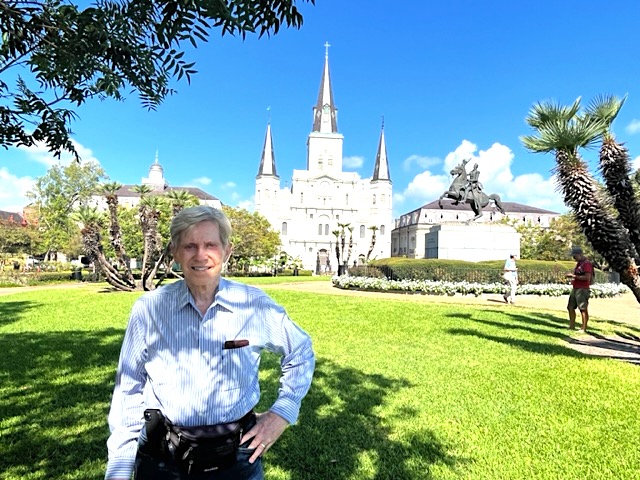
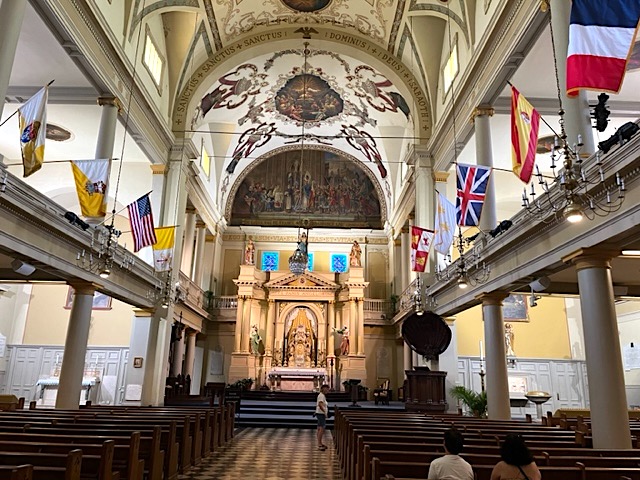
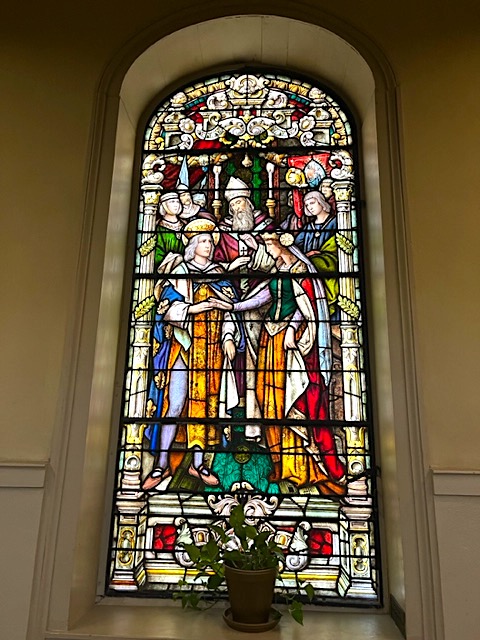
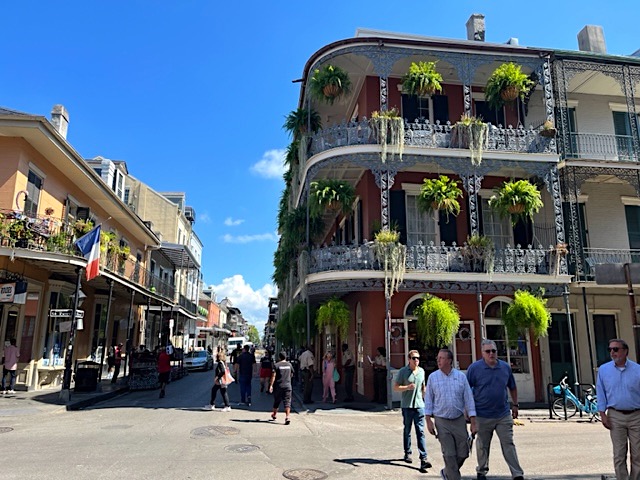
St. Louis CathedralSt. Louis Cathedral InteriorStained Glass Window in the St. Louis CathedralLovely Building on Royal Street with Wrought Iron Railings and Hanging Baskets
This morning we headed out on foot in the heat of the morning sun to explore Jackson Square and the St. Louis Cathedral.
Jackson Square, formerly the Place d’Armes in French or Plaza de Armas in Spanish, is an historic park in the French Quarter of New Orleans. Declared a national historic site in 1960 for its central role in the city’s history as the site where in 1803 Louisiana was made United States territory pursuant to the Louisiana Purchase. In the center of the square is an equestrian statue of Andrew Jackson, hero of the Battle of New Orleans and seventh U.S. president.
St. Louis Cathedral is one of New Orleans’ most notable landmarks and was dedicated to Saint Louis, also known as King Louis IX of France. Since 1718, residents have worshipped in churches on this site. A fire in 1788 started when a candle ignited the lace draperies of an altar nearby the church and the original church was burned to the ground. The current Cathedral was first completed in the 1850’s although many modifications and additions have been made to the Cathedral over the years. It was designated as a minor basilica by Pope Paul VI in 1964 and Pope John Paul visited the Cathedral in September of 1987. During hurricane Katrina the roof was torn open and extensive damage was done to the organ which has since been restored.
We then headed over to Royal Street for brunch at The Court of Two Sisters where they feature jazz music on the patio. The property had once been home to a notions shop owned by two sisters of an aristocratic Creole family and this is where the restaurant name comes from. In 1963, an established local restauranteur acquired the property and began preserving it. For the past 60 years the several generations of the same family have been operating the restaurant.
We dined on the rear brick courtyard with trellises covered in wisteria vines, a fountain and balconies of wrought iron railings. The buffet they serve includes a variety of 80 different items from salads to Creole and New Orleans’ favorite entrees. The food and service were excellent and the jazz music was quiet not to overwhelm the dining experience.
By mid-afternoon we headed to the airport for our flight home to San Diego. We changed planes in Dallas prior to arriving home in San Diego about 10:30pm.
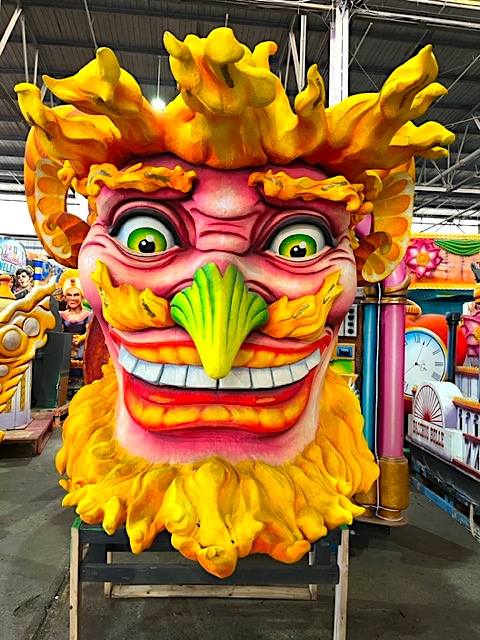
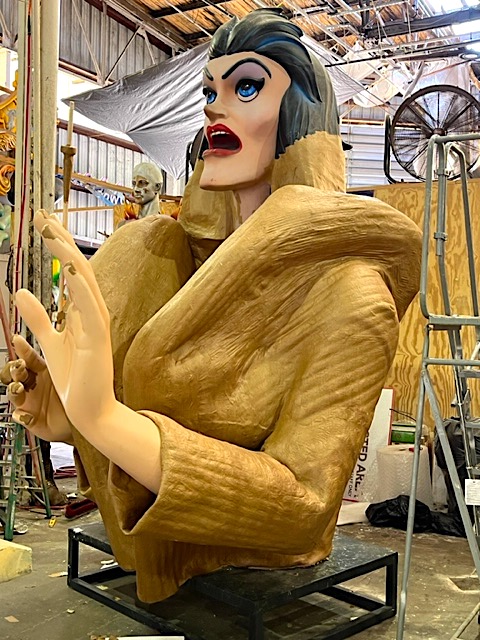
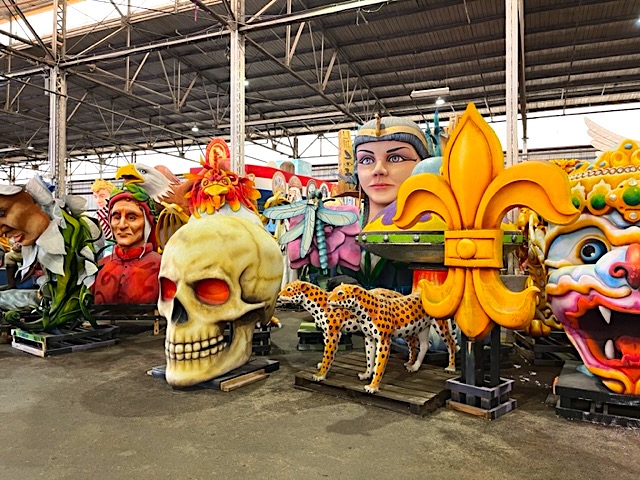
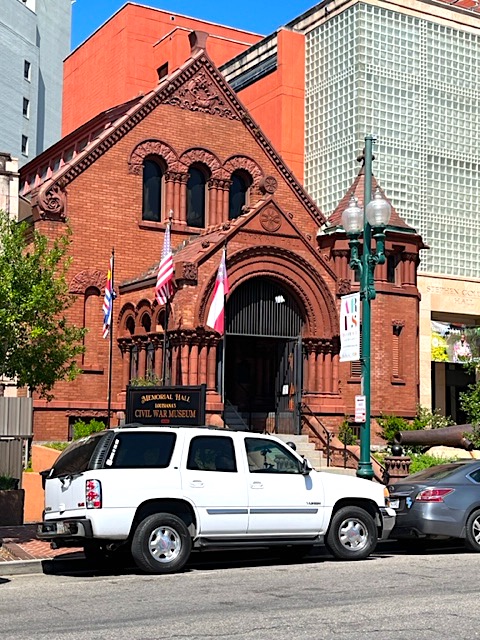
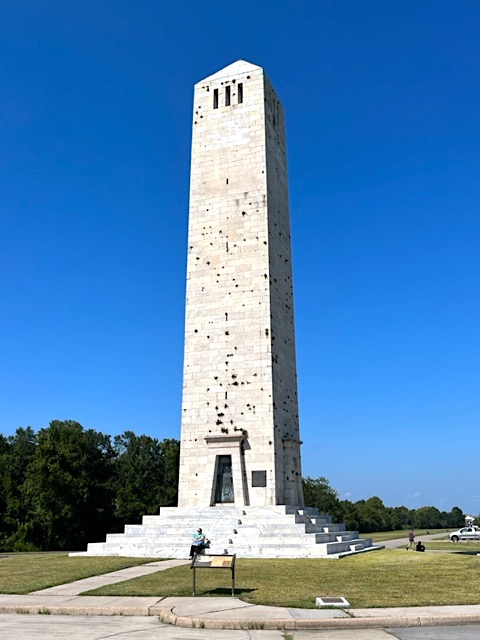
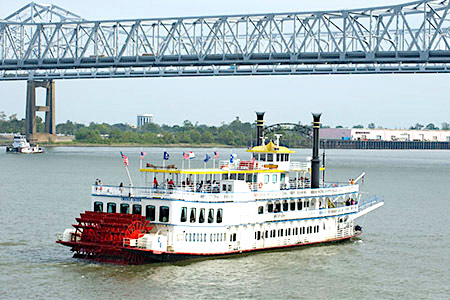
Mardi Gras WorldMardi Gras World Mardi Gras WorldOgden Museum of Southern ArtConfederate Memorial HallChalmette Battleground MonumentCreole Queen PaddlewheelDomino Sugar Refinery Produces More Than Seven Million Pounds of Sugar Daily
After breakfast at our hotel, we visited Mardi Gras World, a 300,000 square foot working warehouse where floats are made for more than 40 Mardi Gras parades in New Orleans each year. A man by the name of Blaine Kern, Sr. founded this family of float builders back in 1946 and in 1984 began allowing visitors a behind the scenes look at the float building process. Mr. Kern traveled to Europe to learn his float building techniques and gained an international reputation in float building. He has also created floats beyond New Orleans for Las Vegas, Mobile, Galveston, Montreal, Universal Studios Mardi Gras parade and for many corporate events.
Our next stop was at the Confederate Memorial Hall Museum containing artifacts related to the Confederate States of America and the American Civil War. It houses the second-largest number of Confederate Civil War items in the world, behind the American Civil War Museum in Richmond, Virginia. It was established in 1891 by New Orleans philanthropist Frank T. Howard to house the historical collections of the Louisiana Historical Association. The museum is a beautiful reddish stone building built in the Romanesque style as it was designed by the architectural firm of Sully and Toledano of New Orleans. The interior main hall is constructed of rich Louisiana Cypress wood and features seven main trusses that transverse the room overhead.
The museum quickly grew a vast collection of Civil War items, mostly from personal donations. Today the museum contains more than 5,000 historical artifacts and continues to receive donations to its collection, mostly from families of those who served.
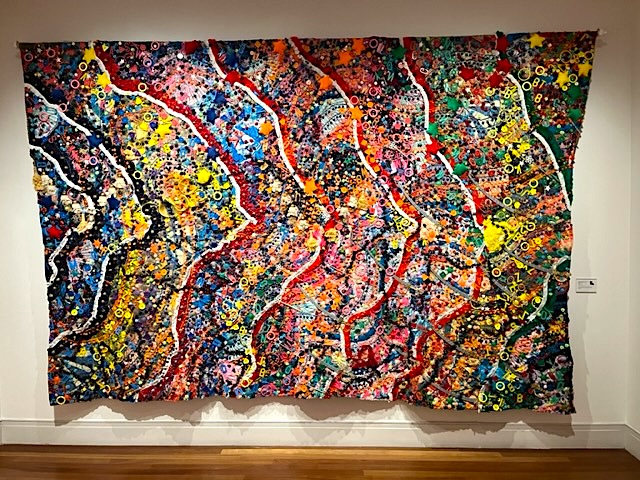
Next door to the Confederate Memorial Hall is the Ogden Museum of Southern Art dedicated to art by artists from 15 southern States and was established in 1999. The museum has been located in the Warehouse Arts District of downtown New Orleans since 2003.
This collection began with the donation of more than 600 works of art by New Orleans businessman Roger H. Ogden’s private collection. Since the original donation the museum’s collection has grown to more than 4,000 paintings, watercolors, drawings, prints, photographs, sculpture, wood and crafts. The current exhibits were remarkedly interesting by subject matter as well as media used.
In the afternoon we took a historic river cruise on the Creole Queen paddle wheeler. A local historian narrated the cruise offering 300 years of local history along the way. The cruise takes you downriver to the Jean Lafitte National Historic Park and the Chalmette Battlefield. The narration included stories of the founding of the city by the Lemoyne brothers, the expansion of the city into the “French Quarter,” the Louisiana Purchase and the Battle of New Orleans. At the battlefield we had one hour to tour the park with a National Park Ranger and to check out the visitor center. In the visitor center they have many exhibits and films about the Chalmette Battlefield.
For dinner we ventured out to a local restaurant not far from our hotel called Creole House. They serve all types of food from traditional New Orleans Po’boys and gumbo to salads, shrimp, fish and more. The food was good although it was a very noisy restaurant.
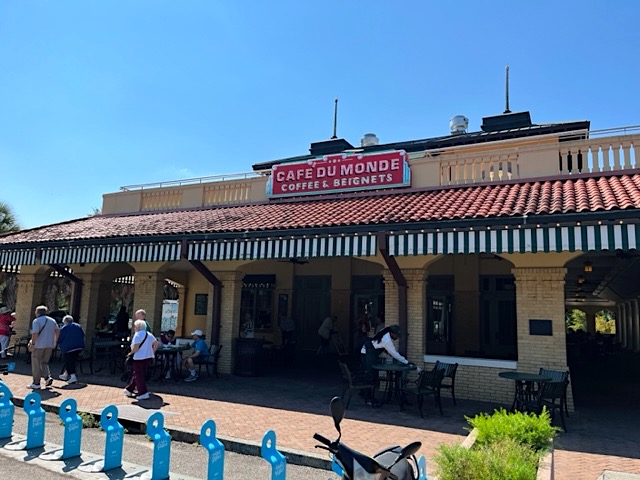
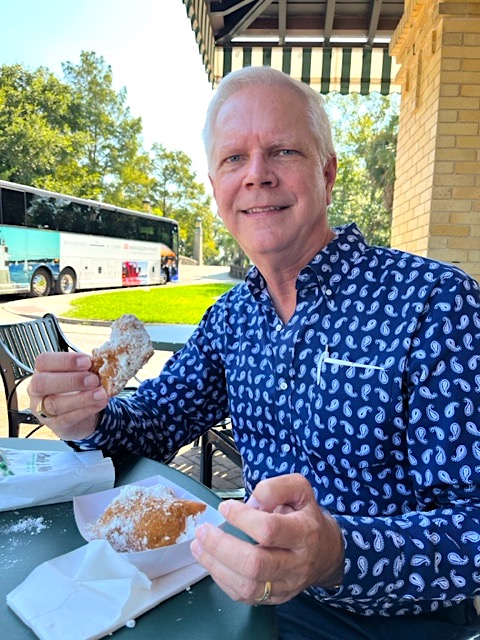
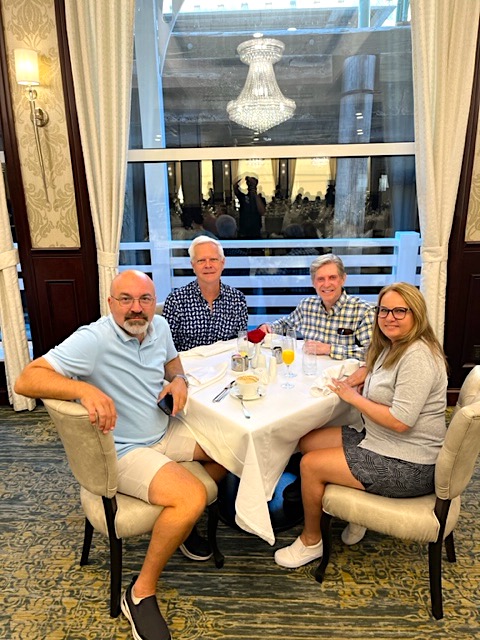
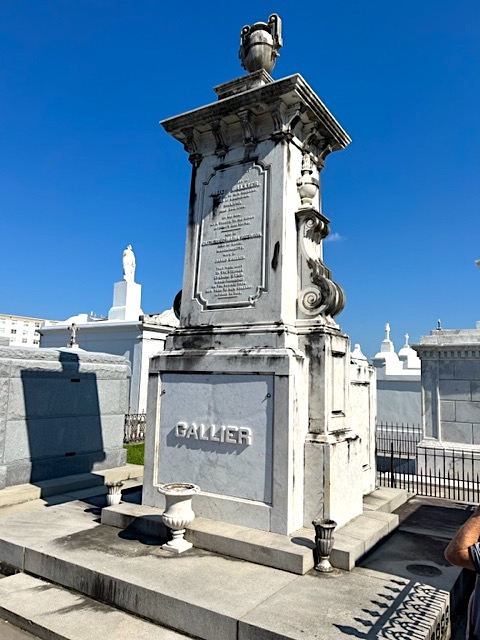
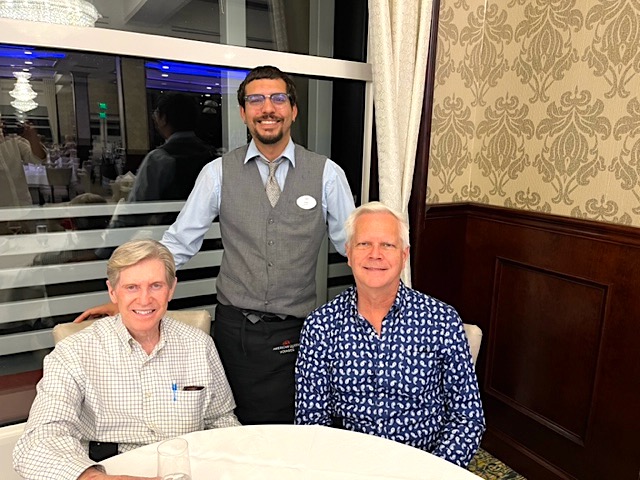
Cafe Du MondeMark Enjoying the BeignetsAmerican Queen Table Mates Aggie and JoleneCemeteryCemeteryAmerican Queen Waiter JayyWWII Museum ExhibitsWWII Museum ExhibitsSt. Charles Streetcar
After breakfast onboard the American Countess river boat, we disembarked in New Orleans where we embarked on a four-hour city tour through a city radiating an eccentric and unique atmosphere. On our New Orleans driving tour we had an Irish woman for our guide. She had come to the U.S. in 1975 as a young woman and got married. She had been living in New Orleans ever sense. We saw the city through her eyes and she sprinkled our tour with first hand experiences and with a lot of humor. Our motor coach took us past some of the most iconic attractions in the city, including Jackson Square, the French Quarter, the Garden District, and the Lakefront Area.
During our morning tour we stopped at the beautiful New Orleans City Park which dates back to 1854. The park encompasses 1,300 acres and is one of the largest urban parks in the country. The park is also home to the largest collection of mature live oak trees in the world, some over 800 years old. After Hurricane Katrina in 2005, 95% of the park was sitting in floodwaters for weeks causing nearly $50 million in damages to the park. With government assistance and local donations, they have replanted all of the lost trees (some 2,000) and made extensive upgrades to the park. In the park we stopped at New Orleans’ famous Café Du Monde for their beignets. The beignets are squares of fried dough eaten hot with plenty of powdered sugar. They were delicious and messy as everyone left covered in white powdered sugar.
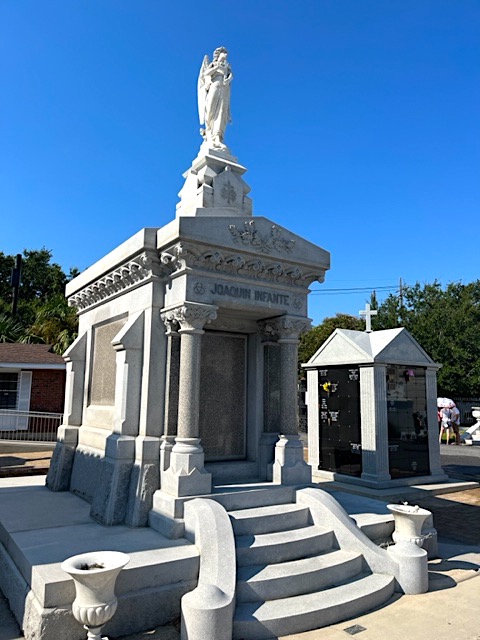
We stopped at one of the many local catholic cemeteries to explore some of the ornate family vaults. There are many Catholic cemeteries in New Orleans that had traditionally been owned and operated by individual parishes. In 2016 management of all of the cemeteries were combined under the Ministry of the New Orleans Catholic Cemeteries.
On our bus there were also travelers who were heading to the airport to fly home so we had to make a trip to the airport which took up about 90-minutes of our day. Very frustrating.
We finally arrived at our hotel for the next two nights, the Intercontinental Hotel near Bourbon Street in the French Quarter. After getting settled into our room we headed out to explore the city.
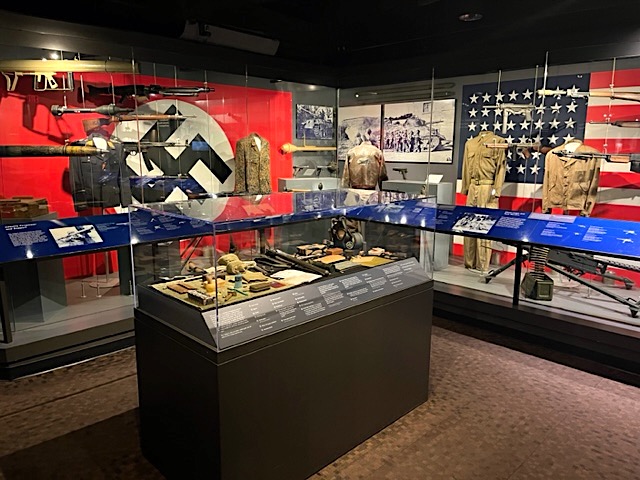
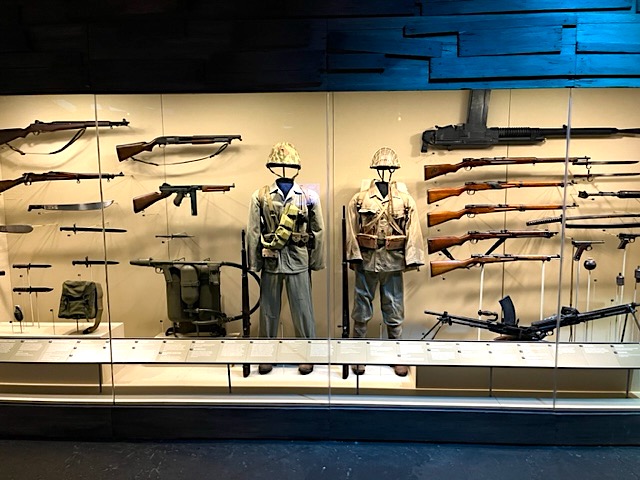
Our first stop was at The National WWII Museum, formerly known as the National D-Day Museum which is a military history museum. The museum focuses on the contribution made by the US to Allied victory in World War II. Founded in 2000, it was later designated by Congress as America’s official National World War II museum in 2004. The museum is affiliated with the Smithsonian Institution outreach program.
When the museum opened, its main gallery focused on the invasion of Normandy. The Higgins boats, vital to the amphibious operations, were designed, built and tested in New Orleans by the Higgins Industries. Other galleries, built since its opening, consist of an aircraft pavilion with airplanes suspended from the ceiling, a theater, a Road to Tokyo exhibit which focused on the Pacific war, the Road to Berlin focused on the European theater, an Arsenal of Democracy focused on the experience on the home Front and room for temporary exhibits which rotate.
The museum is beautifully done and incorporates many personal stories of families across the nation who experienced the war personally through military service. It has extensive film footage shown throughout the museum, photos, weapons, exhibits, personal history recordings and more. It is so large that it takes up two city blocks and is connected with a bridge over the road. You can easily spend hours exploring the museum.
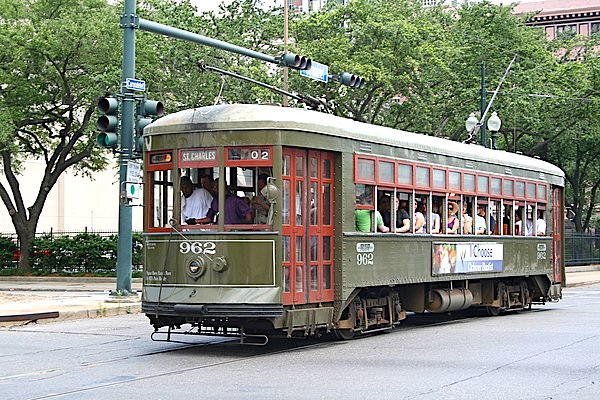
After the museum closed we got on one of the historic streetcars for a ride up and down St. Charles Road. This is one of the most beautiful streets in the city with oak tree lined sidewalks and gorgeous homes. This road passes the extensive and beautiful Tulane University campus. The St. Charles streetcar line has been running since 1835 and is the oldest continuously operating streetcar line in the world. Most of the cars running today date back to the 1920’s.
In the evening we explored the French Quarter on foot but it was not really my cup of tea. The French Quarter is the oldest neighborhood in the city of New Orleans. Today you still see many influences from the Spanish period with the ornate cast iron galleries or balconies, many buildings having several tiers of balconies overlooking the narrow streets below. Bourbon Street is closed to car traffic at night so they can accommodate many people in the street and on the sidewalks. Most of the people have oversized drinks in one hand and a cigarette in the other. Every block seems to have multiple card tables set up with a table cloth and candle and a sign advertising tarot card readings or psychic readings.
We stopped for a bite to eat at a local restaurant called the Royal House where we tried the local specialty, the Po’boy Sandwich. Kent tried the fried fish sandwich while I tried the shrimp sandwich. They serve the fried fish on a toasted French roll with lettuce, tomato and pickles. On the side French fries to top off the large quantity of grease. Also available are alligator Po’boys in case you were wondering.
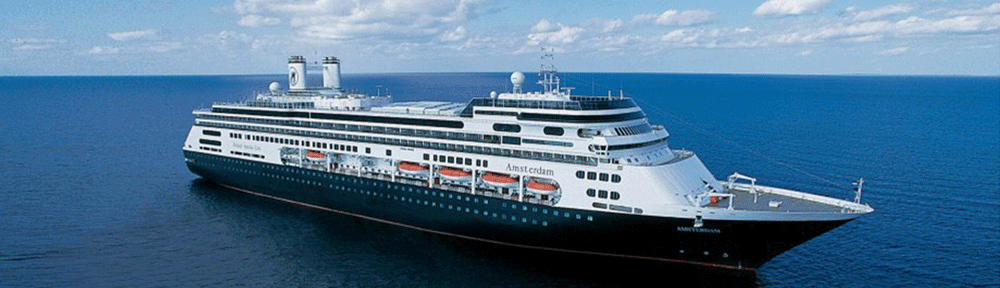
The river boat pulled up to the famous Nottoway resort on this day where we remained for the entire day. It was our only stop of the day and the resort is located just a ten-minute walk from the boat. The temperatures were about 90 degrees and somewhat humid, making it uncomfortable to stay out in the sun for very long.
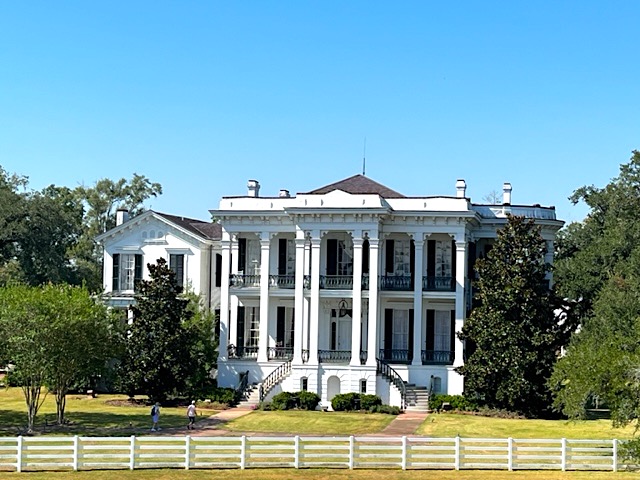
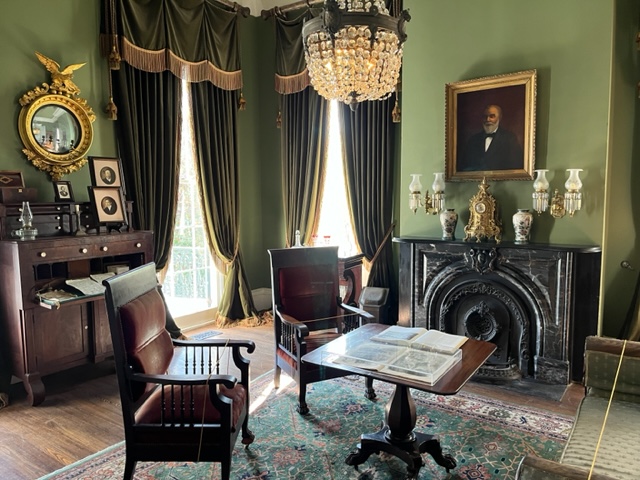
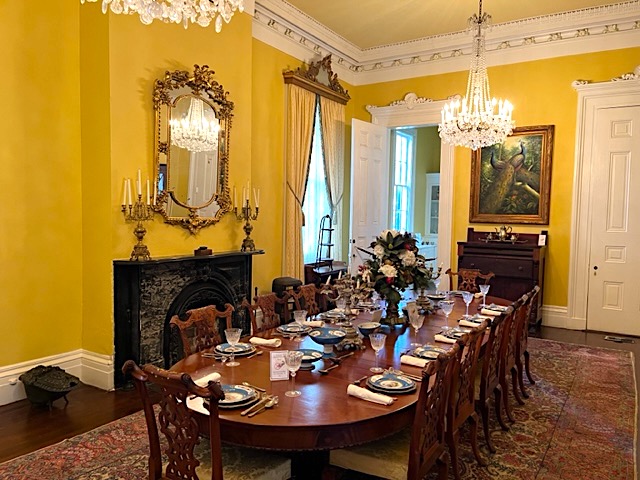
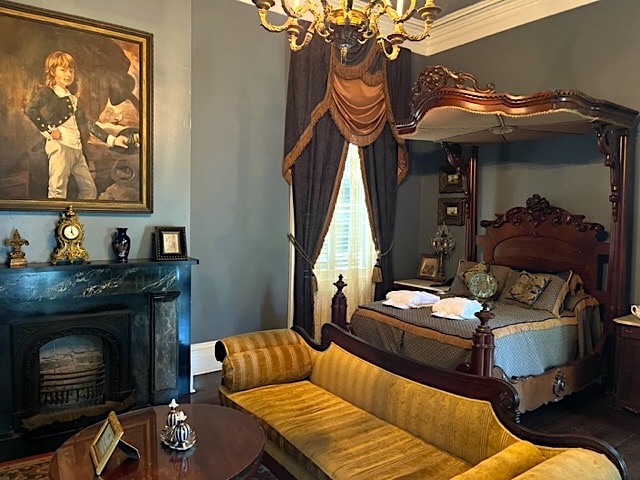
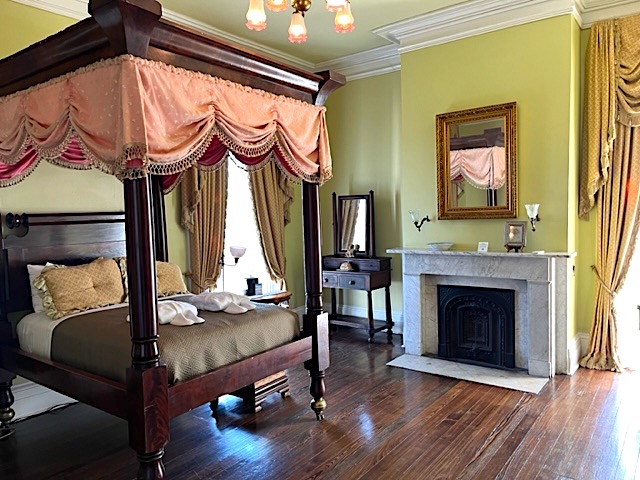
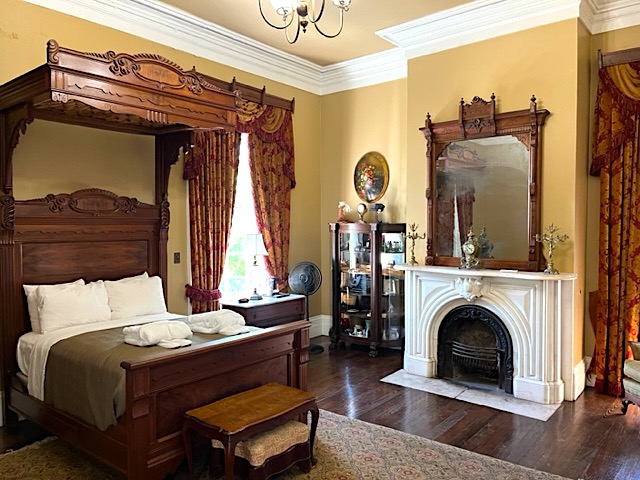
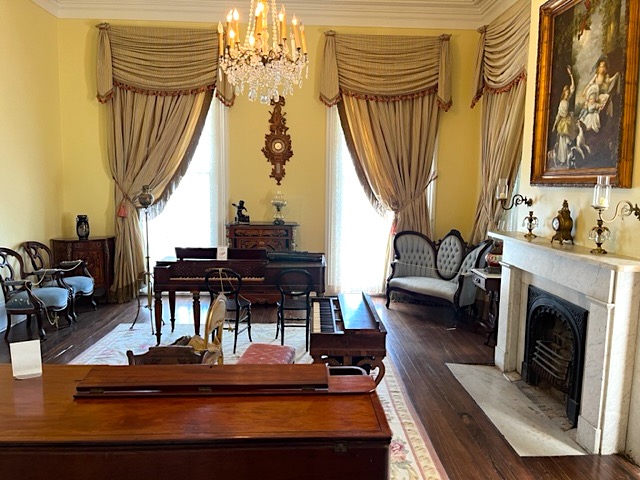
We took a 45-minute tour of the Nottoway Resort, the South’s largest remaining antebellum mansion situated on 31 acres of majestic oak trees. This stunning historical plantation built in 1859 at a cost of $80,000, lies between Baton Rouge and New Orleans and offers a view of a truly grand plantation. The 53,000 square foot mansion flaunts three floors, 64 rooms, and displays an incredible 22 white square columns which contribute to its nickname, the “White Castle of Louisiana.” The home enjoyed 19th Century novelties like a bathroom on each floor with flushing toilets and hot and cold water, gas lighting throughout the home and a complex servant call-bell system. The most popular room among guests is the White Ballroom, which is painted entirely in white and displays elaborate gold décor throughout. Rooms are trimmed in custom plaster frieze made from Spanish moss, clay, plaster and mud and are all original to the house. And as if that weren’t enough, this immaculate mansion was constructed with 365 openings (165 doors and 200 windows), one for each day of the year. We also enjoyed a stroll through the grounds and gardens.
The home has been owned by a gentleman from Australia since 1984 who uses the property as a hotel or bed and breakfast. They have built many modern cottages on the property to supplement the number of rooms as well as a restaurant and business center.
Even after investing $14,000,000 in the property since 2008, the property needs many upgrades and maintenance to make it shine. Any property of this scale would require an extraordinary amount of money to maintain. Hopefully this unusual property will be able to stand the test of time and will be here for many more years.
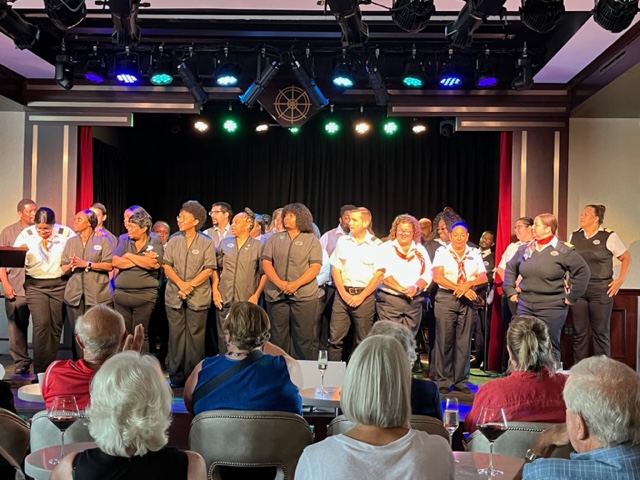
Late in the afternoon there was a very short and sweet champagne toast with the captain and some of the crew in the theater. It was a way of saying thank you from the crew to the guests and from the guests to the crew.
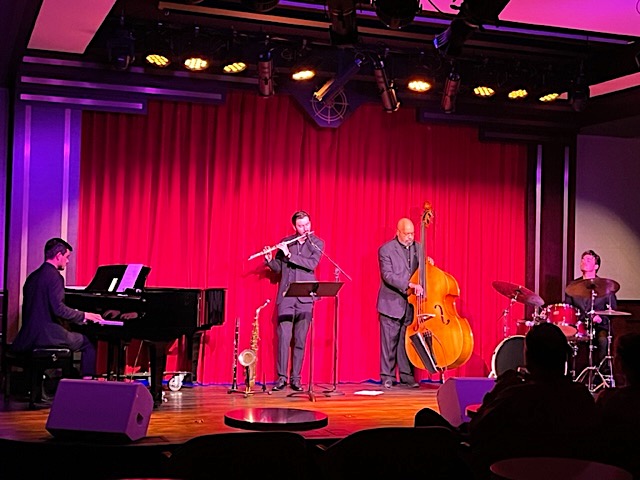
The evening’s entertainment was a show by Michaelyn Oby who performed the tribute show to Diana Ross earlier in the cruise. She was back with a show titled “Feeling Good” featuring jazz, blues and soul music.
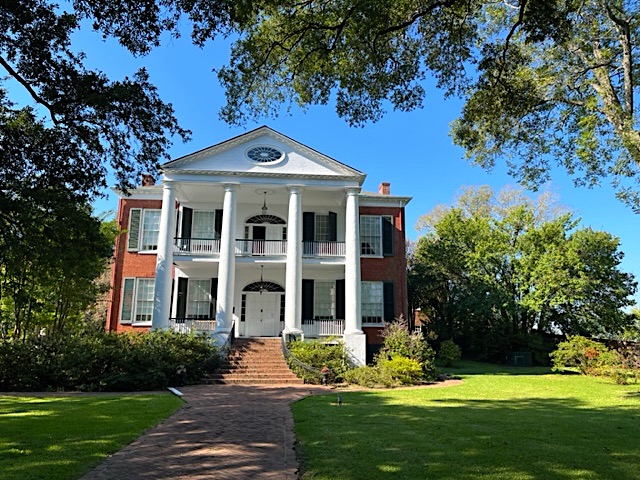
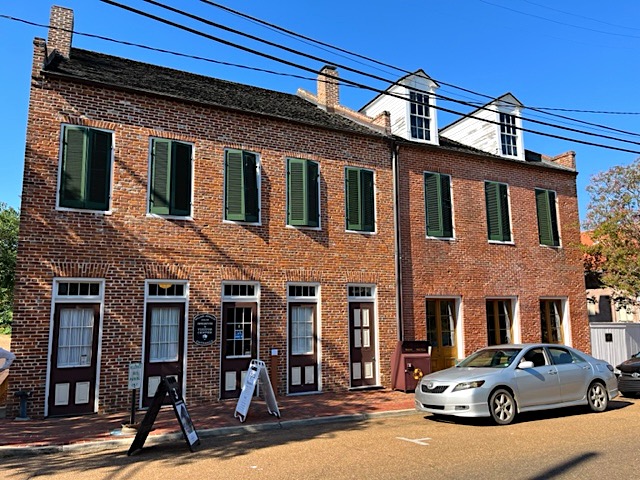
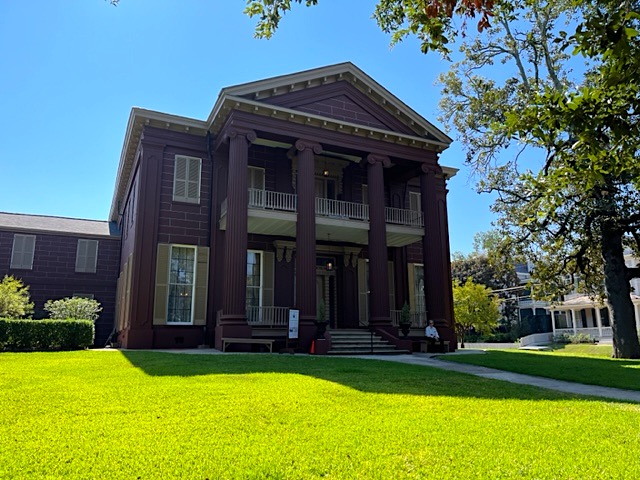
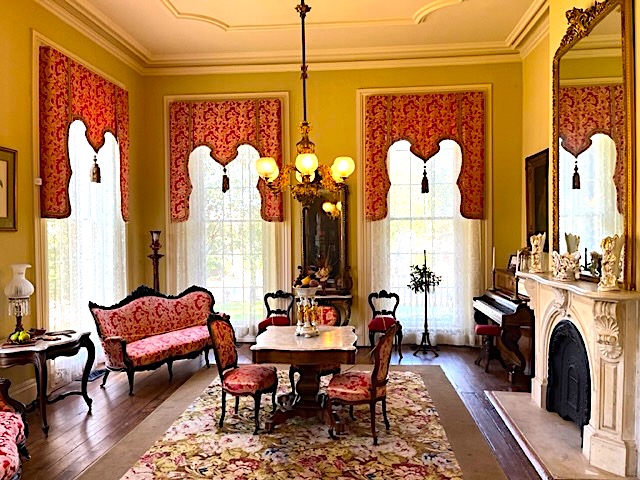
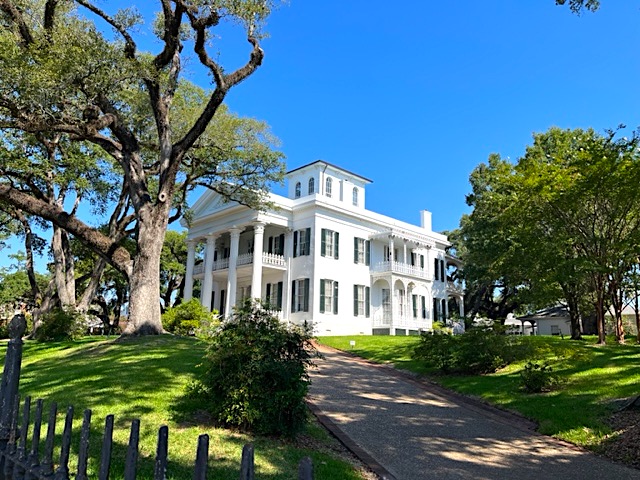
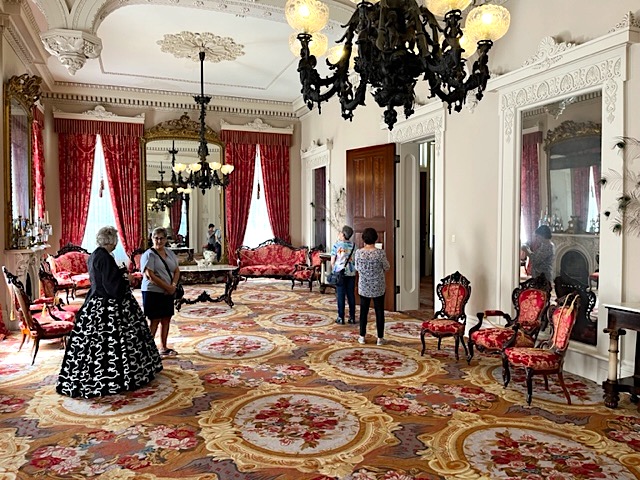
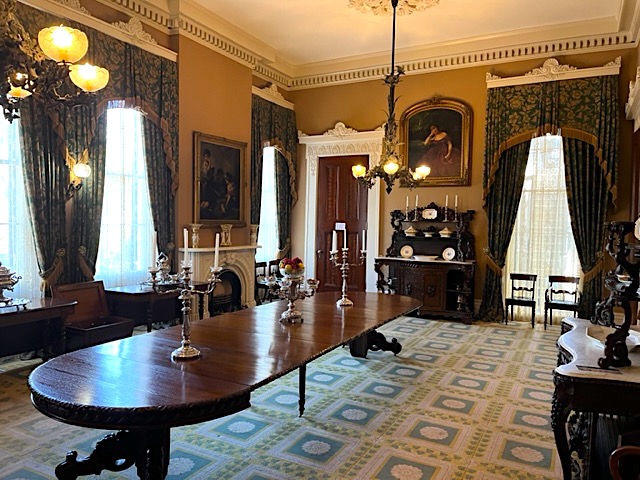
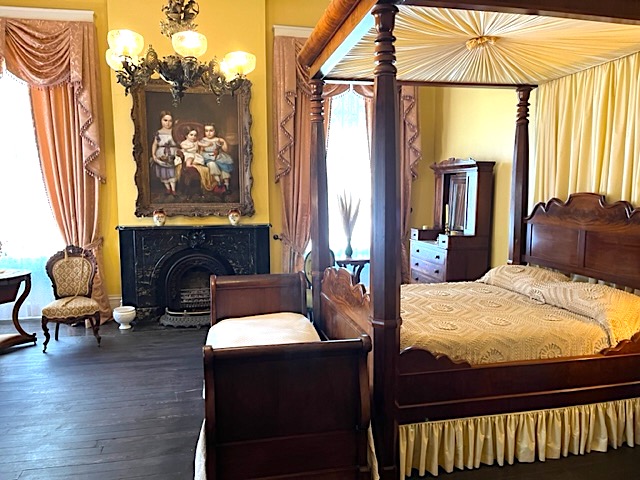
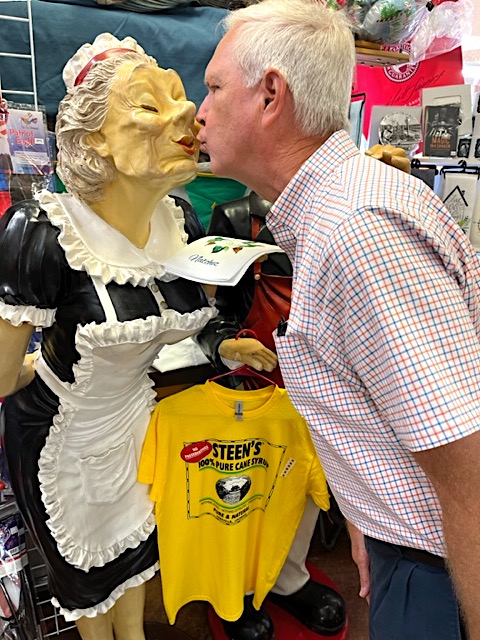
Rosalie MansionWilliam Johnson HouseMagnolia HallMagnolia Hall ParlorStanton HallStanton Hall ParlorStanton Hall Dining RoomStanton Hall BedroomNatchez Hospitality at The Old South Trading Post
Natchez is about 85 miles north of Baton Rouge, Louisiana, and has a population of about 15,000 inhabitants. It is named after the Natchez tribe of Native Americans who inhabited much of the area from the 8th century AD through the French Colonial period. Natchez was established by French colonists in 1716 and is one of the oldest European settlements in the lower Mississippi River Valley. By 1779, the area was under Spanish rule but in 1797, Major Andrew Ellicott of the US marched to the highest ridge in Natchez and raised the American flag claiming Natchez and all former Spanish land east of the Mississippi above the 31st parallel for the United States.
Preceding the Civil War, Natchez was the most prevalent slave trading city in Mississippi and second in the US only to New Orleans. In 1883 the most active slavers in the US were John Armfield and Isaac Franklin who sold slaves individually, the buyers were allowed to survey the people much like items in a modern retail store.
In town we visited The Old South Trading Post to sample Southern muscadine juice, dips, salsas, jellies, cappuccinos, and coffees. There’s something for everyone here, including a wide selection of books, candies, one-of-a-kind shirts, hats, holiday ornaments, souvenirs, drug store items, and even alligator items! There were 6,000 items on display and for sale.
Our next stop was at the magnificent Rosalie Mansion, an outstanding example of Federal style architecture, built by a wealthy cotton planter in 1823. The Mississippi State Society Daughters of the American Revolution have since gained ownership and have been maintaining the house and grounds since 1938. On this self-guided tour, we discovered the history of the house and the artifacts found throughout. Period-dressed docents throughout the home were there to answer questions and to provide more information. We explored the extensive gardens, gift shop, kitchen, library, and carriage house. The rooms are all beautifully furnished with antiques, accessories and 95% of the personal items from the second and final owners of the home. The home has been a museum since 1958 when the last descendent of the family died after 101 years in the same family.
Our next stop was the William Johnson House. In 1809, Johnson was born the son of a mulatto slave woman in Natchez. At the age of eleven he was emancipated by his white slave owner, also named William Johnson, who is presumed to be his father. Johnson became a well-known barber in town for a mostly white clientele. He not only provided barber services himself, he hired free blacks, had apprentices and also owned slaves. From his barber business he was able to purchase land and become a farmer as well as a business owner.
William Johnson was able to read and write which was unusual at the time and he kept a detailed diary of his life for sixteen years, from 1835 to 1851. This has provided historians with a vast understanding about what it was like to be a free black man during this period of time in this part of the country.
We stopped at Magnolia Hall, a Greek Revival mansion built in 1858 before the breakout of the Civil War but it did not make it through the conflict unscathed. It took a direct cannonball impact to the kitchen, although it is now fully restored. The main floor offers a showcase of many antiques and furnishings and the upper floors offer a costume collection in the Historic Clothing Museum. Upstairs, we viewed a short film that outlined the history of the Natchez pageants and Garden Club, an organization founded in 1927 with the mission to preserve the rich history of the city.
Stanton Hall is a Palatial Greek Revival style mansion built between 1851 and 1857 by Irish immigrant and cotton merchant Frederick Stanton. Frederick built the home as a replica of his ancestral home in Ireland and named it “Belfast.” The palatial home occupies an entire 2-acre city block. The home is approximately 14,000 square feet in size, its lower level has 17-foot-tall ceilings and upstairs there are six spacious bedrooms. Many of the original furnishings continue to be reunited with their original home as family members who inherited them decide to donate them back to the home. It was built at a cost of $83,000 even before it was furnished. Unfortunately, Mr. Stanton only lived in the residence for nine months before he died of yellow fever.
In 1890 the home became the Stanton College for Young Ladies and by 1940 it was acquired by the Pilgrimage Garden Club, which uses it as its headquarters and operates it as a museum and event venue.
The evening’s entertainment was a variety show titled “Anything Goes Tonight” with the crew performing musical numbers from ABBA to Broadway and everything in between. The cast and the band did a great job with the musical numbers.
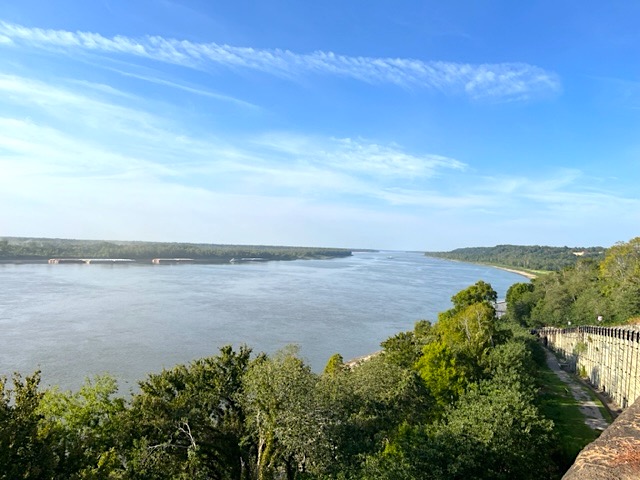
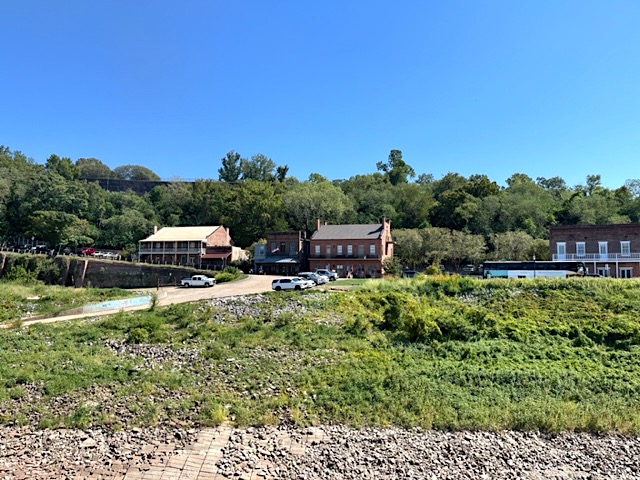
Mississippi River at NatchezNatchez Landing Location–Normally the Water Level Would be up to the CarsSt. Mary’s BasilicaSt. Mary’s AltarSt. Mary’s Stained Glass WindowsAfrican American History MuseumAfrican American History MuseumAfrican American History Museum
Due to the extraordinarily low water levels of the Mississippi River we were unable to stop at Vicksburg. We should have left the Mississippi River and transited up a side tributary about 1.5 miles to visit Vicksburg, but the tributary river did not have enough water for the vessel to transit. Below is some of the information about Vicksburg and the things that we were supposed to see.
Vicksburg is an historic city in Warren County with a population of about 20,000 and is located on the high bluff of the Mississippi River across from Louisiana. The area was long occupied by Natchez Native People and later settled by French colonists who built Fort St. Pierre in 1719, and was later incorporated in 1825, and named after Methodist missionary Newitt Vick.
We planned to visit the Church of the Holy Trinity, an incredible church over 125 feet long, 52 feet wide, and reaching 61 feet high to the apex of the ceiling, built of southern white pine to emulate Noah’s ark. The church was constructed in Romanesque Revival style and finished in red brick. It showcases zigzag tracery, which was highly unique to the style at the time. The Belgian slate roof is another amazing feature of the building, which began construction with the laying of the cornerstone in 1869. The 34 stained-glass windows, however, may be the main draw. They were given as memorials and six of them were created by Tiffany Studios in New York under the supervision of Louis Comfort Tiffany.
Our next Vicksburg stop was planned to be at the Anchuca Mansion. The word Anchuca derives from an Indian word meaning “happy home,” which is the exact vibe this home gives off. The original home on the property was built in 1830 by politician J.W. Mauldin. Anchuca is now listed on the National Register of Historic Places. The current home is an impressive Greek Revival style home with columns that was built around 1840 by Jane and Victor Wilson, successful merchants of the time with coal and ice businesses. It was used as a hospital during the Siege of Vicksburg in 1863. Today, the home is a bed and breakfast and its interior is beautifully furnished with fine antiques and art, but also provides modern day conveniences.
Our next stop would have been the Old Court House Museum, now a National Historic Landmark. Construction for this colossal courthouse began in 1858 and was completed in just two years in 1860 for a mere $100,000. It was well built, surviving Union shelling and a direct hit from a tornado in 1953. Now home to the largest collection of Vicksburg’s history, the museum is filled with countless artifacts, including confederate flags, portraits, the trophy antlers won by steamboat Robert E. Lee in an 1870 race, an original Teddy Bear given by Theodore Roosevelt, and much more!
The Biedenharn Coca-Cola Museum was our planned next stop in town. This building is where Coca-Cola was bottled for the first time anywhere in the world in 1894. At the Biedenharn Coca-Cola Museum, we hoped to see the equipment used to bottle the first Coca Cola as well as a wide variety of Coca Cola advertising and memorabilia in an authentic candy store and soda fountain setting. They serve ice cream, fountain Cokes, Coke floats and many Coke souvenirs for purchase.
At the Jesse Brent Lower Mississippi River Museum, they provide a unique and interactive way to learn about the history, people, and events that have been a part of the Mighty Mississippi. Their mission is to show the federal government’s role in the Mississippi River’s past, as well as future efforts to maintain a healthy river. You can step aboard the M/V Mississippi IV and experience what life was like on this unique vessel that was used as a working tow boat and as a flagship for the Mississippi River Commission. Nearly all of the vessel has been staged and can be explored. They have many other exhibits about what the 1927 flood was like for the community and you can see some of the river’s fish up close in a 1,515-gallon aquarium.
The Old Depot Museum features a 250-square foot diorama of the Siege of Vicksburg, giving us a bird’s-eye view of the layout of the Battlefield as it looked in 1863. It houses 250 scale models of ships and boats, model railroads with railroading artifacts, and 150 model cars that show the evolution of motor travel. There are also more than 40 original paintings of war on the river and Civil War artifacts.
Our last planned stop was at the Vicksburg Civil War Museum where we hoped to explore a historical museum that features a one-of-a-kind collection of artifacts from the Civil War Era. The museum was opened by Mr. Charles Pendleton, and takes a unique approach to tell the story of the Civil War, from 1860 – 1870. To fully understand this pivotal moment in the story of the United States, the Vicksburg Civil War Museum provides context and information from the years prior to the breakout of war and the reconstruction thereafter.
Back to reality….The weather was extremely warm, reaching about 90 degrees. We continued our journey towards our next port of call, Natchez, Mississippi. We arrived in Natchez, about 3:30pm and they allowed us to get off of the boat about 4:00pm. They ran three Hop-On, Hop-Off buses around town to give us an orientation around town in preparation for our full day in town the following day. We were able to visit several places before returning to our boat for the evening.
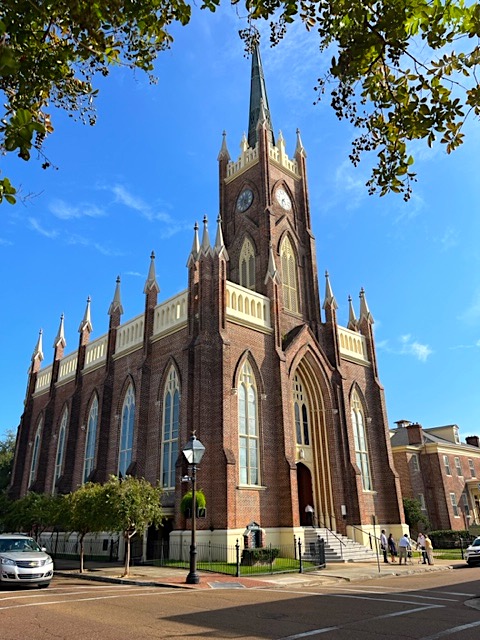
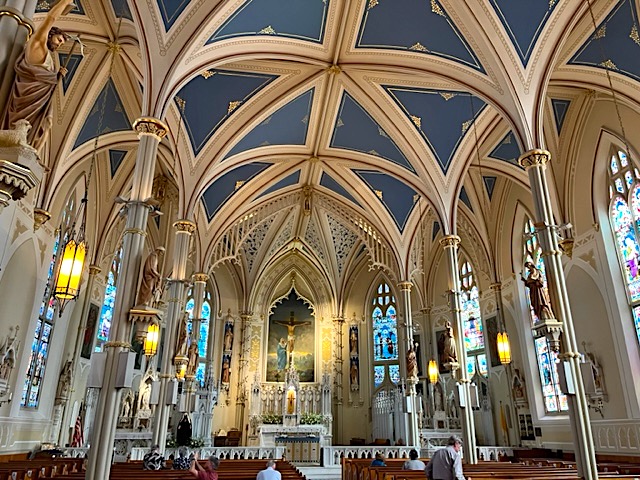
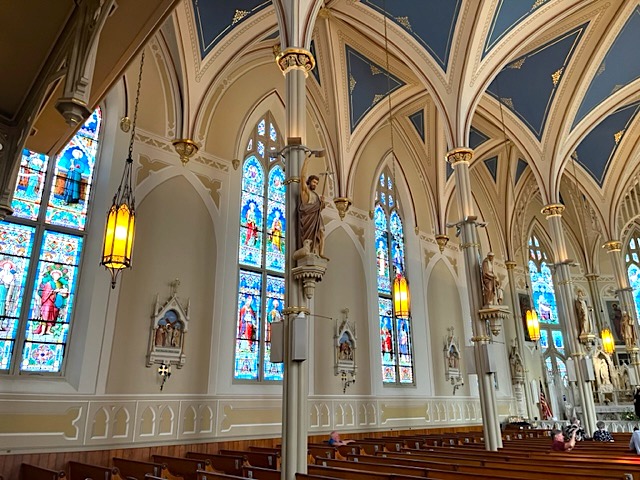
We stopped at the stunning Basilica of Saint Mary begun in 1843 but not completed for forty-years, until 1882. It includes beautiful stained-glass windows, two bell towers and a clock installed in 1881. Behind the church is a small Bishop’s Garden with a shrine of the Immaculate Conception dating back to 1847.
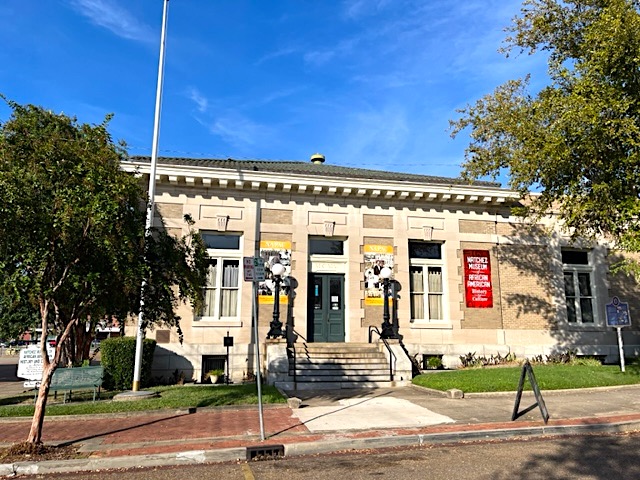
We then stopped at the Museum of African American History and Culture where they delve into the 300-year-old African American history, spanning four lifetimes from Colonial and Cotton Kingdom Natchez to the Reconstruction and the Civil Rights Movements. This creative portrayal of the true African American story unfolds history to reveal Natchez in a light that is shown nowhere else around. The museum features many exhibits of daily living, photographs, books and documents depicting the African American experience in the area.
The evening’s entertainment was a variety show with seven members of the crew performing a variety of musical numbers. Surprisingly, there were a lot of very talented crew members with great voices.
Grammy MuseumGrammy MuseumGrammy MuseumGrammy MuseumCleveland, Mississippi Main Street ArchitectureRailroad MuseumRailroad Museum
Our stop on this day was at Terrene, Mississippi, although there is nothing in Terrene. We took a 35-minute bus ride into the town of Cleveland for our day’s activities. The countryside was filled with corn and soy bean fields as well as some rice fields.
Cleveland, Mississippi, not to be mistaken with Cleveland, Ohio, is located in Bolivar County, Mississippi, and has a population of around 11,000 residents. Once a passenger railroad stop, it no longer has a railroad line after passenger trains stopped in 1965 and freight trains ceased in 1995. The city, originally called Fontaine, was named after President Grover Cleveland in 1887. In the 1950’s the small town was able to attract Baxter Laboratories and Mississippi Power and Light’s Delta Steam Electric Station just north of town and the population quickly doubled over the next decade.
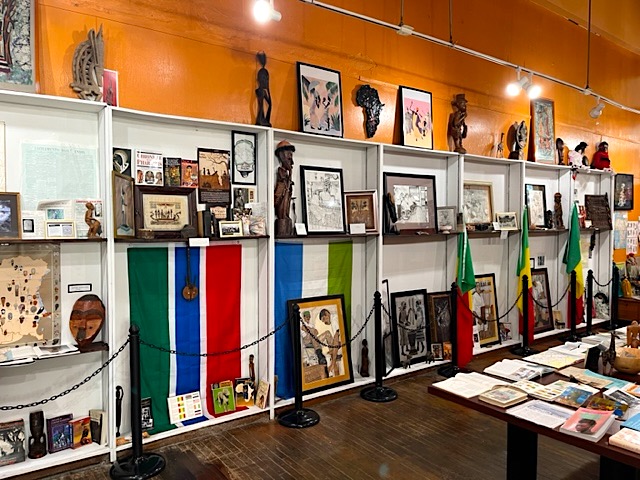
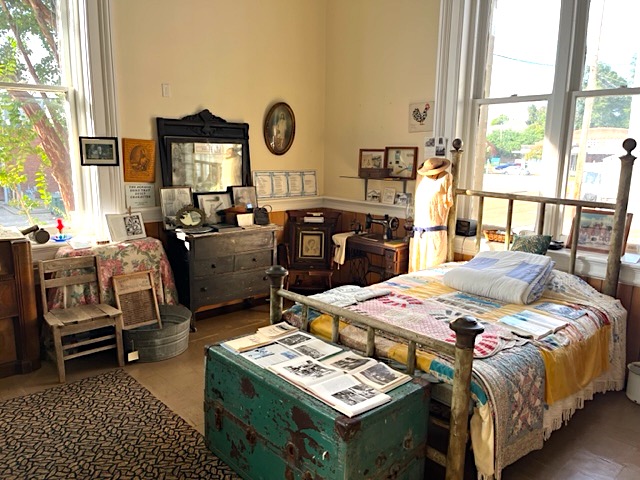
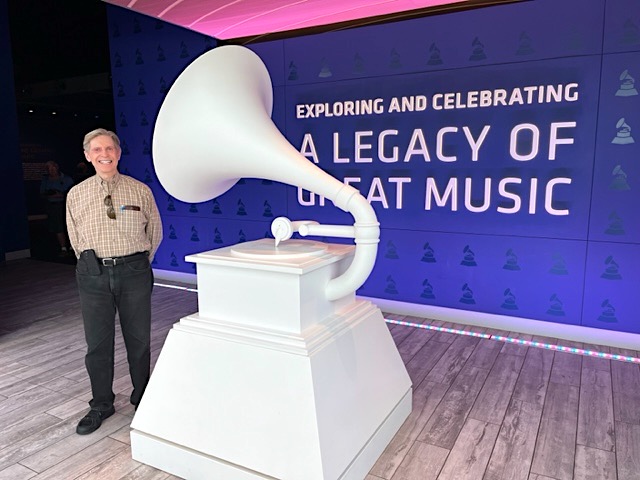
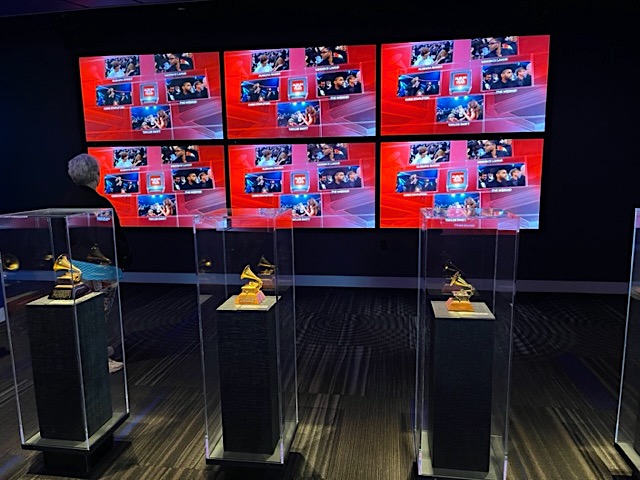
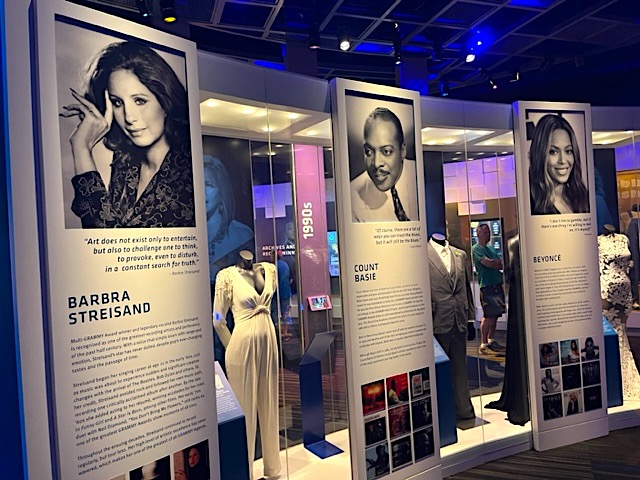
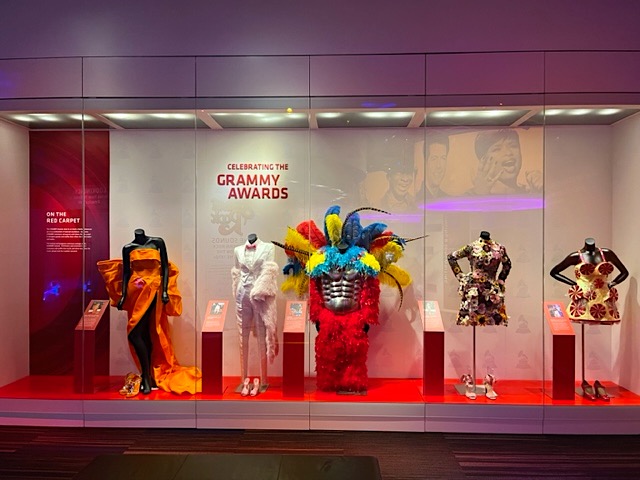
Cleveland is home to the Grammy Museum Mississippi as Mississippi has more Grammy winners per capita than any other state, making it the perfect location for the Grammy Museum Mississippi. The 28,000-square-foot museum opened in 2016 and offers more than two dozen exhibits, interactive experiences, and films to inspire future generations to create and explore new forms of music using the roots that have existed in this country for centuries. Here we learned about Mississippi’s contribution to America’s music, including the blues, jazz, hip-hop and rock n’ roll. The museum is located in a modern building and the Grammy’s are beautifully presented in this exquisite museum. They have a small theater where we watched Grammy performances from years gone by. They had a traveling exhibit on Route 61, which runs from Minnesota to New Orleans, and brought many musical talents from this route. They have many outfits from the musical celebrities who attended the Grammy’s. Musical instruments were also beautifully displayed along with many opportunities to hear Grammy Award winning artists’ music. Los Angeles has a larger Grammy Museum, although it does not provide as much local information on the influence of this area.
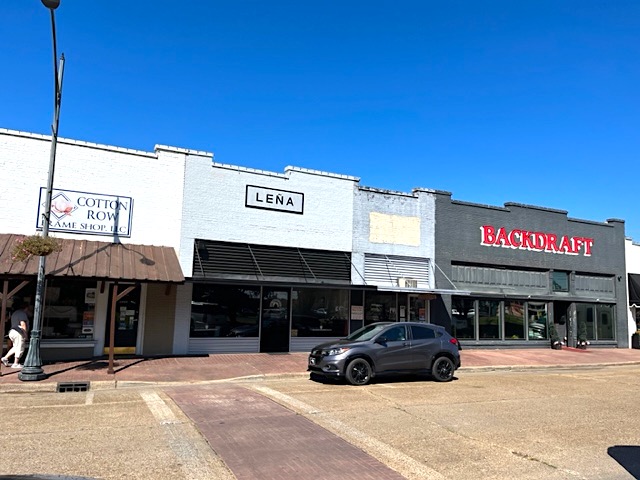
We enjoyed some of the many window-shopping opportunities in downtown Cleveland where we found an array of restaurants, boutique shops, a pharmacy, and more. This small town is much simpler than most of the towns that we had visited along the Mississippi River. The style of the architecture was simpler as was the selection of merchandise.
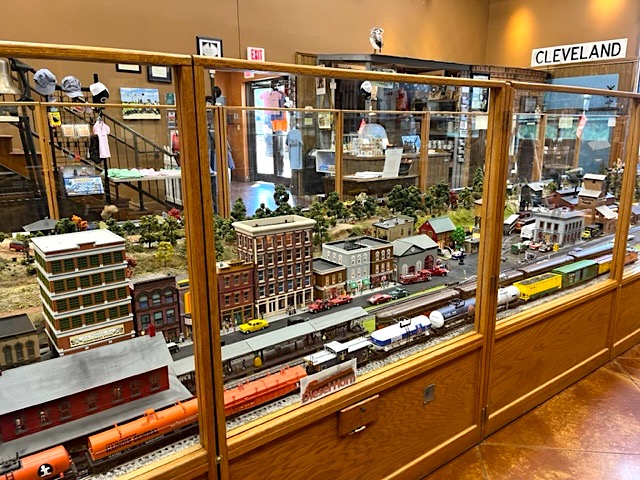
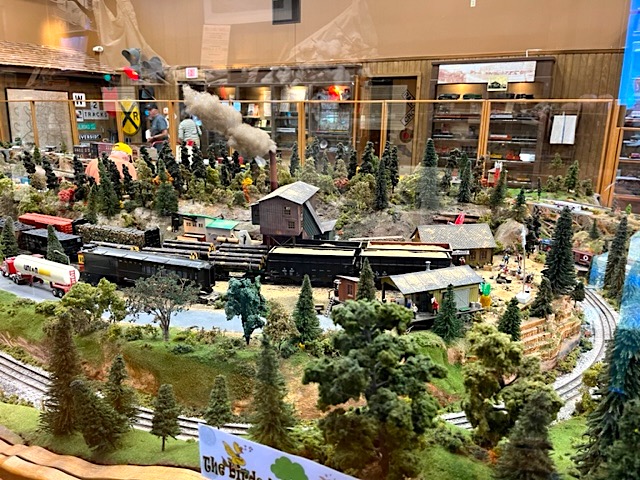
We visited the Martin & Sue King Railroad Museum, highlighting the 19th and 20th centuries, when the railroad was essential to the settlement and growth of the Mississippi Delta. The coveted railroad attracted many great industries to the town of Cleveland, Mississippi, including Baxter Laboratories, Delta Steam Electric Station, and more. The trains were vital in the transportation of people, goods, and mail. We walked through to explore the museum and its thousands of artifacts, photographs, documents and see a 1941 Illinois Central caboose. The museum focuses mostly on the extensive model railroad they have on display with tons of buildings, cars, landscapes and more.
Our next stop was the Mississippi Delta Chinese Heritage Museum. The fertile land of the Mississippi Delta has made the region fundamental to America’s agricultural economy. In the wake of the Emancipation Proclamation and the Civil War, immigrants from a diverse array of ancestries and cultures began to inhabit the area. In the 1880s Chinese immigrants began to work in the vast fields and farmlands of the Delta, originally as a source of inexpensive labor. Since then, the Chinese families that settled there have been an integral part of the community. At the Mississippi Delta Chinese Heritage Museum, the rich history of this significant community is displayed and preserved. We discovered the powerful stories of the Chinese families and culture that are tightly woven into the Mississippi Delta. Many Chinese immigrants opened grocery stores in the area and were only partially accepted into the community. White schools were not open to the Chinese, forcing them to attend small minority schools or be home schooled.
The evening’s entertainment was a review show called “Just Go to The Movies” put on by the crew and the house band. It featured a wide variety of musical numbers made famous by the movies that they were included in. The crew did a great job with their costumes and choreography.
2000-Piece PuzzleSunset Over The Mississippi RiverThe American Countess House Band
I’m sad to report that we were unable to visit Memphis because a barge had gone aground in the night and the Coast Guard had blocked all traffic on the river until they could move the barge. We had gotten up early for our shore excursion to Graceland that was scheduled to depart the boat at 7:30am. It was not until about 11:30am that we finally had an announcement from the captain that we had gotten the all clear to proceed down the river. Unfortunately, we were still a couple of hours away from Memphis by boat and would need to forego our visit. With the built-up traffic on the river the captain did not believe that we would be able to stop and still make it to our next stop in Mississippi the following day.
Memphis, with a population of about 625,000, residents is the second largest city in Tennessee after Nashville. Modern day Memphis was founded in 1819 by John Overton, James Winchester and Andrew Jackson. Memphis grew to be one of the largest cities if the Antebellum South based on its wealth of cotton plantations. After the Civil War and the end of slavery, the city continued to grow into the 20th century becoming one of the largest world markets for cotton and lumber.
Memphis is home to Tennessee’s largest African-American population and has played a prominent role in the American Civil Rights Movement. Leader Martin Luther King Jr. was assassinated there in 1968 after activities supporting a strike by city sanitation workers.
Memphis has become one of the nation’s leading commercial centers in transportation and logistics. Its largest employer is FedEx which maintains it global air hub at Memphis International Airport. In 2021, Memphis was the world’s second busiest cargo airport and is also the fifth busiest inland water port in the US. Memphis is also a center for media and entertainment, notably its historic music scene with clubs on Beale Street.
In the morning while we were awaiting news about the boat’s delay we attended an interesting 2019 documentary film on Linda Ronstadt called Linda Ronstadt: The Sound of My Voice, chronicling her life from birth to her diagnosis of Parkinson’s in 2011. We enjoyed listening to her many hit recordings which were all familiar to us. It would later become known to her that she had progressive supranuclear palsy and not Parkinson’s.
In the afternoon a group from Road Scholar was having a lecture on Martin Luther King Jr. in Memphis and they asked anyone on the boat to join them for the lecture. It was interesting to learn more about the garbage strike and politics in Memphis that led Martin to be in town during the time when he was assassinated. He was not intending to be in town at that time.
We also attended a lecture about the beginnings of Jazz in New Orleans by the Riverlorian. She provided an interesting talk on the Jazz bands that performed all over New Orleans from river boats to the area of town called Storyville, where there were whore houses and bars for white business men. This area of town was a place where the race of the prostitutes was promoted and advertised which was not possible at the time in other parts of the country.
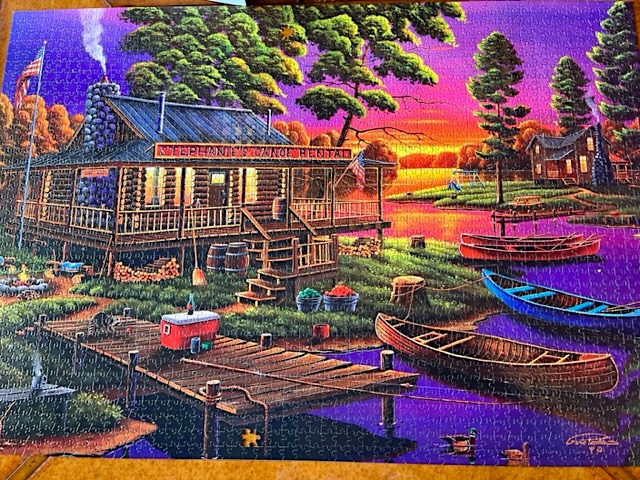
Mark and his fellow passengers finished the 2000-piece puzzle they had been working on for the last week or so.