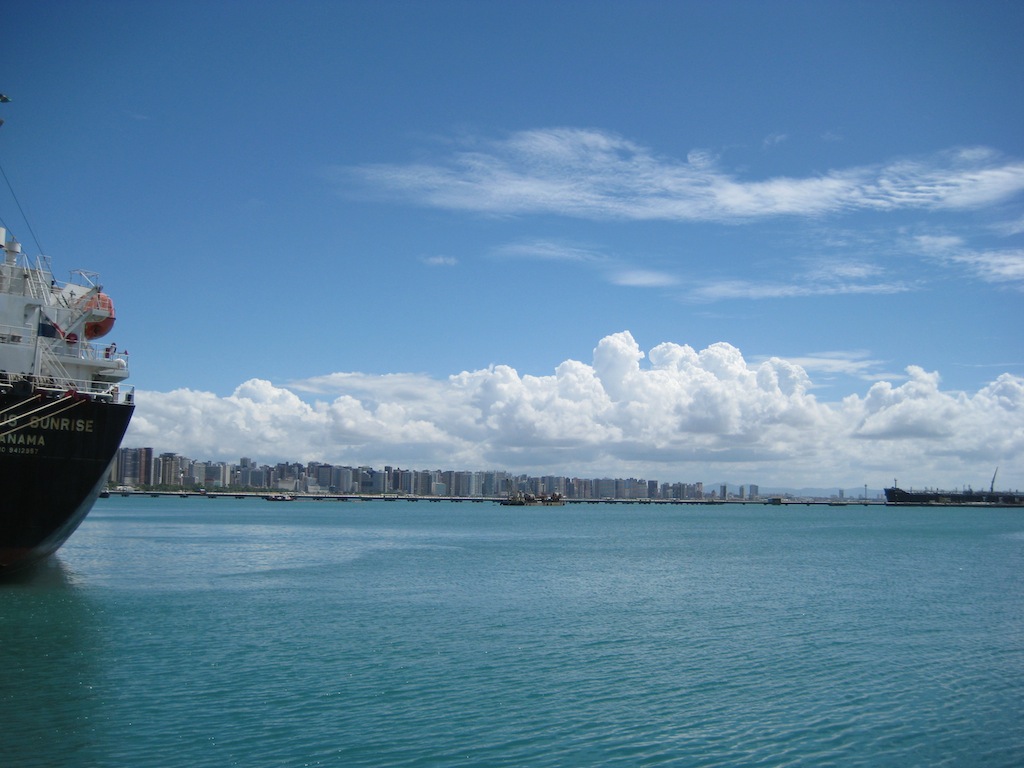
April 28, 2013 Sea Day

April 28, 2013  Sea Day

Phillip Huber presented a behind the strings talk on his spectacular marionette puppets. He brought out all eighteen of the puppets he presented in his two shows and demonstrated how several of them were constructed and how they operate. He played a short video of how he got started in the business at an early age. He got his first hand puppet at three, moving up to string puppets and then starting work as a professional puppet show entertainer and marionette maker when he was only fifteen.

People just loved seeing all of the marionettes again and getting a chance to see them up-close. They are exquisitely crafted and have many details that are not visible when they were performing on the stage.

The afternoon included the Palm Court Cabaret, presented by our cruise director Bruce and friends. Bruce is a very accomplished musician and performed a variety of piano pieces. One of our librarians, Emily, was a theater major and sang a song with Bruce at the piano. Debbie Bacon from the piano bar did a duet with him and another of the ships performers played the guitar while Bruce played the piano. It was a wonderful afternoon concert.

The evening’s entertainment was a refreshing group of entertainers called Graffiti Classics. Four young string musicians who also sang and danced to a wide variety of musical numbers, all the while, not taking themselves to seriously. They were excellent musicians, but everything they did had a sense of whimsy and fun to it.

April 27, 2013 Castries, St. Lucia

April 27, 2013  Castries, St. Lucia

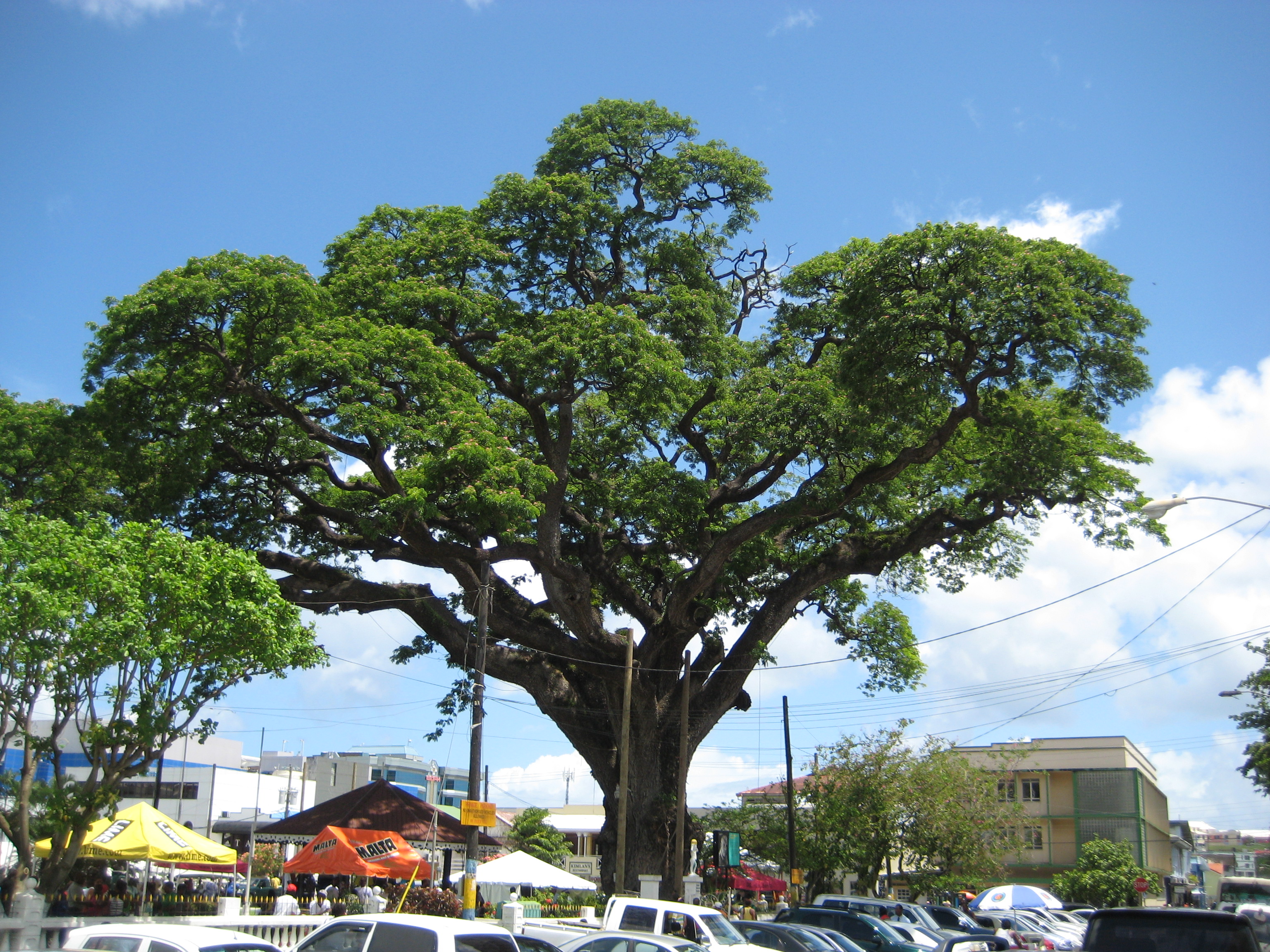
Public Square 400 Year Old Tree

Public Square 400 Year Old Tree


Cathedral of the Immaculate Conception

Cathedral of the Immaculate Conception

Interior of the Cathedral

Interior of the Cathedral

Lying between Martinique and St. Vincent, St. Lucia is another peak in the Windward chain, with slopes that soar from the sea to a central mountain spine crested by Morne Gimie at a height of 3, 117 feet. 27 miles in length and 14 miles across, St. Lucia has an active volcano called La Soufriere, which is a bubbling, sulphurous mass with the distinction of being the “only drive-in volcano in the world”. The population of 145,000, are of mostly African descent and more than a third live in the sprawling northwest coast capital of Castries. Agriculture is the mainstay of the economy and 70% of the island’s earnings come from the export of bananas. There are 2,000 banana farmers on St. Lucia, and on market day, the children regularly play truant, just to help their parents carry the crop to the processing plant. The trademark of the island is its twin peaks known as Gros Piton and Petit Piton. These two spikes of lava over 2,500 feet high have been a sailor’s landmark for hundreds of years.

We did not have a tour scheduled so we walked about twenty minutes into the town of Castries to have a look around. In the peak of the season, the town receives as many as four cruise ships a day, so it is well equipped for the shopping tourist. Several large market halls surround the port with one souvenir stand after the next. The items being sold ranged from spices, jewelry, clothing, shells, woodcarvings, to refrigerator magnets. None of the merchandise looked to be of particular quality, but rather an abundance of mass-produced merchandise.

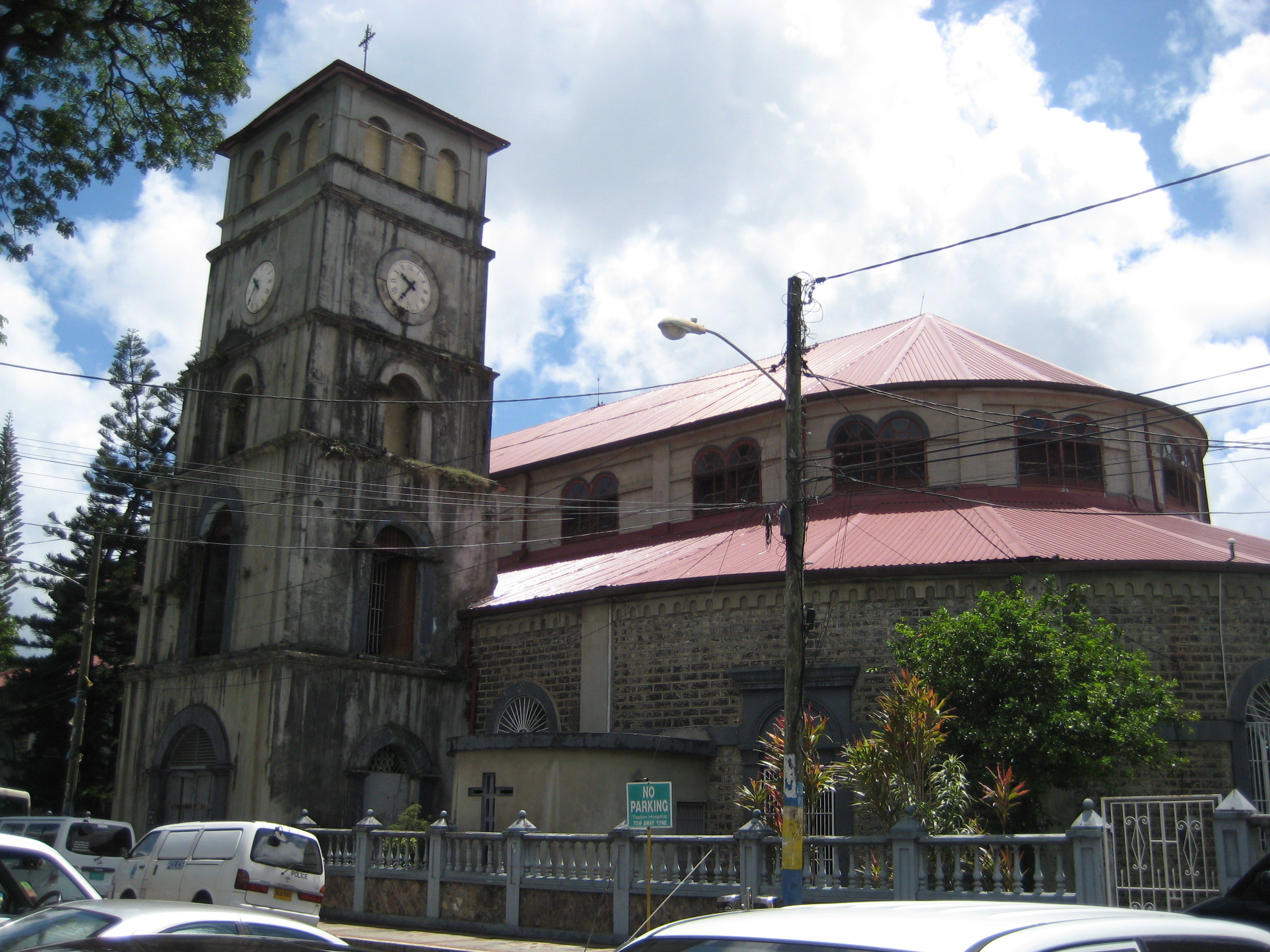
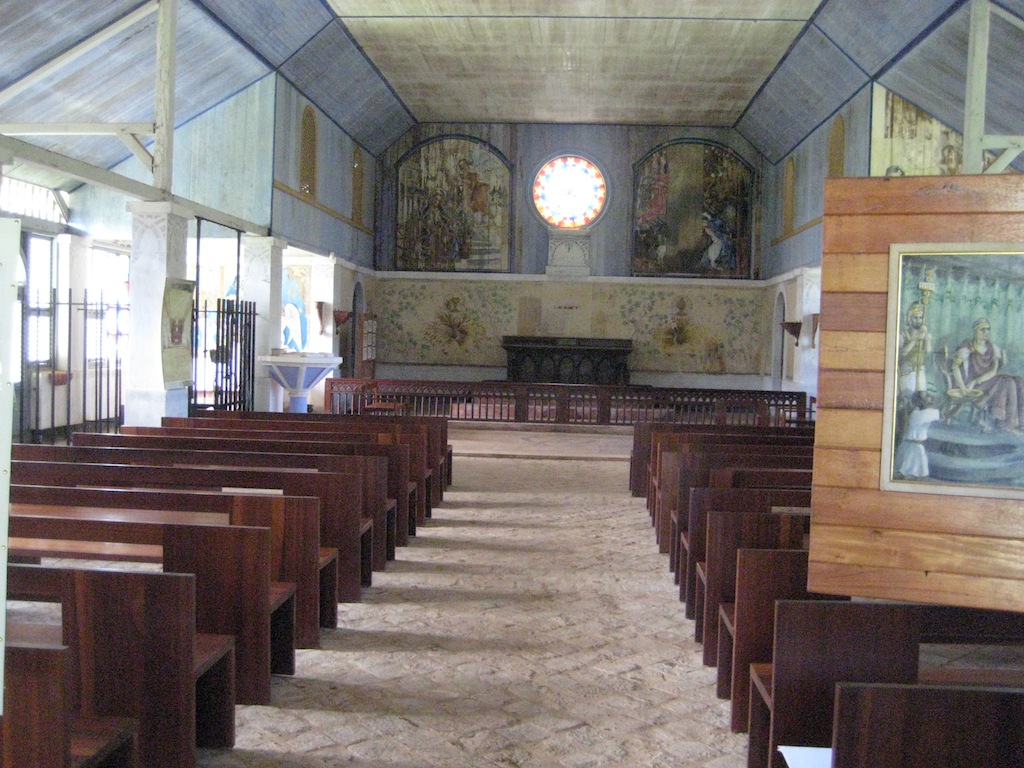
We visited the Cathedral of the Immaculate Conception, built in 1897 and located next to the main public square named after Derek Wolcott, who was a local poet and Nobel laureate. The church is a beautiful wood constructed church with intricate hand painted ceiling and walls. On this particular day, there were a large number of children attending bible study, dressed in uniforms and singing hymns and reading bible verses. Outside the church in the square is a gorgeous 400-year old Samaan (rain) tree.

We wandered the hot and humid streets of town poking our heads into several shops to check out the merchandise and observe the locals doing their Saturday shopping. We stopped for a coffee at a local coffee and pastry shop in a small indoor mall where we used the Internet.

We found the locals to not be very friendly, and with nothing of interest to explore in town, we headed back to the ship. Onboard the ship, we were treated to a local entertainment group called the Lime Diamond Steel Orchestra. They played a variety of different types of music on a variety of steel drums. They were excellent musicians, playing for an hour without a piece of music.

Late afternoon, we had our last sail away party as we headed home towards Ft. Lauderdale. It was now difficult to pretend that this extraordinary adventure was quickly coming to an end and soon we would be back home dealing with the reality of everyday life.

The evening’s entertainer was a gentleman from Las Vegas by the name of Doug Starks who calls himself Mr. Entertainment. He sang a variety of music and told jokes; unfortunately his act was a bit flat.

April 26, 2013 Sea Day

April 26, 2013  Sea Day

This was a very quiet sea day, allowing us to rest as we had both been fighting colds, coughing and sneezing uncontrollably. We must have picked it up from a fellow guest, as many guest have been coughing and sneezing all over the ship. There were a couple of lectures on fabrics of Latin America and digital photography but nothing that we were particularly interested in.

We shared lunch with our friend Maureen, who is the arts and crafts teacher onboard and lives in the Bay area near San Francisco.  We hope to see here when we are in the Bay area in September.

The evening’s entertainment was a singer by the name of Lorraine Brown who had a beautiful voice, lots of energy and a good sense of humor.

April 25, 2013 Devil’s Island, French Giana

April 25, 2013  Devil’s Island, French Guiana

Prison Ruins

Prison Ruins

Chapel

Chapel

More Prison Ruins

More Prison Ruins

Chapel Interior

Chapel Interior

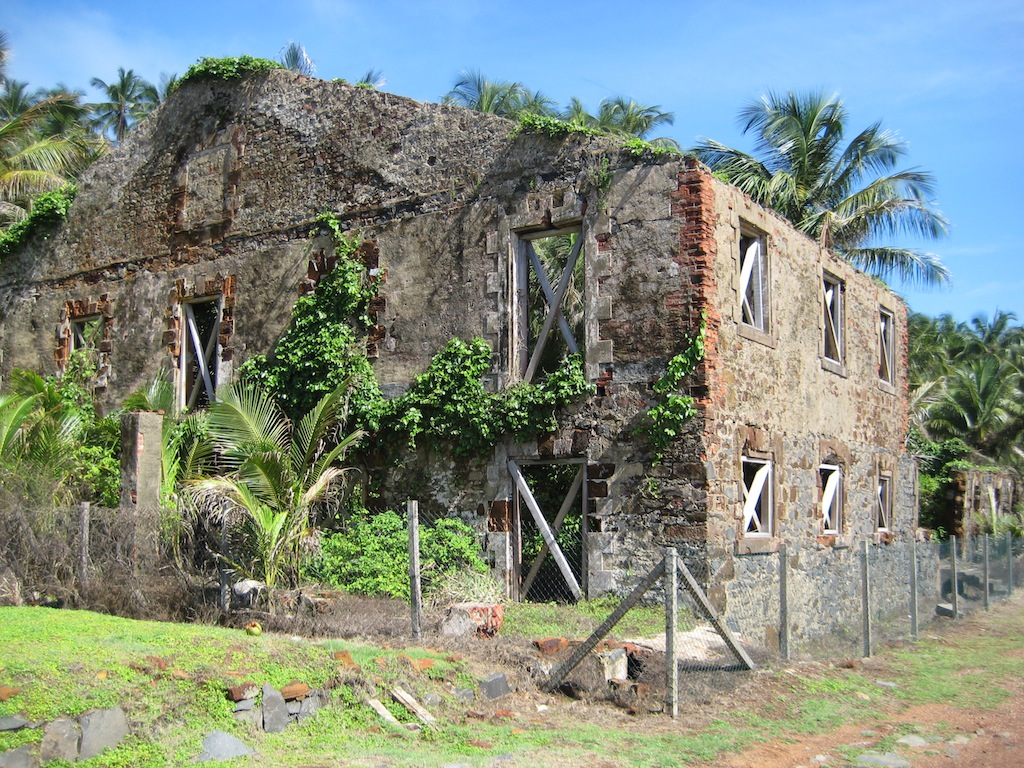
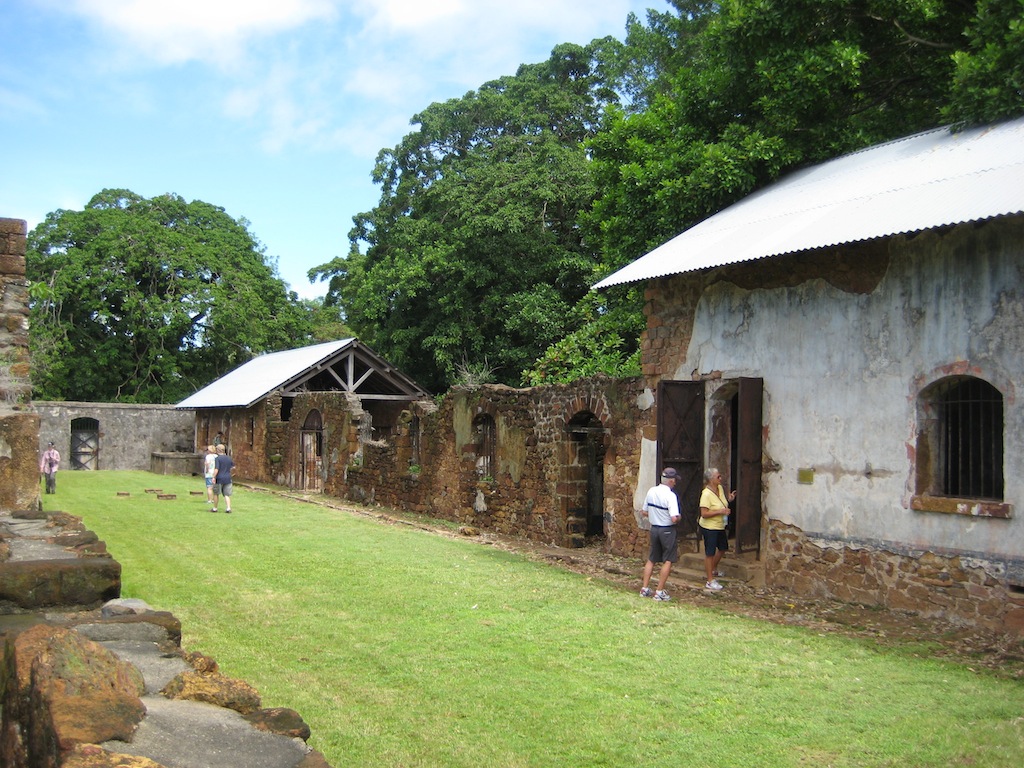
Devil’s Island is another name for a group of three islands also known as the Iles du Salut island group in the Atlantic Ocean. The three islands are called Ile Du Diable, Ile Royal and Ile Ste Joseph. Our visit today was to the island called Ile Royale. It is located approximately nine miles off the coast of French Guiana in South America just north of the town of Kourou.  It has an area of about 70 acres. The island was a part of the controversial French penal colony of French Guiana for 101 years, from 1852 to 1953. In spite of its being the smallest part of the penal colony, it is the most famous due to its use for the internal exile of political prisoners. The harsh conditions and rampant spread of diseases on the island guaranteed that more than 80,000 prisoners were never seen again. The remote location, rocky coastline and treacherous waters made escape virtually impossible. In 1938 France stopped sending prisoners to Devil’s Island, and in 1953 the prison was closed forever. Since tourism facilities have been added, the islands now receive more than 50,000 visitors a year.

Our visit to this small island was quick, as our all-aboard time was 2:30pm. The island has no dock large enough for a ship of our size, so we used tender boats to go ashore. Once on the island there are several grass or gravel paths you can follow to explore the island. To give you an idea about the islands size, it takes about 45 minutes to walk around the perimeter of the island.

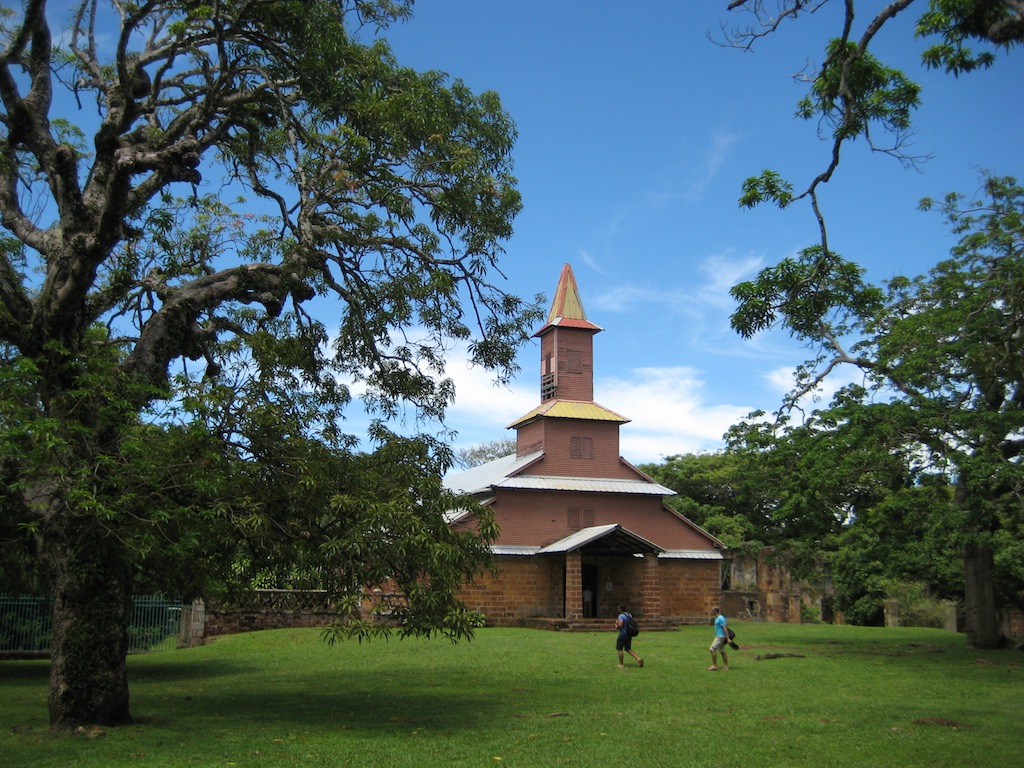
The island is very lush and tropical in feel with palm trees, hibiscus bushes and dense vegetation. The shoreline consists of large rocks. The center of the island is elevated and contains the majority of the ruins from the convict community. Ruins of the old barracks, chapel, lighthouse and hospital are still visible. The former guard’s mess hall has been restored as a restaurant and hotel, but it is far from luxurious. There is a small cemetery on the island and the director’s quarters have been restored and contains a small museum with photos and maps, unfortunately all of the descriptions were in French.

The island was a pleasant place to explore although the heat and humidity were enough to make you moist from head to toe. Monkeys were frequent sights around the island, as were peacocks, parrots, humming birds, agote (large rodents) and iguana. A protected bay is set up as an area for swimming in the ocean. We stopped at the hotel bar with our friend Jenn, for the famous Devil’s punch. They serve this concoction in very small Solo plastic cups, which look very unassuming. I didn’t seem to be affected by the turpentine tasting drink that burned as it went down, but Jenn started laughing and saying she was drunk before she had finished the tiny cup. We are not too sure what the punch is made of but it was an experience.

The afternoon sail away party included what was called the Grand Voyage Swap Meet. This was an opportunity to sell, trade, or give away any items you may not have room to take home, or maybe it was a souvenir that you now thought “What Was I Thinking?”  Well, people brought everything they could get their hands on to the swap meet including chocolates left on their pillow each night, clothing, shoes, gifts received from the ship on formal nights, souvenirs and more. The crazy thing was that there was someone who bought most everything that was available for sale and everyone seemed to go away happy.

In addition to the swap meet, there was an ice carving demonstration and games for the guests to play. The orchestra played music but the ship didn’t sail. There was a problem with the hydraulic lift on one of our tender platforms that fold out from the ship and it would not close. It took the crew several hours to get the platform back in place and we could finally get underway about 6:30pm.

The evening’s entertainment was a movie titled Papillon based on a book written by Henri Charriere in 1968 about Captain Alfred Dreyfus’ escape from Devil’s Island along with a companion by the name of Sylvain. They used sacks filled with coconuts to act as buoys and drifted in the rough seas for several days before reaching the mainland.

April 24, 2013 Sea Day

April 24, 2013  Sea Day

The Amazon River is a gigantic system of rivers and forests, covering almost half of Brazil and extending into neighboring countries. The wide stretch of river known as Rio Amazonas, runs between the cities of Manaus and Belem, providing a navigable route for ocean-going vessels to the western portion of the South American continent. Much of the Amazon remains unexplored, although it is estimated that there are more than 15,000 creatures, thousands of birds and fish and hundreds of mammals that have not been classified. A cursory sampling of known animal species found in the forest – some common, some rare, some virtually extinct – includes jaguars, tapirs, peccaries, spider monkeys, sloths, armadillos, caimans, alligators, river dolphins, boa constrictors and anacondas. Forest birds include toucans, parrots, macaws, hummingbirds and gaviao, and insect life is well represented, with over 1,800 species of butterflies and more than 200 species of mosquitos.

Our travel guide, Barbara, presented her final port talk on Things to See and Do in Castries, St. Lucia. She has been a wealth of knowledge about every port we have visited and her presentations have always been upbeat and entertaining. Thank you, Barbara.

Howard Walker lectured on the Relative Decline of 20th Century Great Powers, where he discussed both Japan and Russia. While they were once great powers they have each moved down the list as the most powerful in the world.

We shared a lunch with local San Diegan’s Gordon and Mary whom we met on this cruise one of the first days we were on the ship. We have enjoyed getting to know them better and look forward to spending more time with them in San Diego when we return.

Packing—Today, Kent decided to pull out of the cabin storage areas all of the Holland America gifts and our own treasures purchased on the trip to see if we can find a way to carry them home.  Some we decided not to keep, so gave some to a mid-ship cleaner we befriended and will offer some to our cabin stewards.  Others, of course, we will keep and figure out how to pack them.  As one of our gifts, HAL did give us each a new suitcase, so that should help.

Lost voice—Kent is experiencing his second cold on this trip and Mark is showing some symptoms also.  Kent’s voice is almost gone, which ruins his favorite activity….talking with others and shouting obscenities to passersby!

Prior to dinner everyone was invited to a cocktail party as a part of the Mariner Appreciation festivities. You were asked to wear your mariner medallions and get your photo taken with the captain. We attended the cocktail party but chose not to wear our medallions or to have our photos taken.

The entertainment this evening was another show by the Amsterdam Singers and Dancers titled: Stage and Screen. They performed a variety of musical hits from Broadway, London’s West End and Hollywood. The post-show reviews were mixed.

April 23, 2013 Belem, Brazil
April 23, 2013  Belem, Brazil

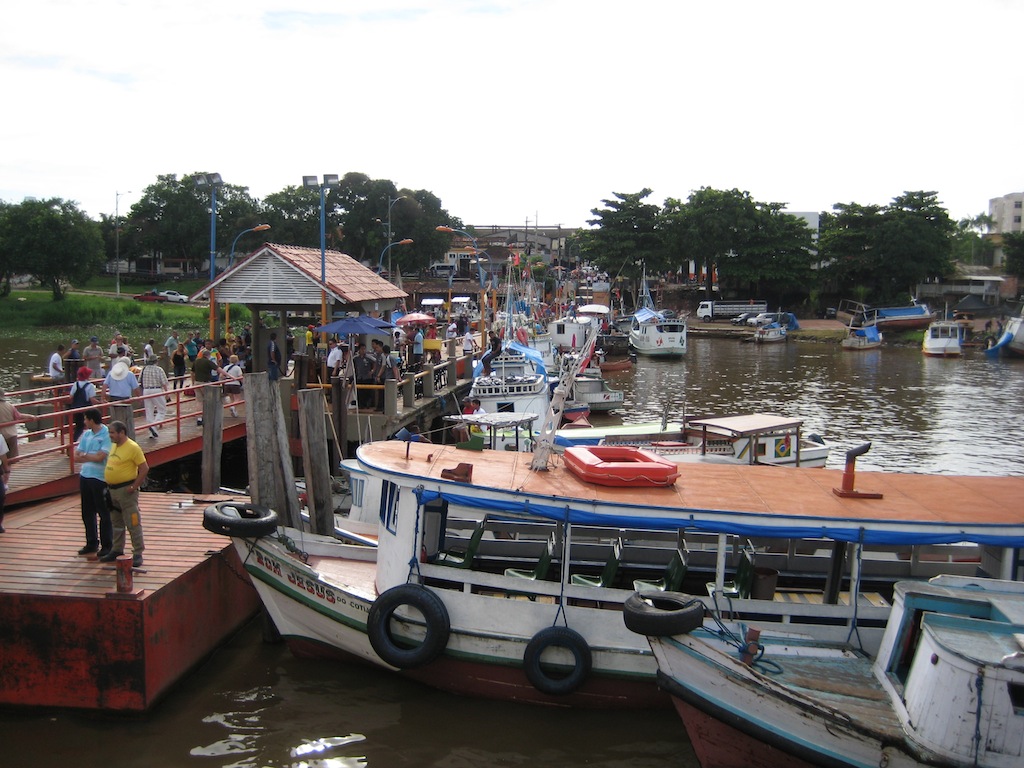
Tender Pier
Tender Pier

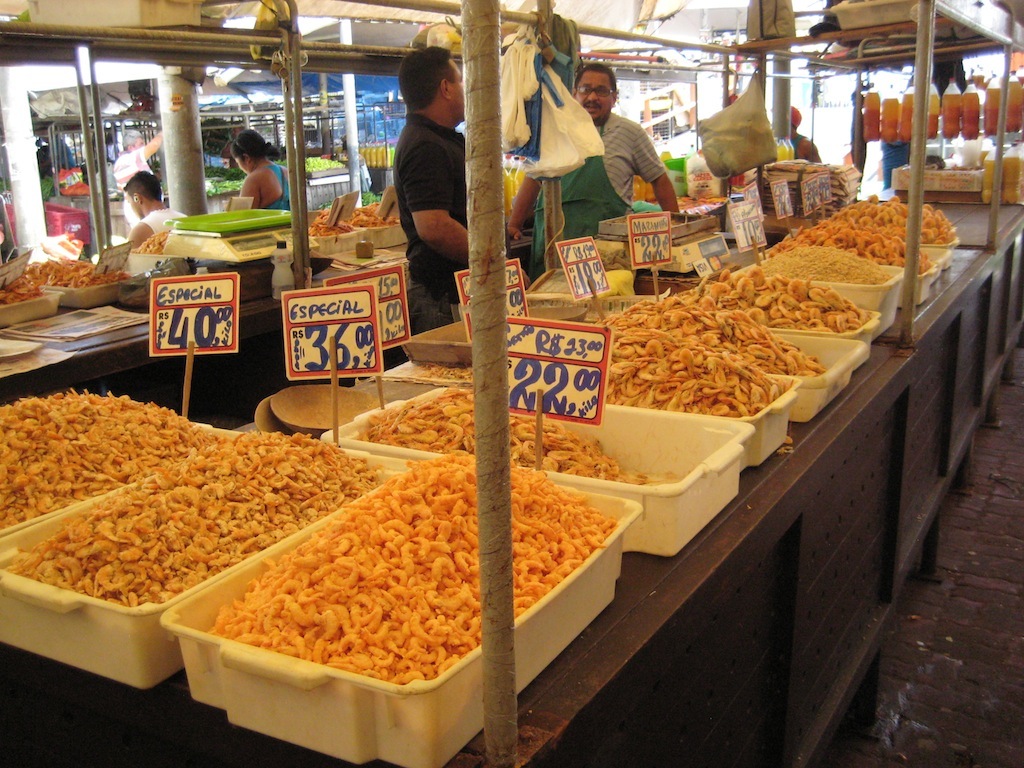
Dried Shrimp at the outdoor market
Dried Shrimp at the outdoor market

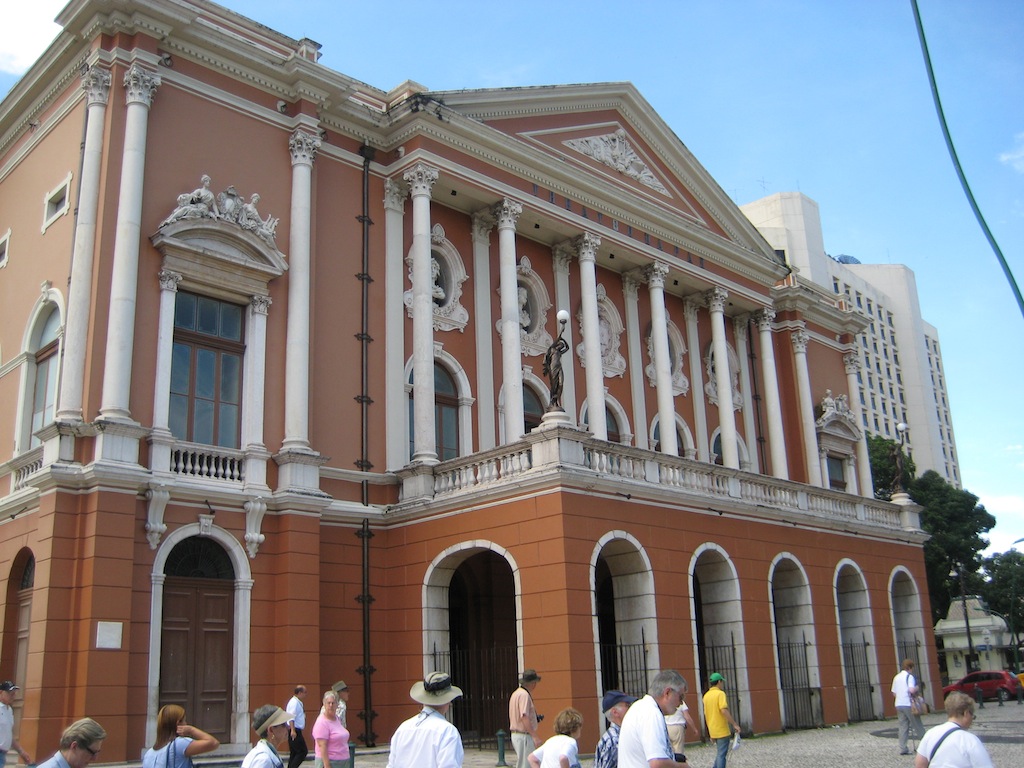
Opera House
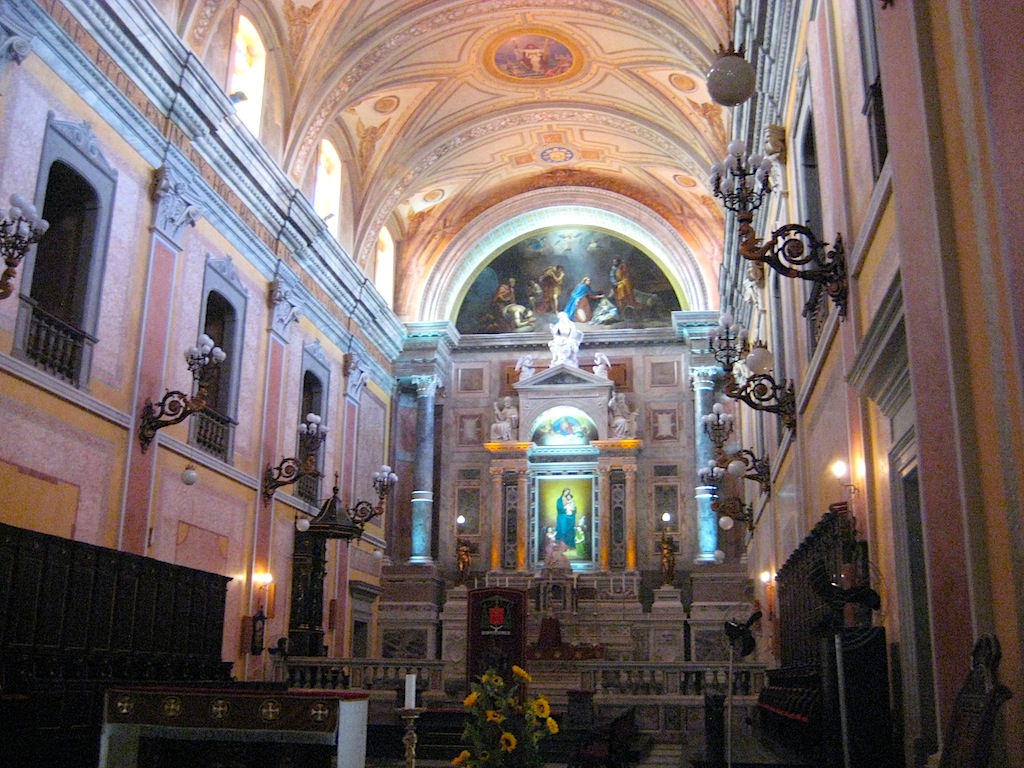
Opera House

Cathedral

Cathedral

The southern channel of the mouth of the Amazon lies just north of Belem, and as such, the city is known as the Metropolis of the Brazilian Amazon Region. Belem is also known as the city of the mango tree, or Cidade das Mangueiras, due to the large number of mango trees in and around the city. We anchored in the middle of the Amazon River and were required to take a local ferry- boat from the ship to a small dock shore-side. The dock was about a 45-minute drive from the downtown of Belem.

The dock area was filled with colorful wooden boats and ferries used for fishing and transporting locals from one town to another. Young men were selling fish and live crabs on the dock. Fruit stands lined the street selling pineapples as well as other fruits and vegetables. Trash littered the shoreline and the water is a hot chocolate color from all of the silt that moves through the river. From the mouth of the river, the silt is carried some 200-miles away as the huge volumes of fresh water mix with the salt water of the Atlantic Ocean. The streets were in poor condition with many potholes, litter and a collection of stray dogs.

Our tour today was an Arts and Culture of Belem tour where we could get an idea about everyday life in Belem. The tour was included in our travel package and was a tour of only eight people in a small van. Our drive to the town of Belem took us along a coastal road where there was a beer brewery, a naval academy, an army academy and many unkempt businesses and homes, many with graffiti painted walls.

Our Signature representative and her husband were good to arrange our early tender off the ship.  However, she seemed to be a little confused/ditzy.  She left without money and had to borrow some US dollars from Kent; didn’t know when to get out of the van at a tour site and seemed more interested in her shopping than managing the tour.

Once we arrived in Belem, we drove through the city to reach the Ver-O-Peso Market (Check-the-Weight Market), a huge outdoor market that sprawls four city blocks. Begun in 1688, as a result of the Portuguese tax for everything entering and leaving Amazonia, it is the city’s best-known landmark and possibly the largest market in Brazil. The market sells most everything that you might need from fruits and vegetables, seafood, live ducks and chickens, handicrafts, clothing, pottery, prepared foods, juices, a natural viagra and more. We had the opportunity to taste the cocoa fruit, dried shrimp, fresh Brazil nuts and a couple of local fruit juices.

Nearby the market, we visited the Forte do Castelo, a fortress built by the Portuguese in the 17th century. It is located on the edge of the river and served to protect the new colonies against attacks by Holland and France. On the site of the fort was a small museum showcasing many of the artifacts uncovered from within the walls of the fort, including pottery, utensils, tools, coins and canons.

Across the street from the fort stands the Basilica of Our Lady of Nazareth, which is an elaborate copy of St. Paul’s Basilica of Our Lady of Nazareth in Rome. Built during the rubber boom at the beginning of the 20th century, this church is a fine example of beauty and architecture with a central nave, stained glass windows and a lovely altar. The church has been beautifully maintained and is in extraordinary condition inside.

Our next stop was the Sao Jose Liberto former jail, now a handicraft market, and the Jeweler Polo Gems Museum displaying more than 4,000 pieces of diamonds, quartz, crystals and amethysts. This once overcrowded jail holding more than 40 people per cell was closed and the population relocated to a larger jail. The building was then completely renovated and turned into a beautiful museum with gorgeous outdoor courtyard, performance hall and handicraft market.

Our last stop was the Da Paz Theater, considered to be one of the prettiest in Brazil. It was built in the neo-classical style and was opened in 1878. Beautifully maintained, the theater is reminiscent of something you would find in Europe. The lobby was decorated with hand-painted walls imitating wallpapers of Europe and the entry floors were beautifully tiled with original mosaics. The theater built in a horseshoe shape with four stories of balconies and box seats facing a large stage with red velvet curtains. The ceiling was exquisitely hand painted, the floors throughout the theater were done in a light and dark wood parquet, and the seating was all made of cane. Upstairs on the second floor we saw a stunning ballroom used for dancing. Around the perimeter of the ballroom a second floor narrow balcony with wrought iron railing was reserved for the servants of those attending the ball. The help was kept accessible in case they were needed but they were not allowed to mingle with the guests.  The seating capacity of the theater was about 882.

During the late 1800’s and early 1900’s, Belem was a thriving community, prosperous because of the burgeoning rubber industry. Much of the city’s architecture during that period was copied from French examples. Unfortunately many of these gorgeous old buildings have not been maintained and today they are covered in mildew from the heavy rains and many have not been painted in years. Many of the main city streets are lined with three story row homes-style buildings with elaborately ornate window trims and architectural details. Hopefully one day the city will be in a position to restore many of these buildings and bring back some of the prosperity of the past.

Belem is located very near the equator so the weather is very warm and humid. Most everyday of the year, it rains for all or a part of the day. It had rained all day yesterday, but today we lucked out and it did not shower until late afternoon when we were back onboard and sailing for Devil’s Island.

The entertainment on this night was a second performance by the very talented Marionette artist Phillip Huber. He brought to the stage a whole new collection of nine more puppets including an opera singer, a contortionist and an Asian warrior who performed the face changing dance, before changing into a dancing dragon. It was fascinating and entertaining.
April 22, 2013 Sea Day

April 22, 2013  Sea Day

This morning our Travel Guide, Barbara, presented: Things to See and Do in Devil’s Island. David Smith lectured on Editing Your Travel Images where he discussed how to adjust the color of your photos, enhance your photos and crop them.

We shared lunch in the dining room with friends Ken and Fred and Dennis and Robert. Afternoon Tea featured an array of cupcakes and other treats today.  Alec joined Kent for the cupcakes.

In the afternoon David Smith’s wife Anna presented a lecture on Exotic Fabrics of the World. Anna spoke and showed photos of exotic fabrics from Asia, South Pacific, Africa, Central America and Europe. She loves to quilt and sew and travels the world exploring the decoration of hand made fabrics from different cultures.

The evening’s entertainment was a program called Noteworthy Nuances performed by the Amsterdam Orchestra. The orchestra consists of six members; Chris Walton the drummer, Jake Stimmel the electric guitar player, Andre Lyles the bassist, Chris Whitely the Saxaphonist, Greg Gibson the keyboard player and the Music Director, Irving Brown, who is also the pianist.

Sickness—many of our fellow passengers have been suffering with severe colds and coughs.  We have avoided this round of sickness until now.  However, Kent is developing symptoms of a cough.  In January, both of us had colds and hoped we were through with the sick thing.

Cruise Blues—many of our fellow passengers are NOT ready for this four-month cruise to be over and are experiencing the “cruise blues.”  They are making special luncheon dates, taking photos of fellow passengers and preparing for the separation from the cruise life.  Others….on the other hand, seem to be ready and are enjoying the moment, but are planning to return home and to reality.  The next few ports don’t have too much to offer and are not those ports people are looking forward to, so both groups may be a little bored with the remaining ports and sea days.

April 21, 2013 Fortaleza, Brazil

April 21, 2013  Fortaleza, Brazil

Fortaleza Waterfront

Fortaleza Waterfront

Theater

Theater

Central Market

Central Market

Cathedral

Cathedral

Beach Front Skyline

Beach Front Skyline

Fortaleza, is in northeastern Brazil and the capital of Ceara State; it is a seaport on the Atlantic Ocean, near the mouth of the Ceara River. It is one of Brazil’s chief seaports for chief exports such as coffee, cotton, carnuba wax, beans, rice, sugar, fruits, rubber, hides, skins and rum. Fortaleza was founded in 1611, becoming the capital of Ceara State in 1810. The current population is about 2.2 million inhabitants. Located very near the equator, Fortaleza has twelve hours of daylight year round and the temperatures are very warm ranging between 80 and 95 degrees day and night.

Our tour started with a drive by the Praia do Futuro, a popular four mile long beach where there are many beach facilities including open air eating establishments, beach chairs and umbrellas, showers and restroom facilities. Fresh fish are sold at beach stands, along with souvenirs.

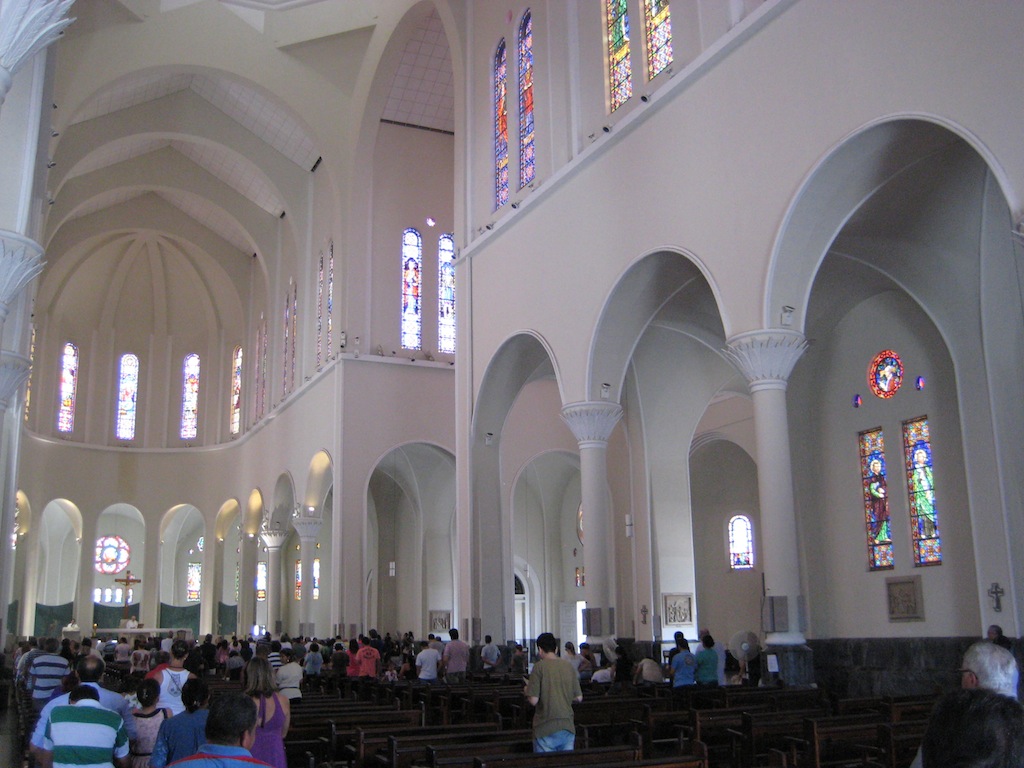
We stopped at the Metropolitan Cathedral of Fortaleza for a look at the beautiful stained glass windows and vast interior able to accommodate a crowd of 5,000. The church is newer and fairly simple inside and out.  A mass was underway.

Our next stop was the central market, which has over 500 stalls where locals sell clothing, local lace and embroidered products such as table cloths, clothing and locally grown cashew nuts. Hammocks of all sizes, shapes and colors are also popular.

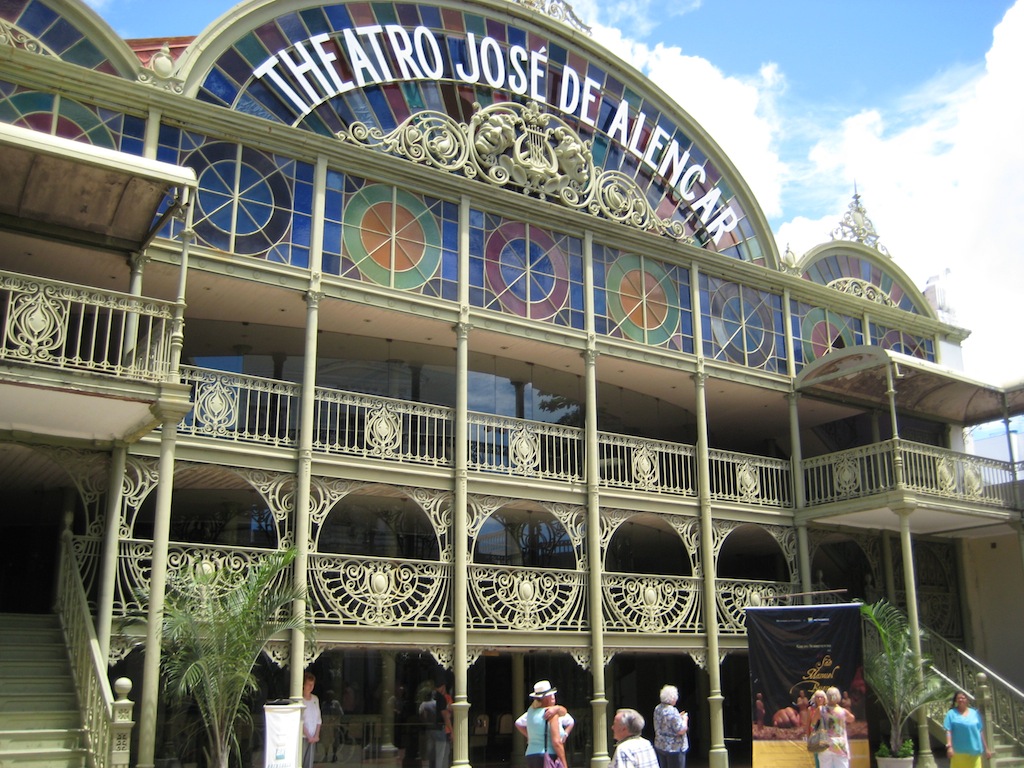
Next was the Jose de Alencar Theater, a memorial to the famous 19th century writer and poet from Fortaleza. The theater is a beautiful Art Nouveau style building from 1910 and is still used for theatrical performances today. The theater is horseshoe shaped with two balconies enclosed with ornate ironwork railings from Scotland. The theater seats are all made of woven cane and wood, and the ceilings and walls are all ornately hand-painted murals, painted by a painter with no hands. Still a beautiful theater 100 years after it was built.

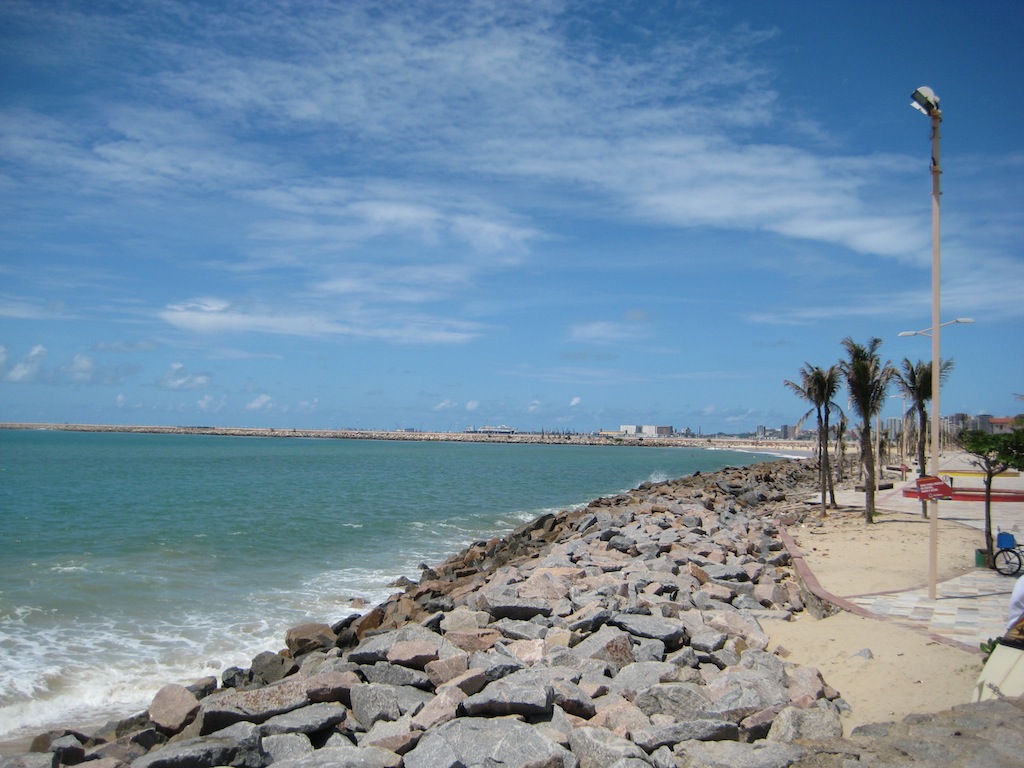
Our last stop was the Praia de Iracema located in the newer part of town near most of the hotels and nightlife. White sand beaches stretch for miles with several piers that reach out into the sea creating a great place to enjoy sunsets. The beach is lined with high-rise towers and looks very modern.  The sand has been eroded and huge rocks protect the remaining shore.

Our overall impressions of Fortaleza are that it is a city of contrasts. We drove through some streets that reminded me of a war zone with half demolished buildings, unfinished roads, graffiti and trash everywhere.  Further down the road we would find newer developed neighborhoods with new high-rise buildings and pleasant looking shops. Construction seemed to be going on in all parts of town, but it was still not a very pretty city.

We attended the sail-a-way, then drinks and dinner.  The Amsterdam singers and dancers performed Abba songs, which we loved.  Dennis and Robert sat with us and Robert helped us critique the performance.  He is quite a musician and had worked for the Disney archives.

April 20, 2013 Sea Day

April 20, 2103  Sea Day

We continue to change our clocks and watches back an hour for the third day in a row as we head towards Brazil. Our morning lecture was by Howard Walker who presented a talk titled: Behind Embassy Walls: Who Works There and What Do They Do? It was a very interesting talk on embassies’ core functions of reporting, representation, negotiation and consular. He discussed all of the types of work that embassies do around the world and how many different departments and purposes they serve.

For lunch they featured a tapas bar poolside where they had items like, empanadas, small quiches, garlic olives, meatballs, scallops in a cream sauce and many more. It was a nice change from the usual offerings.

The afternoon included the Indonesian crew show of traditional music, song and dance from their homeland of Indonesia. Many of the dining room stewards and cabin stewards participated in the colorful and lively show.  They needed a little more practice…but considering how many hours they work, we will give them credit for showing up!

The evening’s entertainment was a second show by the Spanish group called Kings of Pop, Queens of Soul. Not many people liked the first show they performed last week so the audience was sparser than usual. The show was not that bad.

Rusty water—Since we boarded, we have experience frequent discharges of rusty water in the shower and sink in our cabin.  We have reported it and they have tried to solve them problem, but it persists.  Today, Kent wrote a note asking for some money back if they can’t provide safe water for bathing and drinking.  HAL immediately sent plumbers to investigate again and gave us bottled water to use.  They followed up with a phone call to see if all was well.  No mention was made of returning any money to us for the inconvenience.  It is OK for now.  At one time or another, all passengers joke about asking for a free cruise if anything isn’t “just so.”  Guess Kent will try that next.  HA!

April 19, 2013 Sea Day

April 19, 2013  Sea Day

We are headed to toward Brazil crossing the Atlantic Ocean, which is the second largest of the earth’s four oceans and the most heavily traveled. Divided into two sections, the part north of the equator is called the North Atlantic, the part south of the equator, the South Atlantic. The ocean’s name is derived from Atlas, one of the Titans of Greek mythology. An S-shaped body of water, the Atlantic extends from the Artic Ocean in the north to the Antarctic continent in the south and between the eastern coast of the American continents and the western coast of Africa and Europe. It’s surface area is about 31,660,000 square miles and if you include its marginal seas-the Gulf of Mexico-Caribbean Sea, the Arctic Ocean and the North, Baltic, Mediterranean, and Black seas-the total area is about 41 million square miles. The Atlantic has an average depth of 12, 881 feet and its deepest point is in the Puerto Rico Trench, where the bottom is 28,681 feet below the surface. The Atlantic formed about 150 million years ago, when a rift opened up in the super-continent of Gondwanaland, resulting in the separation of South America and Africa, which continues today at the rate of several centimeters a year. The underwater mountain ridges have a more rugged topography than any mountain range on land, are a frequent site of volcanic eruptions and earthquakes and can range as high as 2 miles above the ocean floor.

Travel guide Barbara presented: Things to See and Do in Belem, Brazil. We attended a cooking show with guest chef Chris Smith in the Culinary Arts Center where he presented two recipes on a chicken tortellini soup and a tomato and poblano chili soup.

We had lunch in the dining room with friends Ken and Fred.

The afternoon featured a lecture with Howard Walker where he discussed the spread of nuclear weapons, conflicts over natural resources, borders, national minorities, and terrorism. He also discussed cooperation against drugs and thugs, humanitarian issues, environmental protection and the international financial system. Howard has an incredible amount of information and statistics but it is often too much information to absorb.

The afternoon also featured a matinee concert, by concert pianist Naomi Edermariam who had performed a few nights ago. She presented a wonderful program of music written about animals, birds and other “critters.”

It was a formal dinner this evening, featuring a Carnival theme with the dining room decked out in bright colors. After dinner there was a ball in the Queen’s Lounge with all of the officers available for dancing. The lounge was beautifully decorated in brightly colored Carnival decorations. Many of the guests had festive colorful outfits and masks for the occasion although as the cruise has progressed fewer and fewer people have been coming to the balls.  Kent took some pictures of favorite passengers and crew and actually danced with Kathy (no underpants)…..first time he’s danced in about 20 years.  Mark and Jenn posed for photos and observed it all, as wall flowers.  We had fun and stayed until the bitter end.