January 30, 2013 Sea Day

January 30, 2013  (Sea Day)

Today was another busy sea day with a couple of new lecturers. The first lecture we attended was by a man named Charlie Urbanowicz who is a Professor Emeritus of Anthropology at the California State University at Chico where he has taught since 1973. His lecture on this day gave insight into how the islanders arrived at their locations and how they have dealt with changes since contacted by Europeans. He also gave us some information about what to expect tomorrow at our stop in Avarua, Rarotonga.

The next speaker was a Maritime Historian named Bruce Linder who lives in Coronado, California. He gave a lecture on the Spanish Galleon named San Salvador, which was used to explore the west coast and discovered San Diego in 1542. In San Diego the maritime museum is building a replica of the San Salvador, which they hope to have finished and ready to launch by year’s end.

The afternoon included a Polynesian tea with treats from Polynesia. Every afternoon tea is served at 3:00 but some days there is a special theme or a high tea is served. When the high tea is served they have a much more elaborate assortment of treats and it is served as a buffet rather than the usual silver trays brought to each table by the wait staff.  We had a bunch of treats at tea with some of our friends.  Life onboard a ship is so hard to get used to.

Tonight’s Vive La France dinner is formal so we bring out the tuxedos and get all dressed up for dinner. Nearly every evening we meet friends in the Crow’s Nest bar for drinks with other gay travelers at 7:00PM prior to our 8:00PM dinnertime. The dinner menus on formal nights are generally a bit grander with items like lobster and filet mignon. The entertainment this evening is a concert pianist who accompanied a slide video with photos of different countries from around the world as he played songs from each of the featured countries. He played non-stop for the entire 45-minute show and was accompanied by the Amsterdam Orchestra’s drummer and horn players. It was a very nice evening.

When we returned to our cabin we had another gift awaiting us. Tonight’s gift was a pair of binoculars for each of us to use on our trips.
January 29, 2013 Bora Bora

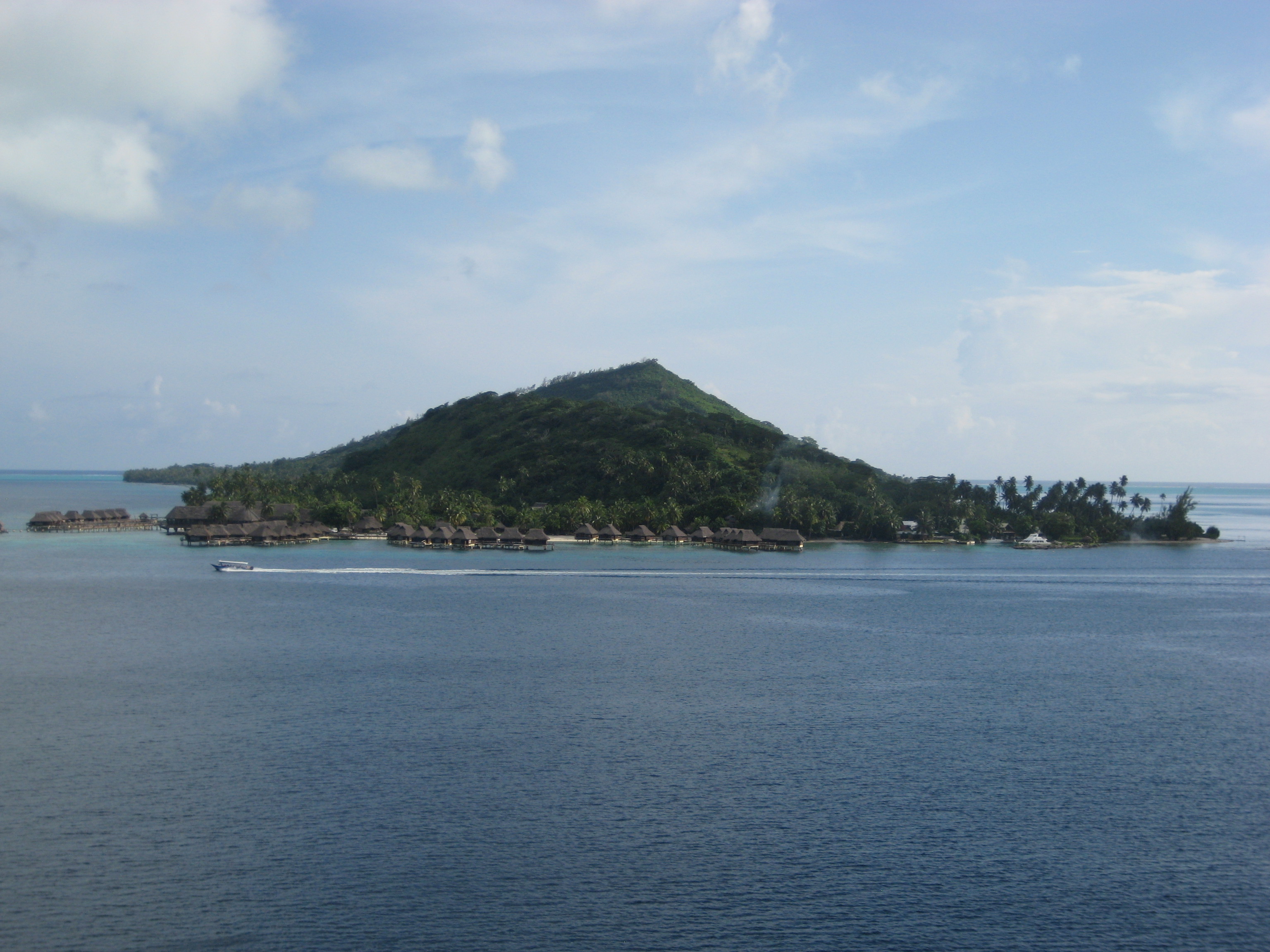
Motu at Bora Bora

Motu at Bora Bora

Bloody Mary's on Bora Bora

Bloody Mary’s on Bora Bora

January 29, 2013  Bora Bora-French Polynesia

Bora Bora is an island in the Leeward group of the Society Islands of French Polynesia and is an overseas territory of France in the Pacific Ocean. The island was settled by Tongan people about the 4th Century. While the island was sighted by earlier explorers, James Cook led the first group of Europeans to visit the island in 1777. In 1842, Bora Bora was officially made a protectorate of France. The island is located about 162 miles northwest of Papeete and is surrounded by a lagoon and a fringed reef. Remnants of the island’s extinct volcano rises to two peaks, Mount Pahia, and the highest point, Mount Otemanu which reaches 2,385 feet.

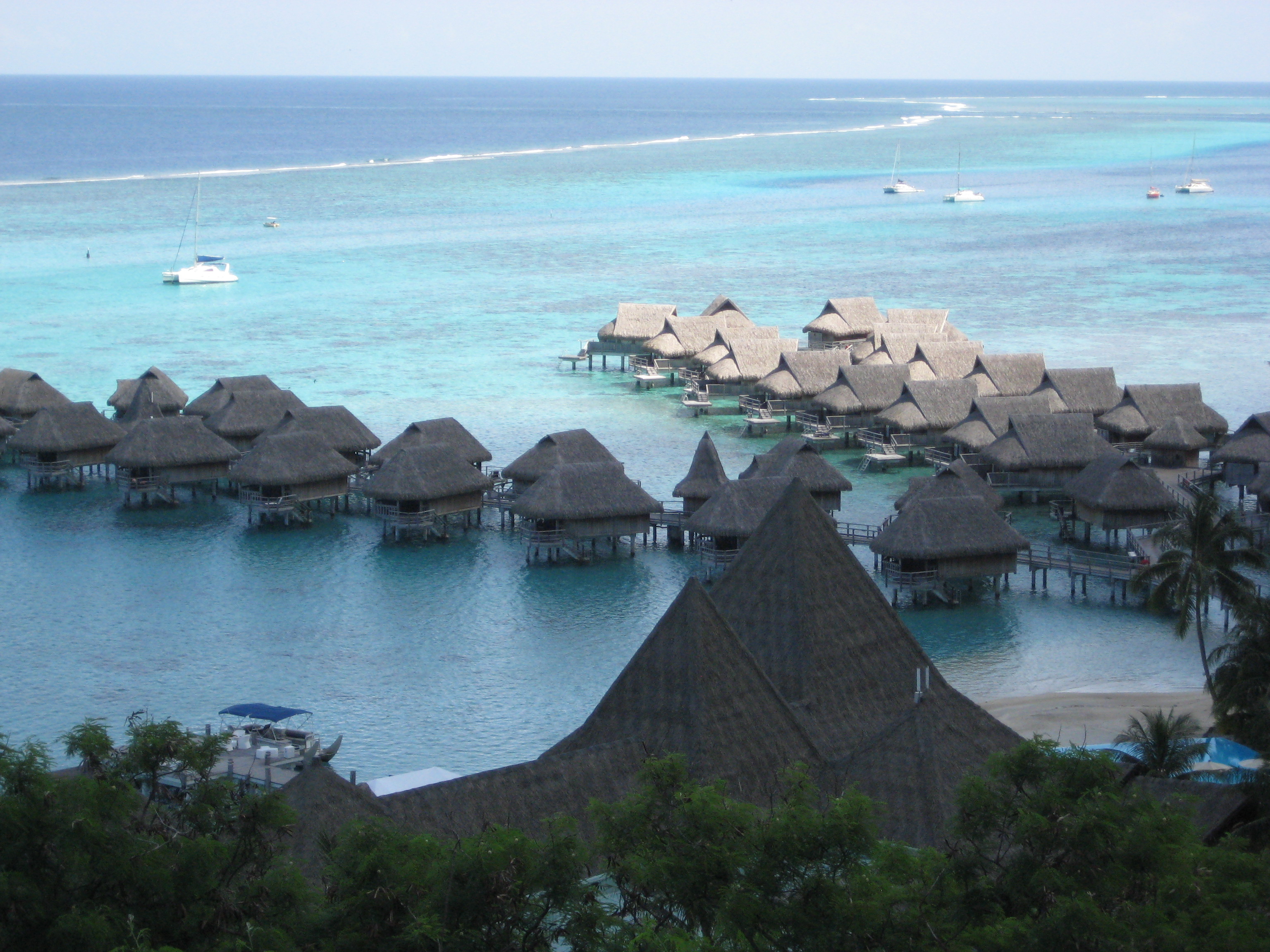
Today the more desirable part of the island is the fringed reef at the outer edge of the lagoon. The reef has many small islands, which are called motu’s. Over the last several years, seven high-end resorts have been built on the small islands surrounding the lagoon. Most of these resorts are built on stilts with small individual thatched cottage rooms, each with direct access to the lagoon where the water is calm and beautifully colored.

We took an open-air trolley like bus here, which took us on a tour around the island with a guide. We visited a roadside shop where they make the local pareo, which is a piece of cotton fabric which has been beautifully dyed in beautiful colors and is used similarly to a sarong. They look something like a cross between a batik material and a tie-dye. The island is filled with small tupa crabs, which live in the ground in the mud. The locals hate them because they eat most anything that their mouths come in contact with.

We stopped at Matira Point where you find the most beautiful white sand beach on the island. This is the largest sand beach that we have seen on any of the islands. The sand leads into the lagoon with its gorgeous multi-colored waters. Our next stop was the famous restaurant and bar called “Bloody Mary’s”. The restaurant has been visited by many a famous person, many of them listed on a sign out in front of the restaurant. Inside you find the floor is covered in sand and a very casual restaurant and bar with a Polynesian theme. They sell tons of t-shirts like you might find at a Hard Rock Cafe around the world.  The men’s bathroom has an unusual urinal flush device—a 10 inch wooden penis…..very interesting.  Many women were in the men’s room photographing it.  We did too!

The island was lush and green but the water was what makes it so spectacular. Otherwise the island looks a bit run down and dirty. It appears as though its time has passed and it is ready for a makeover. Hopefully when the world’s economy improves more tourists will once again visit and things will get spritzed up.

The entertainment on this might was another show by the Amsterdam cast called “Supergroups” which was a celebration of the music of some of the biggest groups and hits of all time. The music included groups like The Commodores, The Monkeys, Bee Gees, The Carpenters, etc.

Death at Sea—We have been told by the experienced cruisers that it is customary for there to be at least 3 deaths on board a ship this size during the cruise.  We understand one has happened already as a casket was offloaded some time ago.  There have also been several people sent home due to injuries from falls or some other illness, which might be best treated at home.  It is always good to have that travel and med evacuation insurance!  One of the entertainers who plays the violin in the Explorer’s Lounge was sent home.  The Explorer’s Lounge is one of our favorite places on the ship.  Classical music in the form of piano and violin duets, or string quartets play while liquors and home made chocolates are served.  Kent volunteered to replace the entertainer sent home.  He is perfecting his talents, which compare to the Great Pugol, an early French entertainer.  (Google it).

Wait Staff—Our dining room wait staff are mostly from Bali.  Some are from other Indonesian islands or the Philippines.  They have been well trained to great us with smiles and warm greetings and to always say “Enjoy your meal or Enjoy your day.”  Most are men with 4 letter names like Jaya, Asep, Tiro, Gede, Tiya, etc.  Some are a little more complex like Prass or Usman.  Our cabin attendants are similarly friendly. They all try to learn our names quickly and seem eager to please.  We try to learn and remember their names, but it is difficult for us.

January 28, 2013 Moorea

Bali Hai-Bora Bora

Bali Hai-Moorea

Hotel Resort in Moorea

Hotel Resort in Moorea


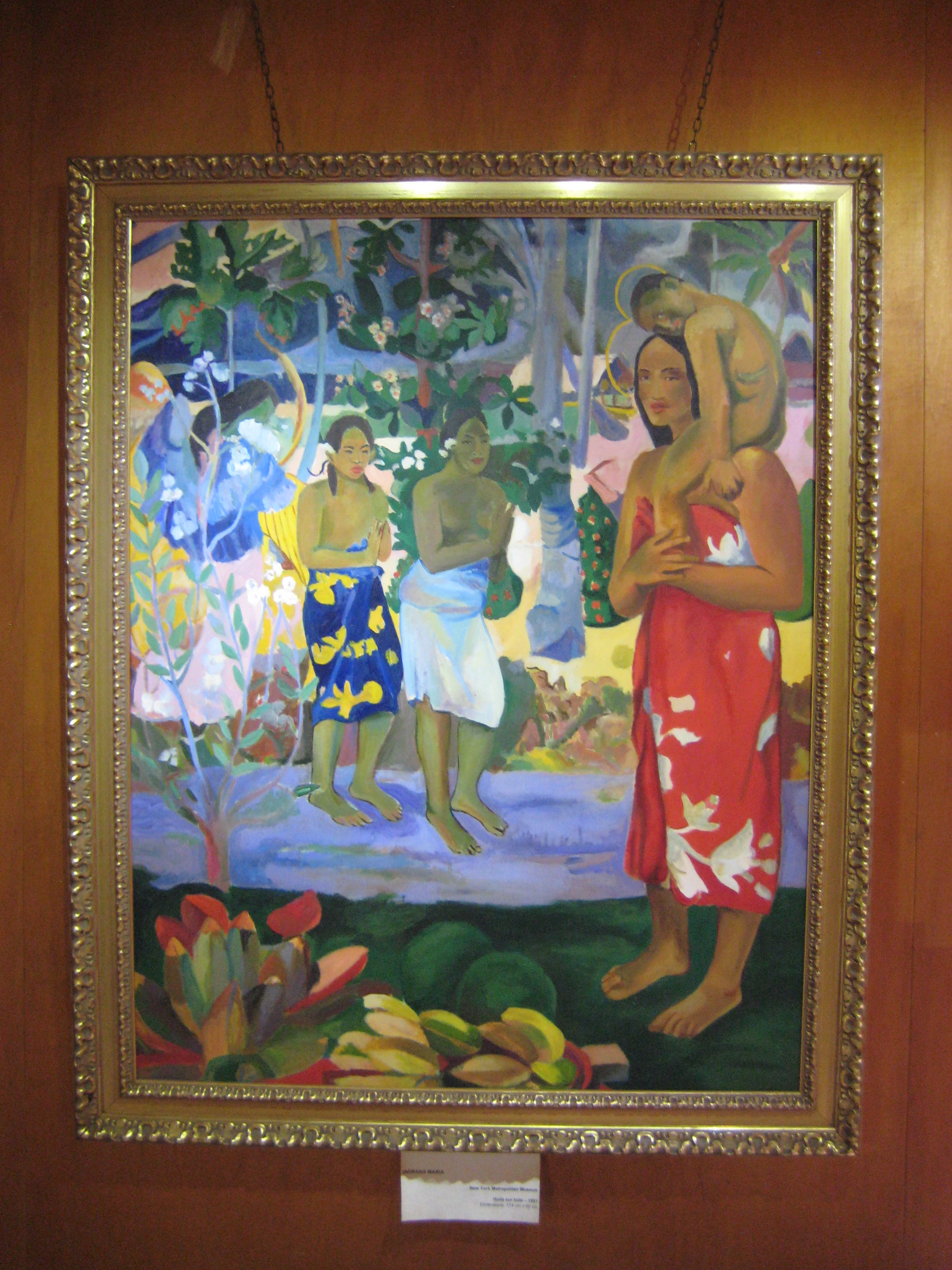
Gauguin Copy at Tiki Village-Moorea

Gauguin Copy at Tiki Village-Moorea

January 28, 2013 Moorea-French Polynesia

Moorea is located only about six miles from Papeete so we spent the night drifting at sea until morning when we headed to the island of Moorea. There is no dock large enough for our ship so we need to tender ashore today on the smaller lifeboats while the ship is moored nearby. Moorea is one of the South Pacific Islands that is part of the Society Islands, one of the five major island groups that form French Polynesia. The island was formed as a volcano 1.5 to 2.5 million years ago, the result of a geologic hotspot in the mantle under the oceanic plate that formed the whole of the Society Archipeligo. The weather is in the high 80’s and the humidity is some of the worst that I have ever experienced.

We took a tour around the 38-mile perimeter of the island. We were taken to an observation point called Belvedere, high above the sea where we could get a birds-eye view of both Cook’s Bay and Opunohu Bay where our ship was anchored. The island is lush with tropical vegetation as well as a large number of wild chickens and roosters with beautiful colored tail feathers. We saw several villages along the way with a few small shops or markets and a number of hotels. Unfortunately many of the hotels have closed due to the lack of business from the world’s poor economy. Being a volcanic island the islands perimeter road is very near the waters edge as there is not much level ground before the terrain begins to climb to the 1,500 foot peak of Mt. Rotui.

We stopped at a replica of a pre-European Tahitian Village where we found a cluster of small shops selling local handicrafts, a gallery of Gauguin reproductions (the Gauguin reproductions were far superior to those we saw in the Gauguin museum yesterday) and a gallery of A. Sylvains famous black and white photos of the local women—bare tits to the wind. (They say the local women used to line up outside his house so they could be photographed). The village also has an outdoor amphitheater overlooking the water where they have a traditional Polynesian feast and folkloric show. No doubt more hip shaking!

Many of the guests onboard the ship chose to take a snorkeling tour, which included swimming with the stingrays. They all seemed to love the beauty of the velvety creatures and the warm beautifully colored water.  Some also swam with the local harmless sharks.  Kent wasn’t allowed in the water, or on that tour,  as he would have scared off the creatures.

One of our fellow passengers and her husband spent $300 each to take an hour’s dive in a submarine to see the local sea creatures.  Once they got in the sub, another passenger decided she was claustrophobic and puked all over the place soon after they departed.  No doubt a lovely ride for our friends.

The entertainment onboard the ship this evening was an award-winning comedian named Ian McLaren from the UK. He was extremely talented although some of the British humor and vocabulary escaped us.

Report from the Bridge—Every day at 12:45 PM, the captain reports sailing info from the bridge:  how deep and warm the water is, how many miles we have traveled and how many miles to our next port, ship speed, etc.  We were surprised to learn that the ship travels only about 14 to 18 miles per hour on average.  It can go up to 24 miles per hour.  No wonder it takes 4 months to travel around the world…the ship has a heavy load….more as the days pass and meals are eaten!

January 27, 2013 (Papeete, Tahiti)

January 27, 2013 (Papeete, Tahiti)

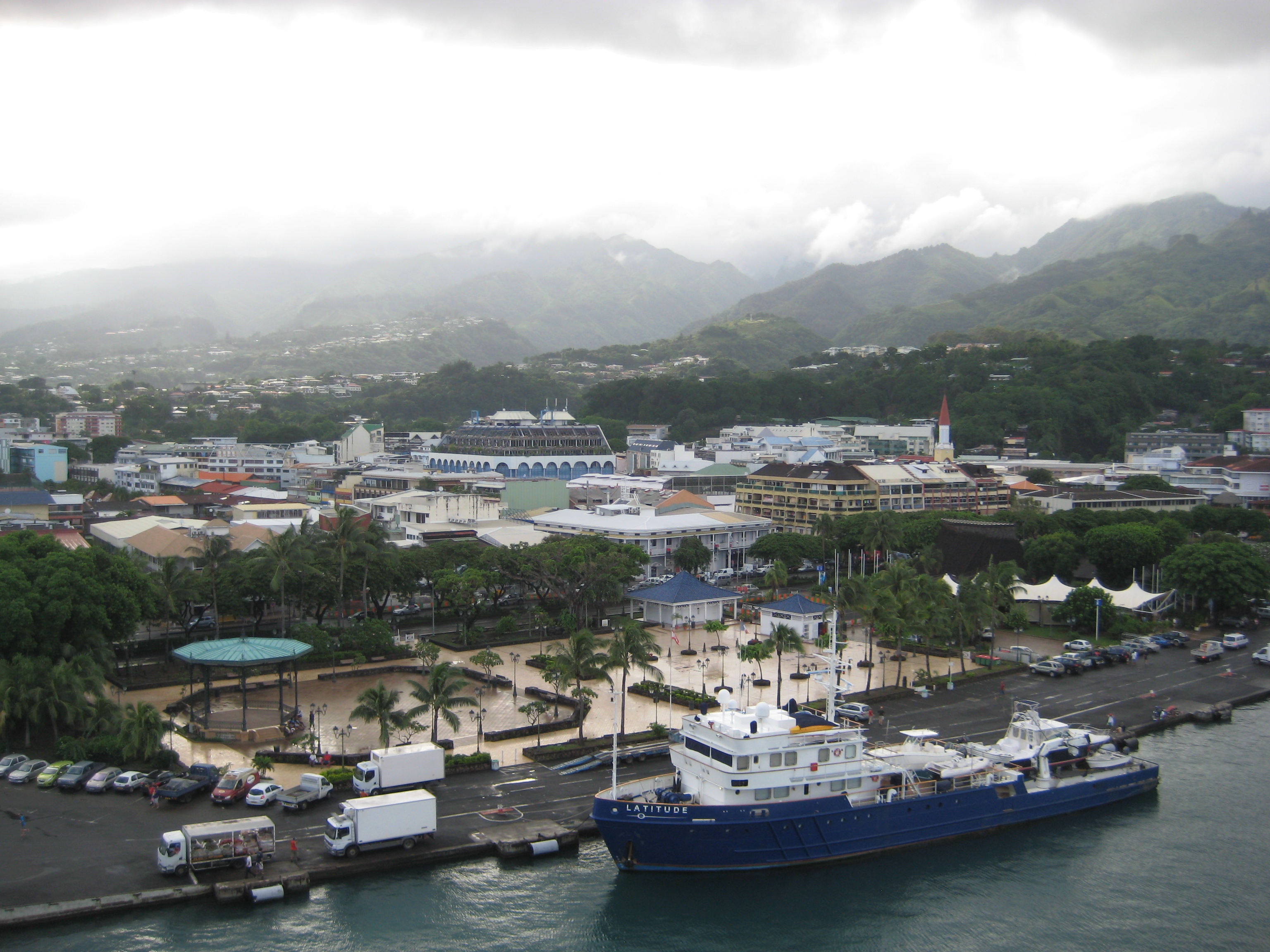
Papeete (meaning water from a basket) is the capital of French Polynesia and is located on IMG_4994

IMG_5033

the island of Tahiti. It is the primary center of Polynesian public and private governmental, commercial, industrial and financial services as well as the hub of tourism. Papeete was first settled by British missionary, William Cook, of the London Missionary Society in 1818. Queen Pomare IV moved her court to Papeete and made it her capital in the late 1820’s and the town grew into a major regional shipping and transportation center. France took control of the Tahitian islands and made them a protectorate in 1842.

We took a tour of the island today called “In the Footsteps of Gauguin”. Paul Gauguin journeyed to and toured Papeete in 1891. He stayed for a couple of years before returning to France to sell his art. After not much success in France he returned to Papeete in 1895 spending time in the area until his death from a heart attack in 1903 at the age of only 55. The Gauguin museum is in poor condition and is getting ready to close for a five-month renovation project. It features a retrospective of the artist’s life in the islands through letters, writings, documents and his household items. There are many copies of his work represented but no originals.

Also on the tour we visited the Museum of Tahiti and Her Islands in the residential district of Punaauia, which has an excellent collection. There were wonderful items related to local culture, traditions, geography as well as a lovely tropical garden right at the water’s edge.

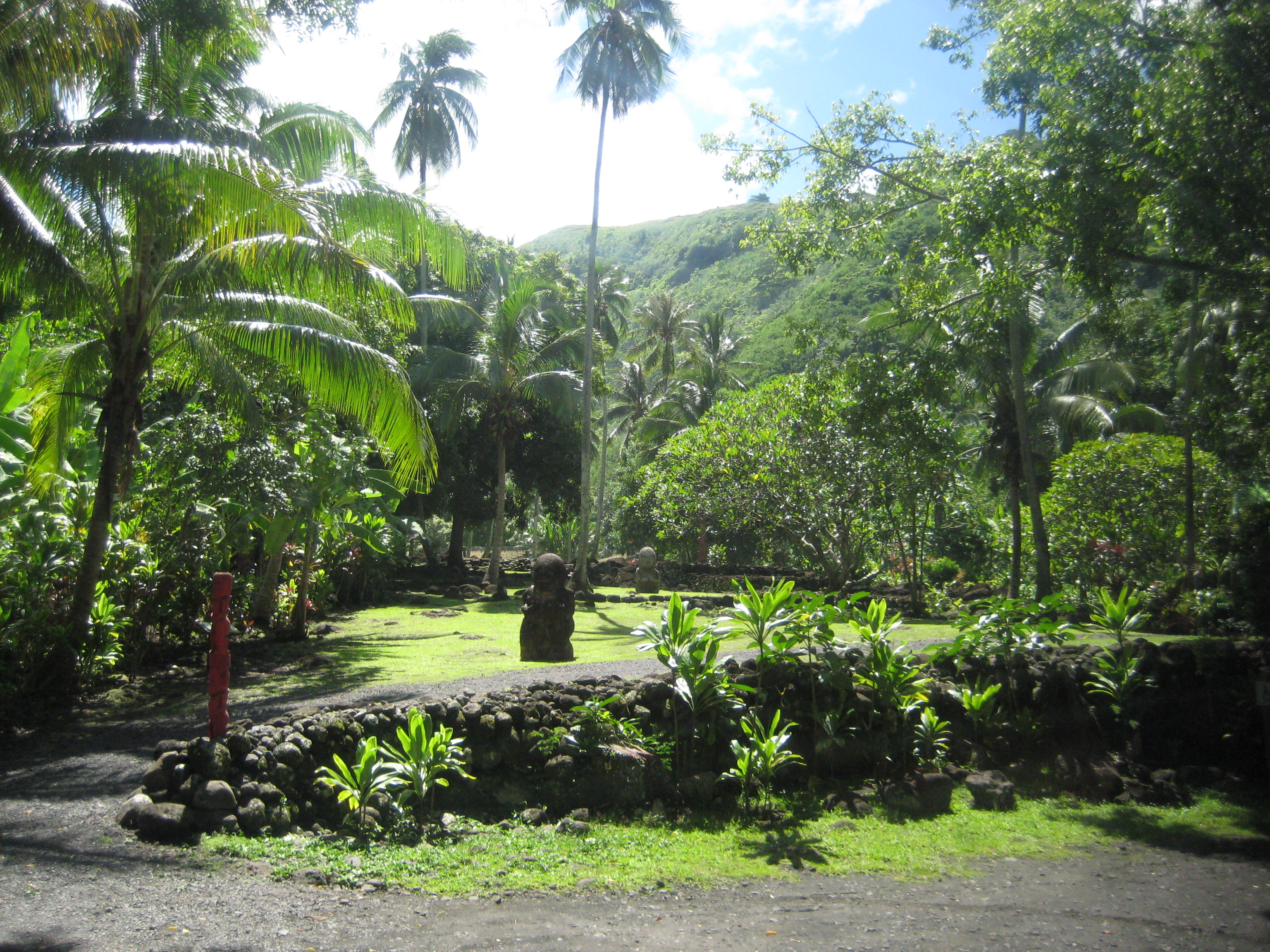
Along our journey to the Gauguin Museum we stopped in a beautiful lush valley filled with lush vegetation and enormous plumeria trees covered with fragrant white blossoms. A valley at Arahurahu is where we visited a Marae, which is a Ceremonial meeting place. Here we saw two human-like statues, which are very similar in style to the statues found at Easter Island. They are much more human like with less exaggerated features and were much smaller in size. The statues could also represent women where the Easter Island statues only represented men. At this site there was also a stage area created out of volcanic rock, which was used for religious ceremonies and festivals. Archery was a sacred sport, which called for human sacrifice. There was a high platform where sacrifices, including humans, were performed. This practice was abandoned when the missionaries arrived. They also used this area for festivals and civic events.

It is a Sunday so most everything is closed today. The downtown area near the port is very well developed and where many of the hotels and resorts are located. Many of the buildings are in poor condition and are in need of paint and repairs. Graffiti is very common throughout the island. Many of the homes are poorly constructed, dated looking and also in need of repairs. There appears to be little new construction and our guide told us that even Hilton and Sofitel recently closed their hotels due to the lack of business.

When we returned to the ship a local Folkloric Show was presented as the night’s entertainment.

January 26, 2013 (Sea Day)

January 26, 2013 (Sea Day)

We have been changing our time by one hour back for each of the last five nights since we left Easter Island. You would think that we would be having too much sleep but we have been enjoying the extra hour of the day.

Today is Australia Day, which is a holiday in Australia when the nation comes together as a nation to celebrate what is great about the Australia and being Australian. It commemorates the arrival of the First Fleet of 11 convict ships from Great Britain, and the raising of the Union Jack at Sydney Cove by its commander Captain Arthur Phillip, in 1788. More than a barbecue and fireworks, it is a celebration of the pride felt by Australians not only of the past but of the present.

We attended a port lecture with Barbara on “Things to See and Do in Auckland” this morning. Also this morning we attended a cooking class with chef Kevin on how to prepare Dungeness Crab Cakes with a Thai Sweet Chili Sauce and Marinated Cucumbers.

This afternoons activities included the movie Australia with Nicole Kidman and Hugh Jackman, which we enjoyed. Tonight’s entertainment is another concert by the group AbbaFab performing the music of Abba.

January 25, 2013 (Sea Day)

January 25, 2013 (Sea Day)

This morning the guest at the “Good Morning Amsterdam” show was the onboard Acupuncturist who is from Australia.

Sandra Millikin’s lecture was on The Seven Wonders of the Ancient World. Sandra showed slides of what they were and what we know about them. They also have influenced modern architecture. David Pasta lectured on,” What’s Coming-Global Warming or Global Cooling?” where he discussed how the earth’s temperature has been rising and the melting of the polar ice.  From his data points it appeared that it was possible that this might just be a normal cycle. He did agree though that more than 80% of scientists studying this field believe that there is some degree of global warming and that man has played a part in it.

The ships Safety, Environmental and Health officer Andrew gave a talk on how the ship leads the industry in preserving the environment. The ship recycles everything possible. They are only allowed to release water from the vessel, which has been cleaned to a certain standard and only when out to sea and not in any port. Food waste is ground up and discharged into the ocean. Some paper waste is incinerated while plastic, glass, aluminum and other items are recycled at ports where they can be properly handled. The ship is able to create its own drinking water from salt water for use onboard the ship.

The show this evening was a variety show with Jack Mayberry and David Howes who have both performed previously.

January 24, 2013 Sea Day- Cruise Pitcairn Island

January 24, 2013 (Cruising Pitcairn Island)

Pitcairn Island

On this day we cruise the island of Pitcairn which was discovered on July 3, 1767 by the crew of the British sloop HMS Swallow and was named after Robert Pitcairn, a fifteen-year-old crewmember who was the first to sight it. In 1790, the mutineers of HMAV Bounty and their Tahitian companions, some of whom had been kidnapped from Tahiti, settled on Pitcairn Island and set fire to the Bounty. Today, the island is inhabited by fewer than 60 people, from nine families, making it notable for being the least populated jurisdiction in the world. Its largest population was in 1937 with 233 people, but through emigration to New Zealand the population has dwindled.

The island has quite fertile soil and is able to produce a wide variety of fruits and vegetables. Fish are plentiful in the sea, so nearly daily someone goes fishing. The Pitcairners are involved in creating crafts and curios mostly of Miro wood, which is a dark, durable and beautifully grained wood. Typical carvings are of fish, sharks, whales, turtles, as well as walking sticks, vases and wood boxes. Pitcairn also produces some of the finest honey in the world, which they export to New Zealand and the United Kingdom. Also exported under the brand “Delectable Bounty” are dried bananas, papayas, pineapples and mangoes.

Typically the ship would allow the Pitcairners onto the ship to give a talk about the island and to sell their handicrafts and honey but not this time. A ship that visited the island a couple of weeks ago brought the flu virus, which has been so prevalent in the U.S. in recent weeks and nearly a third of the population was ill. The captain was not willing to allow the islanders onto the ship from fear they would bring the flu bug onto the ship. Because of this we were only able to cruise around the island before setting sail for Tahiti.

Before we left the MS Amsterdam fulfilled the islanders wish list for items like meats, poultry, ice cream, soft drinks and liquor, which were donated to the locals. This was accomplished by the islanders coming out to the ship in a motorboat and ship’s crew throwing boxes of goods to the islanders. This minimized the risk of crew catching any germs.

The island is fairly small, measuring about two miles across, but is very green looking with steep cliffs and jagged rocks at the point that the island meets the sea. We could see several homes and buildings on the island, which looked fairly simple and plain. Clusters of pine trees were visible from the coast but otherwise there was not much to see from the sea.

This evening we were invited to join the captain for a cocktail party and dinner in the specialty restaurant called the Pinnacle. Each formal night the captain hosts one of these parties for the passengers until all of the guests have had a chance to be included. Cocktails and appetizers were served in the Wajang Theater, which had been converted to a party room with tall cocktail tables draped in white linens. Crewmembers who were dressed in all black served the guests.

A five-course dinner was served in the beautiful Pinnacle restaurant, with an officer seated at each table. We were seated at a large table for ten with officer Frizzo who is the second in command, and his girlfriend, Jennifer, who works in the front office. The meal included a cup of soup, a starter of lobster skewers, a green salad, a lamb entrée and a medley of chocolates, cheese and coffee flavored gelatins for dessert.

The entertainment tonight was a gentleman by the name of Nick Page who was a wonderful vocalist from London’s West End. He performed songs from Michael Buble, Broadway, Frankie Valli, Pavarotti, Les Miserables and more.

When we returned to our cabin after dinner there was a small plate of chocolates and a thank you note from the captain thanking us for coming to the dinner. We also received a two-piece ceramic tulip vase as our gift for tonight’s formal night. The vase has an illustration of a building in Holland where they grow tulips.

January 23, 2013 Kent’s Birthday!!!!

January 23, 2013 (Sea Day)

It is Kent’s birthday today. He received cards from the captain, our travel agent, new friends onboard and Mark. He made a special request that he did not want to have a cake and all of the waiters singing for him at dinner.

We attended Good Morning Amsterdam this morning as we usually do on sea days. Today’s guest is the Chef Kevin who oversees the Culinary Center onboard. He is from Vancouver and has a fine arts background.

David Pasta lectured on “When Will the World Run Out of Oil”. He discussed how the world’s oil supply is unsustainable and that it is mandatory that we find alternative fuels.

After a delightful lunch in the main dining room we attended a classical music appreciation lecture where we listened to classical music that has accompanied motion pictures. That was followed by the movie of the day, which was a documentary on Ethel Kennedy that was produced by her youngest daughter, Rory. It was a moving documentary chronicling the life of her mother Ethel Kennedy from the time she grew up until 2011. It had a wonderful collection of family photos and film clips from her life including her very public life with husband Bobby Kennedy and their eleven children.

For Kent’s birthday dinner we dined at the specialty Italian restaurant called Canaletto. The German boys Allan and Matthius joined us for dinner.

Canes, walkers and scooters – Old People.  There are many older people on the cruise who are still out there enjoying life.  Many are slow and use all sorts of tools and devices to get around.  At least they are still here!  Many passengers get frustrated with them, but we say, “Go for it!”  We have heard stories about some passengers whose families have put them on the ship to keep them in a safe place where they will get food, care and have social opportunities—all for less money than a nursing home.  Sounds like a good deal for me.  Some say that some of those passengers “just aren’t right in the head.”  But, they are here.

January 22, 2013 Sea Day

January 22, 2013 (Sea Day)

Today is a quiet sea day with a wide variety of activities onboard to chose between or to just do nothing. Both of us are suffering from colds so it is a good day to take it easy and rest.

Explorations speakers include Sandra Millikin speaking on the Taj Mahal and David Pasta speaking on the predicting of earthquakes, tsunami’s and volcanic eruptions.

The crew prepared a special Mongolian barbecue poolside for lunch. You could select from a buffet of vegetables, meats and noodles of which the crew would stir- fry with sesame oil, garlic and hot sauce.


January 21, 2013 Easter Island

January 21, 2013 (Easter Island)

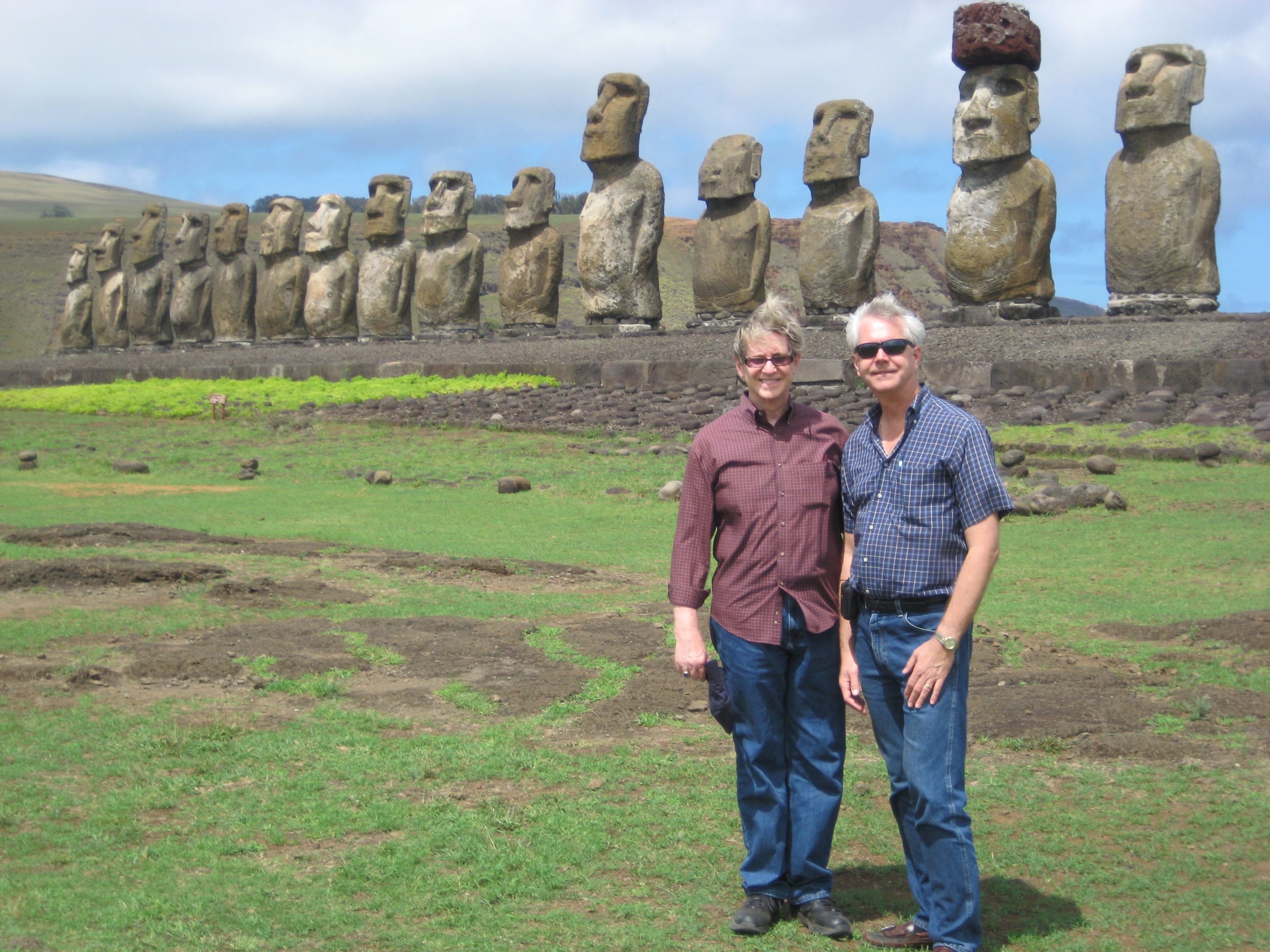
Easter Island Moai

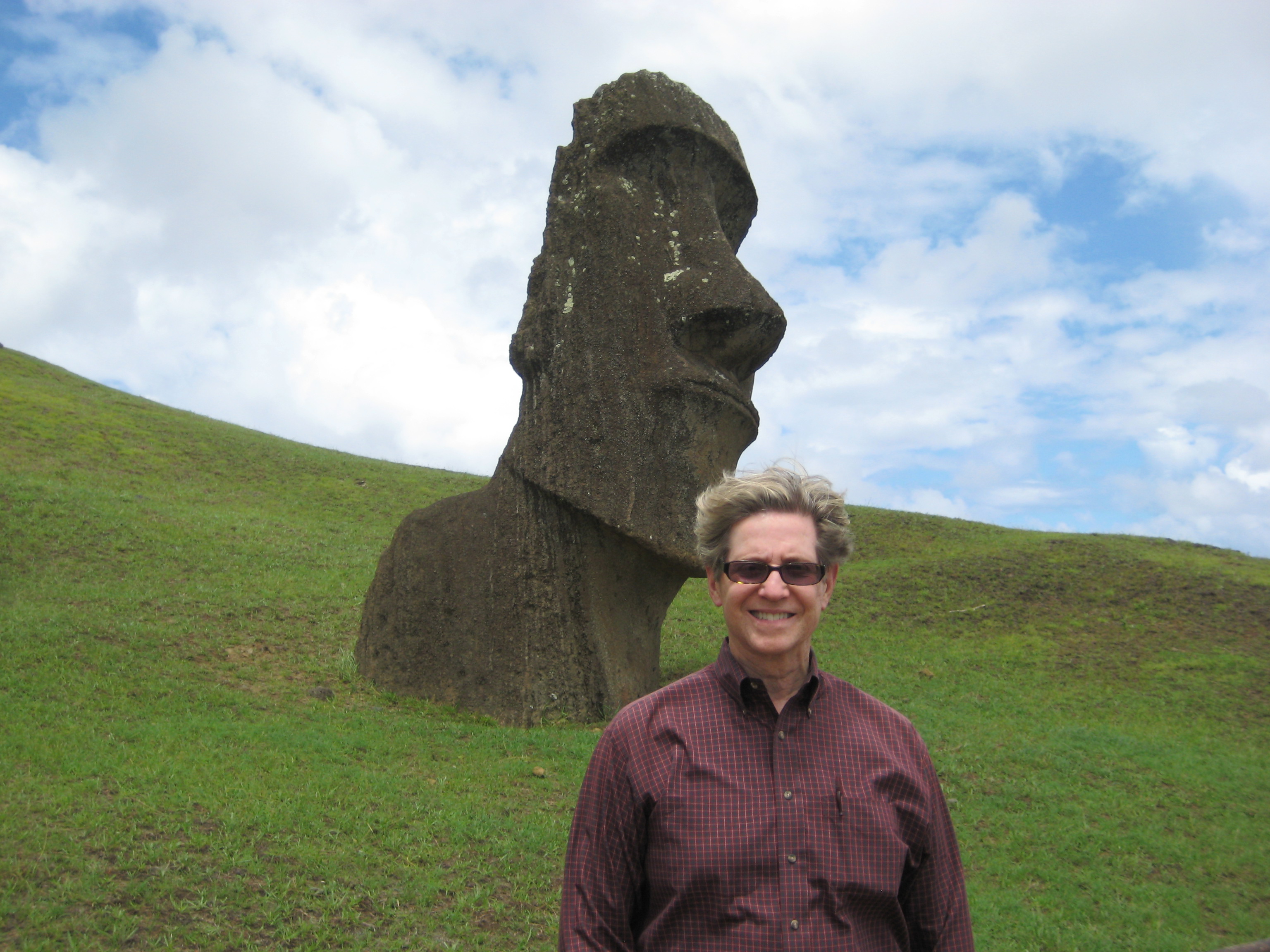
Easter Island QuarryEaster Island Kent and Moai The weather today is mostly sunny and very warm. It looks like the perfect day to visit this unique and very isolated island. Sometimes things can be very deceiving, and todays adventure was one of those days.

Because there is no pier large enough for our ship to dock, our visit to Easter Island requires us to take a tender from the ship to shore. The tenders are small life- boats that are lowered from the ship into the water and used to transport passengers from the anchored ship to a small dock on the island. Each tender holds something like 75 passengers and they run all day long while we are in port. Unfortunately the weather is often very rough here and only about 30% of ships actually disembark passengers. We were lucky to have made it onto the island although it was much later than anticipated. Around 8:00 in the morning we went to the theater to get our tender tickets to go ashore as soon as possible.  We had intended to go ashore by 9:30 with some friends to take a private tour with a local guide our friends had met last year. Due to the weather the tender boats were getting beaten against the ships loading platform causing damage to them. Additionally it was taking a very long time to get the tender boats loaded with passengers as they bounced up and down in the rough seas. We were finally allowed to take a tender a little after noon due to the delays with the tenders. The tender we took to shore has been smashed against the ship splitting the fiberglass body and breaking out a window, which was now covered in plastic. When the large waves crashed over the bow of the tender buckets full of water poured into the boat. The short distance to the protected dock ashore was very close but took us awhile to get there as we rode each swell in the sea up and down. Shortly after we made it ashore by tender the captain stopped all tenders due to the high seas and unsafe conditions. Many passengers were unable to go ashore and were very disappointed.

The tour guide our friends arranged for our 9:30 tour was waiting for us at 1:00 PM.  So we convinced our German friends, Allan and Matthias to join us for the island tour which now as four hours rather than seven.  The tour van was dirty and had loose seats, but, at this point we didn’t care.

Easter Island is a part of Chile and keeps the same time as Chile so we have not yet changed our watches from Fort Lauderdale time. Easter Island is located 2,237 miles west of Chile and 1,290 miles east of Pitcairn Island, making it one of the most isolated, inhabited places in the world. The island is almost triangular in shape and is approximately 17 miles in length and 8 miles in width at its widest point. It was given the name Easter Island because the Dutch discovered it, on Easter Sunday in 1722. Literature suggests that Easter Island was settled around 300-400AD about the time that Hawaii was settled; however some scientists say the island was not inhabited until 700-800AD. More recent studies, including radiocarbon dates from what is thought to be very early material, indicates that the island was settled as recently as 1200AD, the time of the island’s deforestation.

The island is nothing like the tropical paradise you would expect to find on an island in the South Pacific. The island is mostly barren with grassy hills and clusters of small trees, which have only existed on the island over the last thirty years or so. Before that it was completely barren without trees or grass. The roads are mostly dirt and gravel and many have been eroded from recent rains.

Easter Island is most famous for its large stone statues called Moai, which were carved from 1100 to 1680. There are a total of 887 statues, which have been inventoried on the island as well as in museums around the world. The statues are all of men, mostly torsos, some kneeling on bent knees with their hands over their stomachs. Many of the Moai are buried up to their necks by years of shifting soils. Some have been restored, although most remain in their original state–often broken, unfinished and many deteriorated by nature. Today the Moai are all natural stone in color but when they were first completed they would have been smoothly finished and beautifully painted in bright colors.  As many as 1,000 family members would carve on a statue at any given time.

We visited the quarry where most of the Moai were carved from stone and later transported around the island. They believe that Moai were made in the likeness of actual people by their families to honor them, especially if they had what they believed was high energy. They believed that the energy was highest in those who were first born and that if you were born of parents who were also first-born that you possessed even greater amounts of energy. If you were the first-born they believed that you should never cut your hair. This may account for the hat like pieces on the top of some of the Moai’s heads. They believe that this may represent the hair that would have been tied up on top of their heads.

We also visited two of the three craters created by the volcanoes that make up the island. These craters are very large and are filled with fresh water from the rain. At one time this was the only source of fresh water on the island. Today the craters are like a huge bowl with a beautiful lake inside filled with a wide variety of plants growing on the waters surface. The craters are so lush that it is hard to imagine that they were once just molten lava.

By the time we finished our tour and returned to the tender dock it began to rain like crazy. The ride back to the ship was a wild one but we all made it back safely and the ship was on its way towards Pitcairn Island.

At dinner the champagne was flowing to help smooth the anger of the passengers who were not able to go ashore at Easter Island. The entertainment on this night was a British gentleman by the name of David Howes. David can play just about any musical instrument and even some items that are not musical instruments. He played the piano, euphonium, a baby euphonium, a trumpet, a post horn not to mention he played a garden hose, showerhead and hose and even an old persons walker. He had incredible energy and was very entertaining and funny.