September 30, 2017 San Diego/ Mandalay, Myanmar (Burma)

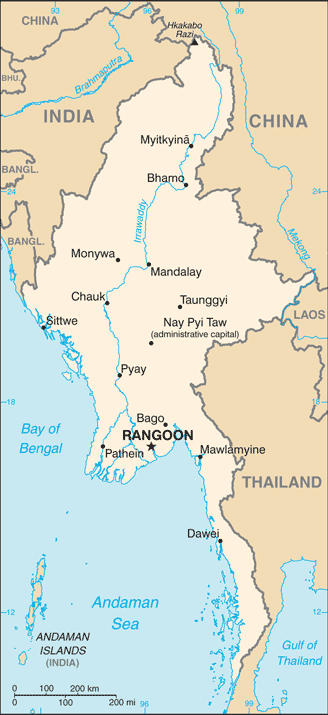
Map of Myanmar

We departed San Diego airport bound for Los Angeles at 6:00pm, a short twenty-two-minute flight. Our next flight left from Los Angeles at 11:55pm arriving in Hong Kong at 5:45am, nearly 15 hours later. From Hong Kong we departed at 8:00am bound for Bangkok, Thailand, a three-hour flight. Finally, from Bangkok we boarded our final flight to Mandalay, Myanmar at noon, arriving nearly two hours later. It was an exhausting trip but we made it safe and sound with no delays or incidents.

Myanmar is located on the Bay of Bengal and the Andaman Sea. It borders India and Bangladesh on the north and west, China, Laos and Thailand on the east. King Anawrahta formed the country in the 11th-century, with Bagan as its capital. The empire collapsed with the invasion of the Mongols 200 years later. King Alaungpaya, on the location of the small town named Dagon, founded Yangon (later Anglicized to Rangoon) in 1755. Various ethnic Burmese and ethnic minorities or kingdoms occupied the present borders through the 19th Century. From 1824 to 1886 Britain conquered Burma and incorporated it into its Indian Empire. The country was ruled by the British from 1852 until 1942 when the Japanese occupied the area until 1945. Allies retook the city in 1945 but this would be short lived. On January 4, 1948 the country regained independence from the British Commonwealth. General Ne Win, a military ruler and then a self-appointed president, was an isolationist ruler of the country from 1962 until 1988. During this time the country was isolated from the outside world. In 1988 he resigned due to extreme civil unrest. During his rule the infrastructure deteriorated through poor management (corruption) and population growth.

In 2011 president Thein Sein came into office and began political and economic reforms that lead to the opening of this long isolated country. The reforms included the release of hundreds of political prisoners, a cease-fire with several of the country’s ethnic armed groups, legal reforms and the gradual reduction of restrictions on the freedom of the press. On March 30, 2016 Burma’s first credibly elected civilian government, after more than five decades of military dictatorship, was sworn into office. Some of the government were still military officers.

Myanmar is slightly smaller in size than Texas but has a population of about 57 million inhabitants. Rangoon is the largest city with a population estimated at 7 million, 86% of which are Buddhist. Under British rule the city was laid out in a grid pattern and by 1900 beautiful colonial buildings and parks filled the city. It was said that the city was on par with London and was known as the garden city of the east. Unfortunately, in 2008 much of the city was heavily damaged by cyclone Nargis, which caused $800 million in damage and 138,000 people were left dead. Today these old colonial buildings are being restored and many of the great parks and lakes remain.

Burmese is the primary language, with English being the preferred second language to the educated. The country’s main economies include agriculture, rice, sesame, peanuts, cotton, lima beans, chick peas, wood–like teak, copper, tin, tungsten, iron, cement, construction materials, pharmaceuticals, fertilizer, oil, natural gas, garments, jade, ruby, sapphire, emeralds and amethyst.

Throughout its history Myanmar has experienced waves of immigrants which traveled southward along the Ayeyarwady, Chindwin, Salween and Mekong rivers. These diverse ethnic groups came primarily from the Central Asian Plateau (modern day Tibet and China) and are reflected in the wide-ranging ethnic assortment found in Rangoon today. 86% of the local people are Buddhist, 5% Christian, 4% Muslim and there are 56 Jews today.

The local currency is the Myanmar kyat (MMK) pronounced like CHAT and the current exchange rate is approximately 1,350 kyats to the US dollar.

The living standards are very low in Burma and it remains one of the poorest countries in Asia. Approximately 26% of the residents live in poverty. The isolationist policies of the past have left the country with a poor infrastructure, endemic corruption, underdeveloped human resources and inadequate access to capital. This in combination with an antiquated banking and revenue collection system will take a major commitment to reverse.
July 6, 2017 Dubrovnik – San Diego

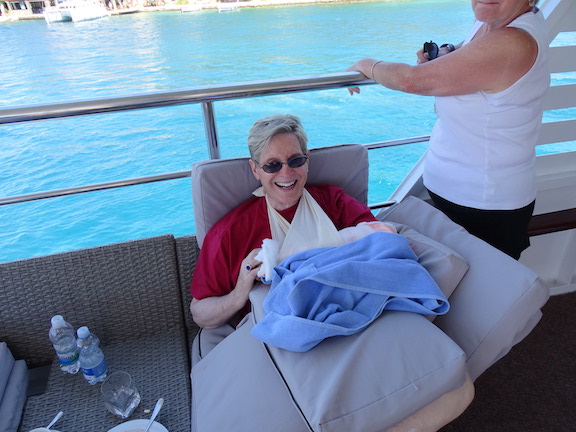
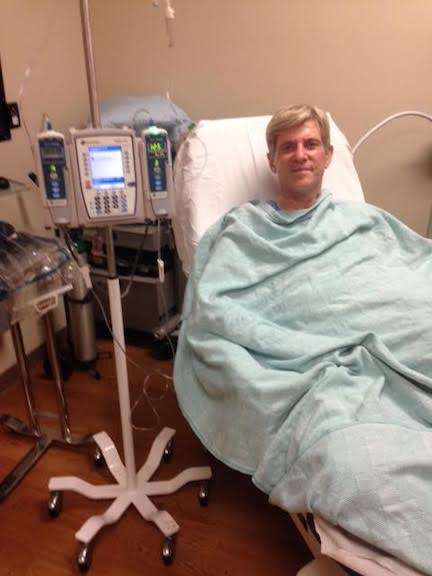
Kent at Scripps Urgent Care in San Diego

We departed our hotel at 5:00am for the local airport located south of Dubrovnik to fly to Frankfurt. Once in Frankfurt we found that our three-hour layover had been extended to a six-hour layover because our aircraft was arriving late. After boarding the plane, we had to sit on the tarmac for another three hours due to an electrical storm in the area. Once planes were allowed to fly again we were finally on our way to San Francisco. Once we arrived in San Francisco we found that we had been re-booked on another flight at 11:00pm because we had missed our original flight. The flight to San Diego arrived about 1:00am and we were so glad to finally be home.

In the following days, Kent had surgery on his left forearm to install two metal plates with 13 screws. He was hospitalized for one night before being discharged to continue recovering at home. Throughout this ordeal, Mark provided support and TLC…..a real trouper who didn’t complain once…..just get ‘er done!

July 5, 2017 Slano – Dubrovnik

Preparing to disembark our boat

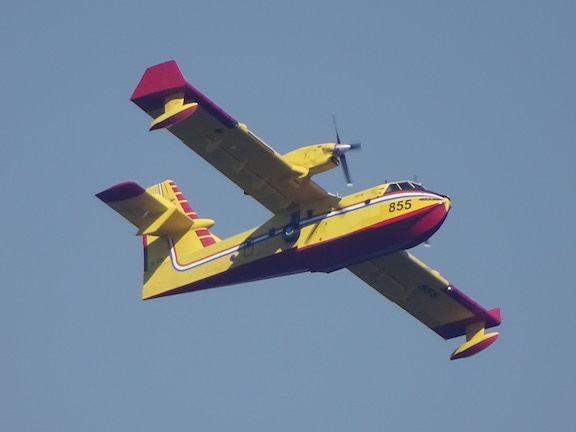
Firefighting Plane

We re-boarded our group boat about 6:30am for a three-hour journey to the port of Slano about 10 miles north of the town of Dubrovnik. As we approached Slano there were two fire fighting planes swooping into the bay to collect water to assist in putting out a local fire. Due to the warm weather and electrical storms there have been many fires in Croatia.

Once on shore Debbie, the cruise director, had arranged for a taxi driver to take us to the clinic in Dubrovnik and then onto a hotel where the rest of our group would be arriving in several days. The private medical clinic was located in an office building very near the cruise port of Dubrovnik. It was very clean, the staff was pleasant and we were seen within 30 minutes of arriving.

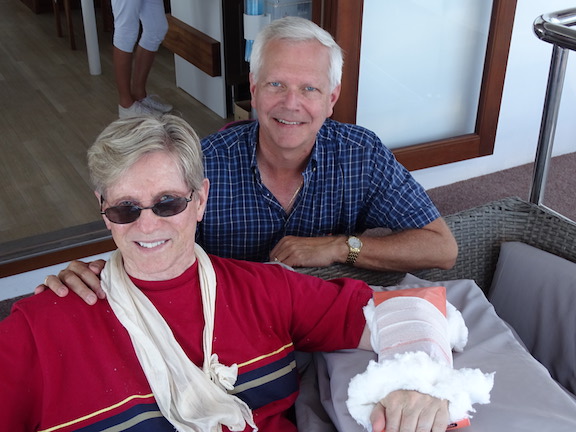
The doctor took X-rays of Kent’s arm to confirm that he had indeed broken both of the bones in his left forearm. The doctor recommended that he stabilize the arm with a plaster splint acceptable for air travel and that we head back to the US for surgery on his arm as soon as possible. Bummer!

The taxi driver then took us to our hotel in Dubrovnik where Mark made calls to reschedule our airline tickets. After thirty minutes on the phone it became clear that it would cost more money to change our airline tickets than it would be to purchase new one-way tickets home. We made arrangements to travel the following from Dubrovnik to Frankfurt, Frankfurt to San Francisco and San Francisco to San Diego. After a late lunch we headed to our room and were in bed early to prepare for a long day of travel the next day.

July 4, 2017 Korcula – Mljet

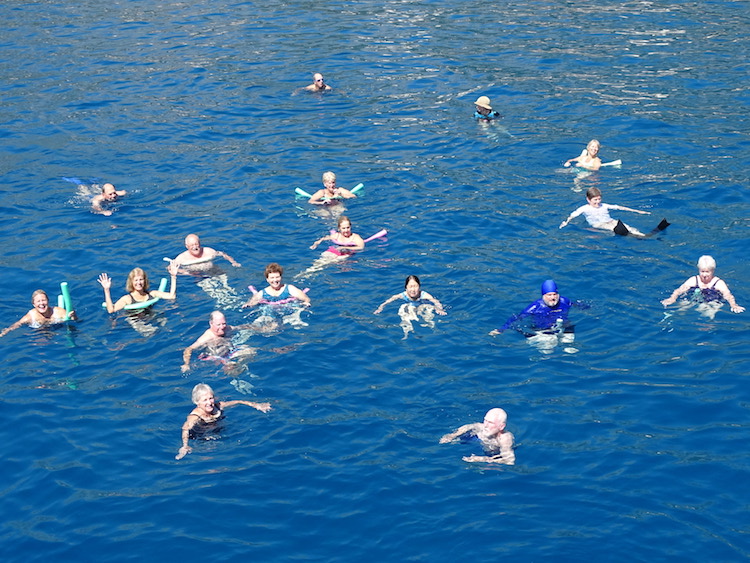
Swimming off the back of the boat

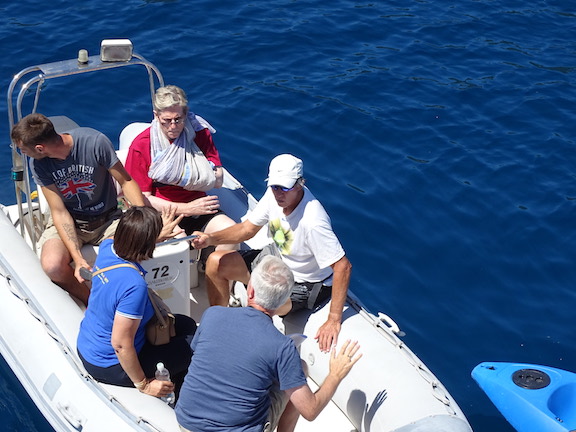
Kent being taken to the local medical clinic

Kent back onboard our boat

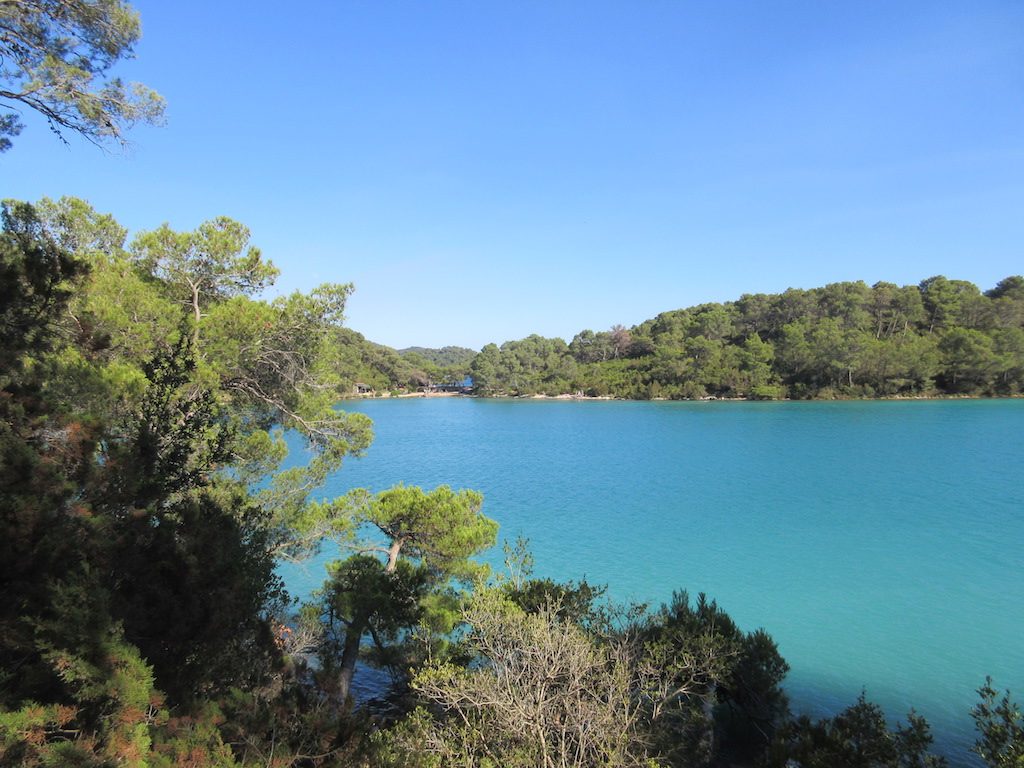
Mljet National Park Lake

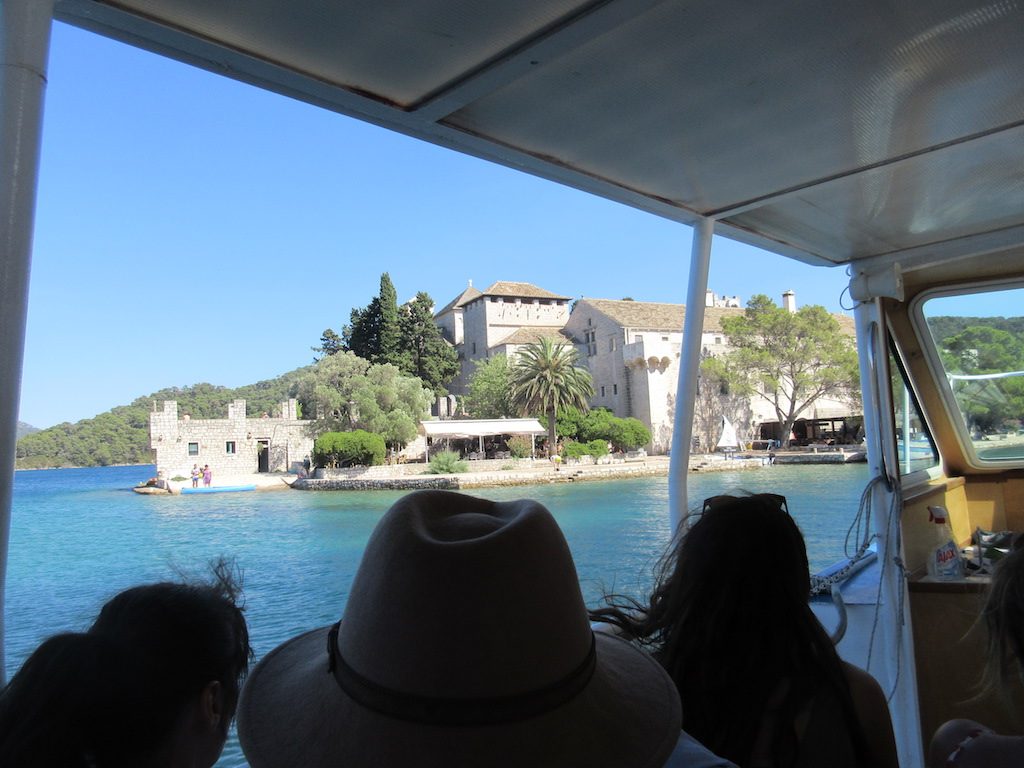
Mljet Monastery

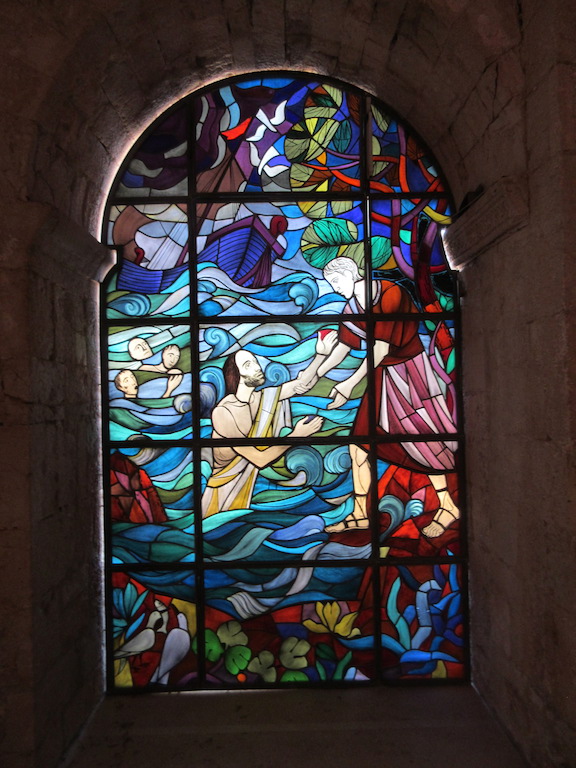
Mljet Monastery Stained Glass Window

Happy July 4th!

We departed Korcula at 6:30am bound for the small island of Mljet. Miljet has a population of only 1,100 residents and is about 23 miles long by 2 miles wide. About 85% of the island is covered with forests, the remainder of the island consists of vineyards, fields and small villages.

Our boat was stopped in a cove not far from the island of Mljet and folks were swimming and kayaking awaiting an open space at the dock in Mljet in the early afternoon. About 10:30am Kent was returning our computer to the cabin and fell down the staircase leading to our cabin on the lower deck of the boat and broke his left arm. It was really floppy. Luckily there was an emergency room doctor traveling with us who prepared a splint on Kent’s left arm so that we could transport him to a clinic on the small island of Mljet. Once the splint was in place Kent and I were loaded into a small rubber boat with a motor for the short trip to Mljet. The ER doctor, Terry, and the cruise director, Debbie, accompanied us in the event of any language issues. Yuri, one of the crew members drove the boat….it takes a village!

Once on landed we waited a short while for a cab to transport us to the local clinic. The island’s doctor informed us that they do not have any X-ray machine and no materials to create a proper splint for Kent’s arm. We will have to transport him to a larger town for further care. Terry and the clinic nurse on staff prepared the best splint possible with the available materials. Terry found some basic pain killers were available although he said that they were about 1/3 the strength of those provided in the US. Once his arm was stabilized, we took the taxi back to port, the rubber boat back to our main boat to make plans to get Kent to a larger town.

There was a speed boat available to take us to Dubrovnik at 5:00pm that afternoon but the ride would take two hours and would be a very bumpy ride and not necessarily the best mode of transport. It was decided that our boat would take us to a port near Dubrovnik the next morning where we could get a taxi into Dubrovnik to a private medical clinic.

After lunch we arrived in port on the island of Mljet and it was decided that we would move Kent to a hotel on shore near the boat dock. While Kent rested, I took a short trip into the national park. The park is mostly pine trees and there are several lakes and tons of walking and hiking trails. The park was busy with tourists who arrive by ferry to explore the park. Many folks were swimming in the lakes, having pic-nicks and exploring the park on foot. One of the lakes has a ferry boat that takes you on a 20-minute ride to an island where I explored an old monastery that is now a part of the national park. The building is being renovated but has a very nice central courtyard garden, a chapel with stained glass windows and a restaurant. It was a quick visit but I was happy to have a chance to see it.

Kent was not in much pain, but more frustrated that he had ruined our vacation and was not able to participate in the activities.

July 3, 2017 Trogir – Korcula

Korcula Sailing

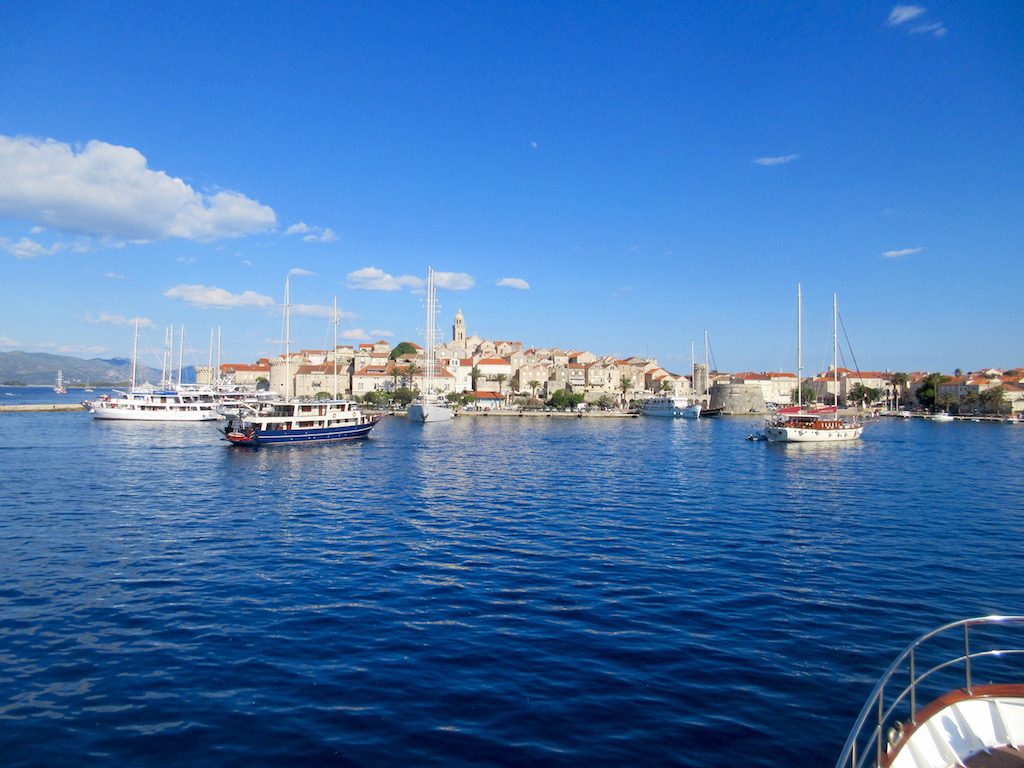
Korcula City View

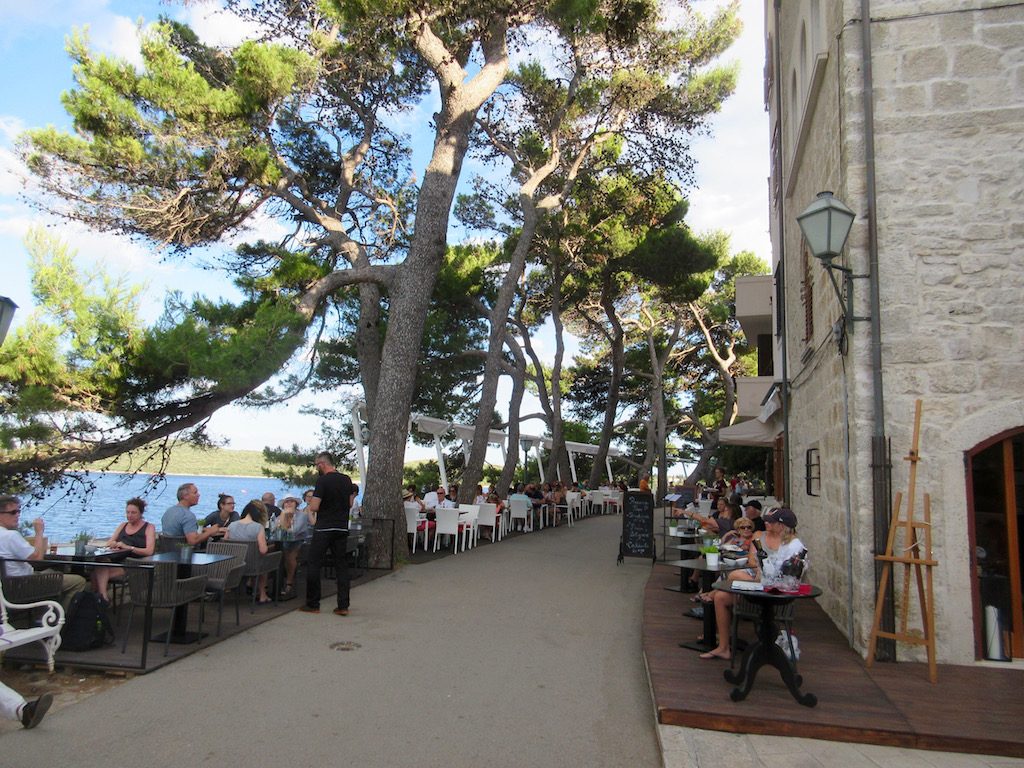
Korcula Waterfront Path

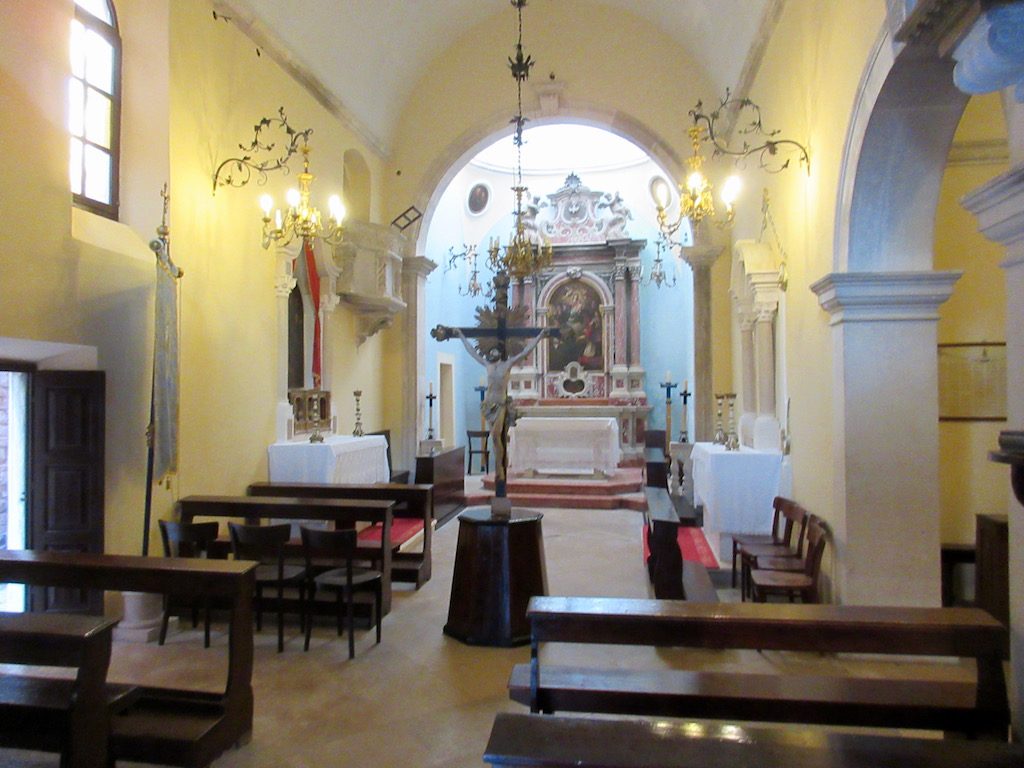
Korcula Chapel

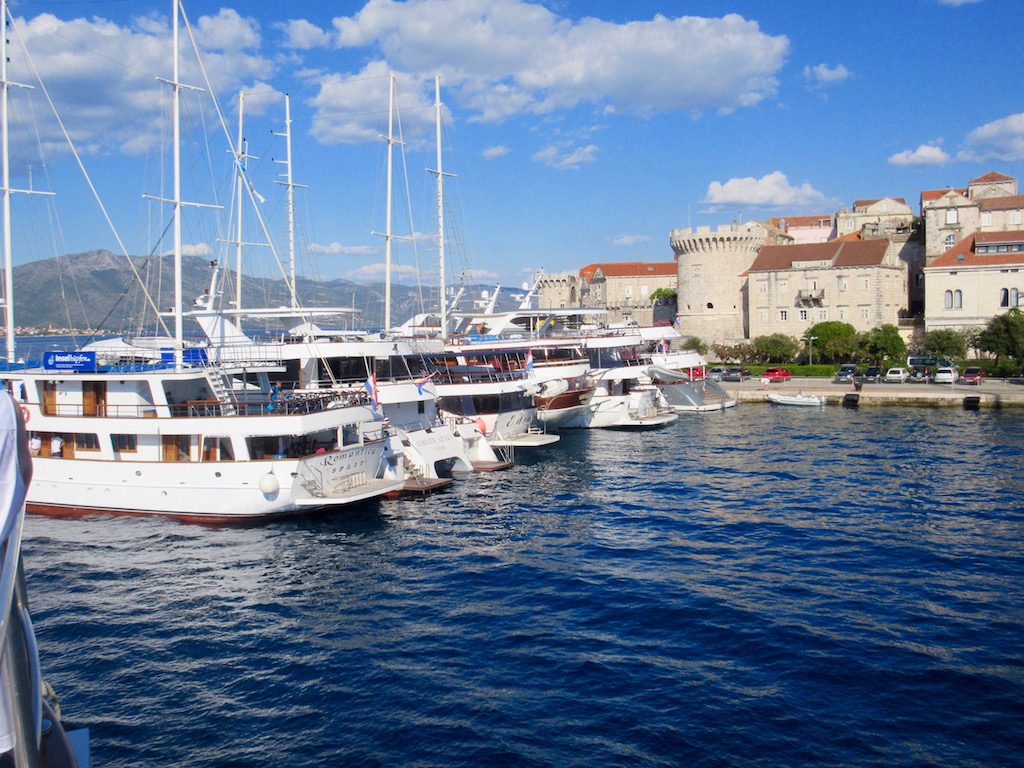
Korcula Stacked Boats

The Adriatic Sea is a body of water that separates the Italian peninsula from the Balkan peninsula. It is the northern most arm of the Mediterranean Sea and Albania, Bosnia and Herzegovina, Croatia, Greece, Italy, Montenegro and Slovenia border it. There are more than 1,300 islands in the Adriatic Sea.

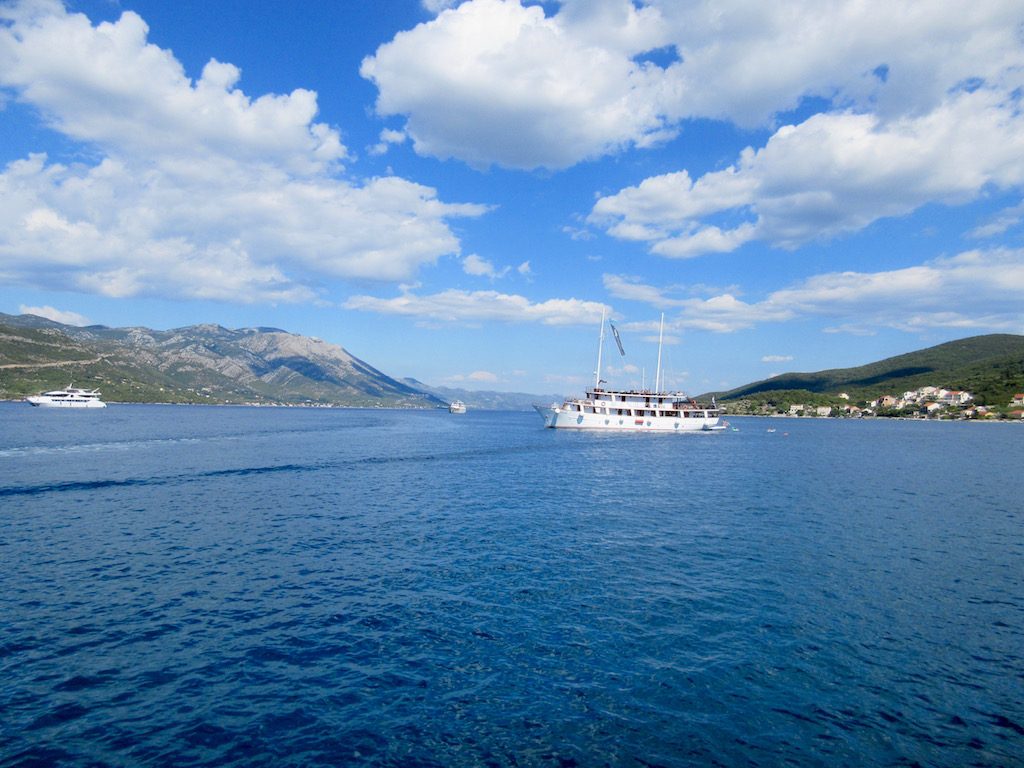
We spent about eight hours sailing from Trogir to Korcula through beautiful dark blue waters and scattered islands, both inhabited and uninhabited. The major islands that are inhabited have ferries that run regularly for both locals and tourists to get from one to the other, as well as to the mainland. Along the way we passed many other chartered vessels with mostly young folks drinking and sunning on the upper decks. Everyone stops in local coves for swimming stops where they put out inner tubes, water rafts and pool toys.

Korcula is the sixth largest Croatian island and is about 29 miles long and 5 miles wide. The population is about 16,000. The island is known for its dense pine forests, vineyards, and olive groves. The town of Korcula is called “Little Dubrovnik” because of its medieval squares, churches, palaces and houses similar to those found in Dubrovnik.

We arrived in at the small port in Korcula late in the afternoon. With limited space to dock all of the boats which would like to overnight in port, they tie up the boats one next to the other.  On this day we were the seventh and final boat tied up so to go ashore we needed to cross from our vessel through six other vessels until we reached land. Not the most convenient but it does allow for everyone who wants to dock to find a spot to tie up.

The old town or Korcula on the island of Korcula is a small oval town built on a small hill at the edge of town. It is not an island of its own but instead a peninsula jutting out from the main island. Again the streets are narrow and meandering but due to the town being built on a small hill there are many more steps to contend with in getting around town. The town has a beautiful main church with a huge bell tower in the center of town.  Although there are several other churches or chapels around the town, all beautiful in their own way.

On the shore side of town there is a lovely pathway lined with large pine trees overlooking the Adriatic Sea and the islands in the area. The pathway is lined with restaurants and bars where we stopped for a pizza and salad for dinner. The evening temperatures are perfect for short sleeve shirts and shorts. Every restaurant is busy by about 7:30 or 8:00pm.

We have noticed that there are no beggars on the streets on the island and no evidence of homelessness.  However, many people have the nasty habit of smoking.  Several young girls were selling sea shells next to our dining area.  They were playing more than they were selling.

July 2, 2017 Rovinj – Trogir

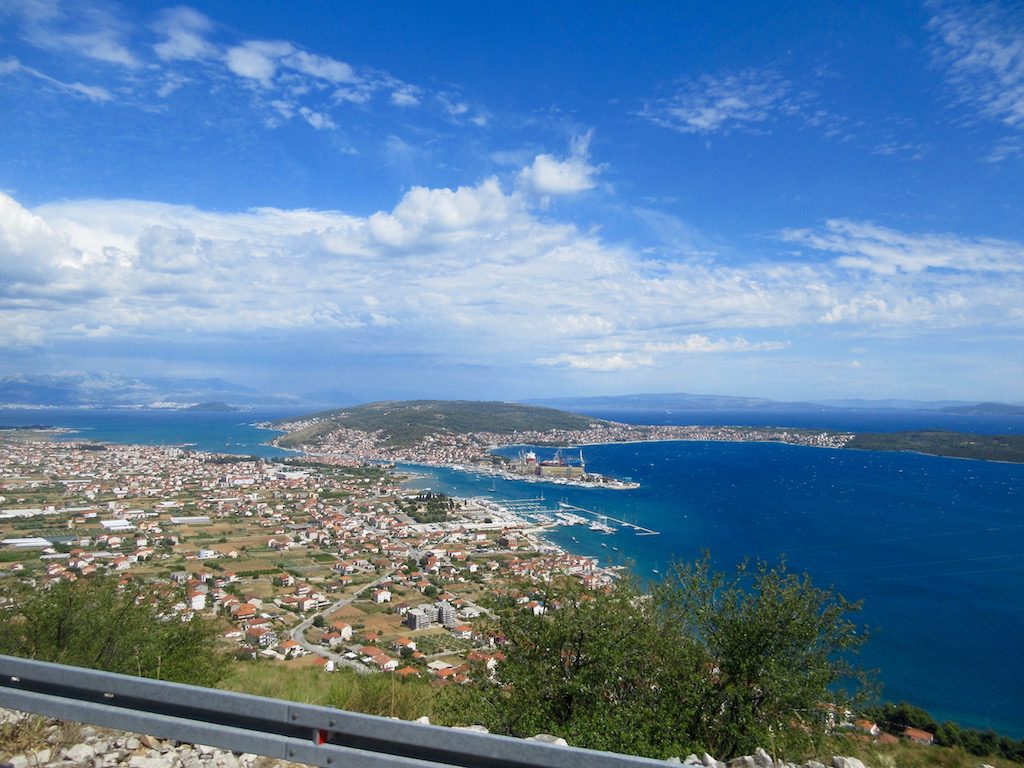
Trogir View from Above

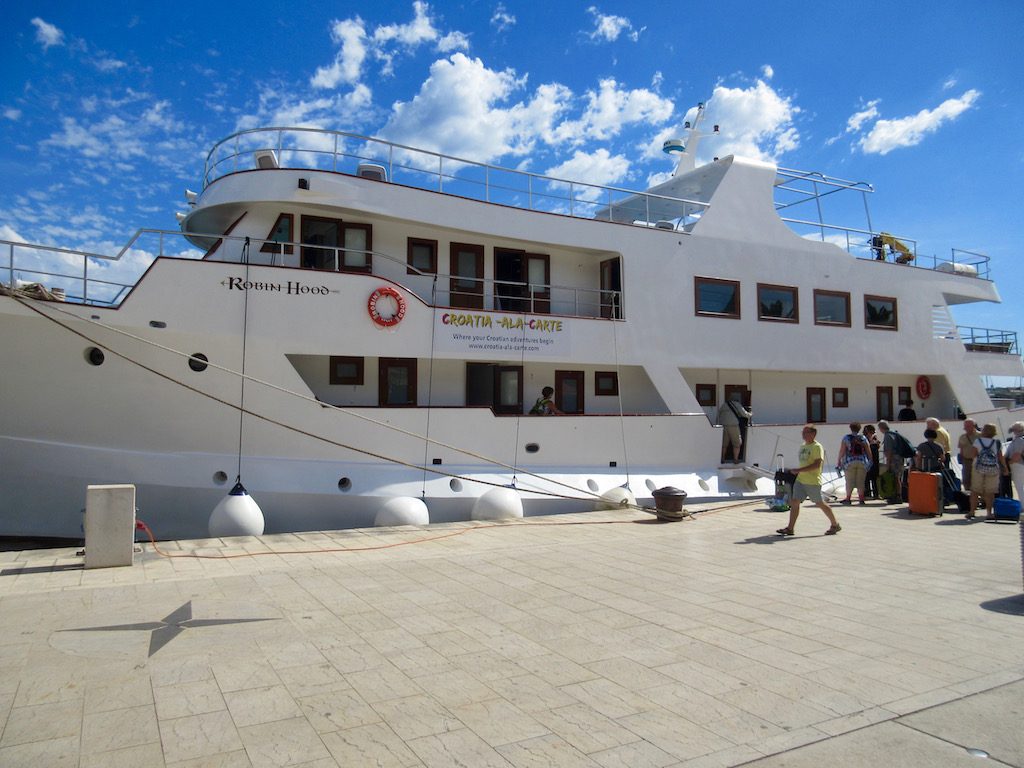
Trogir – Robin Hood

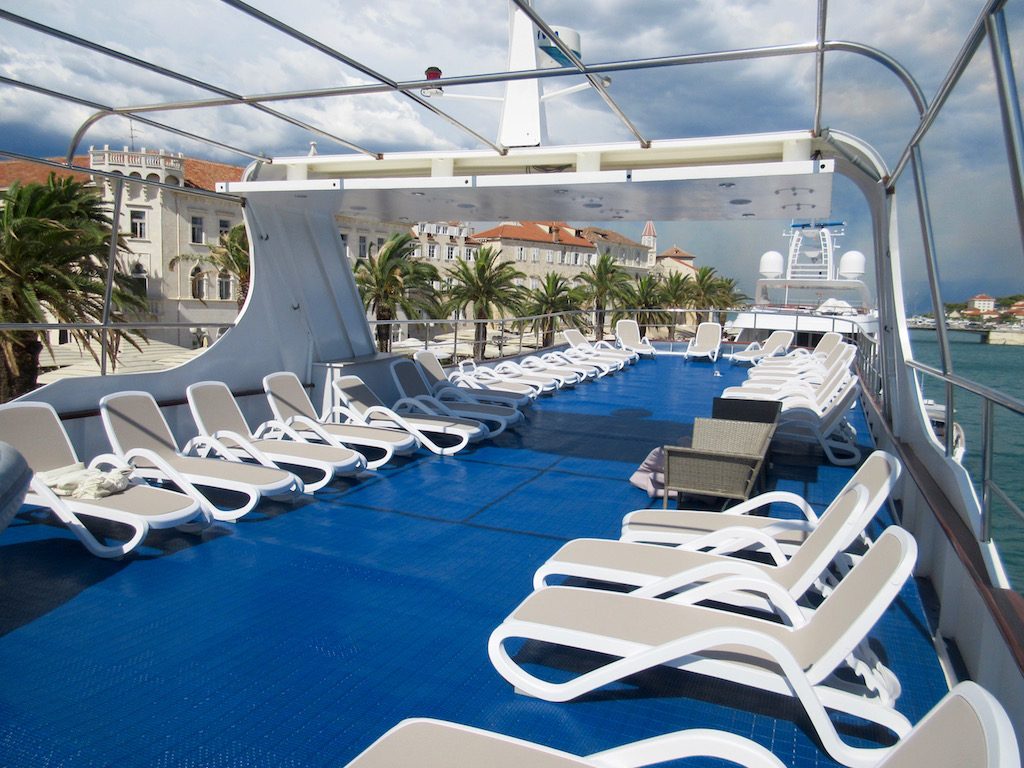
Trogir – Robin Hood Sun Deck

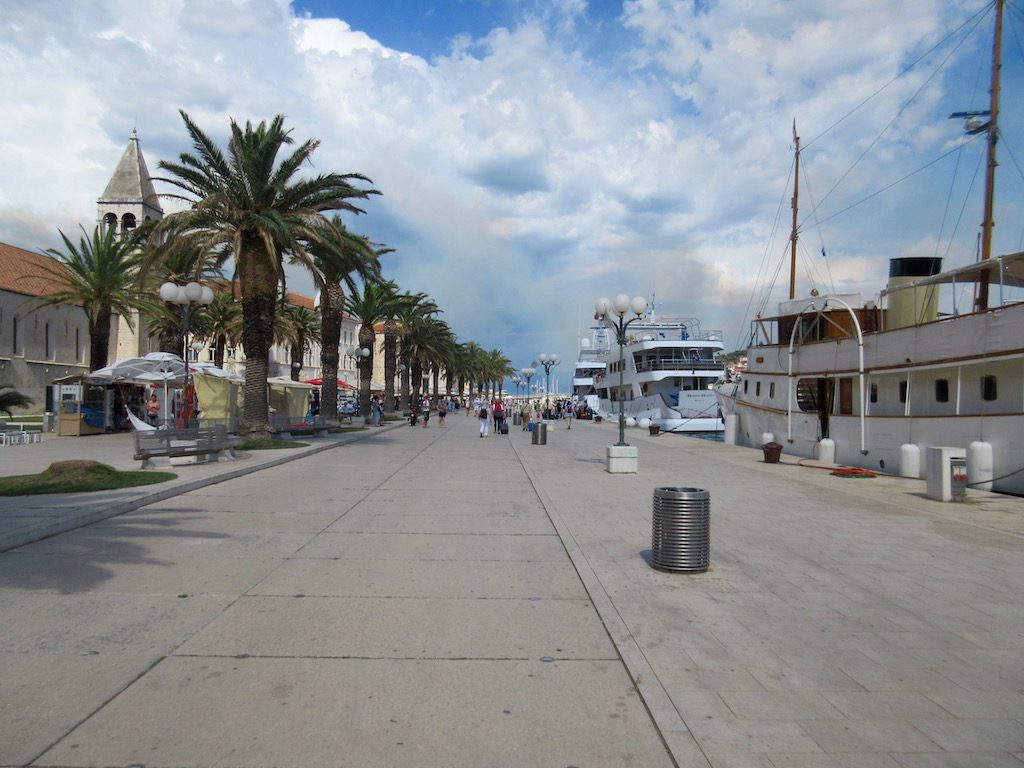
Trogir – Old Town Harbor Front

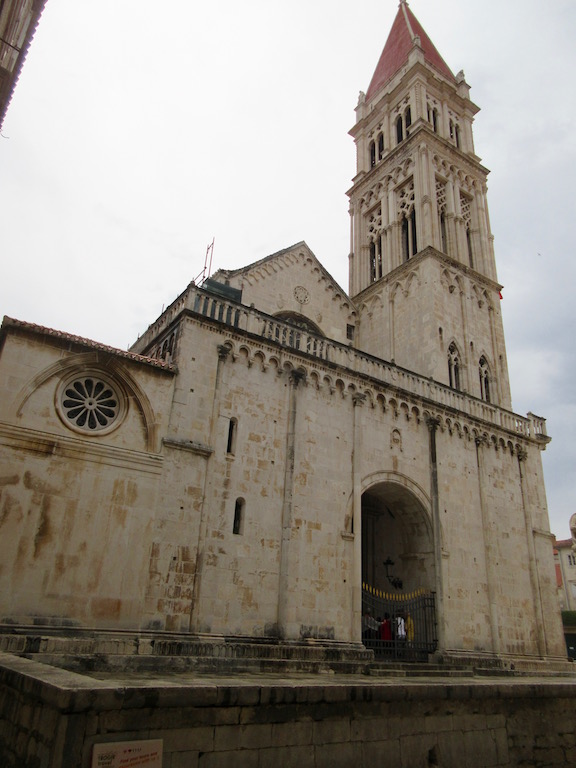
Trogir Church

Trogir Rainbow

This morning we departed Rovinj about 9:00am via private coach for the town of Trogir on the Adriatic Sea. The bus ride, including a required 30-minute resting time for the coach driver, took six and a half hours. We arrived in Trogir about 3:30pm. The drive from Rovinj was very pleasant as we were mostly on recently built toll roads. These toll roads include stunning bridges over ravines and extraordinarily long tunnels carved through the mountains to make travel as quick as possible. The roads were built by foreign companies at no cost to the country in exchange for a certain number of years that the companies can collect the tolls on the roads. For the distance we traveled today the tolls might add up to a total of $100 US. Convenience and time has its price. The toll roads are extremely well maintained with rest stops, gas stations, hotels and restaurants along the way.

We traveled on roads that were a bit further inland from the coast and it felt like we were in the mountains. The hillsides were covered with pine trees. As we veered off from the main toll road and made our way to the coast, the landscape began to change. It looked more Mediterranean with orchards of olive trees, acres of vineyards and other fruit trees. The hillsides were more brown than green and were covered with grasses rather than trees. As we reached the summit of the hills just off the coast we had incredible views out over the Adriatic Sea, Trogir and the town of Split in the distance.

Our home for the next week was the MS Robin Hood. The Robin Hood is a small ship with a capacity of just 34 passengers. Our local guide and owner of the Robin Hood is a local named Debbie Knezovich.

After boarding our vessel, the Robin Hood, we had a welcome drink and introductions to the captain and the crew. Shortly thereafter we enjoyed a late lunch or early dinner in the dining room. They served a light soup, roasted veal, French fries, a green salad, a mixed vegetable dish of carrots, peas, potatoes and such. Dessert was a chocolate cake with cherries.

The weather was very windy in the afternoon and by the time we finished our late lunch it had begun to storm with lightning and thunder. We had planned to sail to Split but instead the captain decided that it would be best to stay in the harbor over night and to set sail for Korcula at 7:00am the next morning.

The rain subsided and we had time to look around the old town of Trogir before we met the group for a happy hour at an open bar just ashore from our vessel. The old town is quite small in size although rich in history and architecture. One of the local waiters pointed out to us that the city was once divided between the rich and the commoners. There is a line drawn in the main street with stone where the commoners were not welcome to cross. The homes on the rich side of the street were larger in scale and more elaborately decorated than those on the other side of the line. The narrow streets of the old town were more like alley ways than streets and they meandered through town more like a maze than in a grid pattern. Mostly the streets are lined with restaurants, small shops of souvenirs, local lavender products and gelato shops. The buildings are all constructed of huge stones hundreds of years old. Most of the windows have large wooden shutters on the exterior. Most of the buildings are left natural stone while others are stucco painted in mostly beige, yellows and orange tones.

While we were having drinks at the bar there was an enormous piece of a rainbow that appeared in the boldest colors. There had been a fire in the hills earlier in the day and maybe the particulates in the air helped to make the rainbow colors more intense.
July 1, 2017 Rovinj – Pula

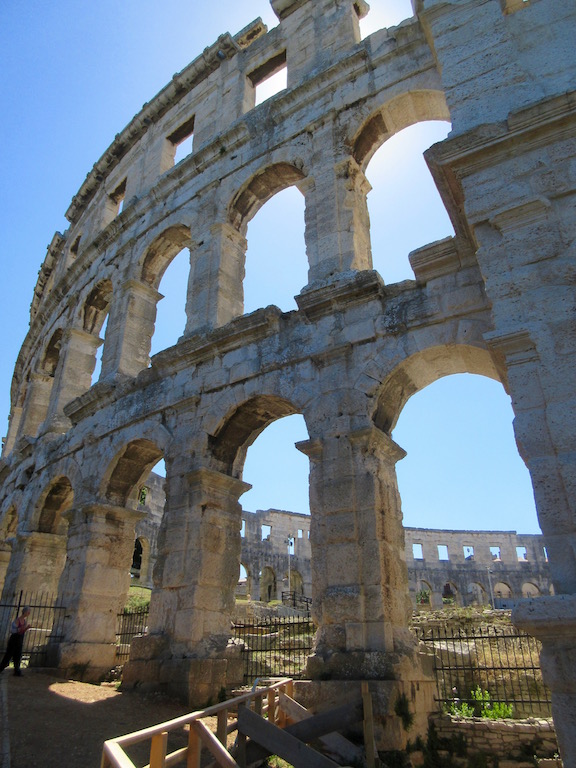
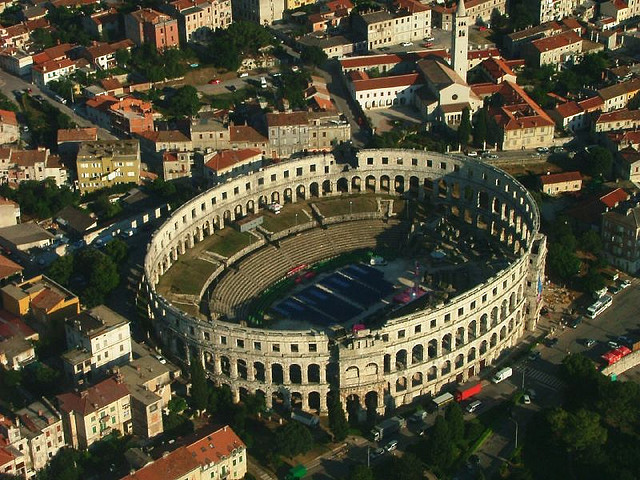
Pula Arena

Pula Arena

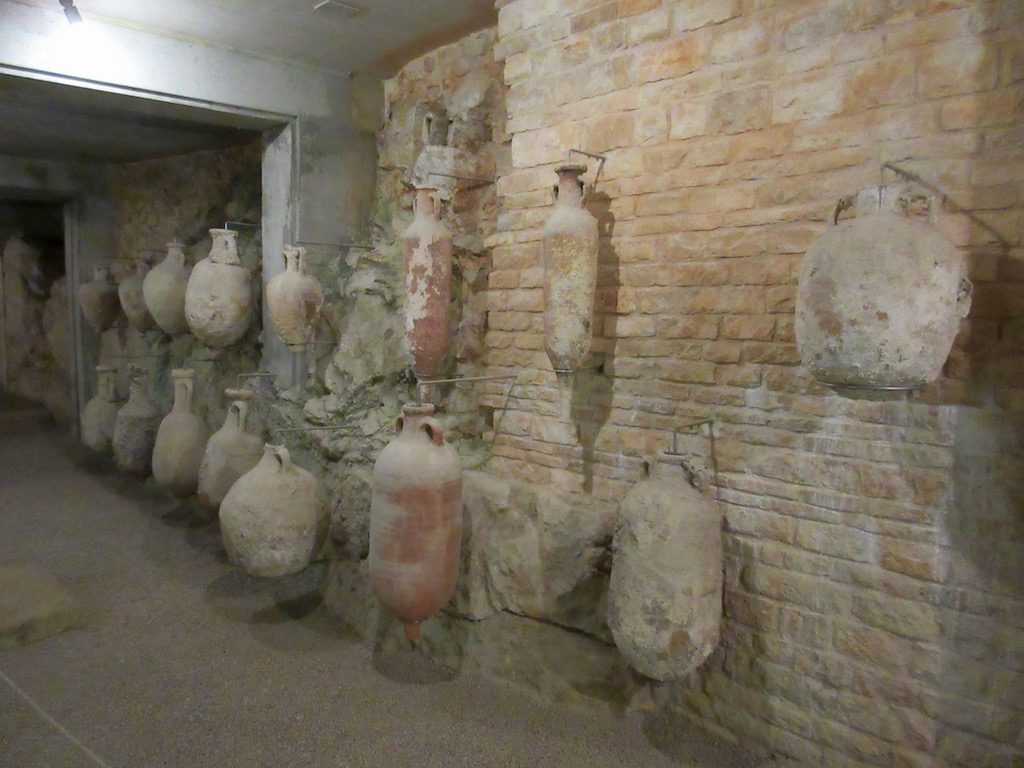
Pula Arena storage containers

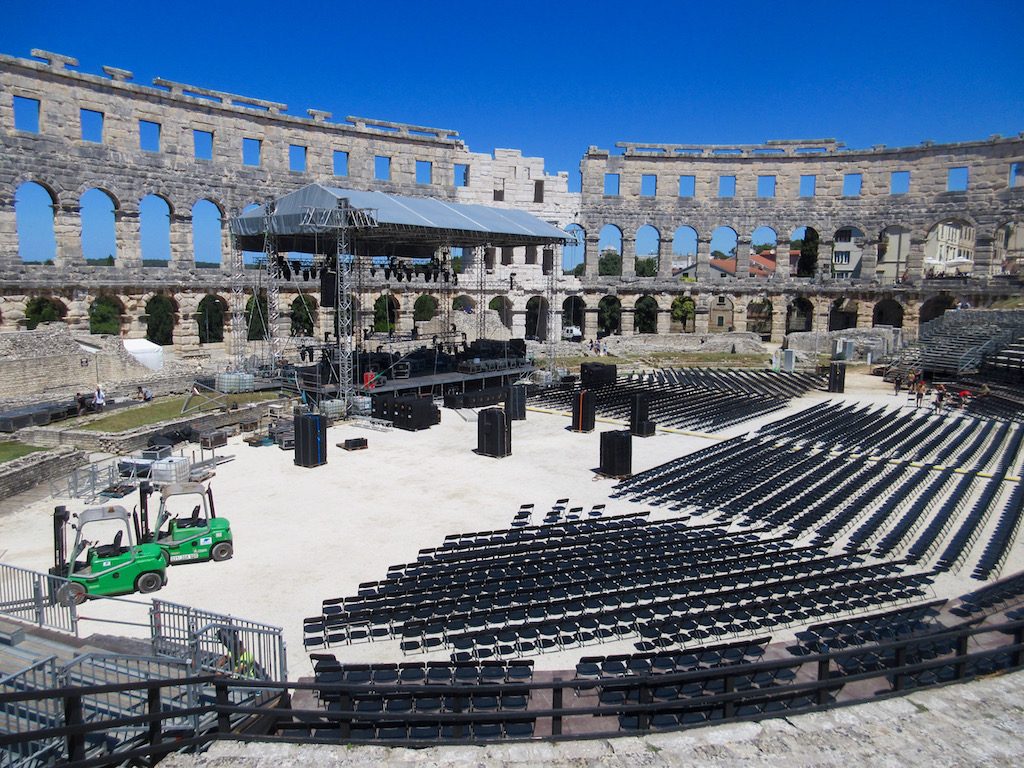
Pula Arena aerial view

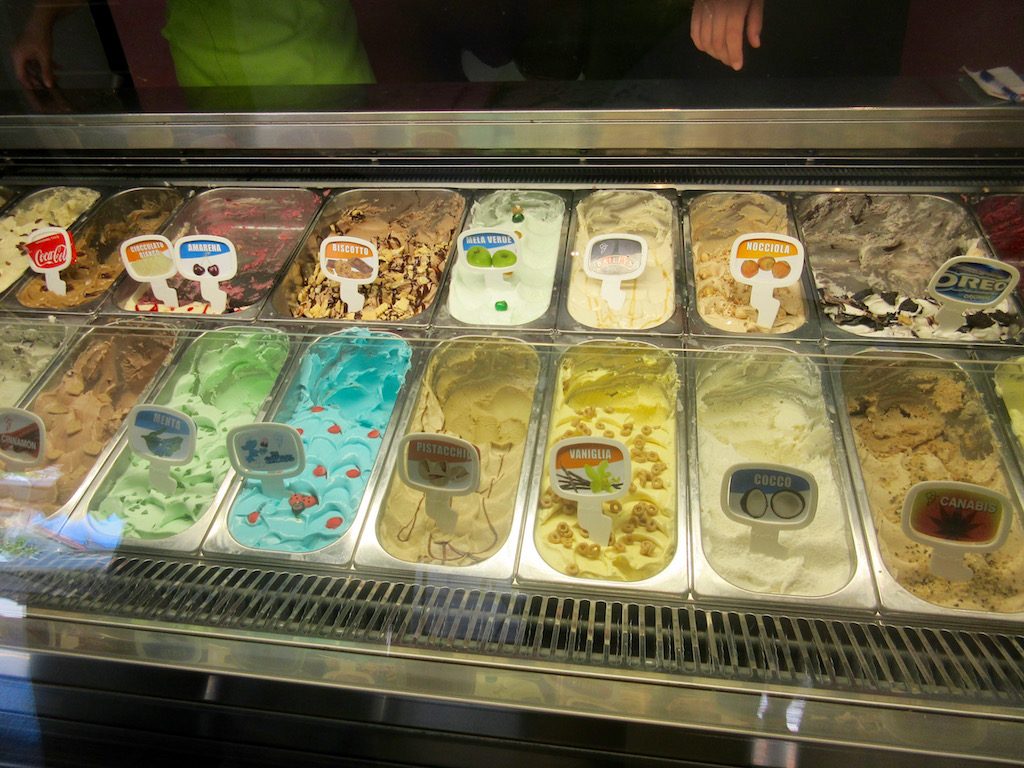
Pula Gelato

After breakfast we took a local bus for a 45-minute ride to the town of Pula. Pula is the 8th largest city in the country located at the southern tip of the Istrian Peninsula. The city of Pula has a population of about 60,000 residents, and has a long tradition of winemaking, fishing, shipbuilding and tourism. It has also been Istria’s administrative center since ancient Roman times.

Between 27BC and 68AD, a great amphitheater called the Pula Arena was constructed, much of which is still standing today. The arena could host up to 23,000 spectators for gladiator fights with live animals. The Pula Arena is among the six largest surviving Roman Theaters and is still in use today during summer film festivals and concerts. We did an audio tour of the arena where we heard about the history of the arena.

The Romans also supplied the city with a water supply system and a sewage system…..lots of tunnels underground. The Romans also fortified the city with a wall with ten gates, a few of which remain today.

There were only seven of us (Nancy D, Turner, Natalie, Jan, David, Kent and Mark) who ventured down to the town of Pula for the day. The program manager, Kent Z, gave us bus tickets. After our tour of the arena, all but Kent, hiked up the hill around the Citadel to take photos of the city from the hill top. It was a warm but beautiful day with clear skies and the views were spectacular. We stopped for beers and soft drinks along the way down from the Citadel. Everyone enjoyed the time to drink and chat.

Before heading to the bus station for our trip back to Rovinj, Kent and Mark took a stroll along a great pedestrian street lined with shops, cafes, restaurants and gelato shops, of which we stopped for double scoops (5 Kuna per scoop vs 8 Kuna in Rovinj).

For dinner we were invited to join 15 of our group for dinner at a local restaurant called Giannino. The owner of this restaurant is the husband of Helena who owns the local wine restaurant where we had wine tastings. The restaurant is very upscale with mostly fresh fish that was very good. They brought a platter of fresh fish to the table so you could select your dinner if you liked.

June 30, 2017 Rovinj

This was a quiet day with breakfast at the hotel in the morning followed by a lecture from 11:00am to 1:00pm. We had a local stone mason who spoke about the local stone quarries and how more than 80% of the stone used in Venice was from Istria. He now has a small shop in the old town of Rovinj where he sells all things made of stone. He uses the winter in his studio to craft the items he will sell in the summer months to tourists in town. He makes candle holders, hot plates, small candy dishes, votive holders, picture frames and items like that.

Next Erla spoke about modern day Istria after the wars and how property rights are still being disputed in the courts. Italians who were forced from the country after WWII are seeking compensation for land lost.

Both Mario, the stone mason and Dario, the hotel owner grew up during Tito’s rule and felt that they had a good life and that they were taken care of by the government. They both feel that there was less animosity between the religious and geographical sectors of society. Everyone used to be treated the same and no one knew any differently about who was Bosnian, Italian, Croatian, etc. They feel that today there is a lot more tension than there used to be.

The weather was very stormy in the afternoon with rain and wind so it was not very good to be outside. We spent the afternoon inside.

At 6:00pm we had another wine tasting class where we tasted a sparkling wine, a rose and two excellent red wines. They served some bruschetta with creamy cheeses, apricots, miniature pears and prosciutto. Helena, the wine shop owner, is very personable and she works with her sister Mandy and a young waiter named Matteh. They were very kind to us all during our stay in Rovinj.

Kent and Christine, the program managers arranged for a doctor to make a house call and check Kent’s cold out before we headed to our next destination. The doctor prescribed some antibiotics to be taken for a week or ten days to clear the fluid in his lungs. The cost of a 30-minute house call and a few days of antibiotics not quite the same as in the US. The total cost was 500 Croatian Kuna, 65 Euro or about $77 US. The drugs were 52 Croatian Kuna at the local pharmacy.

June 29, 2017 Rovinj

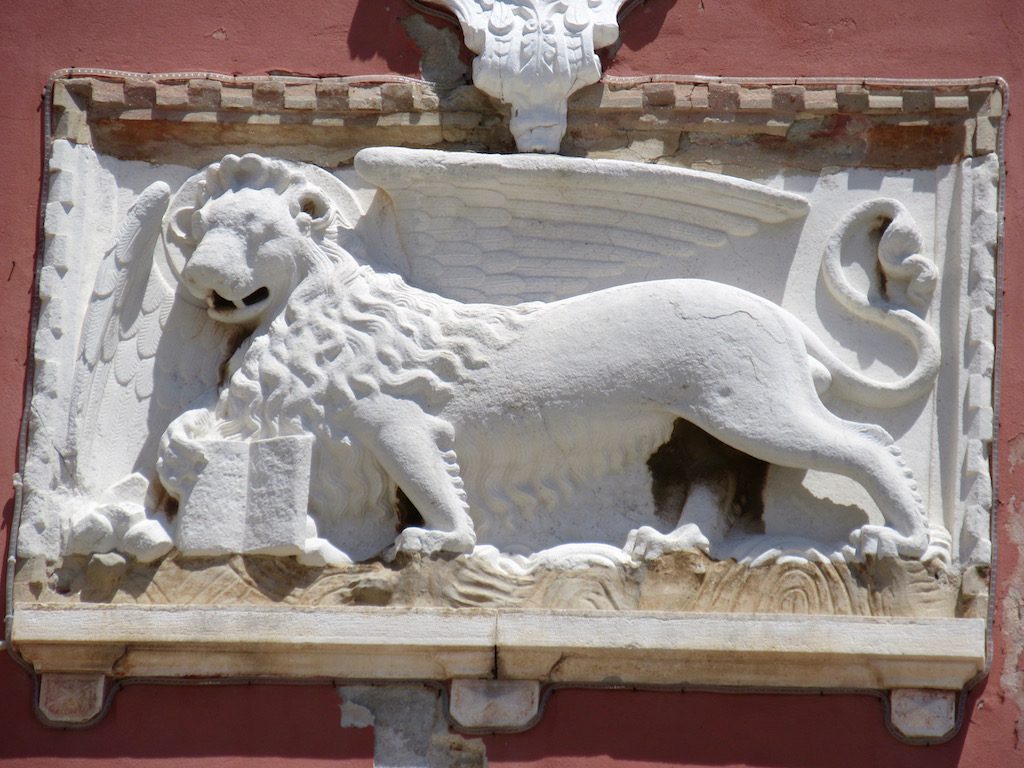
Rovinj Lion

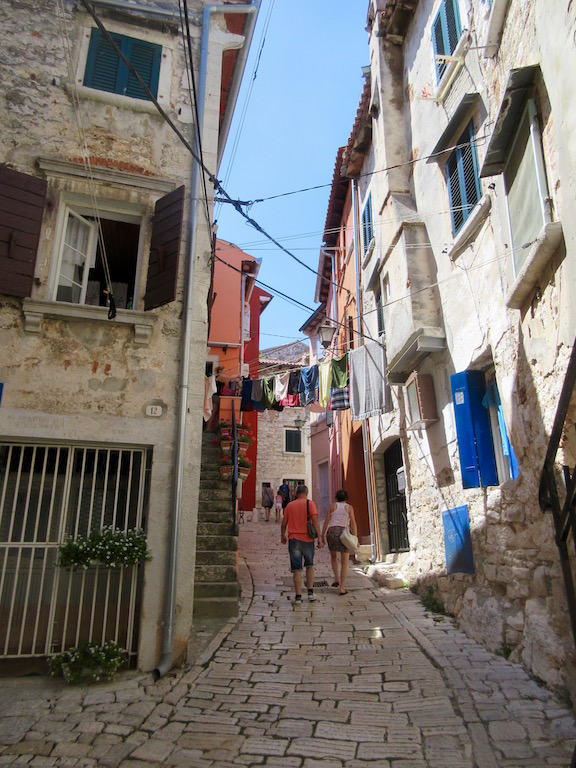
Rovinj Street

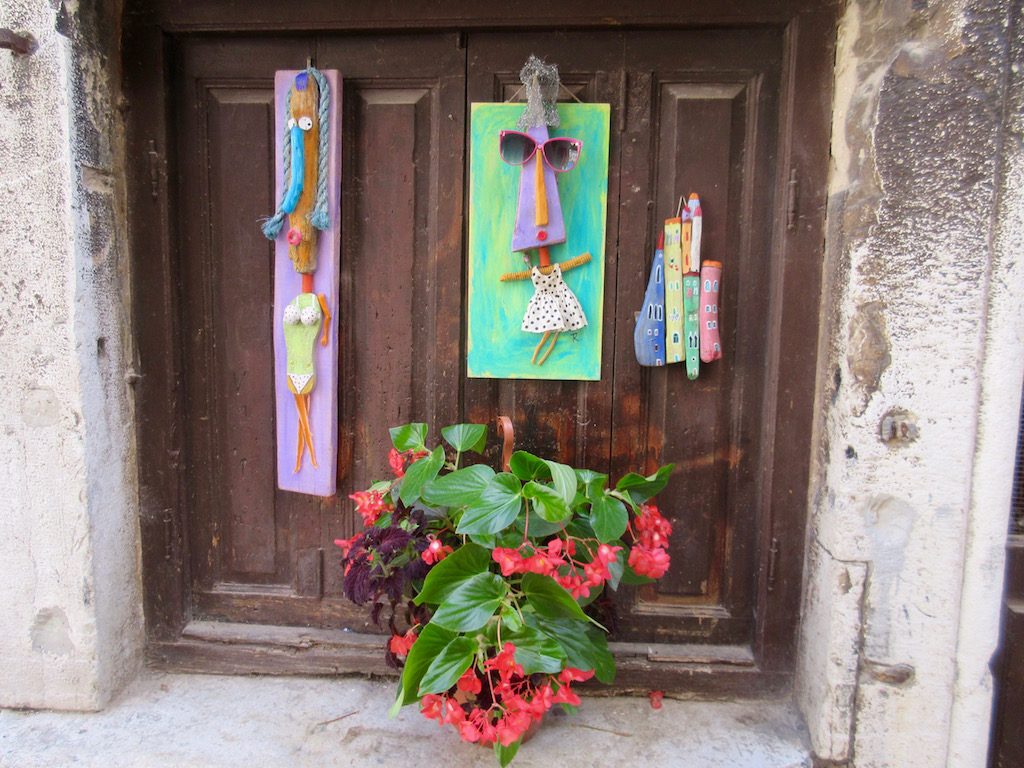
Rovinj Decorative Doors

Rovinj – Art from recycled objects

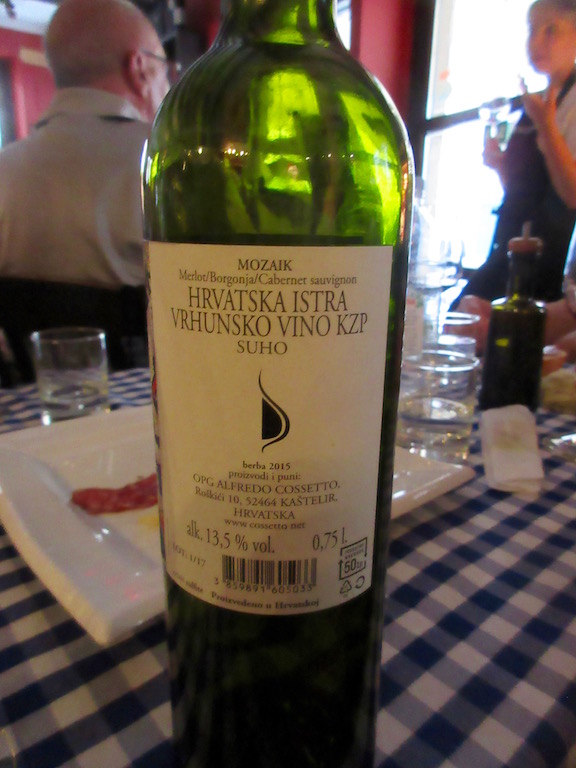
Rovinj – Local language on the wine bottle

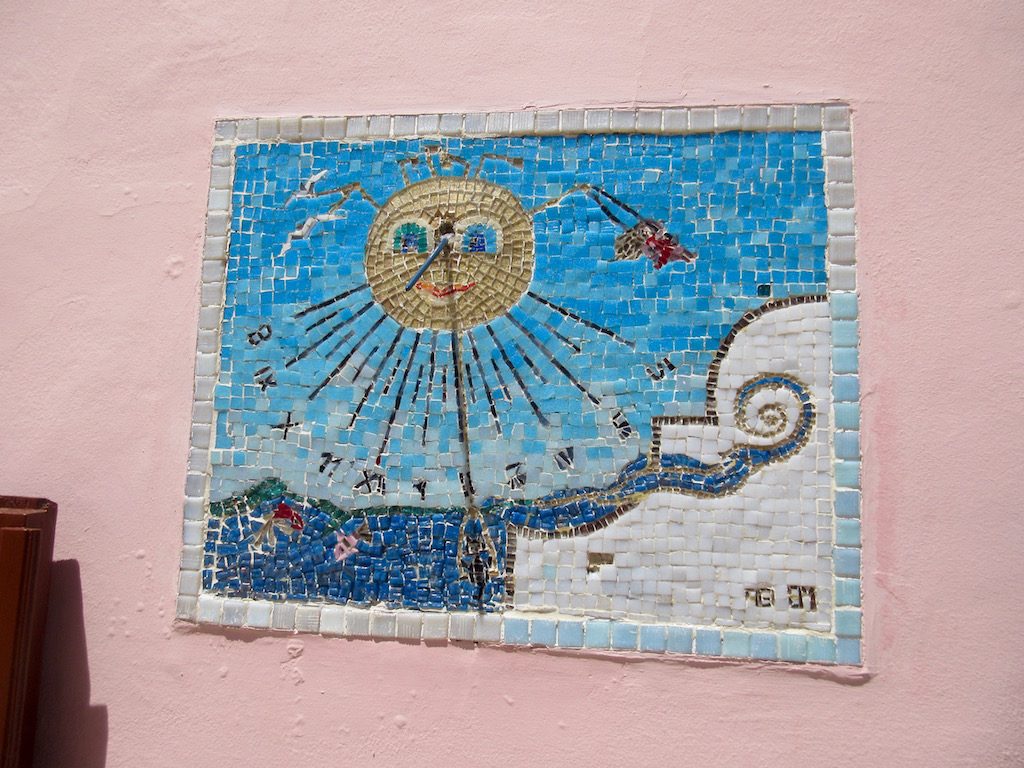
Rovinj Sundial Mosaic

Last evening, we had a large rain storm with thunder and lightning but the morning was much cooler and the sky was clear.

Dario, the owner of our hotel, spoke to us on this morning about how he came to Rovinj about 18 years ago and began to buy and renovate old buildings that were mostly inhabited by refugees from the 1991war. Many of the buildings at that time had been left vacant for decades and in many cases abandoned since the 1940’s by Italian families. Dario now owns and operates several buildings and rents rooms out to visitors like a hotel. Every room is different and has its own unique style depending on how large the rooms were in the past. They have all been beautifully restored and furnished with modern baths, hardwood floors, air conditioning and modern electricity.

Our lecture this morning by Erla was about the symbol of Venice being found all over the Istrian peninsula. The lion with wings is the symbol of St Mark which is the patron saint of Venice. Most often shown with the front paws on land and the rear legs on the sea. It is also depicted with an open book in its paw.

The afternoon was free to explore town on your own. Some folks took walks while other chose to swim in the sea. Kent and I had a late lunch at a small restaurant called Neptune in a back alleyway out of the afternoon sun. Kent had a large plate of a “Weiner chicken” something like a Weiner schnitzel. Pounded chicken battered and deep fried and served with French fries. Mark had a plate of cheese ravioli in a white cream sauce and a side green salad.

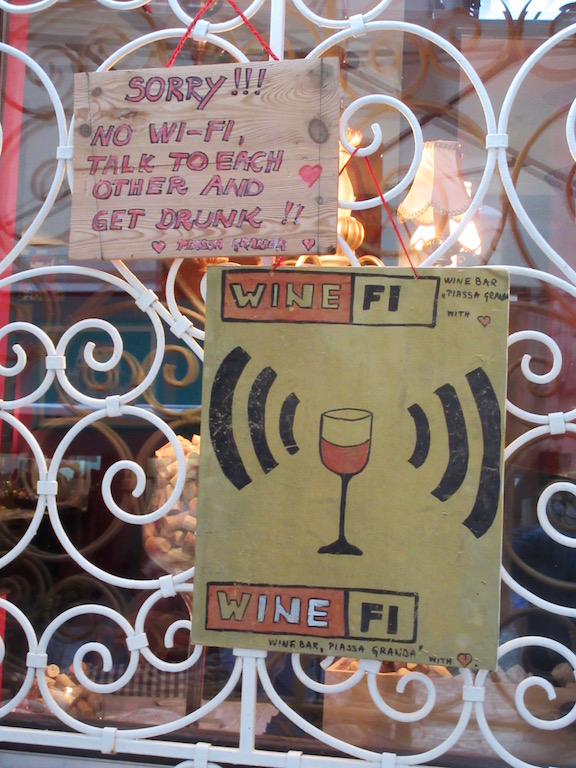
At 6:00pm we met up for another wine tasting class where we tasted three local red wines. The wines we tasted are made from local grapes and are not aged at all. The varieties of wines were called Teran and Mozaik as in Mosaic. They are only from the 2015 and 2016 harvests and are considered fresh wines. Along with the wines they served up a platter of cheese with truffles, polenta, a sliced sausage that was excellent and another spreadable cheese with truffles on small bread crisps. All very good.

After the wine class we spent some time along the waterfront watching the world go by before retiring to bed early. Kent is still recovering from his chest cold and was not feeling up to walking much.

June 28, 2017 Rovinj

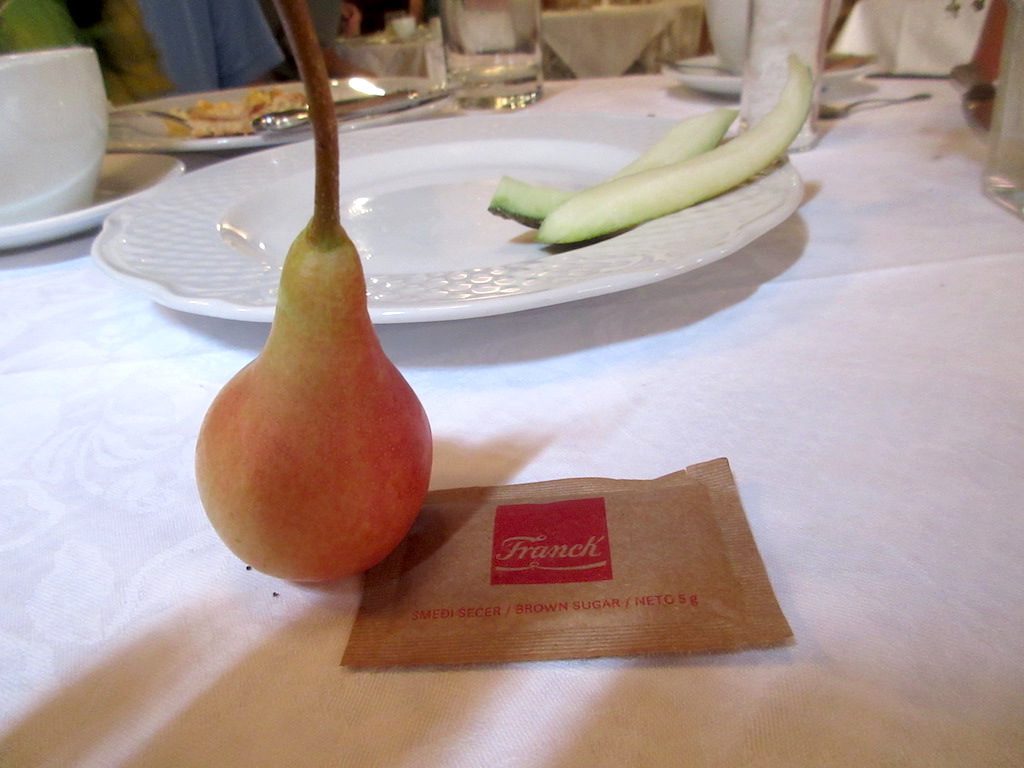
Mini Pear served at breakfast next to a sugar packet

Old town of Rovinj

St. Euphemia Sarcophagus

Wine Tasting

Wine tasting snacks

Wine Bar Signage

This morning breakfast was served in our hotel from 8:00 until 10:00am. At 11:00am Erla lectured for a couple of hours about the items that were exported from Croatia to Venice. There were many other ports around the country of Italy but the port of Venice was the farthest north and the most convenient to transport goods further north into the Alps and Europe. Erla discussed items like wool, stone and salt.

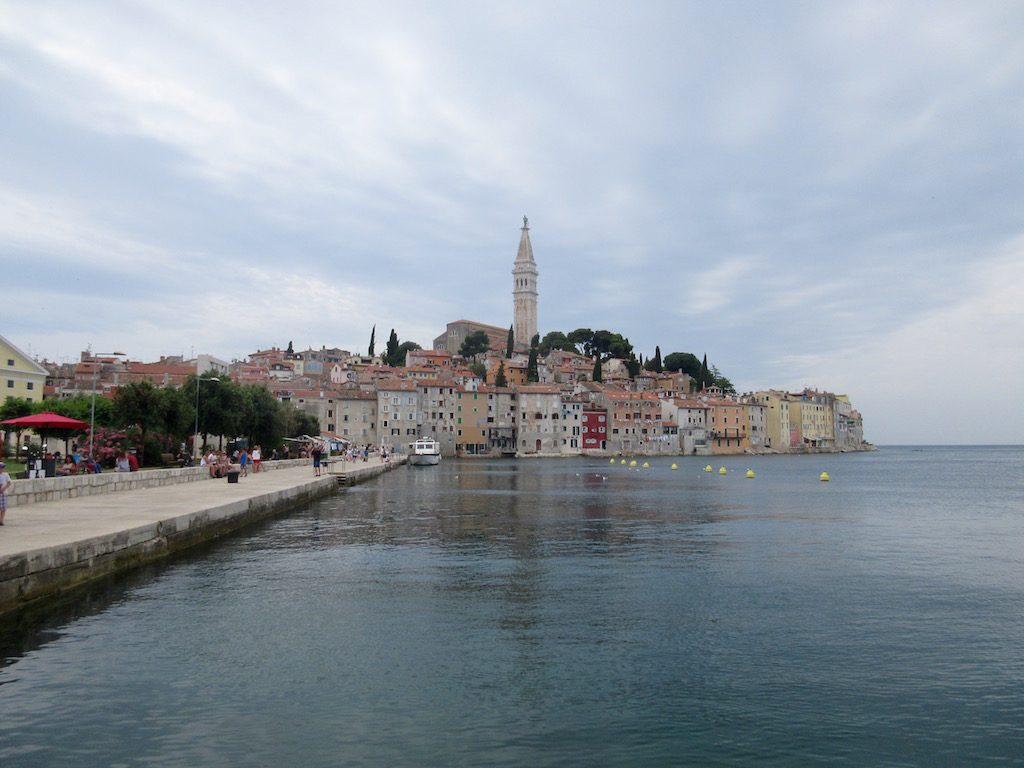
In the early afternoon a local guide by the name of Tamara took us on a two-and-a-half-hour tour of the old town of Rovinj. She showed us where the old city walls were when Rovinj was just an island and where the original canal and draw bridge were that were used to access the island. She took us to the top of the hill where the church of St. Euphemia is located.

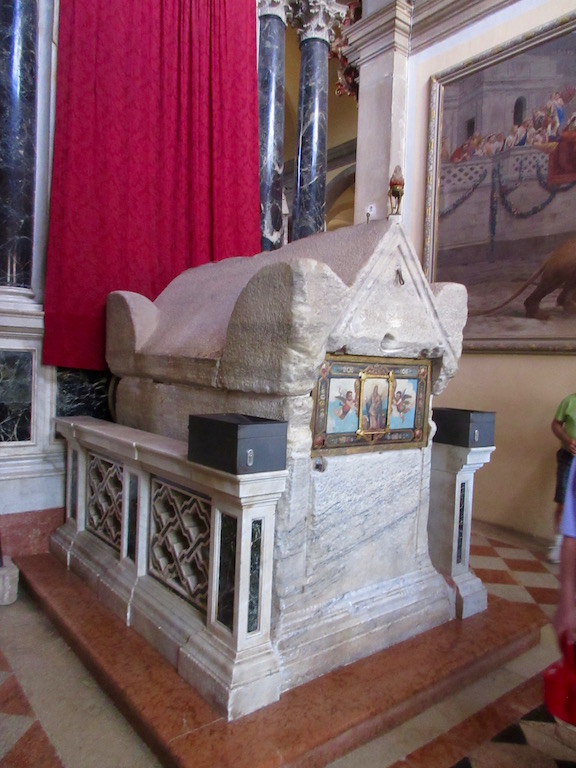
It is believed that in the time of the Tsar of Diokletian many Christians were captured, persecuted and killed. Among them was a young 15-year-old girl by the name of Euphenia from Chalcedon in Asia Minor (Turkey). Euphemia was arrested by Diocletian soldiers and thrown into an arena with lions because she would not give up her Christian beliefs. They believe that she died in the year 304 and that her body was placed in a church in Constantinople, built in her honor. By the year 800 the Iconclasts came to power and the Christians were forced to remove the relics of St. Euphemia.

What happened next is difficult to say but legend has it that a marble sarcophagus came floating to the coast of Rovinj in a large storm of July 13, 800. Many people tried to haul the sarcophagus to St. Georges church on the hill but were unsuccessful. Finally, a small boy with two small cows managed to haul the sarcophagus up the hill and it was considered a miracle. The city proclaimed St. Euphemia the patron-saint of Rovinj. Every year on September 16th St. Euphemia Day is celebrated with a grandiose celebration in the main square of town. The locals eat mutton with sauerkraut and a fritule dessert, something like a deep fried doughnut hole.

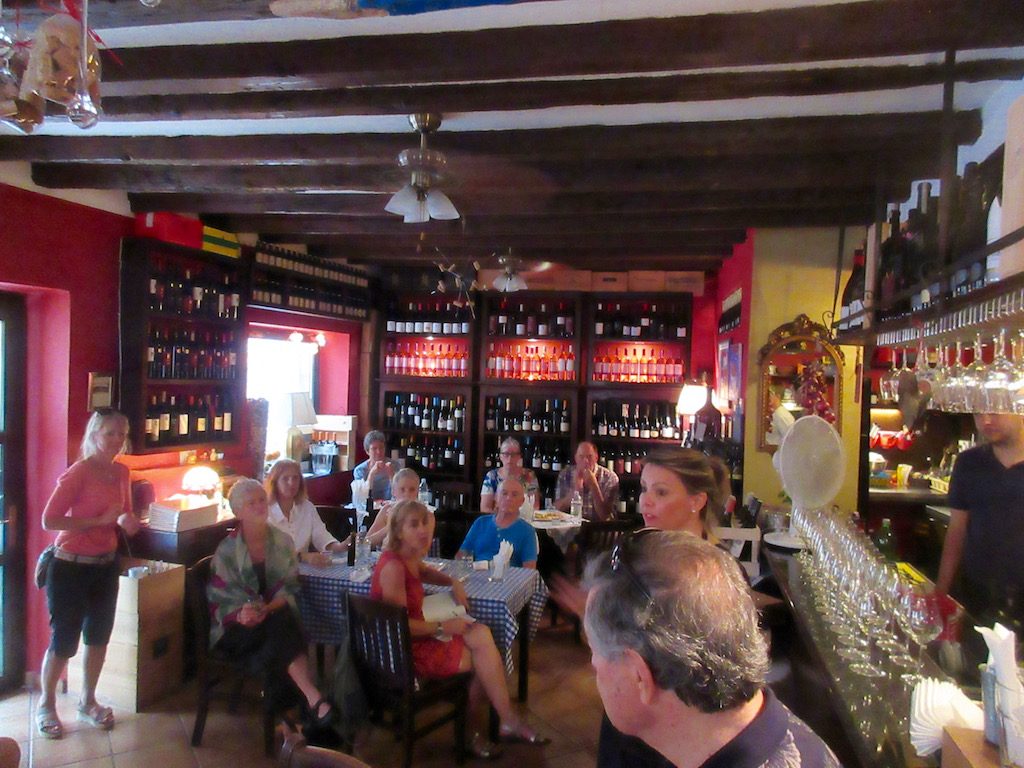
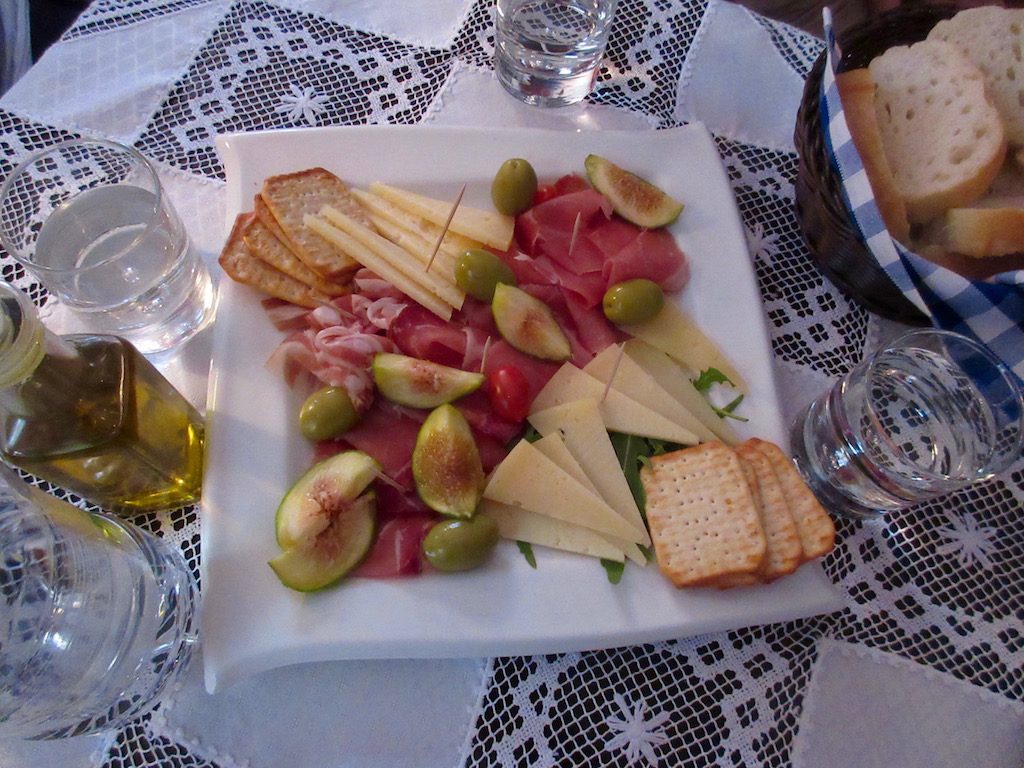
At 6:00pm we had a wine tasting class at a local restaurant. They served three varieties of local white wines. Two of the three are wines that should be drunk within the first year of being bottled. They were very light and refreshing. The third wine they served is called an orange wine because of it amber or orange like color. The grapes skins are macerated causing the wine to be tinted. It was a bit heavier and full bodied wine and people had very distinct opinions about whether they liked it or not. Along with the wine they served trays of cheese and crackers, fresh white figs, prosciutto and olives.

We had a late lunch around 4:00pm in a local pizza restaurant so we were not particularly hungry after the wine tasting but we did have room for a little gelato.

The weather on this day was very windy and the evening was filled with showers on and off as well as lightning and thunder.