June 27, 2017 Rovinj

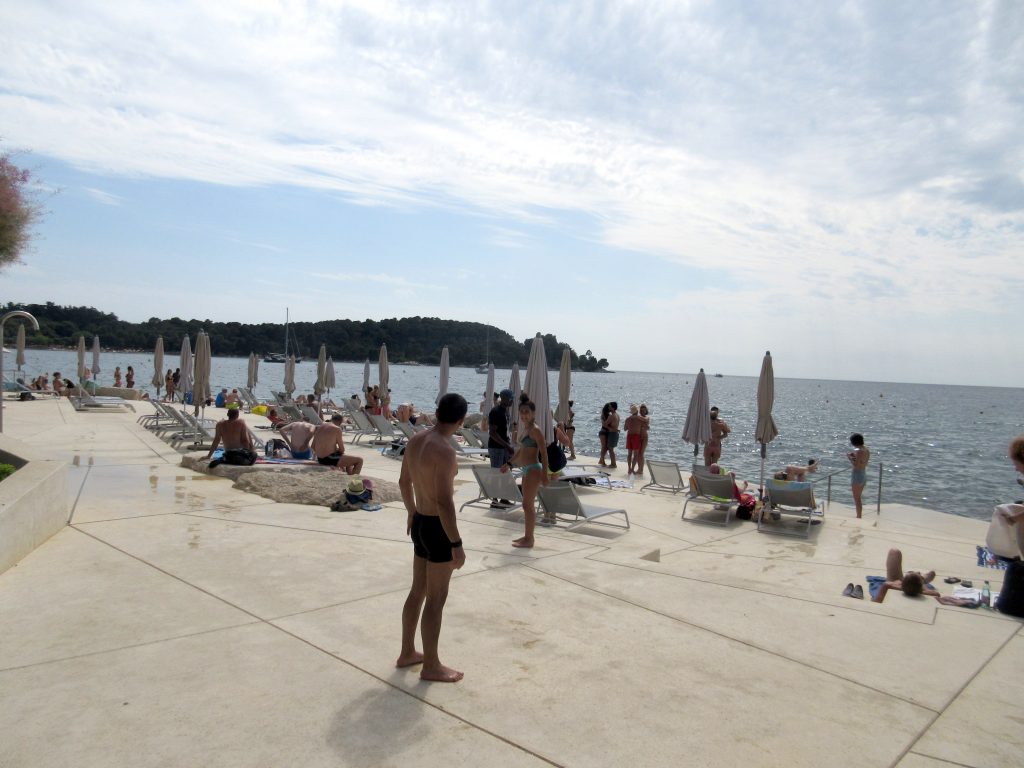
Rovinj Beach

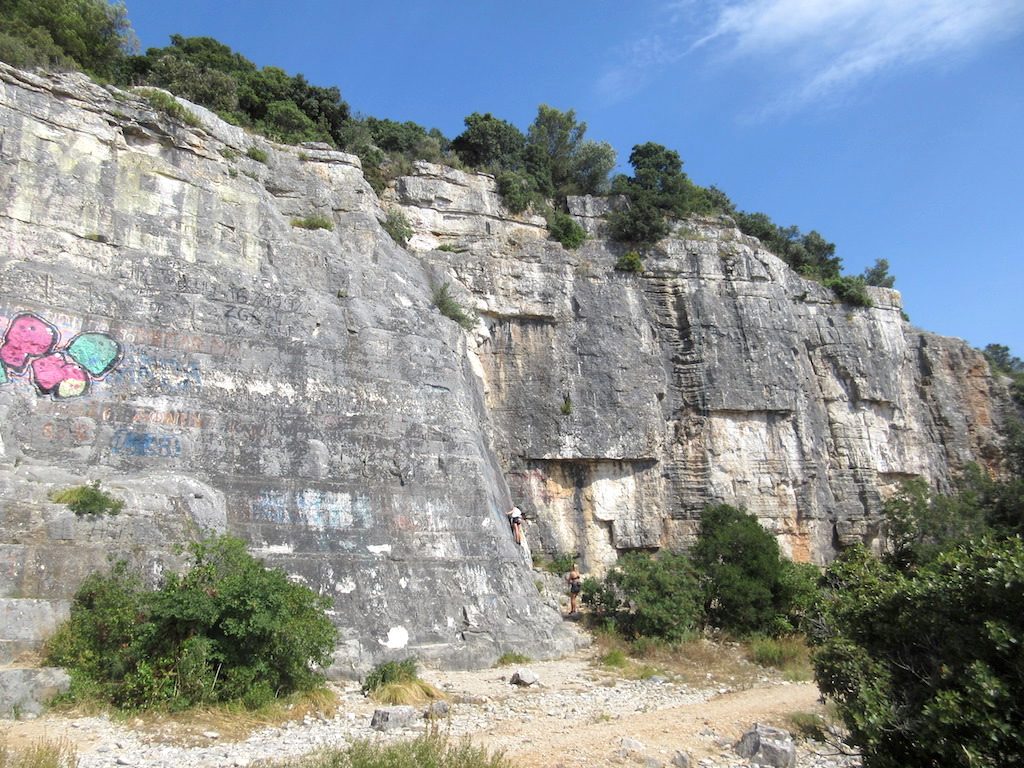
Rovinj Rock Quarry
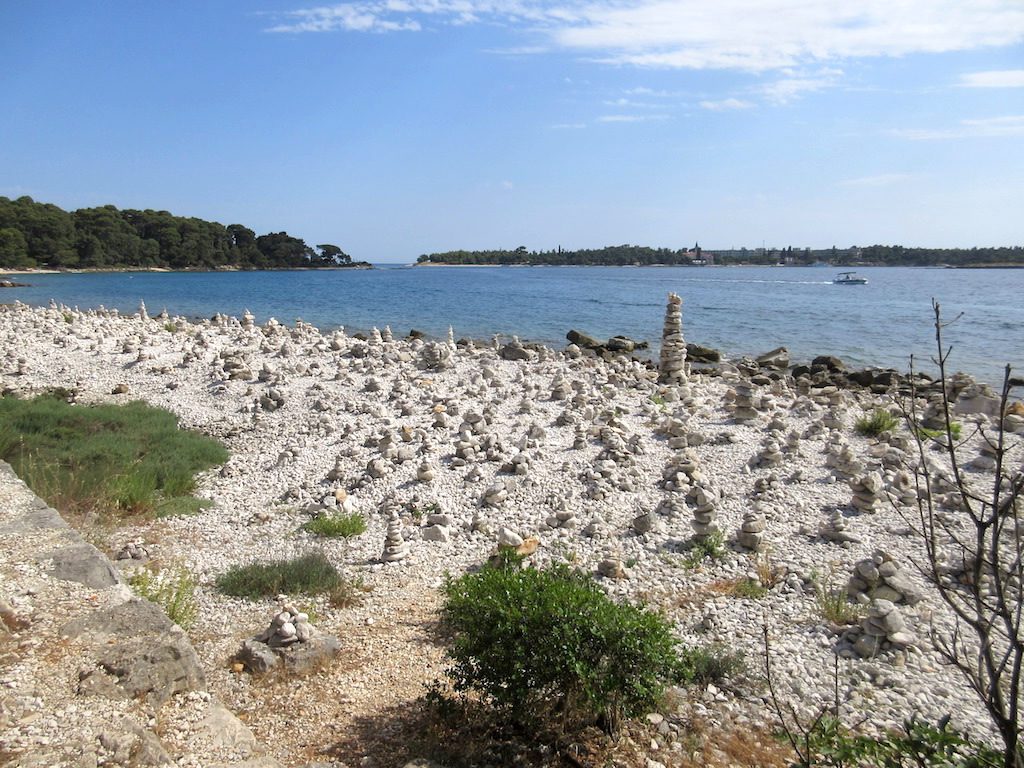
Rovinj Stacked Rocks
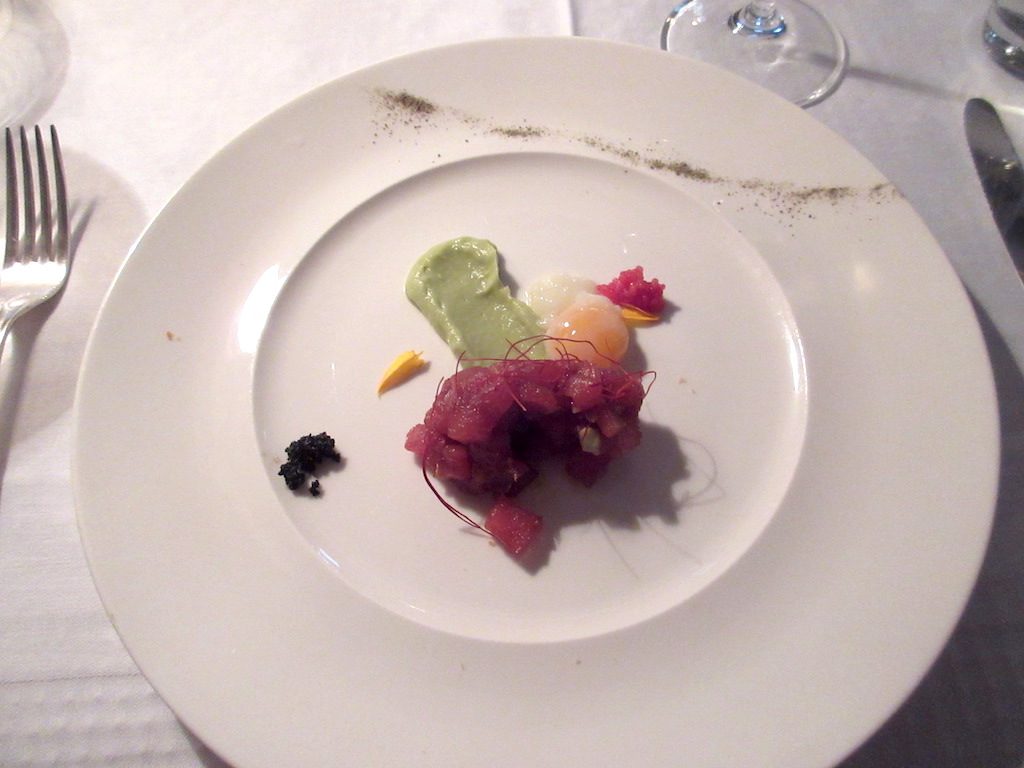
Tuna Tartar
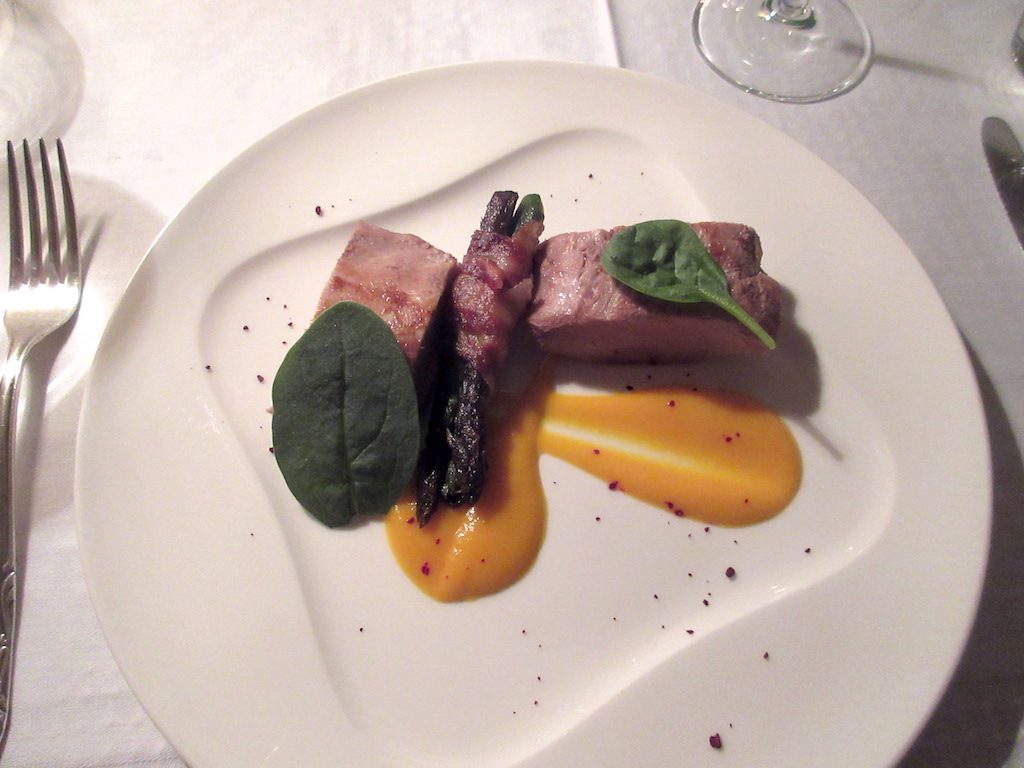
Pork Medallions Entree

Croatia has a population of about 4.2 million people, 90% of which are Croat and mostly Roman Catholic in faith. In addition to the Croat’s there are minorities of Serbian, Bosnian, Hungarian and Italians. The official language of Croatia is Croatian which is written in Latin Script.

Arriving from present day Poland, Slavic Croatian tribes settled in the area in the early 7th Century. Christianity was accepted about 800AD and by 925 Croatia became a kingdom under the rule of King Tomislav. In 1102 the country together with Hungary formed a union which lasted until 1918. Yugoslavia was formed after World War I when Croatia joined with Serbia. This relationship lasted until 1991 when Croatia declared its independence, prompting a Serbian invasion which lasted five years. Today the country is a parliamentary democracy and is a member of NATO as well as a member of the EU since July 1, 2013.

Breakfast was served on the ground floor of our hotel between 8:00 and 10:00am. There was a generous selection to choose from including eggs, potato pancakes, potato salad, French toast, fresh fruits, cereals, baked breads, cheeses, deli meats, and individual coffees brewed to your taste.

At 11:00am we had our first lecture by Erla Zwingle who has written for dozens of magazines over the past 30 years, primarily National Geographic, to which she has contributed 25 articles as well as writing its Guide to Venice. Erla had a slide presentation to accompany her lecture where she discussed the early years of the area and it relationship to Venice. After an hour we had a break to celebrate a fellow traveler’s birthday with a delicious hazelnut cake. We finished the lecture by 1:00pm and it was time for lunch.

Kent was under the weather with a cold that he picked up from our friend Carlos before we left home so he retreated to our room to rest. Mark has lunch at one of the local restaurants with David and Jan. We all had tuna salads with an assortment of vegetables, dressed with olive oil and balsamic vinegar. Olive trees are plentiful in the region so you see many places where they are selling olive oil products.

At 3:00pm Kent Zimmerman lead those who were interested on a five mile walk around the harbor and out onto a peninsula where there are many rocky beaches, enormous hotels, fancy patios along the shore with teak chaises with mattresses and lots of hiking trails. There is an old rock quarry from years ago where stone was exported to Venice to build bridges and construct buildings. It was very warm in the sun and the entire walk took about two and a half hours. It was tiring but very beautiful and scenic. Tons of vacationers from the hotels who were out at the beaches, biking and enjoying the water. Kent was still under the weather with his cold so he stayed in the room and rested.

At 6:30pm we met up with the group at a Croatian restaurant very close to our hotel called Ulika. The restaurant located in the lower level of an old residence was very charming with white linen table cloths, a variety of hanging chandeliers, some working and some not. The walls were lined with small mirrors, framed pieces of art and kitchen cups, saucers and dishes.

The first course consisted of fresh grilled octopus’ pieces with a bit of olive oil, balsamic vinegar and a basil leaf. The second course was a tuna tartar with quail egg, black and red caviar, pureed avocado, diced beets and saffron threads. The third course consisted of fresh made gnocchi in a shrimp sauce with fresh shrimp, grapes and a sprig of fresh fennel. The fourth and main course was pork tenderloin medallions with pureed carrots, prosciutto wrapped wild asparagus and a fresh basil leaf. Lastly we enjoyed a vanilla bourbon ice cream with pumpkin seed oil and a variety of roasted seeds including pumpkin seeds. Everything was absolutely delicious and was accompanied with all the red and white wine you could drink and plenty of bottled sparkling and still water. The entire presentation of dinner took about three hours. Wonderful!
June 26, 2017 Rovinj, Croatia

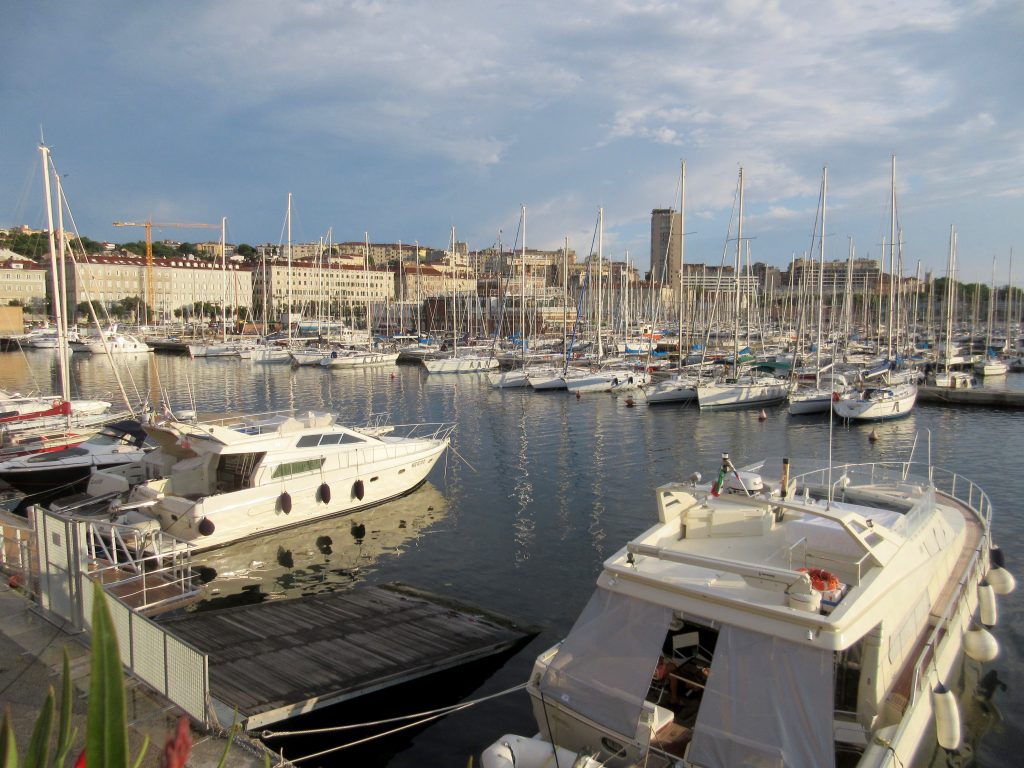
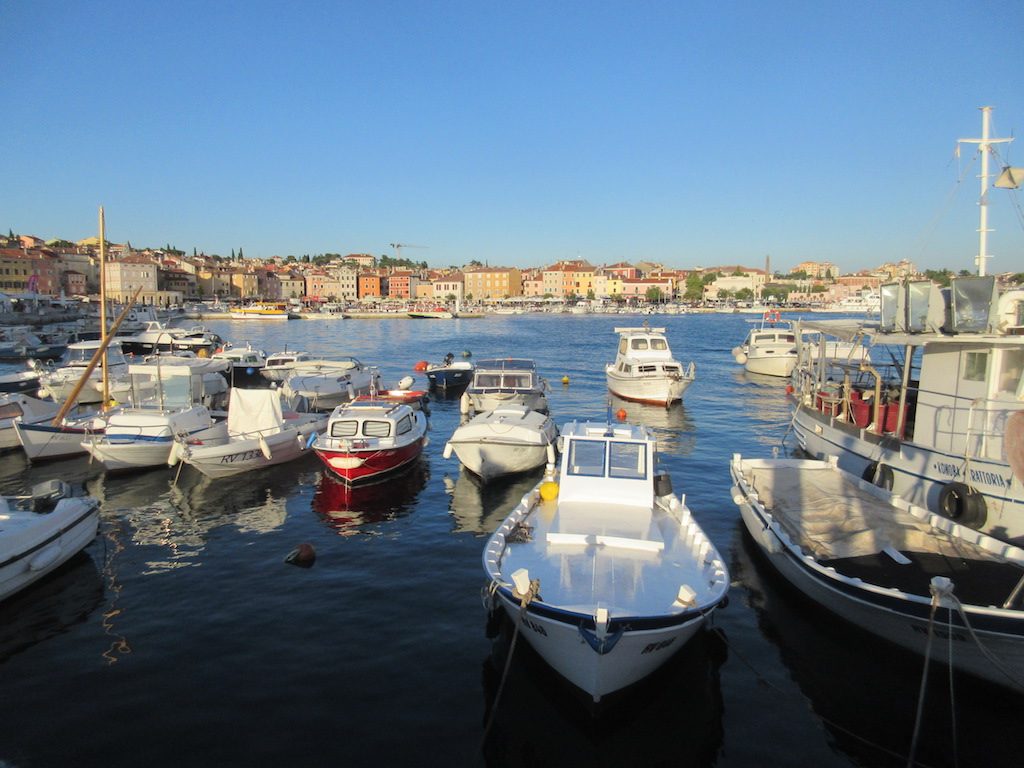
Rovinj Harbor

Rovinj Hotel

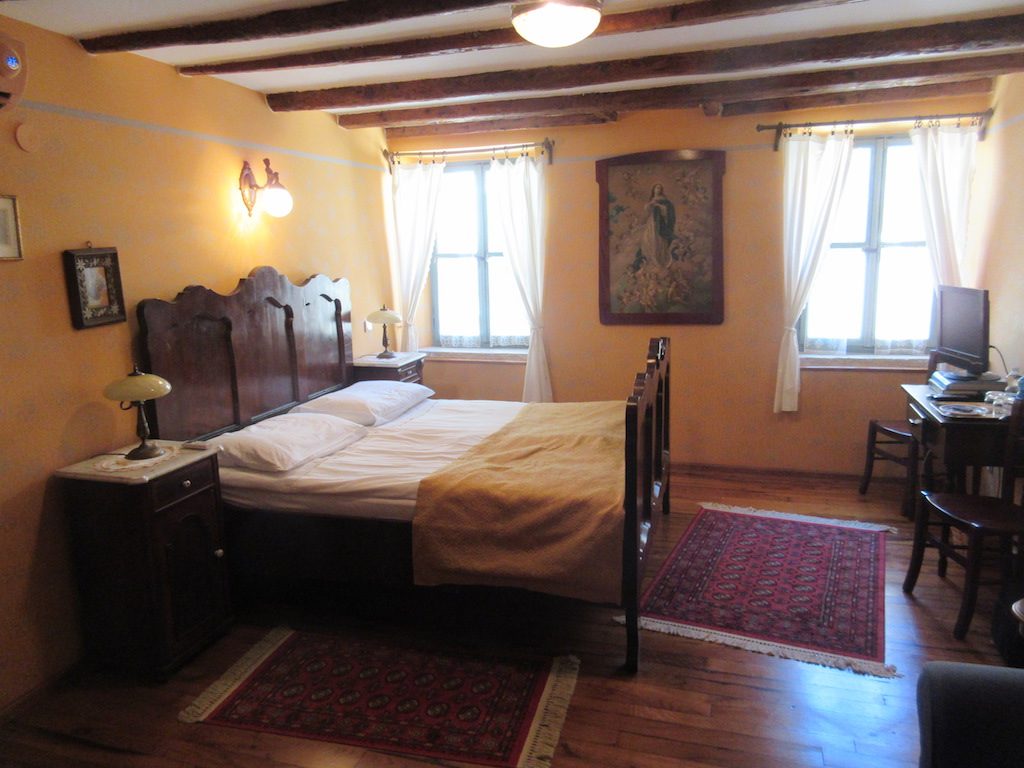
Rovinj Hotel Room

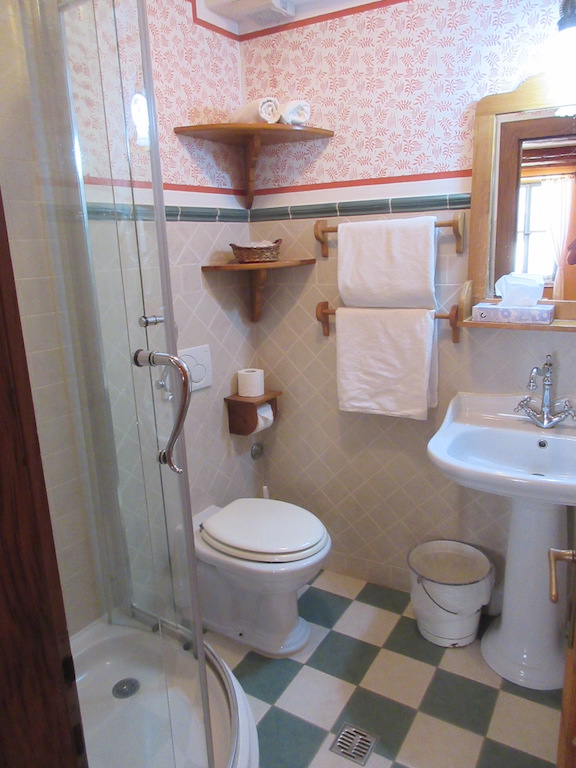
Rovinj Hotel Room Bath

After a quiet relaxing morning at leisure we departed Trieste, Italy by private coach bound for Rovinj, Croatia. We had to cross into Slovenia and from Slovenia into Croatia. The weather has been very warm with what the locals called a heat wave. With the humidity the temperature felt like 103 degrees. The border of Slovenia was just a ten-minute drive from our hotel in Trieste. With both countries being a part of the European Union, there was no border control, we just drove across the border.

About an hour after leaving Trieste we arrived at the Croatian border where there was a fairly long line of cars waiting to enter the country. The lines moved fairly quickly and it did not take long for the border patrol agent to collect our passports, stamp them and send us on our way.
We arrived at our destination Rovinj within two hours of leaving Trieste. A smooth and easy drive on a toll road constructed about four years ago. Along the highway there were many grape vines and fruit trees growing including beautiful looking figs plums. Once in Rovinj we had to disembark the bus and walk into the old town where our hotel was located. The tiny narrow streets and alley ways are not large enough to accommodate a bus so our luggage was transported by car to our hotels. Even with a car there are very few streets within the old town that a car can get down.

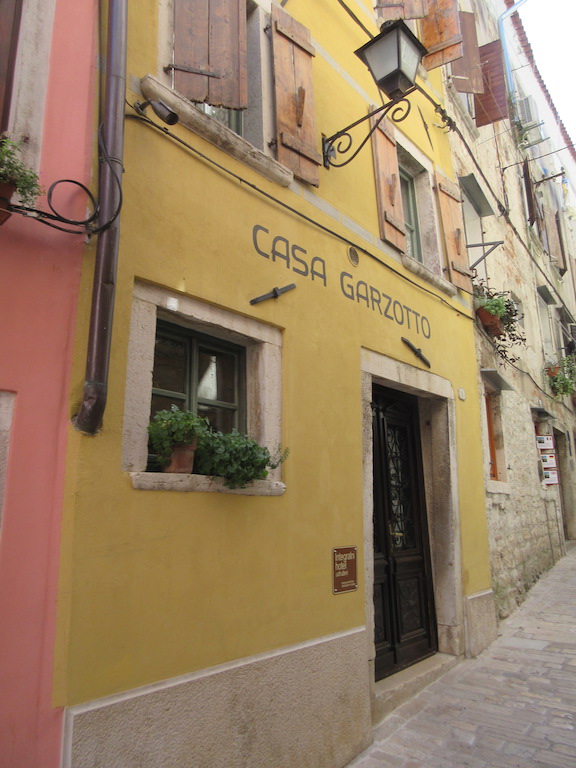
Kent and Christine directed us to a local bar and restaurant where we ordered lunch and drinks of our choice. Mark had a pasta with a prosciutto and Kent had a Greek salad. After lunch we checked into our hotel rooms around the old town. Due to the small hotels within the old town, our group was scattered between three hotels and six different buildings; each hotel room within an historic old building and each room unique to the next. Our room was a third floor walk up a steep staircase to a very large room on the top floor of a small building. Our room was quite large with an antique bed with head and foot boards. A pair of antique night stands with marble tops, a small desk with a chair, a sofa and an armoire for hanging clothes. The floors were hardwood, the walls stenciled with light blue flowers on a peach background, and natural rustic beamed ceiling. A small bathroom with a small modern corner shower, sink and a toilet. Not fancy, but very manageable.

After lunch Kent and I explored a bit of town including the old church at the top of the hill. The narrow winding streets in the old town are paved in cobble stones that are well worn and many of the alley ways have many steps to climb the hill of the town. Charming art galleries, shops and restaurants line many of the streets and alleys along the way. The narrow streets and tall buildings create shade from the afternoon heat.

At 7:30 we met up with Kent and Christine and the rest of our group for a short orientation of the old town and drinks at a waterfront bar and restaurant. It was Salsa night at the waterfront so they had a DJ playing Salsa music and many of the locals and tourists were dancing the night away. The waterfront is lined with small gelato shops, restaurants and bars all filled to capacity with tourists. Ferry boats bring passengers to town from nearby cities, including Venice. They may come for a day, a week or a month but the streets are very busy.

After drinks we found a small pizza restaurant on a narrow alleyway where we had a mixed green salad and a pizza. The Kuna is the local currency and the current conversion rate is about 7 Kuna to one US Dollar. Our pizza, salad and soft drinks cost 115 Kuna.

Located on the Adriatic Sea and the Istrian peninsula, this Croatian city of about 15,000 is a popular tourist town. The town is officially bilingual with Italian and Croatian being equal.

Rovinj was once an island just off the coast called Mons Albanus, with the first archaeological traces of Rovinj dating back to the Bronze Age, while the old city started developing around the 3rd century. In the 18th century, the city began to expand towards the mainland and the channel between the island and the mainland was filled in creating a peninsula out of the island. The limited space caused the city to build narrow streets with narrow homes and small town squares.

Kent and I were here in 2008 and found it to be a charming town then and now.

June 25, 2017 Trieste, Italy

Trieste Harbor


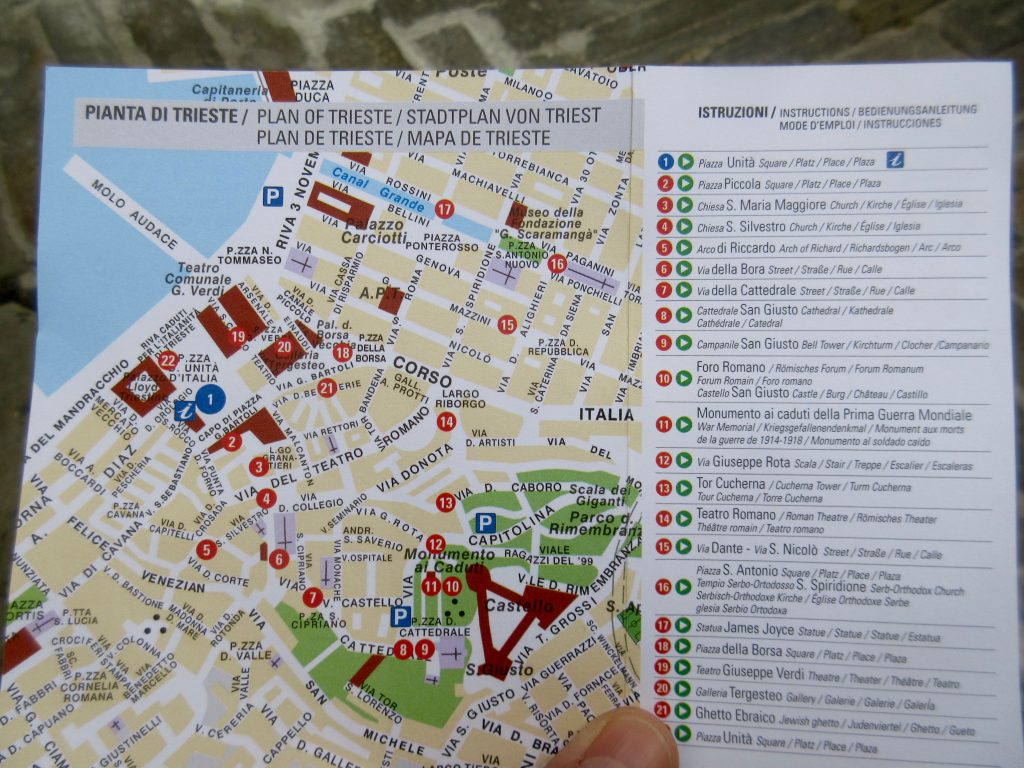
Trieste Map of our walking tour

Trieste Museum

Trieste – Kent and Mark at the Castle

Trieste – James Joyce Statue

Trieste – Sunset

Trieste, with about 240,000 inhabitants, is located on the Adriatic Sea in the north-east portion of Italy, near the borders of Slovenia and Croatia. During the 19th century Trieste was the fourth largest city of the Austro-Hungarian Empire after Vienna, Budapest and Prague. By the end of the 19th century it emerged as an important hub for literature and music. In the 1930’s Trieste underwent an economic revival and was an important spot in the struggle between the Eastern and Western blocs after the second world war. Today Trieste is one of the richest regions of Italy and is a center of shipping, ship building and financial services.

We had a leisurely morning after our long trip arriving yesterday. A wonderful breakfast was served at the hotel between 7:00 and 10:30am. The hotel dining room is an old world style room with large glass windows overlooking the main square of Trieste. They served fresh fruit, assorted pastries, cheeses, cold meats, eggs, bacon, coffee and juice.

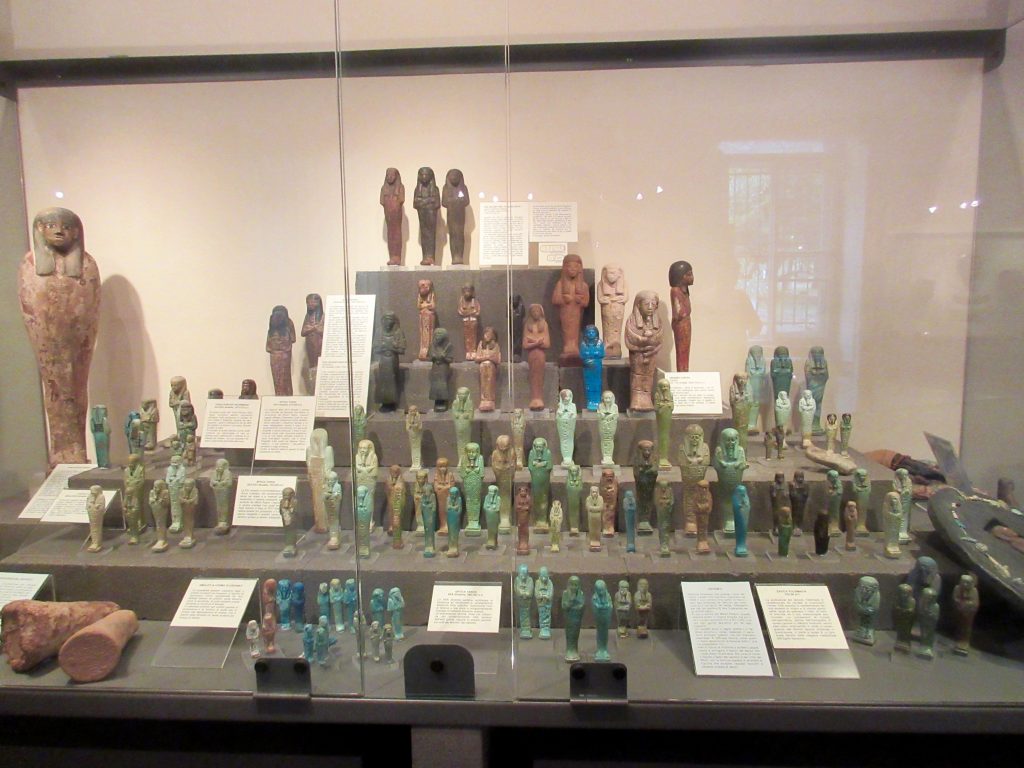
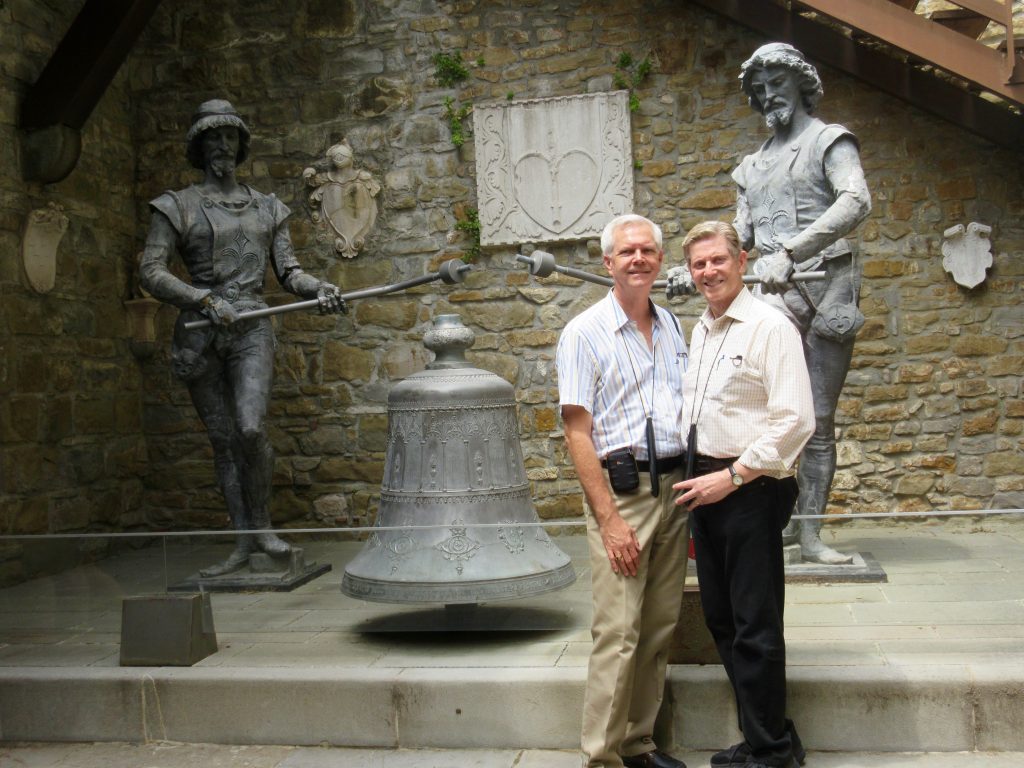
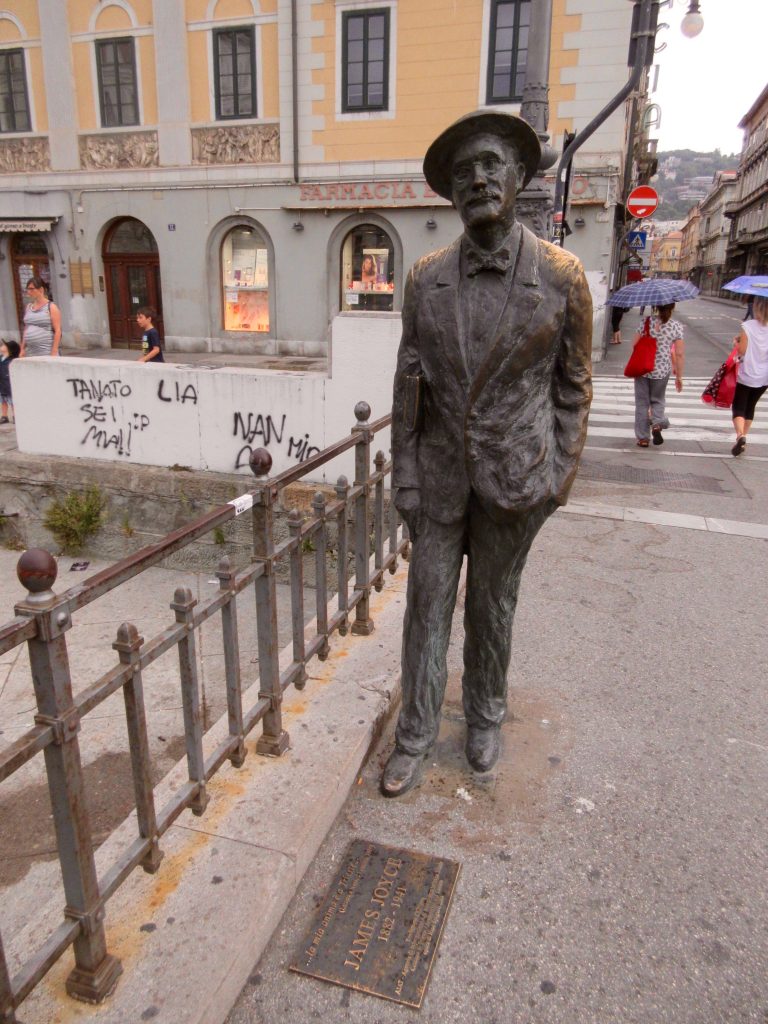
At 11:00am we met up with Kent and Christine, along with the rest of our group, to get a brief update on the agenda for today and our trip to Rovinj, Croatia tomorrow. We were given audio devices for the day with a self guided walking tour map of Trieste. The tour took Mark and Kent all around the central part of Trieste with selected stops where we could listen to the audio device for the history of the stops. Along the way, we picked up another member of our group, Nancy, and stopped at a museum with many artifacts brought to Trieste from Egypt, including a variety of mummies in beautifully ornate sarcophagus. The three of us stopped at several churches and explored those along the way. There is a triangular shaped castle at the top of the hill where we got great views out over the city. The castle had an armory museum as well as a lapidary museum where we saw many artifacts from previous civilizations. There were many mosaics floor remnants, busts, statues, pillars, and carved remnants from local buildings. We visited the old Jewish quarter where some 6,000 lived in times gone by and now only 700 reside in this area of town. The Irish writer James Joyce once lived in Trieste and so there are many statues and references to places that he frequented around town. There are still remains from a Roman amphitheater that seated about 3,500 people. The night that Giuseppe Verdi died in 1901, the city counsel convened a meeting and re-named the local opera house in his name.

We stopped along the way to have a small bite to eat and drink before proceeding on our way around town. By late afternoon the sky had turned a dark gray and it began to rain. We returned to the hotel for a short nap as the rain and wind strengthened and an electrical storm passed overhead.

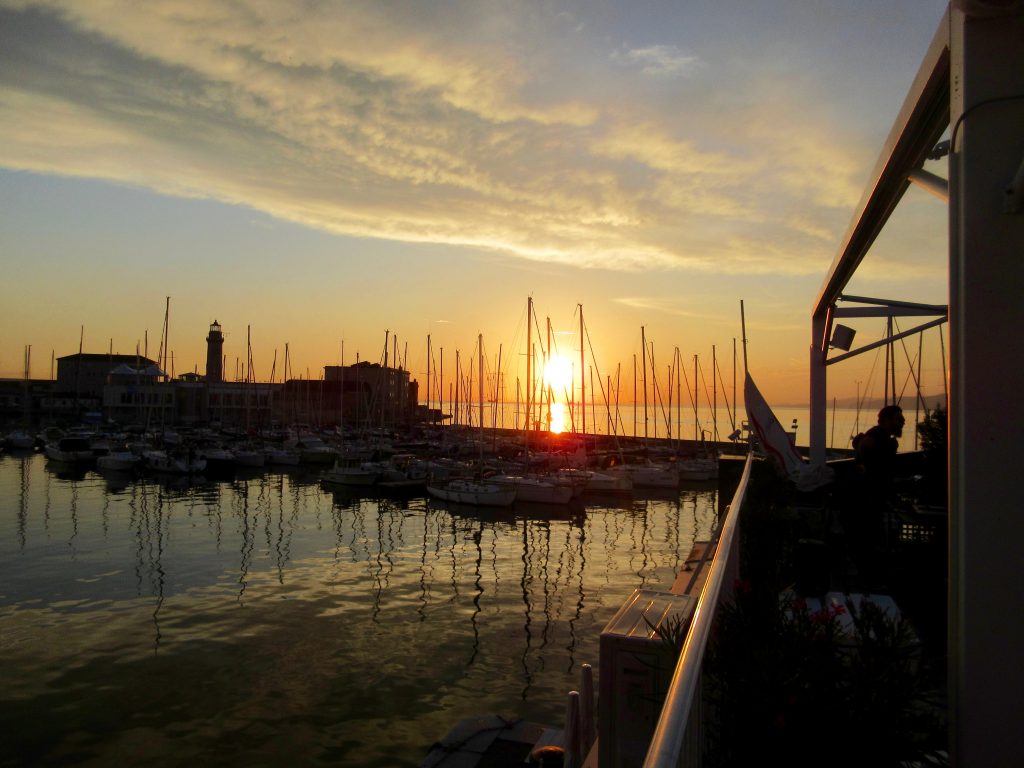
Kent and Christine had planned a roof top dinner for us this evening at a local restaurant on a pier not far from our hotel. After the rain and wind had stopped we were still able to enjoy a wonderful evening on the pier. With the warm weather things dried out quickly and all of the sidewalk cafes were busy serving dinner outside. There was a DJ playing music from the 60’s and 70’s and people were dancing.

For dinner they brought us pitchers of Mojito’s with potato chips followed by small squares of pizza as an appetizer. Then came a very large bowl of black and white rice mixed with carrots, peas and corn. Next they served an octopus ceviche with olives and small bits of potatoes. For the entrée they served bowls of lightly battered and deep fried squid and sardines. Not exactly our favorite but plenty of food for all.

The large town square was sealed off for the evening concert and people waited for hours in the pouring rain to get into the square for the free concert. Back at the hotel we enjoyed the remainder of the concert on the square from our hotel room just by opening the window.

June 23 – 24, 2017 Leave San Diego Bound for Trieste

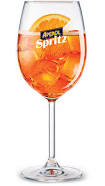
Italian Aperol Spritz

It was a long travel day. We left home for the airport about 10:30am. Our first flight was from San Diego to Los Angeles where we caught a flight to Rome, Italy. The flight was about twelve hours and the Alitalia plane was not very comfortable. There were ten seats across the plane and there was little leg room. Mark was seated next to two large young men with broad shoulders and you couldn’t help but rub shoulders the entire time. Our last flight was from Rome to Trieste, Italy where we landed about 5:00pm and were picked up by Kent Zimmerman, one of our program mangers. The drive from the airport to our hotel was about 30 minutes.

Our hotel is the Grand Hotel Duchi D’Aosta which has 55 rooms and dates back to the year 1873. It is located just off the coast on a lovely town square of stunning majestic buildings of carved stone. Our room is very charming with high ceilings, faux finished walls, a gold ornate mirror, an antique desk and bedside tables, an easy chair and some old world style oil paintings. The colors are red carpets and light green walls and printed draperies. The good thing is that there are modern conveniences of a large flat screen TV, a modern bathroom and internet service included.

After checking in we had a nap for 90 minutes or so before heading out to find an ATM to get some local Euro currency and a gelato. At 7:30 we met up with the others in the group (28 in all) for a welcome drink on the square. Kent recognized several of the folks in our group from other trips that he has taken with our program managers Kent and Christine. The local popular drink is an orange colored spritzer called an Italian Aperol Spritz. Although it is a wine based drink, it is a very brightly colored orange and comes in a wine glass with ice and a slice of orange. They served olives, potato chips, Doritos, and small squares of pizza as snacks. By 10:00pm we were ready for bed.

April 5, 2017 Havana/Miami/San Diego

We had a very early departure from the hotel, with a 5:15am continental breakfast in the lobby before departing for the airport. Our flight from Havana to Miami was delayed for the better part of two hours as the airlines computer system was down and passenger ticketing needed to be done by hand. Once we arrived in Miami at the airport around noon, we had lunch with group members Celeste and Theresa who also had later flights.  We had a long wait until our flight for San Diego departed at 7:40pm, arriving home after 10:00pm.

April 4, 2017 Havana

Havana Dance Company

Havana Casa Fuster

Havana Casa Fuster

Havana Fuster’s Artwork

Havana Hemingway’s Home

Havana Ride in a Vintage Car

Havana Opera House

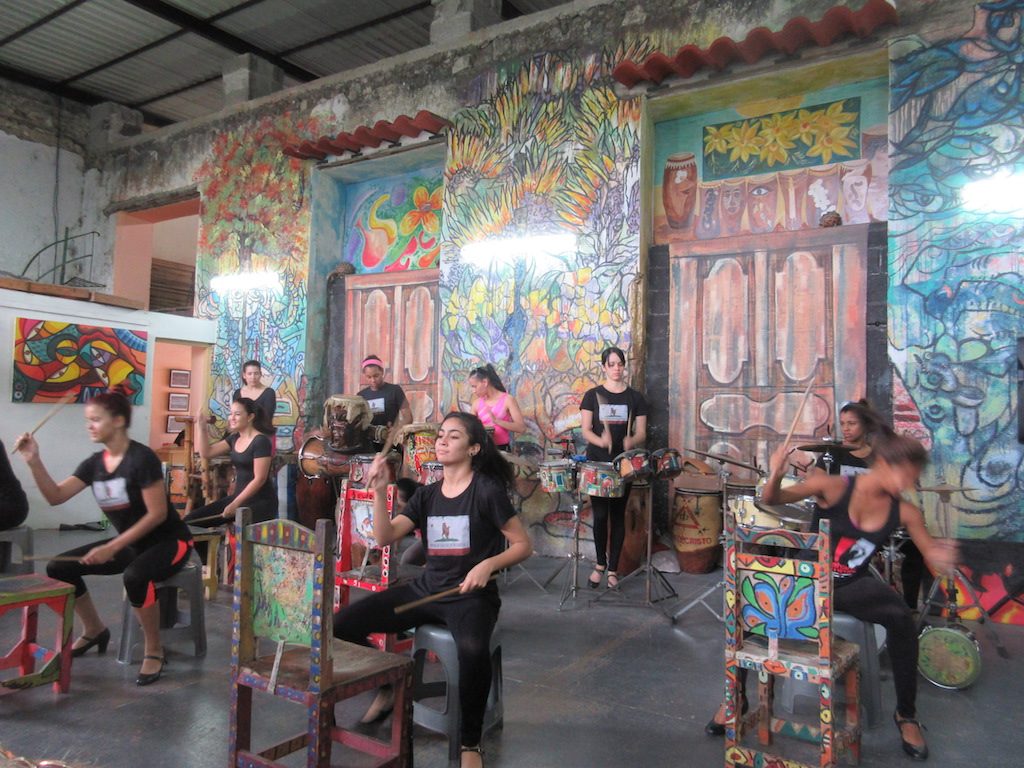
There is a local Havana Dance Company that we visited on this morning. This particular dance company is privately funded and not run by the government. They gave us a performance of their unique dance and music experience. They use their bodies to clap, stomp their feet move as well as play everything from the drums to the kitchen chairs. They were really very talented young women and it was a pleasure to see them perform.

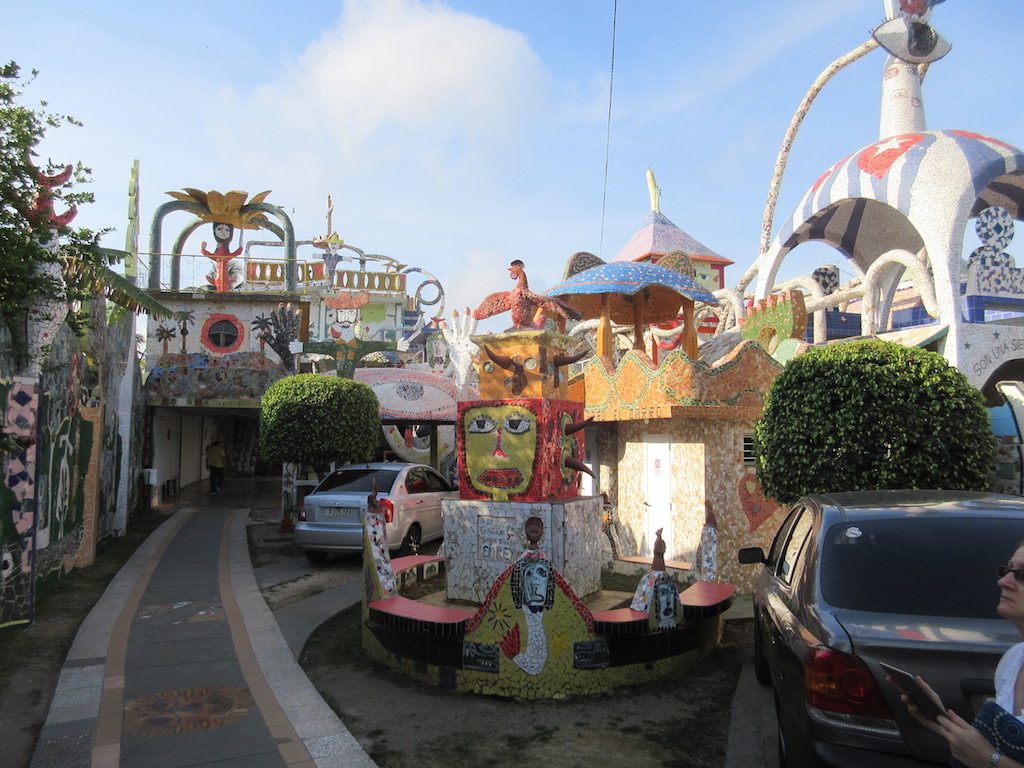
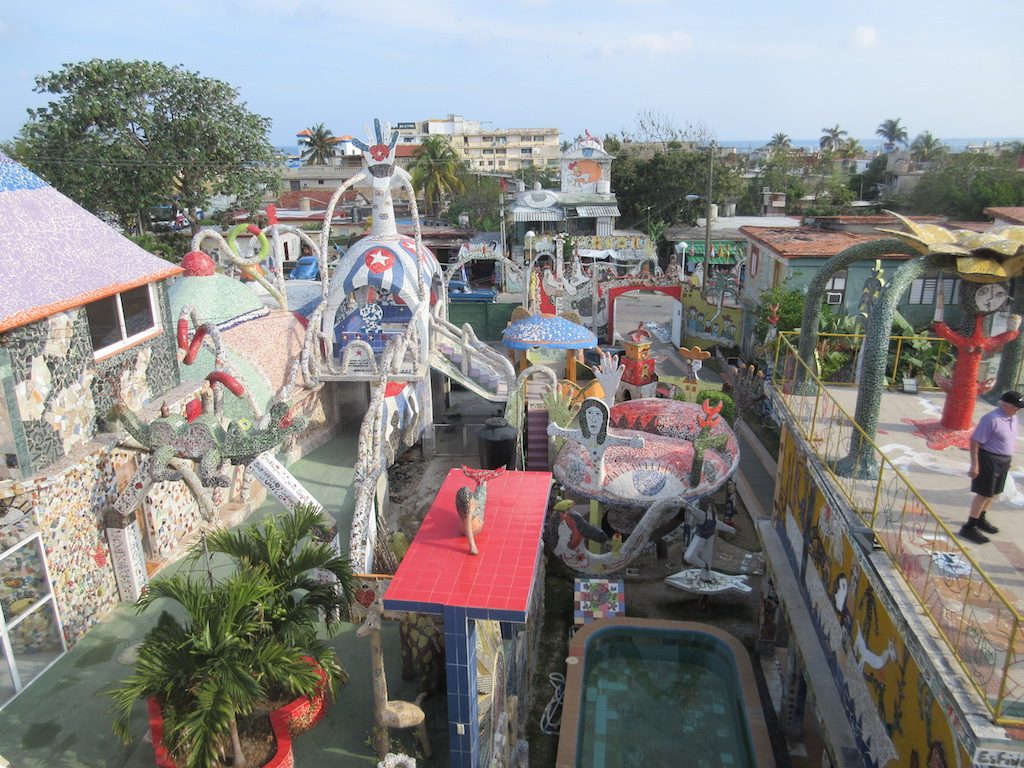
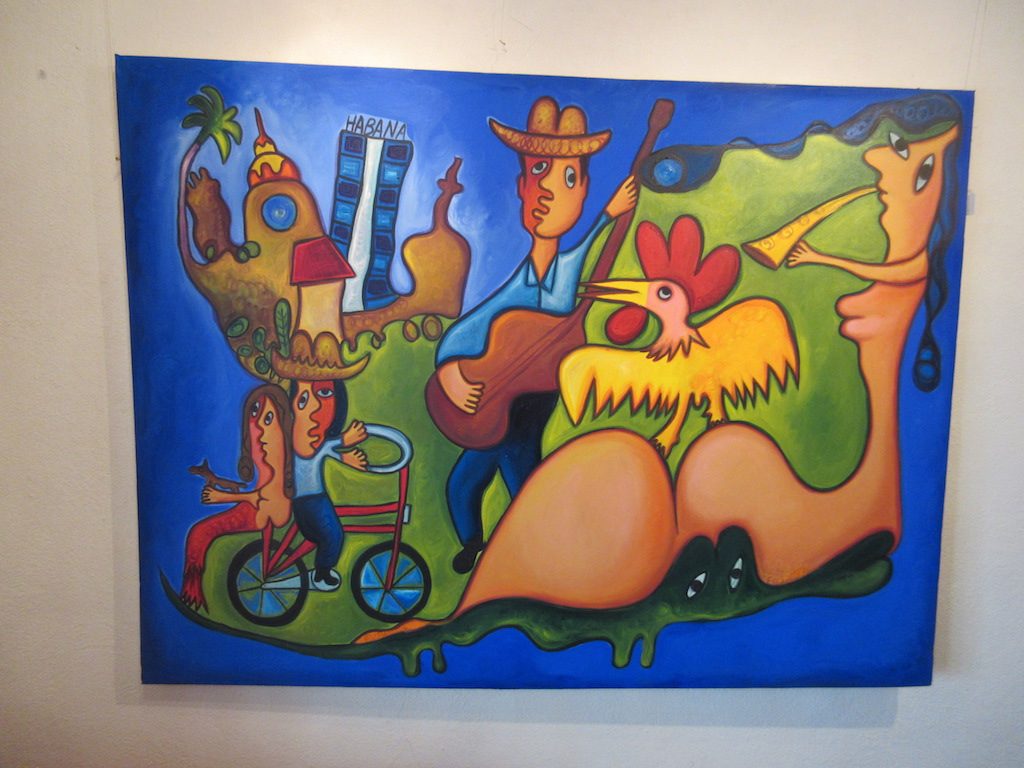
We also visited the Casa Fuster or home of artist Jose Rodriquez Fuster, known as the Picasso of the Caribbean. Jose, now in his 60’s, is a painter, ceramicist, and creator. He is most famous for transforming his poor neighborhood with ceramic mosaics. For the last 30 years he has been covering most any surface he could find in the neighborhood with ceramic tile mosaics. He now has a team of 15 neighborhood artists who assist him with his creations. His own private residence is like a Disneyland of mosaics. The floors, ceilings, benches, railings are all entirely covered with mosaic tile. In addition, there are many creations of animals, figures, and creatures all made of concrete and steel and then entirely covered in ceramic tile mosaics. The homes all around the neighborhood are now also covered with similar mosaics and several neighbors have set up souvenir stands in their yards to cash in on Jose’s success.

For lunch we had something unique. We went to a paladar called the Mediterraneo Paladar where we enjoyed a lunch of pasta, pizzas, salads and ice cream. After lunch a famous retired Cuban baseball player named Rolando Matias spoke with us about his career in local baseball. He had many opportunities to sign with American ball teams in the late 1950’s but could not imagine leaving his family in Cuba to play ball in the states. Many of his baseball accomplishments still stand today, of which he is extremely proud.

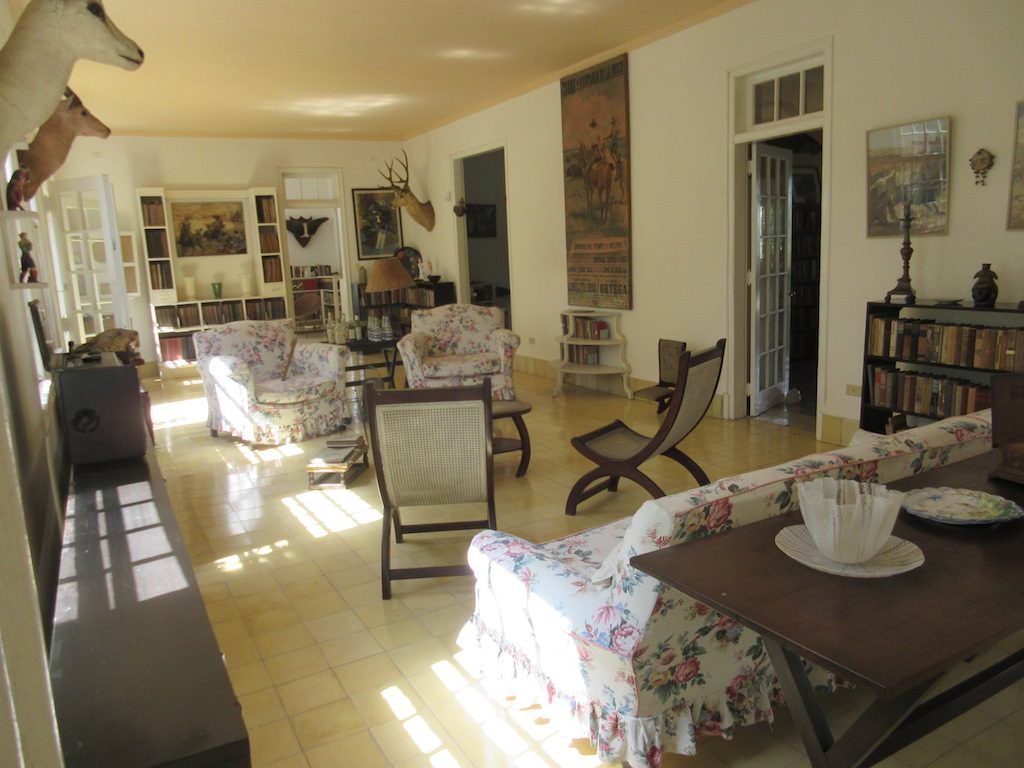
We also visited Finca Vigia, Hemmingway’s farm about a 30-minute drive from town. The home has been beautifully maintained as it was at the time of his death. To preserve the property, they only allow visitors to view the home from the outside as they peer through the open windows and doors. It is a small two-bedroom home located on a large parcel of land in what was a very rural area at the time he lived there. We were also able to visit the pool and see one of his boats that he owned and used to fish from.

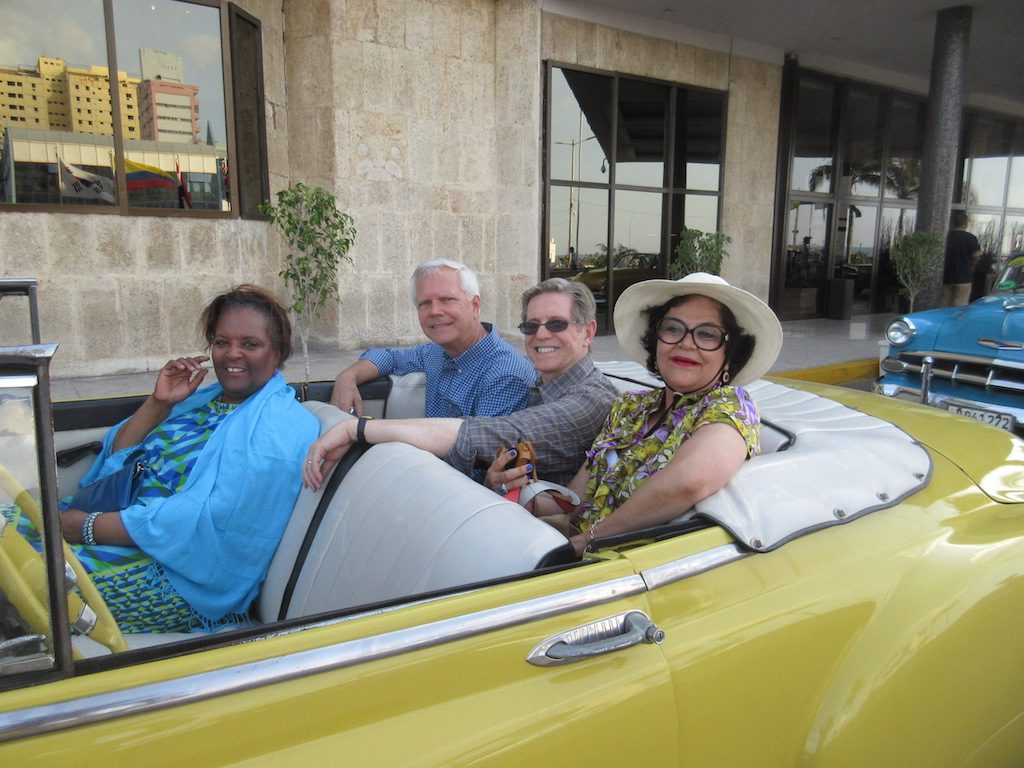
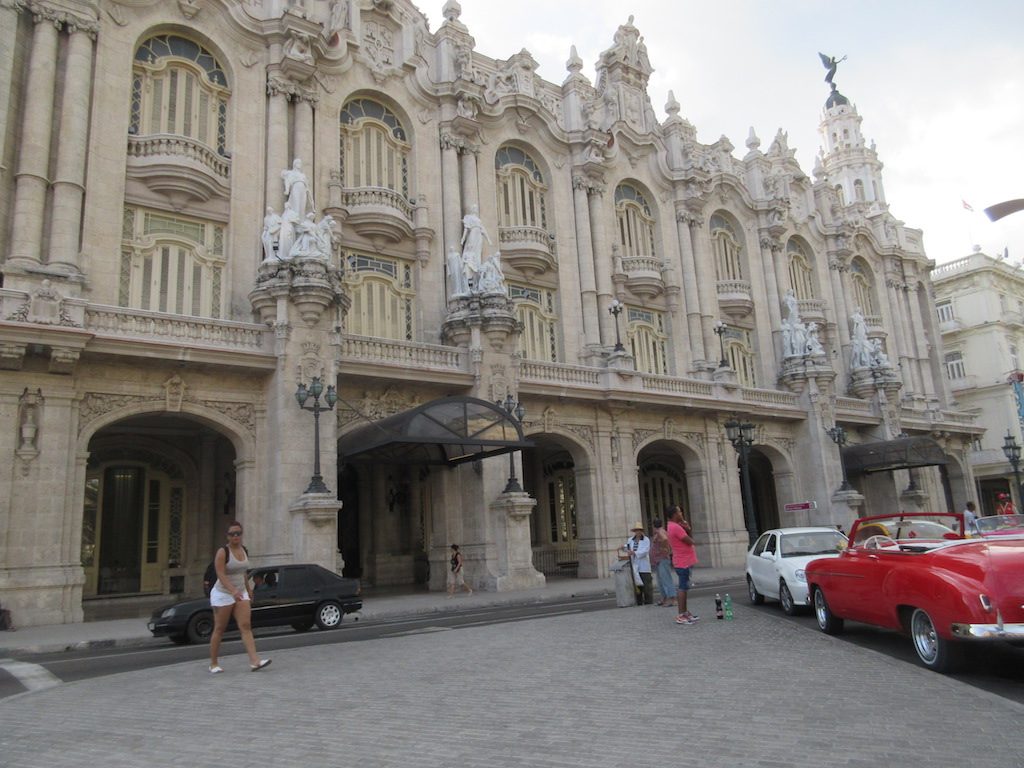
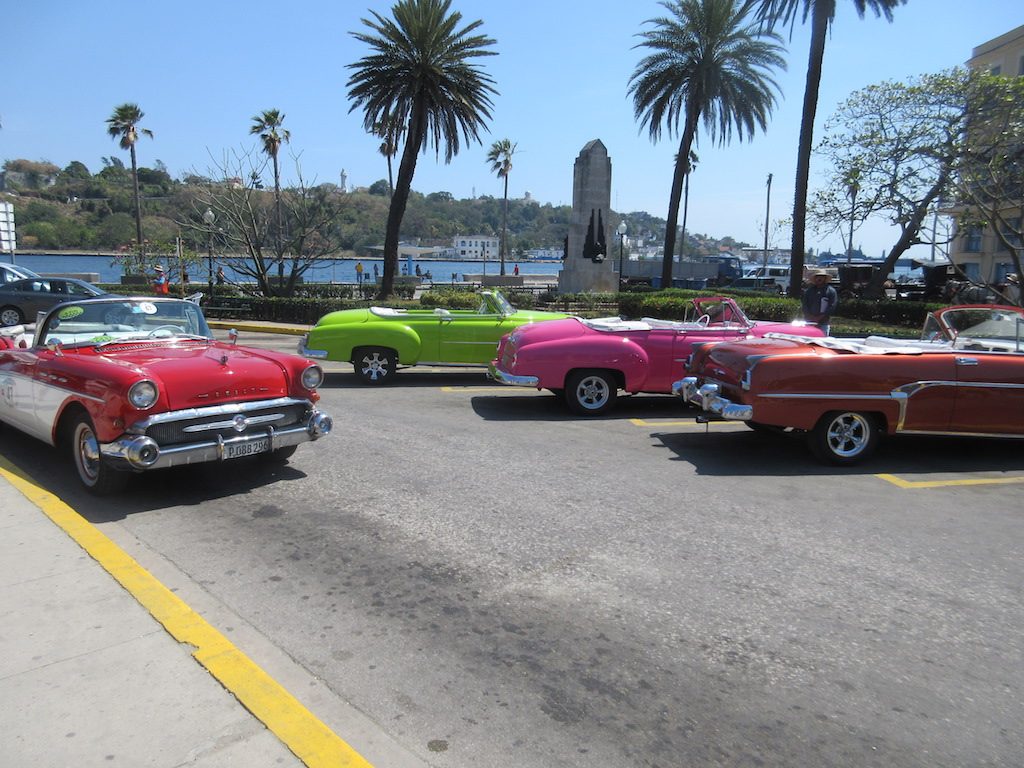
In the late afternoon we were picked up at our hotel in vintage 1950’s convertible American automobiles. They took us on about a one-hour tour of the city before dropping us off at the La Fontana Paladar for our final dinner. We dined on lobster, fish, clams and shrimp outdoors in a lovely garden. Surprise!  No flan and no music!
April 3, 2017 Havana

Havana Church

Havana Church Interior

Havana Roundabout

Havana Muraleando Art

Havana Muraleando Mosaic Bench

Havana Muraleando Musicians

Havana Mural

Havana Vintage Cars

Havana Hotel National

Havana Hotel National Bar

Havana Architecture

With a population in excess of two million people, Havana is the capital city, the largest city, the major port and leading commercial center of Cuba. The city was founded by the Spanish in the 16th century due to its strategic location for the conquest of the continent. It became a stopping point for treasure-laden Spanish galleons returning to Spain.

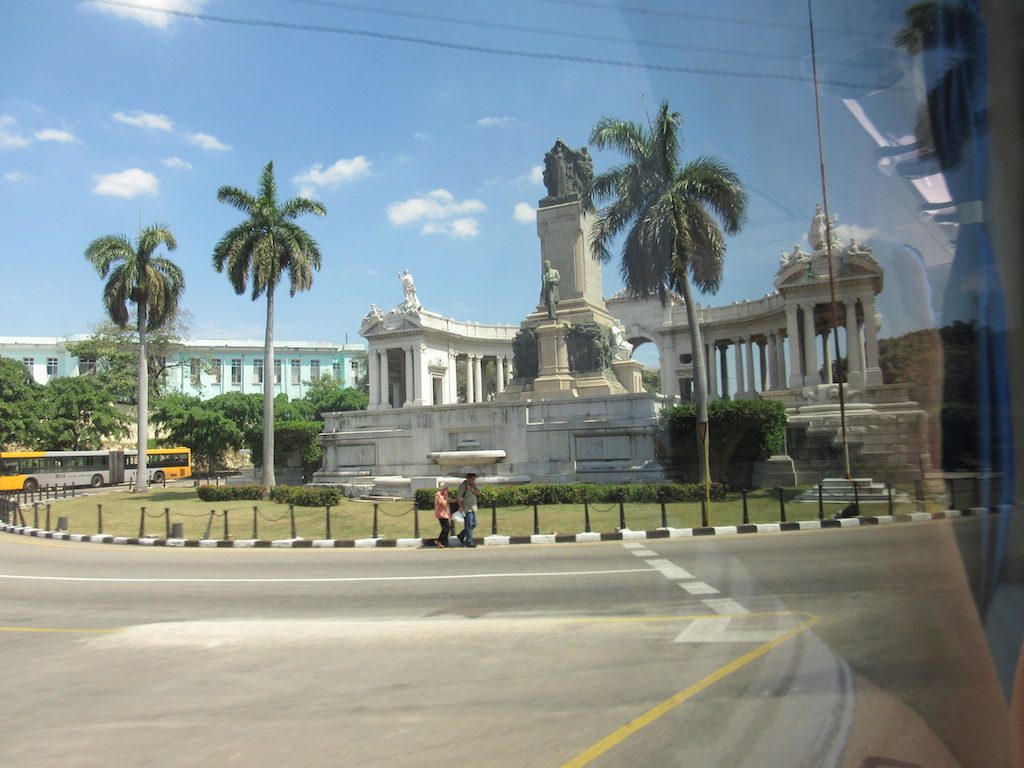
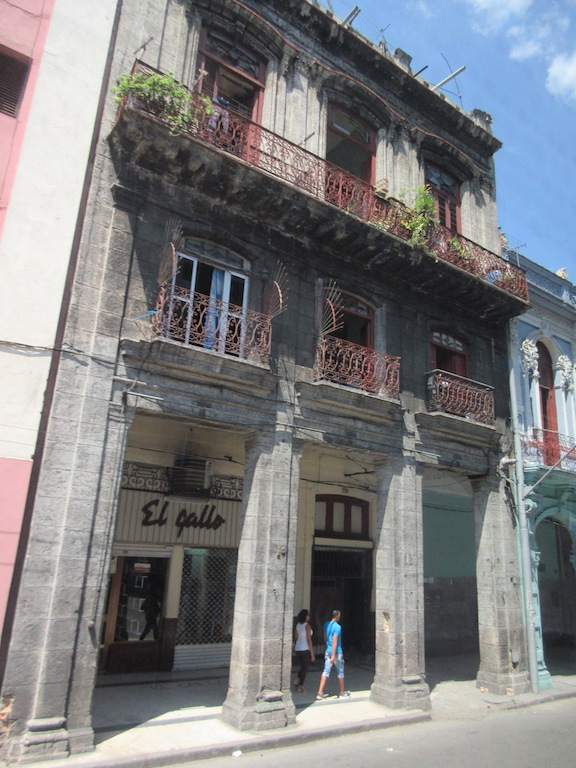
Due to Havana’s almost five-hundred-year history, the city boasts some of the most diverse styles of architecture in the world. It has every style from castles built in the 16th century to modernist present day high-rises. The Old Havana section of town consists of the original core of town with mostly western style architecture. Much of this area has baroque and neoclassical style architecture.

Then there is the Barrio Chino area which was once Latin America’s largest and most vibrant Chinese community incorporated into the city in the early part of the 20th century. Prior to this time, beginning in June of 1847, hundreds of thousands of Chinese workers were brought in by Spanish settlers from Guangdong, Fujian, and Macau via Manila, Philippines to work alongside African slaves. After completing an eight-year contract, many Chinese immigrants settled permanently in Havana. Interesting, but in reality we saw very few Asian’s in Cuba.

This morning we had a lecture in our hotel with a local economics professor who gave us his insights into the Cuban economy including the recent changes since more Americans have been allowed to visit the country. The increase in cruise ships in recent months, along with the increased number of flights from Miami to multiple airports in Cuba, has been dramatic. More than 500 paladars have opened in Havana alone. High end hotels like the Melia where we are staying are fully booked by American companies for more than the next year and the price of rooms has gone through the roof. Air B&B has also experienced incredible growth in the country as more and more locals try to cash in on the influx of tourists. There are also many new hotels under construction in Havana to help accommodate the high demand.

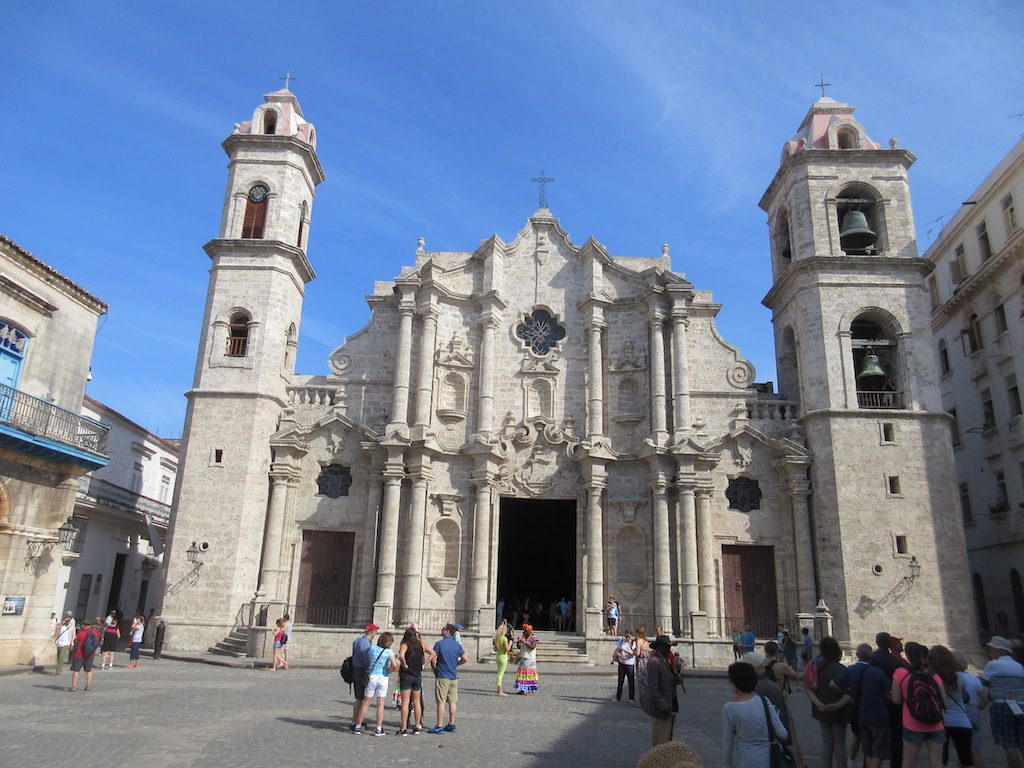
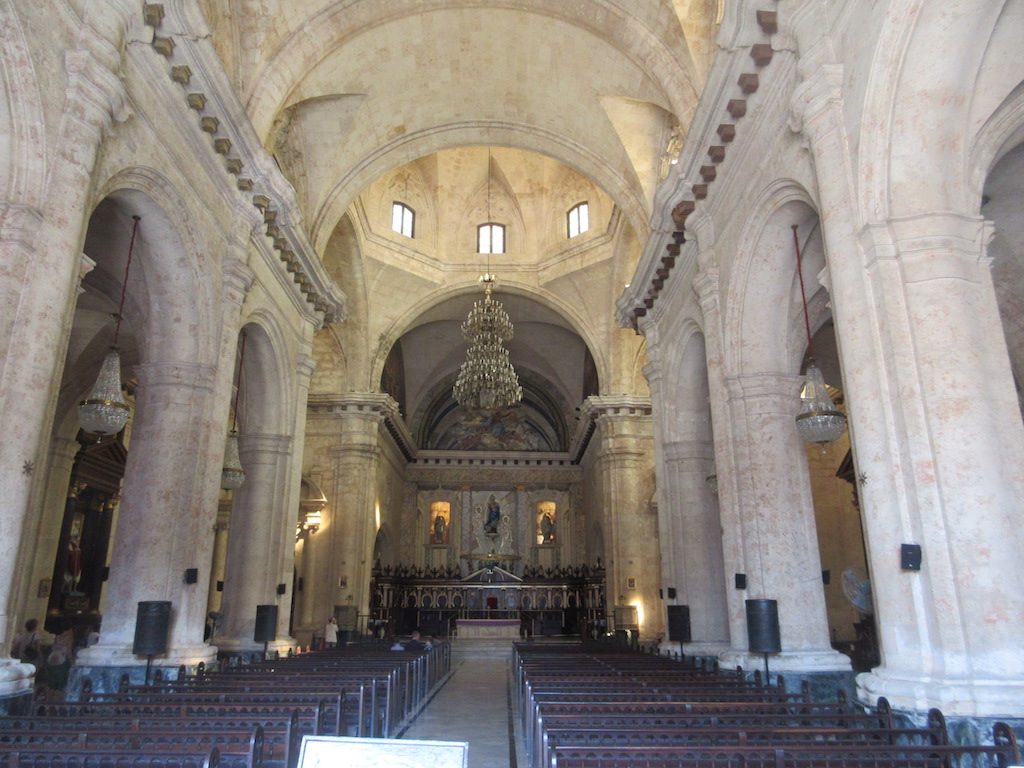
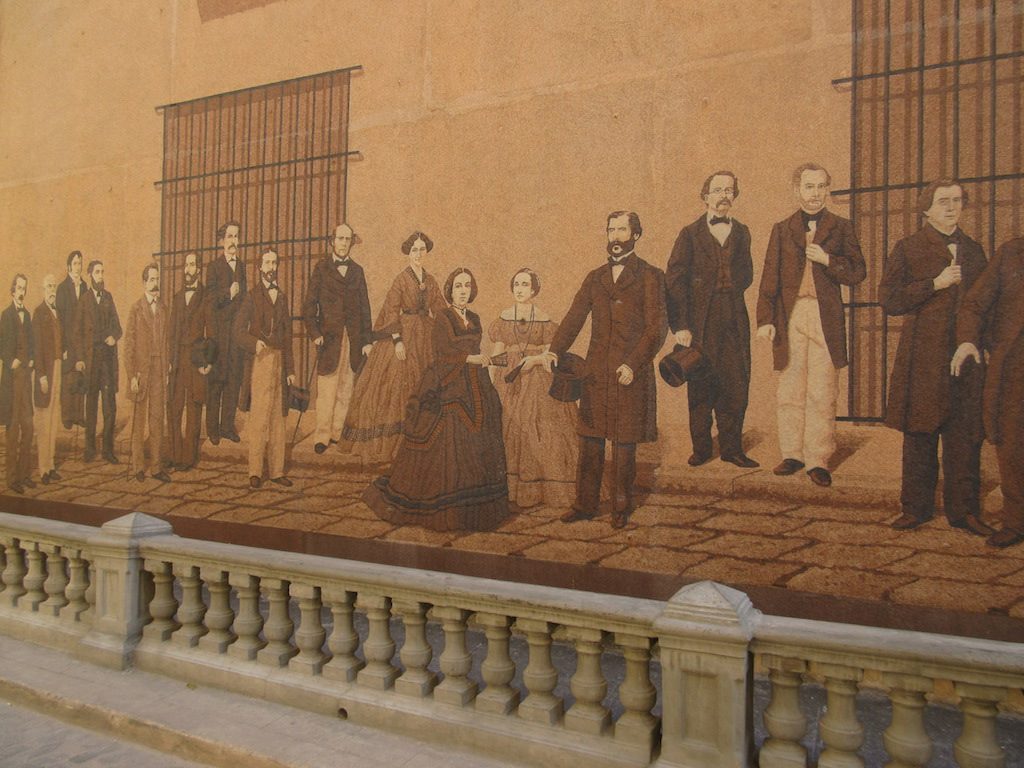
Next, we took a walking tour of Old Havana with a local architect. Eduardo showed us several of the local squares including one with a street made of wood. One of the wealthy governor’s wives did not like the sound of the horse drawn carriages as they passed by the house on the concrete street so her husband had the street replaced with wood to soften the sound. As a piece of history, they have maintained the wooden street to this day. The artist Ernest Hemmingway used to live in a hotel room in Old Town and frequented a local bar most everyday. Many buildings have been restored but there are still many more that are in dire need of renovation. We visited the main church that has been restored and is quite beautiful inside. Outside of the church there were a group of locals, including many women dressed in colorful dresses, with cigars in their mouths, wanting tourists to tip them to take a photo with them.

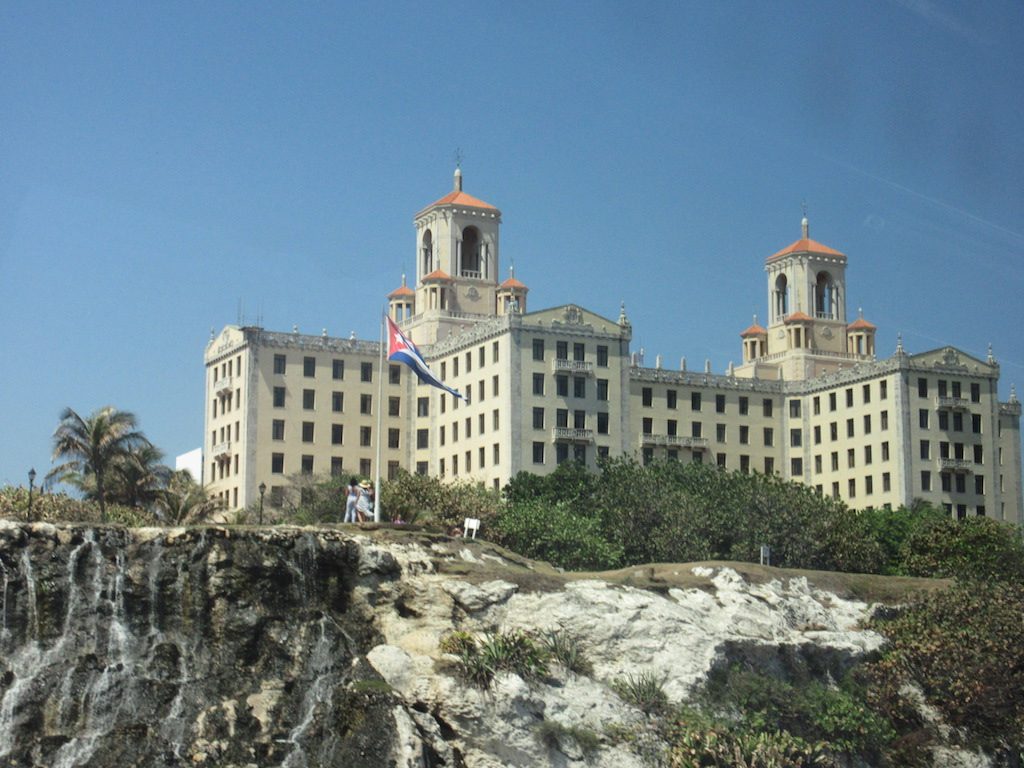
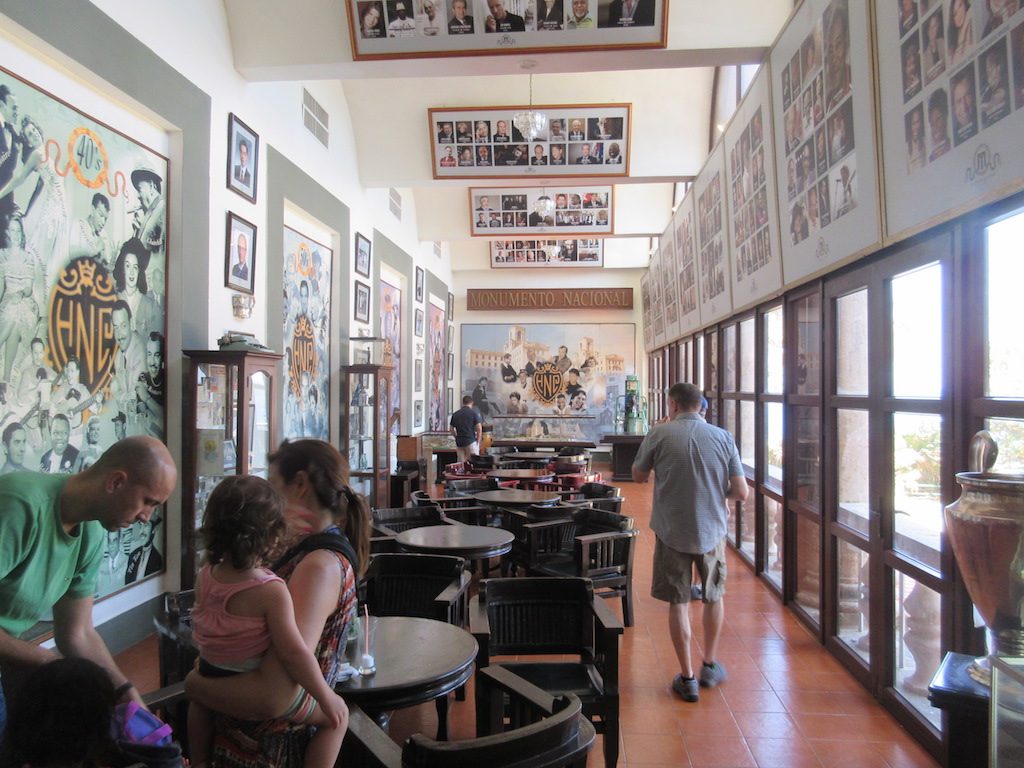
Our next stop was the famous Hotel National that has been frequented by every movie star, newscaster, political leader that has visited Havana over the last century. The hotel overlooks the ocean and features a lot of old world character. The bar has photos on every wall of all the famous people who have visited the hotel over the years.

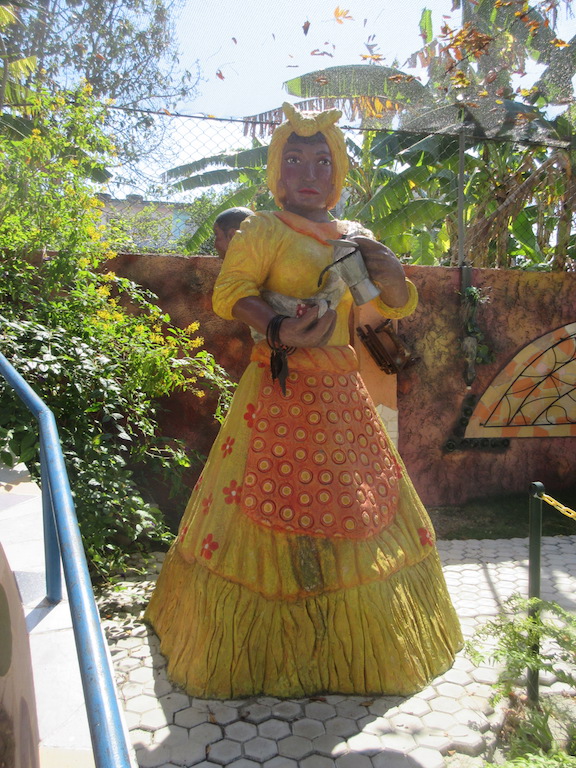
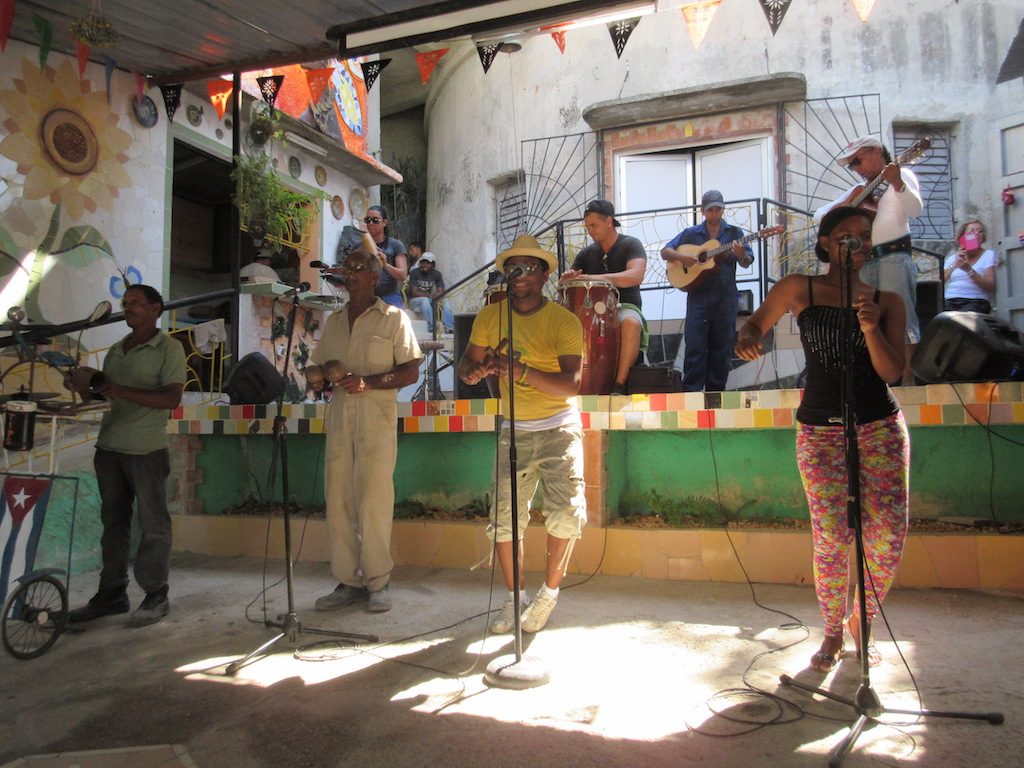
After lunch at a local paladar called La Moraleja, we visited the Muraleando Community Project. This poor community, once overwhelmed by trash, has been transformed by this neighborhood community center. This community asked permission from the government to build a community center out of an old concrete water storage tank that had long ago been abandoned and had become a trash heap. Community volunteers have transformed this old trash heap into a wonderful community center where everyone is welcome to come and be creative or just hang out. The walls are covered with paintings, tile mosaics, sculptures and other works of art. The old water tank is now filled with local artist’s jewelry, paintings, sculpture and handicrafts which they sell to help finance the works of the community center. On the roof of the water tank there is now a full kitchen and covered event space where they host birthday parties, wedding receptions and community events. They offer children classes in art and welcome all to participate. It is really quite a remarkable space created by the community for the community.

We were free to have dinner on our own but we were happy to enjoy a short walk and a quiet dinner in the hotel. We retired to our room early after such a busy couple of weeks.

April 2, 2017 Cienfuegos/Bay of Pigs (Playa Giron)/Havana

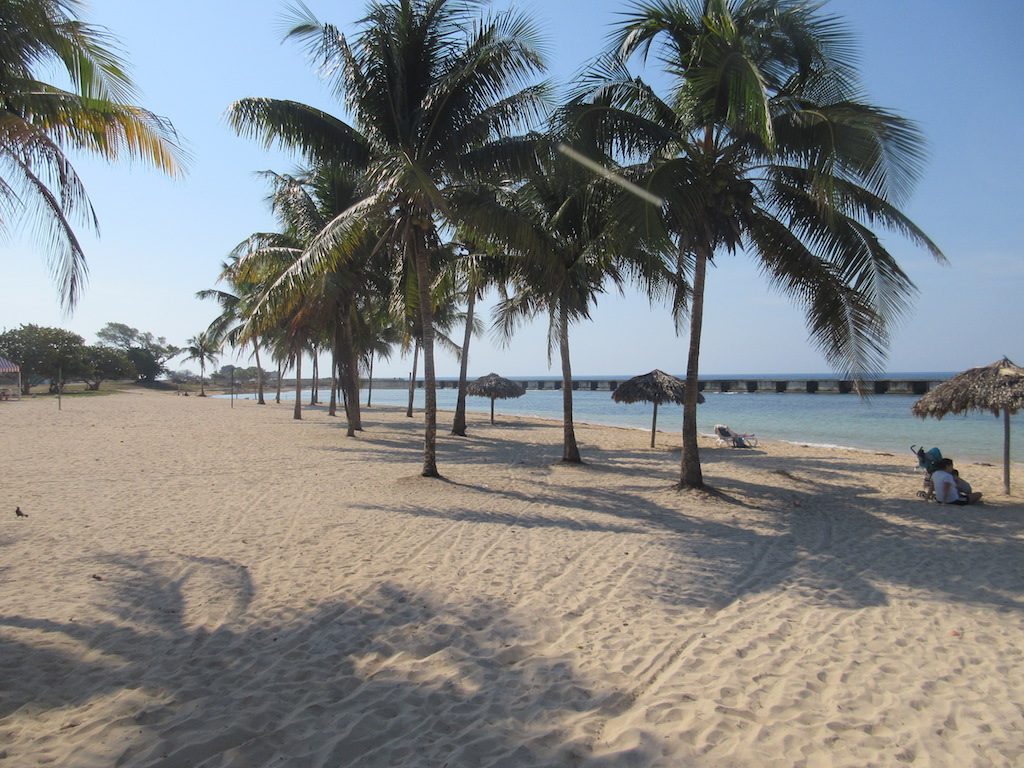
Bay of Pigs Beach

Bay of Pigs Museum

Bay of Pigs Museum Exhibit

Bay of Pigs Museum Photograph

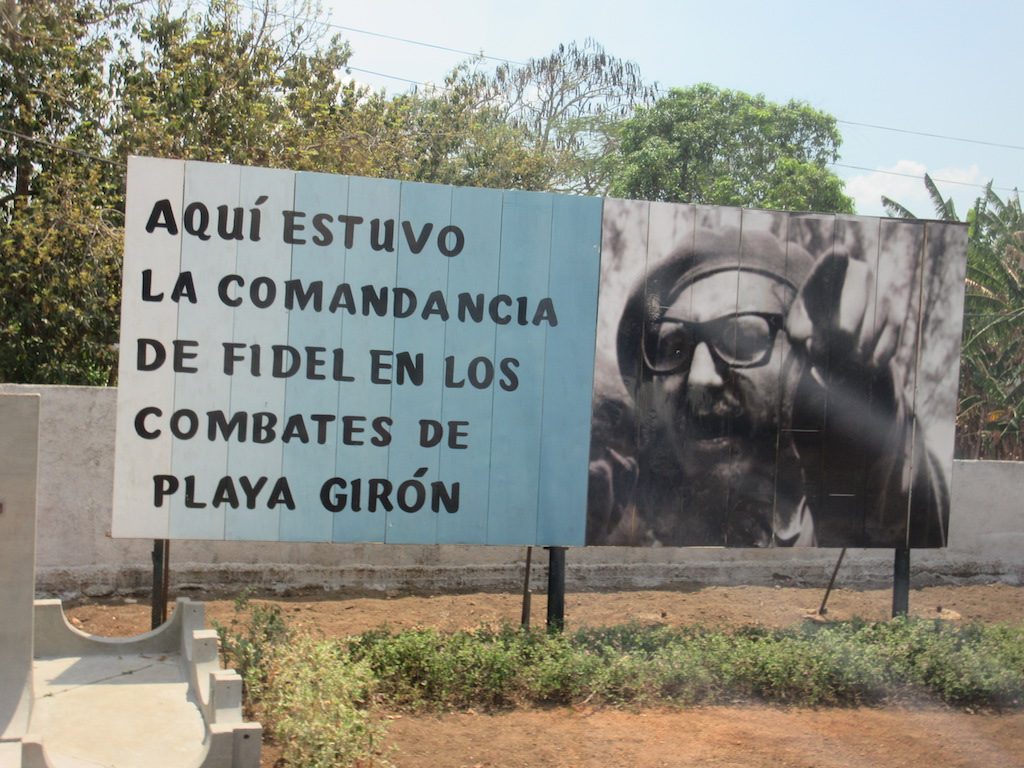
Bay of Pigs Billboard

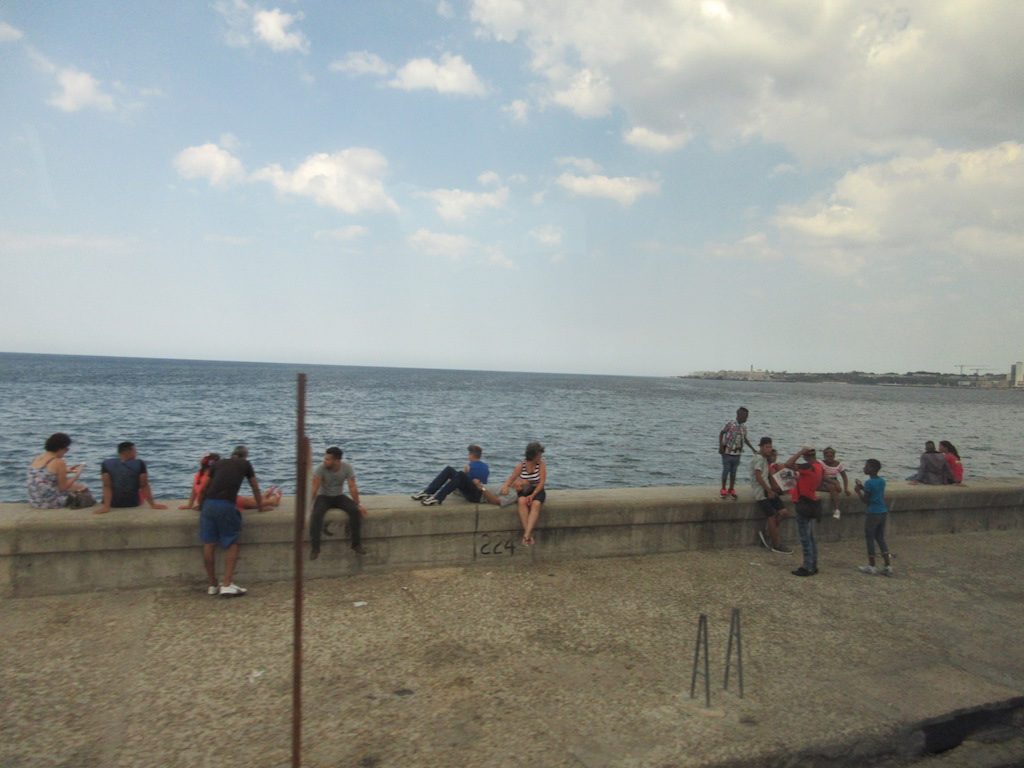
Havana Malecon

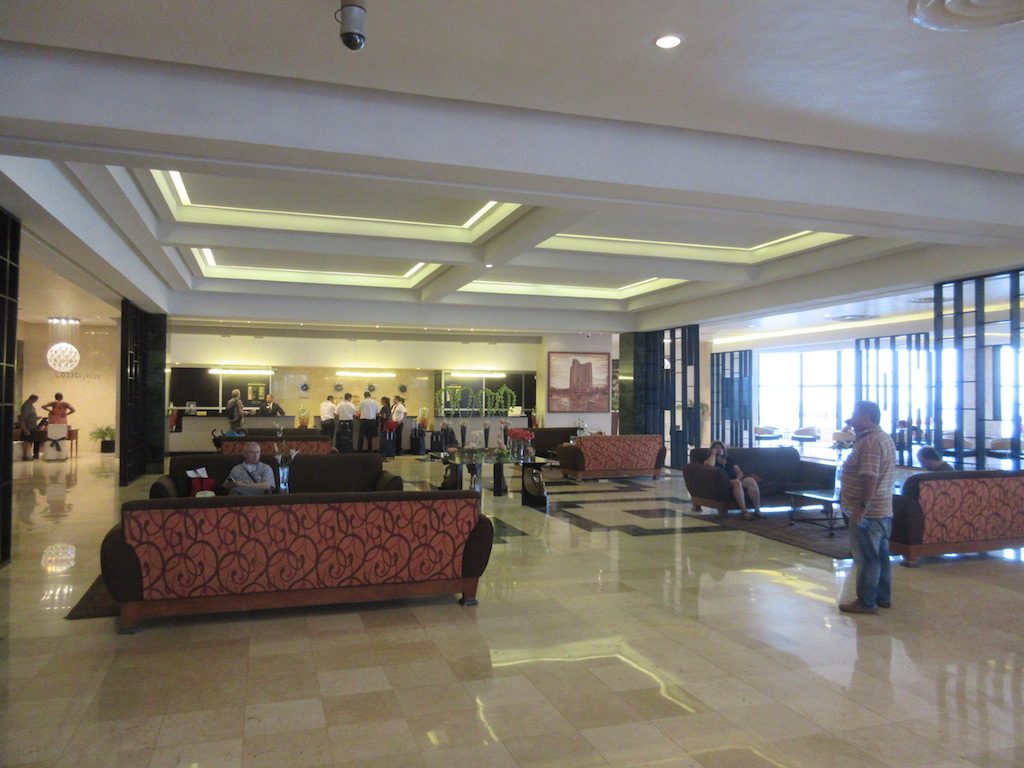
Havana – Melia Hotel Lobby

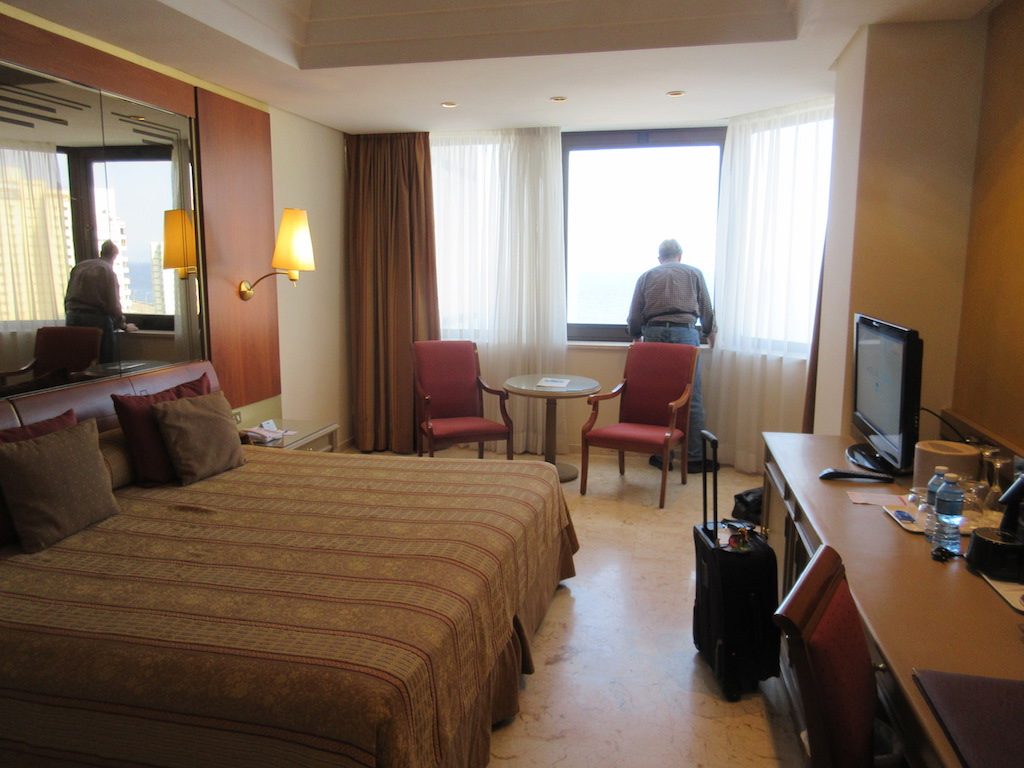
Havana – Melia Hotel Room

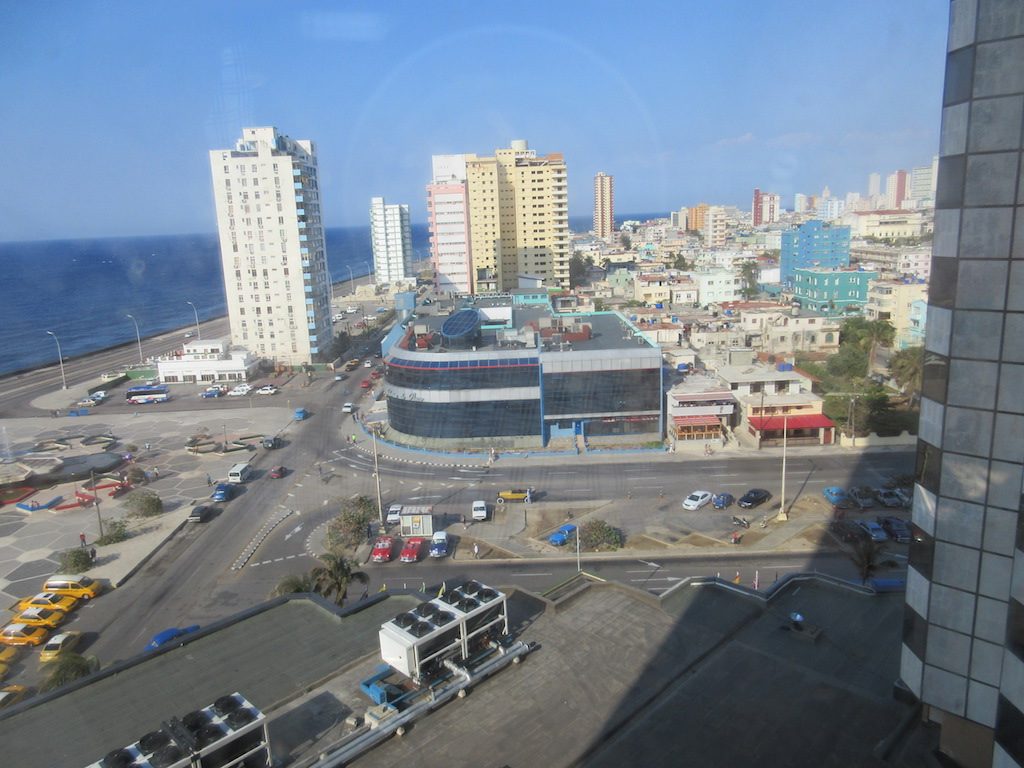
Havana – Melia Hotel Room View

The drive from our hotel to Playa Giron and the Bay of Pigs Museum took us about ninety-minutes including a comfort stop along the way. The countryside in this area of Cuba is filled with rice fields, mango, papaya, banana, taro root and plantain fields.

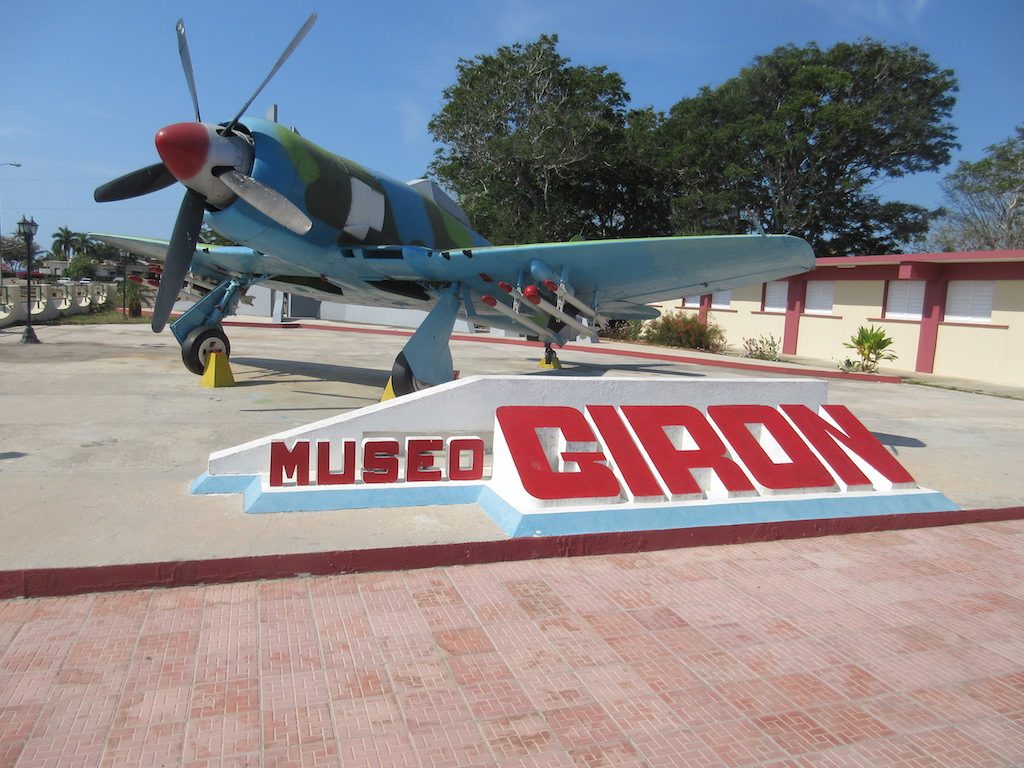
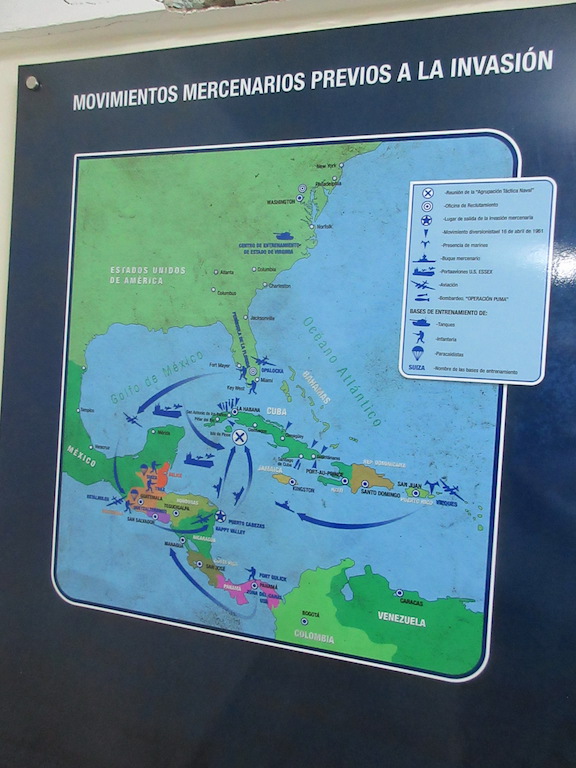
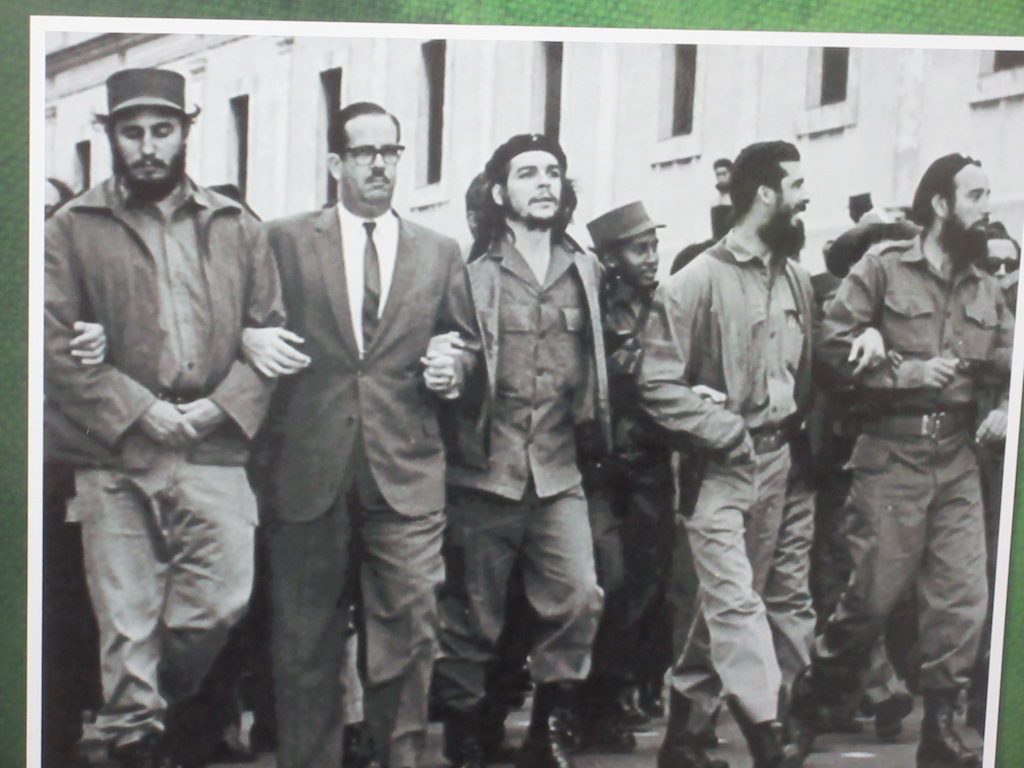
The museum was very modern looking with many photos, tanks, war plane remnants, weapons and news articles. Of course the museum is slanted to the view from the Cuba side of things and how powerful and smart Fidel and his men were to defeat this invasion of the southern coast of Cuba.

The Bay of Pigs refers to the failed invasion of Cuba undertaken by the CIA-Sponsored paramilitary group Brigade 2506 on April 17, 1961. The intent was to overthrow the increasingly communist government of Fidel Castro. The attack was launched from Guatemala and Nicaragua, but within three days the invading forces were defeated by the Cuban Revolutionary Armed Forces under the direct command of Prime Minister Fidel Castro. President Eisenhower allocated $13.1 million to the CIA to plan Castro’s overthrow but it was put off for President Kennedy to decide. The attack failed miserably and the invaders surrendered within three days, and the majority of the the invaders were publicly interrogated and put into Cuban prisons. Negotiations led to the prisoners being released in exchange for medicine and baby food. They say that there were 1,197 prisoners, 5 ships were destroyed, 156 Cubans and 89 mercenaries were killed, and hundreds injured.

The failed invasion helped strengthen Castro’s leadership and made him a national hero. It also strengthened relations between the Soviet Union and Cuba.

After our visit at the museum we drove a short distance around the bay to a restaurant called the Casa Enrique for another Cuban lunch of fish, rice and beans, pork, shredded goat and flan. The food was very nice. After lunch we met with a local naturalist (male) who works for the government in the management of the huge National Park in this area called the Zapata Marshlands. The park is made up of mostly marshlands that are home to crocodiles, crabs, birds, fish and a variety of wildlife.

From here we drove a short distance to the main country highway comprised of six lanes, three in each direction, bound for La Habana or as we call it Havana. The funny thing about the massive highway is that they have so few cars compared to the population that the highway was mostly empty. The drive to Havana took us about two and a half hours.

Our hotel for the next three nights was the Melia Cohiba Hotel located just west of downtown Havana on the malecon or concrete waterfront boardwalk. The hotel was much more modern and elegant than any other hotels that we stayed at. It was about 25 stories tall with nicely appointed rooms, large bathrooms, elegant public spaces, multiple restaurants and bars and several shops.

After a short rest we departed the hotel bound for a Jazz Performance and discussion by the Cuban Institute of Music musicians at a local paladar. There were four musicians playing the keyboard, a wooden box drum, a percussionist and a trumpet player. They performed a short concert while we enjoyed mojito’s and drinks. They answered questions about the local music institute and how competitive the music business is in Cuba. Most everywhere we went for a meal there would be a musical group of one type or another who would play for us.

After drinks we took a short bus ride to the El Aljibe Restaurant that has been around for more than fifty-years and is famous for it roast chicken dinners. The restaurant had a huge open air dining room with a thatched roof. They served a roasted chicken dinner family style with rice, beans, salad, appetizers and ice cream for dessert. It was very good and a bit of a change from the seafood and pork that we had mostly been eating. The only drawback was that since it was an open air restaurant, there was no air conditioning. It was originally privately owned but is now a government run restaurant using the original family recipes.

April 1, 2017 Cienfuegos

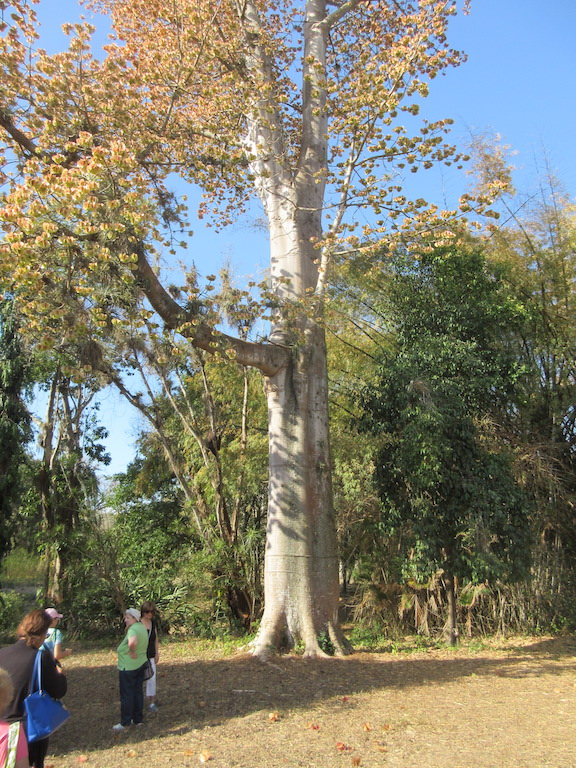
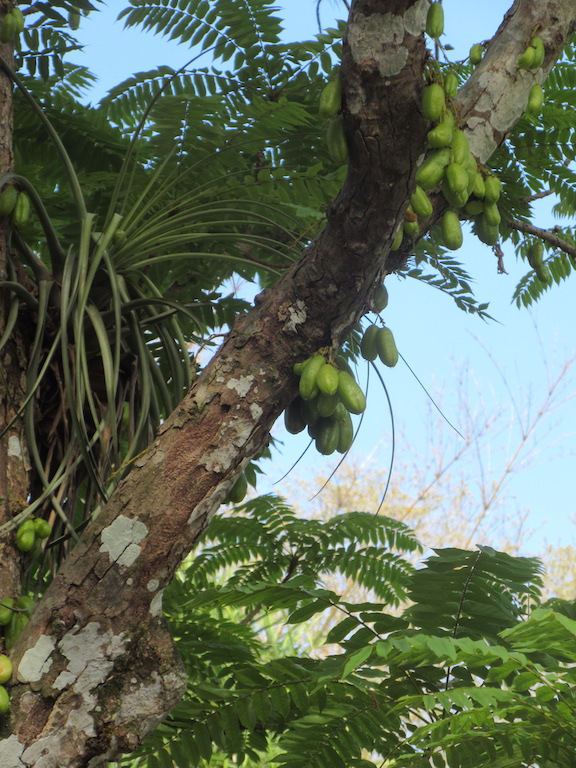
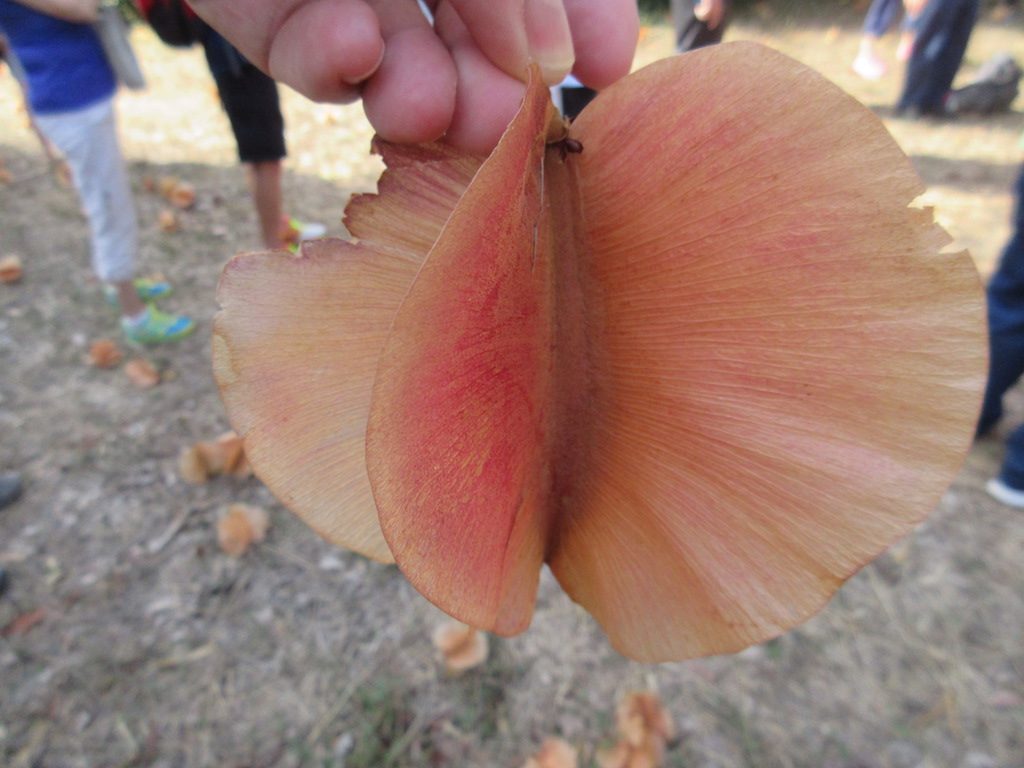
Cienfuegos Botanical Garden Tree Blossoms

Cienfuegos Botanical Garden

Cienfuegos Botanical Garden

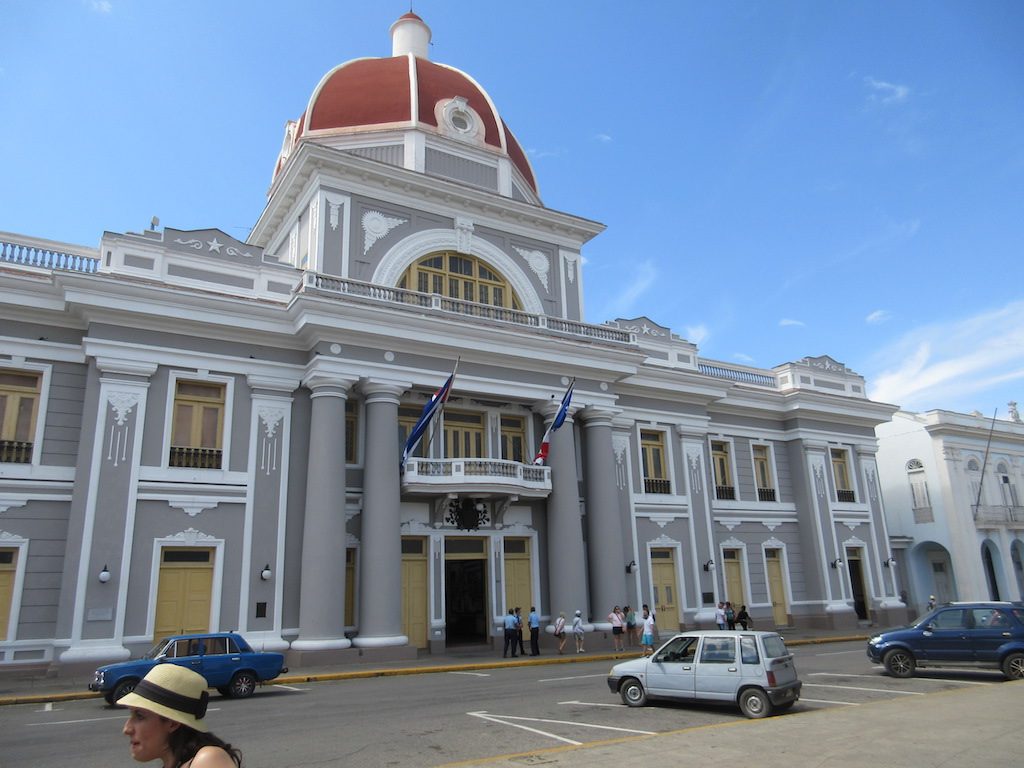
Cienfuegos City Hall

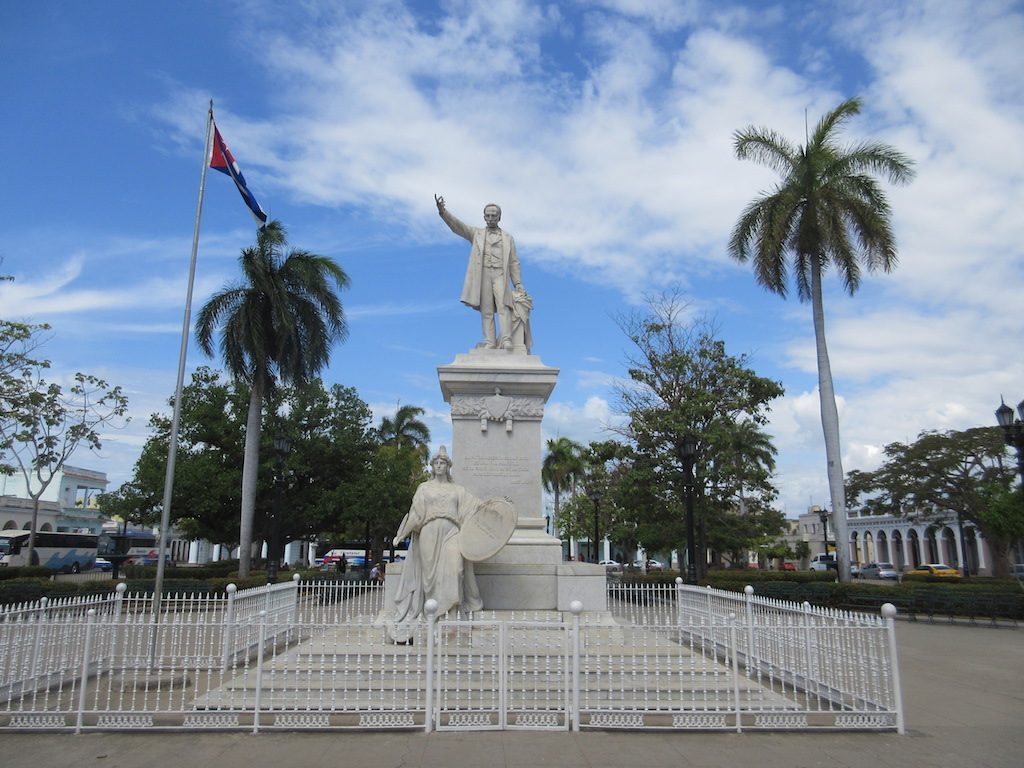
Cienfuegos Main Square

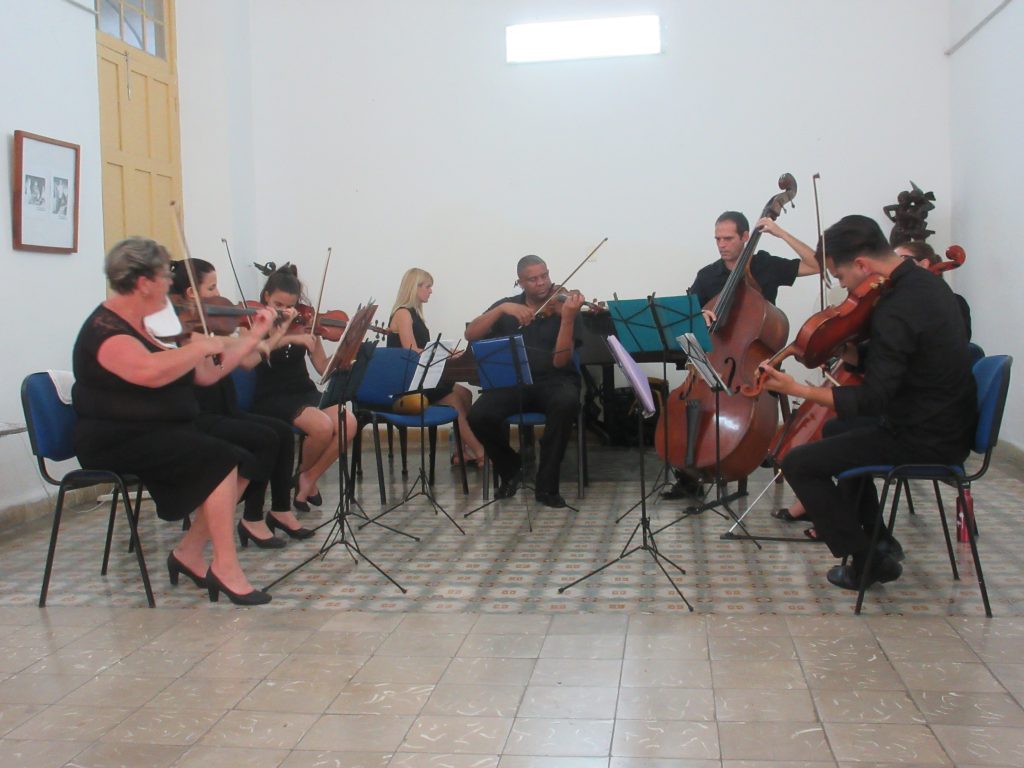
Cienfuegos Chamber Orchestra

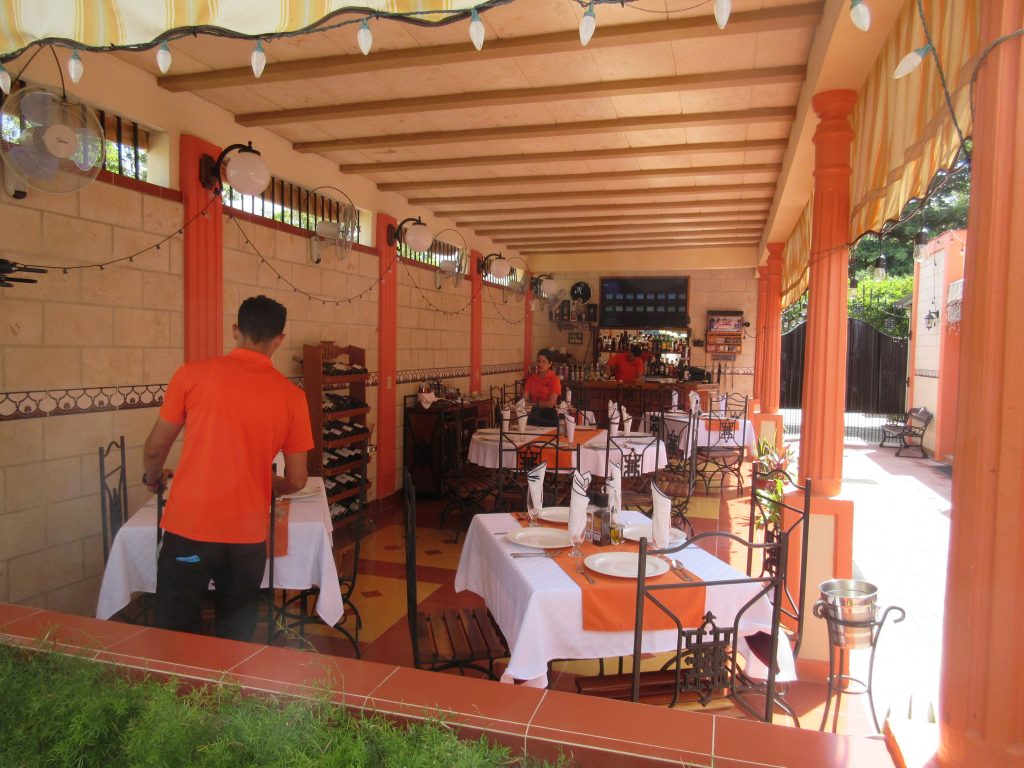
Cienfuegos Paladar

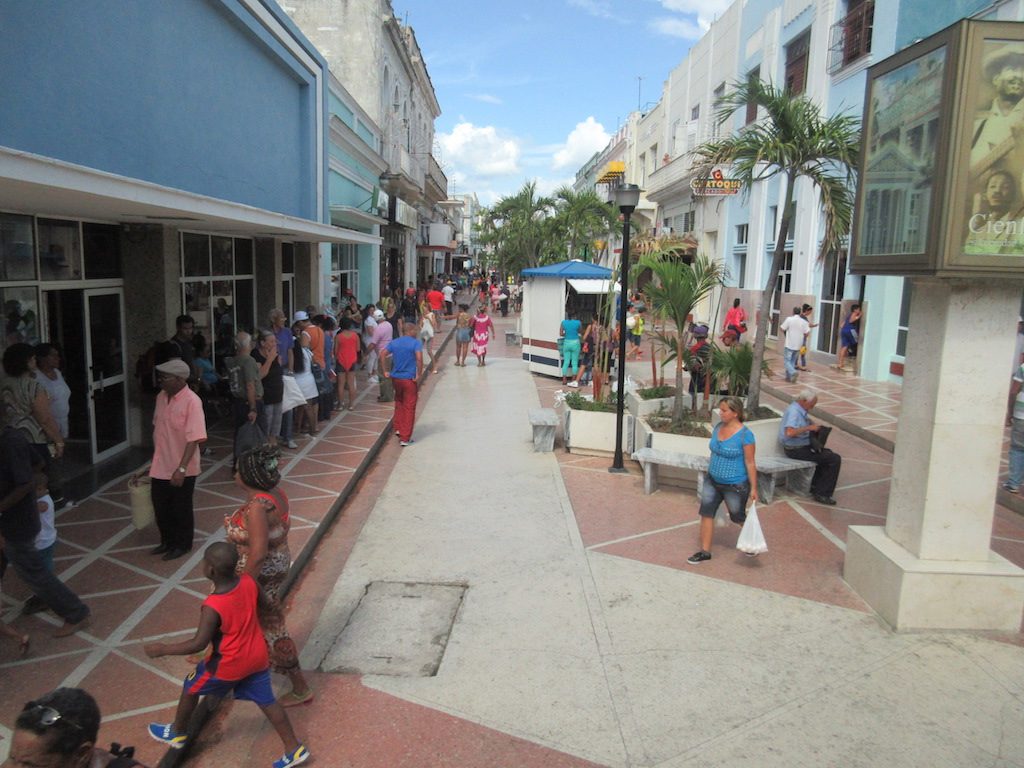
Cienfuegos Pedestrian Street

This morning our fist stop was at the local Cienfuegos Botanical Gardens set on something like 3,000 acres of land. The botanical garden was started in the early 1900’s when a Dr. Atkins from Harvard University bought a sugar plantation. He traveled the world collecting species of plants from all the tropical climates and brought them back to Cuba to create the botanical garden. They used the plants in research at Harvard University. We had a guide by the name of Hilda who gave us a brief walking tour of a small portion of the garden. She had been working at the garden for 22 years and was extremely knowledgeable about the plants. We saw a variety of plants we recognized and many that were new to us.

Next we headed to the center of Cienfuegos where we walked the main pedestrian shopping street and visited the main square named the Parque Jose Marti. Many of the buildings have been restored–or are in the process of being restored–around the main square. The great majority of the shops are all government owned at this time with the exception of some of the art shops and a clothing shop. The main square is the largest in Cuba, and being a Saturday there were lots of people out with their families shopping and enjoying the outdoors. The strange thing was that there were almost no cars on the streets around the square. There are so few cars that no matter where you go there is little to no traffic. More likely you would need to wait for a bicycle or motorcycle to pass to cross the street than to worry about a car.

We had lunch at a local Paladar not far down the coast from the center of town called the Finca del Mar Paladar. Here we enjoyed a pumpkin (Squash) soup, green salad, choice of red snapper, shredded beef or grilled chicken breast, steamed squash, green beans and ice cream or flan for dessert. We were seated on the patio at this beautiful restaurant with views of the ocean but it was very warm and humid. We had lunch with Alan and Tim, from Los Angeles, who are on the trip with us. They were suggesting that we try a new cruise website called cruisecompete.com and also Google Flights for airline tickets.

After lunch we headed to the Marti Museo Provincial (Museum on the main square) for a performance by the Cienfuegos Chamber Orchestra which has existed for 10 years and now consisted of a pianist, three violinists, two violas, a bass player, and a cello player. They performed about five songs for us, including one in which they sang. They were a small group but were very talented musicians who seemed passionate about their craft. Many had started studying at age 7 or 8.  Most were in their 20s/30s and one was about 50.  After the concert we looked around the small museum which had everything from early indigenous people’s tools, to fine art to home furnishings from a century ago. Unfortunately, it appeared that the roof leaked, the wooden windows were rotted and the building was in dire need of some TLC.

We had some free time to wander around after the concert and Kent found a small wooden car to purchase for our collection of travel treasures. Many of the shops sell these wooden cars that represent the vintage American and Russian cars you find throughout Cuba.

We arrived back at the hotel about 4:00pm for a rest before cocktails at our hotel at 6:00pm followed by dinner back in town at the Casa Prado Paladar. The dining room was quite small but the wait staff was very pleasant and attentive making for a wonderful evening. They served us fresh bread rolls, a warm salad of mixed vegetables, a choice of grilled pork, fish, beef, shrimp or chicken. The meats came with four sauces, a sweet and sour, mayonnaise, green pepper and creole. The main course was accompanied with white or Cuban rice and banana chips. For dessert they served flan, coffee and a large shot of sugar cane liqueur that was 33% alcohol. They also sent us home with a souvenir cigar and a key ring with a barrel of rum on it that says Cuba.

March 31, 2017 Camaguey/Trinidad/Cienfuegos

Beautiful Countryside

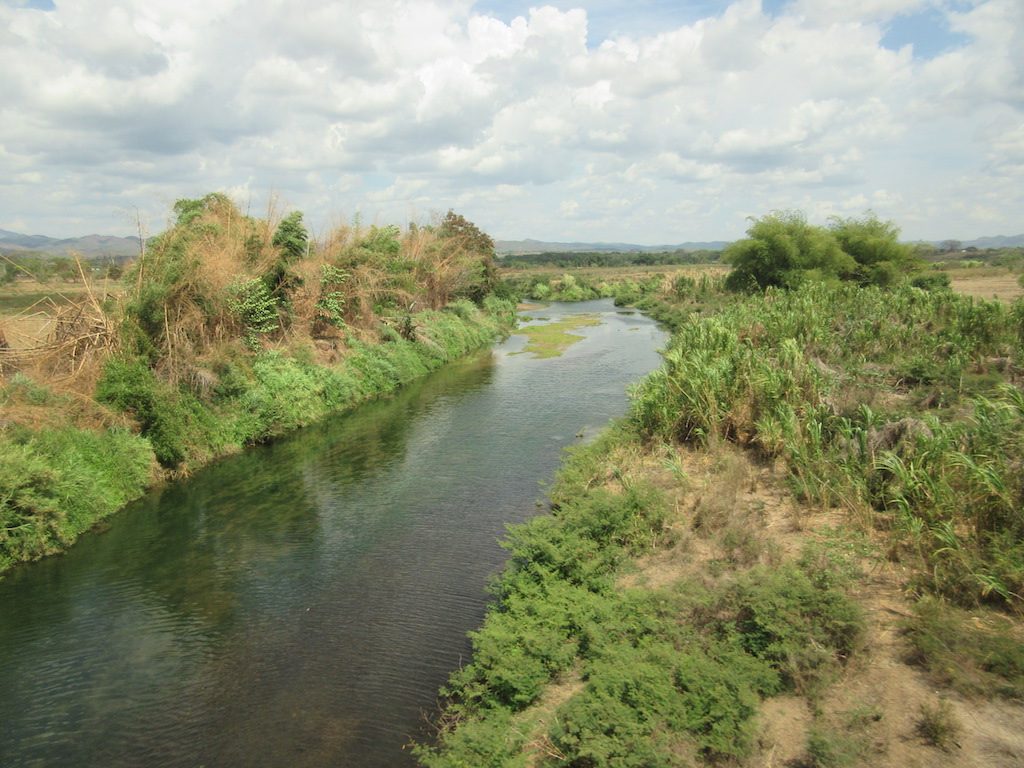
River on the way to Trinidad

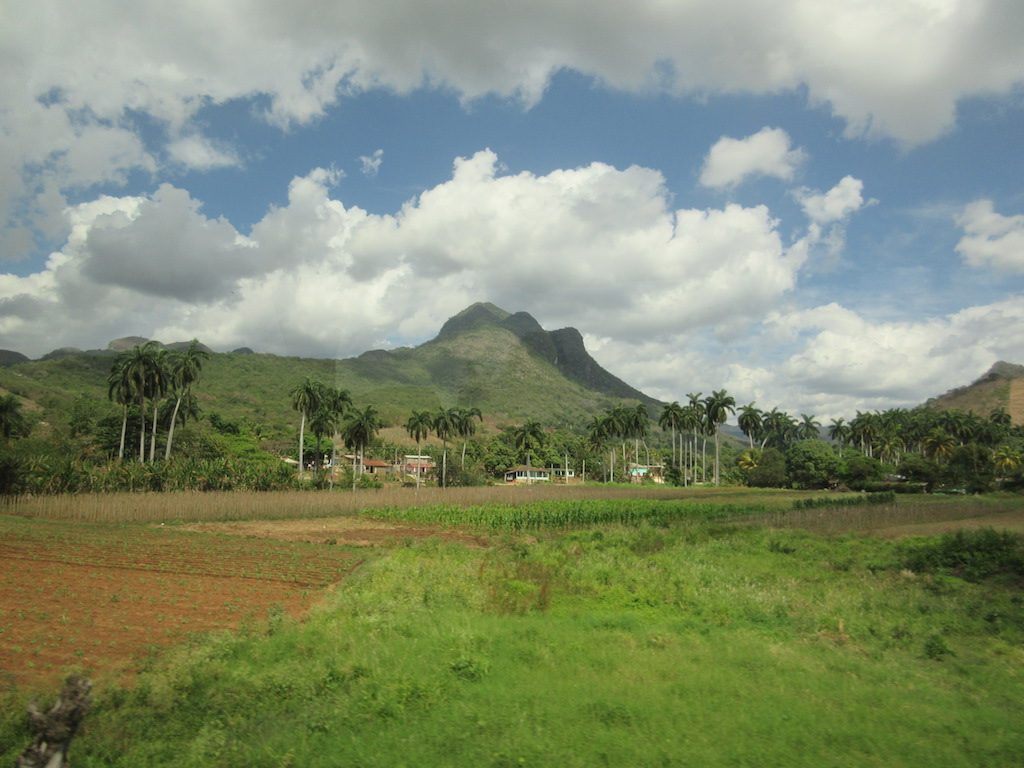
Tobacco Valley on the way to Trinidad

Trinidad Main Square

Trinidad Street

Kent Shopping in Trinidad

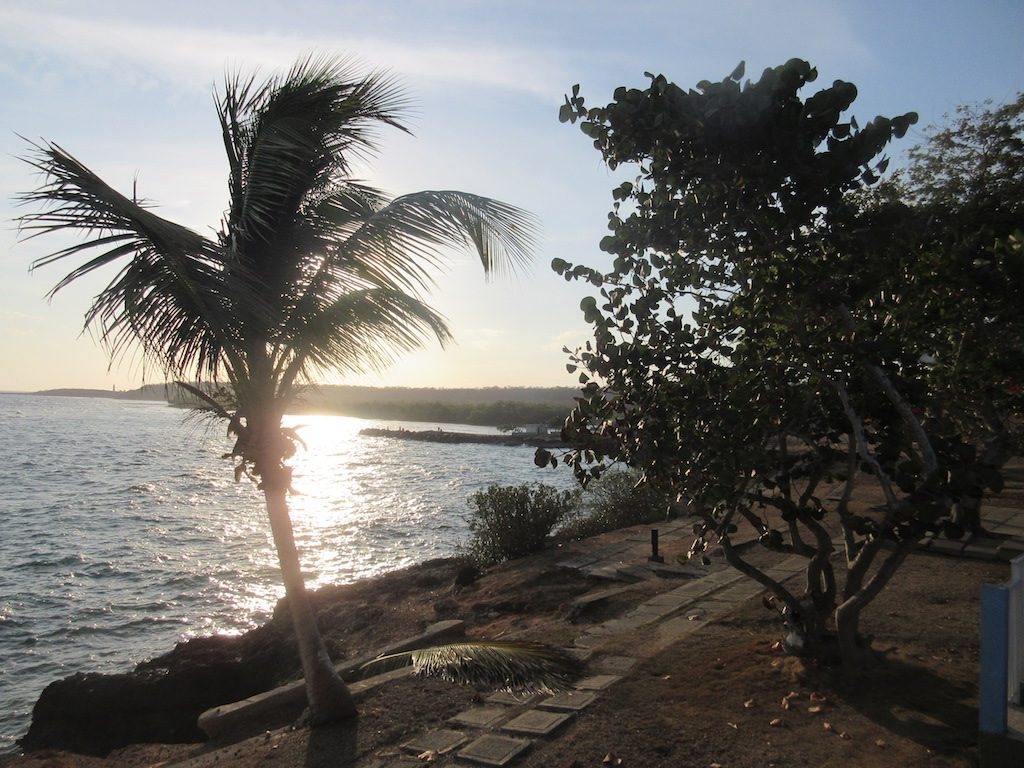
View at our Cienfuegos Hotel

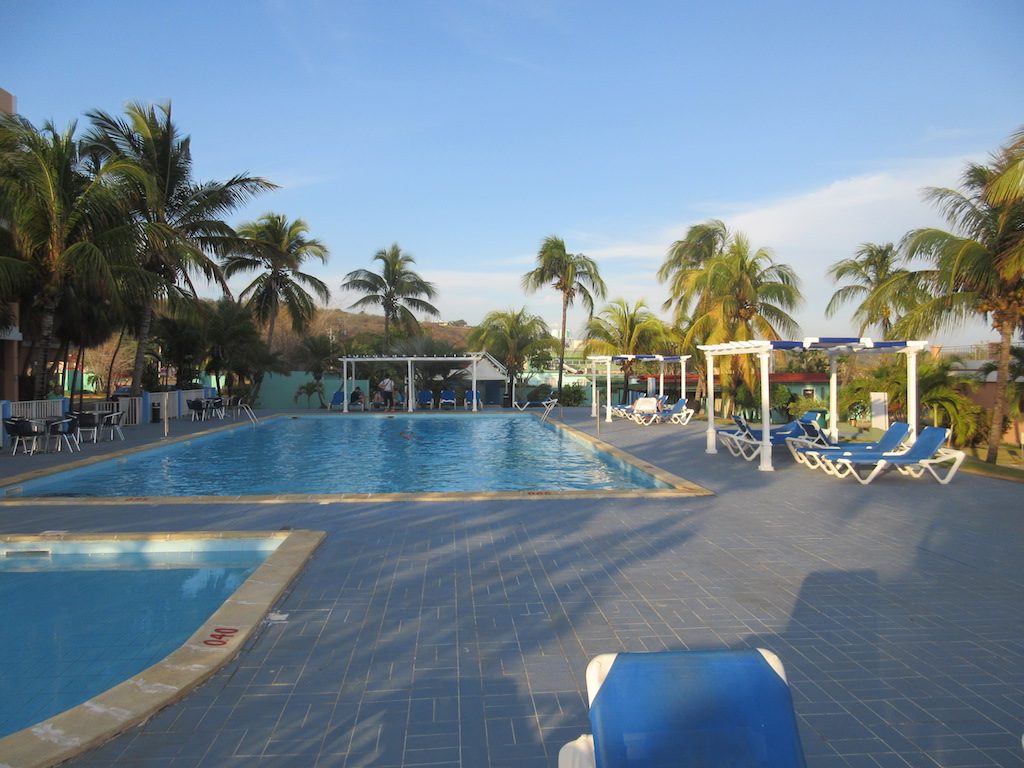
Pool at our Cienfuegos Hotel

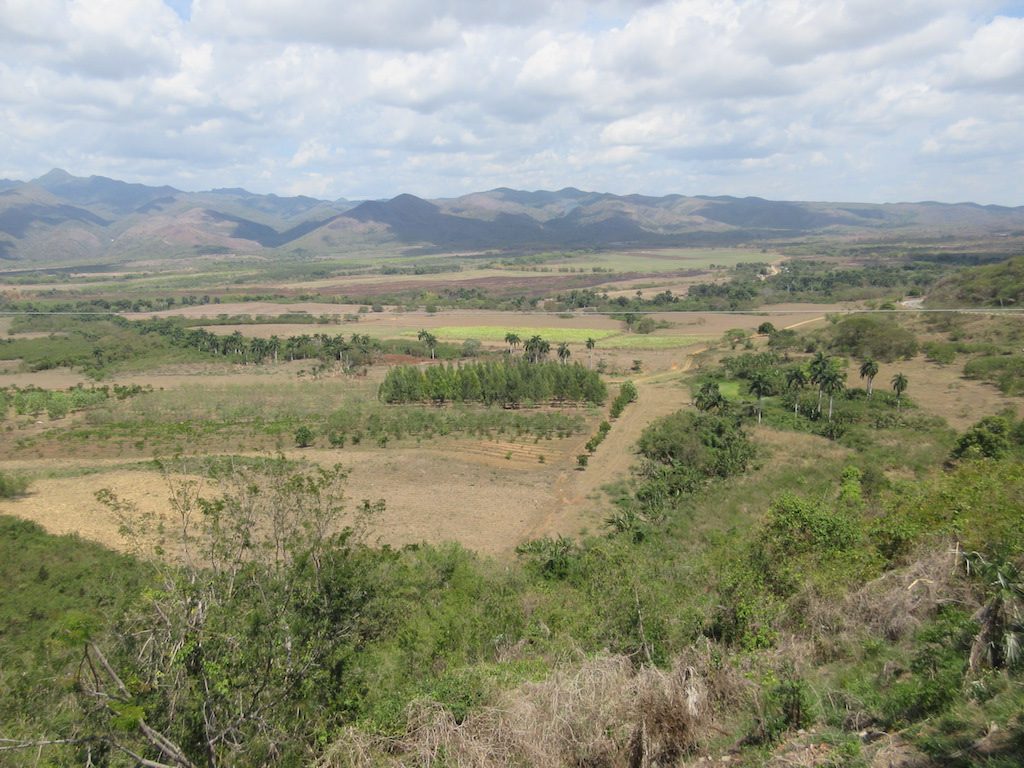
We left the hotel in Camaguey this morning about 8:00am bound for the town of Trinidad. The trip took about five hours with a fifteen-minute comfort stop at a roadside restaurant. The drive was through mostly flat dry land used for raising cattle and goats. As we neared Trinidad we began to see the foothills and mountains that line the southern coast of Cuba in this area. We stopped at a lookout point overlooking what is known as the Valley of the Sugar Mills, named this because there were once more than 50 sugar refineries located in this valley and sugar plantations were everywhere.

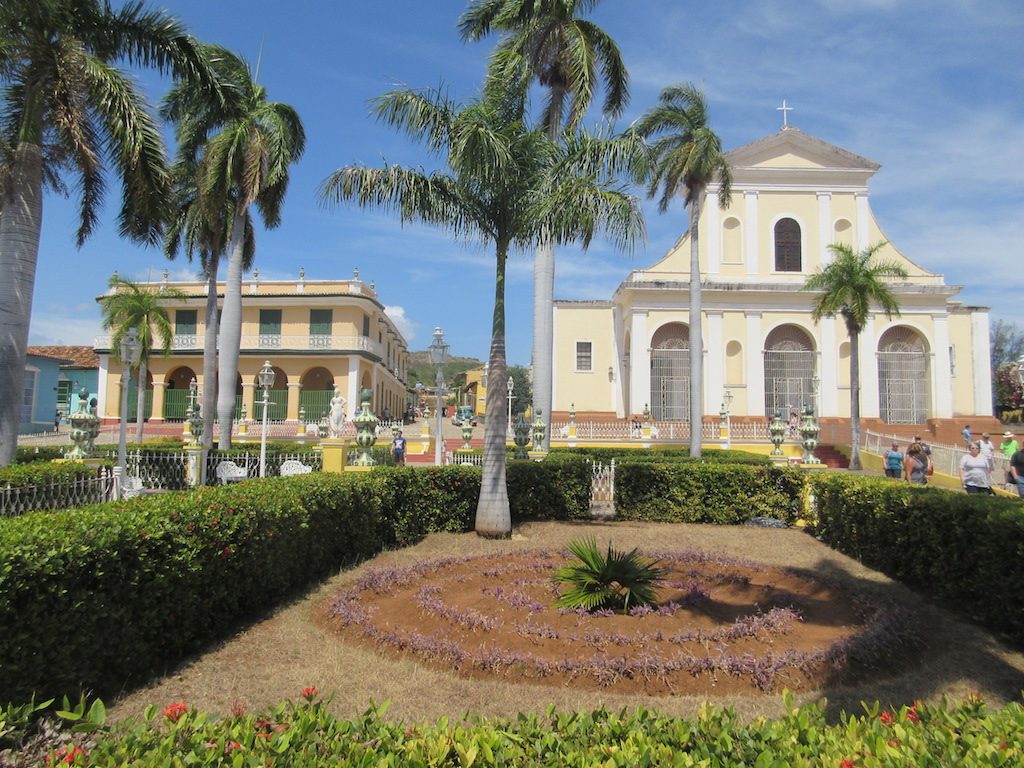
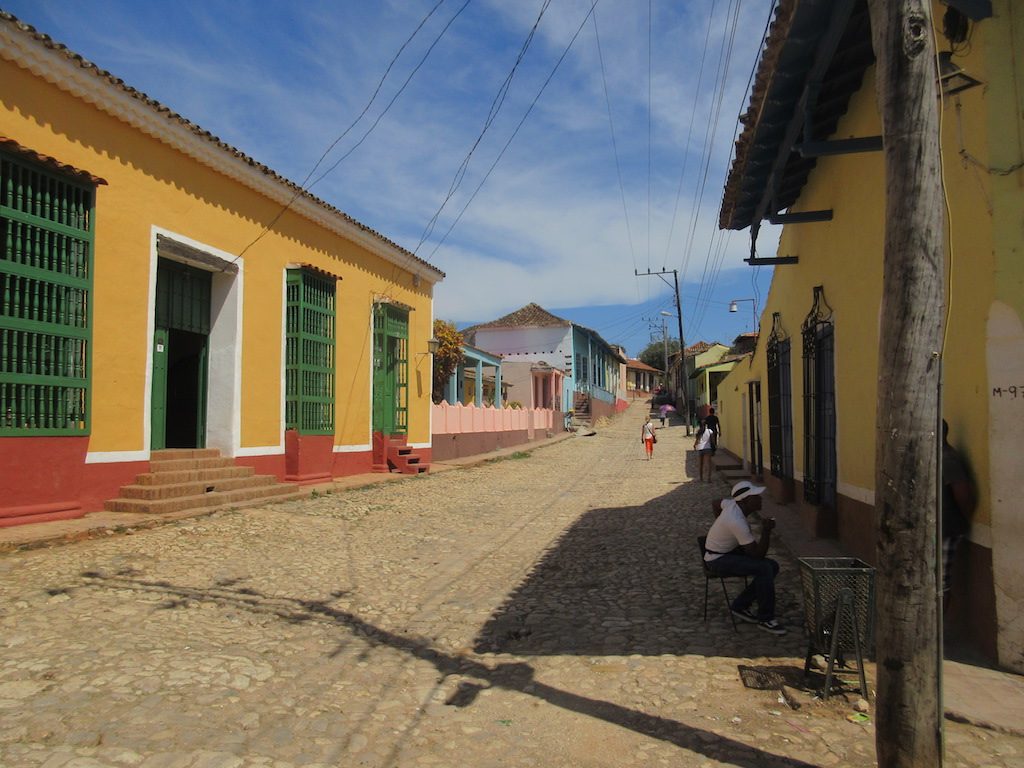
The meticulously well preserved colonial city of Trinidad is located in south-central Cuba with a population of about 75,000 inhabitants. Built on huge sugar fortunes amassed in the adjacent Valle de los Ingenios during the early 19th century, the riches of its heyday are still in evidence in the colonial style mansions. Rambling cobblestone streets, stately palaces and plazas are everywhere. The buildings are brightly painted in shades of pinks, greens and blues and the streets are sprinkled with vintage American cars. The town is now a UNESCO World Heritage Site and so many of the historic colonial buildings are being restored within the downtown area and the cobblestone streets must be maintained.

We had lunch at the Paladar El Dorado, located in the historic center of Trinidad. The paladar was beautifully restored with several large dining rooms complete with high ceilings and crystal chandeliers. There was a pleasant private courtyard and guest rooms for rent upstairs. They gave us a welcome drink called a banana daiquiri that tasted little like bananas with rum in it. We dined on vegetable soup, green salad, bread, lobster, rice and black beans, banana chips and flan for dessert.

After lunch we walked a short distance to an African oriented religious temple called the Templo Yemaya to meet the local priest. This Santeria religion was brought to Cuba by African slaves who worked in the sugar plantations and is one of the three main religions practiced in Cuba.

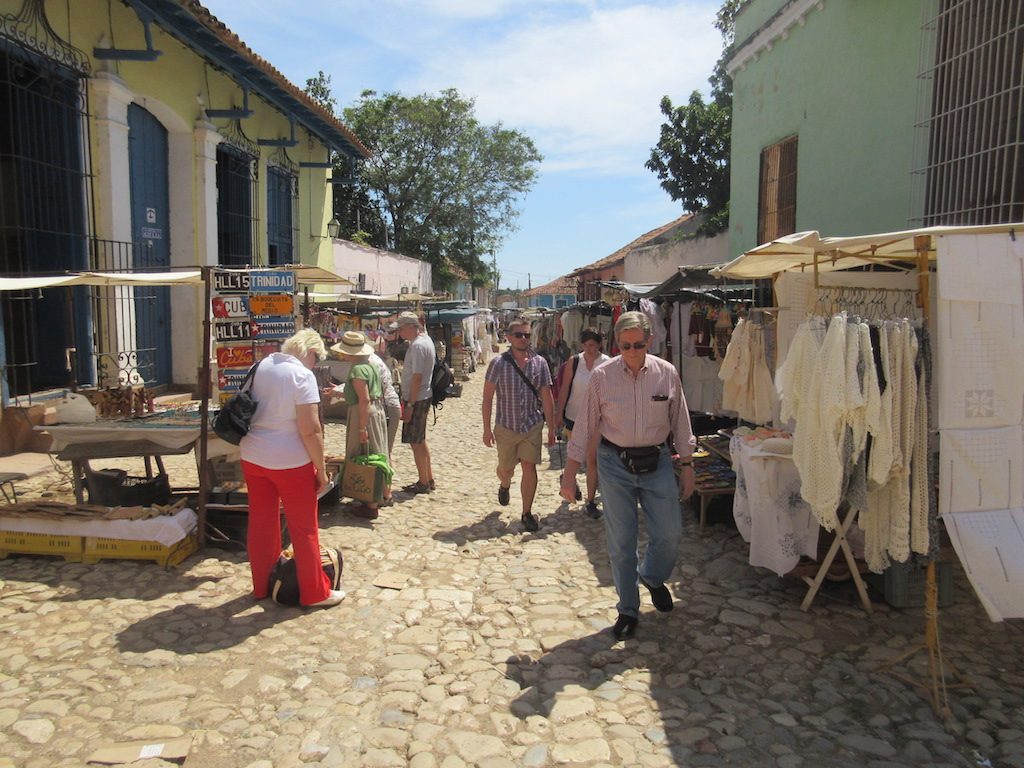
We then were given a short amount of time to wander the cobblestone streets of town to explore the architecture and shops on our own. The town was by far the busiest that we have seen thus far, with tourists filling the streets. There are many of the old homes and buildings that have been converted to art galleries and shops on the lower floors and sell all sorts of carved wooden figures, paintings, handicrafts, T-shirts and other items. On several of the streets there were flea markets filled with booth after booth of more souvenirs and artwork. It appears that with all of the tourists in town, everyone is an entrepreneur. You cannot walk far without someone asking you if you want to buy Cuban cigars.

We boarded the bus about 4:00pm for a 90-minute drive to our hotel for the next two nights called the Faro Luna Hotel in Cienfuegos. Cienfuegos, named after a local founder, is located on the southern coast of Cuba about 160 miles east of Havana and has a population of about 175,000. Settled by French immigrants more than 150 years ago, Cienfuegos is often referred to as the “Pearl of the South” because of its impressive beauty and colorful history. The hotel overlooked the Caribbean Sea to the south. We had dinner with the group in the hotel’s restaurant called the Caribe.