April 5, 2016 Sea Day

This was a quiet sea day as most of the passengers were preparing to disembark the ship in Southampton, England the next day. There was a farewell event hosted by Michael Langley the cruise director who had prepared a short video of the crew saying farewell. They had been filming segments of the video over the past several weeks. It was very funny with crewmembers from all over the ship dressing up and being silly doing something around the ship. They then had about 400 of the ships 600 crewmembers on stage to say good-bye.

Professor William Morris Welch presented a lecture on the wreck of the Medusa and what this tells us about the politics and society in 19th century France. In so many ways the politics at that time were not so different from today with the captain of the Medusa saving himself and letting his crew and passengers fend for themselves. Most of them unfortunately died from lack of food and water or exposure to the sun and seawater.

We had lunch in the lido with one of the dining room supervisors by the name of Joris or as Kent called him, gorgeous Joris. He is a bright young man from the Netherlands who has a degree in hospitality and has only been working on the ship since December. He would like to open a restaurant in the Netherlands one day. We enjoyed learning a bit about his life and aspirations.

In the afternoon and evening, Kent made rounds saying good-bye to friends and crewmembers he had met onboard. Mark spent the better part of the afternoon working on a puzzle in the library.

The evening’s entertainment was a variety show featuring Tony Pace the Las Vegas headliner and David Schofield the pianist. Both of them had performed for us earlier this week. We briefly attended a Farwell Party in the Crow’s Nest to say final good-byes.

April 4, 2016 A Coruna, Spain

A Coruna, Spain -  Port

A Coruna, Spain – Port
A Coruna, Spain - Santiago de Compostela

A Coruna, Spain – Santiago de Compostela
A Coruna, Spain - Santiago de Compostela Altar

A Coruna, Spain – Santiago de Compostela Altar
A Coruna, Spain - Plaza de Maria Pita

A Coruna, Spain – Santiago de Compostela – Plaza de Maria Pita

A Coruna, with a population of 275,000, is located at the northwest corner of Spain on the Atlantic Ocean. This port provides a distribution point for agricultural goods from the region. The manufacture of clothing and textiles is also an important piece of the local economy. The company Zara is located and started here; the owner is now the richest man in Spain and one of the richest in the world.

The weather was cold and rainy, but we were not going to let that dampen our spirits. Our tour this morning was titled Santiago de Compostela Highlights. The drive to the town of Santiago took about one hour through beautiful countryside. They grow a lot of eucalyptus trees here used for making paper.

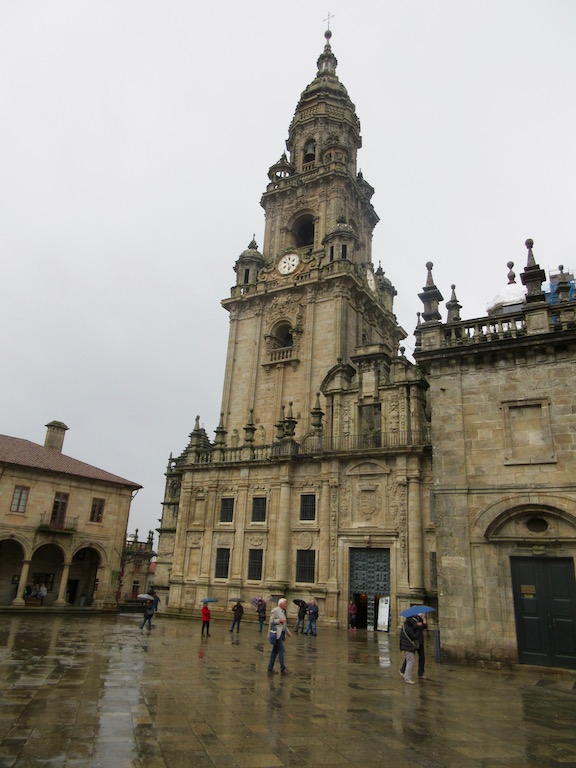
Once we arrived in the town of Santiago, we made our way to the main square called Obradoiro Square. Here you have a magnificent view of the Cathedral Santiago de Compostela, the Town Hall, the Palace of Saint Jerome and a 15th century Hotel of the Catholic Kings. The square itself is paved in stone with no flowers, no fountain and no ornamentation of any kind. On the other hand, the cathedral and the surrounding buildings more than make up for the lack of ornamentation.

This cathedral is a place of pilgrimage because as the story goes, St James the apostle’s remains are entombed here. The apostle was beheaded in Palestine and some of his disciples brought his body back to Spain where he had once taught the word of God. They thought that this was where he would have wanted to be buried. Over time his remains were lost until one night a farmer found them in the light of the moon known in Spanish as the Compostela. When the Apostle’s bones were found, a small chapel was built in his honor and it was enlarged several times over the years until it became an enormous cathedral. The west face of the cathedral shows the apostle James (Santiago) as a pilgrim, as well as a representation of the urn where the remains of the Apostle appeared. This main entrance was currently undergoing restoration and was mostly hidden behind scaffolding. On the north side of the cathedral is the Plaza de Azabacheria and a neoclassical façade. To the south is the Silversmith’s Square where during the middle ages silversmiths had their smithies. This south side of the cathedral is decorated in Romanesque style. On the east side is the Jubilee Door on the La Quintana Square. This door is usually only used during a year when St. James’ birthday falls on a Sunday and this is where pardons are dispensed. However this year the door is open due to a request of the Pope that all churches should be open to the people this year. During the summer months, many Christians make a pilgrimage to this historic site walking or biking a minimum of 100 kilometers on foot or 200 kilometers on wheels. Others have been known to make the entire journey that St James’ body took walking for up to two and a half months from France, primarily.

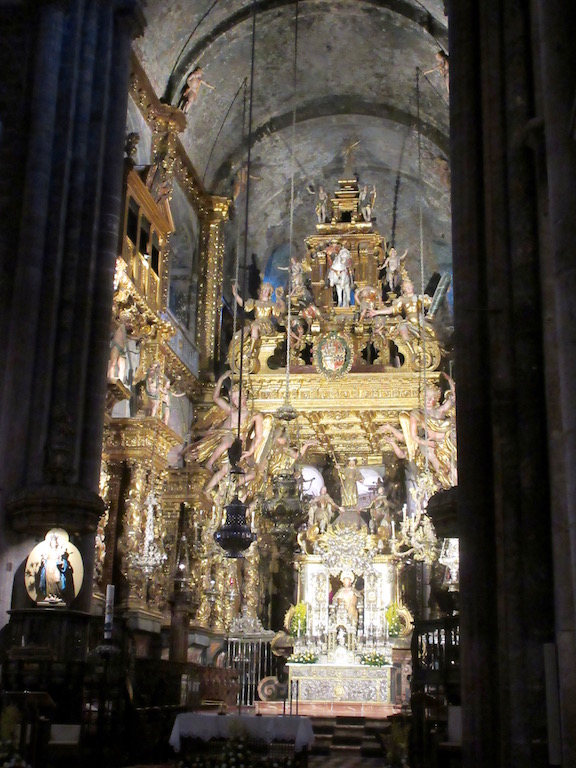
Inside this massive church there is a very ornate altar complete with a large bust of St James. There is a rear stairwell where you can climb up to the rear of St James bust in silver and give him a hug. Below the altar you can take another set of stairs down to a crypt where we found a large silver box containing the remains of St James. Around the perimeter of the church there are many small chapels with ornate decorative altars of all types. Most of these are locked behind iron gates to protect them. The alar itself is several stories tall with lots of gold, horses, cherubs and angels. It has so many different things going on with it, that it is hard to make sense of it when you sit and look at it. So much for the old saying that less is more.

After our visit inside the cathedral we headed back to the Hotel of the Catholic Kings for refreshments. The hotel is a beautiful five star hotel built during the reign of Isabella and Ferdinand with a blend of Renaissance, Baroque and Gothic styles gracing its rich interior. There is a lovely central courtyard with a fountain filled with fresh rose petals. Wide hallways surround the courtyard, lushly furnished with sofas, chairs, carpets and paintings. A regular room can run you in the neighborhood of 500 Euros a night during season.

We had our tour refreshments in a third floor Hotel reception room where we were served wine, cheese, small tuna-filled sandwiches, croquettes of some type, ham and a potato quiche–like tapas. During our visit we were treated to the singing of a group of young men called Tuna singers. They were dressed in a type of medieval Spanish-style costumes. They had on black velvet pants and long decorative capes or robes.

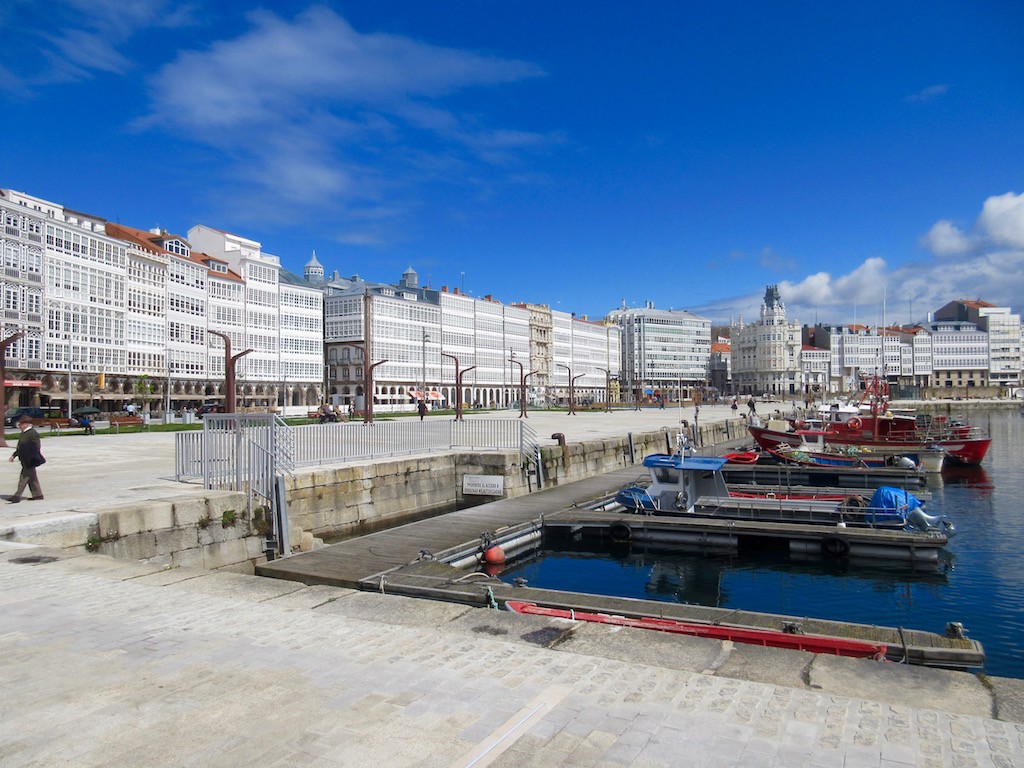
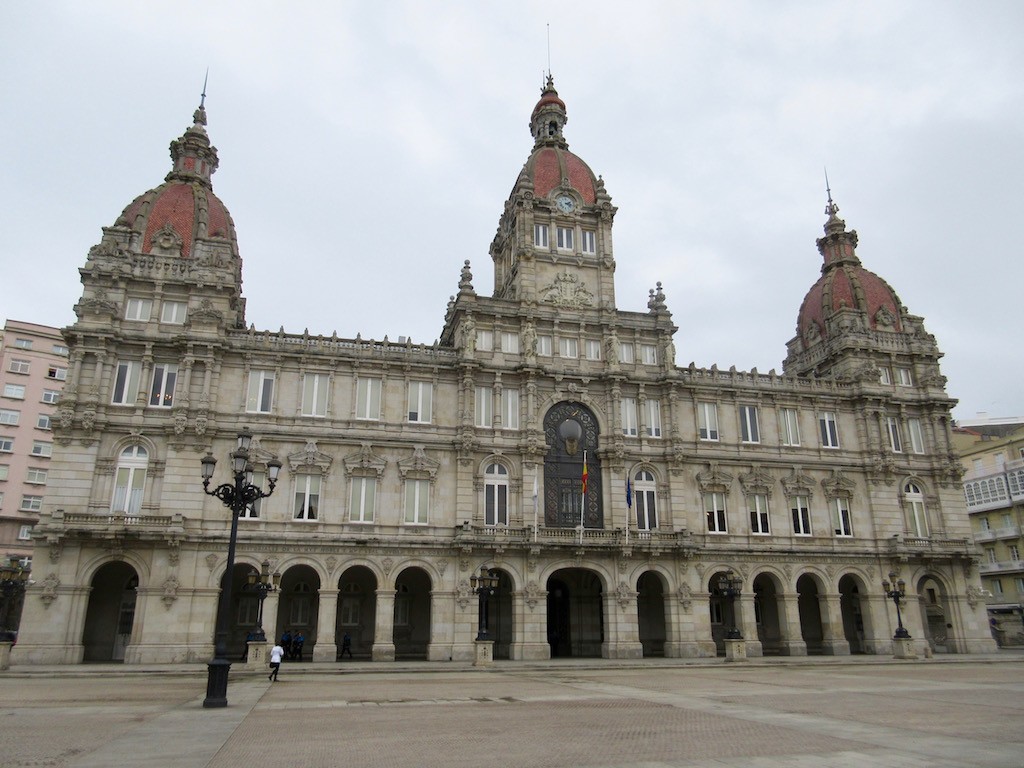
After returning to the port we had a bit of time to explore the town of A Coruna, located in the municipality of Galicia. Our ship was docked at the edge of town so it was an easy walk into the charming historical district, once an ancient walled Roman city. Today the meandering streets house many shops and businesses, many with homes above. We visited a large main square dedicated to Maria Pita, who defended the city against attack in 1589. We stopped at a former castle, converted into a garden in the 18th century, which is home to the tomb of Sir John Moore. Many of the streets house museums, convents and monasteries in old historic buildings as well. Along the waterfront there is one structure after the next with glass-faced sides, flat from top to bottom and with many white mullions. The buildings are so crisp and clean in appearance that it makes you think that they are modern construction. These unique buildings have given the city the nickname of “the crystal city.” There is also a modern, wide pedestrian-friendly promenade stretching along the harbor and ocean perfect for a stroll or biking. Along the way you find many benches, sculptures and even an old castle that houses an archeological museum.

The entertainment this night was a young 27-year-old pianist by the name of David Schofield. David grew up in Manchester, England where he learned to play the piano before being shipped to London and Chicago to boarding schools where he studied piano for the next nine years. When David was only nineteen-years-old he won a music competition at Carnegie Hall and since then he has been performing all over the world at concert halls and aboard cruise ships. He gave a very entertaining concert with a wide range of music choices. We had seen him on the world cruise in 2013 as well.
April 3, 2016 Sea Day

The weather had turned cold and cloudy and the seas were rather rough on and off throughout the day.            The morning included a watercolor art exhibit displaying the paintings that passengers had created over the length of the cruise. The show included about 200 pieces of art and many of the passengers are very talented. Mark had several of his pieces in the exhibit….they looked great!

William Morris Welch presented a lecture on the lead up to the greatest naval battle of the Napoleonic war called Trafalgar. He discussed the leaders of Spain, France and England at the time and Napoleon’s unsuccessful attempt to take over England.

The afternoon lecture by Martyn Green explored things to see and do in the port of Southampton, England. Many of the passengers will be disembarking in England during a three-hour port stop, while we will proceed to Rotterdam, Netherlands to disembark.

Mark attended the watercolor class and worked on a community puzzle of Marilyn Monroe. The evening show was the Rotterdam singers and dancers final show titled The Midnight Hour. The cast has been on the ship since September and will be disembarking in Southampton.

April 2, 2016 Cadiz (Seville), Spain

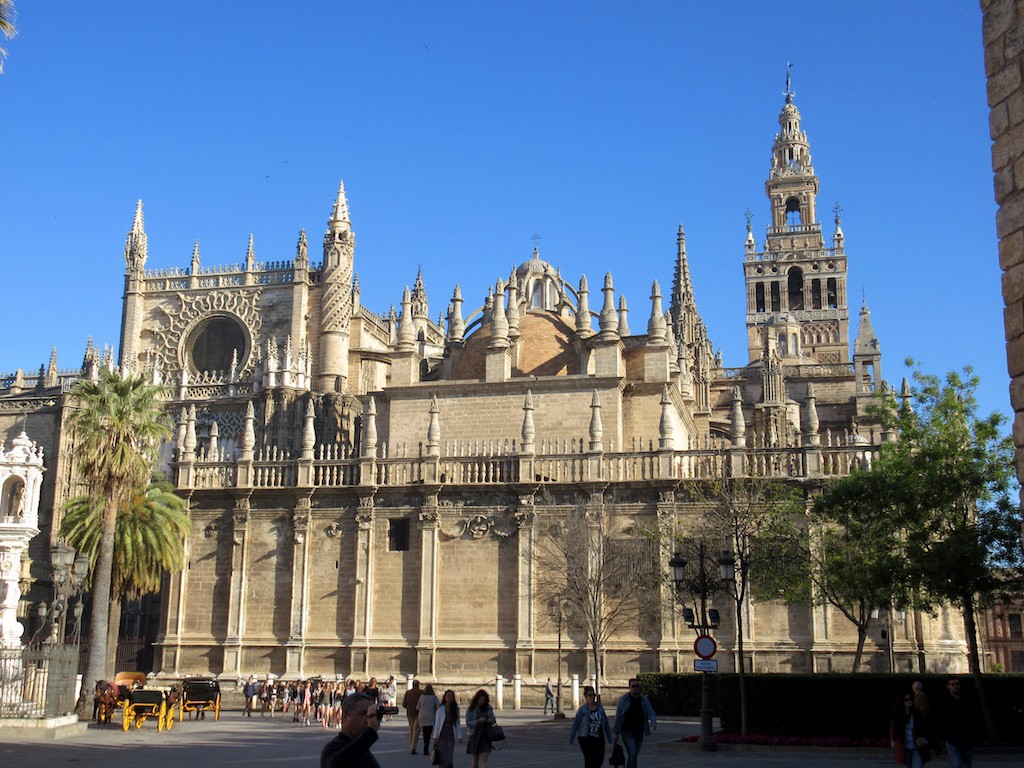
Seville - Alcazar

Seville – Alcazar

Seville - Cathedral

Seville – Cathedral

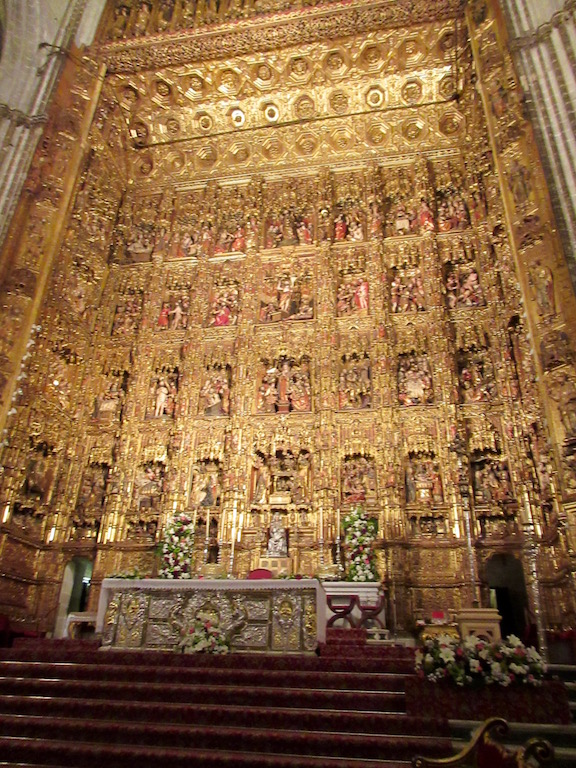
Seville - Cathedral Altar

Seville – Cathedral Altar

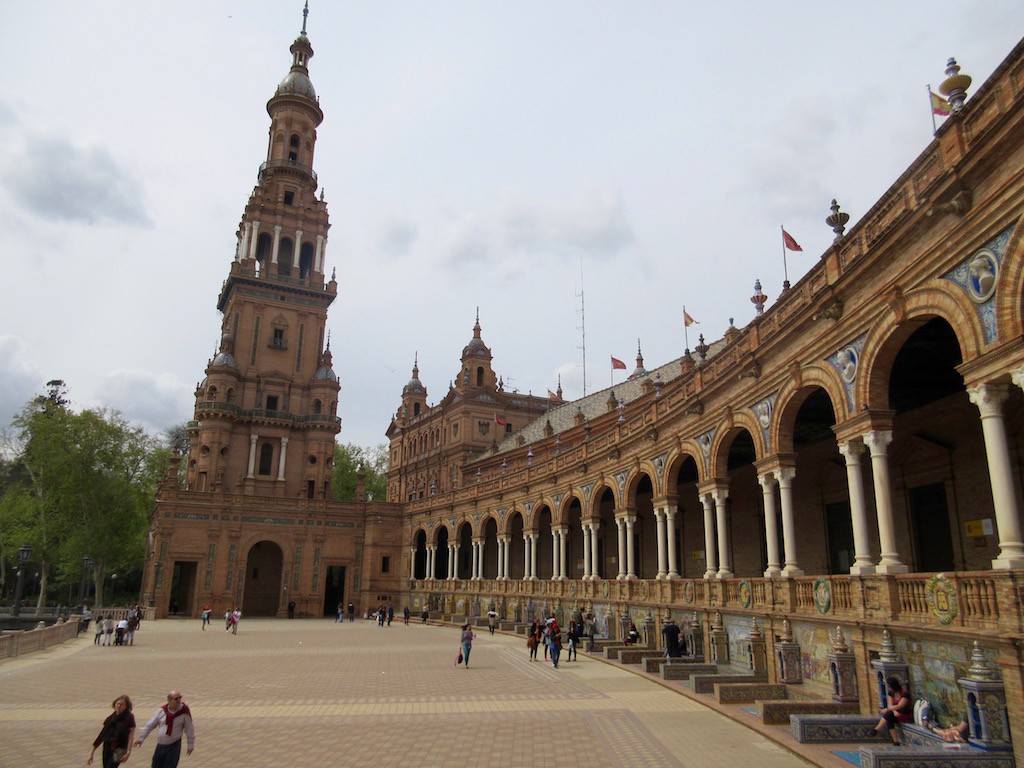
Seville - Plaza de Espana

Seville – Plaza de Espana

Cadiz is located on the Gulf of Cadiz in the southwestern region of Spain about 75 miles south of Seville. The town is a narrow slice of land surrounded by the sea and has a population of about 125,000. Large open public plazas are connected by narrow winding alley like streets. This is also considered to be the oldest continuously inhabited settlement in Europe, founded as Gadir by the Phoenicians about 1100BC. While the city looked very nice, we decided to spend the day on tour in Seville rather than in Cadiz.

Seville is the fourth largest city in Spain and is a 2,000-year-old metropolis home to countless historical monuments. Seville was once a very important port town accessible by a large navigable river until the river became bogged down with silt and Cadiz became the important seaport. The scenic ride from Cadiz to Seville takes about 90 minutes through beautiful farmland. In this region of Spain they produce more olives and olive oil than they do in all of Italy. They grow cork in this region, a variety of other crops as well as herds of sheep that we spotted along the way. The landscape is mostly flat but very beautiful; mile after mile we saw one field after another planted with one crop or another.

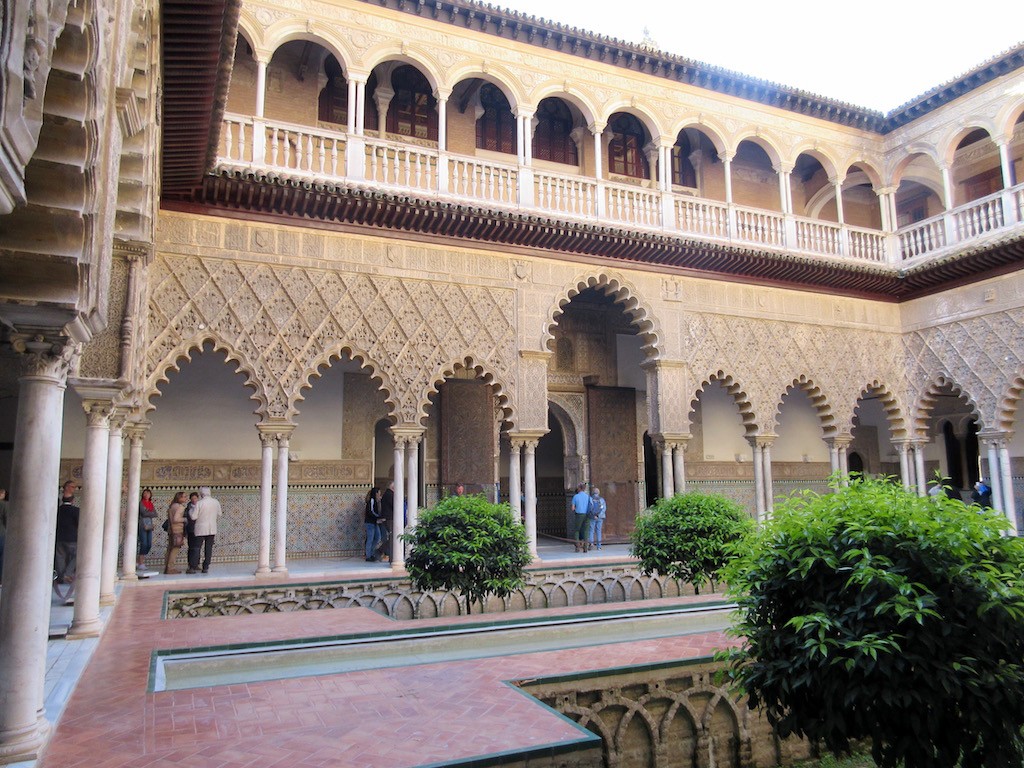
Once we reached Seville, we took a walking tour that began in the Alcazar, a monument to the Moorish occupation of Spain. The Alcazar is the official residence of the King of Spain when he is in Seville. Our guide tells us that he has only slept here for two nights in the last several years. The Alcazar includes room after room of beautiful mosaic tiled walls, elaborate and detailed hand painted plaster reliefs, gorgeous interior courtyards with Moorish arches and colonnades, outdoor gardens with many fountains and—this time of year, sweet blooming orange trees. The rooms that we visited were the public rooms with ornate walls, ceilings and floors but they had no furniture to speak of. Some of these rooms are used for public events and royal weddings from time to time.

Our next stop was to explore the old Jewish Quarter next to the Alcazar. At one time the royal family used to protect the Jewish people and so they were located just outside the gates of the Alcazar. Eventually, the Jews were encouraged to leave the area. Over the years most of this area had been rebuilt but the small winding streets here are filled with souvenir shops, hotels and restaurants serving tapas.

We then visited the grand Seville Cathedral including the tomb of Christopher Columbus. From 1184 to 1198 this was Seville’s main mosque with an enormous minaret built of brick. The original mosque’s courtyard remains today and is called the Orange Tree Courtyard as it is planted with lush green flowering orange trees. The original minaret now forms the lower two-thirds of the Giralda bell tower (325 feet in height). In 1218 the mosque was consecrated as a cathedral. From 1434 to 1517 construction work continued on the gothic cathedral. From 1528 to 1601 during the Renaissance, period the cathedral was expanded and embellished. From the 1600’s to the 1900’s work continued on the cathedral to make it what it is today. The cathedral is now about 425 feet long, 275 feet wide with a transept rising more than 125 feet high and has more than 235,000 square feet of floor space.

The cathedral is called the Cathedral of Saint Mary of the Sea today and is magnificent in every way. After St Peter’s and St. Paul’s, it is the third largest cathedral. There are 45 chapels within the cathedral, all ornately decorated with elaborate altars, fantastic paintings, statuary and more. Everywhere you look you find something new and exciting. The main altar is the largest in the world and is made up of a series of niches with hand carved figures telling the stories of the bible. Each of the niches is elaborate on it’s own merit but once they are all put together as one massive altar, imagine that the entire altar is then gilded in gold! The organ is made up of two sets of pipes totaling more than 7,600 pipes. I wish we had more time to explore the cathedral but our time was limited so we only had time to see the most significant points of interest.

Our next stop was for lunch at the Macarena Hotel where we had a huge lunch. The starter was a bread roll with prosciutto and cheese followed by a very large salad of lettuce, tomatoes, cucumbers, olives, asparagus and carrots with oil and vinegar for dressing. The entrée was roasted chicken, potatoes and a Spanish rice dish with assorted seafood—a paella-like luncheon. Dessert was three kinds of ice cream with whipped cream on top. The meal was served with a rose wine and water.

After lunch we visited a beautiful semi-circular building arcade called the Plaza de Espana, built for a world exposition held in 1929 in Seville. This enormous structure included several large towers, a central water fountain, a moat with boats and arched bridges and ornate painted tile scenes. Today this building is used as government offices. The main street running through Seville is lined with wonderful buildings built for the exposition representing countries all over the world. Today many of these buildings have been converted to residences, offices and museums. Seville is definitely a place to return to explore further.

The evening’s entertainment was a Las Vegas Headliner by the name of Tony Pace who performed a show of comedy and music. He had a great voice and did a lot of impersonations of artists from the 1960’s onward.

April 1, 2016 Ceuta, Spanish Morocco, Spain

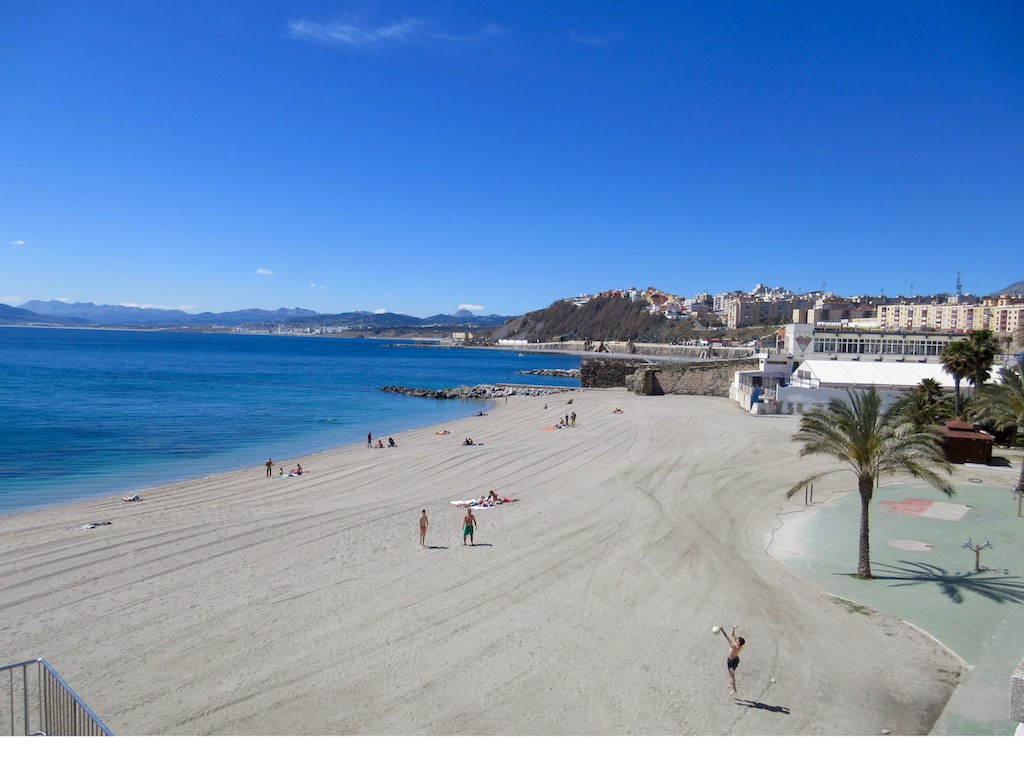
Ceuta Beach

Ceuta Beach

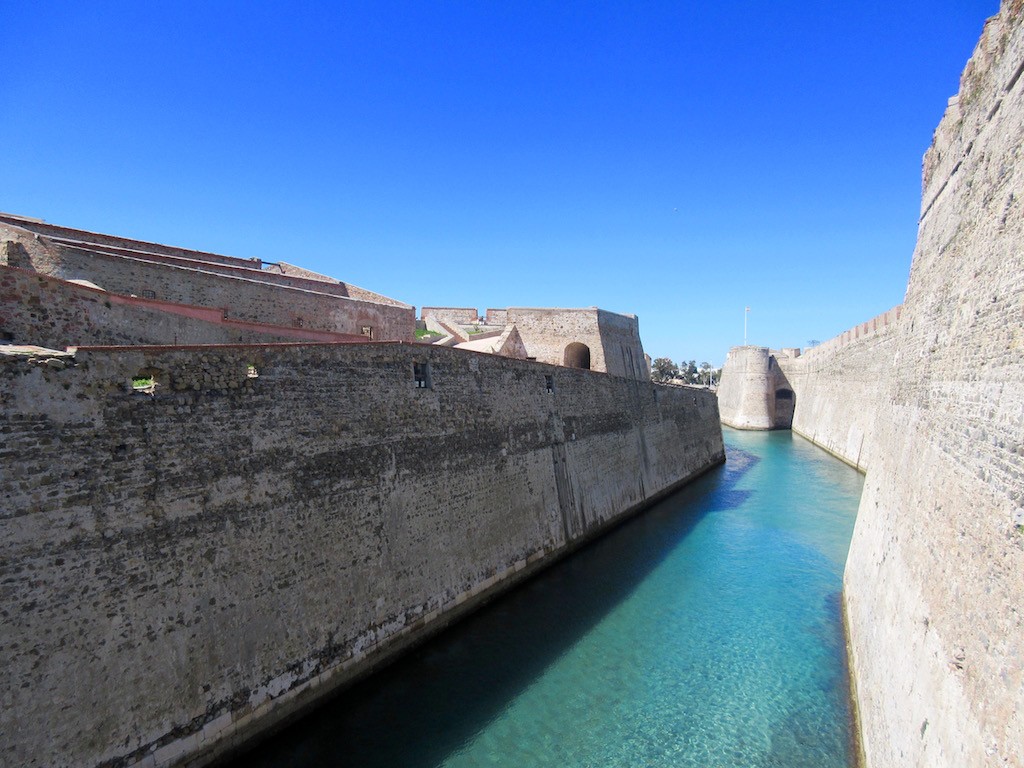
Ceuta Royal Walls

Ceuta Royal Walls

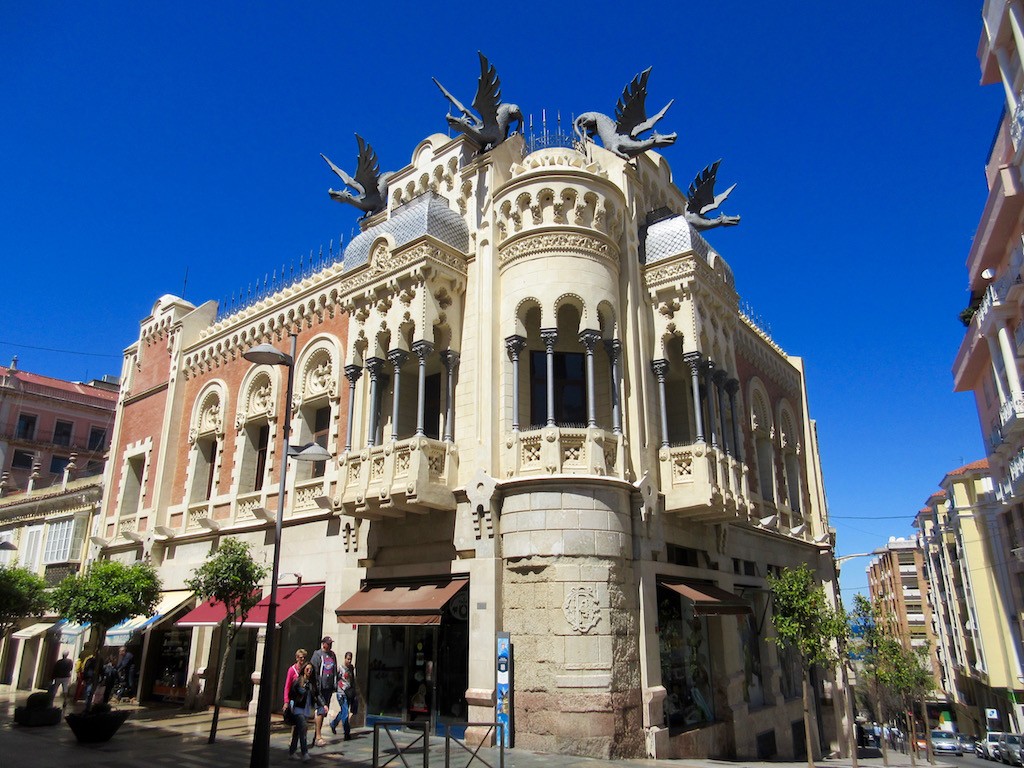
Ceuta Architecture

Ceuta Architecture

Ceuta is located on the north coast of Africa on the strait of Gibraltar and is a Spanish Territory. Ceuta is only about seven square miles in size, and is just to the northeast of Morocco. Christianity and Islam have lived together in Ceuta for centuries. From 700 until 1415, Ceuta remained under Muslim rule. In 1415 Juan Vaz de Almeda conquered the land and flew the Royal Standard and the flag of Lisbon. For two centuries Ceuta would live, speak and feel Portuguese until Ceuta asked to belong to the crown of Castille in 1640. Since this time Ceuta has maintained its Spanish identity.

Our call in port on this day was from noon until 8:00pm so we had a quiet morning at sea until we arrived. Once we arrived we ventured into town with our friends Dennis and Robert from Cambria, California. We explored the Monumental Complex of the Royal Walls in place since the time of the Portuguese rule. There is still a moat that is navigable between the ocean and the port to protect the city from invaders. These walls have been modified over the years but are well maintained.

The town of Ceuta is on a peninsula that is only a couple of blocks wide at its narrowest point. Therefore we were able to easily walk from the port through town passing the Plaza de Africa and the grand Cathedral of St. Mary of the Assumption to reach the beautiful white sand beach on the ocean. The skies were a beautiful clear blue and the temperature was warm in the sunshine while a bit cool in the shade with the ocean breeze. Running through town half way between the ocean and the bay is a pedestrian only shopping street with many monuments, public plazas and a museum.

Along the way we met up with our Virginian friend Brian from the ship and we all found a restaurant where most shared a bottle of red Spanish wine and a dish of green olives. Kent tried to find a place for a massage, but had no luck!

The town is extremely clean with a mix of old and new architecture. The older buildings have detailed ornamentation and have mostly been beautifully restored. The public plazas, with a wealth of public art, beaches and portside promenade, are all well kept, nicely landscaped and very inviting. We checked out the local market and even it was neat, clean and inviting. Overall it was a very pleasant port to explore on foot.

Back on the ship, we met Willem (from the Merabella shop) and Max (from the photo shop) for dinner in the dining room. It was fun to get to know these fellows better and Kent enjoyed asking them some of his “life questions.” The entertainment for the evening was a Spanish flute player by the name of Andrea Amat. She is young and from Valencia with a pleasant personality and a wonderful stage presence. Her show included several clever video clips where she pre-recorded herself playing the flute so she could do a duet.

March 31, 2016 Sea Day

Early this morning about 4:30am we had quite the wake-up call when the ship’s alarms sounded. The officer of the watch came on the ship-wide speakers announcing that there was an incident onboard and for crewmembers to report to their stations. A short time later the captain came on to announce that there had been a small fire in the crew galley but that it had now been extinguished. All was well.

The morning included a lecture by Professor William Morris Welch where he discussed Spain’s centurie’s old control of Ceuta on the continent of Africa. He contrasted and compared this with England’s control of Gibraltar and how this has long been an issue for Spain. The interesting thing about Ceuta is that there remain very few Spanish people living in Ceuta. The majority of the residents of Ceuta are Muslim from other parts of Africa and so he discussed how this might go against Spain’s best interest in maintaining control of Ceuta.

The afternoon included a lecture by David, the onboard location guide, regarding things to see and do in Cadiz and A Coruna, Spain. Then Martyn Green gave his lecture on A Coruna, Spain, including the old city, as well as the high city. Mark worked on the community puzzle, attended the watercolor class and Kent went to the gym and sauna.

The evening entertainment was a repeat performance of the Rotterdam singers’ and dancers’ show called Variations. This show includes a variety of songs from classical to contemporary; pop to opera, but with new arrangements on old songs.

March 30, 2016 Ajaccio, Corsica, France

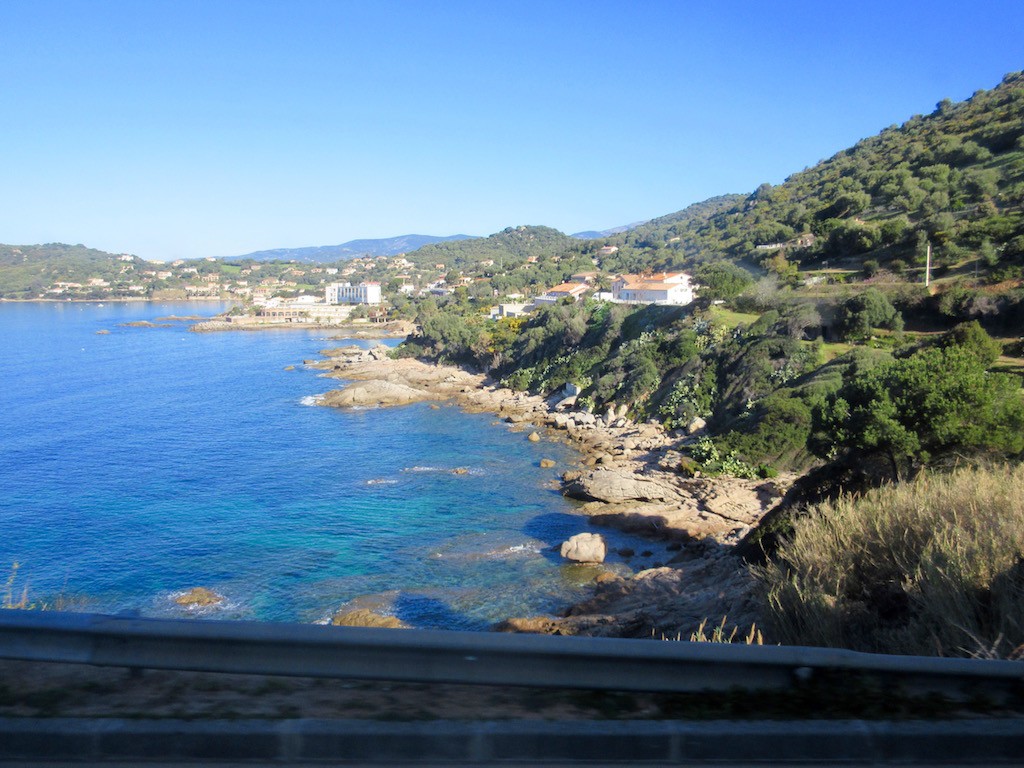
Shoreline

Shoreline

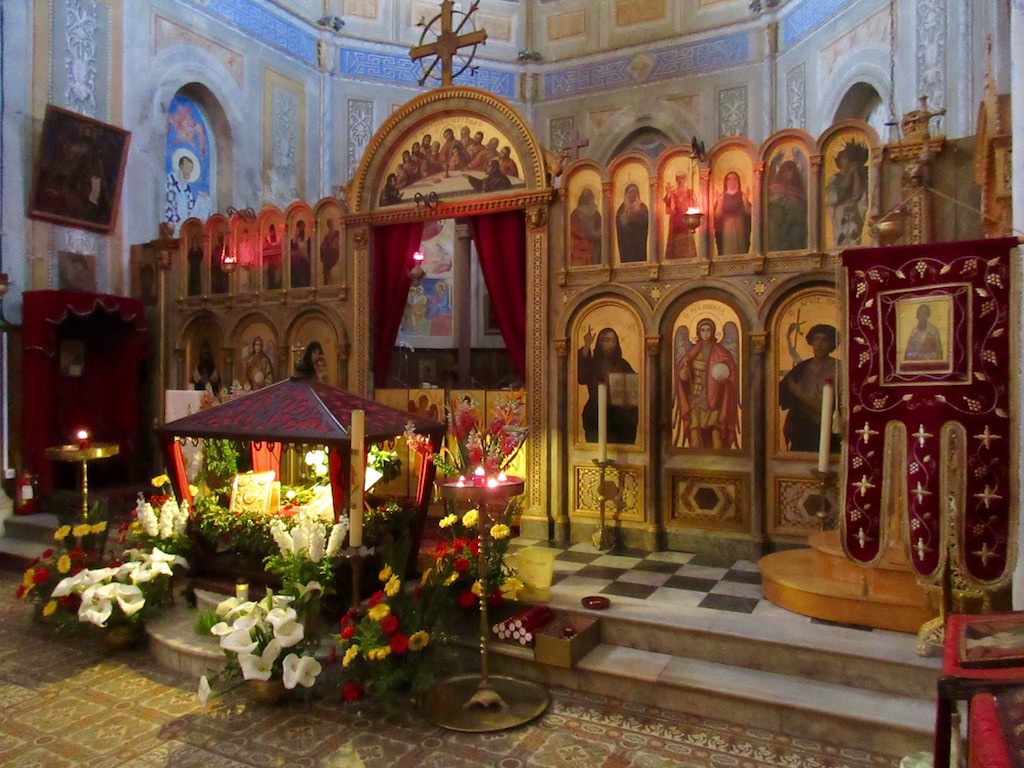
Cargoes Greek Orthodox Altar

Cargoes Greek Orthodox Altar

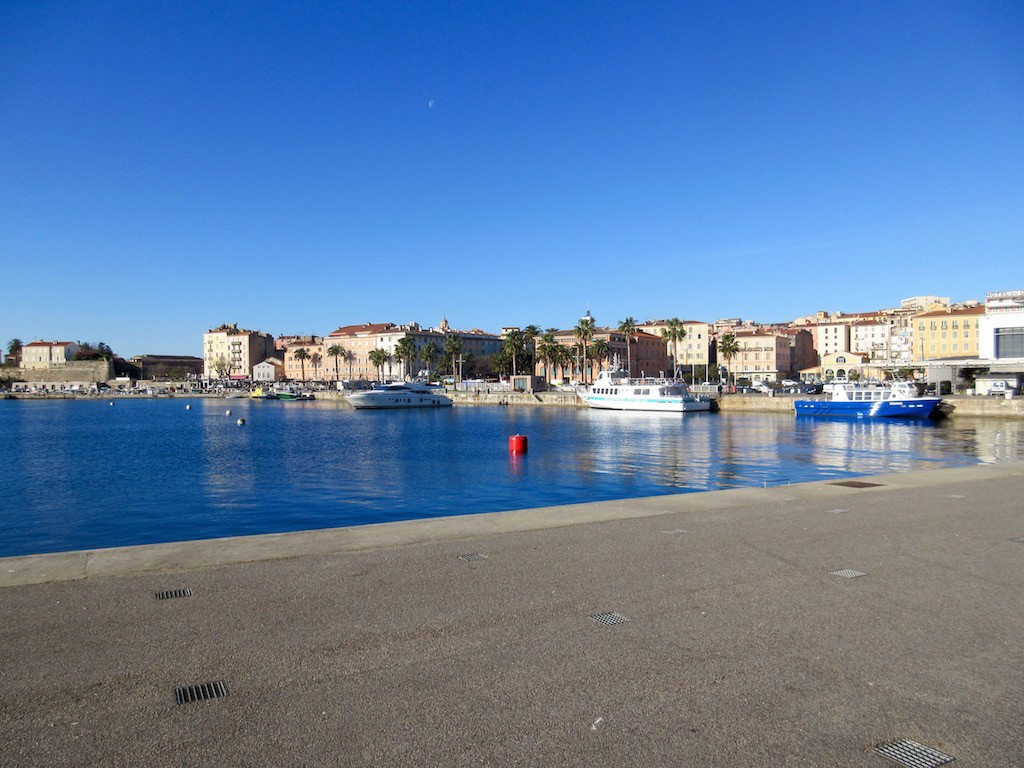
Ajaccio port view

Ajaccio port view

Corsica is an island in the Mediterranean Sea belonging to France. It is located to the west of Italy and to the southeast of France. Tourism is the most important aspect of the economy. Napoleon Bonaparte was born here in 1769. The population of the island is about 250,000 inhabitants while the town of Ajaccio has about 50,000 people.

Our tour this morning was titled Cargese Greek Village. The village of Cargese is located about an hour’s drive away passing through the San Bastiano Pass with incredible views of the Gulf of Ajaccio. We traveled through many small resort towns and gorgeous scenery before arriving at the village of Cargese. 730 Greek settlers arrived here from southern Peloponnese in the year 1676 and it still maintains a Greek identity today. We had a snack of bread, cheese, prosciutto, olives, a pickle and red wine upon our arrival at a local hotel overlooking the town and the coast. We then set off on foot to explore the small village including its two churches, one Catholic and the other Orthodox. The Orthodox Church was completed first, but not to be outdone, the Catholics quickly began construction across a small canyon on their church. The churches are very old but have been restored and have some beautiful paintings, murals and artifacts in them. The village is small but has a nice main street filled with restaurants and shops mostly open during the summer tourist season.

After returning to the port we had a little time to explore the old city center of Ajaccio. This charming seaside town has many cafes, restaurants, chic shops and tourist souvenir shops all within walking distance. Along the way you find many statues celebrating the city’s famous resident, Napoleon Bonaparte, who was born here. His home is now a museum but time was short so we had to give it a miss for this trip. All aboard time was 2:30pm today.

The afternoon included a lecture by Martyn Green on things to see and do in our upcoming port of Cadiz, Spain. In the evening a magician by the name of Marc Oberon performed for us. He had some very new and interesting tricks, as well as some more familiar to us.

March 29, 2016 Civitavecchia, Italy

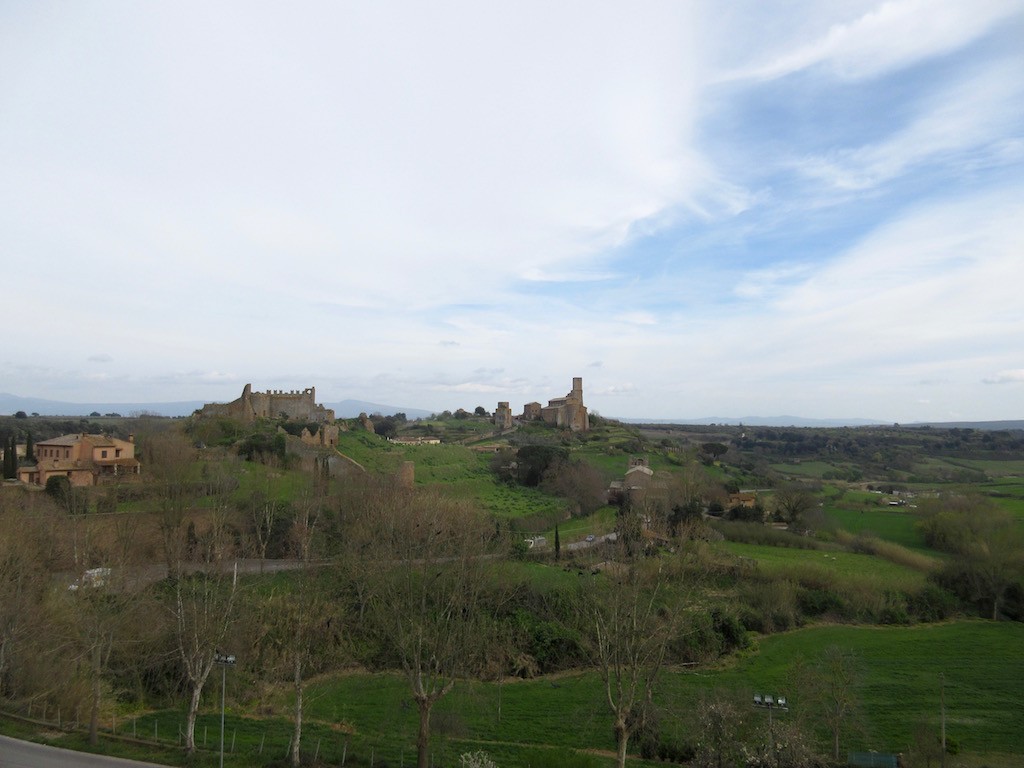
Views of Tuscania

Views of Tuscania

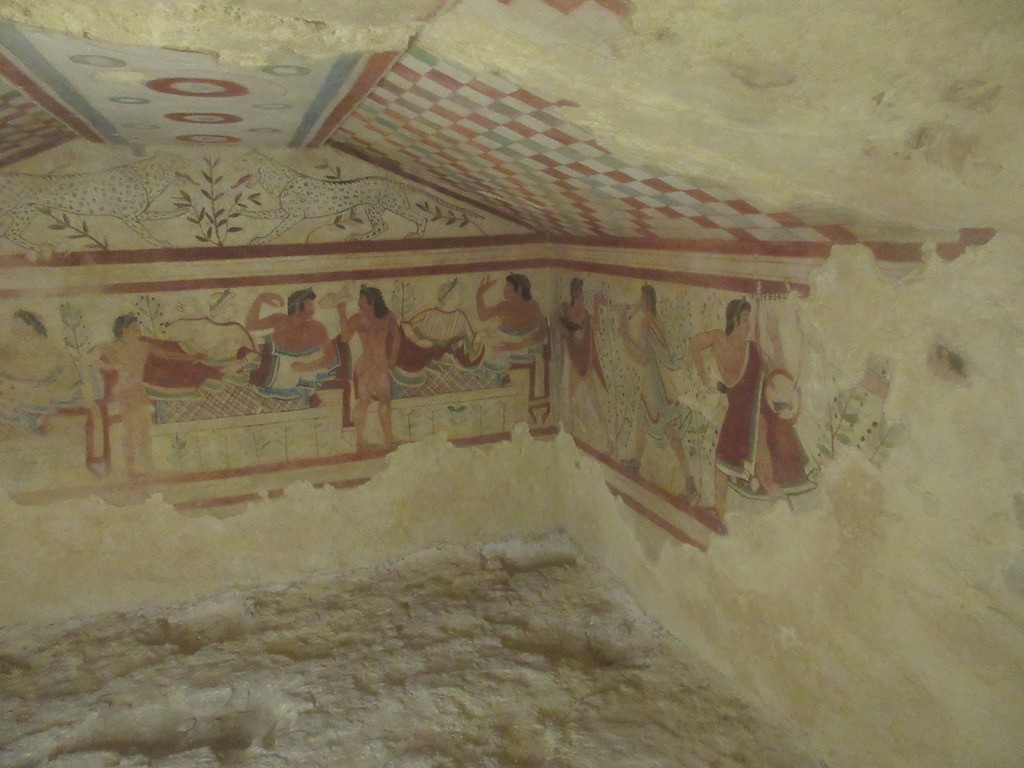
Burial Tomb Murals

Burial Tomb Murals

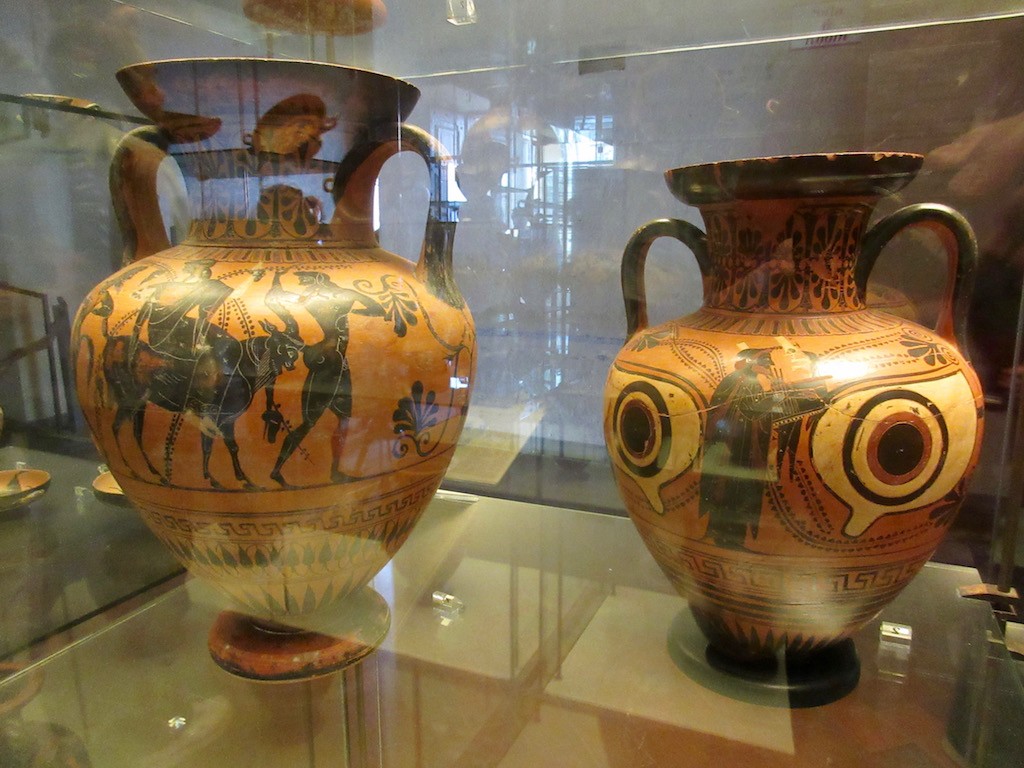
Burial Urns

Burial Urns

Civitavecchia is the gateway to Rome and is about 50 miles to the west of Rome. Many cruise ships and ferries from surrounding ports come in and out of here. Having been in Rome previously, we chose a tour titled Etruscan Treasures: Tarquinia and Tuscania. Our first stop was in the town of Tarquinia, founded in the 7th Century BC, about a thirty-minute drive from the port. We visited an ancient burial ground or necropolis containing thousands of tombs dating from the 6th to the 1st century BC, many of which have yet to be explored.

At the necropolis we were able to visit a number of tombs that have been excavated and turned into a museum of sorts. The tombs are rooms built underground to house the remains of the deceased. They believed that after they died they would need to live underground so they wanted to have whatever useful items they needed for the afterlife. Most of the tombs were rooms about twenty feet by twenty feet, elaborately decorated with murals on the walls. They have excavated and built enclosed staircases down to these rooms so that you can view them through a glass door to preserve them. The contents of the tombs have been removed to a local museum, so all that remains at this site is the room with the murals. These tombs would have been built by the living to include murals of things of interest to themselves. In some cases the murals contain angels and flowers while in other animals, hobbies or sexual acts are depicted. The colors in some of these tombs are vivid in color and still very well preserved, while others have faded or been damaged by water intrusion.

Also at this site we saw another type of tomb for those who had fewer financial means. These other tombs were round hollowed out stone bases about thirty inches in diameter with a large lid resembling a mushroom cap on top. These vaults would be filled with urns of the deceased’s ashes, jewelry, money or favorite possessions, before being sealed and buried underground.

Our next stop was the Palazzo Vitelleschi, an early renaissance home now converted into an archaeological museum housing the remains of the Etruscan population. This museum is located in the charming medieval town of Tarquinia. Inside the museum we saw all types of stone tombs, burial urns, and artifacts found inside some of these tombs. The urns were elaborately decorated while other items included gold or metal coins, jewelry, figurines and more.

We then headed to Lake Bolsenae for a traditional Italian lunch including a salad, lasagna, tiramisu, wine and espresso. The restaurant was called La Pirata and had a commanding view out over this gorgeous and vast volcano-made lake. The lake is fed by rainwater and on its shores are forests of oak and chestnut trees as well as farms growing olives, grapes and vegetables. The lunch was not so spectacular but the setting was beautiful. Kent had two pieces of tiramisu!

After lunch we headed to Tuscania village located on a nearby plateau above the River Marta. This is one of the oldest villages in Italy and was the cradle of the Etruscan civilization from 900 to 700 BC. We took a walking tour through the old medieval village to admire the architecture including two Paleo-Christian basilicas from the 9th century. The village, including the ancient walls, is well preserved and it was a treat to have a chance to visit.

Back onboard, we enjoyed a special show this evening by the ships violinist and pianist who perform nightly in the Explorer’s lounge. Also performing was one of the Rotterdam singers named Laura McCulloch and her boyfriend Alex Gates who is the bass player in the Rotterdam Band. Laura sang songs from her favorite stage and screen shows. It was their first solo show and they were a bit nervous but they did a nice job.

March 28, 2016 Naples, Italy

Naples Church

Naples Church

Naples Church

Naples Church

Naples, Italy

Naples Pizza

Naples Pizza

With one million people, Naples is the third largest Italian city after Rome and Milan. It is located on the west coast of southern Italy. Its historic city center is the largest in Europe, covering 4,200 acres and is a UNESCO World Heritage Center. The city has many important museums and is home to some 448 historic churches. The city of Pompeii, destroyed in 79 AD by the eruption of Mt. Vesuvius, is located a short drive to the south.

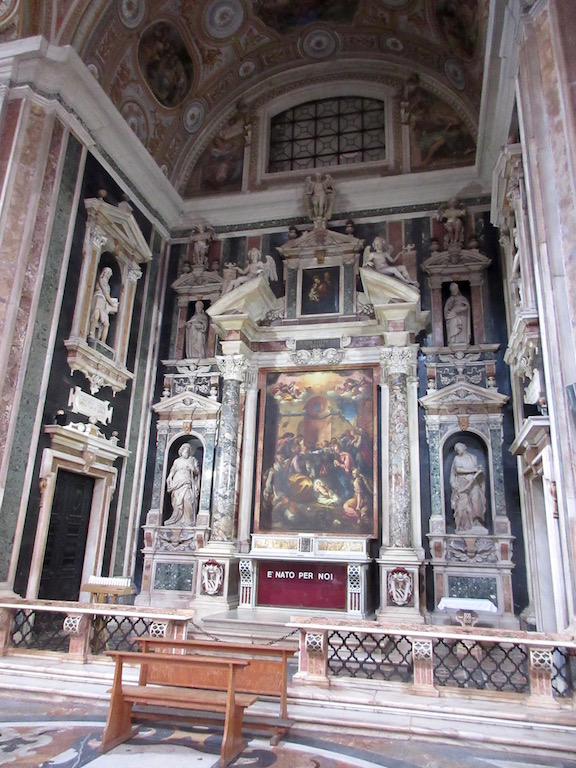
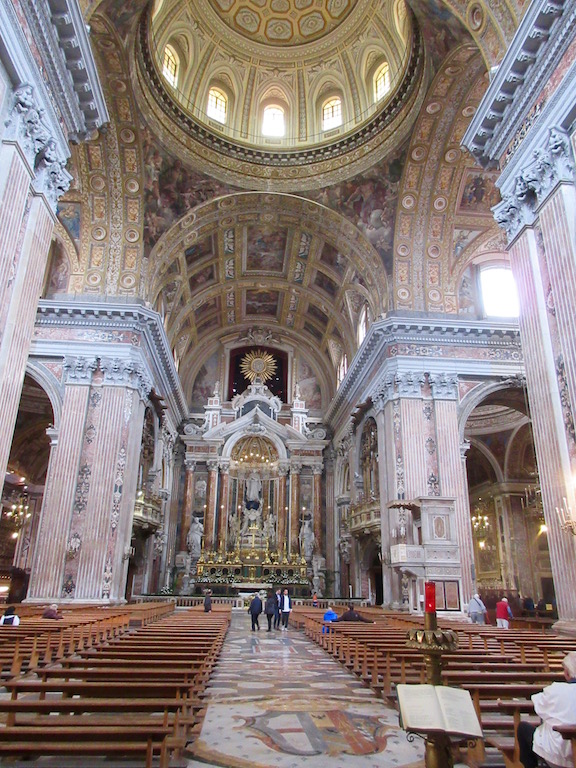
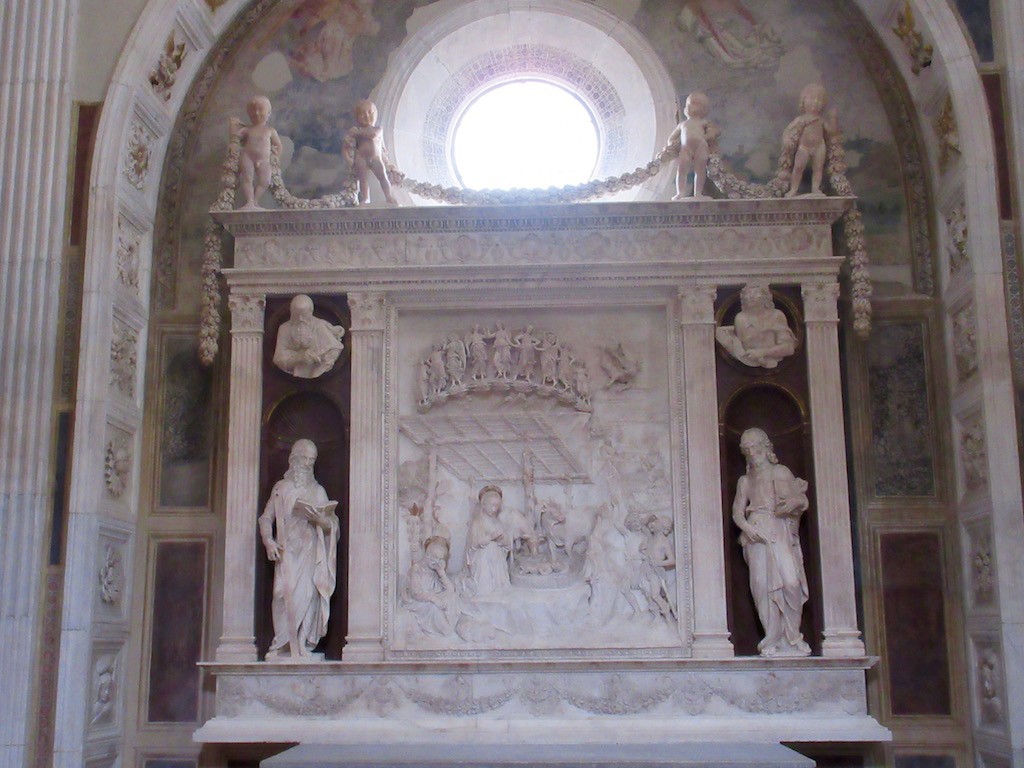
We had planned to take a tour of the Amalfi Coast and Sorrento, but due to the public holiday of Easter, busses were not allowed to drive on the coastal road. We instead headed out on foot with our friends Michael and Joey from Canada to explore the city on foot. Our first stop was a church with a plain looking exterior as we searched for a church, which housed a spectacular marble statue we had heard about. This church was not the one we were looking for but turned out to be quite spectacular inside. Not only was the main cathedral filled with beautiful statuary, marble and paintings, but there were multiple side chapels and rooms that were equally as beautiful. One chapel in particular had a gorgeous hand painted ceiling, wood paneling with marquetry inlaid wood panels, and hand carved and painted wood statuary. It was artistry at its best and to think that this chapel was hundreds of years old and these items had withheld the test of time beautifully. We did finally find the church we were looking for, but due to the Easter holiday, which is celebrated on the Monday following Easter, there was an enormous line to get into the church to see it and we decided not to wait.

We then found a street called Spaccanaoli Street or Via Dei Tribunali Street where the locals eat, shop and live. Our friends Steve and John, who had been on the ship earlier in the cruise, had recommended this street as one of their favorites in Naples. Due to the holiday, many of the shops were closed but the street was filled with local families of all sizes out celebrating Easter by being together, eating and exploring the city. Above the shops where people live, you find the laundry blowing in the breeze drying. Even though the narrow streets are filled with pedestrians, cars and motorcycles are slowing make there way through the streets as well.

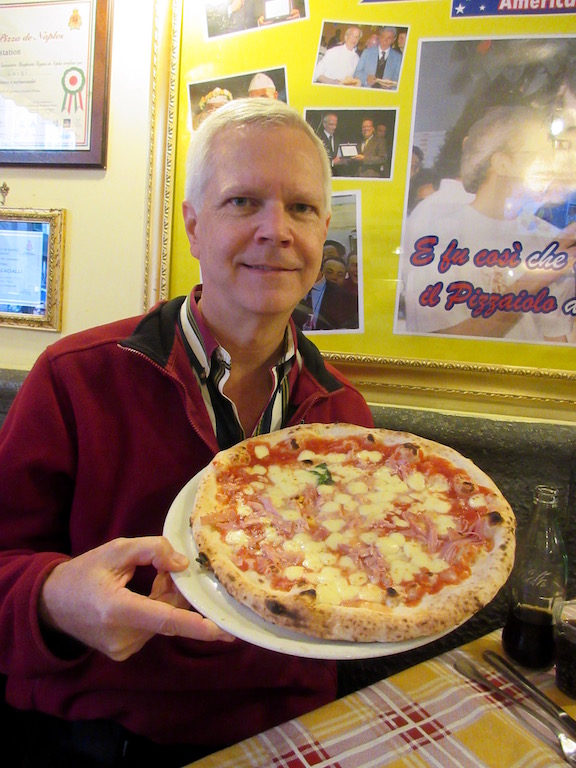
We stopped at a local family owned pizzeria with photos of Bill Clinton having eaten there when he was president. Naples is known as the home of the pizza so we thought that we should check out the local pizza. We each had a fairly large pizza but none of us thought the pizza was very special. The crust is fairly thin and was cooked in a wood-burning oven, but the taste was rather bland and unexciting.

Our next stop along the way was to visit the National Museum where artifacts from Pompeii and Herculaneum are housed. Unfortunately by the time we reached the museum it too had a very long line and was extremely busy. We decided to give it a pass given our limited time in port.

We visited a couple of other churches along the way. One church that was enormous in size had gold and sterling silver statues, a lower level crypt, several side chapels and ostentatious ornamentation everywhere. There were paintings, statuary, candles, multiple altars and chandeliers everywhere. This particular church could easily hold thousands of parishioners. I cannot not imagine that any church in the US could compete with this church, but here in Europe it is much more common to see. The other church that we visited was quite the opposite in that it had a very plain interior, but was still beautiful. The city as a whole is like many other European cities in that it is filled with gorgeous architecture. Some of the buildings are in pristine condition but many of them are in need of restoration and many have graffiti on them. The streets are narrow and mostly lack any trees or greenery so it often seems like a concrete jungle. There are many plazas and public spaces around the city that have some greenery but many of those are only concrete as well.

We then stopped for gelato on our way back to the ship. There are some things that one must do while in Italy and gelato is one of those things not to be missed.

Back onboard the ship we were entertained by a British couple that called themselves Epic Moves. They were incredible dancers who had put together a show with clips from famous movies that included dancing. After showing a short clip of the movie they would perform a dance using the same style of dance as was in the movie. They also did a bit of the quick-change costumes. She changed outfits eight times in a very short amount of time. Each change only taking a few seconds behind a screen.

March 27, 2016 Sea Day

Easter Sunday! This was a sea day with a Sunday mass in the main showroom followed by the broadcast of the Pope’s Easter service from the Vatican. In the Lido restaurant they had large chocolate rabbits on display along with some small chocolate eggs that were quickly snapped up by the guests. I’m missing my See’s chocolates that we normally have at home for Easter. Maybe next year.

The afternoon included a lecture by professor William Morris Welch on how a young man from Scotland drew the world’s attention to the struggle for Corsica’s independence. He discussed some of the history of the Corsican people and how Italy ruled them prior to being ruled by France.

Location guide, David, gave a lecture on things to see and do in the ports of Ajaccio, France and Ceuta, Spain. Then there was a shore excursion presentation on the upcoming three ports of call in Spain. Mark attended the watercolor class while Kent had an ice cream.

The entertainment for the evening was a performance by the Rotterdam singers and dancers titled Dance. We had seen the show twice before but enjoyed seeing it again.