March 26, 2016 Sea Day

This morning the weather was much cooler since we had reached the Mediterranean Sea. People were once again wearing sweaters and complaining about how cold it was, a big change from the heat and humidity of Asia.

We attended a lecture by Professor William Morris Welch on Italy and the circumstances that led it from a monarchy to a republic. The time period in history that he discussed covered the late 19th Century until the 1930’s. It was a very interesting lecture with a variety of interesting Kings and rulers, murders and wars. Some things change but history always seems to repeat itself in so many ways.

The afternoon included a lecture by Martyn Green on the port of Ceuta, a Spanish enclave on the North African coast of the Mediterranean. Martyn always has wonderful slides to accompany his lectures and lots of practical information.

In the evening we attended a showing of the movie titled Trumbo starring Bryan Cranston, Diane Lane and Helen Mirren. The film tells the story of Dalton Trumbo in 1947 that was Hollywood’s top screenwriter and how he and other artists were jailed and blacklisted for their political beliefs. After dinner we attended a variety show featuring Hilary O’Neil and Andy Bunger, both of whom performed earlier this week.

March 25, 2016 Transit the Suez Canal

About 4:30am we pulled up the anchor and began our convoy through the Suez Canal along with a number of other ships. Since we were transiting the canal for most of the day there were no scheduled activities planned. Most folks were out on deck or in the crow’s nest to take photos as we transited the canal. By 2:00pm we had completed our passage through the canal and were then in the Mediterranean Sea.

In the afternoon we attended a shore excursion lecture for several upcoming ports. Mark attended the watercolor class and then we enjoyed a movie titled The Big Short in the movie theater. The movie was about four denizens in the world of high finance who predicted the credit and housing bubble of the mid-2000’s and starred Christian Bale, Steve Carell and Ryan Gosling.

The evening entertainer was a man by the name of Andy Bunger from Germany who is a multi instrumentalist who played several horns, the drums, the flute and more.

March 24, 2016 Sea Day

This morning the location guide, David, presented a lecture on the ports of Naples and Civitavecchia in Italy. A new lecturer by the name of Dr. William Morris Welch presented a lecture on Alexandria, Egypt and the influence of the Greeks in ancient times, as well as in modern times. Many Greeks have lived in Alexandria over the years including poets, artists, doctors, scientist and more. He gave a detailed description of many of the accomplishments of these Greeks in Alexandria.

In the afternoon lecturer Martyn Green presented a lecture on the port of Adjaccio, Corsica owned by the French. Kent went to tea and Mark attended his watercolor class. In the early evening we attended a movie titled Joy with Jennifer Lawrence, Robert De Niro and Bradley Cooper. Joy is the story of the title character who rose to become founder and matriarch of a powerful family business dynasty. The evening’s entertainer was a comedienne, singer and impressionist by the name of Hilary O’Neil.

About 11:00pm we anchored at the southern entrance to the Suez Canal in preparation of our daylight transit tomorrow.

March 23, 2016 Aqaba, Jordan

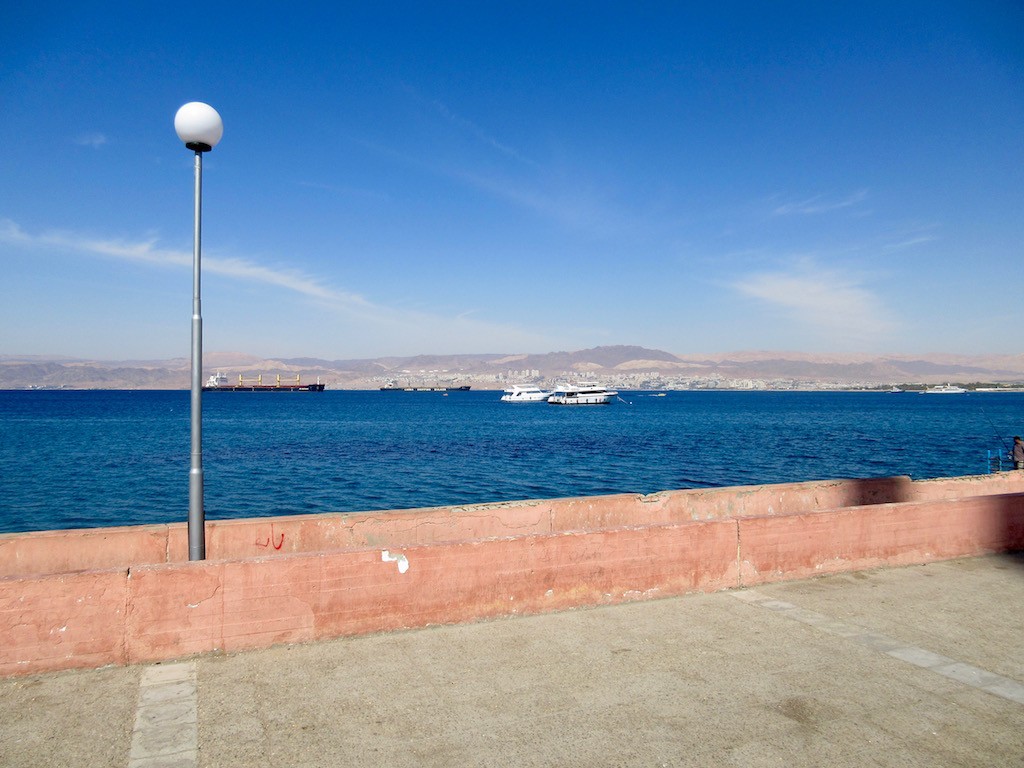
Aqaba, Jordan - Israel across the bay

Aqaba, Jordan – Israel across the bay

Aqaba, Jordan - Wadi Rum

Aqaba, Jordan – Wadi Rum

Aqaba, Jordan - Wadi Rum Bedouin Camp

Aqaba, Jordan – Wadi Rum Bedouin Camp

Our tour on this day was titled Aqaba Highlights and Wadi Rum Lunch. Our first stop was at the Aqaba Museum and Fort near the city center, built in the Mamluk era. At the museum we saw a collection of ceramics from all over the area, many of them showing both Egyptian and Chinese influences. We then drove through Aqaba where many new hotels are located as well as a large shopping area filled with everything from fruits and vegetables to butcher shops and handicrafts. In the heart of town near the Movenpick Hotel you can still see ruins of the old city of Ayla built here in the year 610 as a trading port between India and the Mediterranean. Portions of a church, the city walls and a mosque still remain. The city of Ayla succumbed to an earthquake and attacks by the Crusaders around 1116. It was then only a small fishing village until World War I when T.E. Lawrence, known as Lawrence of Arabia, along with local forces took the city from the Ottomans. On summer weekends, many Jordanians from Amman and other towns in the north retreat to Aqaba to escape the extreme heat.

We then drove south of town where the container port and an industrial area are located. Further south towards the Saudi Arabia border there is a very well developed waterfront called Marine Park with a boardwalk, beach umbrellas and white sandy beaches. In this area there are many hotel resorts and condominiums owned by foreigners from all over the world who come here to vacation. This area is popular for diving, snorkeling, swimming and water sports.

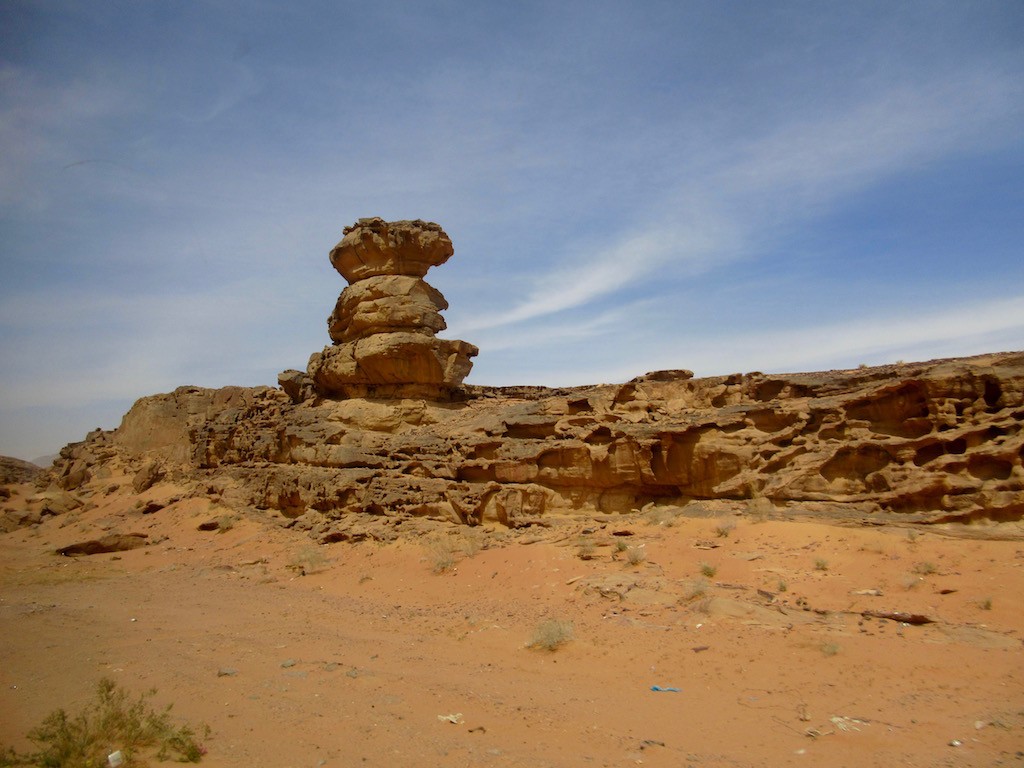
We then drove about an hour north and east to the area known as Wadi Rum or valley of the moon. Geologists believe that Wadi Rum was created by a great crack in the earth’s surface causing an enormous upheaval. Some of the ridges in this area are a thousand feet tall and are topped with rounded domed peaks worn smooth by the desert sand storms. This area has been inhabited since prehistoric times as is proven by scattered slabs of rock in the area with inscriptions of early Thamudic writings. Underground, enormous aquifers of fresh spring water have made this area a meeting center for nomadic caravans heading from Arabia to Palestine and Syria. This area has been used to shoot many films including Lawrence of Arabia. Today many Bedouin tribes live here and many have set up campsites for visiting tourists. The area is a government protected natural reserve.

The rock formations in this area are very dramatic in their shapes, red colors and rich textures. On this day there was a sand storm off in one direction filling the air with small particles of sand causing the landscapes to look as though they were in a sea of fog. It might remind you of a visit to the Grand Canyon although this area of Jordan is much larger and vast in size.

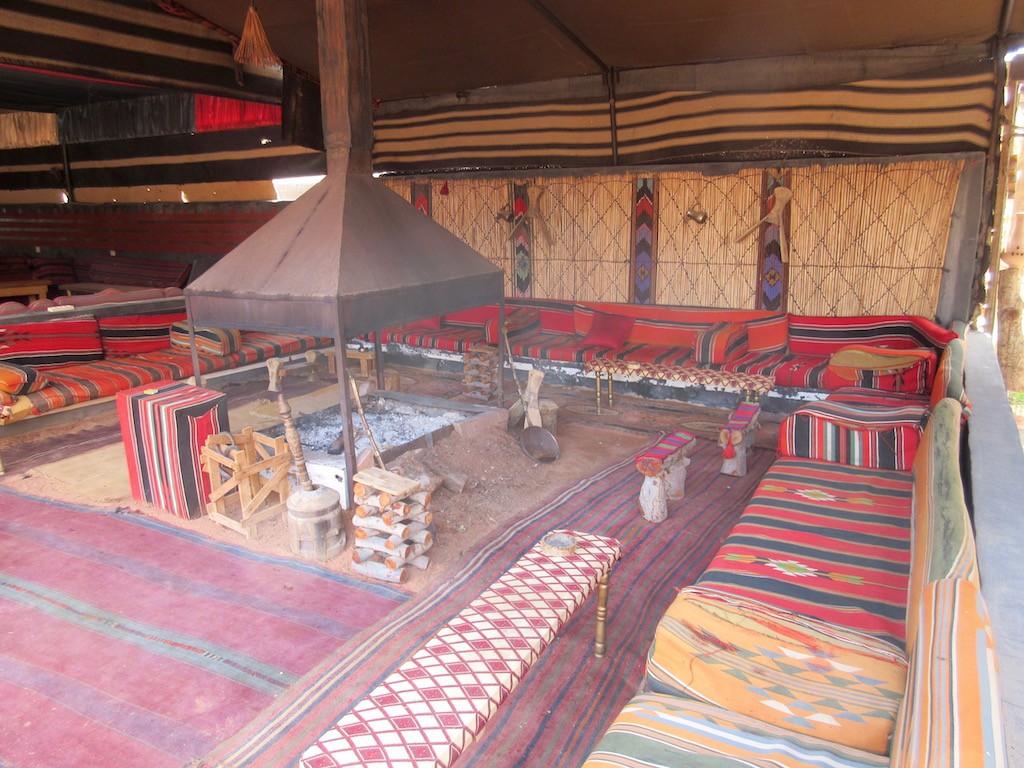
We had lunch at a modern day version of a Bedouin camp called Captain’s Desert Camp. This modern day camp had many small tents for rent by the night as a hotel, as well as community bathrooms and a large community tent for entertainment and dining. We enjoyed a buffet lunch of barbecued lamb and chicken, a variety of salads, fresh made bread, stuffed pita pockets, tea and cake. During our lunch they had a blind gentleman playing a local instrument similar to a guitar but with a very short neck. As he played, he would also sing some local songs but the sound was not very appealing to us and we just wished he would stop.

As we returned to Aqaba after lunch they dropped us in town where we explored the shopping area on foot. Kent stopped at a tourist office which recommended a Turkish bath house for a massage. The cost of a one-hour Turkish massage was only $35. While Mark was waiting on Kent to finish his massage, a Saudi man was inviting Mark to Saudi Arabia to his ranch where he breeds camels and horses. He claimed he was also in the petroleum business and wanted to give Mark his mobile phone number. Luckily Kent returned before Mark could be whisked off to Saudi Arabia for a visit.

About half of the people in Aqaba were dressed in western style clothing while the others were wearing local dress. The majority of the women were wearing something on their heads like a scarf. There are several beautiful mosques in town including one named after the late King Hussein.

The evening’s entertainment was another performance by Marco Romano of Italy. He sang a variety of songs from the classical to the modern and we thought he gave a better performance than his first show a few nights back.

March 22, 2016 Aqaba, Jordan

Aqaba, Jordan - Shoubak Castle

Aqaba, Jordan – Shoubak Castle

Aqaba, Jordan - Shoubak Castle

Aqaba, Jordan – Shoubak Castle

Aqaba, Jordan - Shoubak Castle

Aqaba, Jordan – Shoubak Castle

Aqaba, Jordan - Neighborhood

Aqaba, Jordan – Neighborhood

Jordan is slightly smaller than the state of Indiana, located to the east of Israel, West of Iraq, north of Saudi Arabia and south of Syria. The country has a population of over 8 million, including more than one million Syrian refugees.

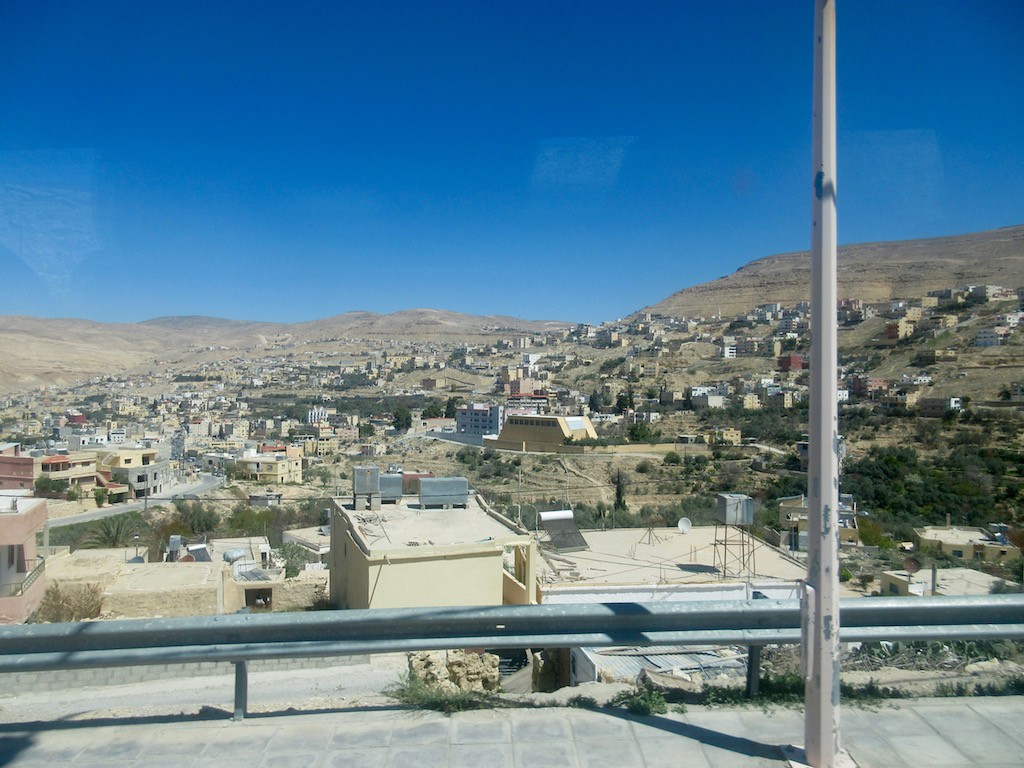
Aqaba is a small coastal city of about 80,000 inhabitants at the northeast tip of the Red Sea and is Jordan’s only port city. Tourist arrive here for newly developed seaside resorts, as well as for access to the 2,200 year old city ruins of Petra about a two hour drive away. This region of the Red Sea is also a haven for Scuba divers, snorkeling and beaches. The Red Sea contains some 250 coral reefs and 1,000 species of fish. Aqaba was recently designated a trade free zone and that has increased foreign investment in the area. There are many new hotels, housing developments and new roads being built.

Our tour on this day took us to the Shoubak Castle located about 2.5 hours north of Aqaba by bus. The drive to Shoubak includes mile after mile of scenic desert landscapes. The terrain is made up of sandstone, granite and limestone with hills and mountain peaks in every direction. We passed many Bedouin tents, shepherds out in the barren land with flocks of sheep and goats, as well as camels roaming the landscape. Even in these conditions and limited water, farmers are able to grow crops to feed the animals and sustain themselves. The weather today was very pleasant in the 70’s but in summer it can get to be over 120 degrees.

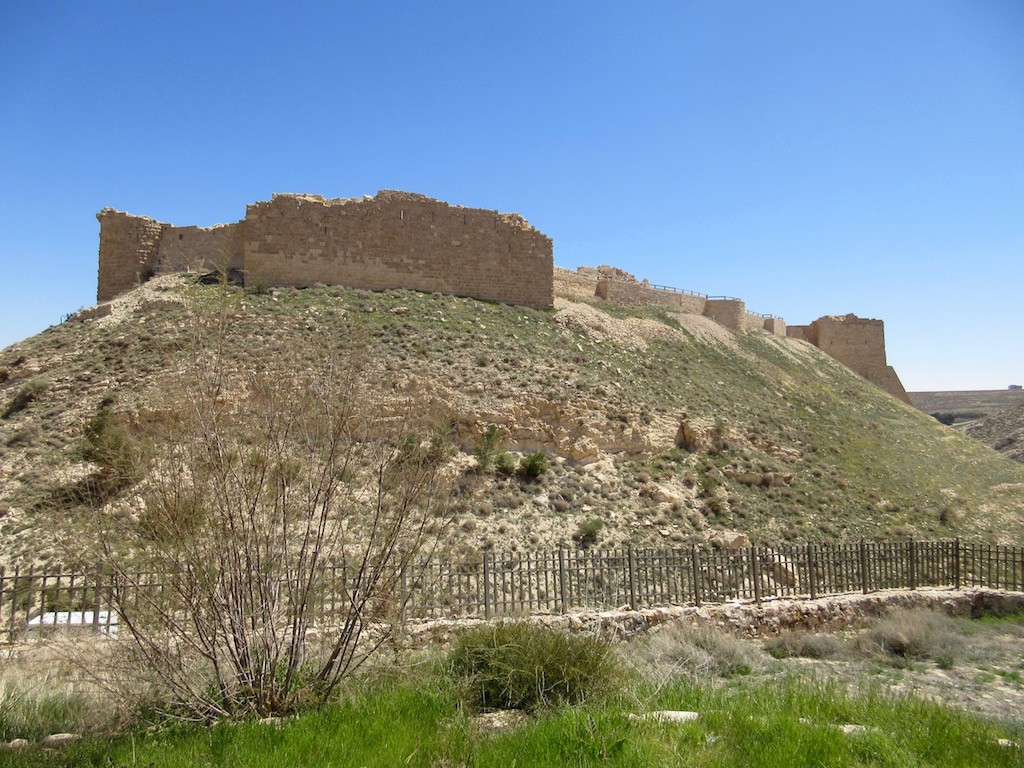
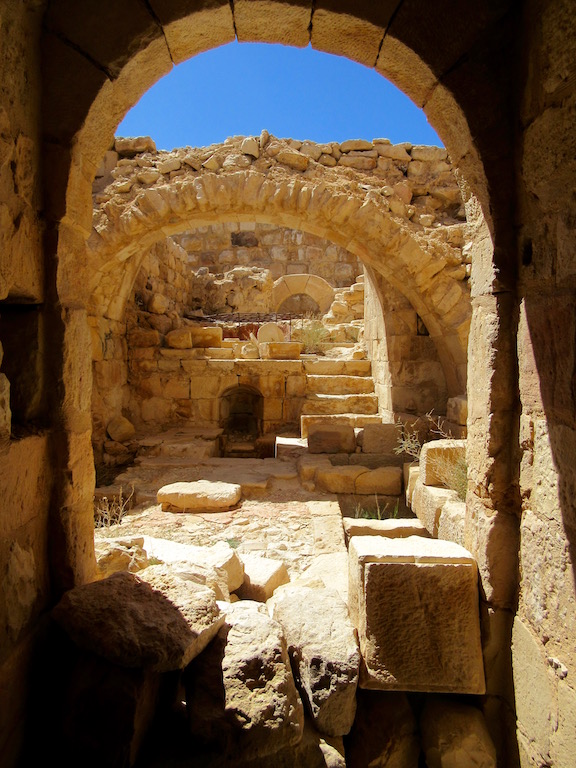
Shoubak Castle is the best-preserved Crusader castle in Jordan dating from early in the 12th-century. The castle sits on a prominent conical mountaintop some 4,265 feet above sea level. King Baldwin I of Jerusalem built it in 1115. The castle was originally named Krak de Montreal and its purpose was to guard the road from Egypt to Damascus. It successfully resisted many sieges before falling to Saladin troops in 1189.

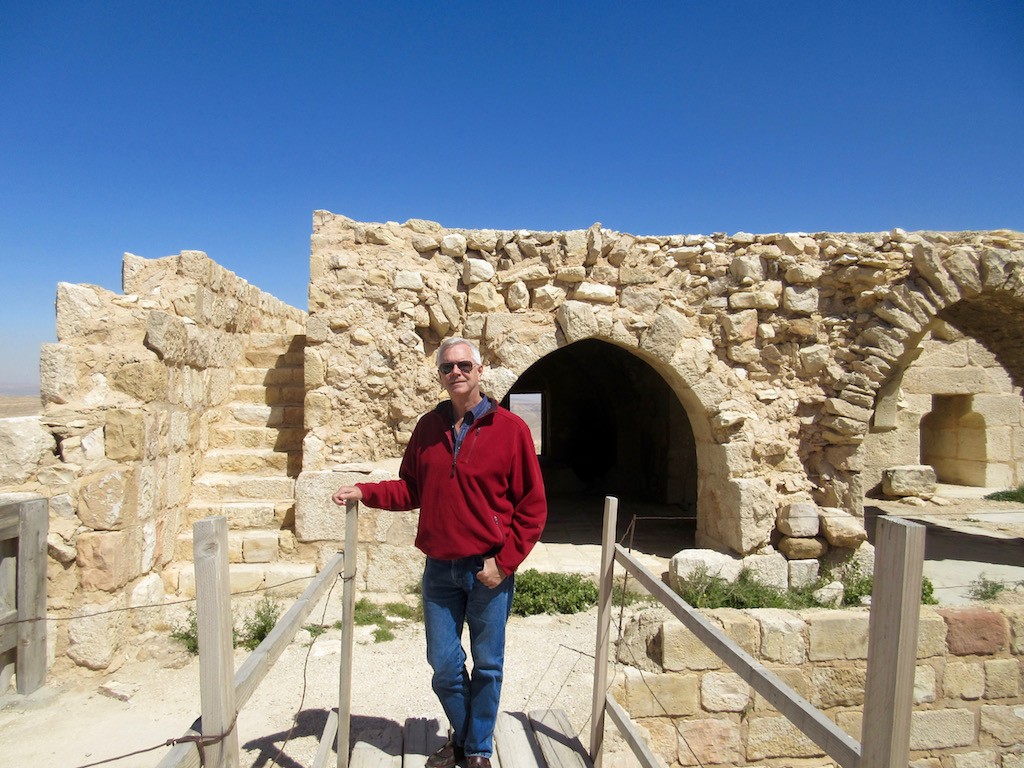
There is a visitor’s center located below the castle where we began our walk up a paved road to the castle entrance. The castle is quite large in scale, built with three floors, a chapel, a water storage system, storage rooms and living quarters for the soldiers. Not only has the entire castle withstood time, but there are a significant number of rooms still fairly intact to explore. Our guide took us through the castle explaining about the use of each of the rooms. In all we spent about 90-minutes exploring the castle before heading back to the ship. It was a long trip (2.5 hours each way) but since we had been to Jordan previously and seen Petra we thought we should explore some of the other sights.

Back onboard the ship there was no live entertainment as we were in port for two days and so they showed the movie Macbeth. We skipped the movie and retired early.

March 21, 2016 Sea Day

It was another lazy day at sea. Bill Crews presented his last lecture before he disembarked. His lecture on this day was a brief background of the construction of the Suez Canal and the subsequent challenges and wrestling for control over this strategic waterway. After several shut downs of the canal, it is now under the control of the Egyptian people, and they have recently invested billions of dollars to enlarge the canal. This new enlarged canal will allow ships to pass in opposite directions at the same time, allowing many more vessels to transit each day. This is expected to increase revenues by more than 100% annually.

For lunch we invited two of the young men who work in the shore excursions office to join us. Antonio is from Holland and Adriano is from Brazil. Antonio has worked on cruise ships for several years as a librarian and then in the shore excursions office. Adriano has worked for several cruise lines at both the front desk and then at the shore excursions office. They both love the opportunity to travel and see the world while working, but at the same time miss some of the things that are happening on land while they are away. They work seven days a week for six months and then have two months of vacation, so it is a busy life.

The afternoon lecture by Martyn Green included practical information on our upcoming port of Civitavecchia, Italy, not far from Rome. With so many things to see in Rome, he narrowed the list of best places to see to just twenty, not including Pompeii, the island of Capri and a few other locations nearby. We are only in port for one day so it will be difficult for people to choose what to see and do in such a short time.

For dinner we met our friends Kathy, Carol, Tom and the Italian entertainer, Marco Romano, for a special cellar master dinner in the Canaletto. The dinner consisted of a six-course meal accompanied by a glass of champagne, a white wine and two red wines. The meal was excellent and we had a wonderful time together.

After dinner we attended a variety show featuring Stephen Clark the flute player and Izabella Zebrowska the violinist. They put on another excellent show featuring songs from movies and musicals.

March 20, 2016 Sea Day

We sailed north in the Red Sea and the water was extremely calm and smooth. The temperature had cooled to the high 70’s making it more pleasant to be outside on deck.

The morning included a lecture by Bill Crews on the British legend, Lawrence of Arabia. He gave a detailed explanation of his life his military achievements and his influence on the Arab world. He was an officer in the British military stationed in Cairo early in the 20th century when he befriended many leaders in the Arab world. He wore local clothing and was able to help unite the Arab world, allowing them to create self-governing regions that now make up Saudi Arabia, Israel, Jordan and Syria. He only lived to be 46 years old but his books continue to be popular to this day as is the movie Lawrence of Arabia.

For lunch we were invited for a delicious collector’s voyage lunch in the dining room. A collector’s voyage is when you travel multiple segments back to back on the same ship. In this case our voyage is broken into six smaller segments and guests have been embarking and disembarking at each of these segments.

The afternoon included a lecture by Martyn Green on an upcoming port of call, Naples, Italy. He gave an excellent presentation on things to see and do in and around Naples. Mark then attended the watercolor class where he created calendars and Kent went to the gym and sauna.

The evening was a gala night where they ask you to dress up for dinner and the show. The entertainment was the show called Iris by the Rotterdam singers and dancers. This was our third time to see this show this voyage but we still enjoyed it.

March 19, 2016 Sea Day

The morning included a lecture by Bill Crews on the decline of the great Islamic Empire. The empire grew very quickly from northern Africa, through the Middle East, reaching China and most of Indonesia. These areas are still mostly Muslim countries but the power that religious leaders have today has been greatly reduced from its height.

The afternoon included a lecture by Martyn Green on the history of the Suez Canal including the construction, current expansion and its future. He had a great number of slides in his presentation from the region including some satellite shots taken from space. In a week or so we will be transiting north through the canal into the Mediterranean Sea.

Mark finished one of the community puzzles and attended the watercolor class where he painted a scene from Oman. Kent had afternoon tea with Thomas and Martin to share info about San Diego for their possible future visit. Then Kent went to the gym and the sauna.

The after dinner entertainment was another performance by the finalist of Britain’s The Voice, Toni Warne. She has a wonderful voice and put on anther excellent show. Mark headed to bed and Kent went to the Crow’s Next to meet up with some of the cast singers and dancers…..the HAL ban on hard liquor was lifted for the crew today, so there were lots of crew/staff drinkers enjoying themselves in the bars.

Each night when we return to our cabin we find an animal of some type waiting for us on the bed. When the cabin stewards come to turn down the bed, change the towels and tidy up for the night they leave chocolates and a towel animal of some type. We have had monkeys, dogs, bears, frogs, fish, butterflies dinosaurs as well as some others.

Our cabin stewards are Badru and Endra from Indonesia and they do an excellent job. They are always available to get you anything that you may need and they make up our cabin once in the morning and again in the evening. When we see them in the hallway they always ask how we are and if everything is ok, or if they can get us anything.

March 18, 2016 Sea Day

This was the first of four days at sea on our way to the port of Aqaba or Al’ Aqaba in Jordan. We had an escort military ship near us as we head through the waters known for having pirates in the past.

We had a lecture by our location guide David regarding Aqaba as well as a more detailed lecture by a new guest speaker by the name of Martyn Green. Bill Crews gave a lecture on the origins of Islam and how it spread across most of the globe. His lectures are very good but they are filled with so many facts, figures and dates that it is overwhelming.

In the afternoon Mark attended the watercolor class while Kent went to the gym and the sauna. The evening entertainer was a violinist by the name of Izabella Zebrowska from Poland. She played a wide variety of music from classical to modern.

March 17, 2016 Salalah, Oman

Salalah, Oman - Frankincense Tree

Salalah, Oman – Frankincense Tree
Salalah, Oman - Mughsail Beach

Salalah, Oman – Mughsail Beach

Salalah, Oman - Sumhuram

Salalah, Oman – Sumhuram

Salalah, Oman - Taqah Castle

Salalah, Oman – Taqah Castle

Salalah is located in southern Oman on the Arabian Sea and has a population of about 250,000 inhabitants. This area was once known for its frankincense and silk trades, but today is heavily dependent on its dwindling oil resources. It was the main trading port on what was called the Frankincense Trail, the trading route for the highly prized aromatic resin used in religious rituals and healing. Frankincense trees are grown only in this region of the world.

The area around Salalah at this time of year is very warm, very humid and very barren. There is a stretch of flat land between the mountains and the ocean where the town is built. The majority of the homes and businesses have been built fairly recently but it is almost like a ghost town in that there is almost no vegetation or landscaping anywhere….only tumbleweeds are missing. The ground is mostly sand and gravel, although they do get a fair amount of moisture in the summer that makes the mountains green and the creeks and rivers flow with fresh water. The streets and roads are in excellent condition and they utilize a lot of roundabouts rather than traffic signals. The city is spread out and there is little traffic to speak of. The locals are Muslim and tend to wear traditional clothing. For the men, mostly white robes from the neck to the ankle with long sleeves, a hat and or scarf that is wrapped around the head and sandals on the feet. The women are typically covered from head to toe, with some wearing the black burka covering all but a slit for the eyes. Most places we went we only saw men and very few women. Most of the women stay home to tend to the family and housework.

Our guide was named Salim and was about 45 years of age. He has two wives, as God has given men permission to have as many as four wives. His first wife has five children and his second wife has two children with a third on the way. The wives each have a home of their own about 10 minutes apart from each other. The husband spends time with each family on alternating days….he said he is not “tired.”

Our tour was titled The Best of Salalah and was a full eight-hour tour due to the distances between the local highlights. Our first stop was at the Al Husn Palace, the Sultan’s summer palace for a photo of the exterior. There is not much that you can see from the street other than a large walled compound with the dome and minaret of the mosque rising above the wall.

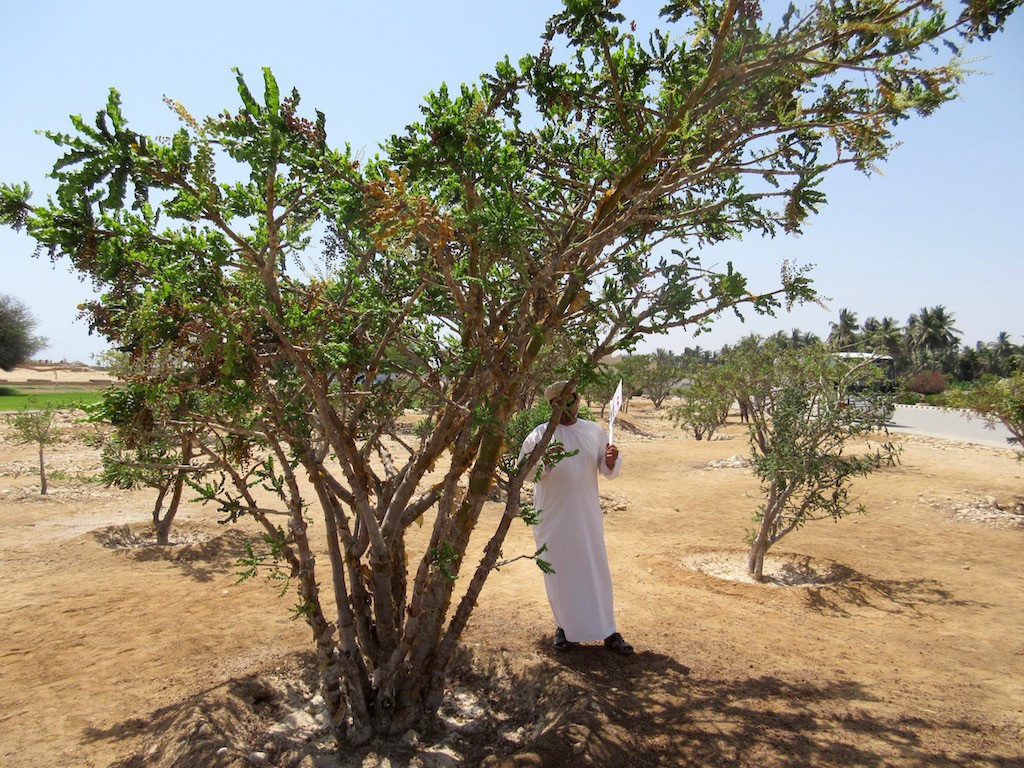
We then visited the Hafa Souk, or market, where stall after stall was filled with perfumes and frankincense. They explained how they cut the frankincense tree bark to make the tree naturally create a sap or resin. The tree heals the bark’s wound. After several months the resin is scraped from the tree, dried in the sun and then sold for its fragrance when burned. They sell a variety of decorative burners similar to something you might think of for burning incense. Most of these burners use charcoal and then the pellets of frankincense are added to the charcoal permeating the room with a sweet aroma. The scent is unique unto itself unlike a spice, not bad, just unique.

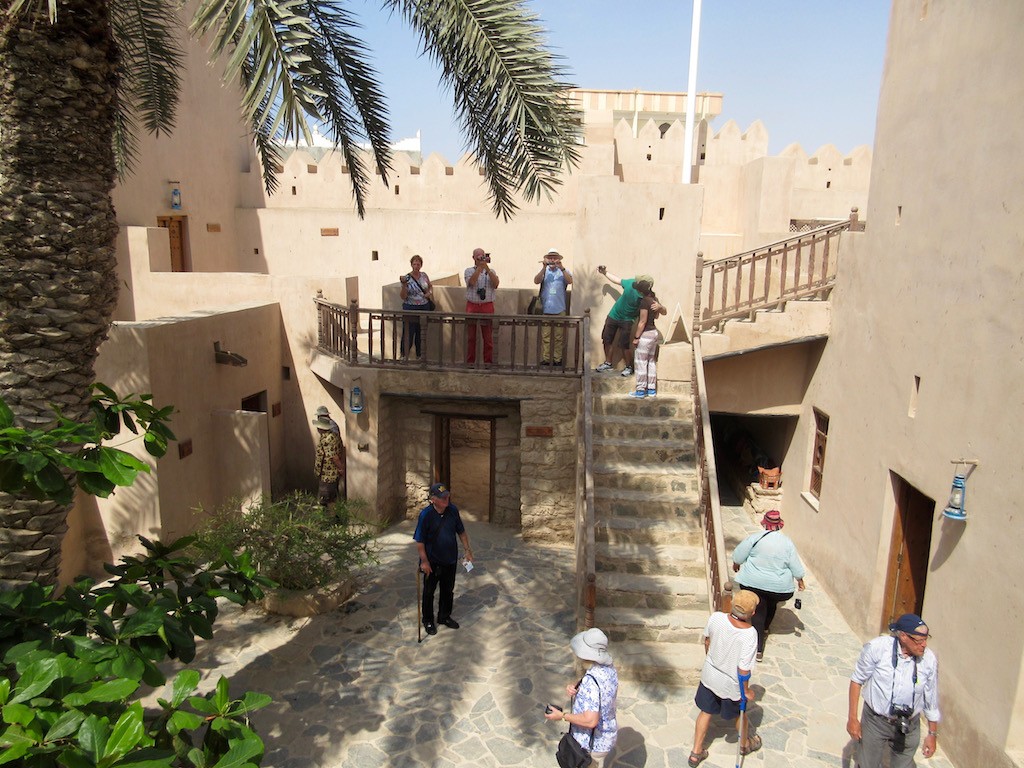
Our next stop was at the Taqah Castle, once the governor’s residence and now a museum. They call it a castle but don’t think of a castle you might find in Europe, this is much different. This castle is more like a two story home with a central interior courtyard. Surrounding the courtyard was an outdoor kitchen, several rooms used for food storage, several bedrooms, a main living room and a roof top observation deck. They had furnished it although most of the furniture consisted of throw pillows on the floor to sit on. There were western style beds in the bedrooms but no other furniture to speak of.

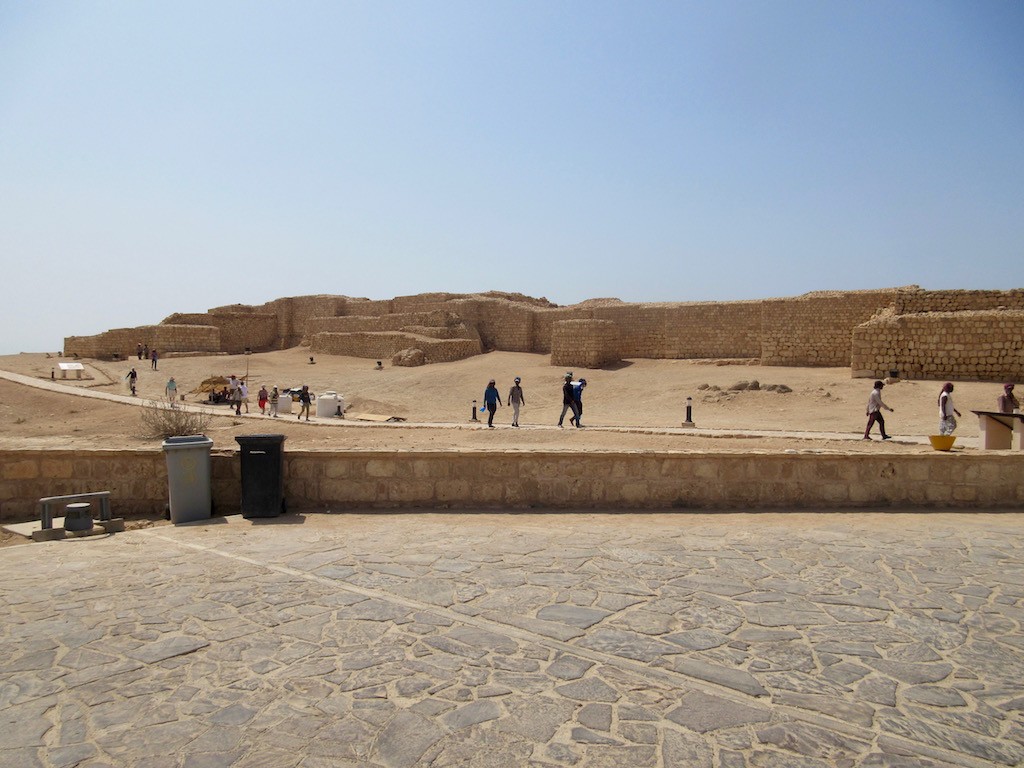
From here we headed to the Khor Rori Creek, believed to be the ruined city of Sumhuram. They believe that this was once the ancient capital of Arabia’s frankincense trade. Excavations at this site provide evidence of a city that traded with Far Eastern ports and Greece. The locals believe that this was the site of the Queen of Sheba’s Palace. Students from a university in Muscat continue to provide labor for the ongoing excavation of this site located on a plateau above the ocean. Some of the walls of the site have been exposed, so you can walk into the large complex to get an idea of where shops, a temple, storage rooms and living quarters may have existed. The views over the creek out to the ocean are incredibly picturesque.

A buffet lunch was included at a Crowne Plaza Hotel in Salalah, located on the ocean. The lunch included salads, hummus, babaganous, pasta, a fish dish, meats and desserts. The beach was very clean with white sand, and they had two nice swimming pools. Several European guests were around the pool.

After lunch we visited the Frankincense Land Museum where they have a beautiful collection of the country’s history in a very modern museum. The exhibits were first class, with both Arabic and English descriptions, and it was air-conditioned. They have artifacts from several archaeological sites around the country, model ships from their country’s past and a variety of positive exhibits about the current Sultan Qaboos. Outside the museum they have a number of frankincense trees planted so we were able to see them close up. The trees have trunks similar to a birch tree with paper-thin layers of bark that easily peel off. The foliage is bright green with few leaves and clusters of white flowers.

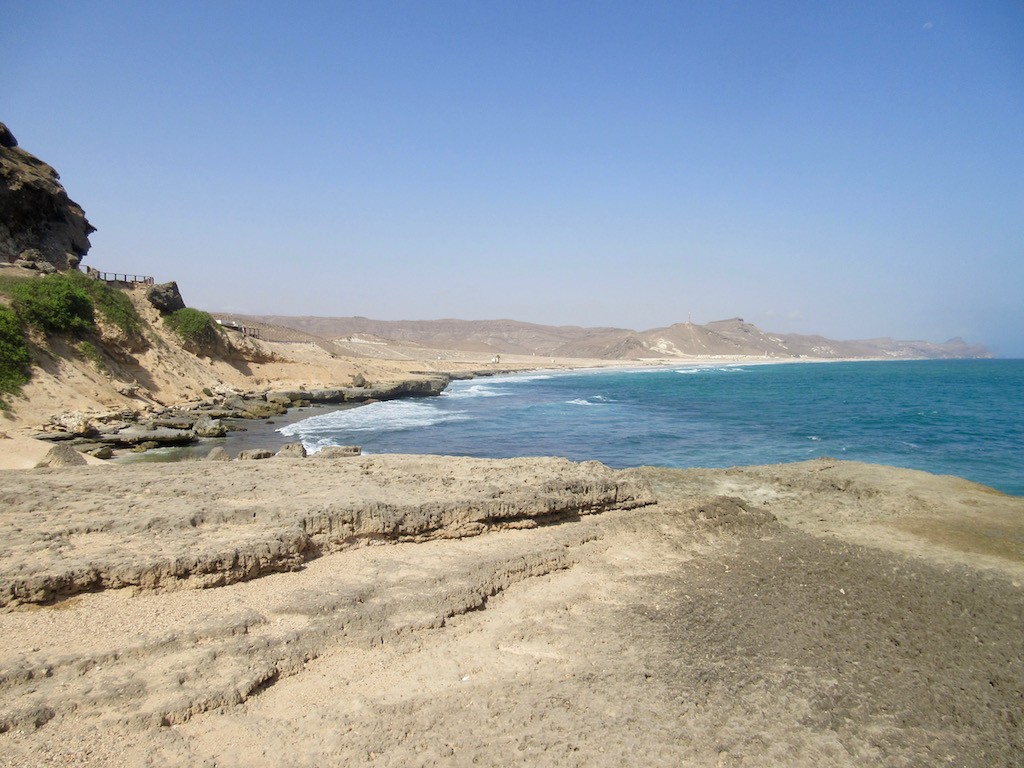
Our next stop was at Mughsail Beach where there is a beautiful two-mile long white sand beach with natural blowholes in the rocks at the base of some high cliffs. Depending on the tide, the spray coming from the blowholes can reach a height of 45 feet. The cliffs above the blowholes are called the Marneef Caves although the caves are not what we might think of as caves. They were very large open caves where the rock formations jutted out from the hillside creating an awning effect.

The evening’s entertainer was an Italian vocalist by the name of Marco Romano. He has performed in many theater productions in his homeland. He sang a wide variety of music from opera to pop and everything in between. He had a lot of energy but there was not much connection with the audience for some reason.