October 29, 2016 — Basel, Switzerland

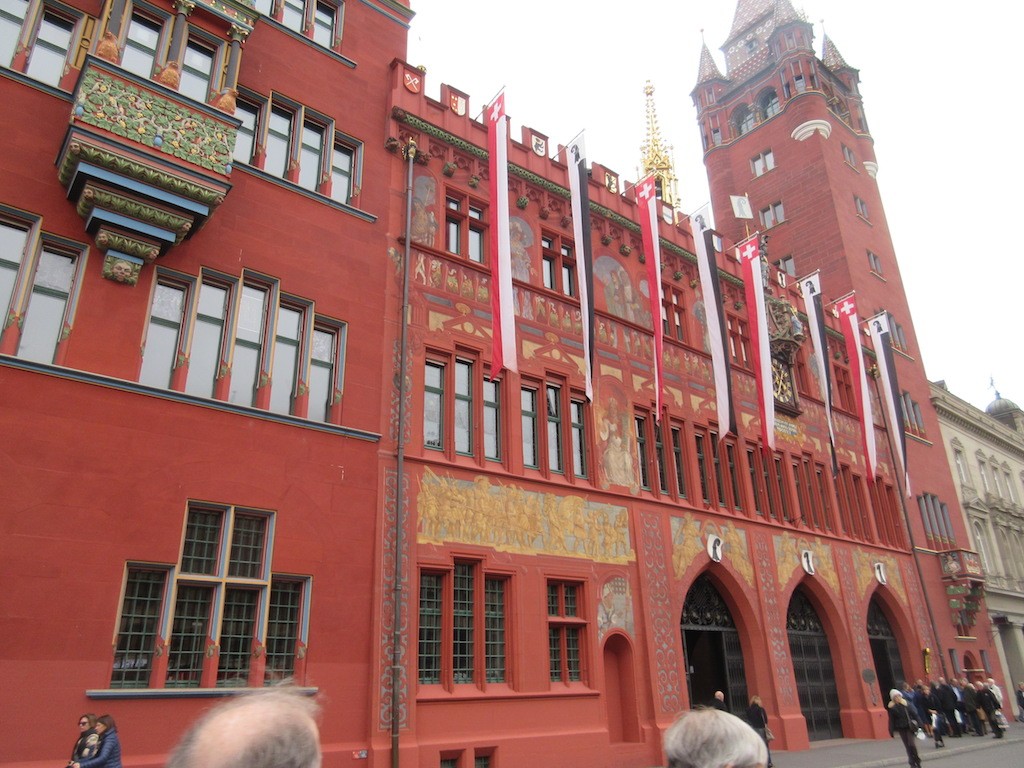
Basel - Town Hall

Basel – Town Hall

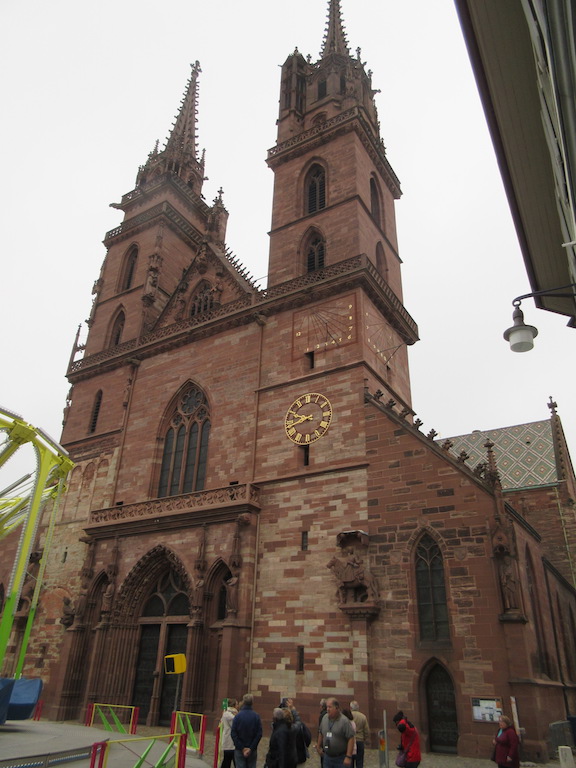
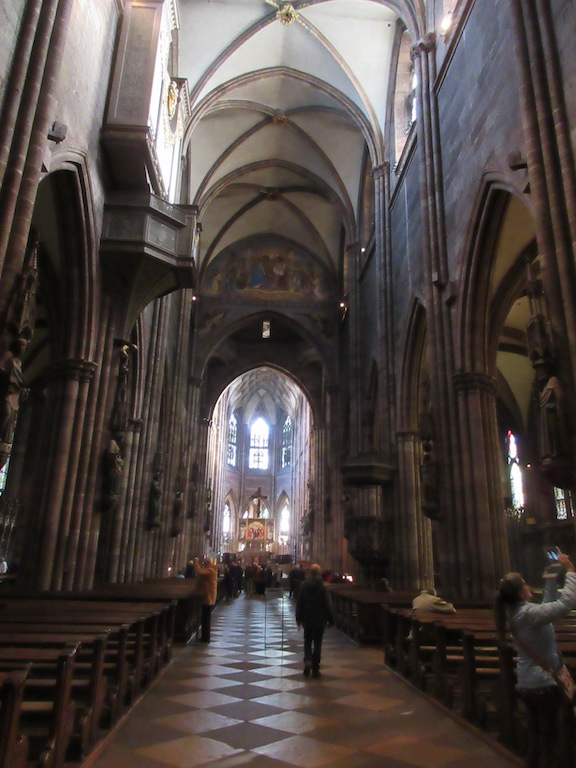
Basel - Church

Basel – Church

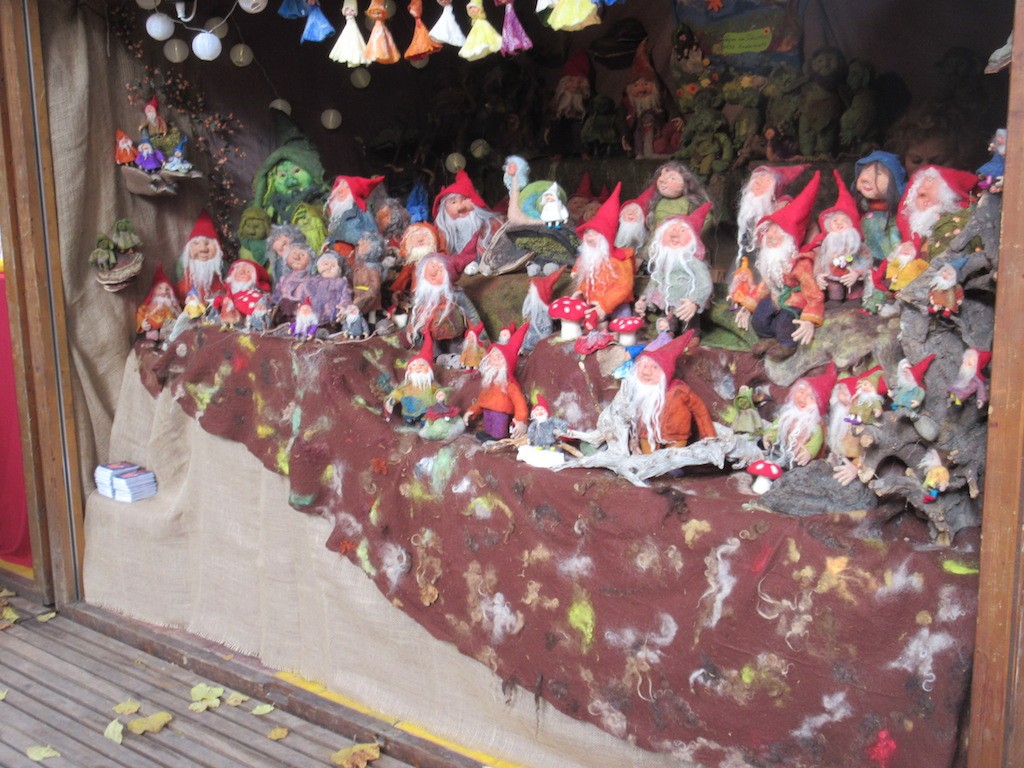
Basel - Stuffed Trolls at the Fall Festival

Basel – Stuffed Trolls at the Fall Festival

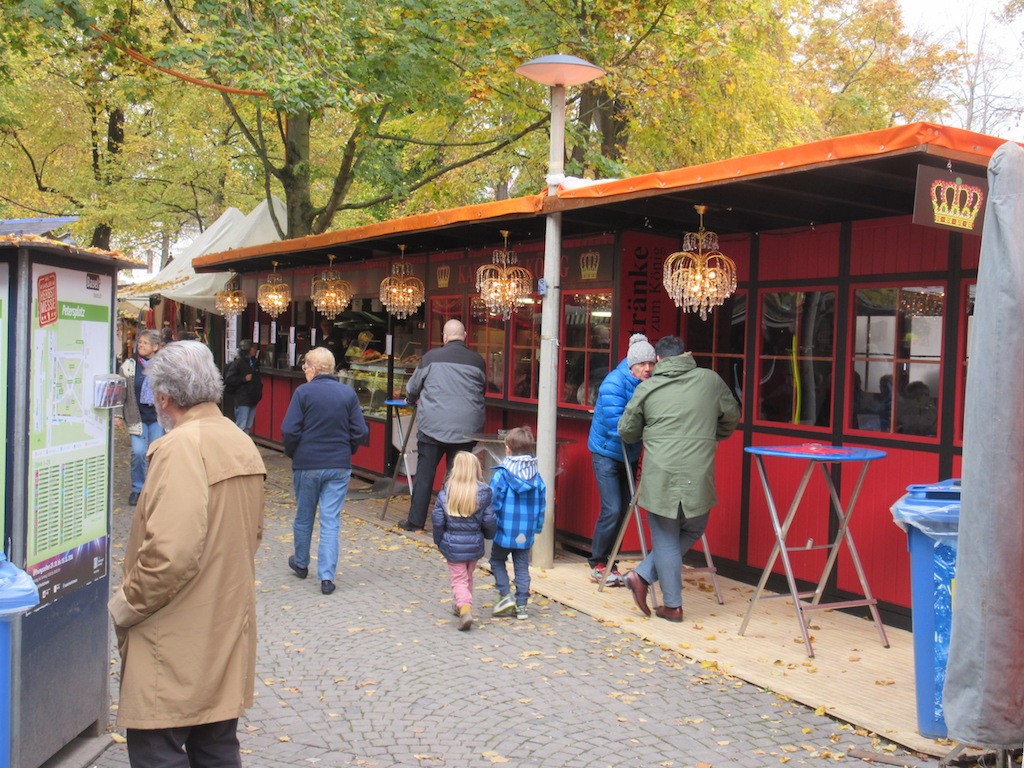
Basel - Fall Festival

Basel – Fall Festival

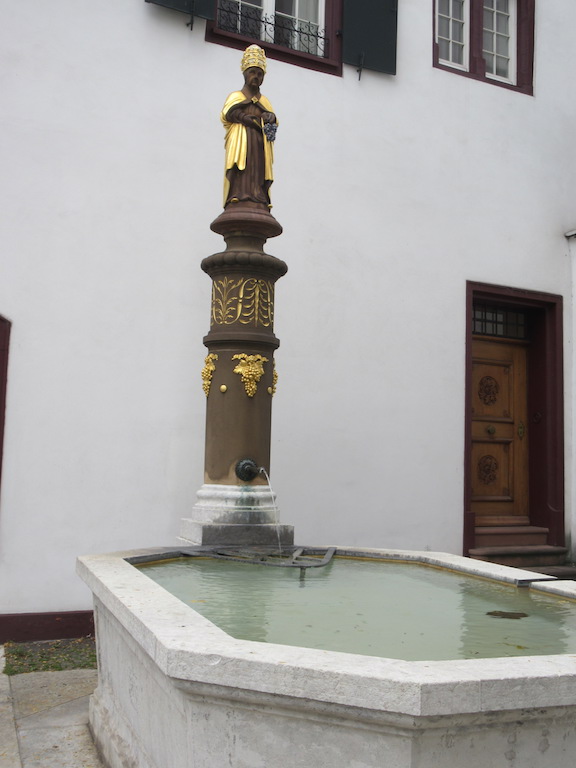
Basel- Fountain

Basel- Fountain

Basel is located on the Rhine River along the northwestern border of Switzerland at the intersection of France and Germany. Basel has about 175,000 inhabitants and about 850,000 people in the area including portions of France and Germany. The official language is German although most people speak a local dialect.

Basel is one of the most dynamic economic regions in Switzerland and has an unemployment rate of less than 5%. Pharmaceutical companies, many banks and Swiss Air call Basel their home.

We took a bus for about a thirty-minute drive to reach the center of Basel from the the ship. From here we took a walking tour of the city where it was the opening day of the autumn festival at noon. The festival was set up in many city squares and parks. It was a bit like a county fair with lots of carnival games, ferris wheels, merry-go-rounds, food booths, demonstrations of mops and vegetable slicing machines, and gift items of all types. We wandered some of the squares and sampled a popular pastry filled with an egg custard mixed with cheese and some candy coated nuts.

One of the local parks we stopped at had something like a Halloween festival going on. There was a skeleton hanging with an exercise bicycle attached to it. When you peddled the stationary bicycle the arms and legs of the skeleton would move. One booth featured a variety of ugly looking hand made stuffed trolls. Another booth was selling all types of jewelry made of bones, while another featured a live grim reaper dressed in black polishing his sickle.

For lunch we stopped at a local burger joint where it was confirmed that the prices in Switzerland really are over the top. We ordered one bacon cheeseburger, one order of French fries and two sodas. The price for this was $29.50.

About 2:30pm we headed back to the ship on a shuttle provided to begin our packing to disembark the ship the next day for our trip to Lucerne, Switzerland.  There was no entertainment and we went to bed early….very exciting.

October 28, 2016 — Breisach, Germany

Freiburg - Church

Freiburg – Church

Freiburg - Church Interior

Freiburg – Church Interior

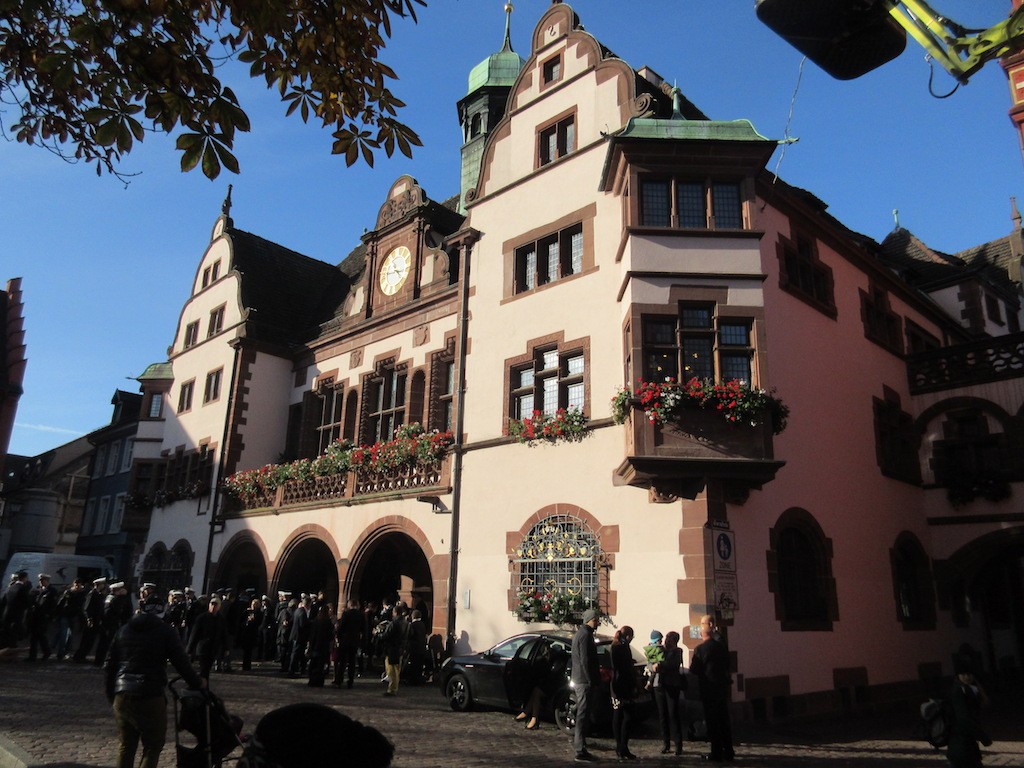
Freiburg - Town Hall

Freiburg – Town Hall

Freiburg - Cuckoo Clock

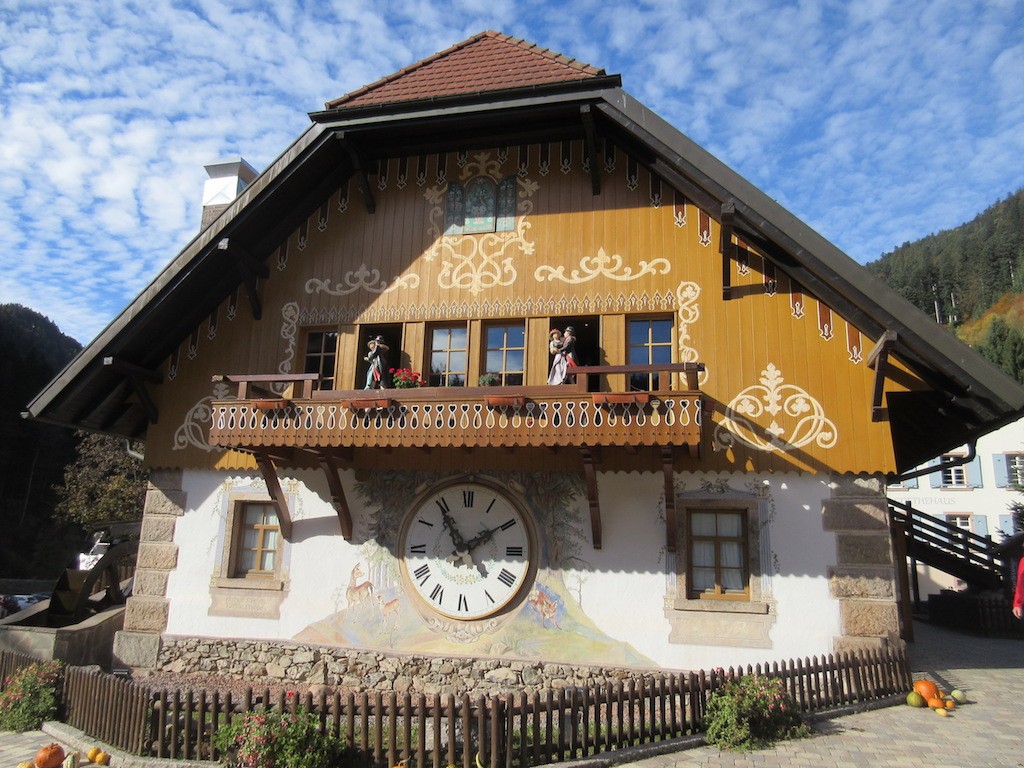
Freiburg – World’s Largest Cuckoo Clock

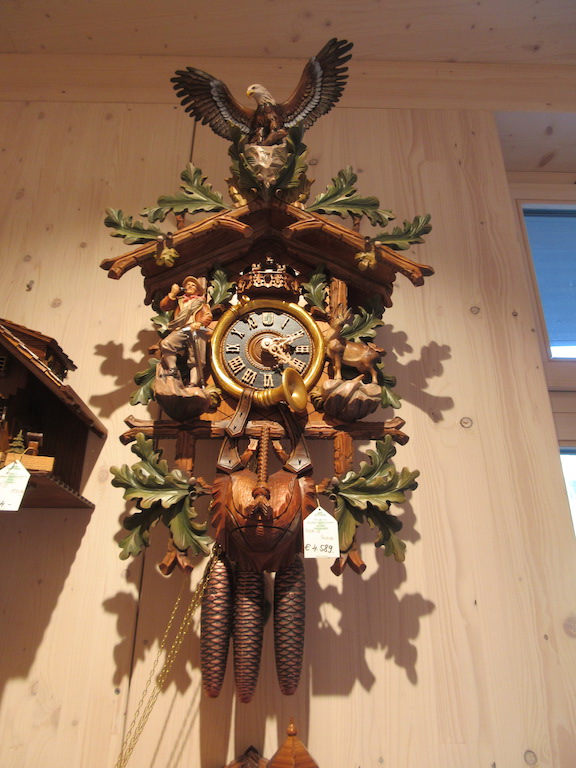
Freiburg - Small Cuckoo Clock

Freiburg – Small Cuckoo Clock

Breisach is a small town of only about 17,000 residents and gets its name from the word breakwater, due to earlier times when the river would flood and leave the town in the middle of the Rhine River. In the 19th-Century engineers re-routed the river and straightened it so that the town was no longer flooded and isolated in the center of the river.

We made our way from Breisach to the university town of Freiburg, located in the foothills of the Black Forest and having a population of about 220,000 inhabitants. During the 13th and 14th Centuries, nearby silver mines made this one of the richest cities in Europe and as such the town boasts stunning architecture from many eras. The name Freiburg means “fortified town of free citizens” since it was once a fortified city with a free market.

Freiburg has small fresh water troughs running throughout the city center. These narrow (maybe 12 inches deep and 18 inches wide) water ways used to bring fresh water to the town’s residents for feeding livestock and fighting fires, but today are more a novelty and place for children to play. It is said that if you accidentally fall into one of these small troughs, you will return to Freiburg and marry a local.

On the main cathedral square we visited the incredibly ornate gothic cathedral constructed in red sandstone between 1200 and 1530. It has a huge towering spire, many gargoyles, carved statues and lace-like ornamentation.

After touring the town, we headed out of town to the base of the Black Forrest to a chalet like hotel and restaurant called Restaurant Hofgut Sternan. The very large restaurant could fit our entire ship full of guests for a traditional lunch of sausages, potatoes, sauerkraut and black forest cake for dessert.

Outside of the restaurant there was a cuckoo clock shop filled with a vast variety of clocks in all sizes, shapes and varying types of ornamentation. There was also a glass blowing shop and gift shop for souvenir shopping. On the outside of one of the gift shops there is a giant cuckoo clock considered to be the largest in the world. We watched the clock chime a couple of times and watched the dancing couple parade in and out of the building along with the cuckoo bird.

We were invited to dine at the captains table for dinner because of the number of times that we have traveled with Vantage Travel. This was the captain’s farewell dinner and featured a seven course meal. The captain was from Hungary and did not really enjoy hosting guests for dinner but he was very pleasant, answered all our questions and took good care of us.

October 27, 2016 — Colmar, Germany

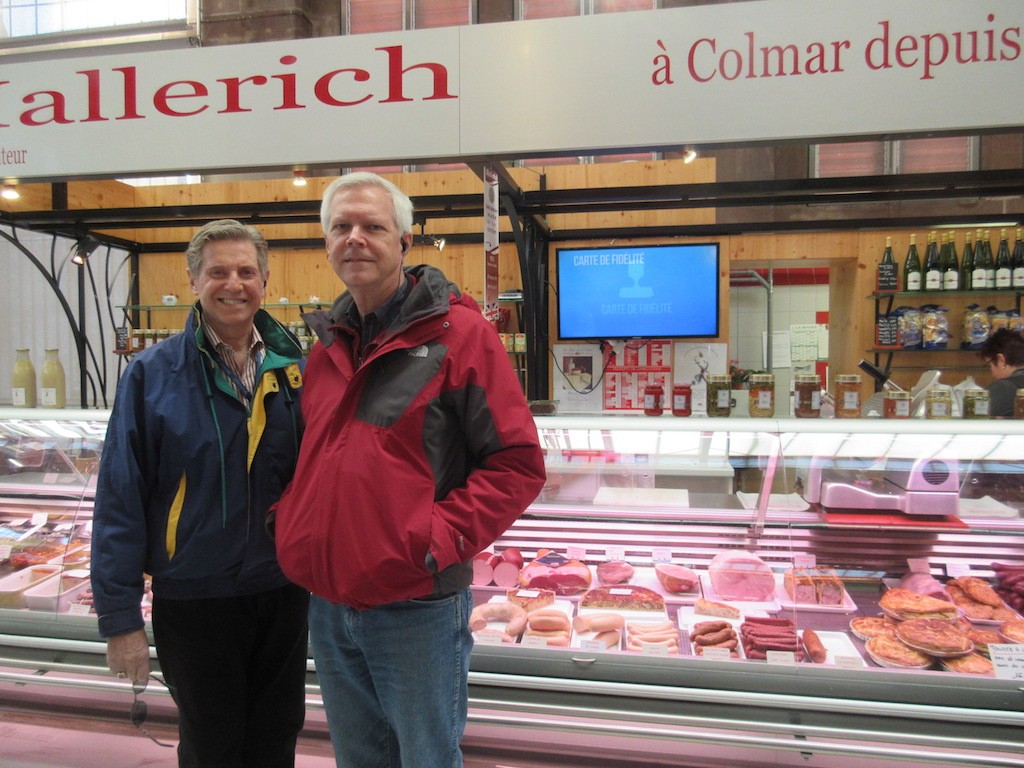
Colmar - Kent and Mark at the market

Colmar – Kent and Mark at the market

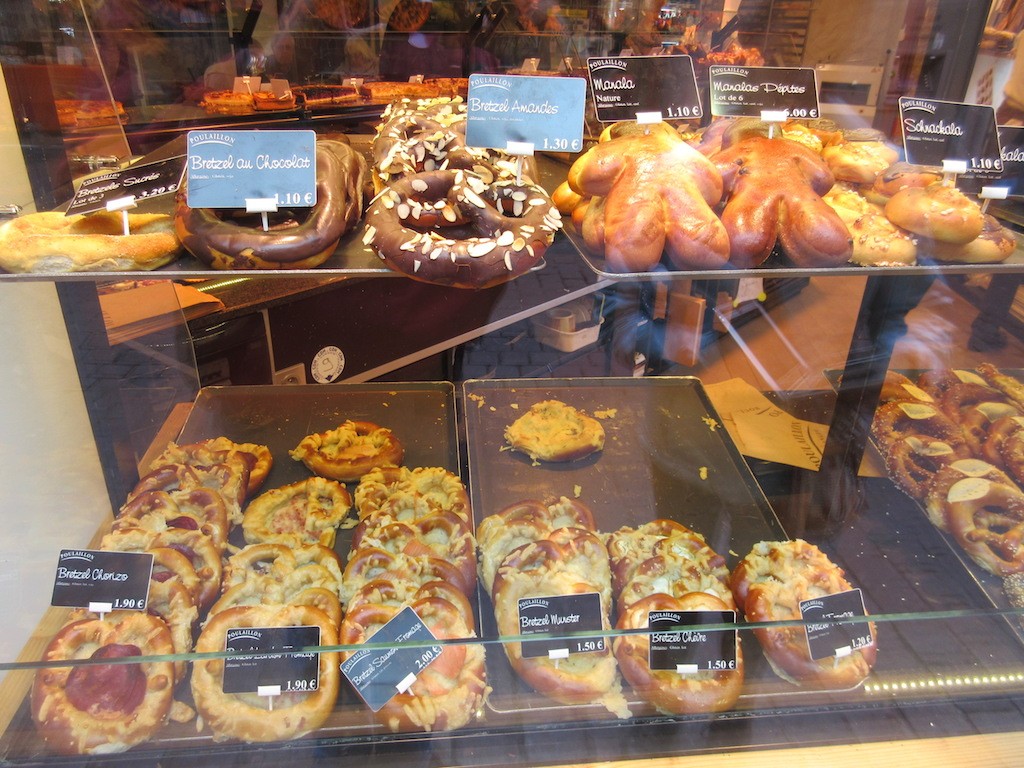
Colmar - Pastry Shop

Colmar – Pastry Shop

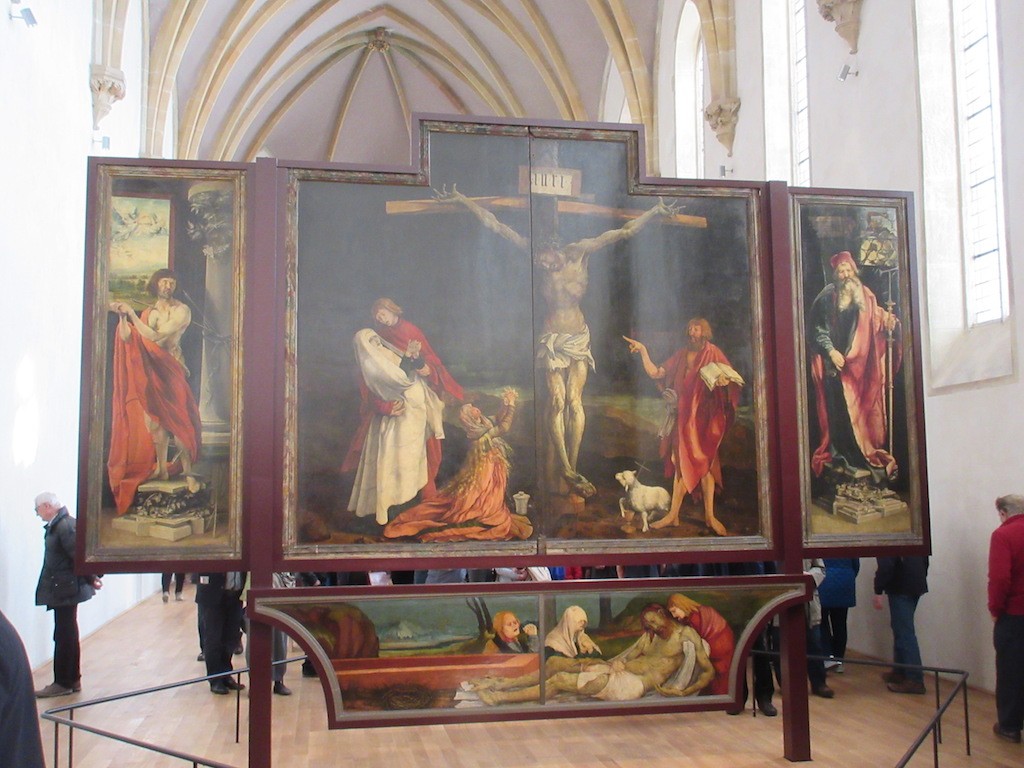
Colmar - One of the Altarpiece Panels

Colmar – One of the Altarpiece Panels

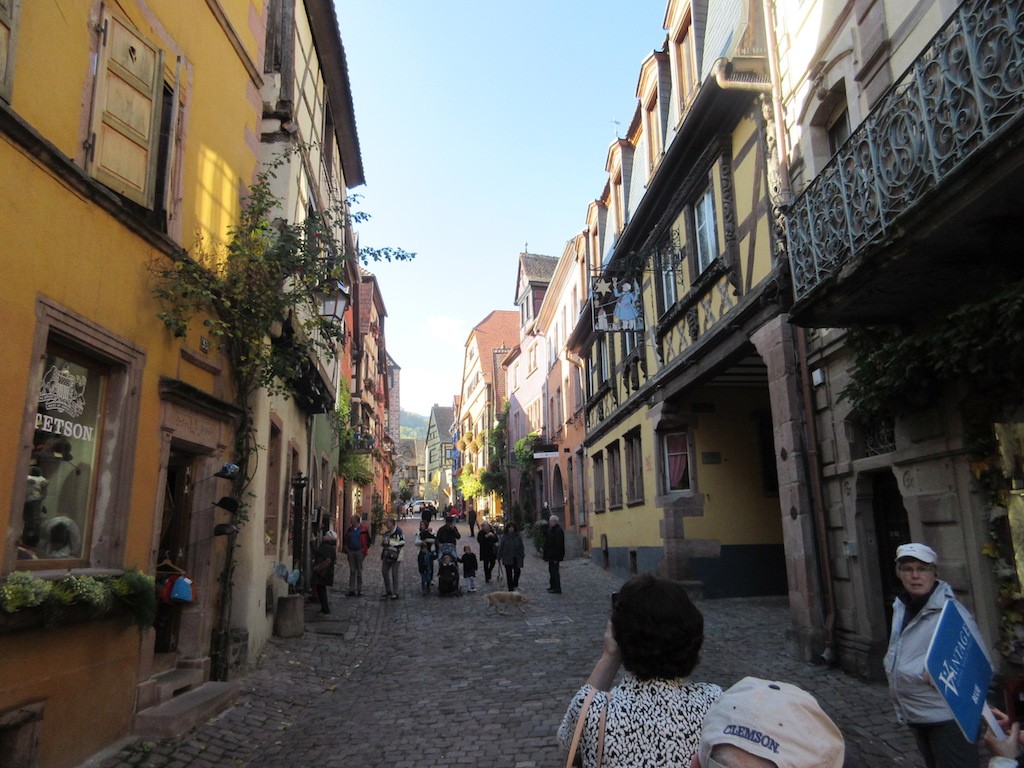
Riquewehr - Main Street

Riquewehr – Main Street

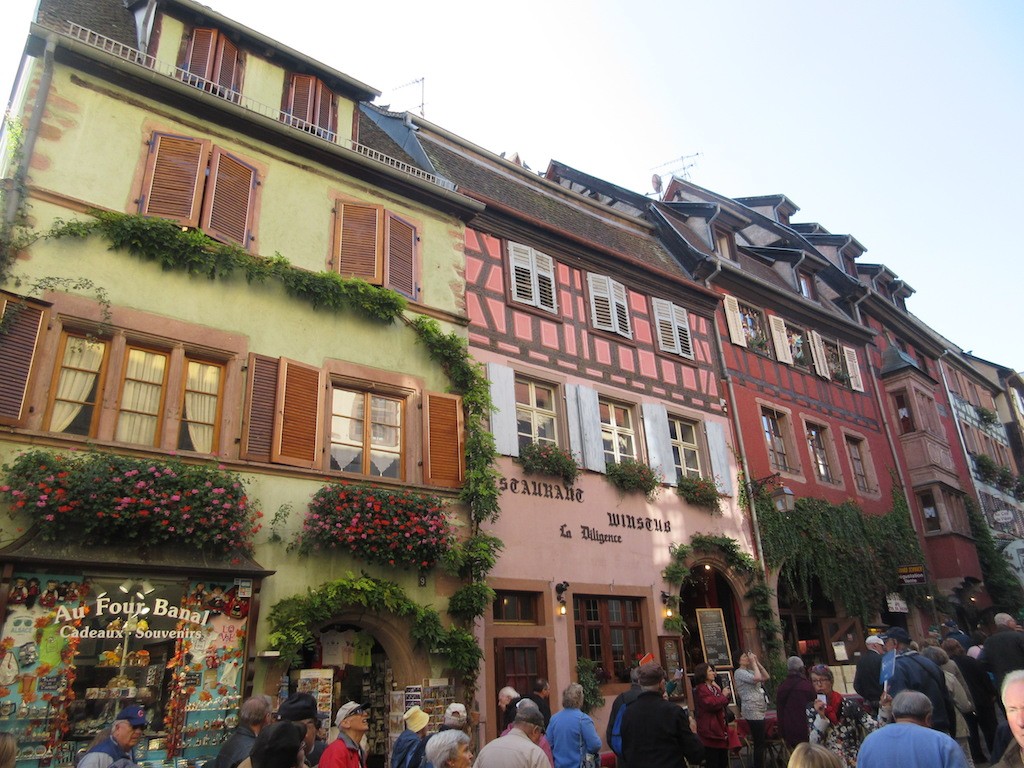
Riquewehr - Main Street Facades

Riquewehr – Main Street Facades

We made our way by motor coach for a full day scenic Alsatian Wine Route tour with a visit to Colmar and the Unterlinden Museum. The French city of Colmar was German between the years of 1871 and again between 1940 and 1945. Colmar was mostly spared from destruction during the French Revolution and the two world wars. Colmar has a sunny microclimate and is one of the driest cities in France. By San Diego standards they still get a lot of rain at 24 inches per year. Colmar is located along the Alsatian wine route and considers itself the capital of Alsatian wine.

The town is another charming town filled with meandering cobblestone streets, gift shops, coffee houses, bakeries and eating places. We visited an area called Little Venice because of its many narrow canals. This area was once the neighborhood where the butcher’s, tanner’s and fishmonger lived and worked.

We visited the Museum Unterlinden, formerly a Dominican religious sisters’ convent built in the 13th-century. Within this beautiful museum is an Isenheim Altarpiece painted by Matthias Grunewald. This extraordinary altarpiece contains several hinged panels that, when opened, changed the altarpiece for different seasons of the church calendar. The panels have now been separated so they can all be seen individually within a room that once served as the sisters’ chapel, complete with stained glass windows and vaulted ceilings.

Typical foods found in this town were the Macaroons, made in all sorts of flavors and colors. They are only a couple of inches in diameter but were being made in shops all over town. The crescent shaped Croissants are very popular here as well. The croissants have been made in France since the middle ages and are popular for breakfast.

After lunch we continued on to a very small village by the name of Riquewehr. This small village was just a couple of blocks long and featured many tourist shops, wine tasting spots and many macaroon shops. The colorful half-timbered houses with flower boxes filled with colorful geraniums lined the main street.

After dinner, the crew from our ship, the River Splendor, put on a crew show where about 30 of the 50 crew members participated in some way. It was very much a variety show with singing, skits, jokes and a lot of laughs.

October 26, 2016 — Strasbourg, France

Strasbourg - Canal

Strasbourg – Canal

Strasbourg - Canal Touring Boat

Strasbourg – Canal Touring Boat

Strasbourg - Cathedral

Strasbourg – Cathedral

Strasbourg - Cathedral Statue Detail

Strasbourg – Cathedral Statue Detail

Strasbourg - Cathedral Clock

Strasbourg – Cathedral Clock

Strasbourg - Kent and Albert Switzer at the Organ

Strasbourg – Kent and Albert Switzer at the Organ
Strasbourg - Asacien Museum Exhibit

Strasbourg – Asacien Museum Exhibit

From Karlsruhe we departed for a half day tour of the famous Black Forest spa town of Baden-Baden. This small town of about 55,000 residents is famous for its twelve salt and radon rich thermal hot springs that spring up from a depth of some 6,000 feet under ground. Once the site of Roman Baths, this picturesque town was Europe’s celebrity resort in the 1800’s.

We visited the the beautiful Lichtentaler Allee historic park set along the west bank of the Oos River. This park was believed to have begun in 1655 as a path between the town market and the Lichtenthal monastery. Between 1850 and 1870 it was planted with a wide variety of trees and plants. Today the avenue contains about 3000 native plants and trees including azaleas, alders, chestnuts, ginkgos, magnolias, maples, oaks and sycamore trees.

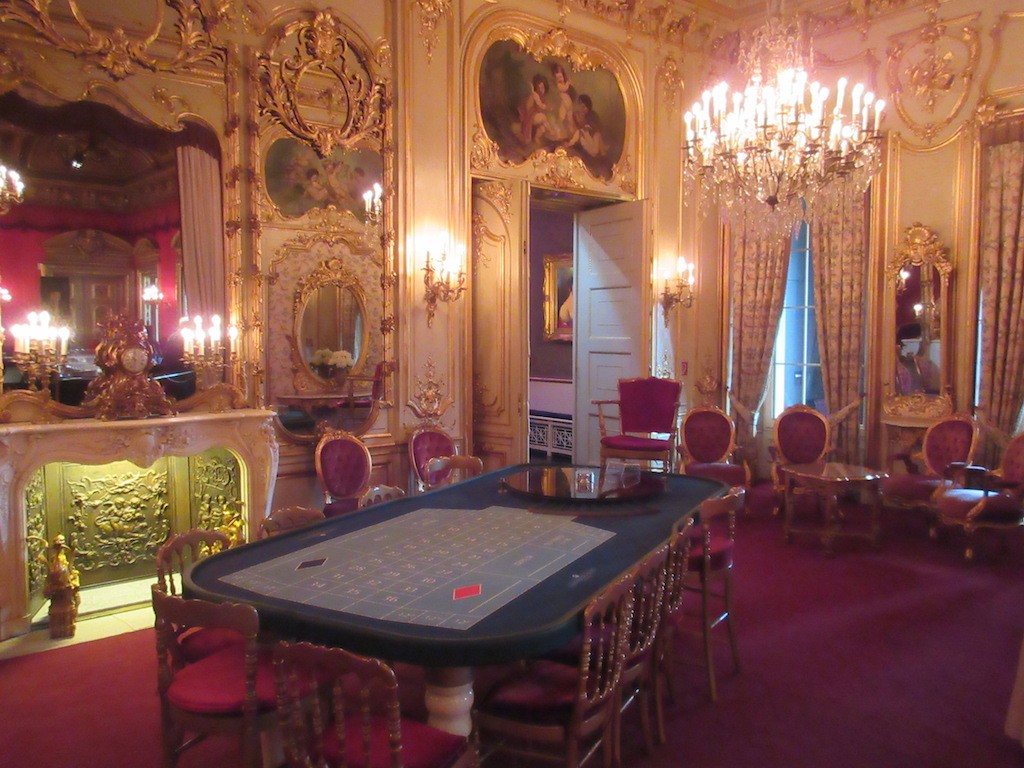
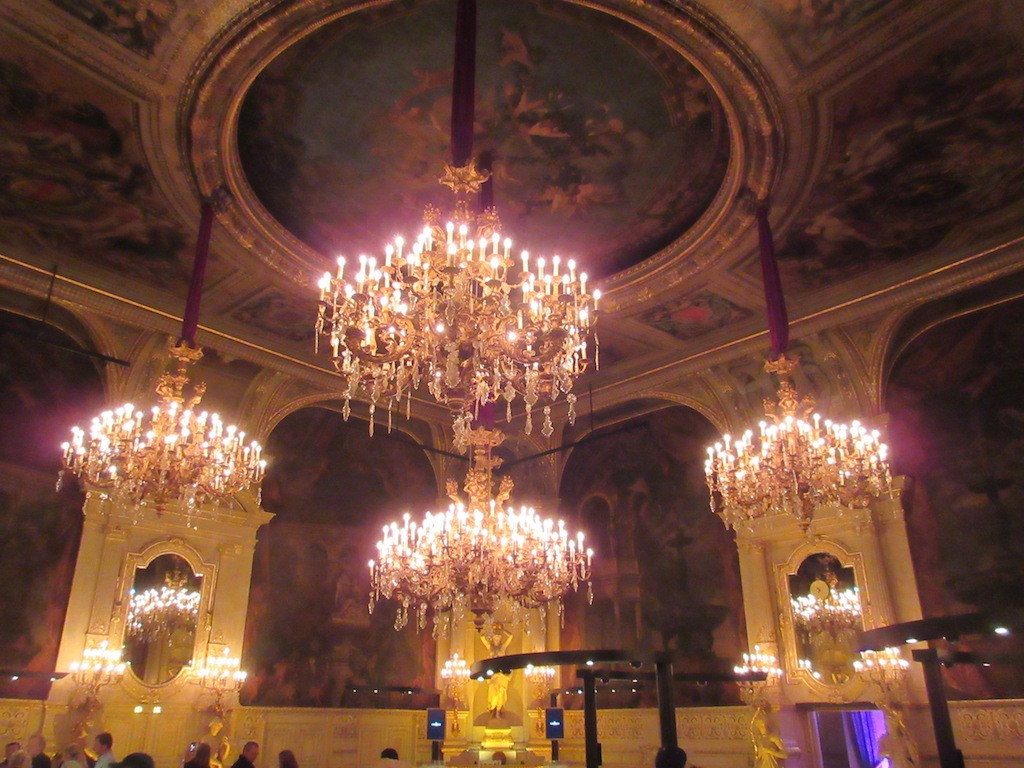
Adjoining the park is the famous Kurhaus or Casino Baden-Baden begun in 1838, where the rich and famous have come for more than 150 years to gamble. This extraordinary ornate and overdone casino is open from 2:00pm daily until 2:00am. The interior includes ornate gilded statuary, extensive wall murals, elaborate chandeliers, red brocade upholstered walls and more. They require gentlemen to wear a jacket and women to be well dressed for admission. Since it was before opening time, they allowed us to take a tour of the casino and to photograph inside.

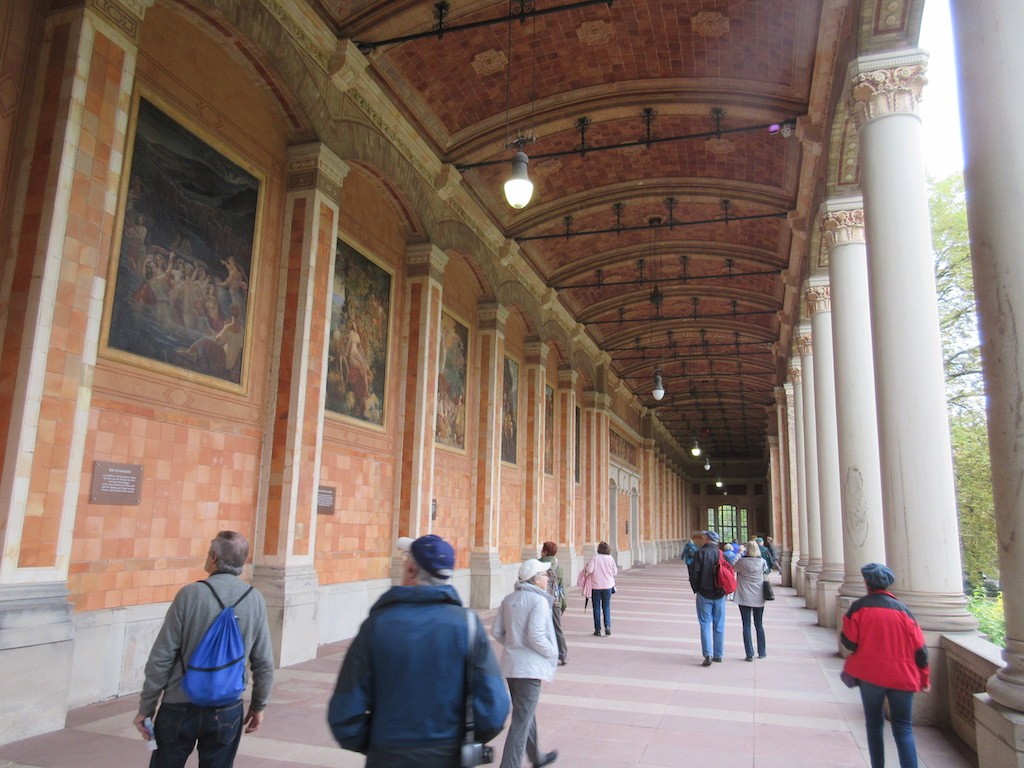
Our next stop was the Trinkhalle or water pump house built in 1839 to 1842. This building has a 300-foot-long covered arcade lined with frescoes and benches to rest. Inside the structure there is a water faucet flowing non-stop with hot spring waters believed to have curative powers. The tourist information office and a restaurant are located in this building today.

We enjoyed lunch onboard and a relaxing afternoon on the River Splendor river boat. To fill the afternoon, they offered a wine tasting of local red wines, a high tea with a variety of delicious cakes and cookies and a tour of the ship’s galley.

October 26, 2016 — Strasbourg, France

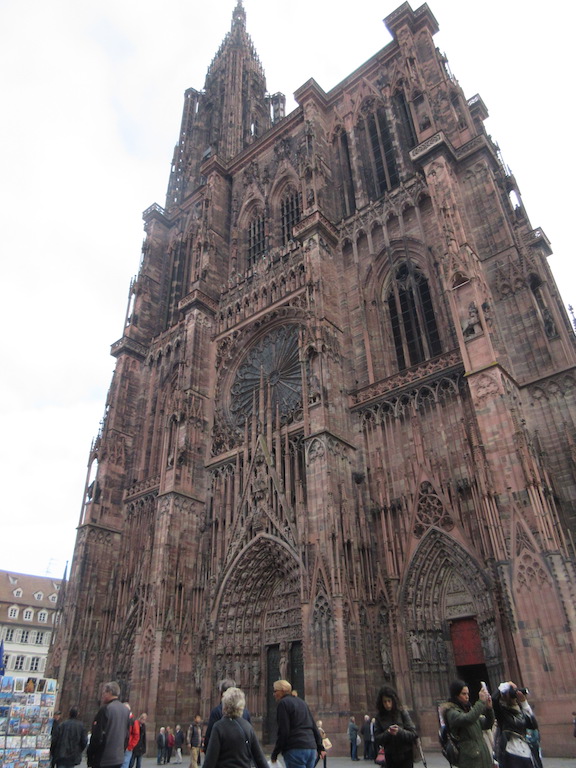
Strasbourg is located in France, about 250 miles east of Paris near the border of Germany, with a population of approximately 275,000 residents in the city and 485,000 in the metropolitan area. The historic city center called the Grande Ile was classified a UNESCO World Heritage Site in 1988. The city is mostly known for its sandstone Gothic Cathedral with its famous astronomical clock and its medieval black and white timber-framed buildings.

Strasbourg is an important center of manufacturing and engineering, as well as a hub of road, rail and river transportation. The port here is the second largest on the Rhine River after Duisburg, Germany.

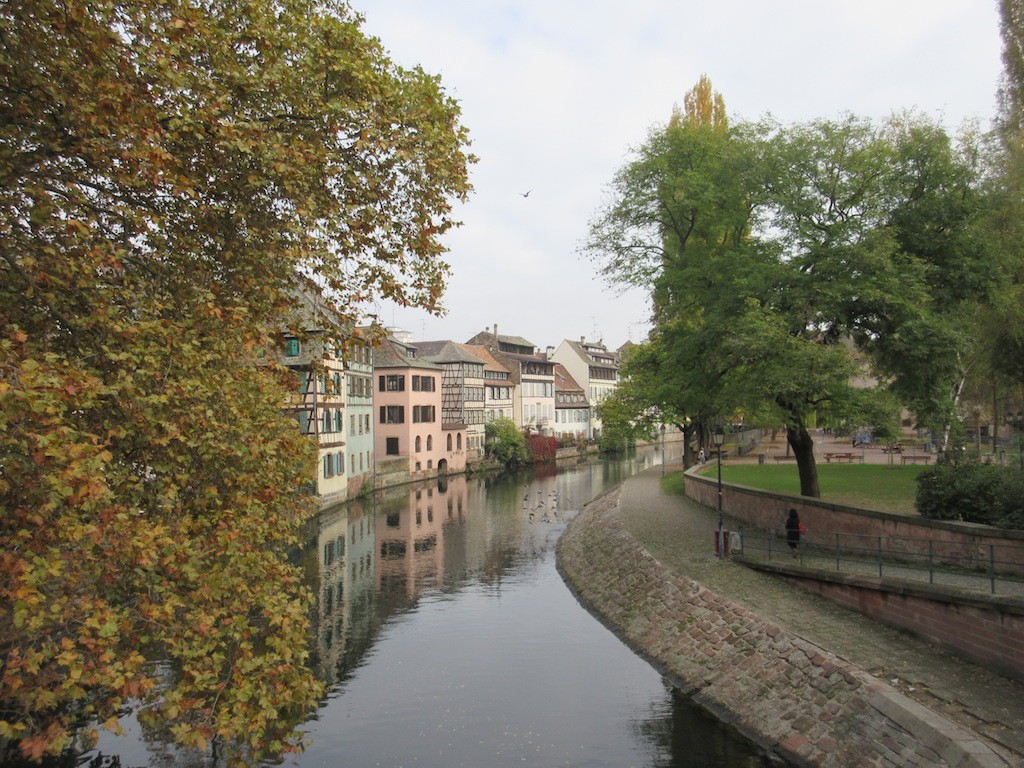
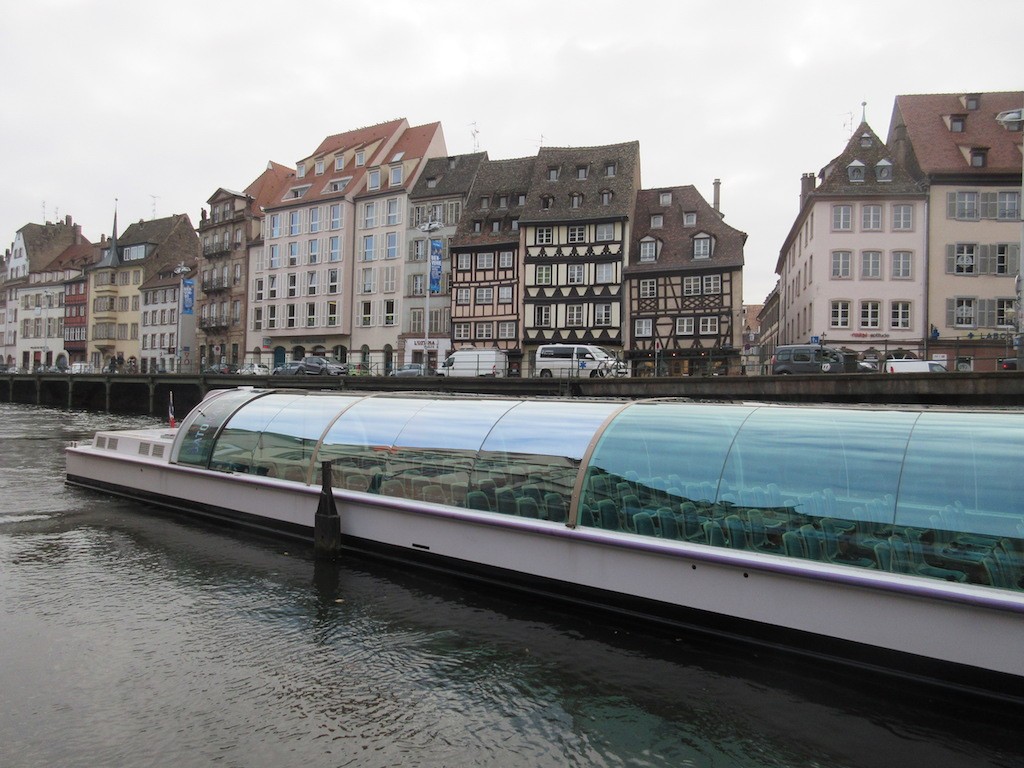
We started our tour with a drive through the city passing the European Union Council buildings and arriving at one of the small canals. There we boarded a sleek canal touring boat with a sleek Plexiglas cover to keep us warm and dry. We toured the canal around the old central part of the city, including a couple of locks that we needed to transit. Along the canals we saw many old timber homes and businesses lining the canals. Most buildings and railings were covered in colorful geraniums.

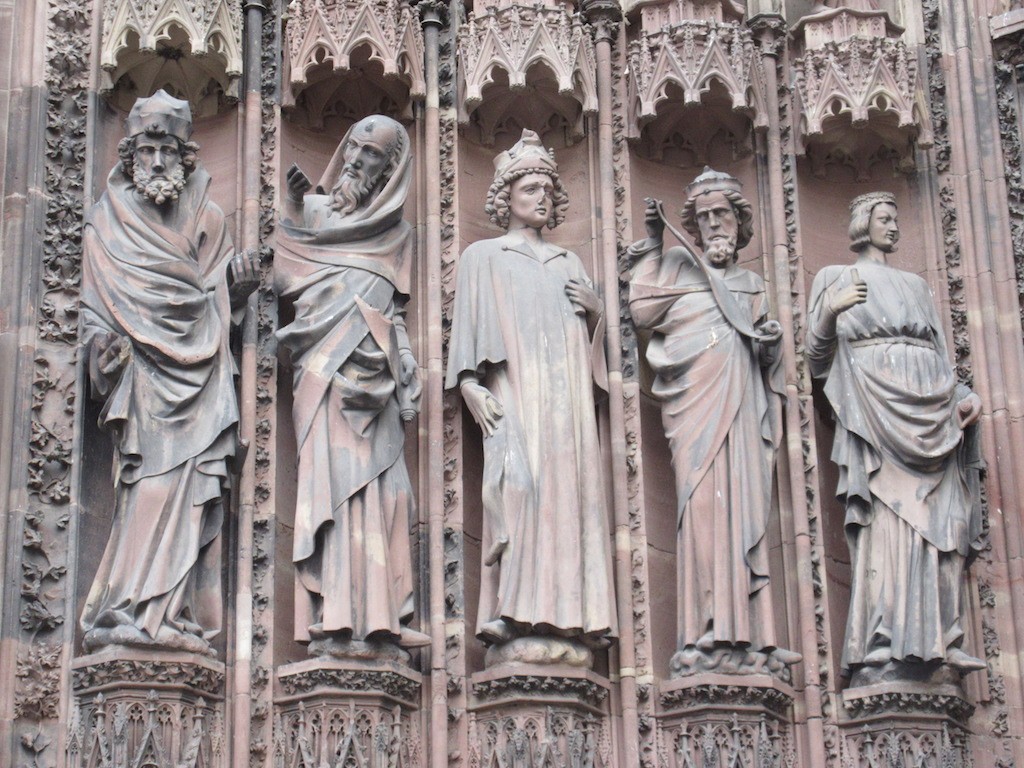
Once we disembarked the canal boat we took a walking tour of the central old town, including the Cathedral Notre Dame built between 1176 and 1439. The gothic style cathedral is extremely ornate with tons of detailed ornamentation, gargoyles, statues, and more. The interior includes a magnificent organ and a famous astronomical clock dating back to 1547. The clock has many moving parts, telling not only the time but the rotation of the moon, the zodiac signs, etc. Regularly, the clock would chime the time, and a bell would be rung by a little boy, and then some moving children would move in and out of a window at the top of the clock.

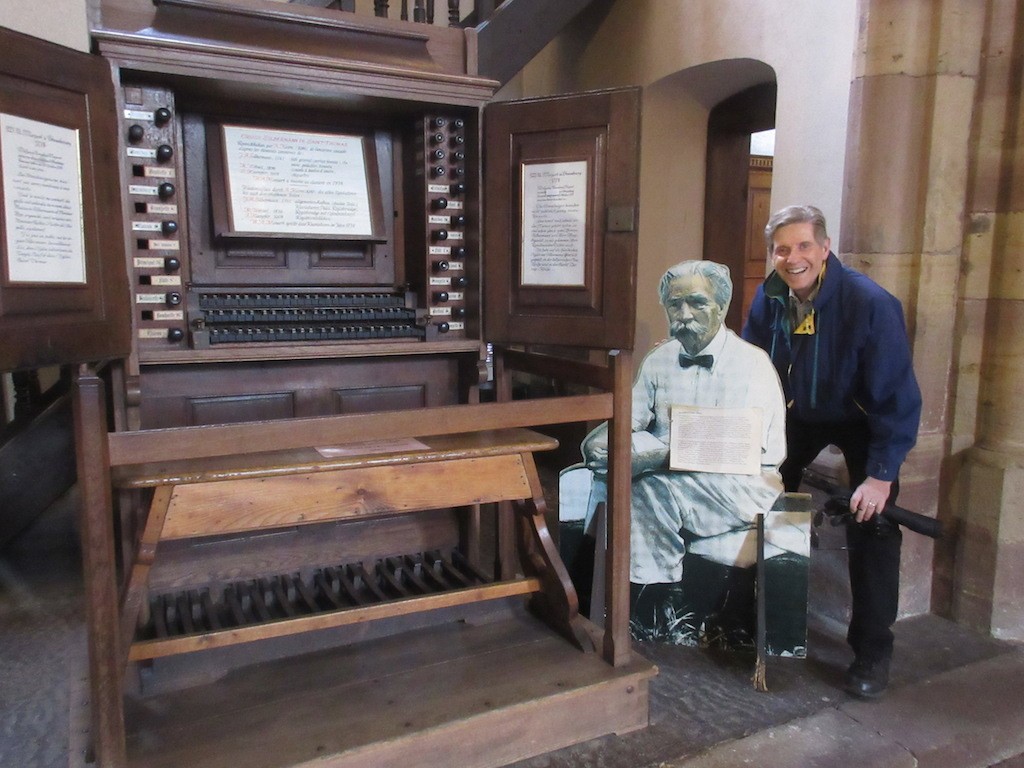
We then headed to St. Thomas church where Albert Switzer and Mozart used to play the more than 500-year-old organ. The organ looks very primitive by today’s standards—but for it to still function is quite amazing.

Next we headed to the Tanner’s District also known as La Petite France where there is the largest concentration of 300-year-old, half-timbered houses. With Rita and Leslie, we then stopped for lunch at a small French café for crepes and pomme frites.

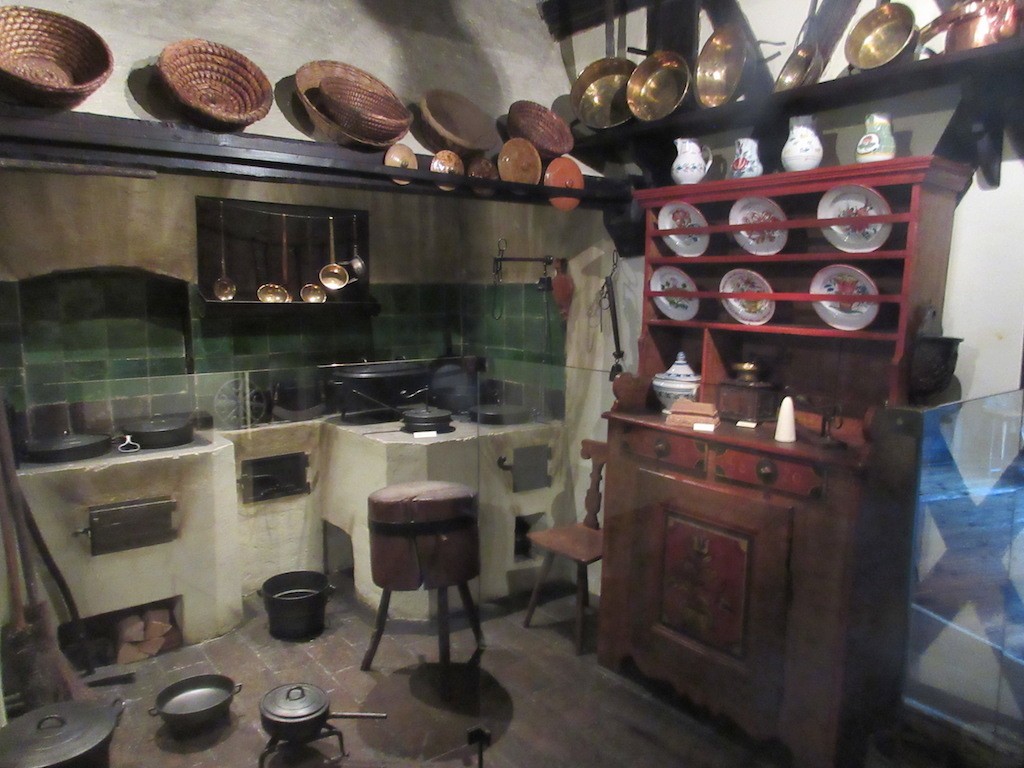
After lunch we visited a very nice museum located in an historic, old half-timberd house where four families once lived around a central courtyard. They have an extensive collection of household items from homes over the years in the Alsace region. The collection includes furniture, dishes, dolls, building ornamentation, Jewish memorabilia over the years and so many more items.

After dinner we were entertained by a local accordionist and a female singer who performed a variety of mostly Edith Piaf songs. We thought that she was quite good but many others did not seem to enjoy her.
October 25, 2016 – Baden-Baden, Germany

Baden-Baden Casino

Baden-Baden – Casino

Baden-Baden - Casino

Baden-Baden – Casino

Baden-Baden - Trinkhalle

Baden-Baden – Trinkhalle

Baden-Baden - Beer Garden

Baden-Baden – Beer Garden

Baden-Baden - Beer Garden

Baden-Baden – Beer Garden

From Karlsruhe we departed for a half day tour of the famous Black Forest spa town of Baden-Baden. This small town of about 55,000 residents is famous for its twelve salt and radon rich thermal hot springs that spring up from a depth of some 6,000 feet under ground. Once the site of Roman Baths, this picturesque town was Europe’s celebrity resort in the 1800’s.

We visited the the beautiful Lichtentaler Allee historic park set along the west bank of the Oos River. This park was believed to have begun in 1655 as a path between the town market and the Lichtenthal monastery. Between 1850 and 1870 it was planted with a wide variety of trees and plants. Today the avenue contains about 3000 native plants and trees including azaleas, alders, chestnuts, ginkgos, magnolias, maples, oaks and sycamore trees.
Adjoining the park is the famous Kurhaus or Casino Baden-Baden begun in 1838, where the rich and famous have come for more than 150 years to gamble. This extraordinary ornate and overdone casino is open from 2:00pm daily until 2:00am. The interior includes ornate gilded statuary, extensive wall murals, elaborate chandeliers, red brocade upholstered walls and more. They require gentlemen to wear a jacket and women to be well dressed for admission. Since it was before opening time, they allowed us to take a tour of the casino and to photograph inside.

Our next stop was the Trinkhalle or water pump house built in 1839 to 1842. This building has a 300-foot-long covered arcade lined with frescoes and benches to rest. Inside the structure there is a water faucet flowing non-stop with hot spring waters believed to have curative powers. The tourist information office and a restaurant are located in this building today.

We enjoyed lunch onboard and a relaxing afternoon on the River Splendor river boat. To fill the afternoon, they offered a wine tasting of local red wines, a high tea with a variety of delicious cakes and cookies and a tour of the ships galley.

October 24, 2016 — Mainz, Germany to Karlsruhe, Germany

Mainz - Cathedral

Mainz – Cathedral

Mainz - Cathedral Cloister

Mainz – Cathedral Cloister

Mainz - Architecture

Mainz – Architecture

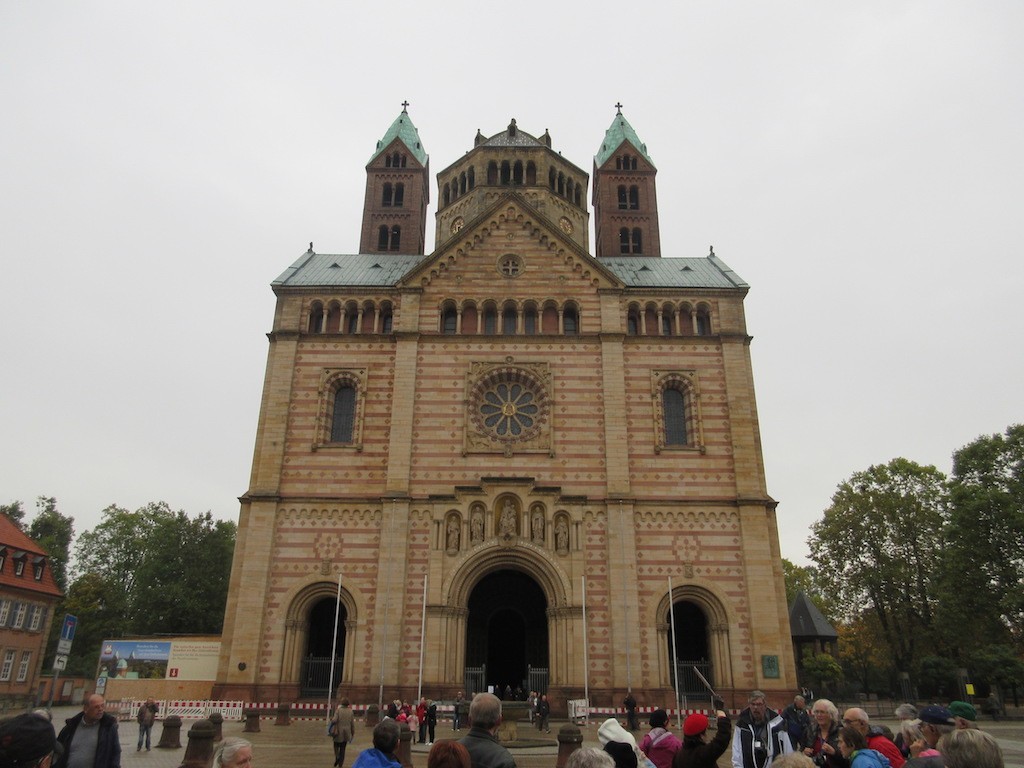
Speyer - Cathedral Facade

Speyer – Cathedral Facade

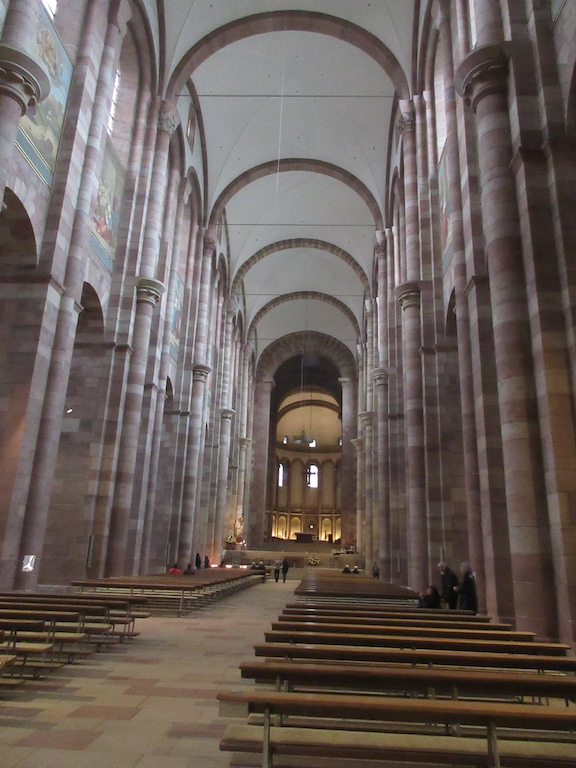
Speyer - Cathedral Interior

Speyer – Cathedral Interior

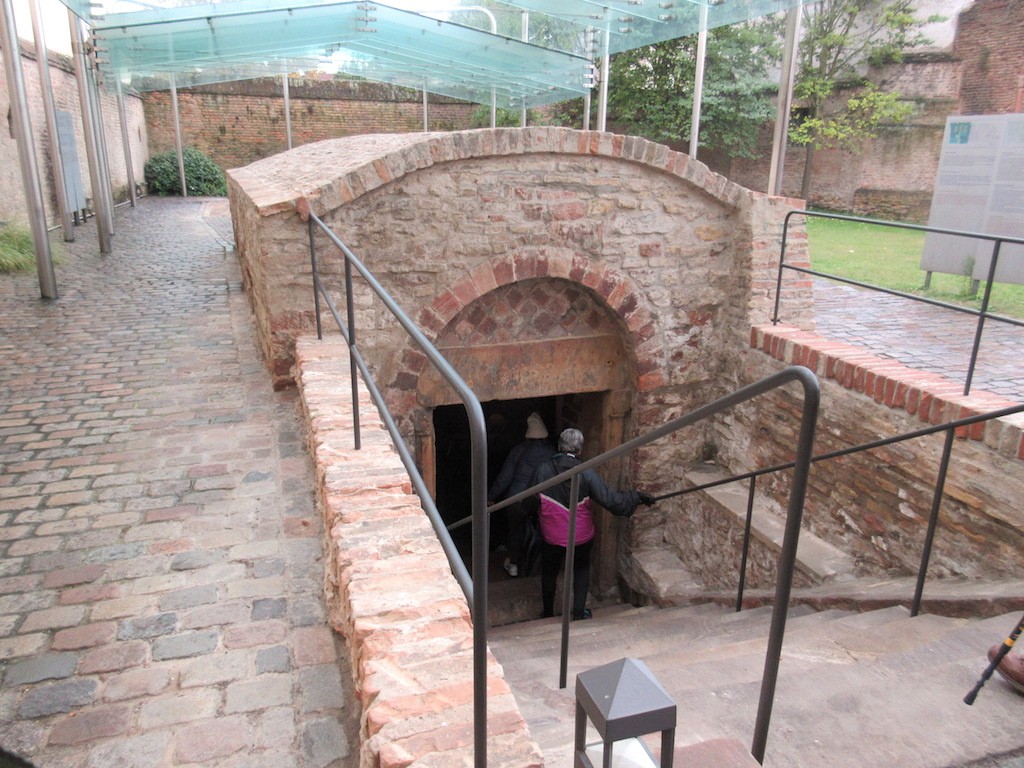
Speyer - Jewish Baths Entrance

Speyer – Jewish Baths Entrance

The weather was not cooperating on this day and we had a morning filled with rain showers. We started out the day with a walking tour around the city center. Mainz with a population of 225,000 is famous as the home of the invention of the moveable-type printing press by Johannes Gutenberg in the early 1450’s. We visited the Gutenberg Museum where we saw first hand how the printing was done with this new invention, the moveable-type. The first books using movable type were manufactured in Mainz. The museum has several original Gutenberg bibles, printed in Latin, now extremely rare and valuable. They keep them locked under glass and in a vault similar to one you might find in a bank.
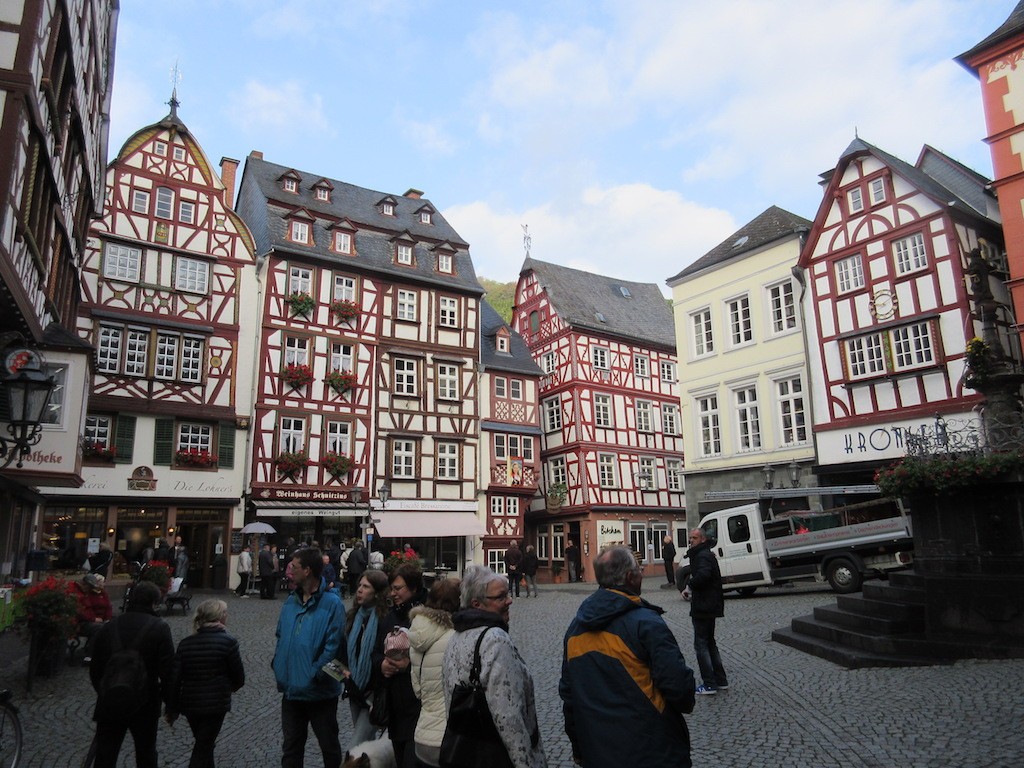
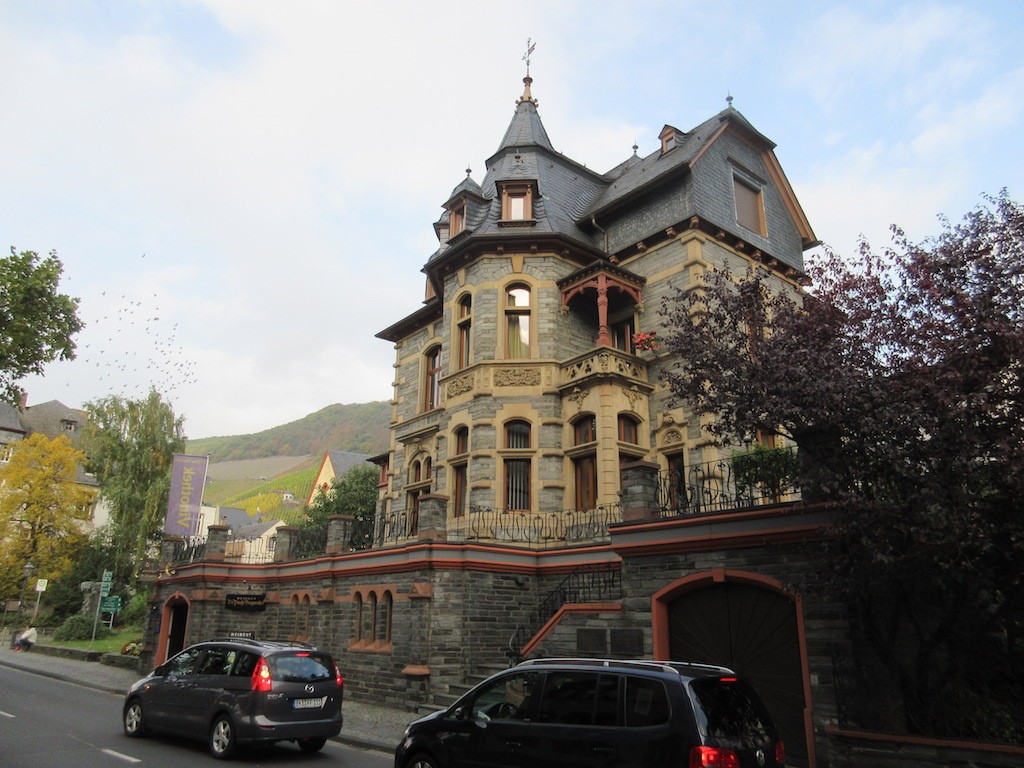
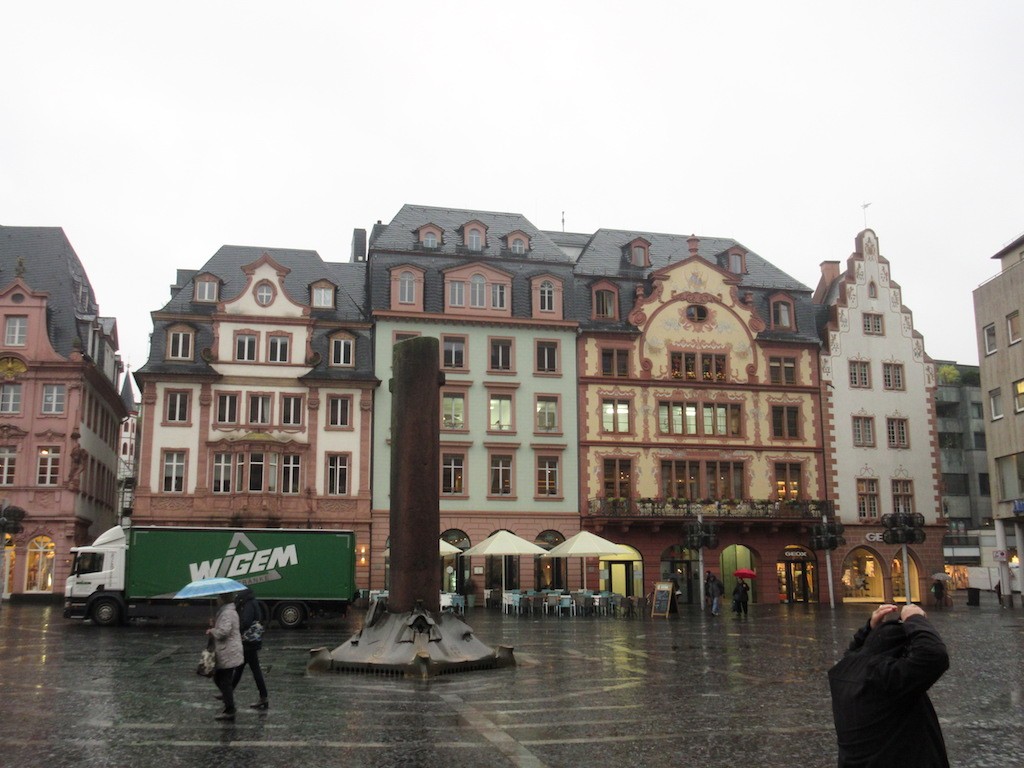
The city has meandering streets which make it difficult to get your bearings on which direction you are traveling. Much of the city had been destroyed during the WWII but many of the old buildings have been restored or rebuilt in their original style. Mixed in with those are buildings from the 1950’s and 1960’s, which appear quite stark next to the ornateness of the classical architecture.

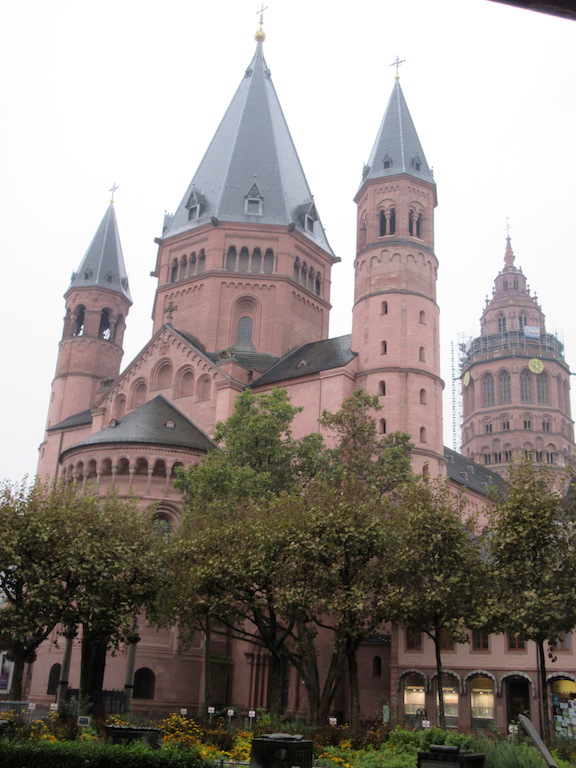
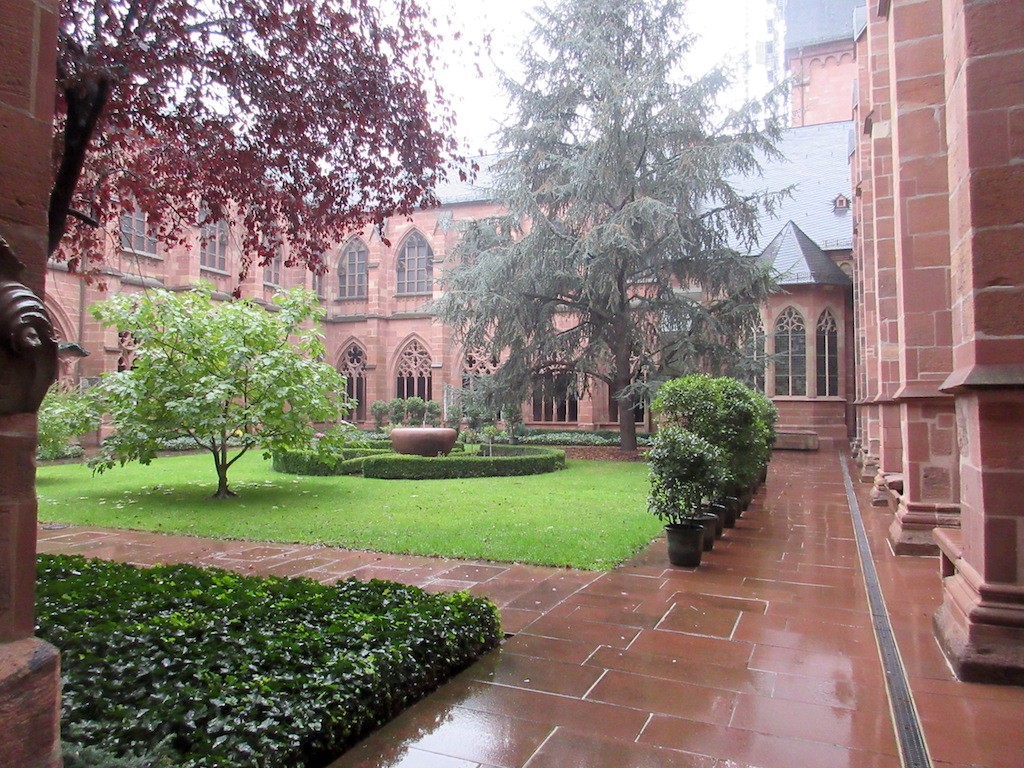
Included on our tour was a visit to the city’s cathedral started by Archbishop Willigis in the year 975. It was not completed until 1009. Like so many of these very old churches they have been partially destroyed and re-built numerous times resulting in an eclectic mix of styles and art. This church has a beautiful outdoor cloister, a huge main sanctuary, many side altars, a chapel and a crypt in the basement. Much of the art work and statues inside the sanctuary are extremely ornate.

Although Mainz is not that large, it is part of the Rhein Metro area comprising 5.8 million people and located just a 25-minute train ride from the Frankfurt Airport.

After lunch onboard the ship, we headed out on an optional tour to the town of Speyer where we saw another enormous cathedral. The Speyer Cathedral is known for having the largest Romanesque crypt in the world, built in the form of a hall. The crypt was consecrated in 1041 and is more than 100 feet wide, 150 feet long and nearly 25 feet in height. It contains many bone and other relics. The main sanctuary is enormous in size, but a bit simpler and understated in comparison to some of the others we have seen.

We then headed to the Jewish baths. Speyer was home to one of the most important medieval Jewish community’s north of the Alps. In the 11th Century, Jewish merchants, and bankers came to Speyer from Italy and France. The Jewish people coexisted peacefully with the Christians until the 14th Century when, for some unknown reason, there was an anti Jewish sentiment leading to the extinction of the Jewish community in Speyer.

In recent years a Jewish ritual bath built around 1120 was excavated and is part of a small Jewish museum. The baths are entered through a staircase down about thirty-five feet underground to where you find the pool of water. They still show the bath with water in it today. It was quite interesting. Several headstones from an old local Jewish cemetery are also housed in this small museum.

After dinner there was no entertainment provided by the ship. We retired to our room and read, responded to emails and rested.

October 23, 2016 — Boppard, Germany to Mainz, Germany

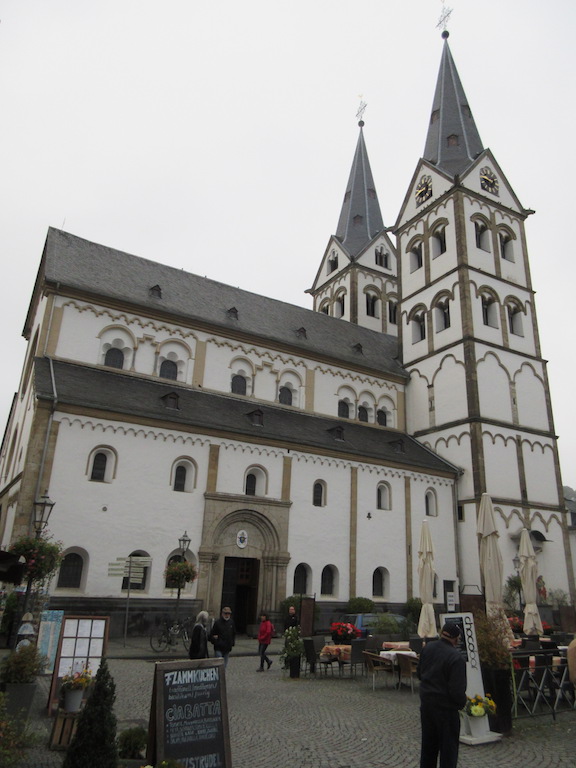
Bopped - St. Severus Church

Boppard – St. Severus Church

Boppard - St. Severus Church Interior

Boppard – St. Severus Church Interior

Boppard - View from the Ski Lift

Boppard – View from the Ski Lift

Boppard - Waterfront Home

Boppard – Waterfront Home

Boppard to Mainz - Views along the Rhine River

Boppard to Mainz – Views along the Rhine River

Boppard to Mainz - One of the Castles along the Rhine River

Boppard to Mainz – One of the Castles along the Rhine River

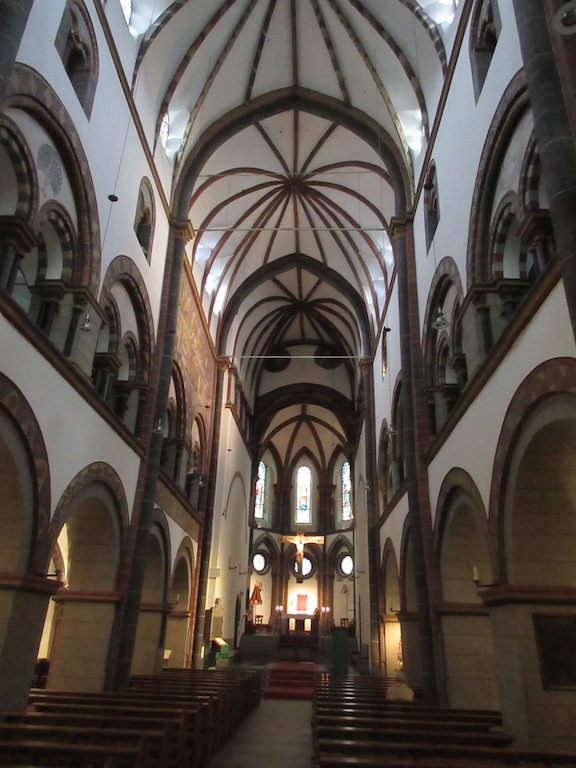
This morning we had a brief presentation by the cruise director about the town of Boppard and the things to see and do. We took our own walking tour around town with our friend, Kathy, to see two of the local churches, the town square and the main shopping street. The Church of St. Severus, with its two bell towers, was just beautiful inside with hand painted arches, an ornate altar, along with lovely newer stained glass windows. It gave off a warm and beautiful feeling, unlike many similar churches.

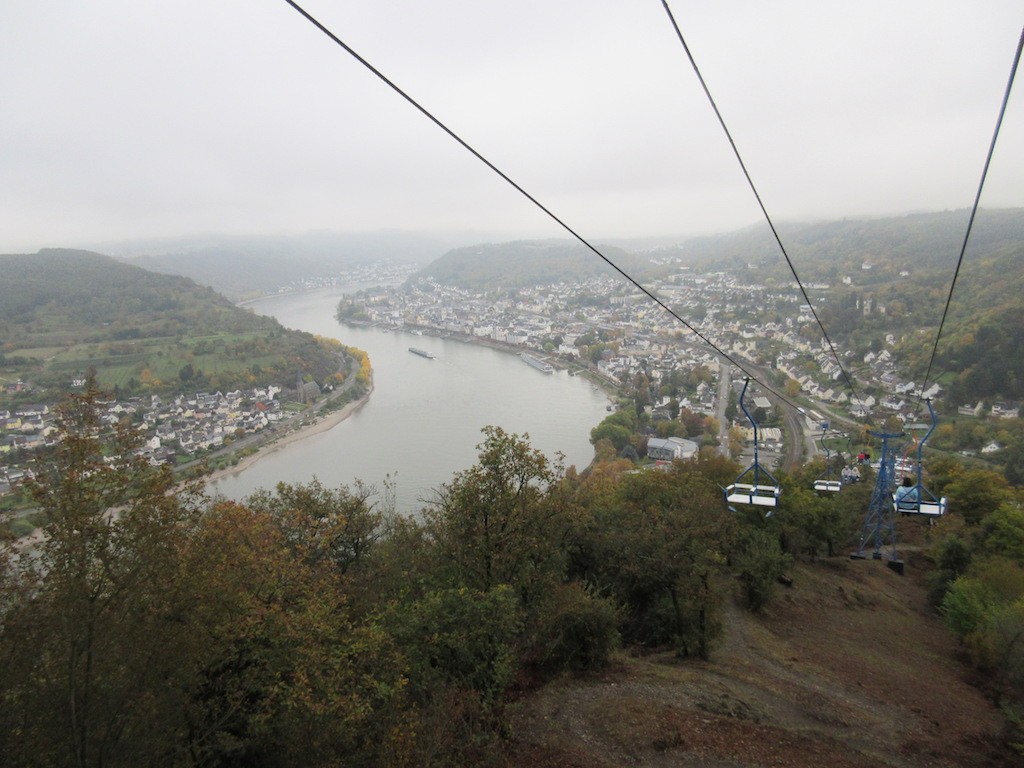
We then took a ski lift for a twenty minute ride up the hillside to a look out point where we could see the hairpin turns the Rhine River makes at this point. The weather was only in the 40’s so it was cold and a bit foggy, but the views over the river were still very nice. Train tracks run along each side of the river providing both passenger service and freight transportation. The river is busy with freighter ships carrying all sorts of commercial goods along the river.

For lunch we had a special Oktoberfest lunch with suckling pig, veal, sausages, sauerkraut, pretzels, and many other local favorites.

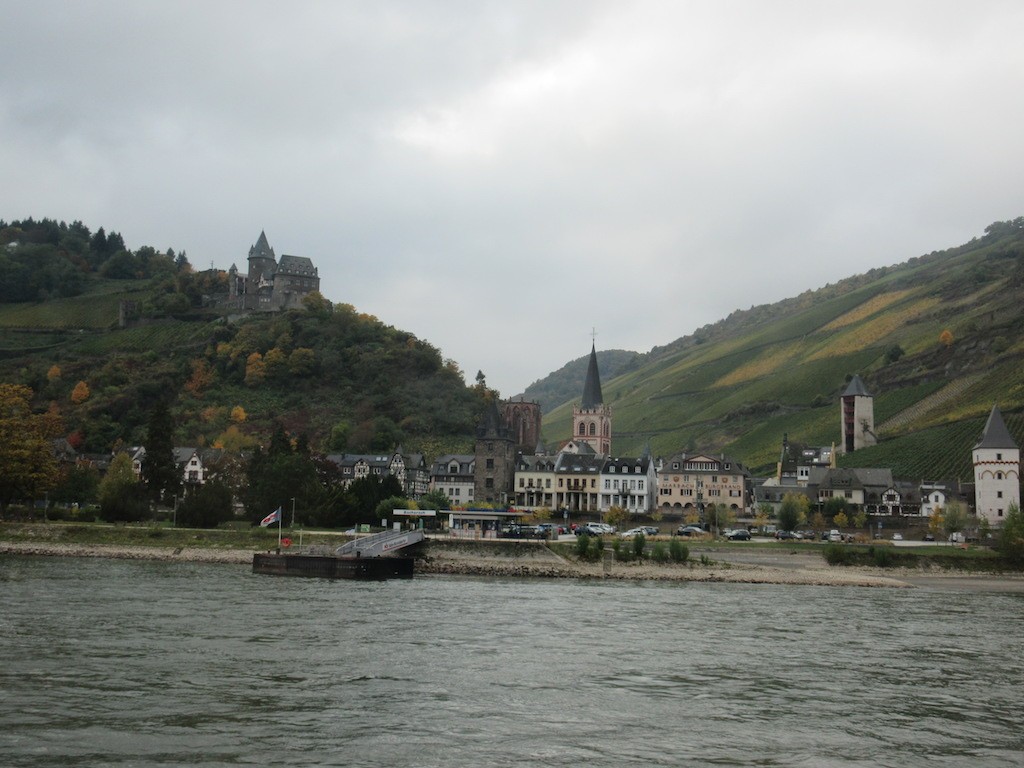
After lunch we cruised the Upper Rhine Valley, considered the most scenic stretch of the river, and a UNESCO World Heritage Site. Along this stretch we saw many castles, as well as the famous Lorelei Statue and Rock. In 1801, German author Clemens Brentano composed his ballad Zu Bacharach am Rheine as part of a fragmentary continuation of his novel Godwi oder Das steinerne Bild der Mutter. It first told the story of an enchanting female associated with the rock. In the poem, the beautiful Lore Lay, betrayed by her sweetheart, is accused of bewitching men and causing their death. Rather than sentence her to death, the bishop consigns her to a nunnery. On the way thereto, accompanied by three knights, she comes to the Lorelei rock. She asks permission to climb it and view the Rhine once again. She does so and, thinking that she sees her love in the Rhine, falls to her death.

Due to the historic nature of this area of the Rhine, there are no bridges over the river and the area is preserved in its current state. People take water taxis across this part of the Rhine.

We arrived in Mainz, Germany about 8:00pm after cruising all afternoon. After dinner about thirty guests headed out to a local bar for the opportunity to see how the locals drink. The bar we visited was a beautiful building that resembled an old church that had been converted to a bar that also served food items. There were many open tables—being a Sunday night it was not too busy. We shared a drink with local passengers before returning to the ship.

October 22, 2016 — Trier, Germany

Trier - St. Peter Church

Trier – St. Peter Church

Trier - Church of Our Lady

Trier – Church of Our Lady

Trier - Porta Nigra

Trier – Porta Nigra

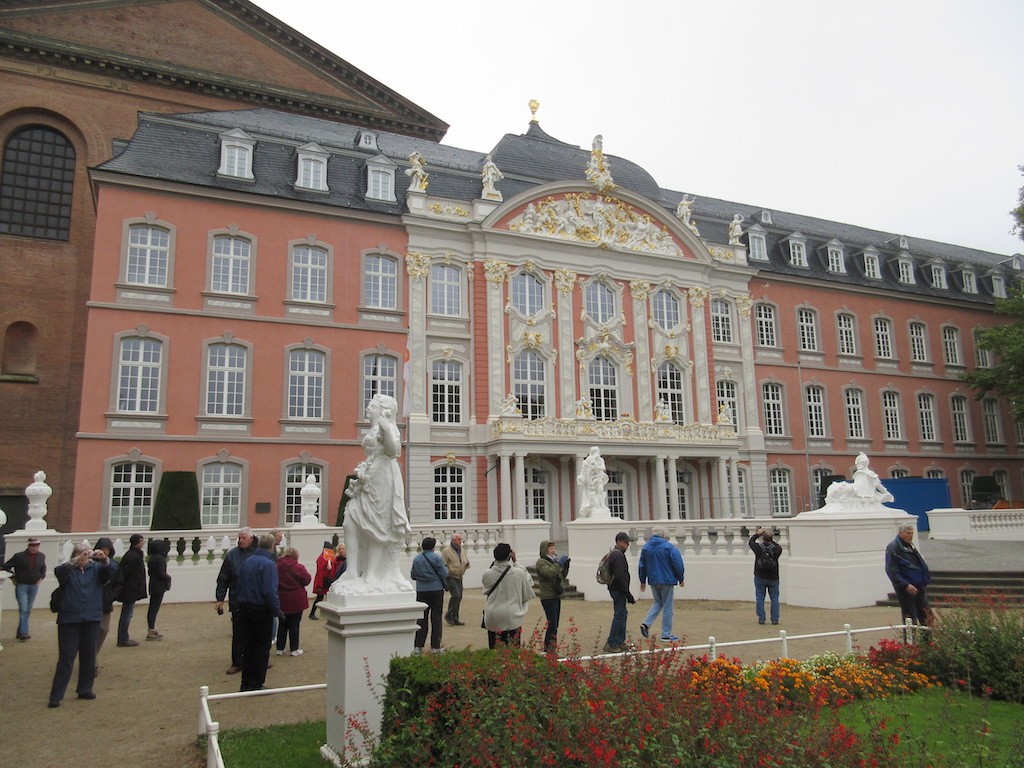
Trier - Palace Facade

Trier – Palace Facade

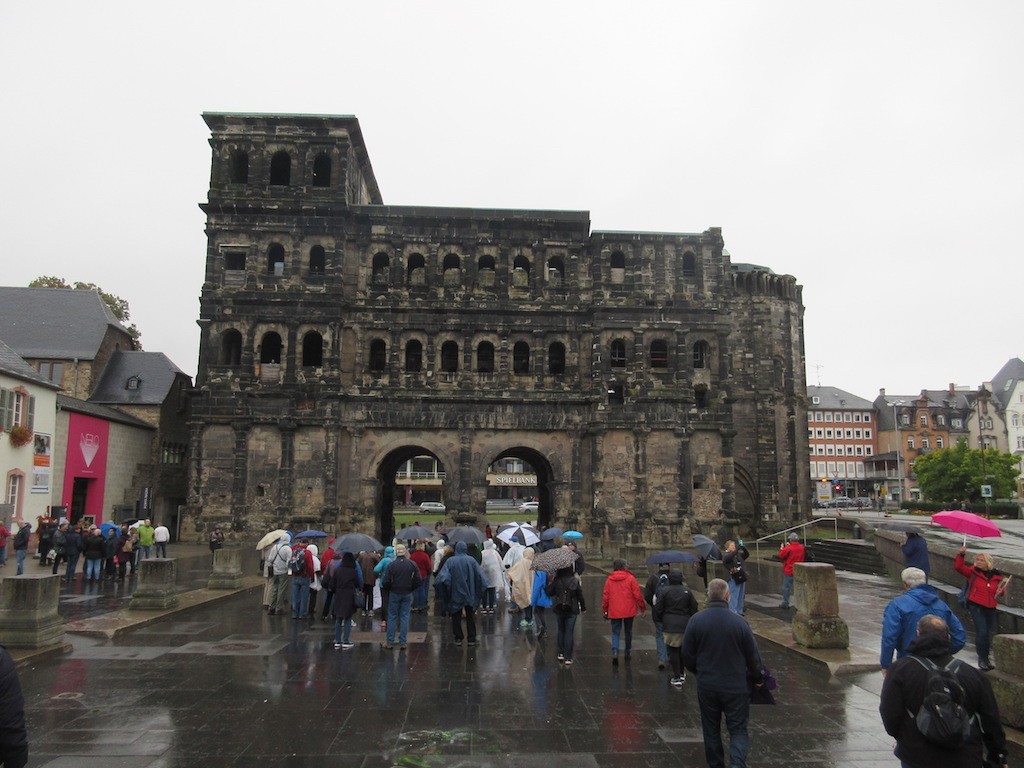
On this day we visited the town of Trier, Germany, with a population of about 100,000 people and is one of the oldest cities in Germany, founded by the Romans before the time of Christ. We stopped to see the Porta Nigra, the best preserved Roman city gate north of the Alps. We drove by the Barbara Baths, one of three sets of ruins from Roman Baths around the city. These baths were built in the second century and had extensive furnaces, pools, sewer systems and a heating system.

We visited the remains of an old Roman amphitheater where gladiators fought other men and exotic animals from tigers to elephants. Many of the fighters were slaves who were trying to improve their place in society if they could win several battles, unfortunately many did not survive the battle.

We saw a large simple church that was originally built by the Romans but later incorporated into a huge palace and later restored to a church. The church today has the exposed bricks and mortar but all of the ornate marble and painted stucco exterior are gone. Attached to the rear of the church is a small portion of the palace and a classical styled garden maintained by the city.

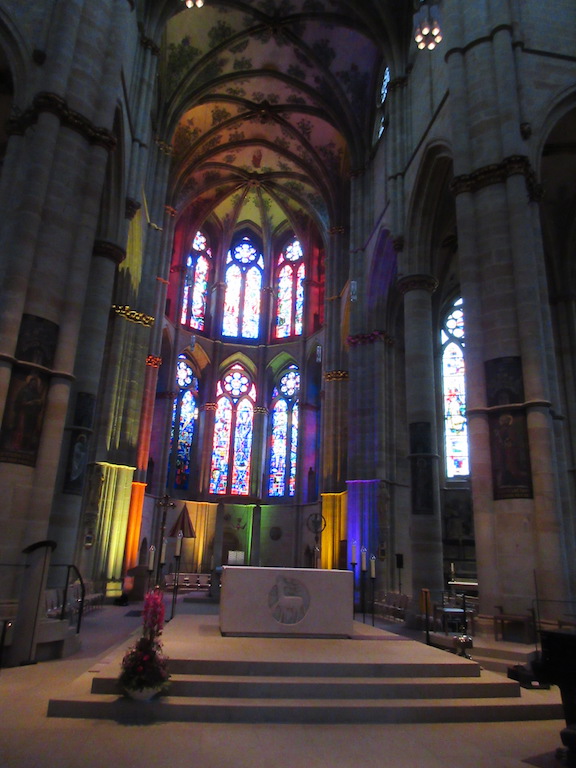
There is also an amazing Roman Bridge built in the second century to span the Moselle River and is still used to cross the river today. Our next stop was the Liebfrauenkirche or Church of Our Lady, built in the Gothic style, although the stained glass windows and the altar were quite modern in style and the altar was in the center of the church. Next to that church was another expansive church called the High Cathedral of St. Peter. This cathedral is one of the oldest cathedrals in the country and the largest in Trier. Portions of the church date back to the fourth century and it has been added onto and altered ever since. Outside the cathedral is a peaceful garden and cemetery courtyard. Below the main sanctuary is another chapel and crypt.

For lunch we visited the Weingut Georg Fritz von Nell, a wine estate that has been in the same family for more than 200 years. Here we enjoyed a four course lunch with wine soup, salads, pork steak that had been marinated for two days, scalloped potatoes with cheese, pane-cotta and of course, tasted six of their delicious wines. Kent enjoyed the red grape juice.

By late afternoon we re-boarded the river boat in the town of Zell and headed for Boppard on the Rhine River. After dinner we participated in the evening’s entertainment game called the Liar’s Club. Three members of the crew each told a story about the meaning of a particularly obscure word like Fullfart. The audience would then have to decide who was telling the truth. The table or team that had the most correct answers won a bottle of champagne.

October 21, 2016 — Bernkastel, Germany

Bernkastel - Town Square

Bernkastel – Town Square

Bernkastel - Wine Tasting Shop and Cellar

Bernkastel – Wine Tasting Shop and Cellar

Bernkastel - Narrow Timber House

Bernkastel – Narrow Timber House

Bernkastel - Wine Fountain

Bernkastel – Wine Fountain

Our stop on this day took us to the small town of Bernkastel, known as the International Town of Vines and Wine. This historic city is filled with gorgeous historic gabled timber-frame houses from the 17th Century. Our walking tour took us through the Jewish section of town, several ornate fountains, unique timber-frame houses and lots of bakeries and sweet shops. This is the sweetest little town that we have visited thus far. What it lacks in size it makes up in character and charm.

Kent went to the Jewish cemetery with a Jewish couple from New York city and Rita where there were 33 Gravesites in the cemetery. The Jewish lady found her acquaintance or grandparent’s graves among those buried there. The cemetery is located high above the river and city in the vineyards.

This region is well known for its Riesling grape vineyards and wines. The population of the town is only about 7,000 inhabitants. Our tour took us to a charming wine tasting shop complete with a cellar where we sampled several varieties of the local Riesling wines.

The afternoon was free for us to further explore the town on our own. Kent and I sat in a cute little coffee and pastry shop for coffee, hot chocolate and treats to watch the people go by.

There are remains of an old castle high up in the hill above the city but we chose not to walk up there to explore it today.

After dinner we had a troupe of young Can Can dancing girls direct from Paris to entertain us. They performed a variety of different dances, songs and comedy including some audience participation where several men were called on stage to try out their dance skills. Luckily we escaped the audience participation. The show was very entertaining and I think all of the guests enjoyed the entertainment. We had seen them on our Vantage river boat tour of France last year but we still enjoyed them and their high kicks.

October 20, 2016 — Schweich, Germany

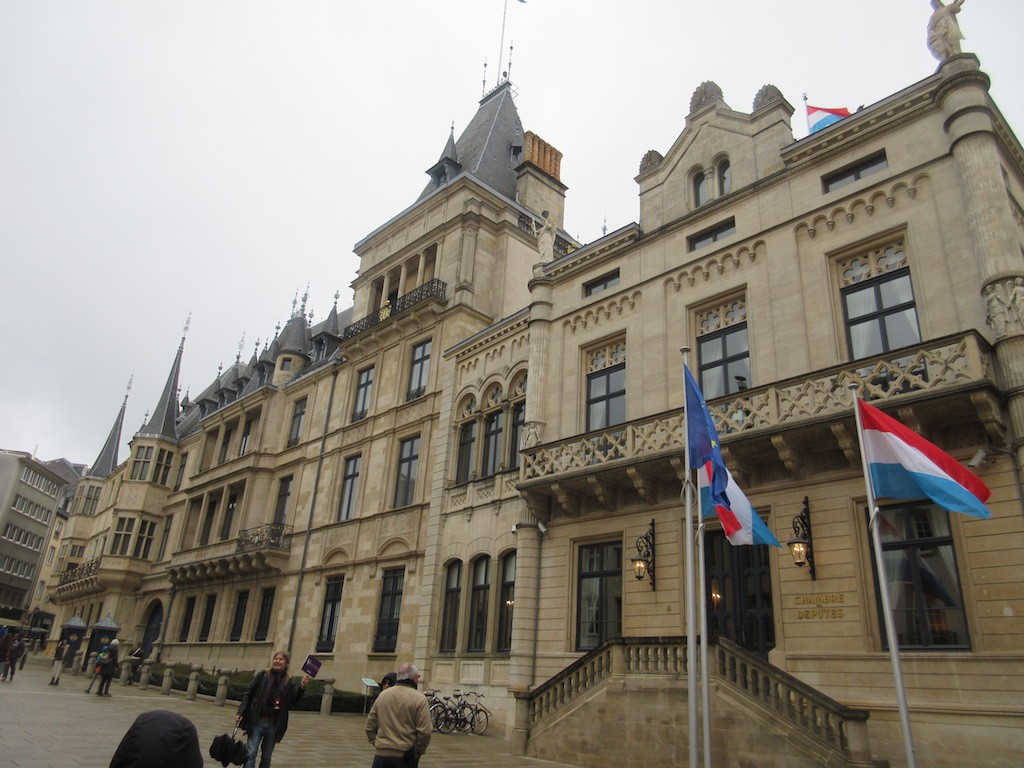
Luxembourg - Parliament Building

Luxembourg – Parliament Building

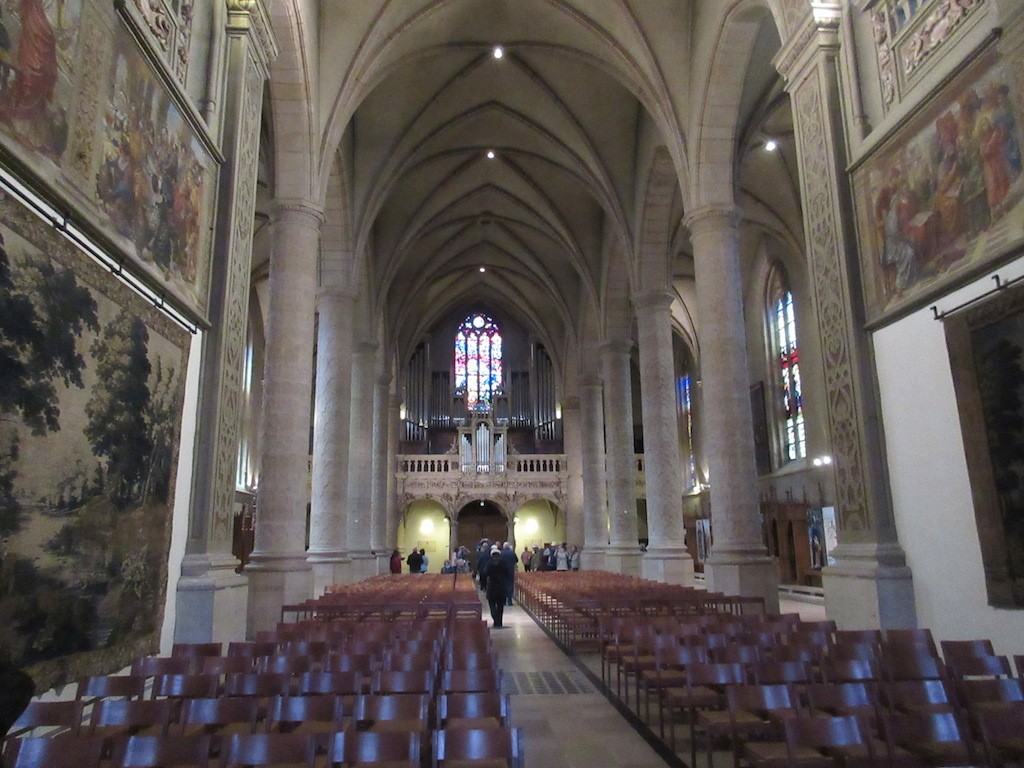
Luxembourg - Church Interior

Luxembourg – Church Interior

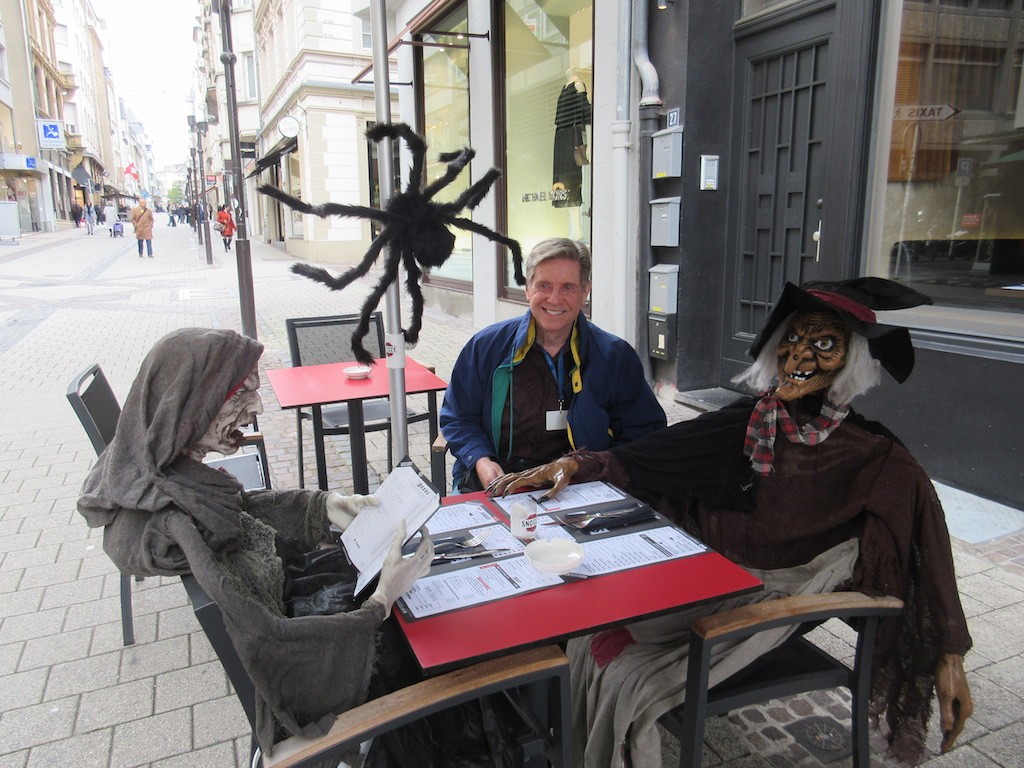
Luxembourg - Kent having lunch with friends

Luxembourg – Kent having lunch with friends

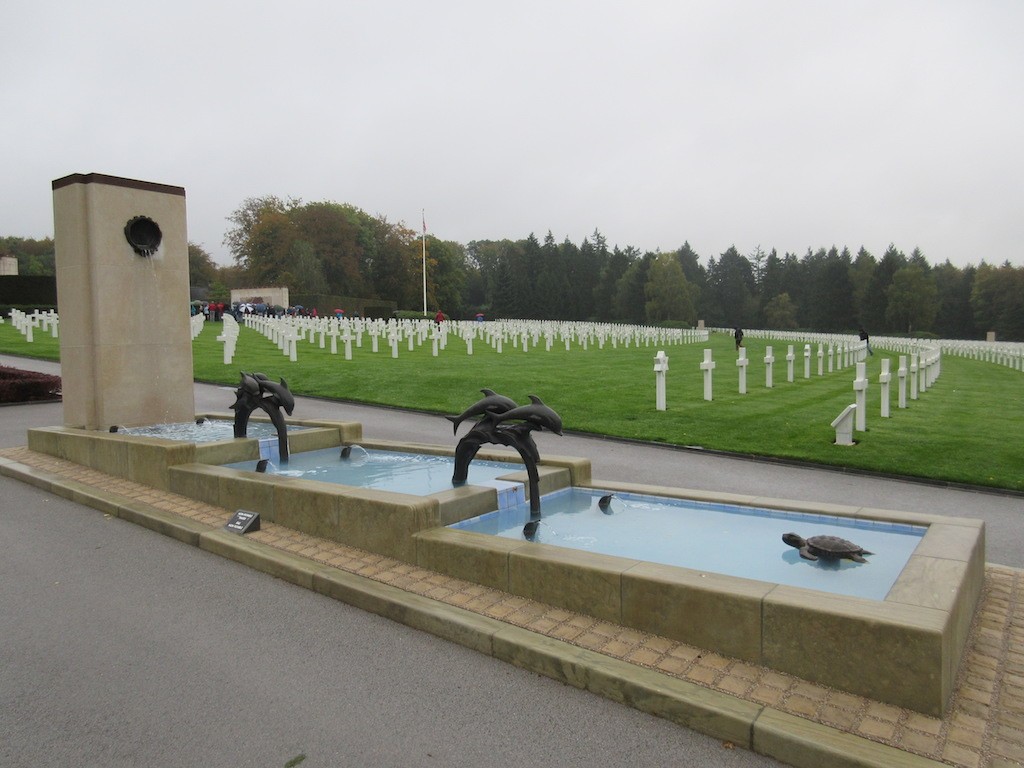
Luxembourg - US Cemetery

Luxembourg – US Cemetery

The weather was very cold with day time highs at only about 50 degrees and some light rain. It was also cloudy and grey.

First thing in the morning we had a lecture about the Romans by Dr. Wolfgang Alt a local historian. He discussed how much of this region was controlled by the Romans and information about the roads, churches and bath houses that were originally built at that time.

An optional tour took us to Luxembourg city with a population of about 115,000 inhabitants. The country of Luxembourg is about 1,000 square miles in size (about the size of Rhode Island) and has a population of 525,000. Luxembourg is one of the smallest sovereign states in Europe and is headed by a grand duke, Henri, Duke of Luxembourg.

The city is built on a plateau in a large canyon atop high rampart walls. We visited the Luxembourg church built in the 1600’s and later added on to some 300 years later. The church contained beautifully bright and colorful stained glass windows, tapestries, murals and ornate carvings. We stopped for lunch with some new friends Rita and Leslie as it was extremely cold out and we wanted to warm up. The small deli/market with a restaurant had a plate du jour featuring roast turkey with a tomato and pea sauce, cauliflower, broccoli and some pasta noodles. The turkey was very dry and over cooked but being inside got us warmed up.

We also visited the Luxembourg American Cemetery where 5,076 American service members are buried. The 50-acre cemetery was given to the US in 1951 for free and without taxation in perpetuity. Most of the service members were killed in the Battle of the Bulge which was fought nearby in the winter of 1944/45. Resting here is the grave of General George S. Patton, one woman and 22 sets of brothers.

The cemetery is beautifully maintained similar to, although smaller than, the cemetery at Normandy in France. The lawns are perfectly manicured and the rows of white marble crosses are placed in perfect rows. The veterans from our ship participated in a laying of a wreath ceremony in front of the memorial before a guide told us about the local battles and stories of a few of the soldiers buried here.