June 22, 2019 Prague, Czech Republic

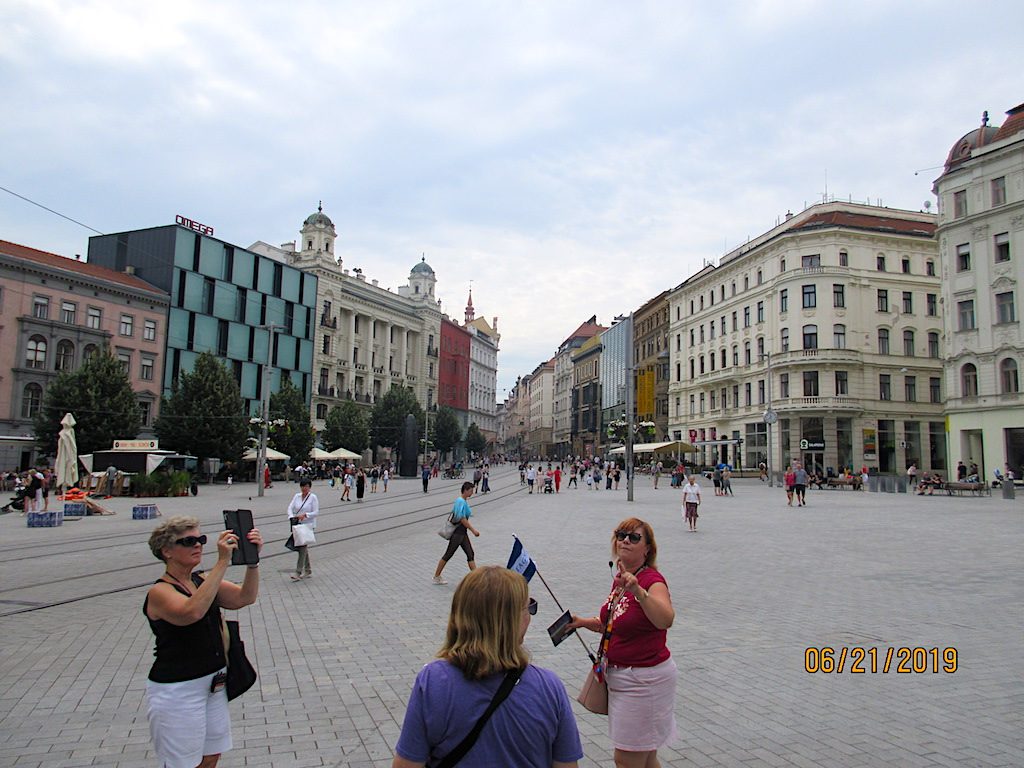
Brno Town Square

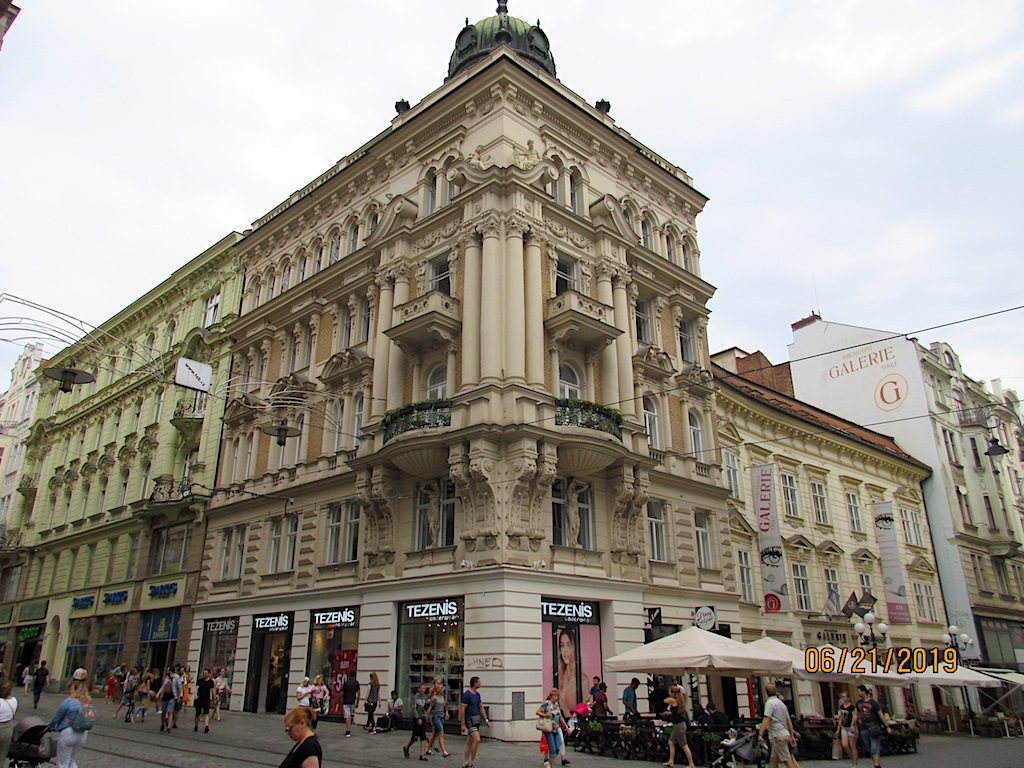
Brno Architecture
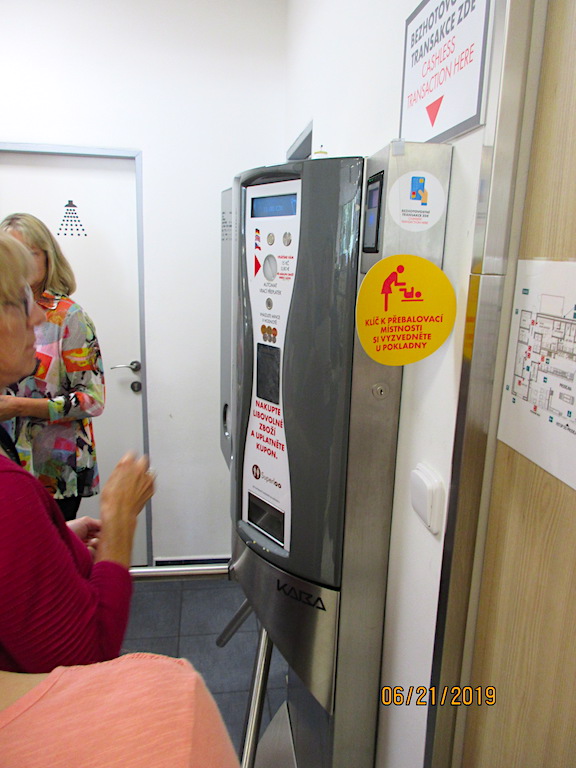
Pay Toilet Machine
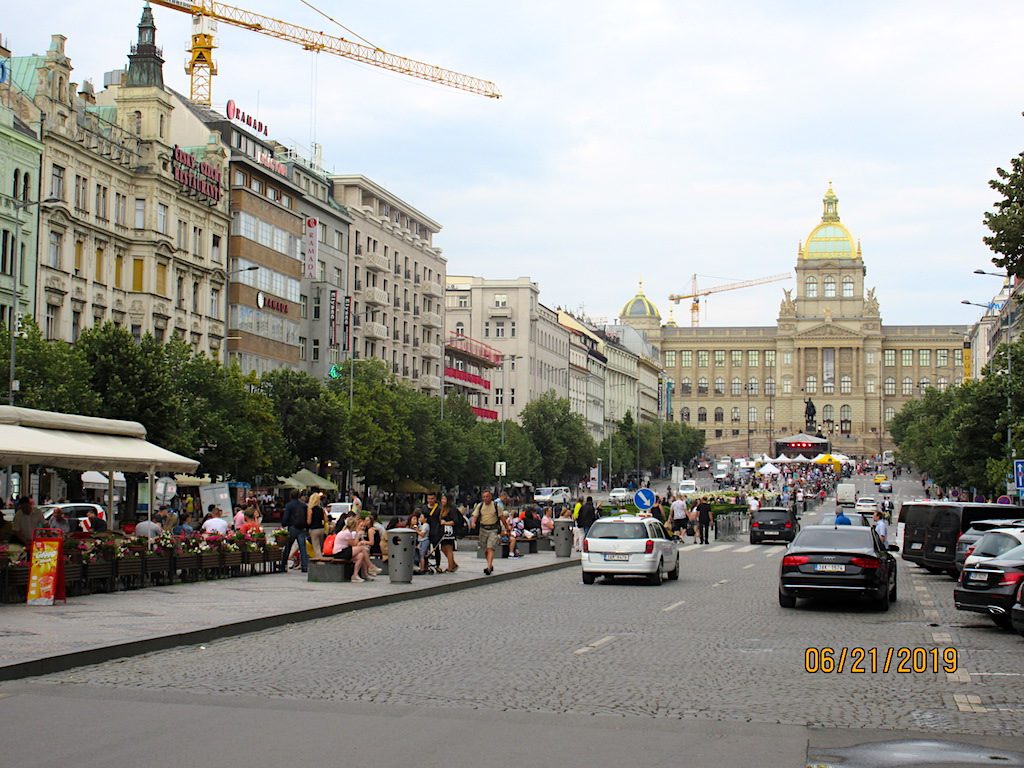
Prague Wenceslas Square

Prague Architecture
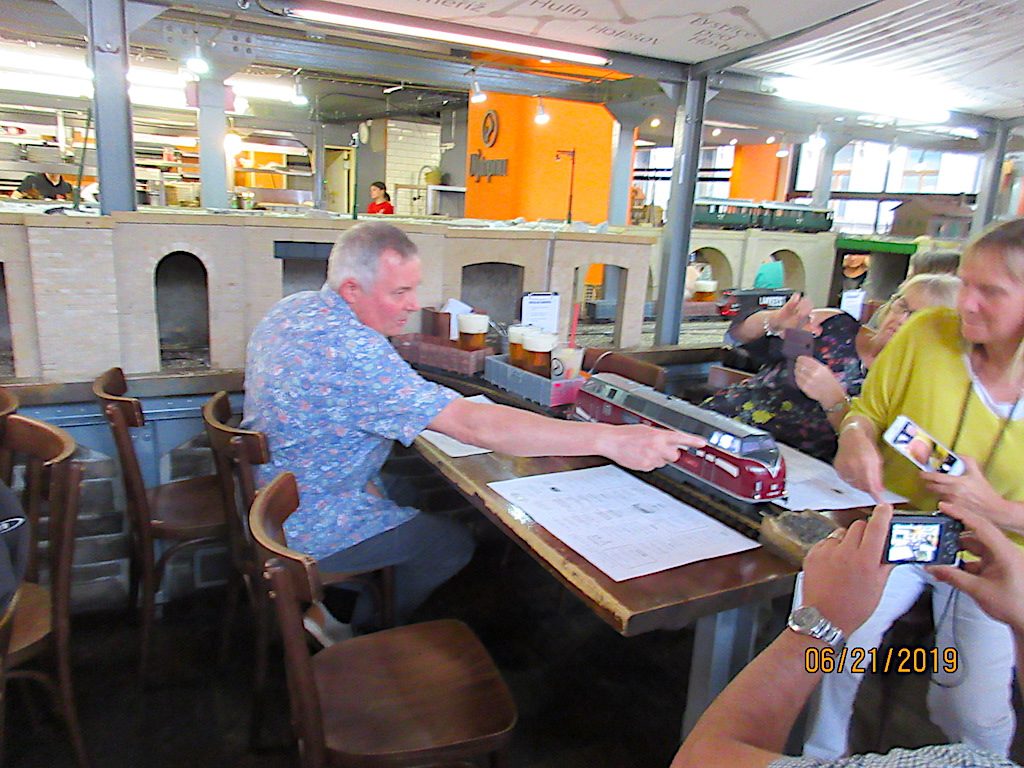
Prague Train Restaurant

This morning we travelled from Bratislava to Prague, stopping in the thousand-year-old town of Brno, Czech Republic, where we had a brief walking tour. Brno is the second largest city in the Czech Republic, a university town and it is known for its modernist buildings. The gothic cathedral of St. Peter and Paul built in 1891 sits high atop the town’s highest peak. We stopped for a bite of lunch on our own in Brno before continuing on to Prague.

The bus ride from Bratislava to Brno took us only about 90 minutes to reach. From Brno to Prague the ride was about three hours. Along the way we stopped at a roadside service station and convenience store to use the toilets. At the stop they had pay toilets where you had to enter coins equal to about 75 cents into a machine that would then allow you to pass the turnstile.

Our hotel for the next three nights is the art deco-styled historic hotel called the Alcron. Originally designed and owned by Alois Krofta, the Alcron Hotel was built in 1929, completed in 1930 and opened for business by 1932. The hotel was the only luxury hotel in Prague and has been host to many celebrities, athletes and political figures since its opening. The hotel is centrally located near the Old Town Square, Charles Bridge and Prague Castle.

Our city guide, Martina, took us on a short walk of the immediate area around our hotel to familiarize us with the area. We walked around the very busy Wenceslas Square filled with shops, outdoor dining spots and a stage with live entertainment. There were many tourists as well as locals out for a Saturday night. We stopped at a local restaurant with miniature train tracks running around the restaurant stopping at each table to deliver the drinks. We had pulled pork and French fries before returning to our hotel for the night.

Czech Republic: Geography & Quick Facts
Across its two main regions—Moravia in the east and Bohemia in the west—the landscapes of the Czech Republic vary from broad plateaus to rolling hills to mountains. Though nourished by many rivers (including the Elbe) which have allowed several port cities to thrive, the Czech Republic is entirely landlocked, bordered by Germany, Austria, Slovakia, and Poland. Its very earth is among its greatest treasures, with coal, clay, and graphite among its chief resources.
Area: 30,449 square miles
Population: 10.5 million
Languages: Czech
Capital: Prague
Ethnic groups: More than 90% Czech with smaller Slovak, Roma, Silesian, Polish, German, Ukrainian, and Vietnamese populations
Religions: Roman Catholic, Protestant

Czech Republic History: From the ninth century onward, the region where the Czech Republic today lies was known as the Lands of the Crown of Bohemia. At times a fiefdom of the Holy Roman Empire and then increasingly controlled by the Germans, the nation experienced its Golden Age under the 14th-century rule of Charles IV, who freed the Bohemian Kingdom. After being crowned Emperor, Charles set about transforming Prague, already booming, into a true imperial city. Because Prague was spared the devastation of other European cities through the ages, much of his glorious city can still be seen today, from the royal castle to universities to the “New Town” (named around 1400 AD) district.

The dawn of the 15th century led to changes of another kind: the birth of the Hussite religious movement, challenging the papacy (and thus falling within the scope of the Protestant Reformation). This movement became a pro-Czech/anti-German flashpoint for the nation, with repercussions from the university to politics, with theologian Jan Hus’s supporters seen as rebuking the past influence of Germany on Czech affairs and policies. But when Hus eventually defied the King as well, Hus was expelled, then arrested, and burned at the stake as a heretic. Even as these inter-denominational conflicts played out, the Kingdom of Bohemia still enjoyed autonomy until the 1620 Battle of White Mountain, when the Habsburgs defeated the Czechs and the nation entered a 300-year period of Austrian rule.

After World War I, the Czech and Slovak people emerged from their long subjugation to form the United Nation of Czechoslovakia. Despite speaking separate languages and having distinct cultures, this seemed a dramatic improvement over Habsburg rule. But autonomy did not assure control. Despite maintaining a parliamentary democracy for the next 20 years, Czechoslovakia was not strong enough to resist a pre-war pact made by Germany, France, and England that required the nation to give up part of its territory—the largely German populated Sudetenland—to the Nazis.

The pact emboldened Germany, which soon marched into the remaining Czech lands. But when World War II ended, the shoe was on the other foot, and nearly three million Germans were forcibly expelled from Czechoslovakia. Once the smoke of war had died away, a remarkable thing was revealed: unlike many of Europe’s great cities, Prague and its “1,000 spires” had survived nearly perfectly preserved. The castle district, with its palaces, churches, galleries and the largest ancient castle on earth, remained impressively intact–a true treasure.

For a brief time, Czechoslovakia’s democratic leadership envisioned the nation as a bridge between the West and the newly hardening Eastern Bloc. But the Communist take-over of 1948 ended that dream, and strict party orthodoxy ruled for a time. Twenty years later, members of Czechoslovakia’s Communist party angled for liberal reforms, installing a Slovak as party head, while taking first steps toward social, economic, and political progress, in hopes of what the leadership called “socialism with a human face.” It was not to be. Soviet tanks rolled in, occupying Czechoslovakia, and crushing opposition for another two decades.

In 1989, when Communist police used deadly force to quell a peaceful pro-democracy rally, the citizenry came together to demand change. The Czech Civic Forum and group known as the Slovak Public Against Violence united millions behind regime change. Facing a sudden near-complete loss of membership, the Communists stepped down and dissident playwright Vaclav Havel became the new president in what became known as the Velvet Revolution. A full 95% of the population voted in the subsequent parliamentary elections, demonstrating their eagerness to move forward. That was nearly the last thing they agreed on: soon, with liberation the subject of the day, the Slovak people wanted their own state, and by 1993, they had one.

Since that day, the Czech people have been citizens of truly their own land: the Czech Republic. Prague has become an international arts hub and a magnet for travelers seeking the best of historic monuments and modern sophistication, making the Czech Republic one of Europe’s most visited destinations.
June 21, 2019 Bratislava, Slovakia

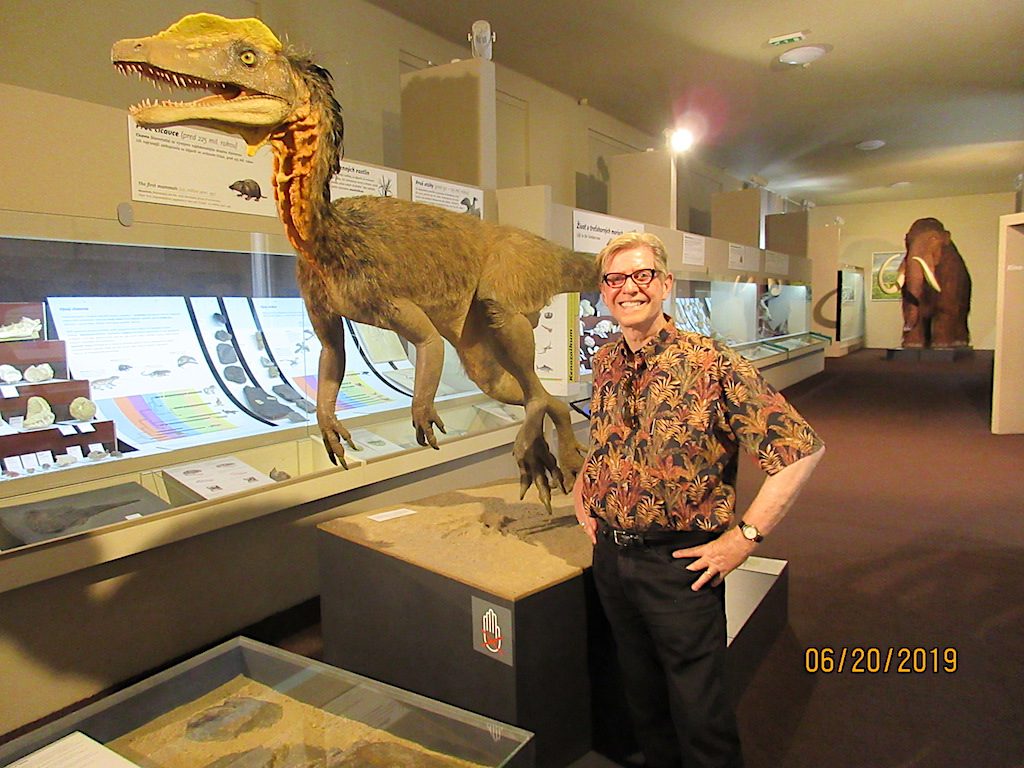
Kent and his new friend at the Slovak National Museum

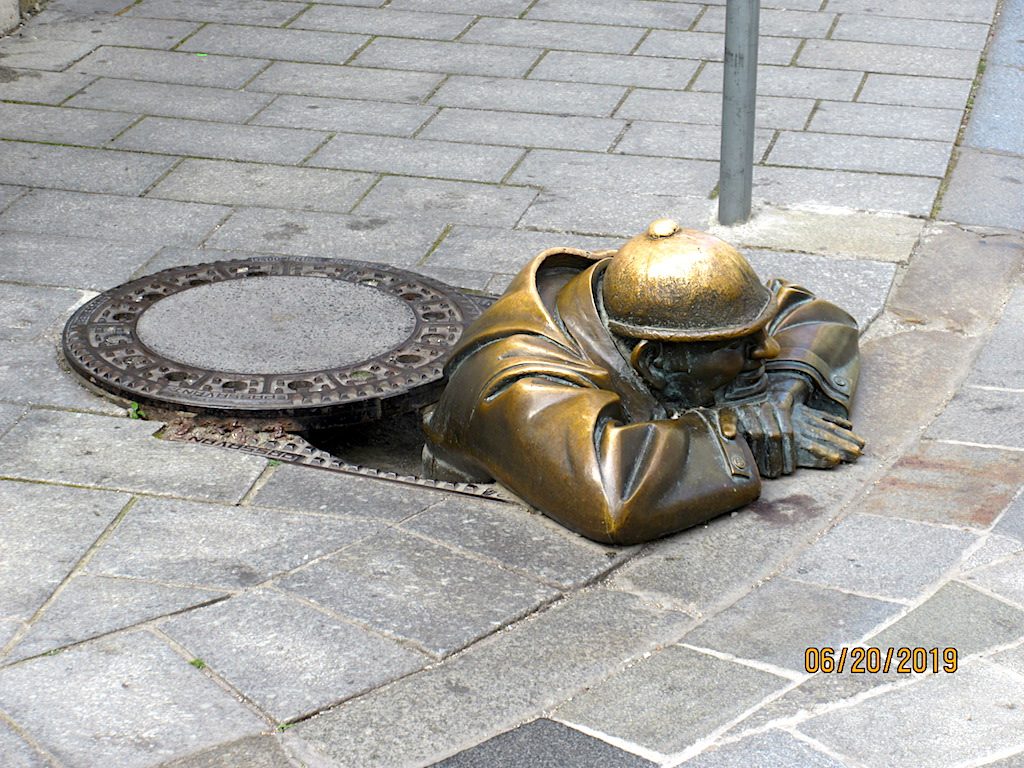
Bratislava Street Art-Represents workers not war people.

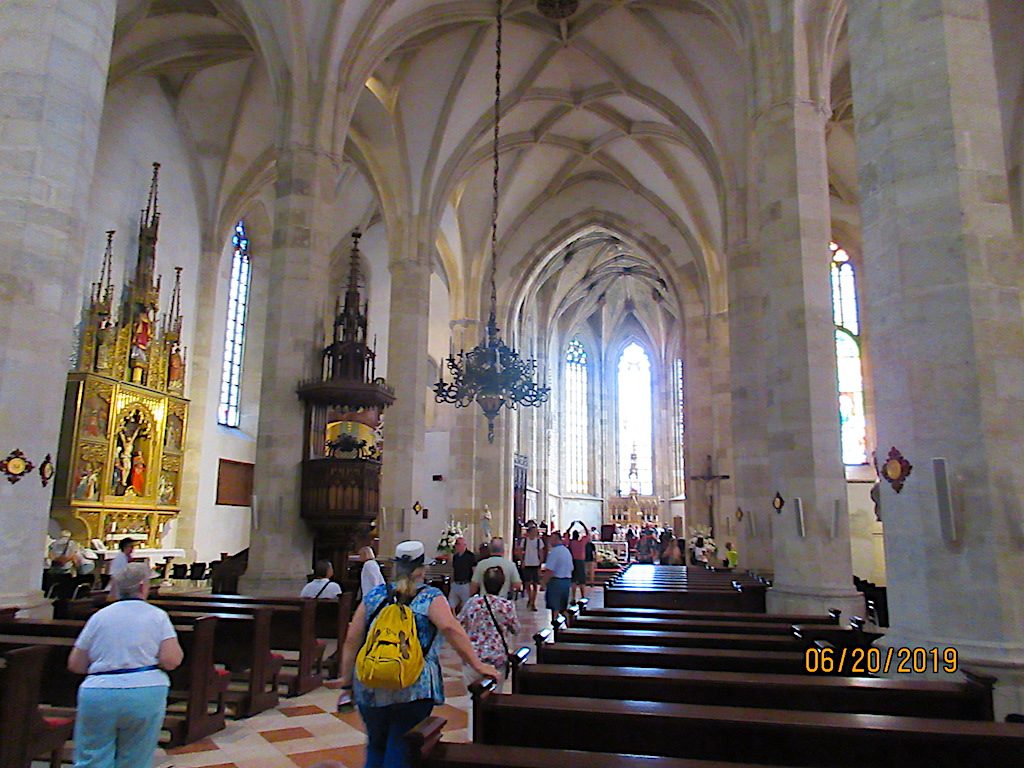
St. Martin’s Cathedral Interior

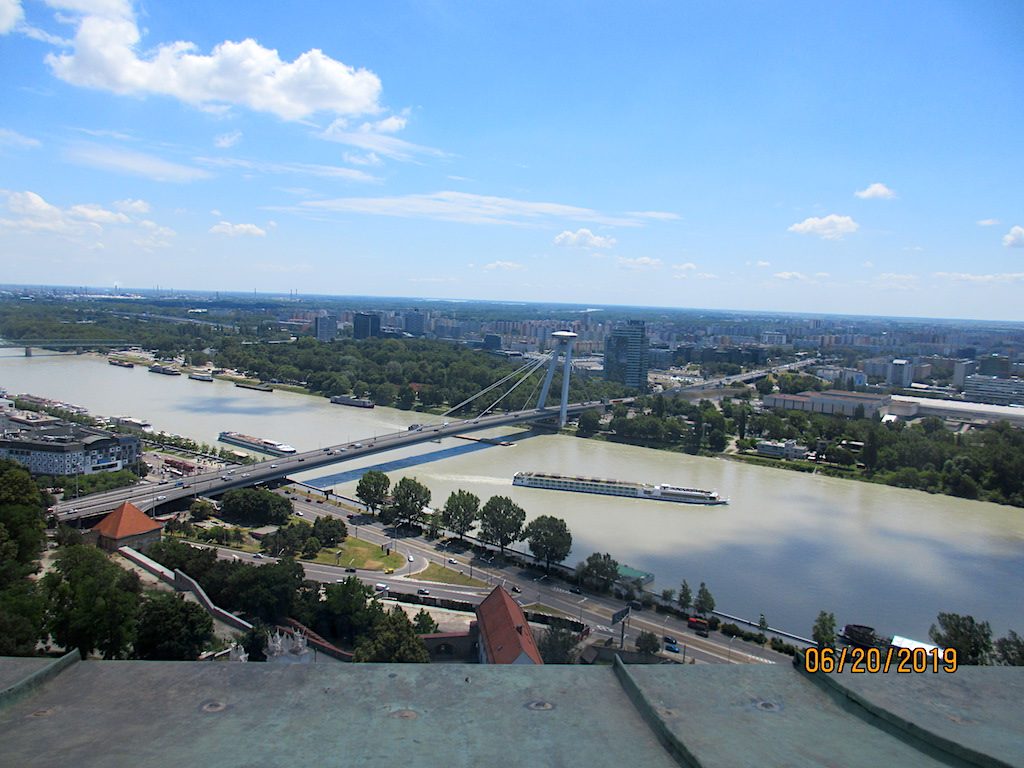
View of the Danube River from the Bratislava Castle Tower

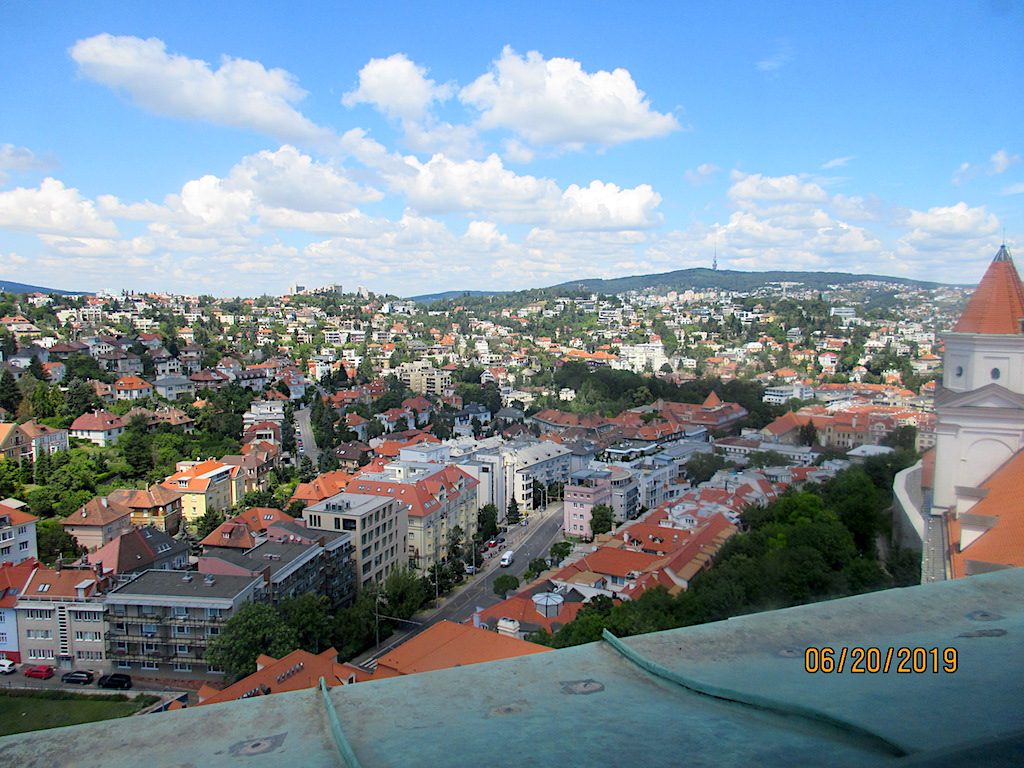
Bratislava Castle View from the Tower

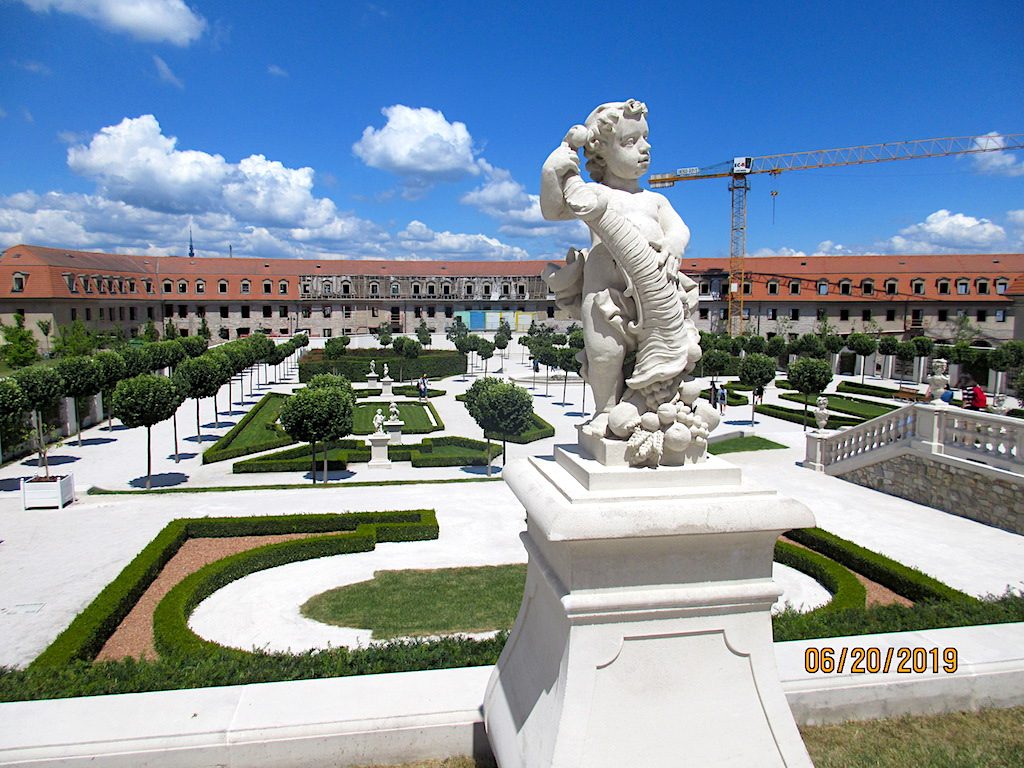
Bratislava Castle Garden

We started the day off with a short train ride (think bus shaped like a train) from our hotel to the old town to begin our walking tour of Bratislava led by a local city guide named Peter. Once in the old town we walked through the historic streets getting some of the history of the places and buildings we were seeing. We took a peek inside the ornate St. Martin’s Cathedral.

After our two-hour walking tour, we took the train up to the re-built Bratisalva Castle for a look inside and out. Inside the recently reconstructed castle we found several floors of exhibits of local glass manufacturing to famous local artists’ paintings. Outside the formal gardens have been reconstructed as recently as 2016 and restoration work continues on the castle grounds.

After our tour of the castle we headed back to the old town area where we had lunch at a local sidewalk café. Our next stop was the Slovak National Museum where we explored exhibits about a local architect works to women’s head covers through the ages in the region. They have an extensive exhibit on animals from bugs to giraffe and have a lot of nice panorama’s showing off the taxidermy animals. The museum is located in a historic old building although it could use some renovations and updating including installing air conditioning.

Bratislava is the capital city of Slovakia with a population of about 470,000 people while the metropolitan area has a population of about 650,000 inhabitants. About one million tourists visit Bratislava annually.

One of Eastern Europe’s great “hidden gems,” the ancient capital of Bratislava has a lovely array of baroque palaces, graceful fountains, and narrow streets. In fact, many who visit the city today compare it to Prague and Budapest. Already a large trading city in the twelfth century, Bratislava is located on both sides of the Danube upstream from Budapest, and served as Hungary’s capital for 300 years, until 1830. During that time, eighteen Hungarian monarchs, eleven kings, and seven queens, were coronated at St. Martin’s Cathedral. The composer Franz Liszt was a frequent visitor, and Napoleon and Emperor Franz I of Austria met at the Primate’s Palace in 1805 to sign a peace treaty. The city was part of Czechoslovakia until that country split into Slovakia and Czech Republic.

Bratislava Castle, occupying a spur that sweeps down to the Danube, is a walled fortress that has undergone many reconstructions since its construction in the tenth century. The fairly compact old city center features a superb collection of baroque palaces, as well as numerous landmarks of Hungarian influence. Bratislava is also noted for its excellent museums. Along the river, the Slovak National Museum features the anthropology, archeology, and natural history of the region. The Slovak National Gallery contains an impressive art collection. Other museums are dedicated to such subjects as wine production, folk music, and Jewish culture.

The afternoon included free time to explore on our own or to take an optional tour to the Cerveny Kamen Castle located about an hour’s drive away. The castle dates from the 16thcentury and was designed by the Thurzo family primarily as a home with a large and defensible built-in storage area for valuable goods. Unfortunately, due to the cost to build the castle it was soon sold to another aristocratic family called Palffys. It was frequently restored over the centuries and today houses a remarkable exhibition of furniture in its many furnished rooms. The museum specializes in the development of the culture and nobility in Slovakia.

Since we had a late and filling lunch we decided that we would venture a few doors from our hotel to the Massimo Italian Restaurant for dessert and coffee. In honor of Kevin’s birthday, we had a delicious Tiramisu and a chocolate soufflé with a berry sorbet. Both were excellent!

June 20, 2019 Budapest, Hungary to Bratislava, Slovakia

Hungarian Strudel Making

Hungarian Goulash

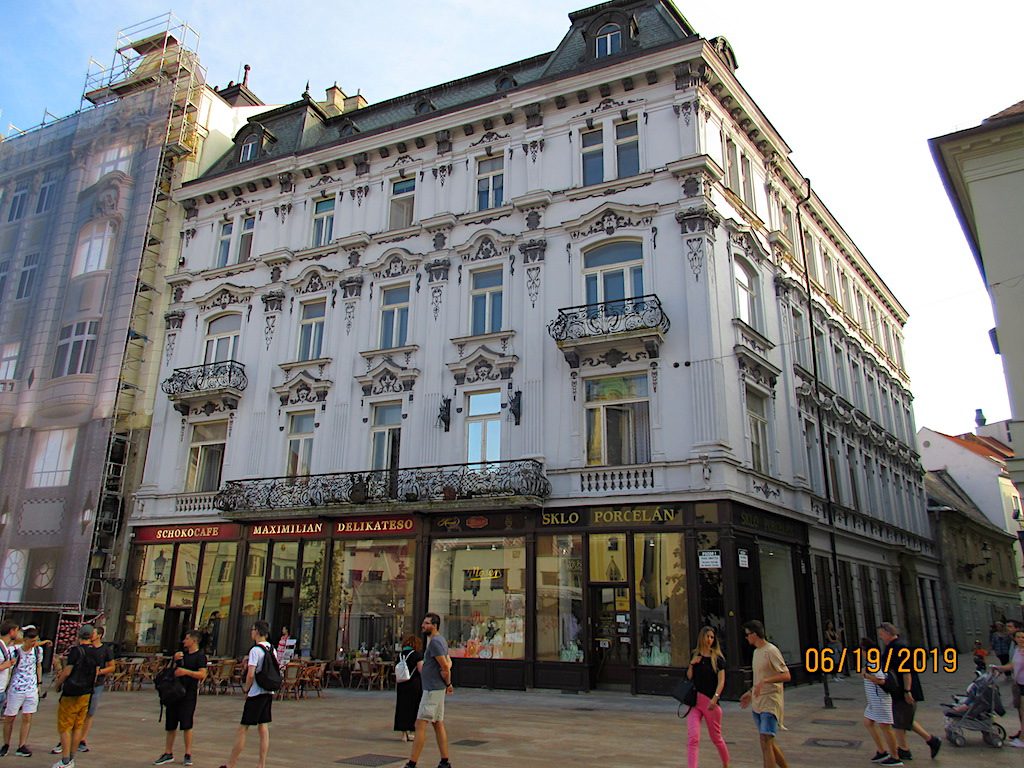
Bratislava Architecture

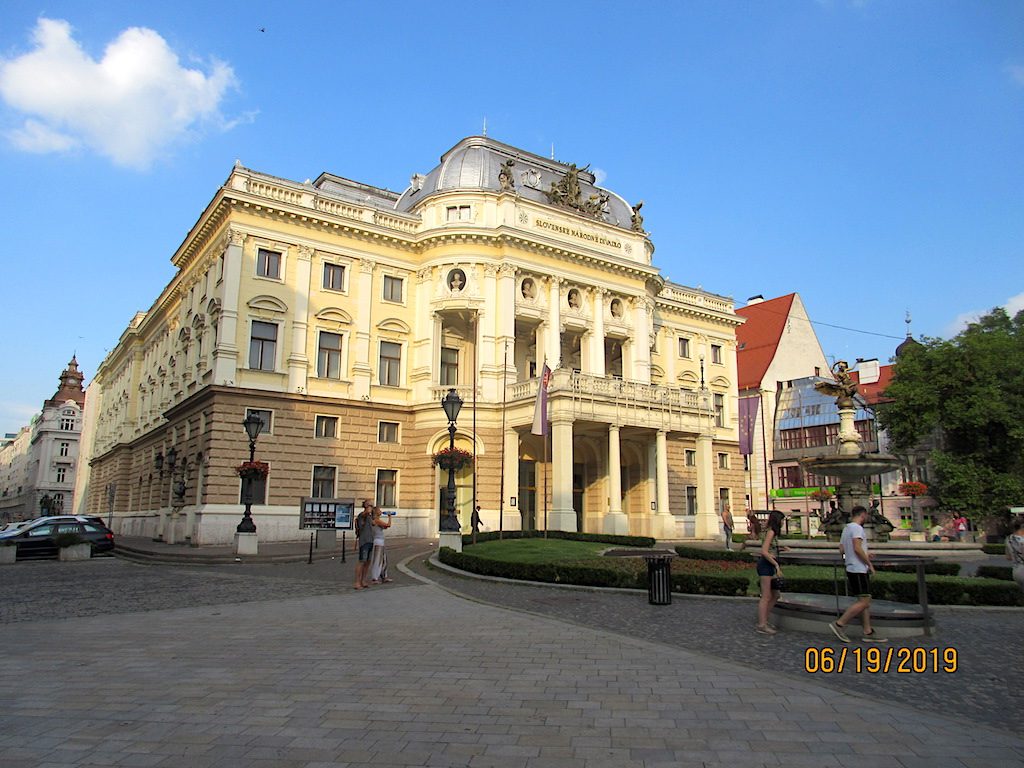
Bratislava Opera House

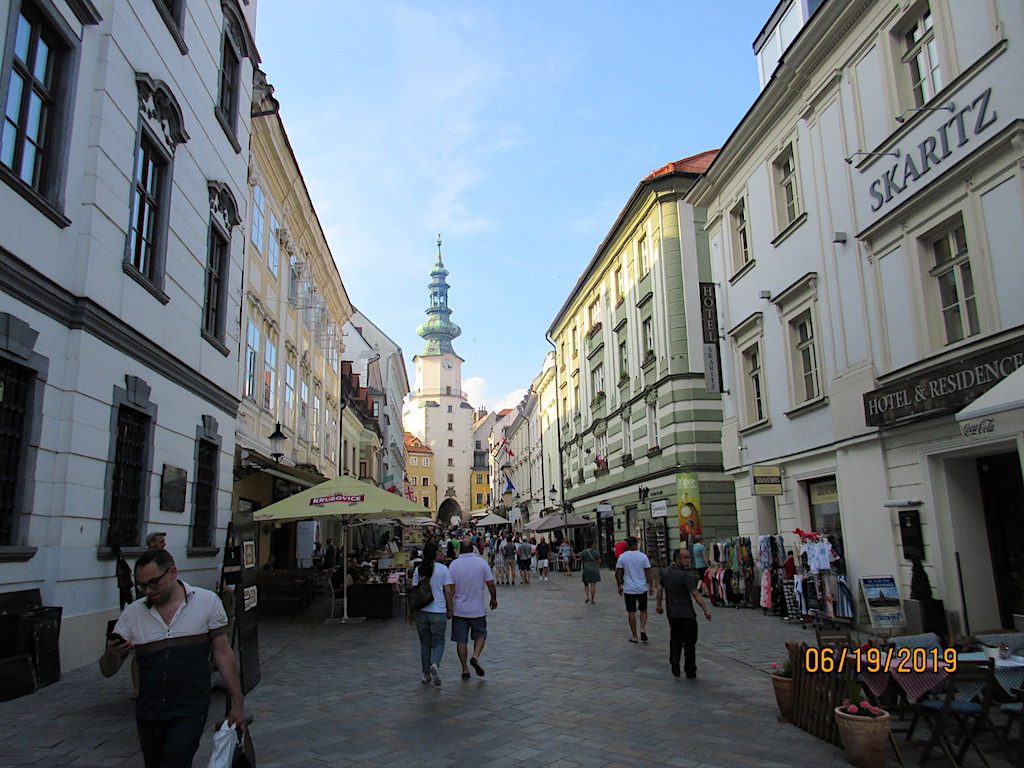
Bratislava Old Town Street with St. Michael’s Gate Tower in the background.

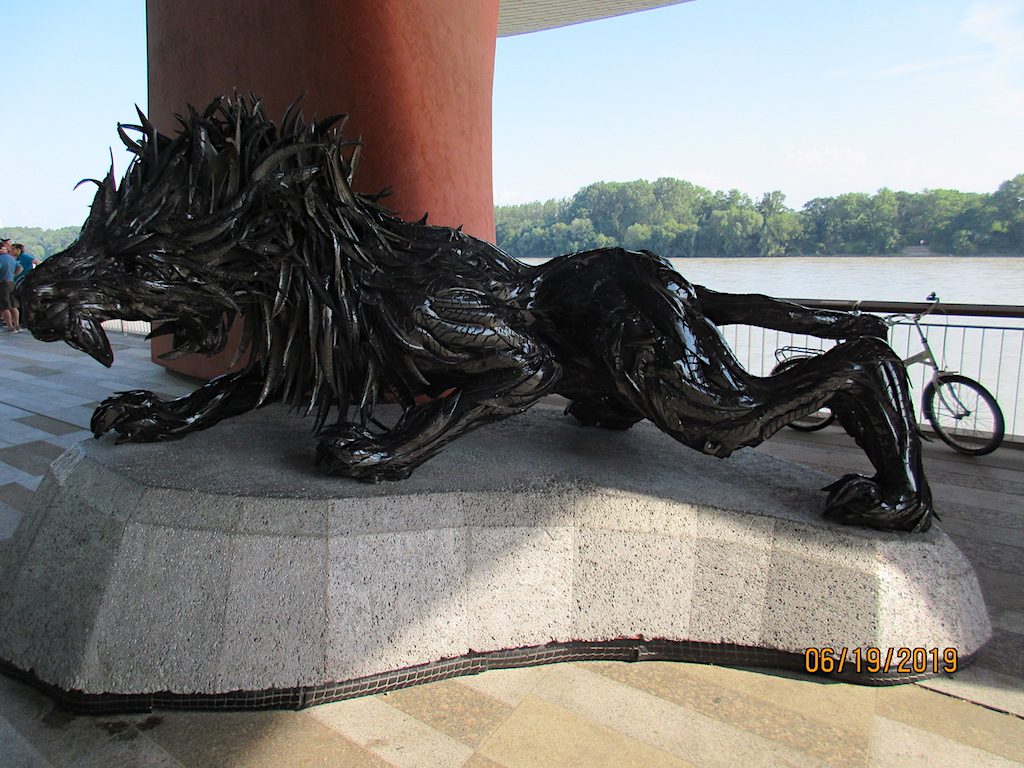
Bratislava staute of a lion made from old tires.

Our friends Ric and Kevin headed home this morning on a very early flight from Budapest to Frankfurt and then on to San Diego. They were on what was affectionately called the pajama shuttle as they had to leave for the airport at 3:00am.

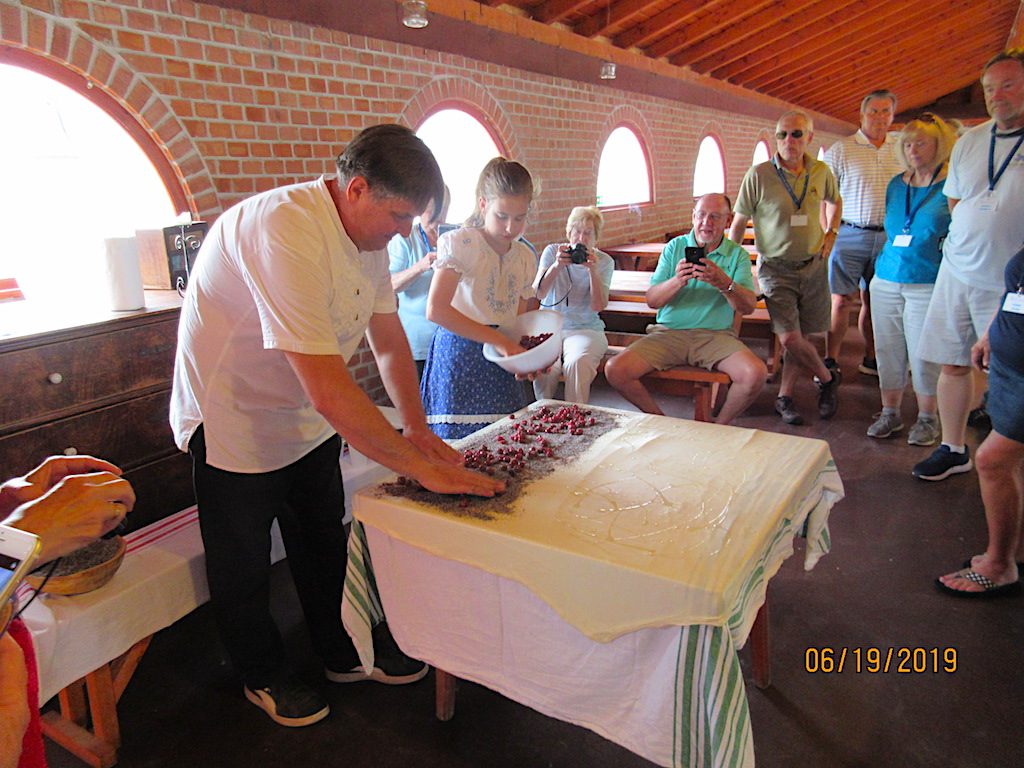
We disembarked our ship at 9:30am for our transfer to Bratislava, Slovakia, by bus. Since there were 55 of us going on the extension we had two large coaches to transport us the 3.5-hour journey. Along the way we stopped in the town of Dunaalmas for lunch at a local family’s ranch. The family hosts all types of events at a ranch where they have horses, a garden and several covered dining and event spaces. We were greeted with a shot of the local welcome drink, a clear liquid in a shot glass that tasted like pure alcohol and went down with a little burning. Next, we helped to make bread that was cooked in a pizza oven over coals. The next task at hand was to help make the cherry strudel for dessert. We assisted with the making of the dough which we stretched very thin over a table before drizzling with oil, a sugar and poppy seed mixture before adding the cherries. The next step involved rolling the strudel pastry up with all of the filling inside before baking in the oven.

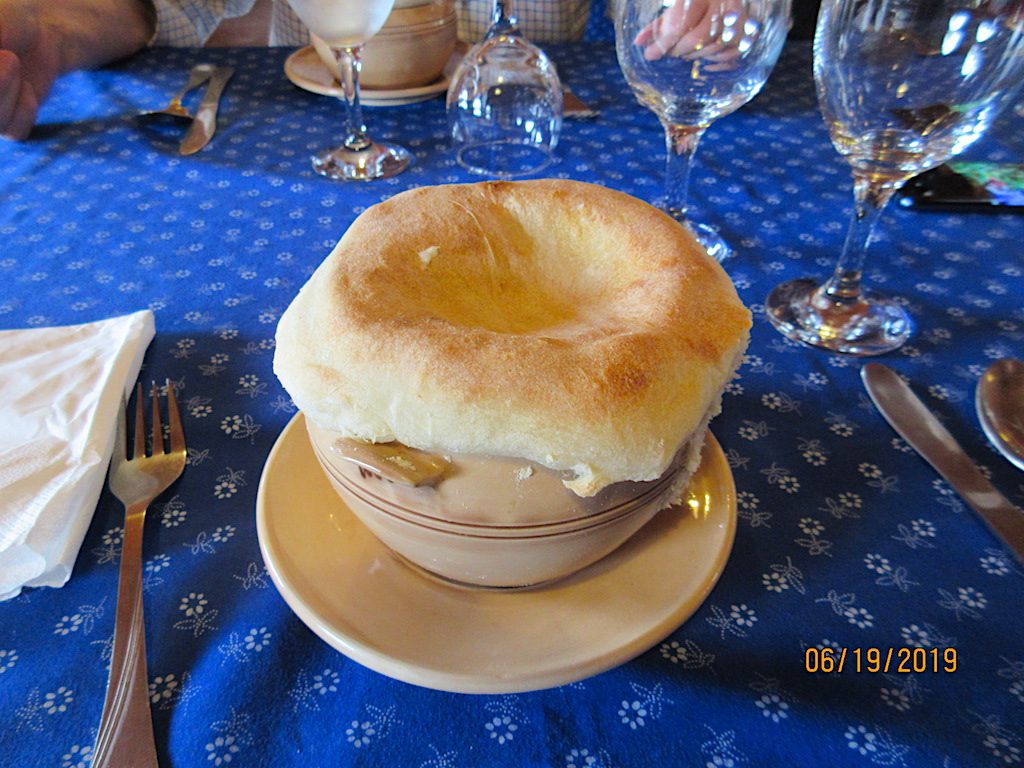
For lunch they served us a local goulash served in a small round dish about 5” in diameter and covered with bread similar to how you might think of a French Onion soup. The goulash was a thin broth with small pieces of carrots, potatoes and beef. After the soup they brought us three types of strudel: a cheese strudel, an apple strudel and finally the cherry and poppy seed strudel that we had helped make. All in all, it was an enjoyable experience with a local Hungarian family.

Crossing the border into the country of Slovakia was easy as both countries belong to the European Union. We simply drove across the border without even stopping.

Our hotel in Bratislava for two nights was the Grand Hotel River Park located downtown on the banks of the Danube. Our room is quite large in comparison to the cabin we had on the river boat. The room is beautifully furnished and very comfortable for our two-night stay.

After settling into our hotel and attending a brief orientation from our Vantage guide, we took a walk about twenty minutes down the riverfront walk into the old town and had a look around. The town was very busy with a live performance on one stage and a fashion show being set up for another stage and runway. There were many small tents and sheds set up in the squares selling souvenirs and food items. Many of the meandering cobblestone streets are pedestrian only and filled with shops and restaurants of all kinds. The town was very busy with tourists and locals alike all interacting in the same spaces.

Back at our hotel we had a light bite to eat in the lobby bar where we had a Caesar salad with chicken and a cheese and salami plate with fresh breads. Very sufficient and accompanied by a pianist who played a variety of American tunes from memory.

Slovakia: Geography & Quick Facts
Landlocked by Austria, Hungary, Poland, the Ukraine, and its former partner the Czech Republic, Slovakia is primarily a land of hills and mountains. The Danube River, which forms the country’s borders with Austria and Hungary, is straddled by the capital city of Bratislava. Farther north, the Carpathian range stretches to Poland. Among the Carpathians, the High Tatras Mountains are a desirable ski destination for Europeans, and the nearby countryside is popular with Slovaks for its scenic valleys and dozens of lakes.
Area: 18, 859 square miles
Population: 5,379,455
Languages: Hungarian, Ruthenian, Romany, and Ukrainian
Capital: Bratislava
Ethnic groups: Slovaks, Hungarians, Roma, Czechs, Ruthenians
Religions: Roman Catholic, Protestant, Greek Catholic

Slovakia History: Though the findings of prehistoric stone tools and a Neanderthal skull suggest that what is now Slovakia has been occupied for hundreds of thousands of years, the Slavs who gave the land its current roots did not arrive until the sixth century.

By the ninth century, Slovakia was just one more territory in the empire known as Great Moravia, which extended into Germany and included Poland and Hungary. In the tenth century, the king of Great Moravia beckoned Cyril and Methodius (future saints best known as the fathers of the Cyrillic alphabet) to help convert the Slovaks as part of his quest to craft a united Christian empire. The missionaries were successful, but the king was not, and by the dawn of the 11th century, his empire had fallen apart.

The Slovak people were governed under Hungarian authority for the next 1,000 years. When the Ottoman Empire swallowed much of Hungary in the 1500’s, Hungary made Bratislava, Slovakia, its capital, which remained until the 18th century. But instead of the city’s role elevating the Slovaks in Hungarian eyes, the opposite happened: the occupiers attempted to make both Bratislava and the entire region more like Hungary. This “Magyarization,” as it was called, had the effect of fomenting Slovak nationalism.

When World War I ended, taking with it the Austro-Hungarian Empire, the Slovaks and Czechs (whose culture had also been repressed) formed the unified state of Czechoslovakia in 1918. A mere 20 years later, with Germany moving in on Czech lands, Slovakia broke away to become its own nation. But it was something of a sham: Slovakia was a Nazi puppet state until the war’s end, despite an insurrection known as the Slovak National Uprising just before fighting ceased.
In the post-war years, Czechoslovakia was reunited, but heavily controlled by the Soviet Union. For 40 years, communist rule limited dissent and enforced cultural dogmas. Party leader Alexander Dubcek, a native Slovakian, tried to soften things, allowing greater social, political, and economic freedoms in a period known as the “Prague Spring.” But this so angered the Soviet Bloc that Warsaw Pact nations invaded in 1968, removing Dubcek and quashing any notions of Czechoslovakian self-determination.

As the Soviets learned, you can remove a leader but you cannot crush an idea, and the spirit of that 1968 spring nourished a dissident movement all through the 1970s and 1980s. In 1988, a peaceful protest, known as The Candle Demonstration, called for greater religious freedom; the police turned water cannons on the crowds and, when the protestors would not disperse, officers attacked them physically. These tactics revealed the communist government’s desperation, emboldening the dissidents further.

In 1989, with the entire Soviet bloc crumbling, the so-called Velvet Revolution broke the communist stranglehold, yielding a transitional government that included Slovak groups. Just over three years later, the Slovak parliament voted for independence in what has been nicknamed the “Velvet Divorce.” With this creation of Slovakia and the Czech Republic, Czechoslovakia was no more, and on New Year’s Day 1993, the new state was officially born.

At the dawn of the 21st century, Slovakia focused on proving itself a worthwhile candidate for membership in the EU and in NATO, both of which accepted the nation in 2004. With an emphasis on new foreign investment and improved social services for its citizenry, Slovakia approaches its second decade as a sovereign state with a sense of purpose—and with its first ever female Prime Minister at the helm. But its modern progress has not changed its historic character. As has always been true, roughly half the population still lives in tiny villages and hamlets of fewer of than 5,000. And alongside the Danube, beautiful Bratislava, with its centuries-old buildings and pedestrian-only Old Town, provides a timeless reminder of Slovakian glories past and present.

June 19, 2019 Budapest, Hungary

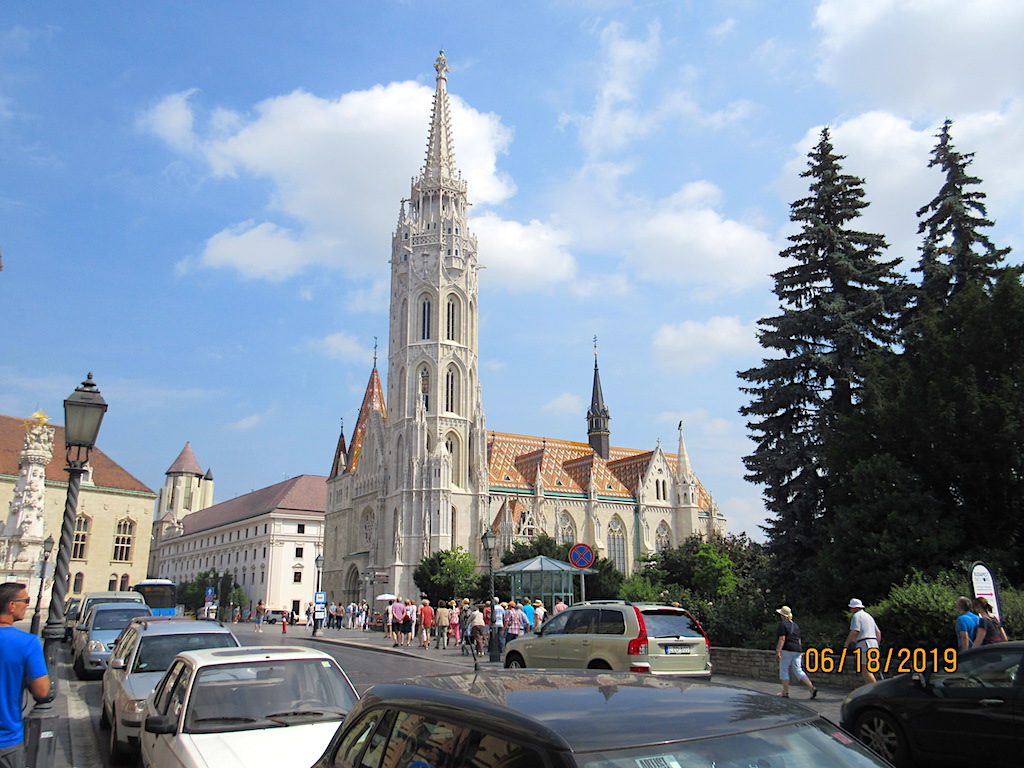
Mathias Church

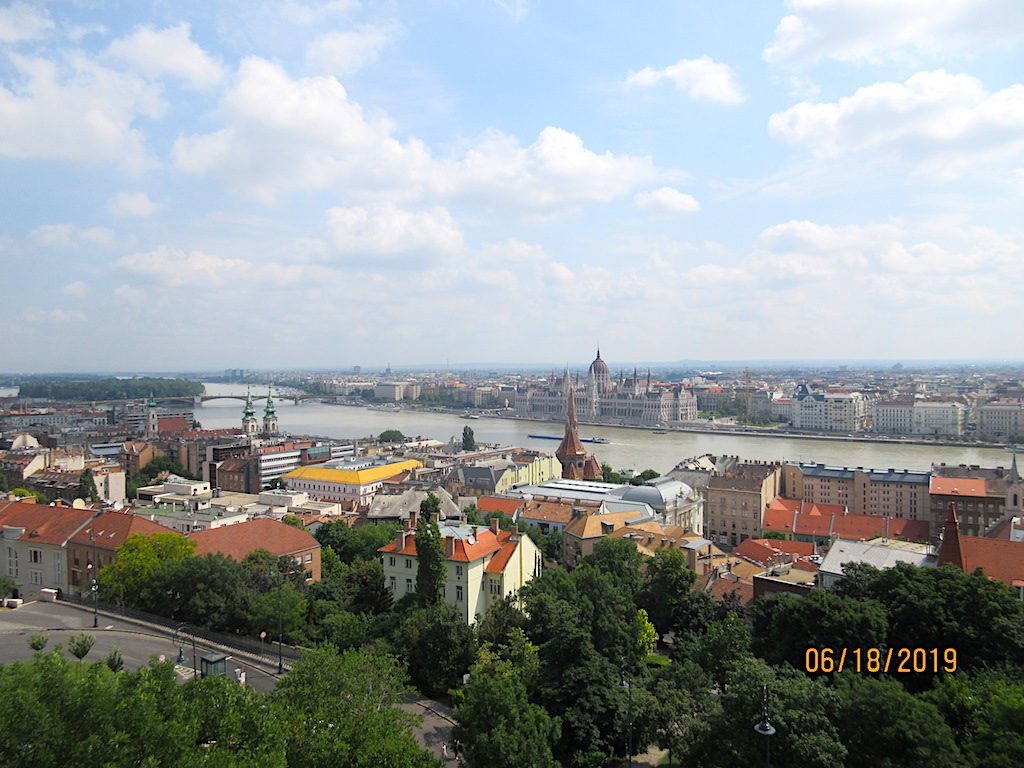
View over Budapest

Vaci Street

Cafe Gerbeaud

Four Season’s Hotel Budapest

St. Stephen’s Basilica

St. Stephen’s Basilica

The capital city of Hungary, Budapest is situated along one of the most beautiful areas of the Danube, it consists of two parts — Buda and Pest. The former is the older, more graceful part, with cobbled streets and medieval buildings; the latter is the commercial center. The capital is a lively city which has long been a haven for writers, artists, and musicians. The bustling city of Budapest has a population of some two million people today.

In the Buda section you will find Gellert Hill which gives a wonderful view of the city, river and mountains; on the hill is the “Citadella”, a stone fort. The Royal Palace, bombed during World War II and now reconstructed, houses the National Gallery with collections of fine Gothic sculpture and modern Hungarian art, and the Historical Museum of Budapest, containing archaeological remains of the old city, furnishings, glass, and ceramics from the 15th century. Also, in the Buda region is the Fisherman’s Bastion — so called because it was the duty of the fisherman of the city to protect the northern side of the Royal Palace during the middle ages — and Matthias Church with its multicolored tile roof.

On the Pest side are the Parliament; the Hungarian National Museum, containing remarkable treasures including the oldest skull yet found in Europe and Liszt’s gold baton; the Museum of Fine Arts housing European paintings; the Ethnographic Museum; and Margaret Island, connected to both Buda and Pest by a bridge. The whole island is a park with a sports stadium, swimming pool, spas, a rose garden, and fountains. Budapest has about 100 hot springs — one located in the city zoo.

Our ship was docked just across the river from the beautiful Parliament building said to be the third largest in the world. Finished in 1902 after nearly twenty years of construction, it was made almost exclusively with Hungarian materials. It contains some 691 rooms and the Hungarian Crown Jewels are on display there.

We took a bus tour of town, first the Pest side where we visited the Hero’s Square where they have monuments to the heroes of Hungary through the centuries. Next, we crossed one of the many bridges to the Buda side where we visited the Castle District and the Fisherman’s Bastion. There you can find several museums, many shops and restaurants and even a Houdini Museum.

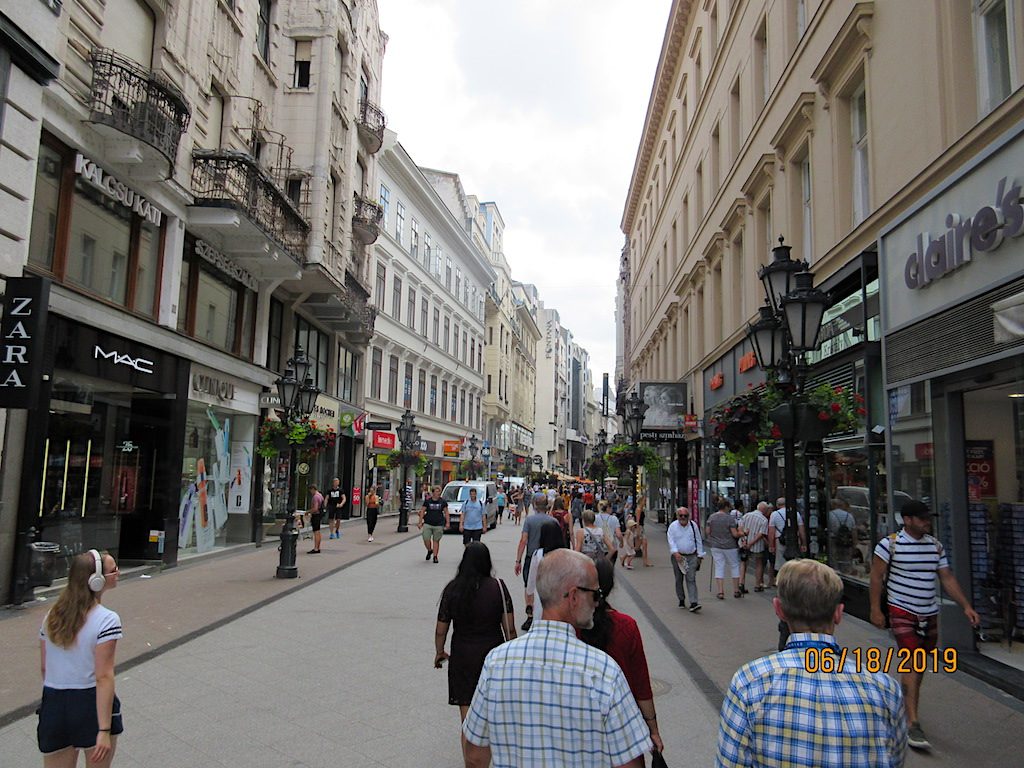
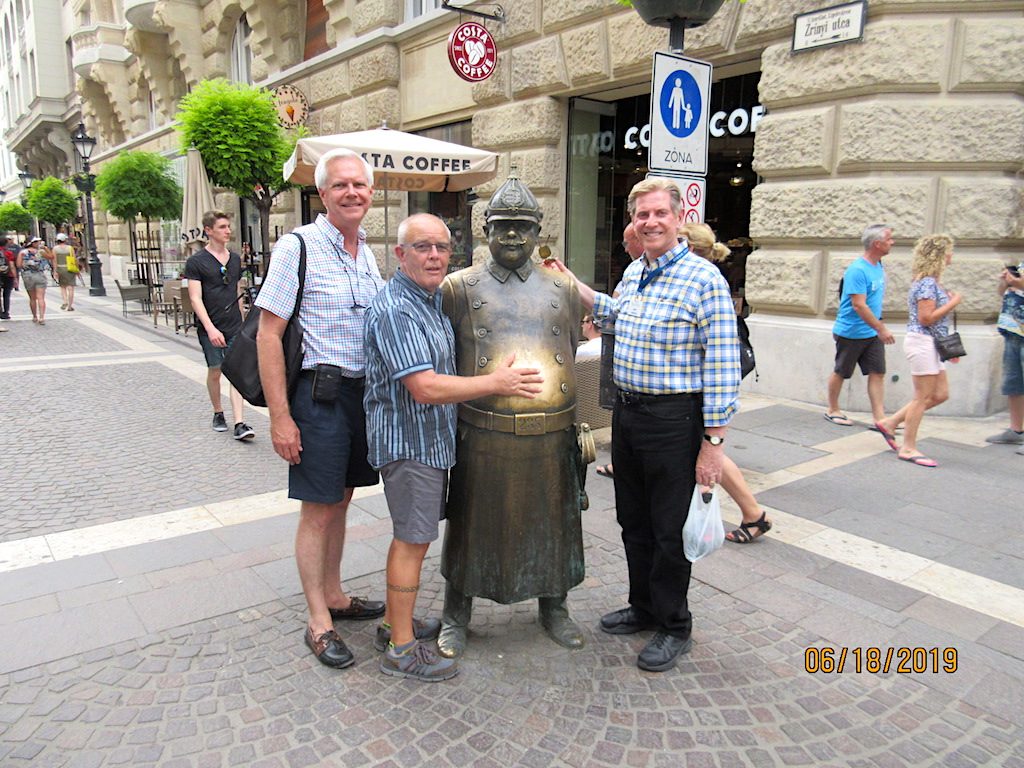
We returned to the ship after the tour for lunch before heading out again with Ric and Kevin. We explored the main pedestrian shopping street called Vaci Street before finding the main market hall. The market hall was one of five halls built in Budapest in the late 1800’s. The style of architecture is reminiscent of the Eiffel tower with its exposed steel construction inside. On the basement level was an Aldi’s supermarket, the main floor had many food stalls selling everything from meats to wine and cakes to cheeses. The upper balcony around the perimeter was filled with souvenir shops and food stalls selling local delicacies as well as pizza.

Next, we stopped along the pedestrian shopping street for a gelato which we ate under the buildings eaves as a passing thunderstorm brought a small amount of rain.

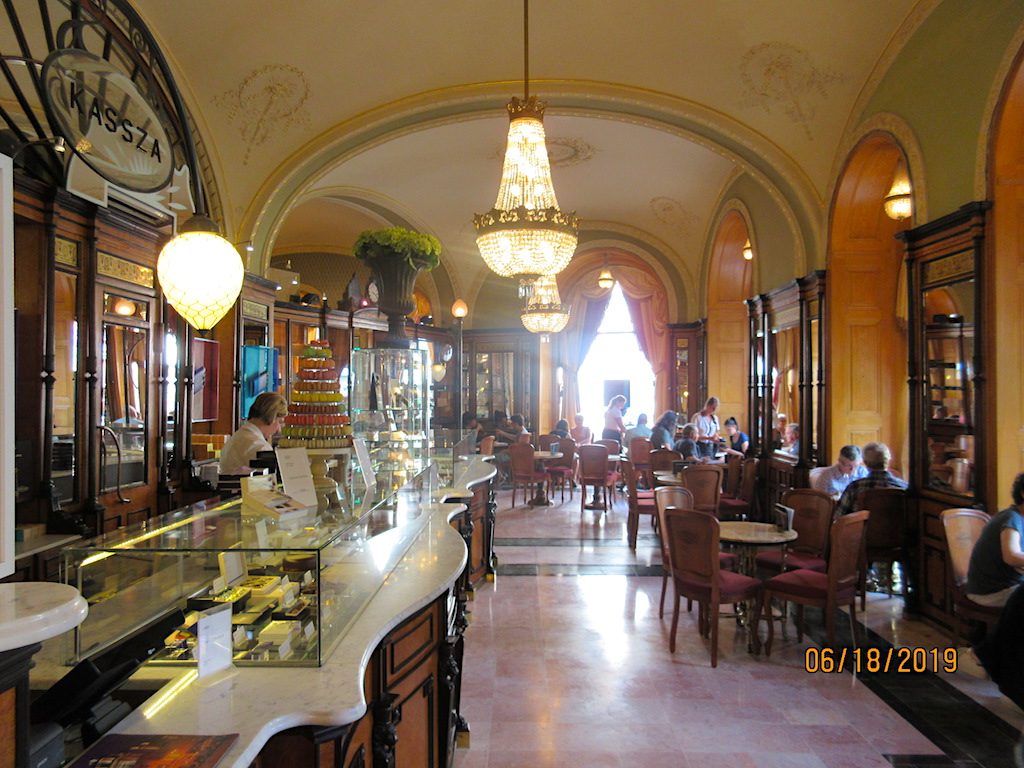
Our next stop was the traditional coffee house called the Café Gerbeaud founded in 1858. Perhaps one of the most well known in Europe, featuring rococo-style ceilings, inlaid wood cabinetry, ornate chandeliers and marble topped tables. There we enjoyed iced coffee cooled with two scoops of ice cream in a tall glass like a sundae. The coffee house also sells beautiful sweets, cakes, chocolates and macaroons. We found that there are more smokers on the streets in Budapest than in any other city on the route. Ugh! Lots of youth/students traveling in groups also this time of year.

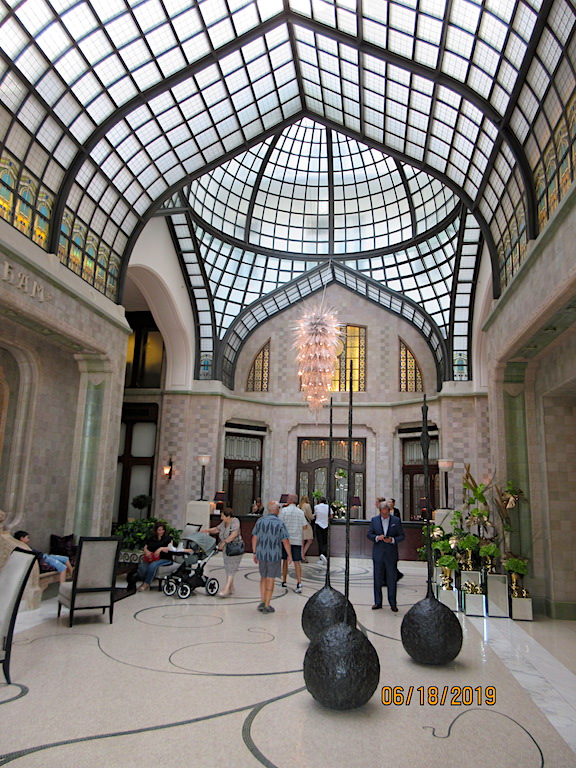
We then stopped to check out a beautiful historic building from 1904, once a residential building but now converted to a Four Season’s Hotel. The lobby was elegant and beautifully appointed.

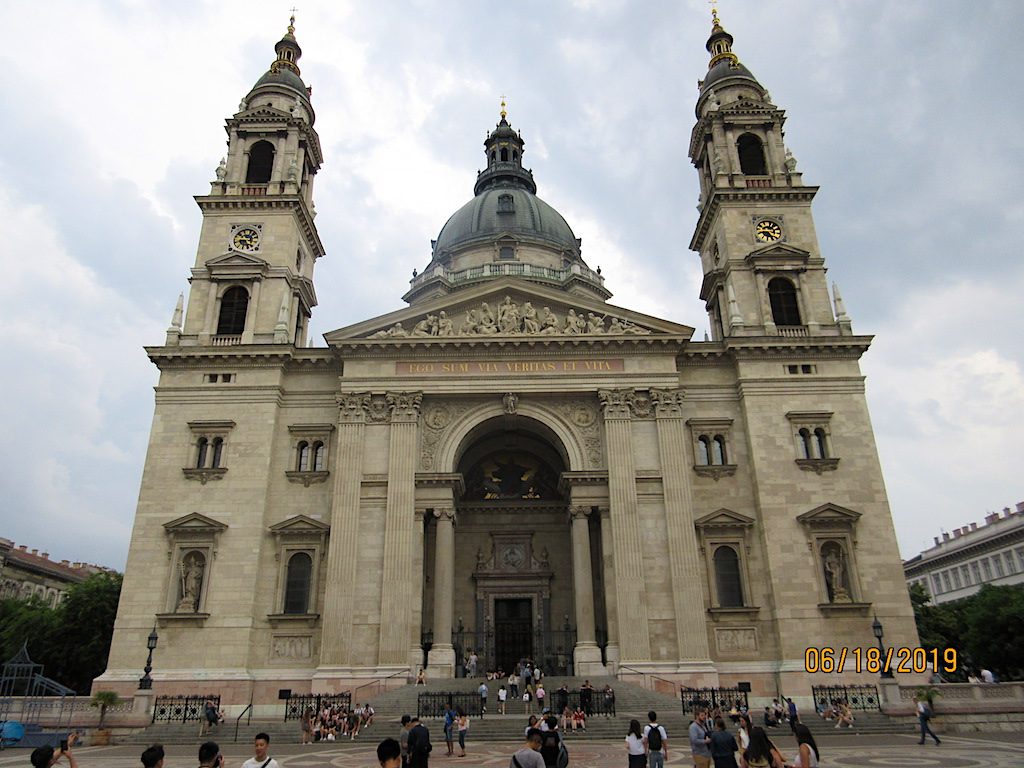
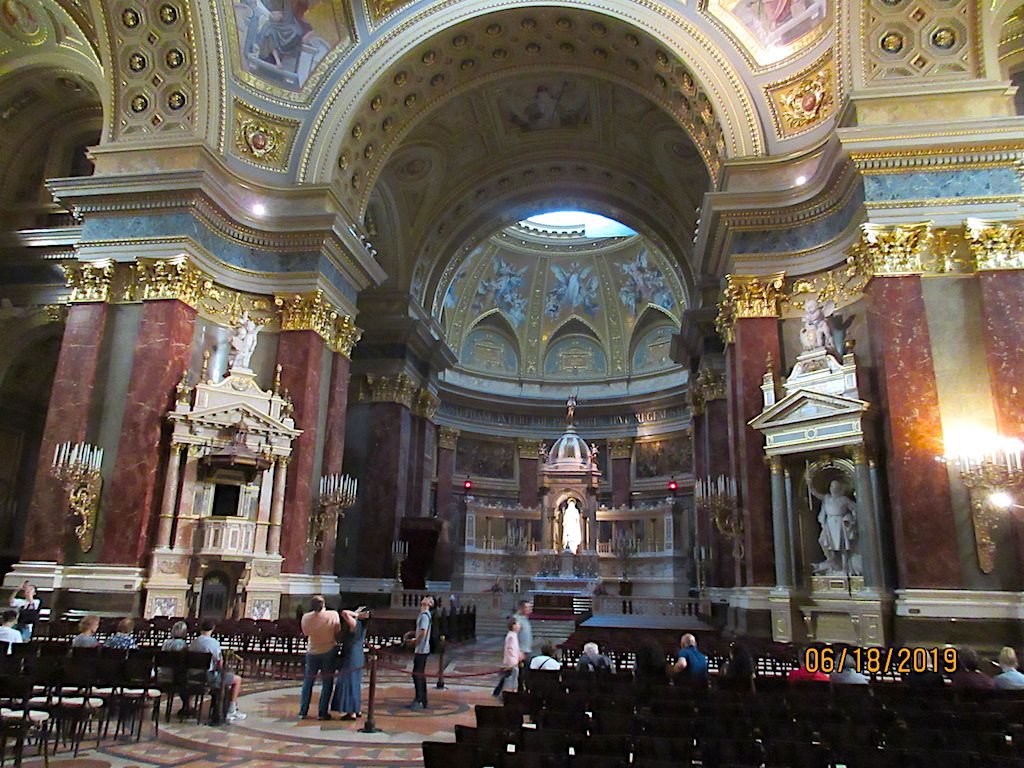
We walked a few blocks from the hotel along another clean and appealing pedestrian street to the St. Stephen’s Basilica where we had a look around. The basilica is named in honor of Stephen, the first King of Hungary who served from 975 to 1038 and whose right hand is said to be housed in the reliquary. It was the sixth largest church building in Hungary before 1920. Today it is the third largest church building in Hungary.

June 18, 2019 Vienna, Austria to Budapest, Hungary

Shonbrunn Palace Entrance

Shonbrunn Palace Facade

Shonbrunn Palace Fountain

Scenic Cruising Sights

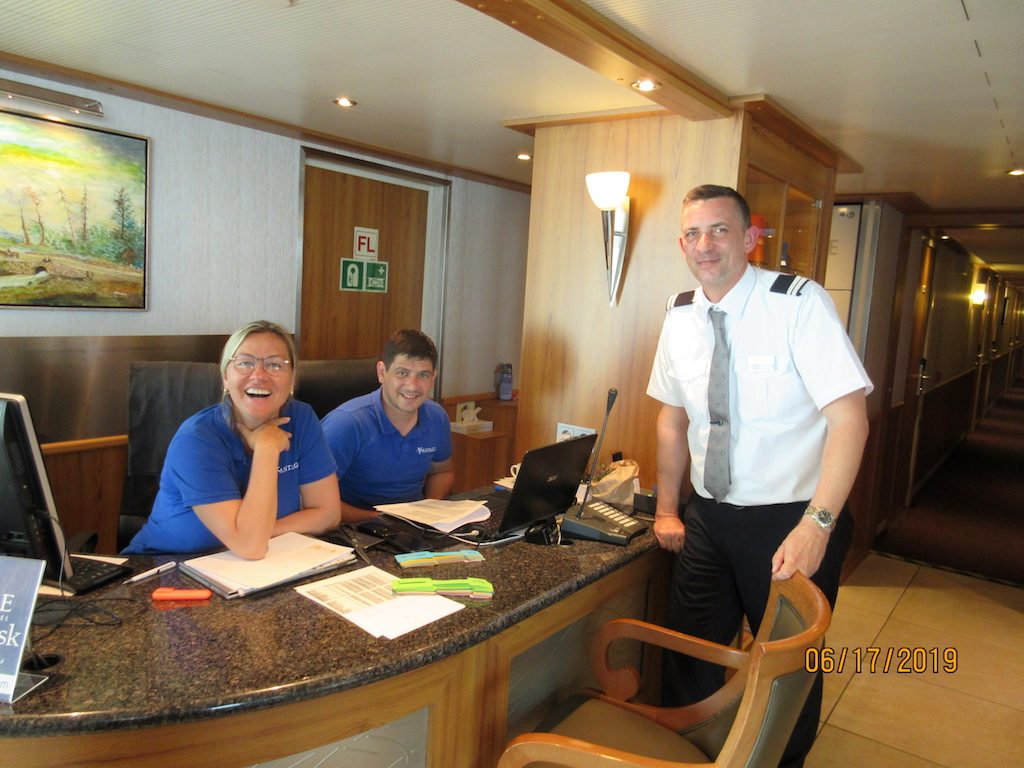
Cruise Director Slavka, Concierge Steve and Anton from the front desk.

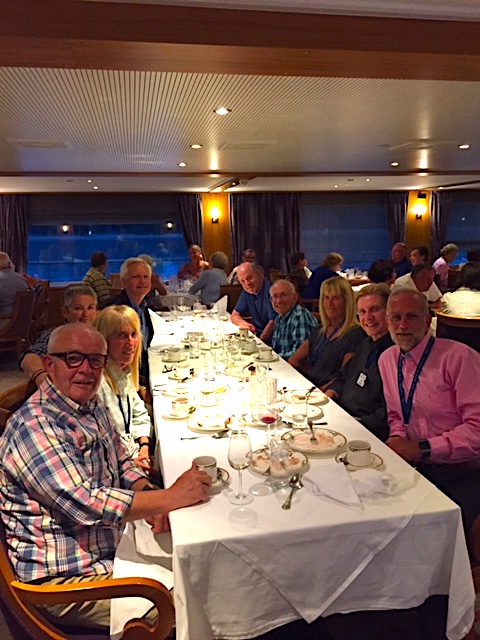
Dinner with San Diego Friends

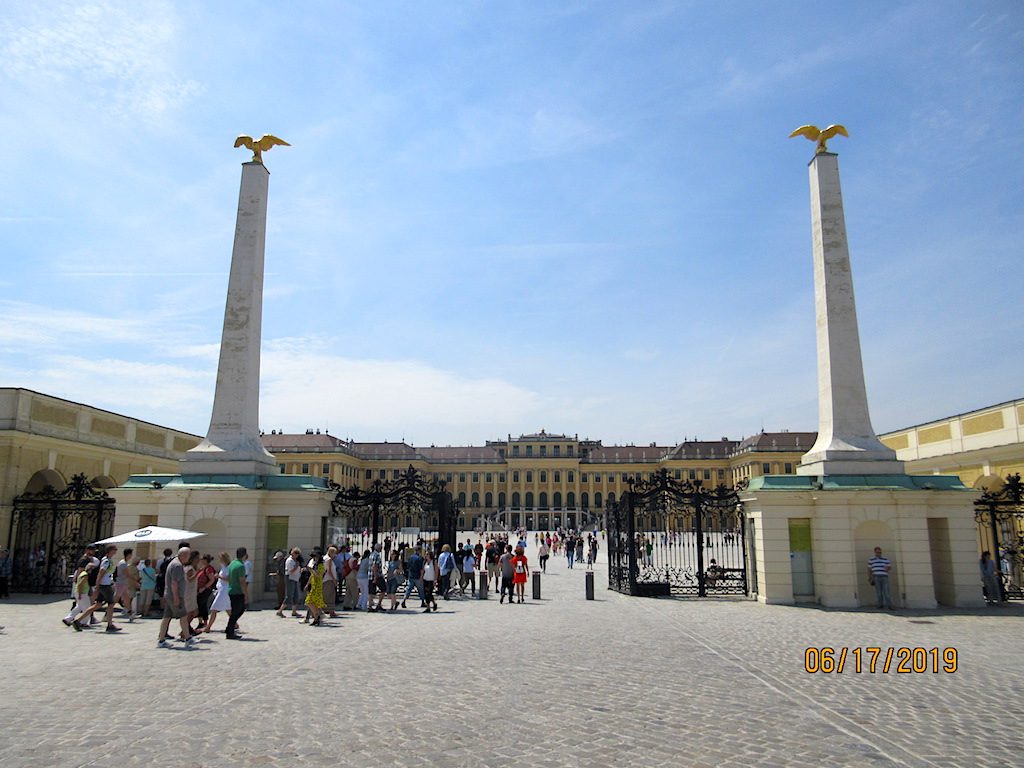
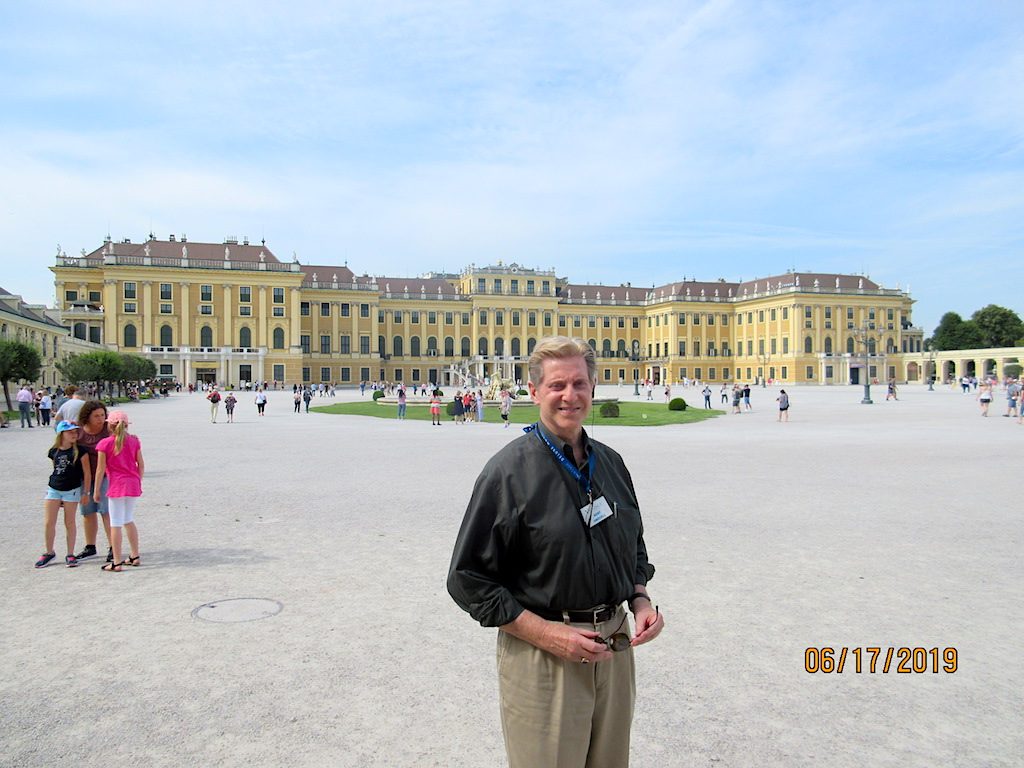
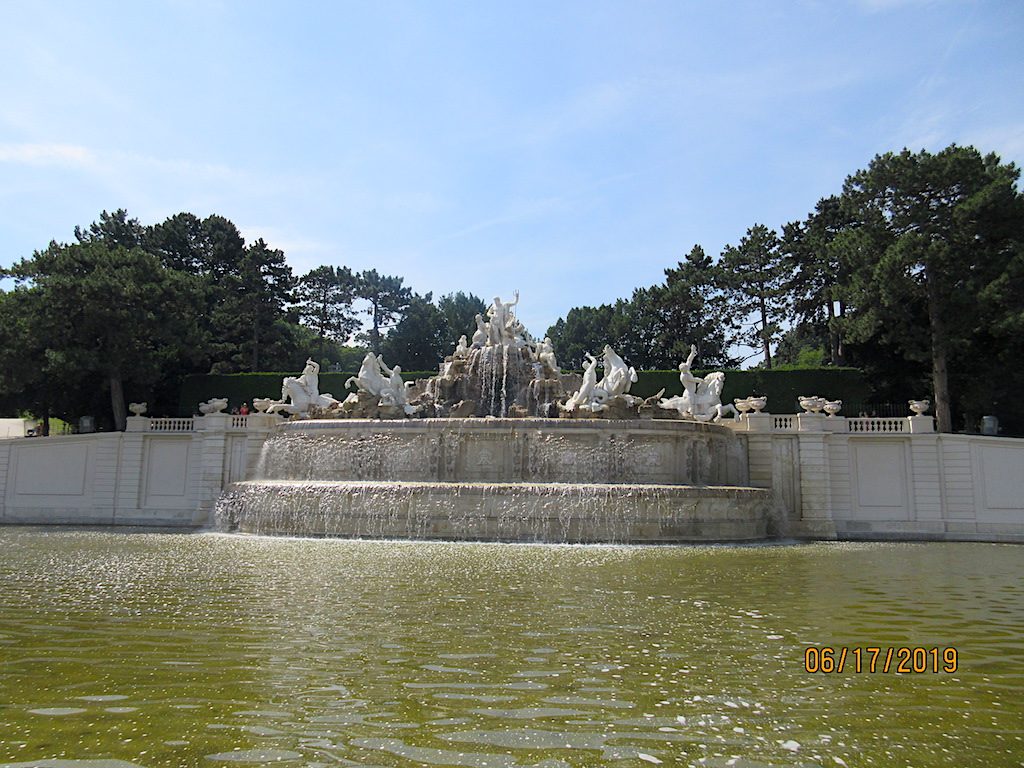
The Imperial Schönbrunn Castle, the former summer residence of the Habsburgs, has been compared to the palace at Versailles. At the end of the seventeenth century Emperor Leopold I commissioned the Baroque architect Johann Bernhard Fischer von Erlach, who had received his training in Rome, to design an imperial hunting lodge for his son, Crown Prince Joseph, later to become Emperor Joseph I. Replacing the chateau de plaisance built on this site for the dowager empress Eleanora of Gonzaga in 1642, it was to grow into a palatial imperial residence over the course of the eighteenth century. The palace today consists of 1,414 rooms, some of which can be rented by locals to live in, while others are part of the museum. The museum rooms are opulently furnished and they allow 11,000 tourists each day to tour the museum.

The palace grounds are extensive with planted beds, grass areas, elaborate fountains, a rose garden, a hedge maze and more. On the day we were at the palace they were preparing the garden for an annual classical music performance where they allow 80,000 residents to attend for free.

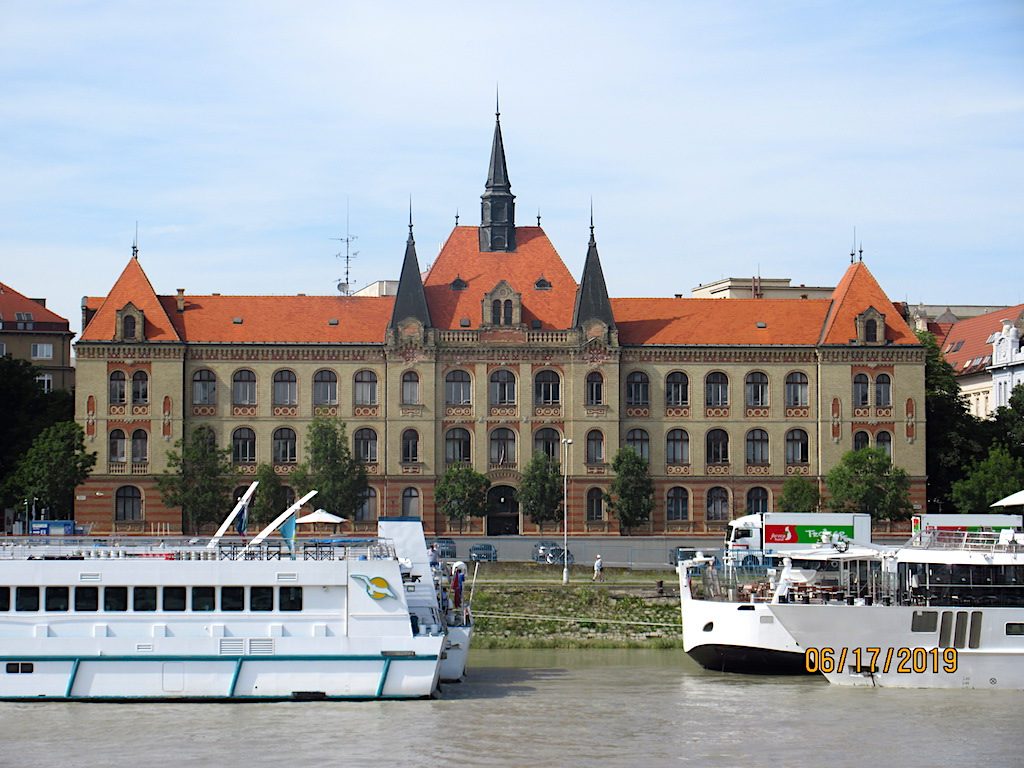
After lunch onboard, we spent the remainder of the afternoon sailing towards Budapest, Hungary on the ship’s top deck. We passed Bratislava, Slovakia, along the way, as well as many charming small towns. We enjoyed chatting with fellow passengers as we sailed.

The evening included the captain’s farewell cocktail party and dinner. For dinner we shared a table with our friends Ric and Kevin as well as four fellow guests, three of which reside in San Diego. Three of them are siblings, who grew up in New York, and one of their spouses.

Hungary: Geography & Quick Facts
Entirely landlocked, Hungary is a nation known for its rich, fertile soil, yielding not only centuries-old vineyards, but corn, wheat, barley, oats, and sunflowers (among others). The small nation, roughly the size of Indiana, is mostly low-lying, with its lowest point just two hundred feet above sea level and its highest peak in the Northern Hills only reaching an elevation of 3,000 feet. Bordered by Austria, Serbia & Montenegro, Croatia, Slovenia, Romania, the Ukraine, and Slovakia, Hungary is dotted with well-known lakes, but its most famous body of water is the Danube, which cuts through the nation’s open plains, linking its most historic ports and cities.
Area: 35, 910 square miles
Population: 10, 011,000
Languages: More than 98% Magyar
Capital: Budapest
Ethnic groups: Magyar, Romany, German, Serb, Slovak, Romanian
Religions: Roman Catholic, Calvinist, Lutheran, Greek Catholic, Jewish

Hungary History: Romans, Huns, Bulgarians—everyone desired the fertile land that would one day become Hungary. Inhabited as early as 9 B.C., the Carpathian Basin changed hands from empire to empire until the ninth century, when the Magyars claimed the region as their own, launching the true beginning of Hungarian history.

Within a century, the Christian realm boasted an operating government and a solid military, which backed the creation of a monarchy under King Stephen, who instituted Latin as the official language. More relevant cultural strides came from a later king, Andrew, who established the first constitution in continental Europe, followed by the creation of what would eventually become the Hungarian Parliament in the early 13th century.

Despite this strong leadership, nearly half the population died at the hands of Mongols in the Tatar invasion of 1241. The effect of the lost populace was muted somewhat by an influx of refugees, as King Béla IV allowed Mongol attack survivors from other countries to settle in Hungary permanently. When the Tatars moved on, the King had his men build hundreds of castles and forts so that the country would never again be caught off guard.

Over the centuries, while keeping the Ottomans at bay, Hungary took a bold new step, electing a non-royal to the throne. Unrelated to any member of the dynasty which had ruled for centuries, King Matthias was a scholar who maintained the second largest library in Europe (behind only the Vatican). But he also proved his military prowess, defeating the Ottomans, Germans, and Polish.

After Matthias, things turned bleak, with Ottomans defeating government forces and splitting the land. From the mid-16th century to the end of the 17th, there were three Hungary’s: Habsburg-ruled Royal Hungary, and the two Ottoman territories of Transylvania and Buda. By the 18th century, the region was reunited under Austrian-Habsburg rule, but its character changed again as Slavs, Slovenians, Romanians, and Germans were allowed to settle in the territory as well. These continual additions of ethnically diverse populations came to define Hungary as a “melting pot”—or perhaps goulash—of cultures.

Hungary became a hotbed of populism in the 1820’s when Count István Széchenyi pushed the Emperor to convene the Parliament, which undertook economic reform, including provisions for the needs of the poor. When the Habsburg rulers resisted, the citizenry deposed them, dramatically reshaping the values and identity of their nation. Hungary’s new government enacted the first laws of minority rights in the entire world—a bold move which prompted the Habsburgs to team up with the Russians to crush the revolution and assume power once again.

For 50 years, the nation was ruled as part of the so-called “Dual Monarchy” of Austria-Hungary. During this time, the economy boomed. Buda, the old capital, and bustling Pest, its neighbor across the Danube, officially united into the metropolis of Budapest that we know today. But the First World War took its toll; upon its end, Hungary gained independence from Austria, but lost nearly ¾ of its original territory, leaving more ethnic Hungarians living on non-Hungarian soil than within its reconfigured borders.

The new Hungary remained a Parliamentary Democracy in name, but the encroachment of the Nazis tempered any true freedom. Though Hungary was aligned with the Nazis at the beginning of World War II, the nation secretly tried to surrender to the Allies. When that pact failed and the Germans discovered it, the Nazis took firm control over the Hungarian government. But this did not quell the Hungarian spirit; during this time, thousands of Hungarians hid Jews or helped transport them to freedom. The decade of Soviet Rule after the war proved a brutal period that included a failed uprising in 1956 and massive loss of life. It would be more than 30 years before Communist rule ended after a bloodless political revolution.

Today, Hungary thrives, and its diverse, democracy-loving citizens invite travelers to discover the natural beauty of their land and the many stunning monuments of a truly enduring culture.

June 17, 2019 Vienna, Austria

St. Stephens Cathedral Details

St. Stephens Cathedral

St. Stephens Cathedral Interior

Liechtenstein City Palace Interior

Liechtenstein City Palace Ceiling Detail

Vienna Cafe Central

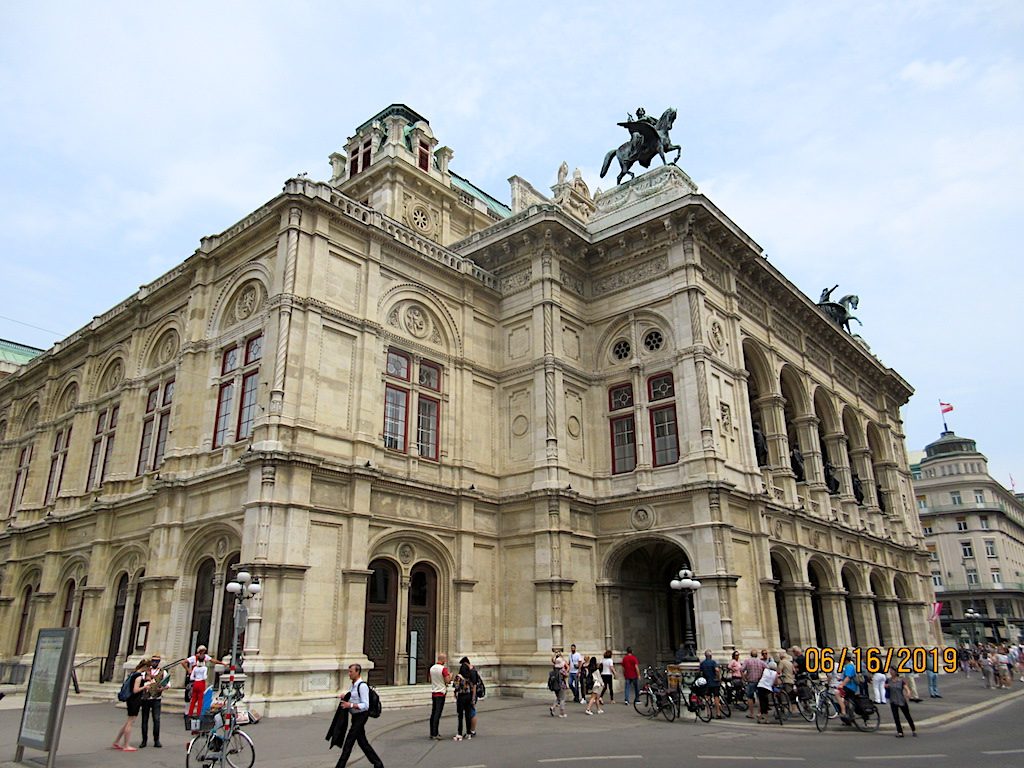
Vienna Opera House

Mozart Monument

Hofburg Palace

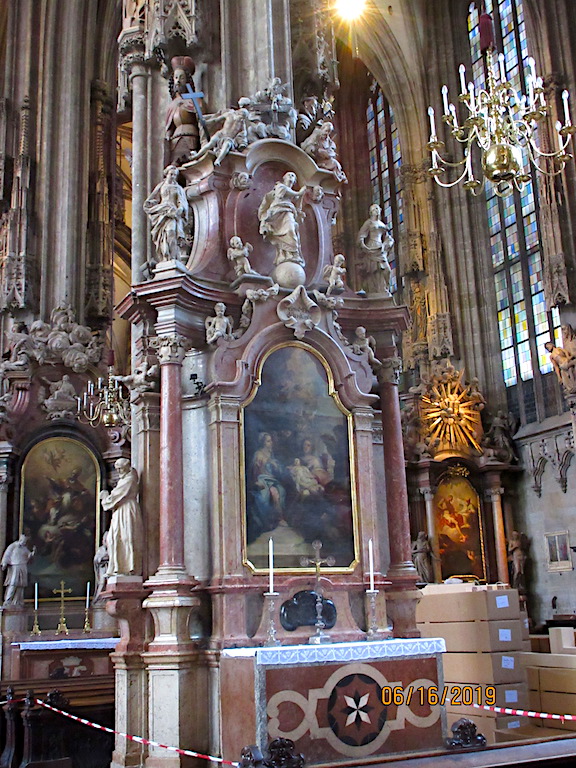
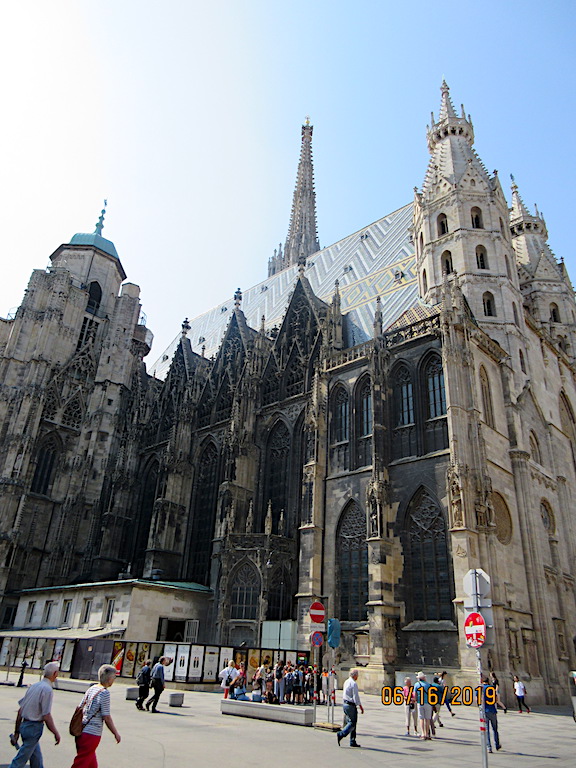
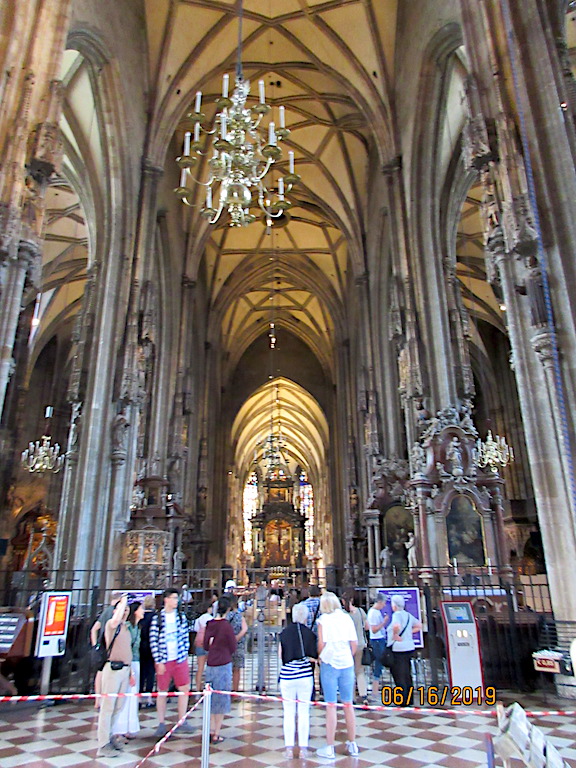
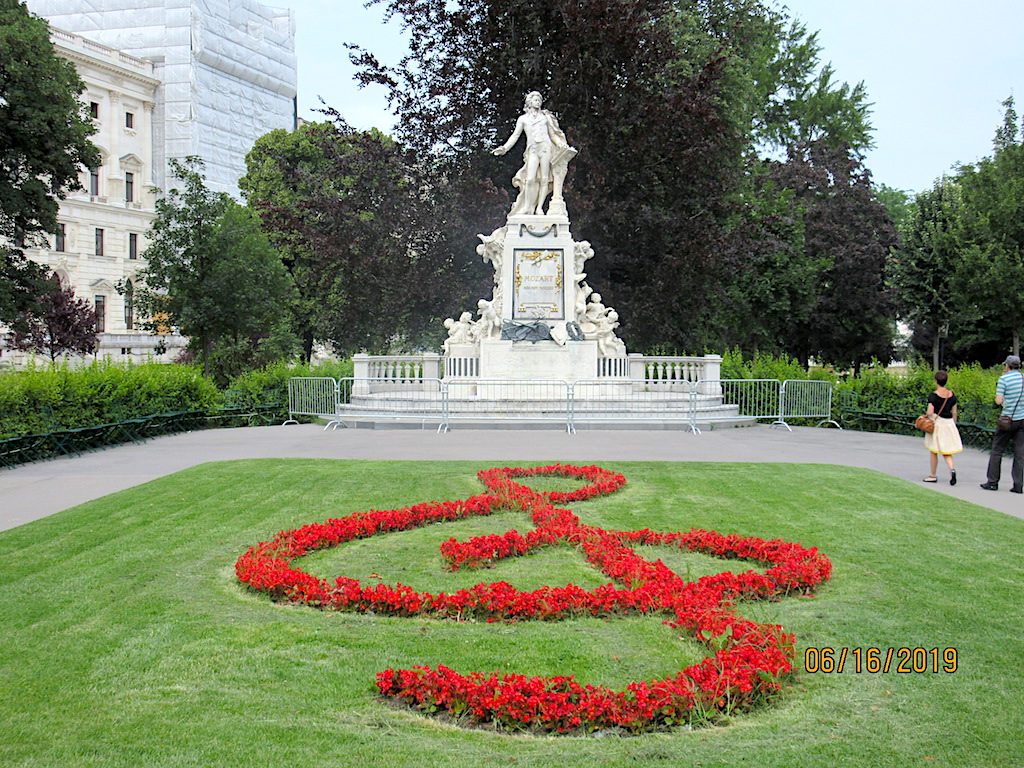
The morning included a city bus tour of Vienna, (1,750,000 + inhabitants) whose historic center is a UNESCO World Heritage Site. Following the bus tour, we set out on foot to see St. Stephen’s Cathedral begun in 1137 and re-built multiple times over the years. The church is built in the Romanesque style and is enormous in size with huge arched ceilings, tons of beautiful carved stone figures, fine oil paintings colorful glass windows. The churches organ was undergoing major renovations and so many parts of the church were closed off.

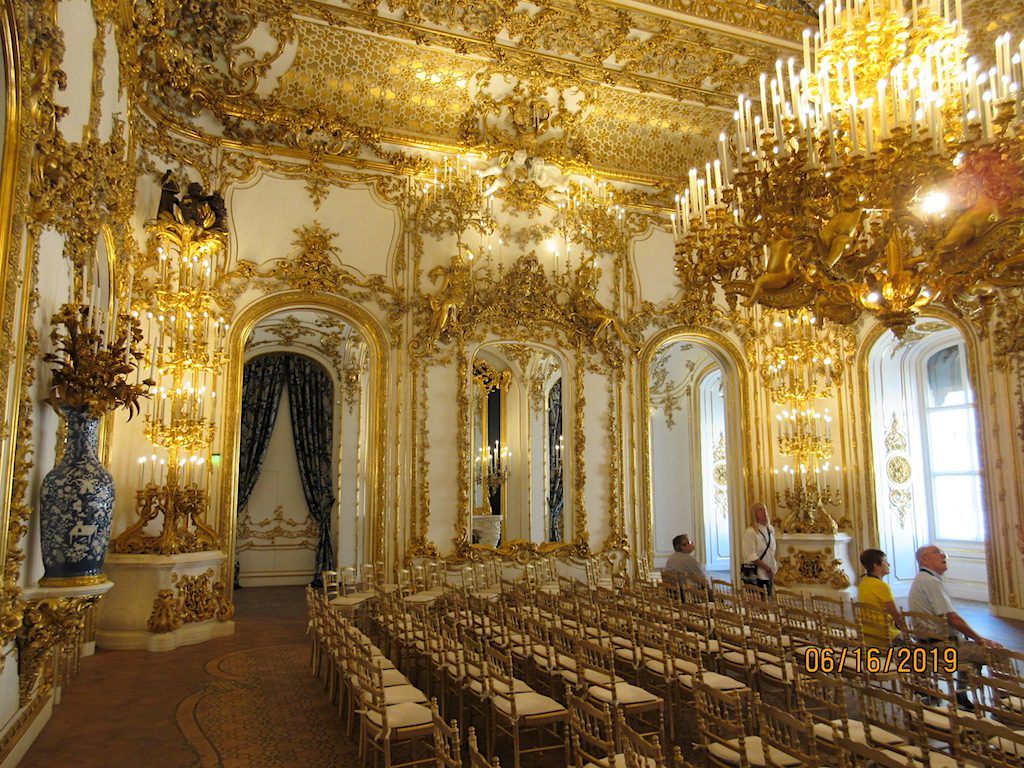
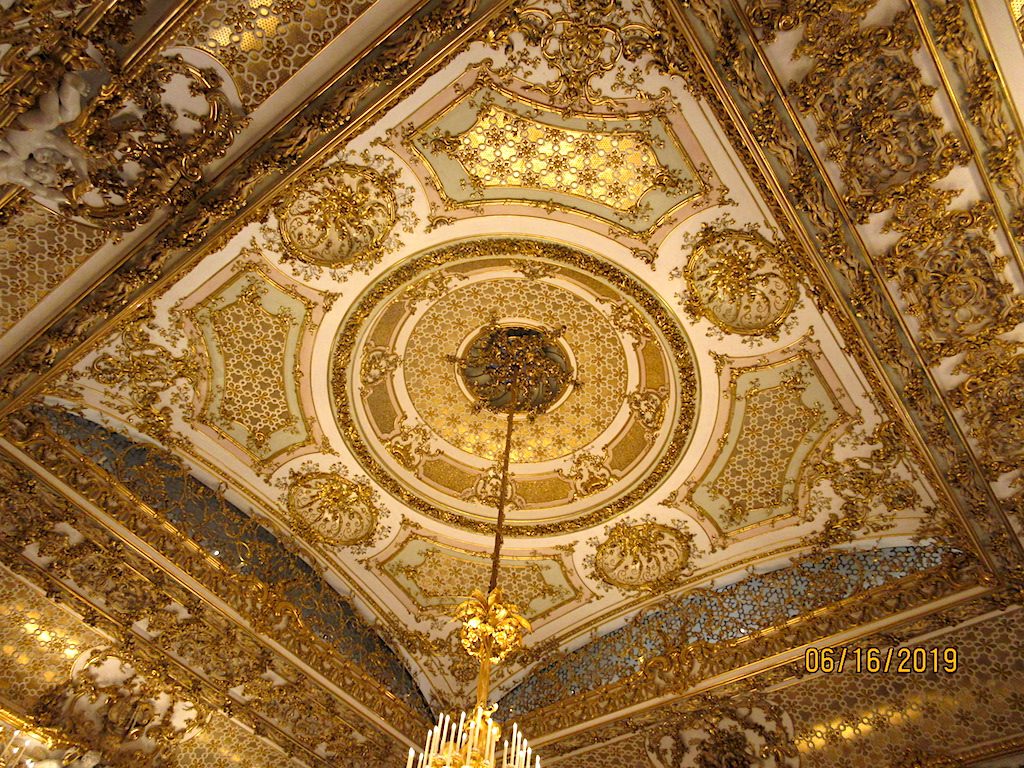
After the cathedral we visited the Liechtenstein City Palace still privately owned by the Liechtenstein family after more than 300 years. Having recently undergone five years of renovation the palace appears in all its former glory. Held to be the first major building of the High Baroque age in Vienna with stucco ceilings, opulent neo-Rococo interiors and original furnishings. A selection of masterpieces from the family’s private art collection are also displayed within the residence. We visited about twelve rooms on the second floor, each more beautiful than the previous. Each was perfectly decorated with intricate parquet floors, upholstered walls, ornate gilded ceilings, fabulous chandeliers and was furnished beautifully.

Vienna is situated in the northeast part of Austria with the Danube running through the northern suburbs of the city. The Ring Strasse is the boundary of the Inner City or Innenstadt, with its fine architecture and many shops and hotels. An atmosphere of elegance and style of bygone eras prevails in this area. Art nouveau buildings line the streets of some suburbs, as Vienna was the birthplace of this then-controversial style.

Vienna contains more than 75 museums, grand palaces, shops, antique markets, international choirs and orchestras, as well as fine restaurants and cozy coffee-houses, which are very much part of Austrian culture. The Habsburgs who ruled the country for six centuries resided in the palatial Hofburg, which houses the Kaiser-Apartments and the Crown Jewels. Unfortunatley, time did not permit us to visit the sight.

With Ric and Kevin, we enjoyed lunch at a local restaurant where we had the pork schnitzel and French fries. We walked the city exploring the beautiful and elegant opera house, museum buildings, parks and monuments around every corner.

Some of our fellow guests took an optional tour with dinner in the Vienna woods, but we stayed onboard and enjoyed dinner as usual. Some professional dancers were brought onboard to provide entertainment and encourage guests to learn contemporary dances you could dance at a Viennese Dance. Not us!

June 16, 2019 Vienna, Austria

Scenic Cruising to Vienna

Apple Strudel Demonstration

Vienna – Mark, Kent, Kevin and Ric

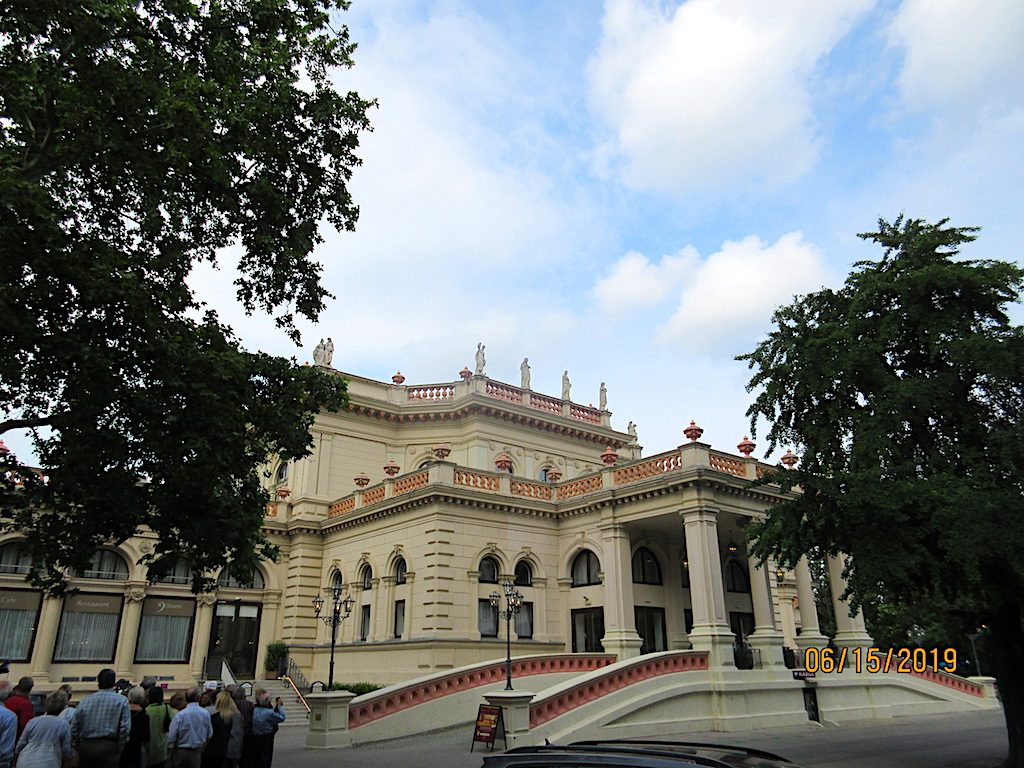
Vienna Music Hall Exterior

Vienna Music Hall Interior

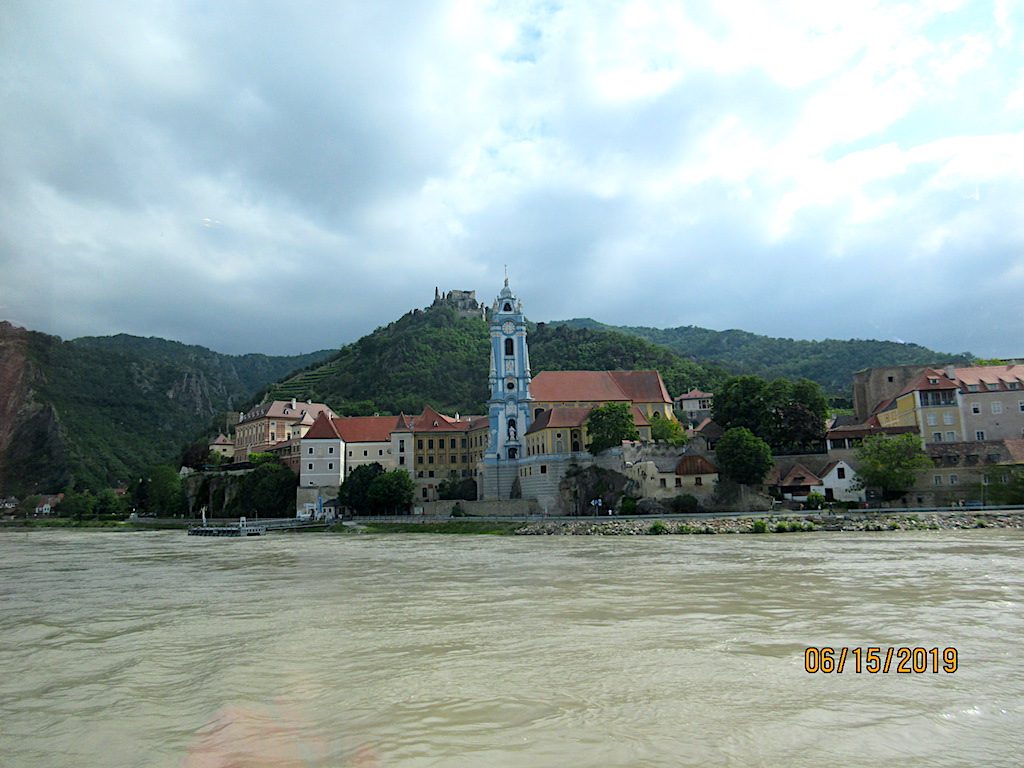
This morning we enjoyed scenic sailing along the Danube River through the Wachau Valley, a UNESCO World Heritage Landscape area. The Danube is 1,775 miles in length and the most important river in Europe. Once a long-standing frontier of the Roman Empire, today it flows through ten countries, more than any other river in the world. We sailed through many small towns and villages filled with beautiful little houses, churches and castles and forts perched on the hilltops and enjoyed the commentary provided by the cruise director.

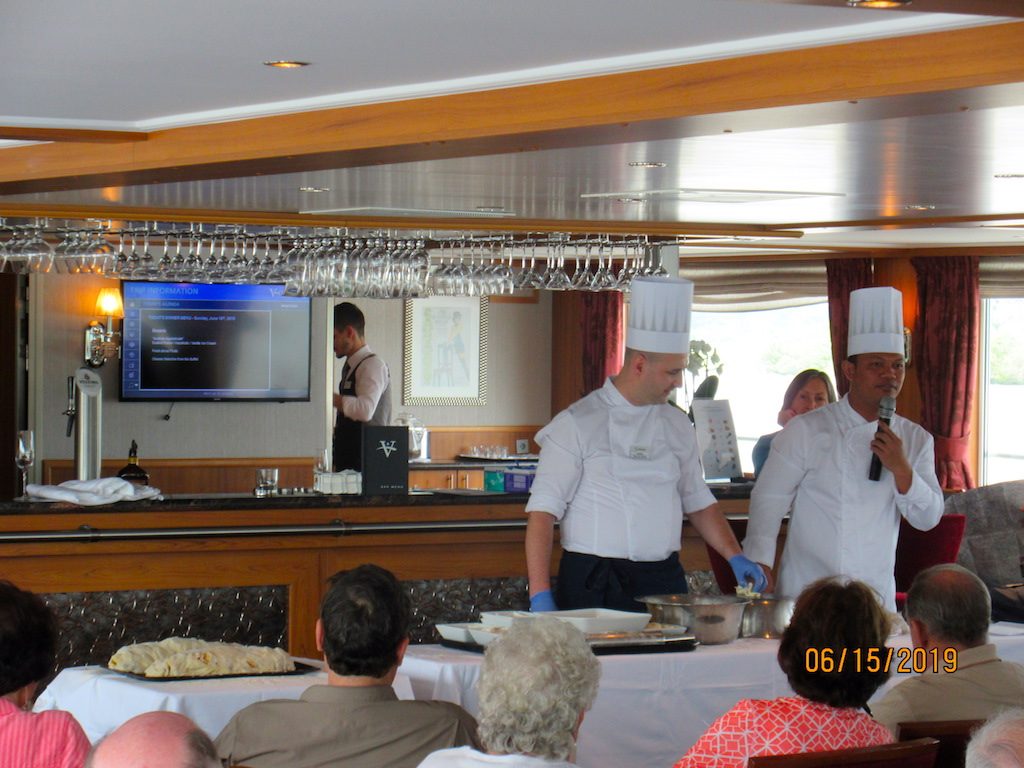
We had a demonstration on apple strudel making by Executive Chef Ketut and Pastry Chef Laszlo. The Viennese made this dish famous with their delicate thin layers of pastry filled with tart apple filling, sometimes with nuts or raisins. The pastry is made with flour with high gluten content, little fat and no sugar. The pastry is rolled out and stretched very thinly to achieve an almost transparent composition. Purists say that it should be so thin that a newspaper can be read through it. After dinner they served the apple strudel for dessert.

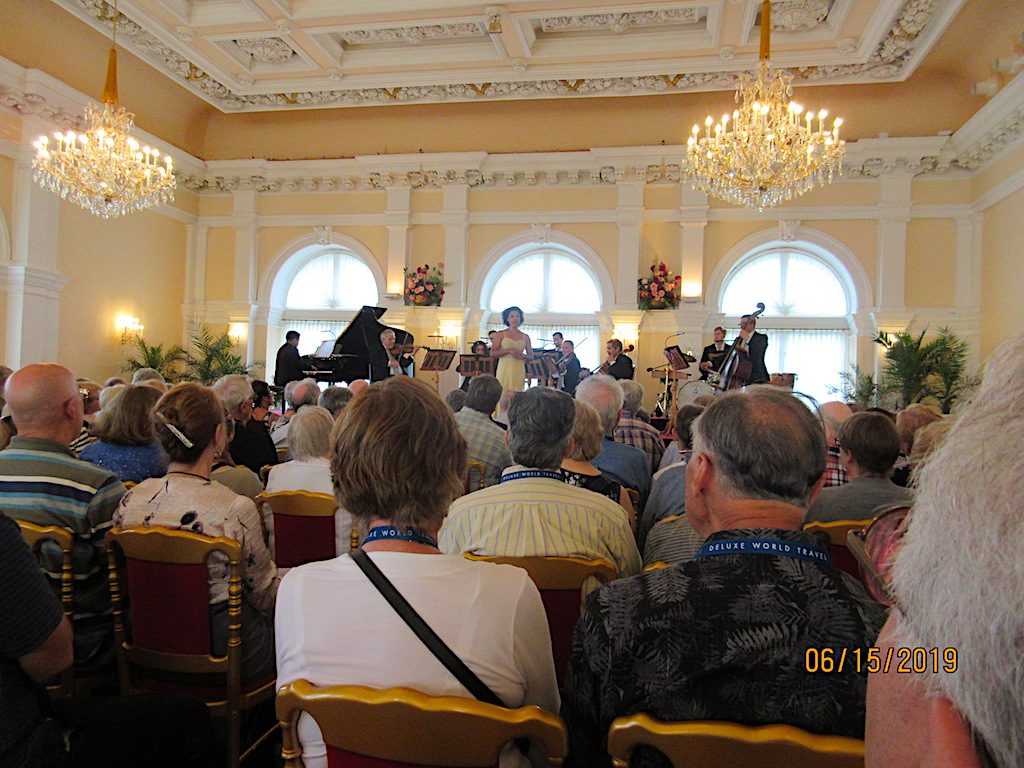
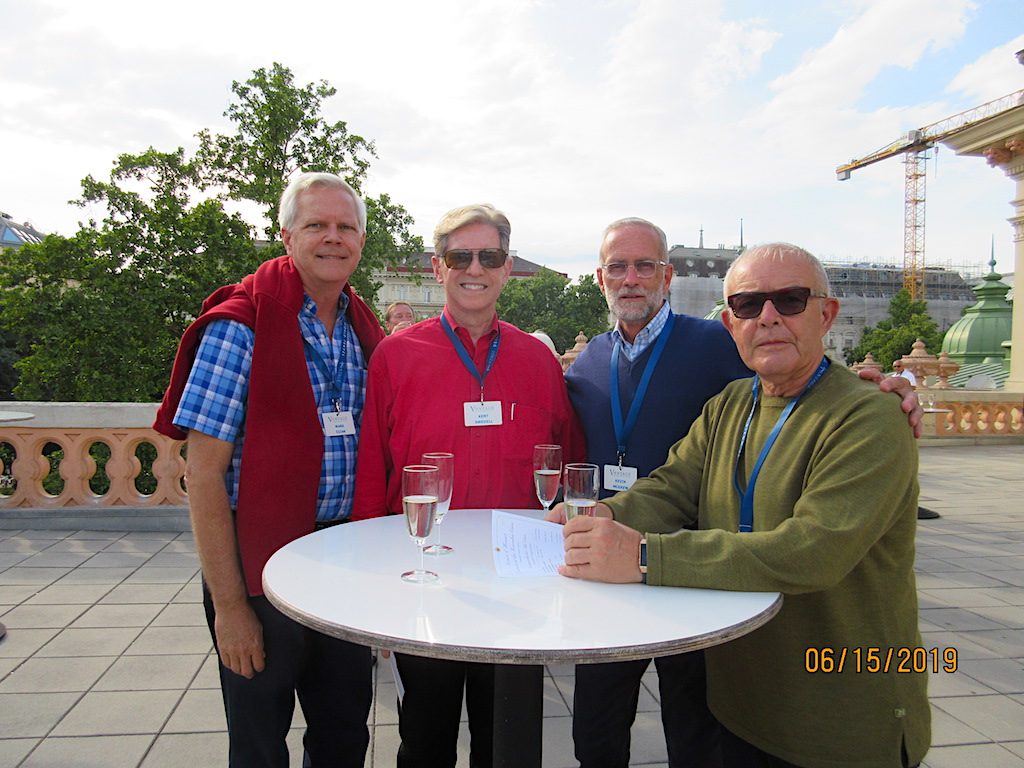
The afternoon included an insightful lecture on musical Vienna in anticipation of our exclusive Mozart and Strauss concert at the Kursalon Music Hall. We took a short bus ride to the music hall where we had a glass of champagne before entering the music hall for the performance. Once inside the music hall we were treated to a nine-piece orchestra that performed a variety of Strauss and Mozart pieces. Some of the works were accompanied with an opera singer while others were accompanied with a dance couple. The entire performance lasted about an hour and was absolutely magical.

Back onboard the ship we shared dinner in the dining room with Ric and Kevin and three sisters traveling together. Two of the sisters are from Buffalo, New York while the other is from Los Angeles. They have been a lot of fun all cruise long. After dinner a local dance couple showed us their fancy footwork as they taught the guests some local dances like the Waltz.

Austria: Geography & Quick Facts
Austria is stunningly diverse for its size, from the glaciers and snow-capped peaks of the majestic Alps to the dense evergreen ecosystem of its Bohemian Forest. Landlocked by other countries (Italy, Switzerland, the Principality of Liechtenstein, Germany, the Czech Republic, Slovakia, Hungary and Slovenia) Austria nonetheless is defined in many ways by water: its heart is the Danube, which flows eastward, carving territory through granite cliffs and nourishing the soil of the terraced vineyards of the Wachau Valley. The climate, though generally mild and moderate in Vienna, varies from the cooler Alpine region to the warmer eastern plains.
Area: 32,377 square miles
Population: 8,332,000
Languages: German
Capital: Vienna
Ethnic groups: Germans, Turks, Serbs, Croats, Slovenes, and Bosnians are predominant, with Hungarian, Czech, Slovak, and Roma minorities.
Religions: Predominantly Catholic, with measurable Lutheran and Muslim populations.
Austria History: Though Austria is smaller than the state of Maine, it has played an outsized role in Europe’s political, cultural, and musical spheres. Its leaders have shaped empires. Elegant cityscapes have graced canvases and the silver screen. And lovers of Strauss have danced all night to the lilting tempo of the waltz.
Austria first declared itself an independent Bavarian kingdom in AD 976, it will forever be associated with rulers who would not appear for another 300 years: the mighty Habsburgs, a dynasty that ruled for 750 years and led Austria to its greatest years of glory. Crafting an empire, the Habsburgs added regions in Spain, the Netherlands, and as far away as Africa to their territory. Holding off the Ottomans and eventually helping defeat Napoleon, Austria established itself as a force to be reckoned with. The wealth of this stunning empire can be seen today in such architectural masterpieces as the 1,400-room Schonbrunn Palace and the elegant palaces and civic buildings along Vienna’s famed Ringstrasse.

Even among the countless powerful Habsburgs, one liege stands out. Franz Josef I, crowned in 1848, ruled for nearly 70 years, a reign which included the establishment of a tandem monarchy with Hungary. While he survived assassination attempts and political in-fighting, cities like Vienna (which became the musical center of the West) blossomed and he remained popular with the general citizenry for the stability he maintained. But he will forever be linked to the tragic events which ended his career and life: upon the assassination of his nephew Franz Ferdinand, Franz Josef declared war on Serbia, setting in the motion the chain of events that became World War I. By its end, not only would the emperor be dead, but the power of the Habsburgs diminished, his family’s rule over Austria forever ended.

While in some parts of the world, the end to one-family rule has occasioned the blossoming of democracy, such was not the case in Austria, where the next 15 years saw an unchecked rise in paramilitary activity and an increasingly authoritarian government so despised by the populace that many cheered on the nation’s annexation by Nazi Germany in 1938. Not all citizens welcomed this alliance, as many Americans recall from The Sound of Music, which showed the love of homeland that caused Captain Von Trapp and his family to flee Austria.

The ensuing terrible events—including the Holocaust—proved the Von Trapps right, and the end of World War II brought no immediate relief, as Austria was kept under occupation by Allied Forces – with many of its manufacturing resources and utilities under Soviet control – for more than a decade. Divided into four sectors administered by British, U.S., French, and Soviet forces (with a central “international” zone), Vienna became synonymous with post-war intrigue, captured in The Third Man, the 1949 film written by Graham Greene and starring Orson Welles. It was not until 1955 that Austria became fully free and independent once again.

The world was reintroduced to the Alpine charms and cultural richness of Austria when the 1964 Olympics were held in Tyrolean Innsbruck. By the time the Olympics returned to Innsbruck in 1976, The Sound of Music had caught the fancy of many Americans with its use of lovely Linz. Austria seemed to show up everywhere in popular culture, from Mozart’s Vienna in Amadeus to the mysterious Melk Abbey in The Name of the Rose. Travelers flocked to Austria, following the banks of the Danube as their route to discovery.

In these post-war decades, the government was led by democratically elected officials working together as coalitions of members from multiple parties. The economy, premised on both capitalist elements and social market values, boomed, and Austrians enjoyed a high standard of living as a result. Though worldwide economic downturns have affected Austria as well, its recession lasted a relatively short period compared to its neighbors, and Austria proudly boasts the lowest unemployment rate of any state in the European Union. From the Rococo palaces of its past to the cosmopolitan cities of its present, Austria once again shines like the crown jewel of Central Europe.

June 15, 2019 Passau, Germany

St. Stephen’s Cathedral

St. Stephen’s Cathedral Interior

St. Stephen’s Cathedral Ceiling

Mark and Kent

Ric and Kevin

St. Paul’s Church Interior

Mark, Ric, Kevin & Kent

Mark, Ric, Kevin & Kent

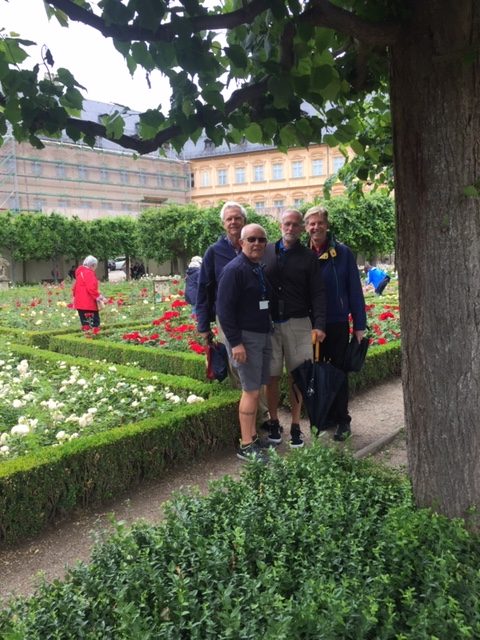
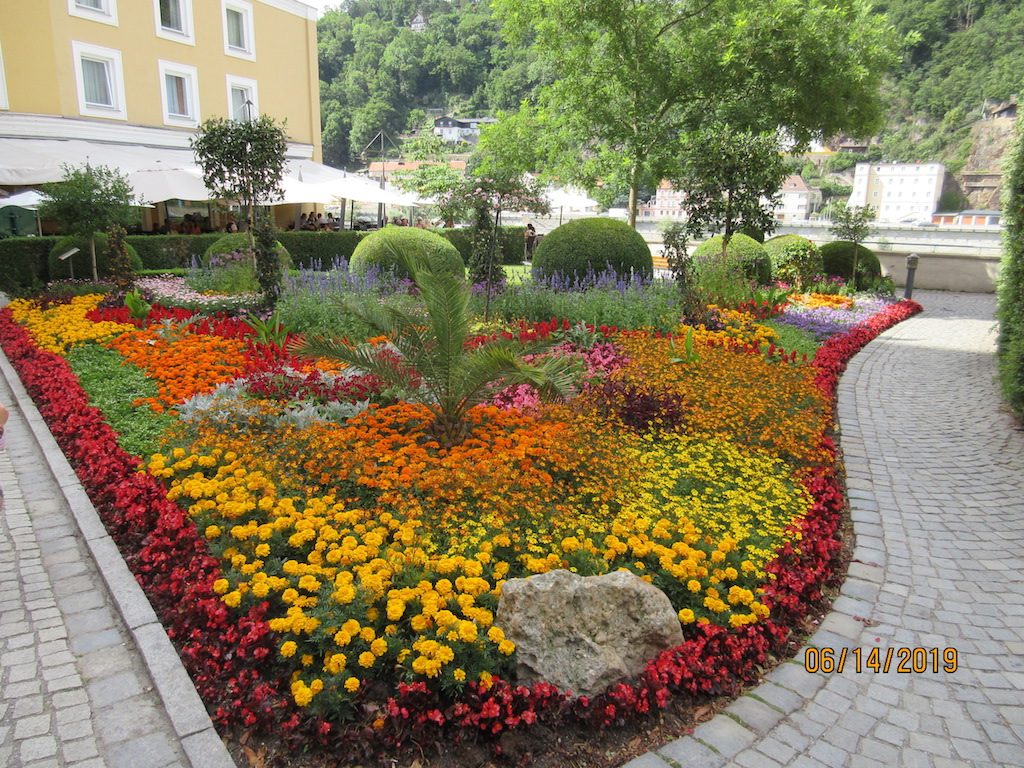
Passau Garden

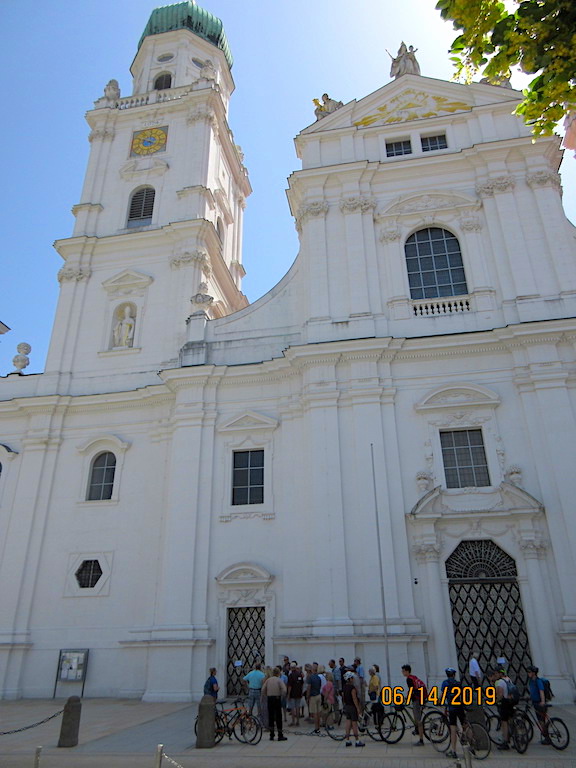
We took a walking tour of one of Germany’s oldest and most picturesque medieval cities. Passau is set amid wooded hills and cliffs at the eastern edge of Bavaria, near the Austrian border. Ideally located at the confluence of the Inn, Ilz, and Danube rivers, Passau has acquired the nicknames “Venice of Bavaria” and “City of Three Rivers.” With charming cobblestone streets, graceful arcades, and Italian-influenced architecture, the town gives a sense of being more closely allied with northern Italy and the Tyrolean Alps than with cities to the north. Several buildings within the town are of interest, including the gothic Rathaus — with Bavaria’s largest Glockenspiel housed in its tower — and Veste Oberhaus, a towering medieval fortress.

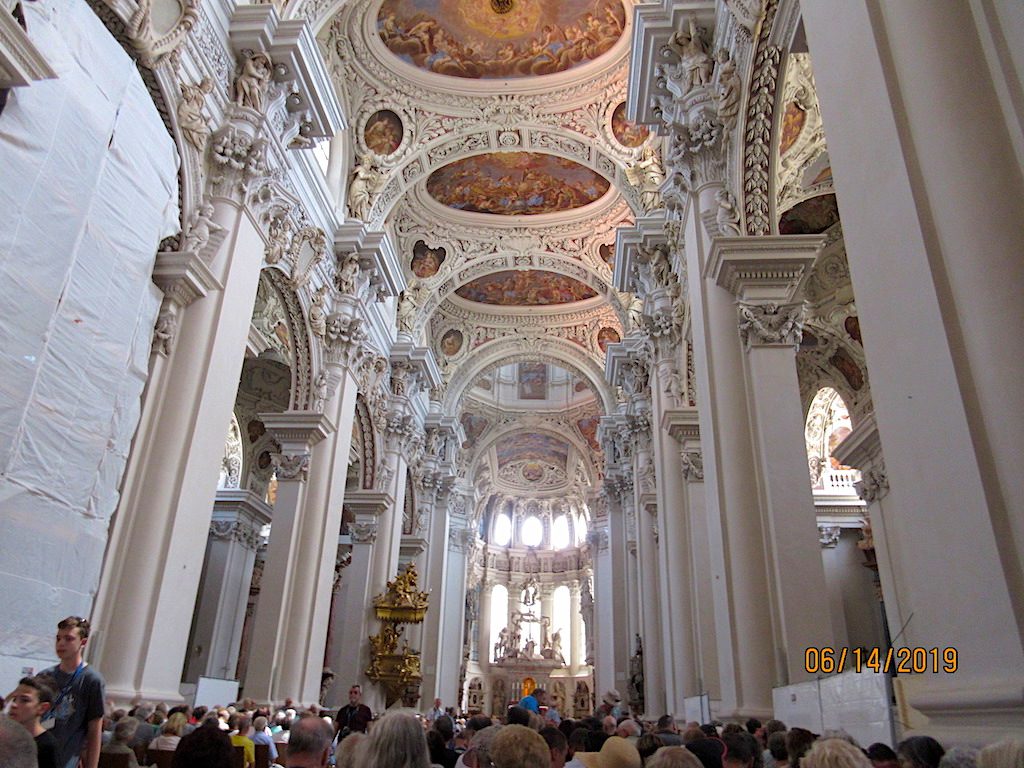
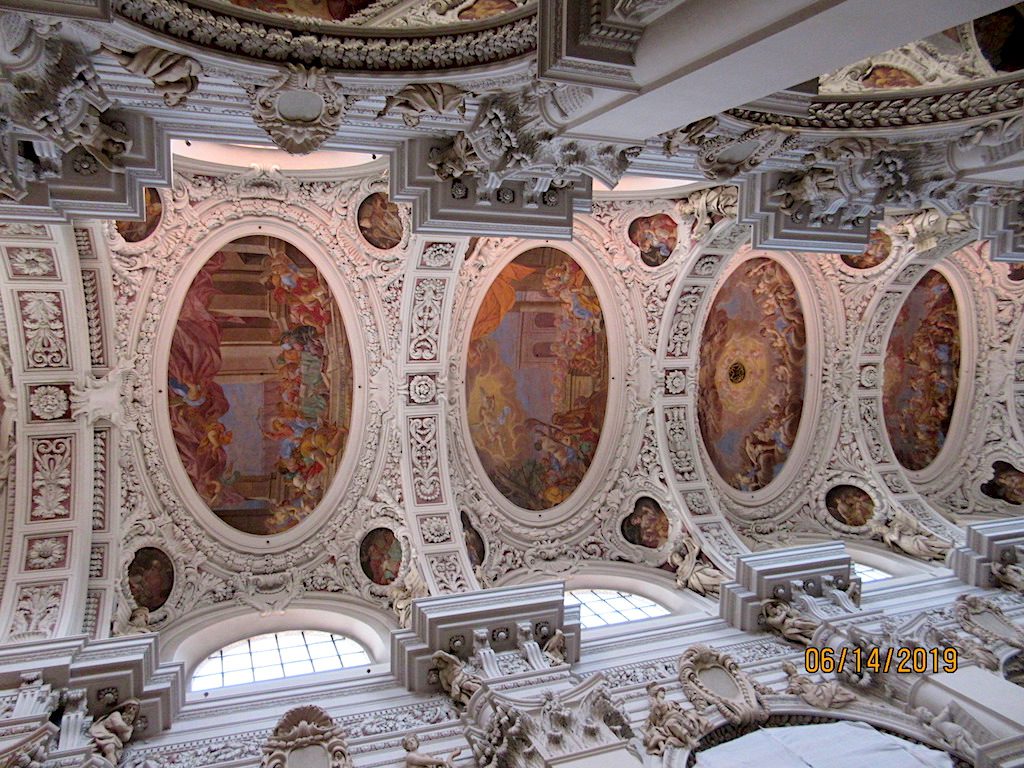
The city’s most renowned site is St. Stephen’s, with its octagonal dome over the intersection of the nave and transept. The interior is mainly baroque, and houses one of the largest pipe organs in the world. The organ consists of five separate organs built in 1928 and housed beneath the octagonal dome. It has 17,974 pipes. Here we enjoyed an organ recital of six pieces of music from Johann Sebastian Bach to Max Reger.

After lunch back onboard, we ventured the short walk back into town where we visited the Glass Museum while Ric, Kevin and others enjoyed another bike tour. This museum is the largest museum on European glass in the world and focuses on the period of 1650 to 1950. The collection contains over 30,000 pieces with only about half of those on display. The museum is housed in a complex of four buildings dating back as far as 600 years. The collection was beautifully presented in glass enclosed cases spread out through four floors of the buildings.

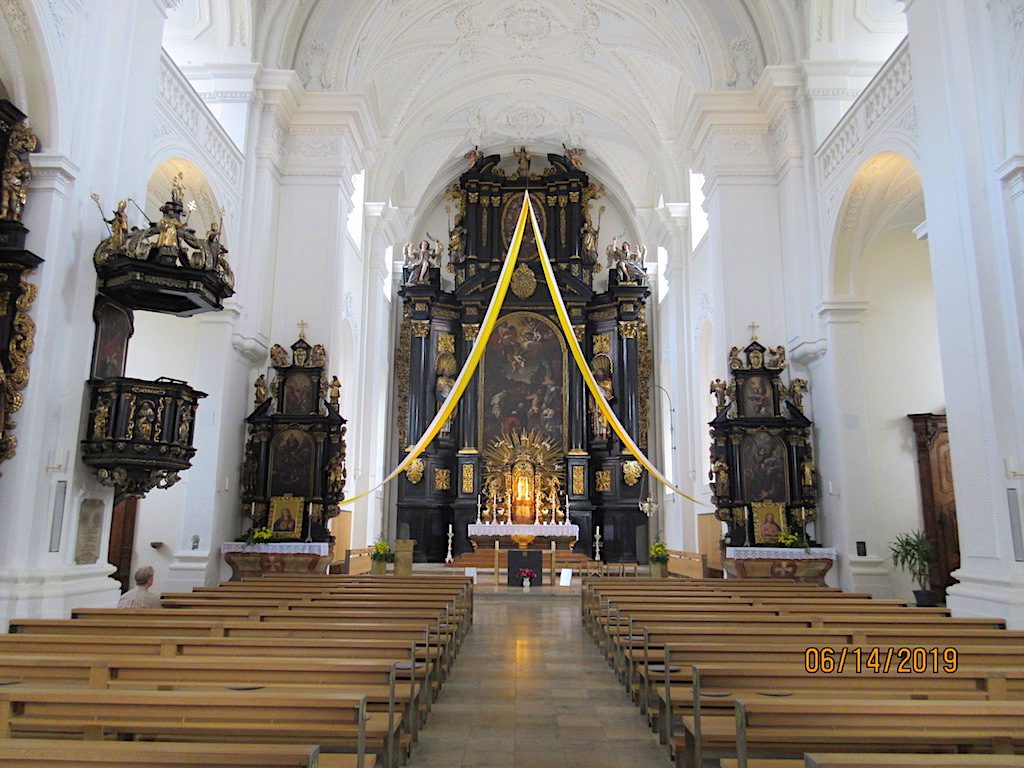
We wandered through town where they have a great number of art shops, souvenir shops, antique shops and clothing stores. Everyone was eating ice cream. Most of the buildings in town are beautifully maintained and the shops are very modern. We stopped in to see the Church of St. Paul where the altars are all painted a rich dark black color contrasting beautifully with the white plaster walls. It is very unusual to see so much black in a church but it was very striking.

There is a section of town that is now a pedestrian only section where many of the modern shops, bars and eating establishments are located. Even here the streets are immaculately clean and the buildings are well maintained with fresh paint.

Our dinner this evening was a five-course wine pairing dinner. The service and food this evening was much better than last evening.

June 14, 2019 Nuremberg to Regensburg, Germany

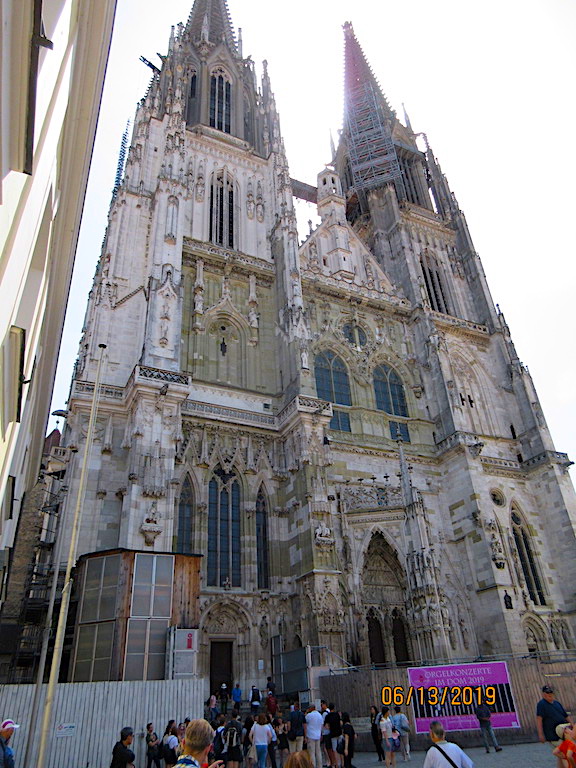
Regensburg Church Facade

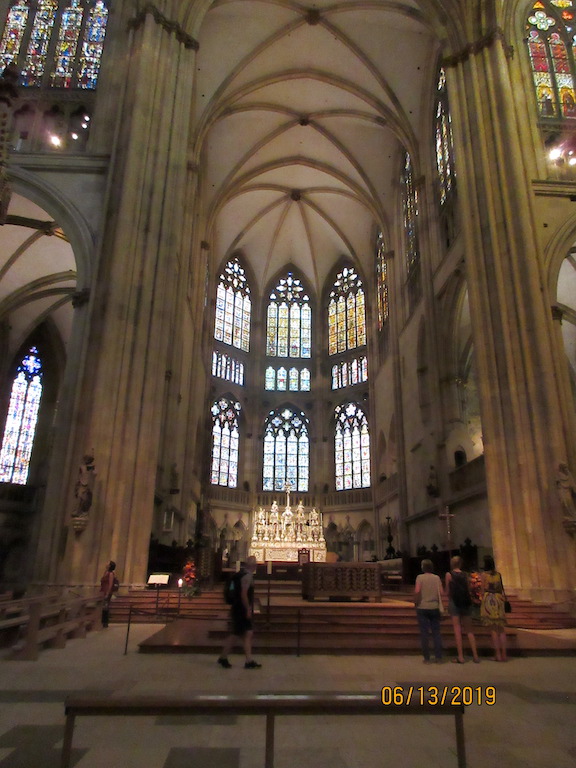
Regensburg Church Interior

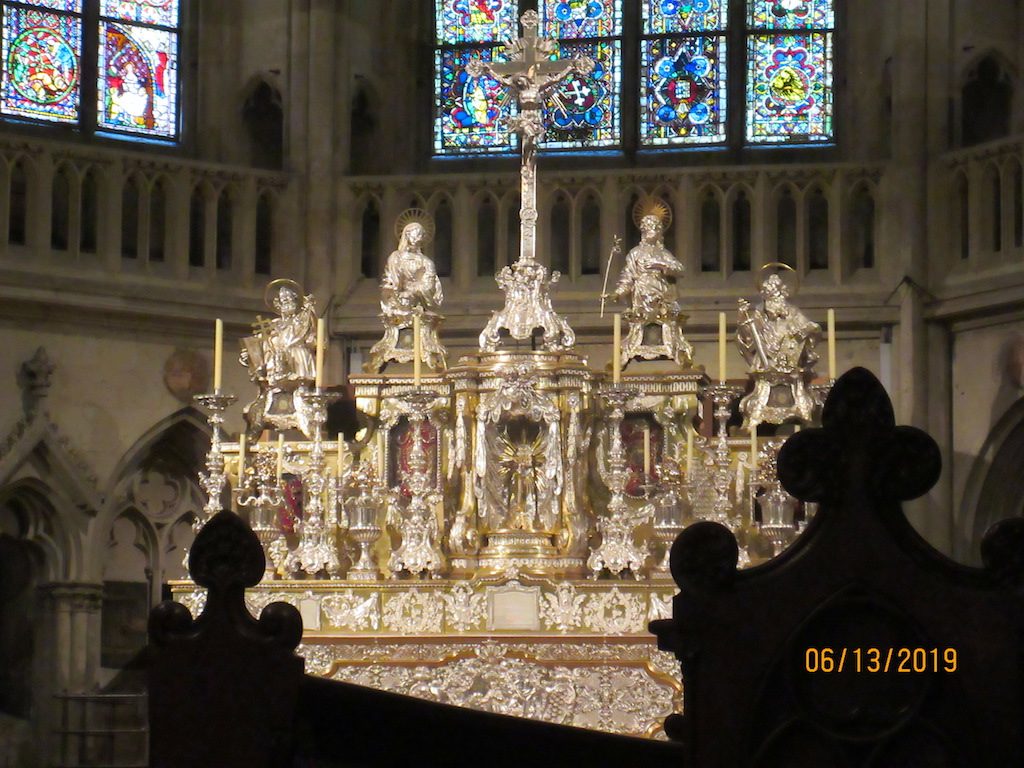
Regensburg Church Altar

Regensburg Bridge

Regensburg Cuckoo Clock

Regensburg Cuckoo Clocks

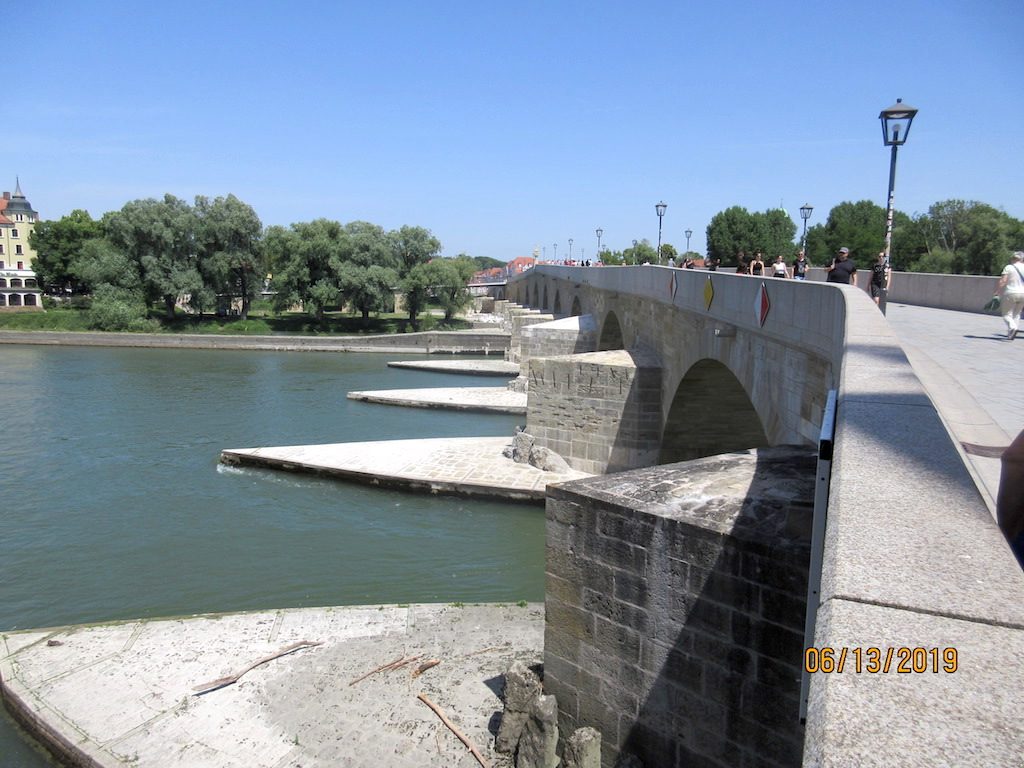
Due to the damaged lock near Nuremberg we were bused about 90-minutes from Nuremberg to Regensburg where we would board another boat, the River Splendor, for the continuation of our trip. Regensburg, a city of approximately 130,000, is located in southeastern Germany in the state of Bavaria, at the junction of the Danube and Regen rivers. Regensburg was undamaged by heavy Allied bombing during World War II and is thus one of the best-preserved medieval cities in Germany. Once we arrived in Regensburg we were taken on a guided walking tour of this delightful Bavarian town. We entered the old medieval core of the town by crossing the picturesque 1,000-foot stone bridge with 16 arches crossing the Danube River completed in 1146. It was the only Danube crossing for hundreds of years, and was the starting point of the second and third Crusades.

Among some of the other notable structures are Saint Peter’s Cathedral and the Benedictine Abbey. Saint Peter’s Cathedral is a 13th-century structure, housing a museum of medieval and Renaissance church art. The church is extremely ornate on both the inside and out. The Benedictine Abbey was an important epicenter of European learning. Among its many treasures are over 200,000 books and illuminated manuscripts.

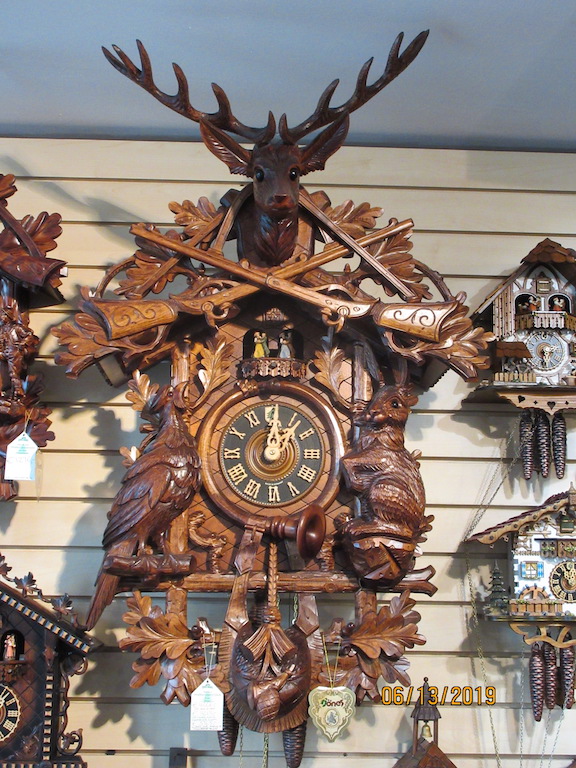
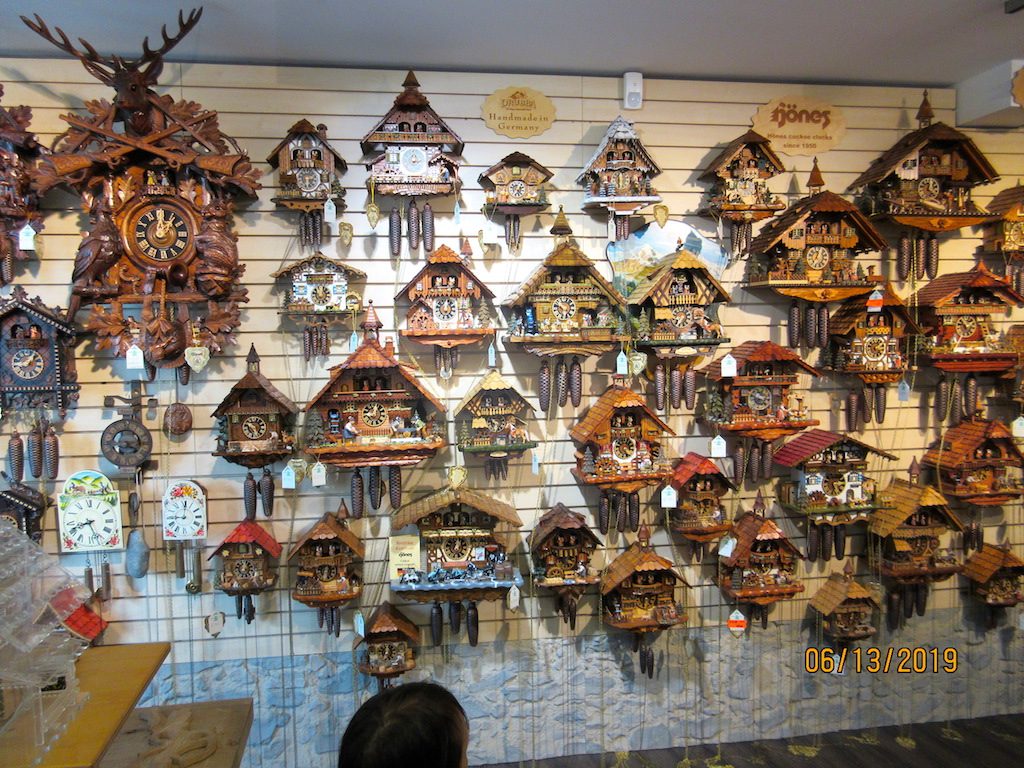
After lunch onboard the boat we walked back into town where we attended a short presentation about the cuckoo clock. These clocks began in the Black Forest (it was so dark in the forest they found the sundial didn’t work well so developed the clock with sound to help tell time) in the 1600’s and have continued to become more decorative as time has gone by. Today the intricate clocks can have intricate carvings, moving parts, up to a dozen songs and many sounds of the cuckoo bird itself. They said that the cuckoo bird found in the Black Forest is known for laying its eggs in another bird’s nest and letting the other bird raise the baby birds. The young birds are also known for throwing the other birds’ eggs out of the nest, giving the baby cuckoo bird chicks more room.

We visited a new museum that had just opened on the waterfront featuring the history of Bavaria from 1800 to the present. The items in the museum were beautifully presented but it was difficult to navigate through the museum. It was a bit like a maze.

Back onboard the ship we unpacked in our new cabin before dinner. After dinner we were entertained by a local brass band of five young folks playing the trumpet, clarinet, bass and baritone. They played and showed us a variety of local songs and dances. They were not particularly good so there was a steady trickle of people leaving the lounge, including us.

June 13, 2019 Nuremberg, Germany

Nuremberg Castle

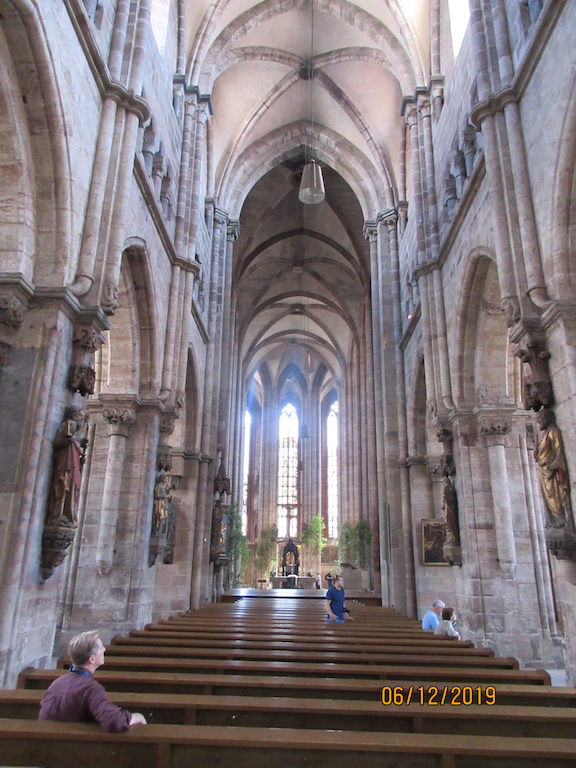
Nuremberg Church Interior

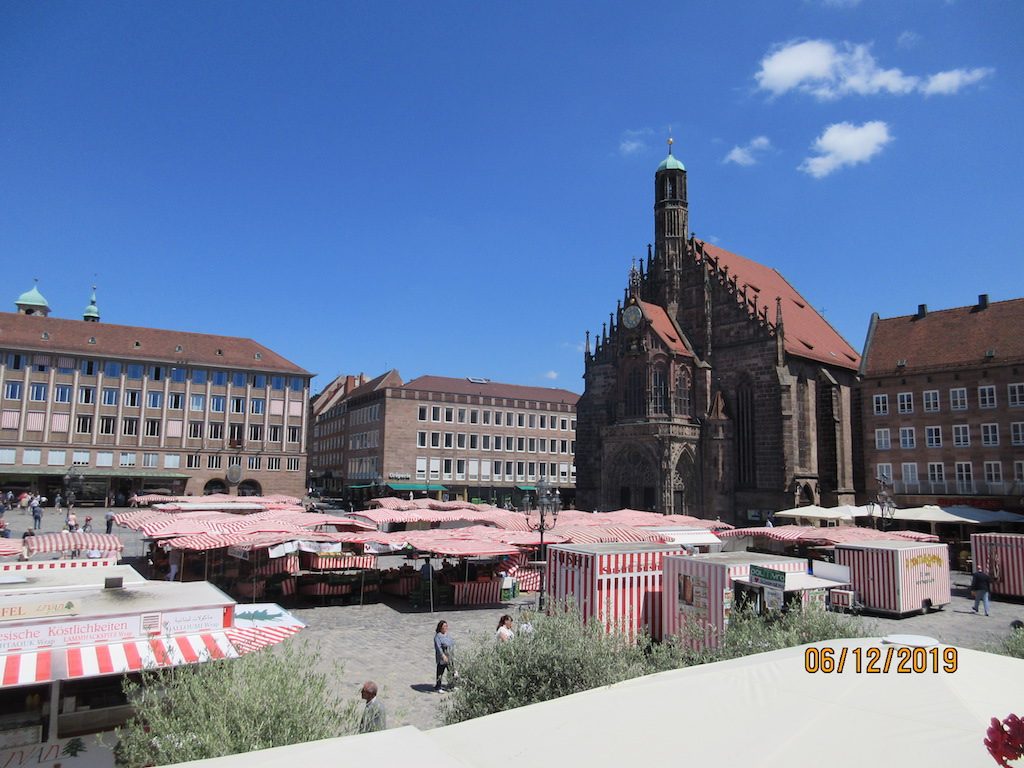
Nuremberg Market Square

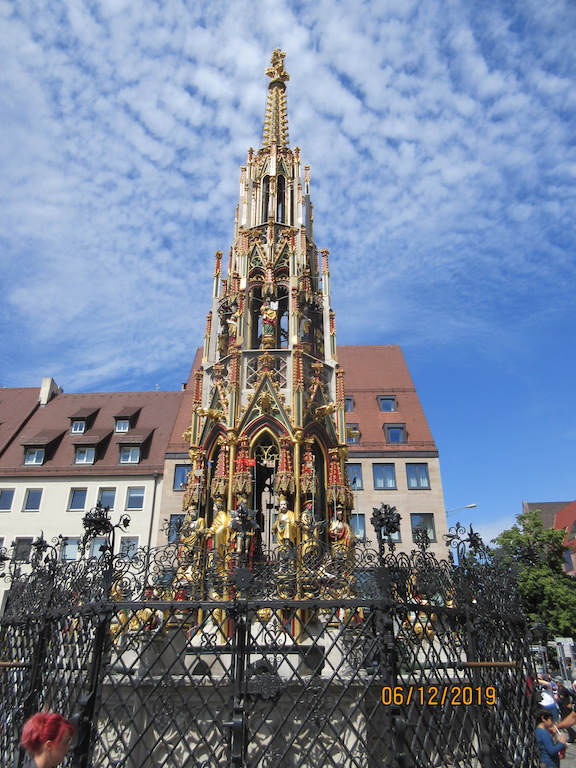
Nuremberg Fountain in the town square

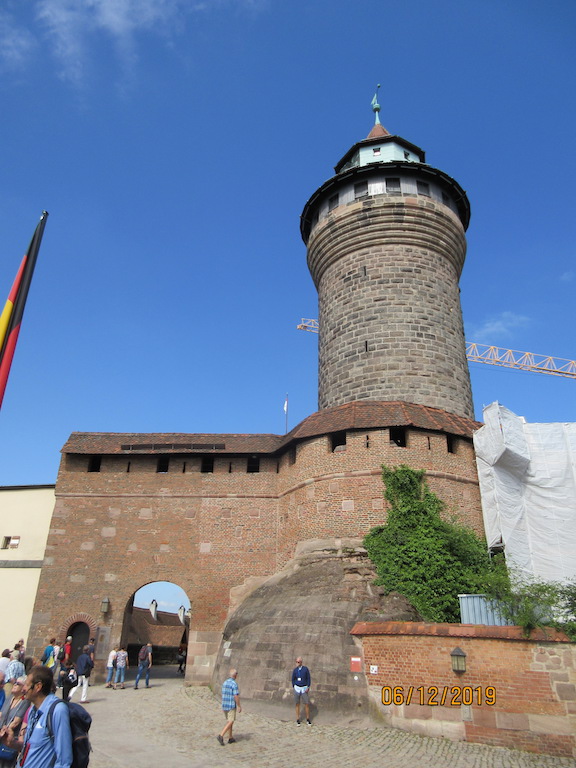
We traveled the Main-Danube Canal, which connects the Danube and Main rivers, to get to Nuremberg. Nuremberg is a sizable city with a population of approximately 570,000 people. In 1806, Bavaria acquired control of Nuremberg, and in 1835 it became the final stop on the first German railroad. Today, Nuremberg is a beautiful, bustling city with the old mixing in with the new, but it also has a dark recent past: from 1933 to 1938 it was the site of annual conventions of the National Socialist German Workers (or Nazi) Party. It was at a 1935 meeting that the notorious Nuremberg Laws were put into effect, depriving German Jews of many civil rights. In 1945 and 1946, Nuremberg was the site of the Nuremberg Trials, the War Crimes Tribunal that tried Nazi leaders.

The city is known for its honey, toys, and spice cakes, and it was here that the first pocket watch in the world was made, as well as the first globe made by Mr. Behaim. Nuremberg was a great intellectual center of Europe in the 14th-16th centuries. It had the first railway in Germany, and it hosts the biggest toy fair in the world!

After a guided walking tour of the old town we visited a very large toy museum with over 14,000 square feet of vintage toys. Nuremberg was a famous manufacturing hub of all sorts of toys that were distributed around the world. They made everything from plastic toys to tin toys, train sets to board games, dolls to military figures. It was a very interesting museum.

For lunch we stopped at a local sausage restaurant to try the small finger-sized sausages that are famous in the area. They were served grilled, six, nine or twelve on a plate with mustard and potato salad. Also, on the tables were bread rolls and pretzels. The sausage was very good.

The main market square, known as Hauptmarkt is a large open space in the center of the old town where there were dozens of market stalls set up selling all sorts of fruits and vegetables, food items and sausages. We stopped to taste the local favorite sweet treat, gingerbread cookies. Ours were shaped in the round about four inches in diameter and tapered at the edges. They were very delicious although quite expensive (2.50 Euros each) by our standards.

Nuremberg is also the former home of the greatest Renaissance artist north of the Alps: Albrecht Dürer. He was a painter, printmaker and theorist of the German Renaissance. Durer established his reputation and influence across Europe when he was still in his twenties due to his high-quality wood prints. He lived from 1471 to 1528 and was in communication with arts greats like Raphael, Giovanni Bellini and Leonardo da Vinci.

After returning to the boat we attended a lecture on the Main-Danube Canal where we heard about the long history of connecting the Main and Danube rivers allowing for access from the Black Sea to the Mediterranean Sea. The canal supported trade and has only been completed since 1992. While they anticipated more commercial traffic, river cruises are the largest users of the canal.

Tonight, we had dinner with Frank and Mona, from Hawaii. They joined Ric, Kevin and us and shared some of their travel and life stories.